Last updated on August 19th, 2026 at 04:19 pm
Keeping a guinea pig cage clean is essential for your pet's health, but daily cleaning doesn't have to be a chore.
With the right cage design and accessories, you can streamline your routine and spend more time enjoying your furry friends.
Here are 13 ideas to make daily cleaning quick and effortless.
Use a Fleece Liner Instead of Bedding
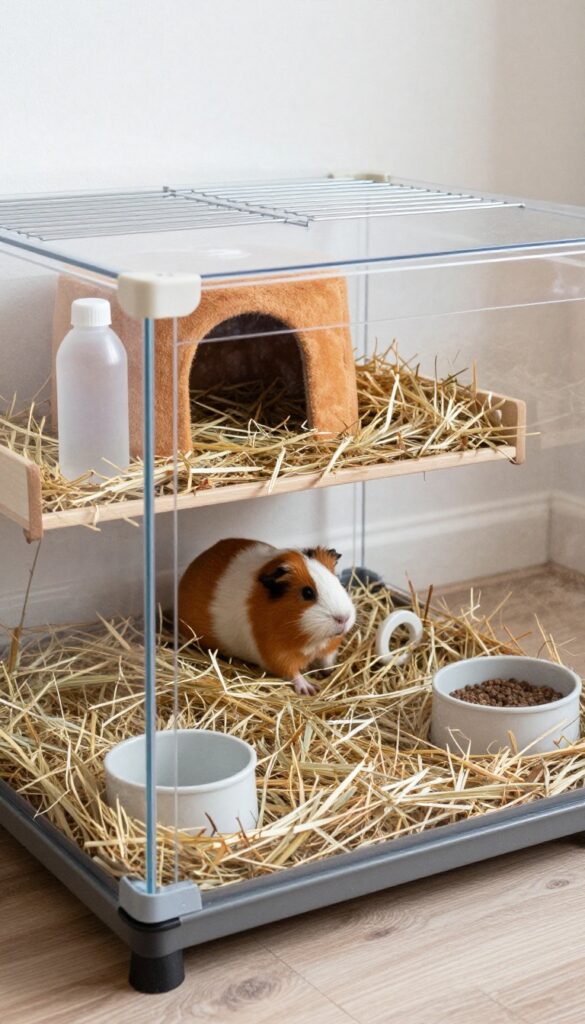
Switching from traditional bedding to a fleece liner is one of the most effective ways to simplify your daily cleaning routine. Fleece liners are reusable, absorbent, and easy to maintain, making them a favorite among guinea pig owners who want a cleaner cage with less effort.
Fleece liners work by wicking moisture away from the surface, keeping your guinea pigs dry and comfortable. They are typically paired with an absorbent layer underneath, such as a towel or u-haul pad, to trap urine and odors. This setup significantly reduces dust compared to wood shavings or paper bedding, which is better for your pets' respiratory health.
- Daily spot cleaning is quick: just shake out or vacuum hay and droppings, then wipe the liner with a damp cloth.
- Liners can be washed in the machine weekly, saving money on disposable bedding over time.
- They come in various sizes to fit standard C&C cages, Midwest cages, and custom enclosures.
When choosing a fleece liner, look for ones with a waterproof backing to protect the cage floor. Place hay racks and hideouts strategically to keep mess contained. With a fleece liner, you can spend less time scooping and more time enjoying your guinea pigs.
Choose a Cage with a Deep Base or Tray
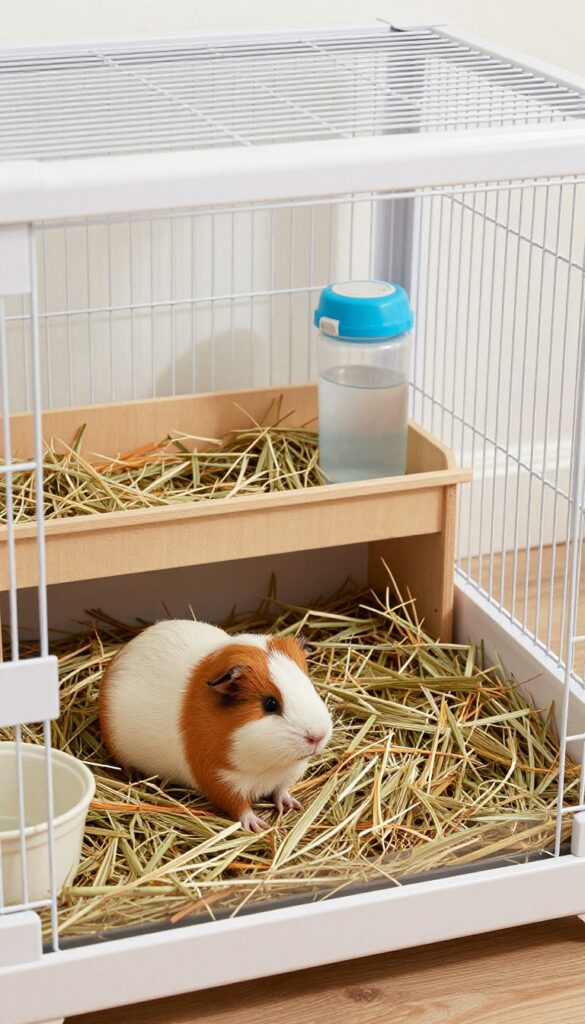
A deep base or tray is one of the simplest upgrades for easier daily cleaning. It keeps bedding, hay, and mess contained, so you spend less time sweeping up scattered debris.
Deep bases—typically 4 to 8 inches tall—prevent bedding from being kicked out during zoomies or when your guinea pigs burrow. They also make spot cleaning faster because you can wipe down the smooth interior without worrying about spills escaping.
Key benefits and tips
- Look for a solid plastic base or a metal tray with a plastic liner. Avoid shallow trays (under 3 inches) that allow mess to escape.
- Smooth corners and rounded edges prevent bedding buildup and make wiping or hosing off much easier.
- For easy daily cleaning, choose a base that can be removed or slid out without disassembling the entire cage.
- Pair the deep base with a fleece liner or absorbent bedding to simplify daily spot cleaning even further.
Many popular guinea pig cages, like C&C cages with coroplast bases or plastic bin cages, already feature deep trays. If you’re building a DIY enclosure, use a coroplast sheet with 6-inch walls to achieve the same effect. This design directly supports a clean, low-maintenance habitat.
Incorporate a Hay Rack to Minimize Waste
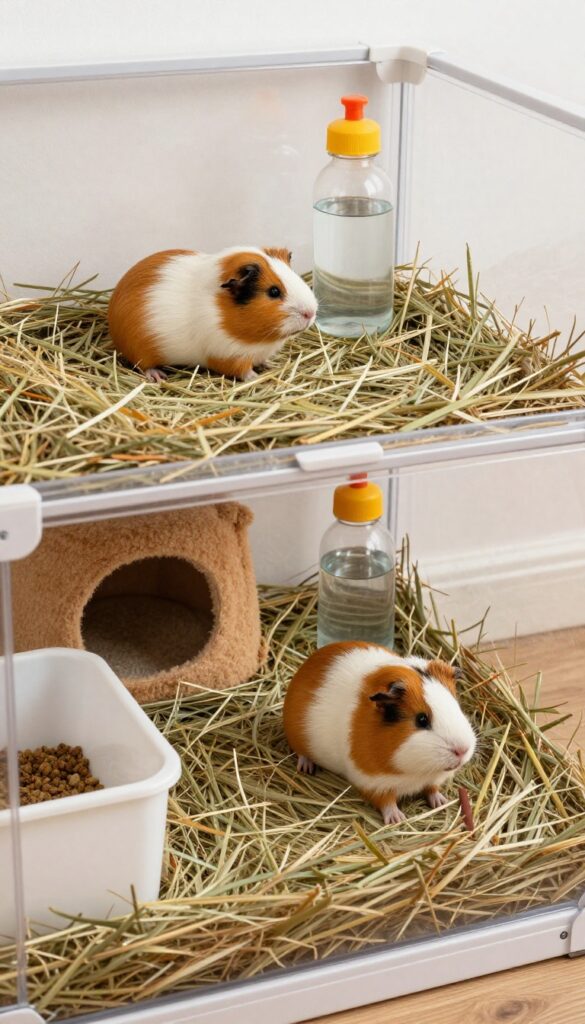
A hay rack is a simple addition that keeps hay off the cage floor, reducing soiling and making daily cleanup faster. By elevating the hay, you also extend its freshness and cut down on the amount you need to sweep or spot-clean each day.
Hay racks come in several styles, each with pros and cons for cleaning. Corner racks attach to the cage walls, saving floor space and keeping hay contained. Hanging racks suspend from the cage lid or sides, which can be easier to refill but may need sturdy attachment.
Some racks double as a hideout or tunnel, combining enrichment with function.
Placement Tips for Cleanliness
Position the hay rack away from water bottles and food bowls to prevent dampness and contamination. Place it over a tray or a small litter box to catch falling hay and dust, making cleanup as simple as emptying the tray. Avoid placing the rack directly over bedding or fleece, as scattered hay will still need to be picked up.
- Choose a rack with a solid back or bottom to minimize hay spillage.
- Opt for designs that are easy to remove and wash, such as plastic or metal racks with smooth surfaces.
- For multi-pig cages, consider a larger rack or multiple racks to reduce competition and mess.
Always ensure the hay rack has no sharp edges or small gaps that could trap guinea pig feet or noses. Chew-safe materials like untreated wood, stainless steel, or sturdy plastic are best.
Use a Corner Litter Box for Targeted Cleaning
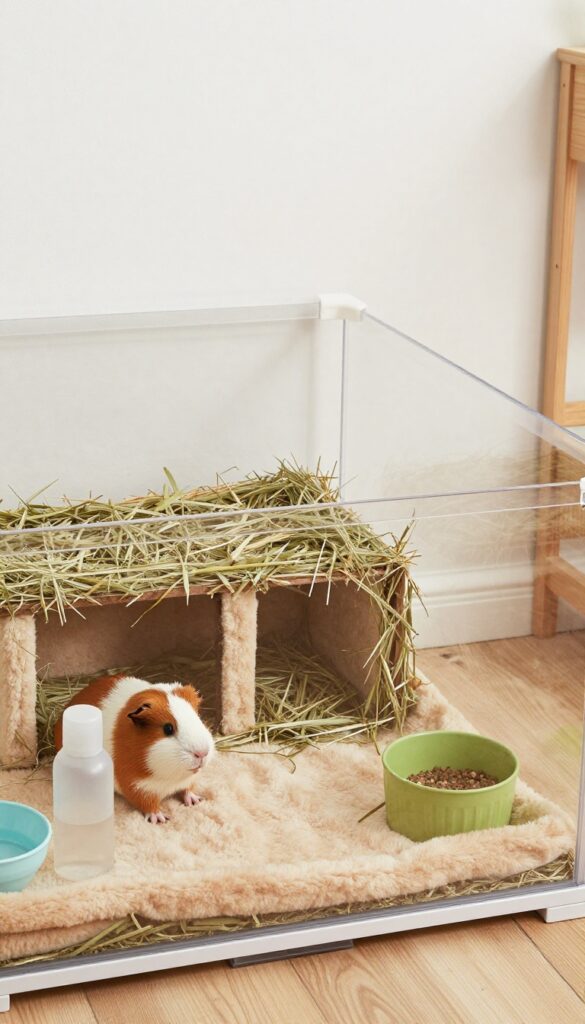
Guinea pigs often choose a specific corner for their bathroom habits. By placing a small litter box there, you can concentrate the mess and make daily cleaning much faster.
Most guinea pigs naturally pick a corner to toilet. Observe your guinea pig for a day or two to identify their preferred spot, then place a small, low-sided litter box there. Fill it with paper-based bedding—avoid clay or clumping cat litter as they are unsafe if ingested.
The litter box should be easy to access and large enough for your guinea pig to turn around.
Tips for success
- Use a corner-shaped litter box that fits snugly into the cage corner.
- Place a handful of hay in the litter box to encourage use (guinea pigs like to eat and poop simultaneously).
- Empty the litter box daily and replace the soiled bedding; the rest of the cage stays cleaner longer.
- Ensure the litter box has smooth edges and is chew-safe (plastic or coated metal).
A corner litter box is a simple, low-cost addition that dramatically reduces the time you spend on full cage cleanings. It also helps keep the main bedding or fleece liner fresher, so you can spot-clean less frequently.
Install a Water Bottle with a Drip Tray
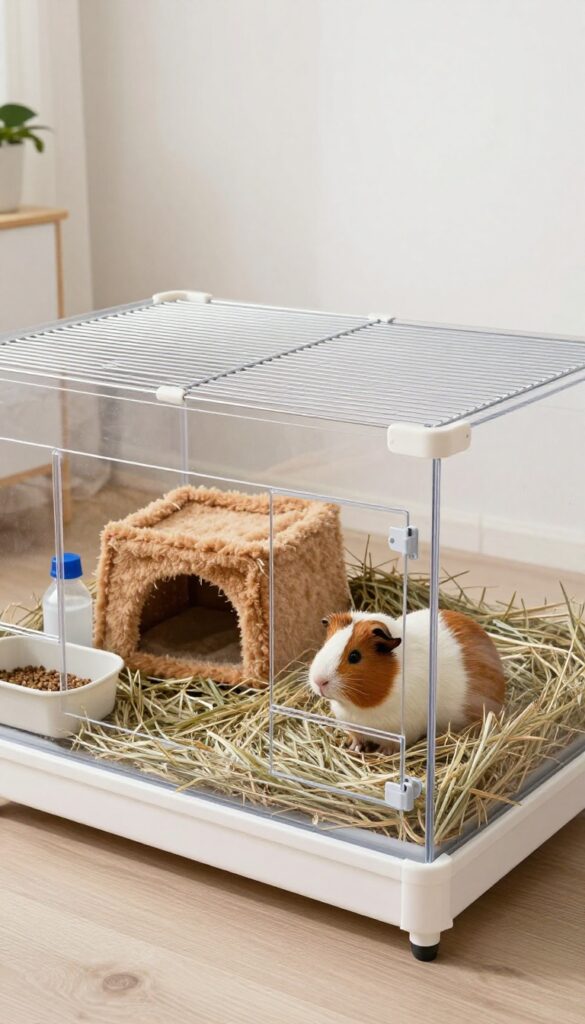
Keeping your guinea pig's bedding dry is essential for preventing skin infections and respiratory issues. A water bottle with a drip tray is a simple upgrade that makes a big difference in daily cage maintenance.
Even the best water bottles can drip, especially when your guinea pig drinks. A drip tray catches those stray droplets before they soak into fleece or bedding. This keeps the cage floor dry and reduces the need for full bedding changes.
- Place the drip tray directly under the bottle spout to catch drips effectively.
- Empty and rinse the tray daily to prevent bacteria and mold growth.
- Choose a tray that is shallow but wide enough to cover the drip zone.
- Look for trays that attach securely to the cage bars or sit flat on the floor.
For maximum effectiveness, mount the water bottle at a height where your guinea pig can comfortably drink without tilting the bottle. A drip tray not only saves you cleaning time but also helps maintain a healthier environment for your pet.
Opt for a Cage with a Removable Bottom Grid
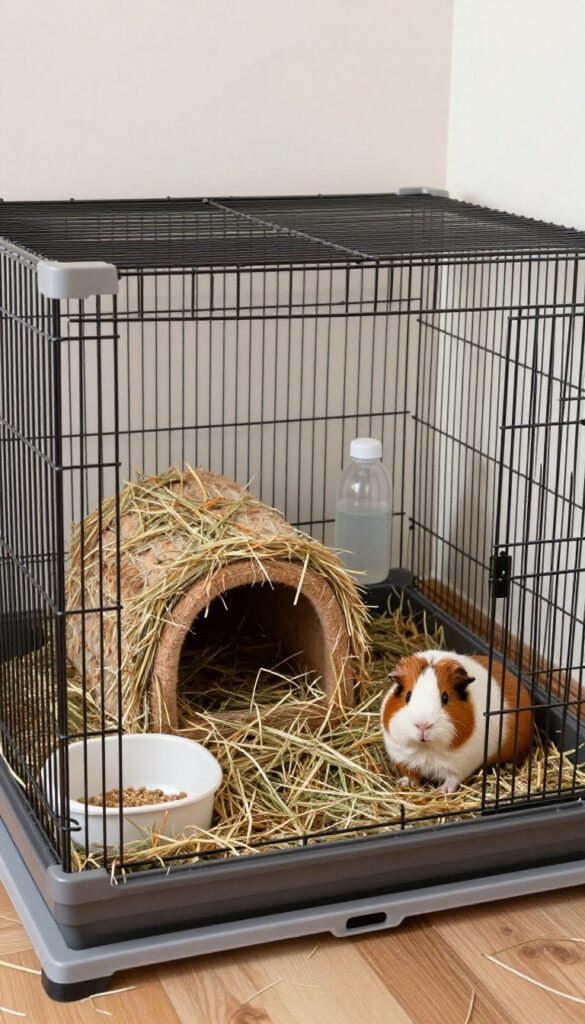
A removable bottom grid is a game-changer for daily cleaning. Instead of struggling to reach every corner, you can lift out the grid and access the tray below in seconds.
Many modern guinea pig cages feature a grid that sits above a deep plastic tray. The grid keeps your pets off the wet or soiled bedding, while the tray catches all the mess. When it's time to clean, simply lift the grid (with or without your guinea pigs inside) and dump the tray.
Some models even have a pull-out drawer that slides out like a filing cabinet, so you don’t have to remove the entire cage top.
Cleaning the Grid Itself
The grid can get dirty from droppings and hay debris. To keep it hygienic:
- Remove the grid and rinse it with a pet-safe disinfectant or vinegar solution.
- Use a stiff brush to scrub off any stuck-on bits, especially around the wire intersections.
- Rinse thoroughly and let it dry before reassembling.
- For stubborn stains, soak the grid in warm water with a little dish soap.
A removable grid makes deep cleaning much less labor-intensive because you can wash the tray and the grid separately. Look for cages where the grid is one solid piece (rather than multiple small grates) to avoid crevices where dirt can hide. This design also helps with ventilation, keeping your guinea pig's environment fresh and dry.
Use a Cage Liner with a Built-In Pee Pad
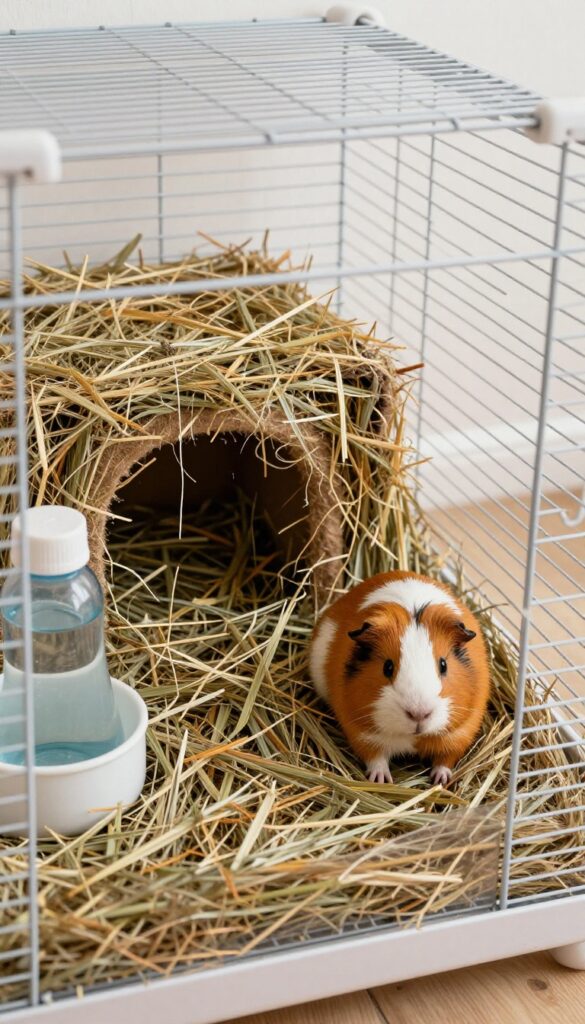
A cage liner with a built-in pee pad adds an extra layer of absorbency exactly where your guinea pigs need it most. This simple upgrade can cut down on daily cleaning time and help control odors.
Place these liners under hideouts or near water bottles, where your guinea pigs tend to urinate most. The integrated pad wicks moisture away from the surface, keeping the fleece layer drier and reducing the need for full liner changes.
Practical tips for choosing and using pee pad liners
- Look for washable, reusable pads made from bamboo or organic cotton for an eco-friendly option.
- Disposable pads are convenient for travel or temporary use, but avoid those with chemical attractants or fragrances.
- Replace or wash the pad daily to prevent ammonia buildup and keep the cage fresh.
- Pair the liner with a deep base tray to catch any spills and make cleanup even easier.
By adding a built-in pee pad liner, you create a targeted cleaning zone that simplifies your daily routine. Your guinea pigs stay dry and comfortable, and you spend less time scrubbing the cage floor.
Choose a Cage with Smooth, Non-Porous Surfaces
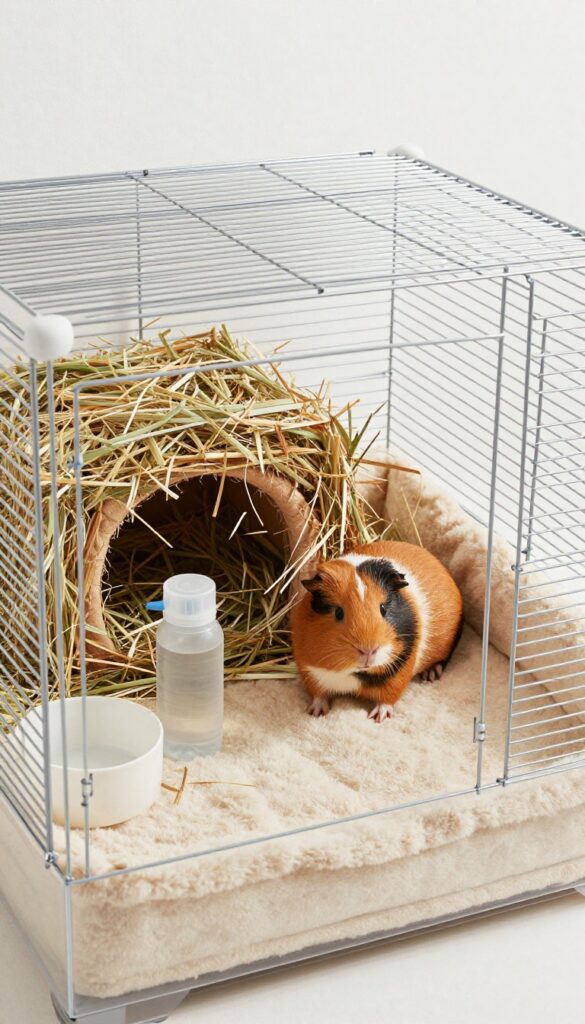
When daily cleaning is a priority, the materials your cage is made from matter a lot. Smooth, non-porous surfaces make wiping down messes quick and prevent odors from soaking in.
Opt for cages with plastic bases, coated wire grids, or metal trays. These materials don't absorb urine or bacteria, so they stay fresher longer and are easy to sanitize. Avoid untreated wood or porous materials like unsealed cardboard, which can harbor smells and require extra scrubbing.
Material recommendations
- Plastic: Durable, wipeable, and affordable. Look for thick, chew-resistant plastic bases.
- Coated metal: Easy to clean and long-lasting. Ensure the coating is non-toxic and intact.
- Coroplast (corrugated plastic): Lightweight and waterproof, ideal for C&C cages.
- Stainless steel: For trays or pans, it's rust-resistant and very easy to sanitize.
Safe cleaning products for guinea pigs
Use a 50/50 white vinegar and water solution or a pet-safe cage cleaner. Avoid bleach, ammonia, or harsh chemicals that can irritate your guinea pig's respiratory system. Always rinse thoroughly after cleaning.
Smooth surfaces also mean less chance of snags or sharp edges that could injure your pets. Pair this cage choice with a fleece liner or paper bedding for a comfortable, easy-to-maintain habitat.
Use a Small Handheld Vacuum for Daily Spot Cleaning
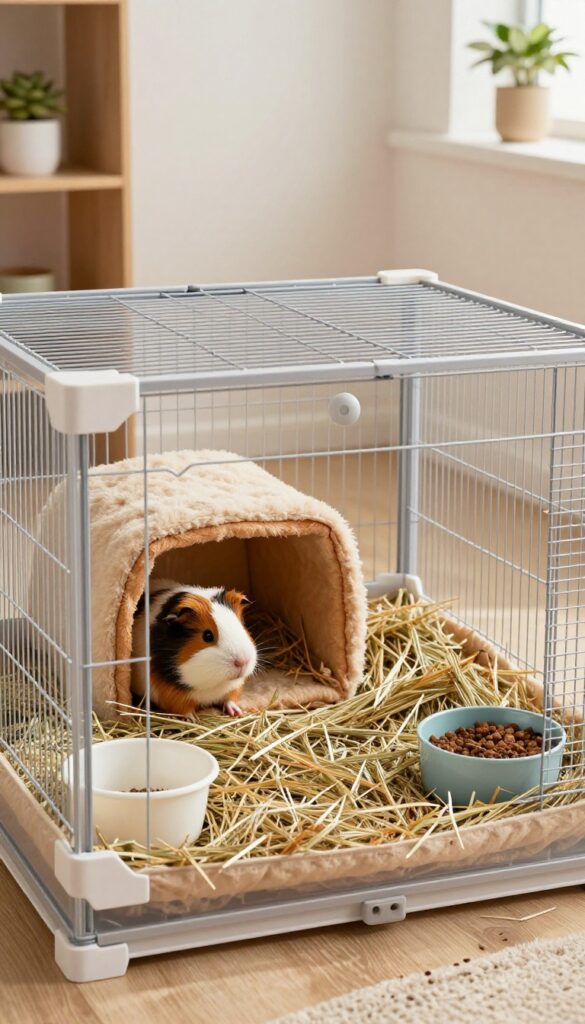
A compact handheld vacuum makes daily spot cleaning quick and stress-free, helping you maintain a fresh cage without disturbing your guinea pigs.
Keep a small, quiet handheld vacuum near the cage for fast cleanups. Cordless models are convenient, and a HEPA filter traps dust and allergens. Use it to suck up hay scraps, stray poop, and loose bedding from fleece liners or tray corners.
Tips for stress-free vacuuming
- Choose a model with low noise (under 60 dB) so your guinea pigs stay calm.
- Empty the canister after each use to prevent odors and bacteria.
- Avoid pointing the nozzle directly at your pets; vacuum around them gently.
- Pair with a crevice tool to reach under hideouts and along cage edges.
This routine keeps the cage fresh between full cleanings and reduces the time spent on deep cleans. A handheld vacuum is a practical addition to any guinea pig cage setup, especially when paired with fleece liners or easy-access trays.
Place the Cage in a Well-Ventilated Area
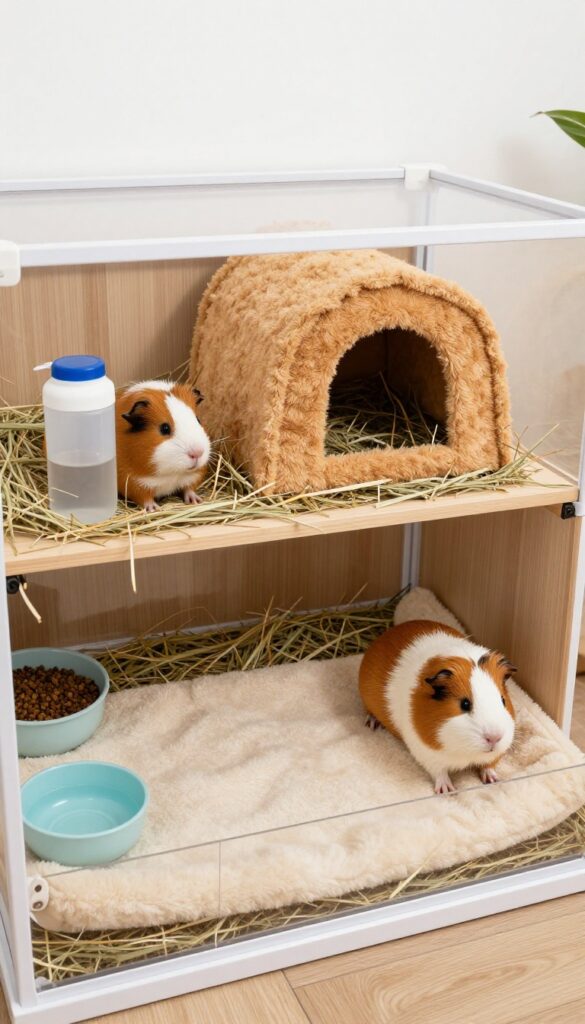
Where you put the cage matters just as much as what's inside it. Good airflow keeps ammonia levels low, bedding drier, and odors under control—all of which make daily cleaning faster and more pleasant.
A well-ventilated room helps moisture evaporate from fleece liners and bedding, reducing the need for spot cleaning and deep cleans. Here are key factors to consider when choosing a spot for your guinea pig's habitat:
Ideal room conditions
- Choose a room with cross-ventilation, such as a living area with windows on opposite walls.
- Use a ceiling fan or oscillating fan on low to keep air moving without creating a direct draft on the cage.
- Avoid placing the cage near heating vents, radiators, or air conditioning units that could cause temperature swings.
Ventilation without temperature extremes
- Keep the cage away from exterior doors and drafty windows to prevent chills.
- Avoid direct sunlight, which can overheat the cage and degrade hay and fleece faster.
- A stable temperature between 65–75°F (18–24°C) is ideal for guinea pigs and helps maintain clean, dry bedding.
Guinea pig cage/enclosure relevance
A well-ventilated cage also means less ammonia buildup in hideouts and corners where guinea pigs tend to pee. This keeps the entire habitat fresher, so you can focus daily cleaning on high-traffic areas like the litter box and hay rack instead of scrubbing the whole cage.
Use a Cage with a Divider to Separate Messy Areas
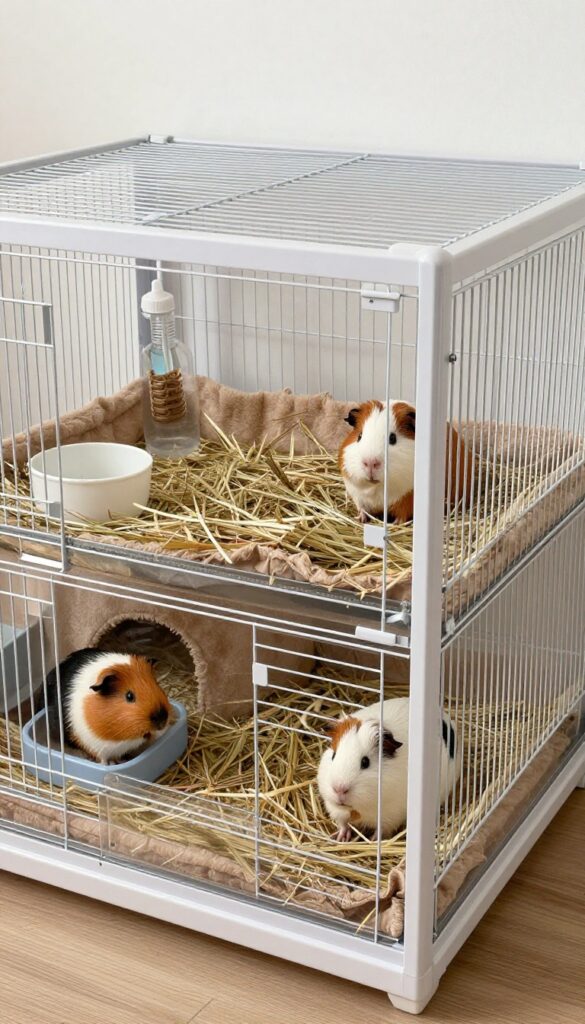
A divider can transform a single large cage into two zones, making daily cleaning faster by containing messes to one side.
Choose a divider made from safe, chew-proof materials like coroplast or coated wire grid. Avoid anything with small parts or sharp edges. Position the divider so that one side holds hay, bedding, and hideouts, while the other side has water bottles, food bowls, and a clean fleece area.
This setup lets you spot-clean the messy side each day without disturbing the clean side.
Tips for divider use
- Ensure the divider is securely attached to prevent tipping or escape.
- Leave a gap at the bottom for ventilation and easy movement if needed.
- Use the divider to separate feeding from sleeping areas, reducing hay spread.
- Clean one section at a time by temporarily moving pigs to the other side.
Choose a Cage with a Large Access Door
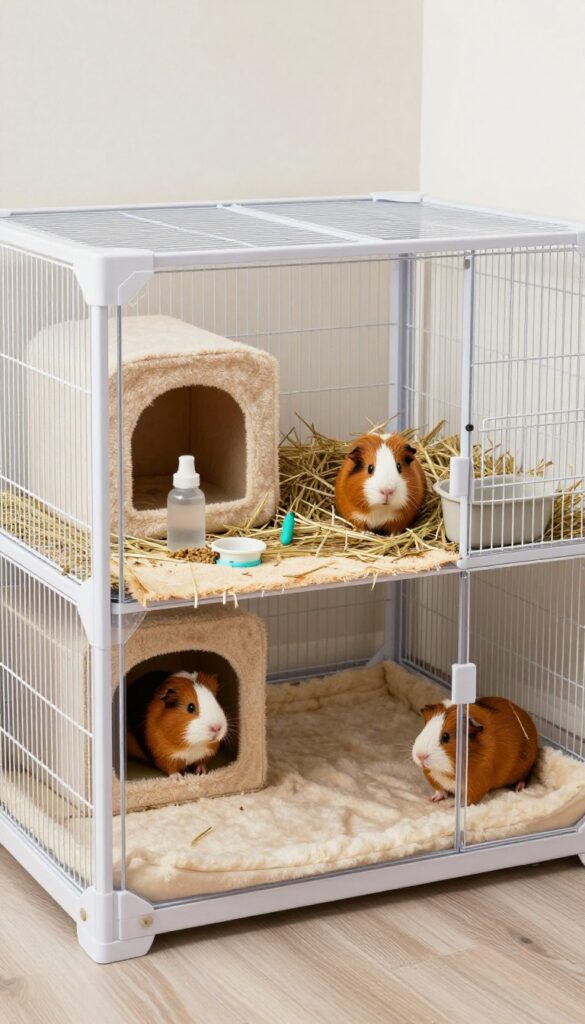
A cage with a large access door can transform your daily cleaning routine. Instead of contorting your arm through a small opening, you can easily reach every corner, making spot cleaning and hay changes far less tedious.
Large doors come in two main styles: top-opening and front-opening. Top-opening doors let you reach down into the cage from above, which is great for deep cleaning and rearranging hideouts. Front-opening doors, often seen on Midwest-style or C&C cages, allow you to slide out trays or sweep debris directly out.
Some high-end cages even feature both, giving you maximum flexibility.
- Look for doors that span at least half the width of the cage to easily access the back corners.
- Multiple doors (e.g., one on each side) can be a game-changer if the cage is against a wall.
- Avoid cages with tiny flip-top lids or narrow front hatches that require you to reach through a small gap.
When evaluating a cage, open the door and imagine cleaning with a small hand vacuum or scoop. If you can’t comfortably reach the far end, the door is too small. Pair a large door with a removable tray or washable liner for the easiest daily routine.
Use a Cage with a Built-In Storage Drawer for Supplies
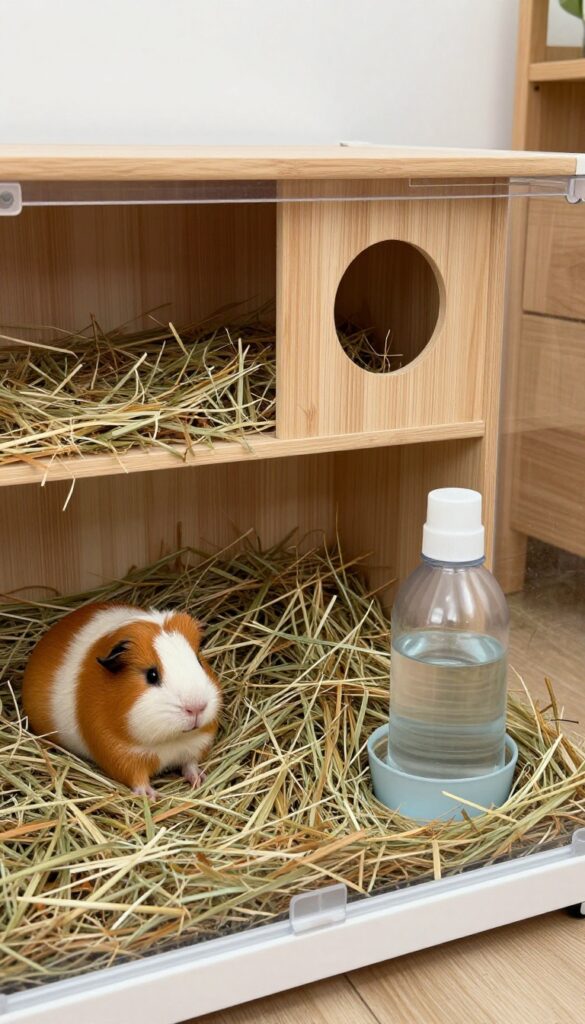
Some guinea pig cages come with a convenient drawer underneath the main enclosure, perfect for storing your daily cleaning supplies. This design keeps everything you need within arm’s reach, so you can quickly grab a fresh liner or wipe down surfaces without hunting for supplies.
A built-in storage drawer eliminates clutter around the cage and streamlines your cleaning routine. Here’s what to look for and how to make the most of it:
- Examples of cages: Some mid-size and large C&C-style cages include a pull-out drawer beneath the coroplast base. Brands like Midwest and certain Etsy custom builders offer models with storage.
- What to store: Keep extra fleece liners, disposable gloves, small trash bags, pet-safe wipes, a mini dustpan, and a scoop for soiled bedding in the drawer.
- Practical habitat details: Ensure the drawer is sturdy and slides smoothly without wobbling. The cage itself should still provide ample floor space (at least 7.5 sq ft for two guinea pigs), good ventilation, and easy access to hideouts, hay, and water.
- Cleaning tip: Use the drawer to store a spare set of cage accessories (like a spare water bottle or food bowl) so you can quickly swap dirty items during daily spot cleaning.
A storage drawer is a small upgrade that makes a big difference in keeping your cleaning routine efficient and your pet’s environment tidy.
FAQ
How often should I clean my guinea pig cage?
Spot clean daily (remove soiled bedding, hay, and wipe surfaces) and do a full deep clean once a week.
What is the best bedding for easy cleaning?
Fleece liners are popular because they are reusable and easy to vacuum or shake out. Combine with an absorbent layer underneath.
Can I use a litter box for guinea pigs?
Yes, many guinea pigs can be trained to use a corner litter box, making daily cleaning much easier.
What type of cage is easiest to clean?
Cages with smooth, non-porous surfaces, removable trays, and large access doors are easiest to clean.
Conclusion
Implementing even a few of these ideas can transform your daily cleaning routine from a hassle into a quick task. A clean cage means a healthier, happier guinea pig and more time for cuddles and play.
Start with one or two changes and see the difference!

I’m Pallab Kishore, the owner of Little Pets Realm — an animal lover and pet care enthusiast sharing easy tips, healthy recipes, and honest advice to help every small pet live a happy, healthy, tail-wagging life.