
A bored dog can turn a quiet afternoon into a chaotic mess. But you don't need a backyard or expensive gear to keep them entertained. These 12 enrichment ideas use everyday items and a little creativity to challenge your dog's mind and body.
From snuffle mats to frozen treats, each idea is designed to be practical for any home. Whether you have a high-energy herder or a couch potato, there's something here to spark their curiosity.
No fancy equipment required—just a few minutes of your time and a willingness to try something new. Let's dive into the best ways to beat boredom at home.
1. Snuffle Mat for Natural Foraging
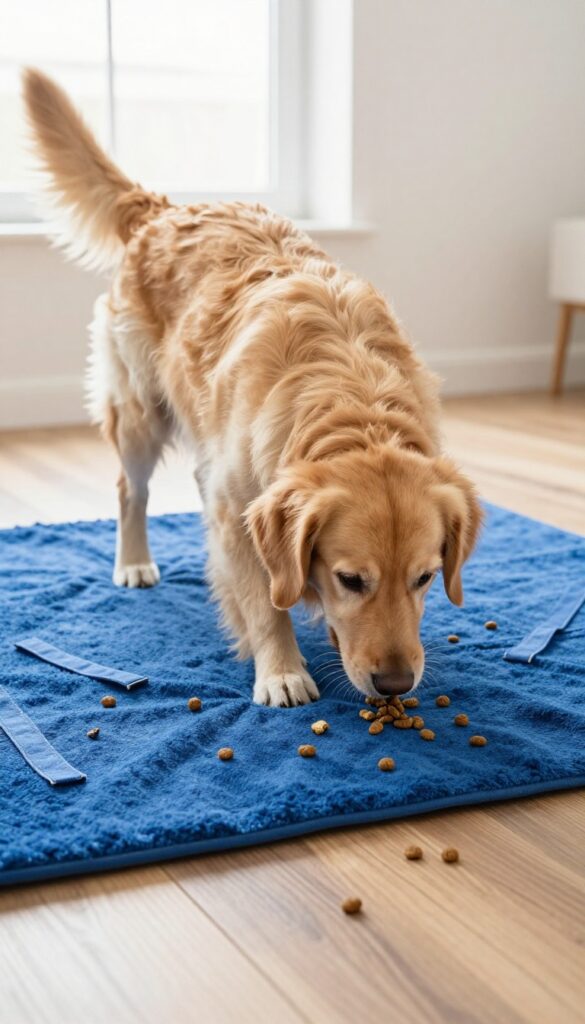
Dogs have an incredible sense of smell, and using it wears them out faster than a long walk. A snuffle mat taps into that natural talent by hiding kibble or treats in a tangle of fabric strips. It turns mealtime into a game, and dogs love the challenge of sniffing out every last piece.
Why It Works
Snuffle mats engage your dog's brain and nose at the same time, which is mentally tiring and satisfying. It mimics the foraging behavior they'd do in the wild, so it feels natural and rewarding. Plus, it slows down fast eaters, reducing bloating and improving digestion.
Best For
This is perfect for dogs who scarf down their food in seconds, shy dogs who need confidence, or high-energy breeds that need a calm activity indoors. Works great in apartments, small homes, or any space where you want a quiet, contained game.
Practical Tip
Place the mat on a non-slip surface or inside a low-sided tray to keep it from sliding around. Supervise the first few uses to make sure your dog doesn't try to chew or swallow the fleece strips. Wash the mat in a mesh laundry bag on gentle cycle, then air dry.
Budget-Friendly Option
You can easily DIY a snuffle mat with a rubber sink mat from the dollar store and fleece fabric scraps. Just cut the fleece into strips and knot them through the holes. It costs under $10 and takes about 30 minutes.
2. Frozen Kong or Lick Mat
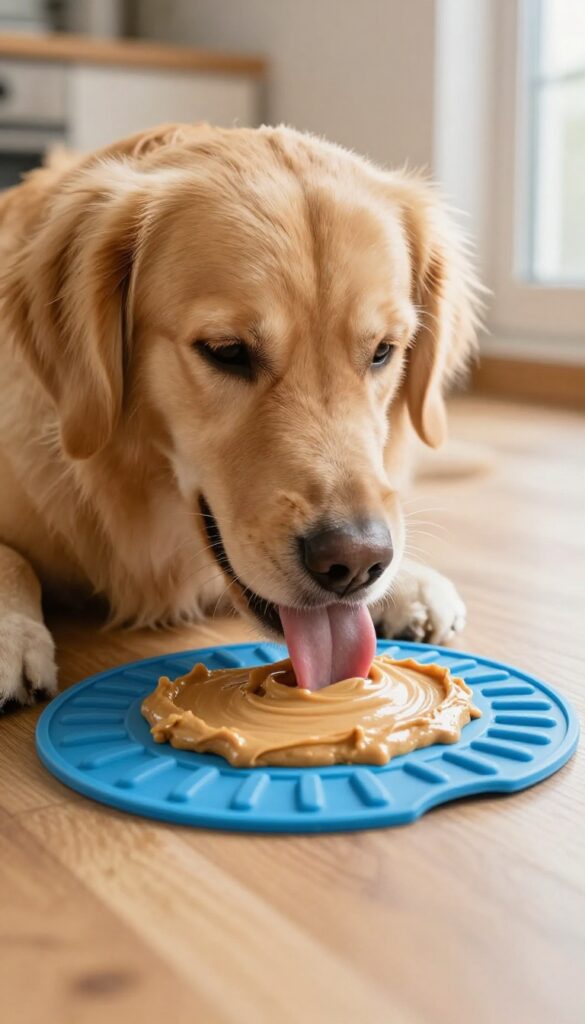
A frozen Kong or lick mat turns snack time into a mini puzzle that buys you real peace. Just spread something sticky—peanut butter, yogurt, or wet food—inside the toy or over the mat, then pop it in the freezer. Dogs love the challenge of working for their treat, and the cold texture adds novelty that keeps them engaged longer.
Why It Works
Freezing slows down eating and forces your dog to use their tongue and nose to get every last bit. This licking motion releases calming endorphins, which naturally lowers anxiety and restlessness. It's basically a built-in chill pill for your pup.
Best For
Any dog that needs to settle down during a work call, after a walk, or before bedtime. Great for high-energy breeds like border collies or anxious rescue dogs who struggle to relax on their own.
Practical Tip
Use a Kong stuffer or a small spoon to push the filling deep into the Kong's hollow center. For lick mats, spread a thin, even layer so your dog doesn't get frustrated. Always supervise the first few times to make sure they don't chew off pieces of the mat.
Budget-Friendly Option
Fill an empty, clean yogurt container with a mix of canned pumpkin and kibble, then freeze. Remove the container and give your dog the frozen block in a bowl—same effect for pennies.
3. DIY Muffin Tin Puzzle
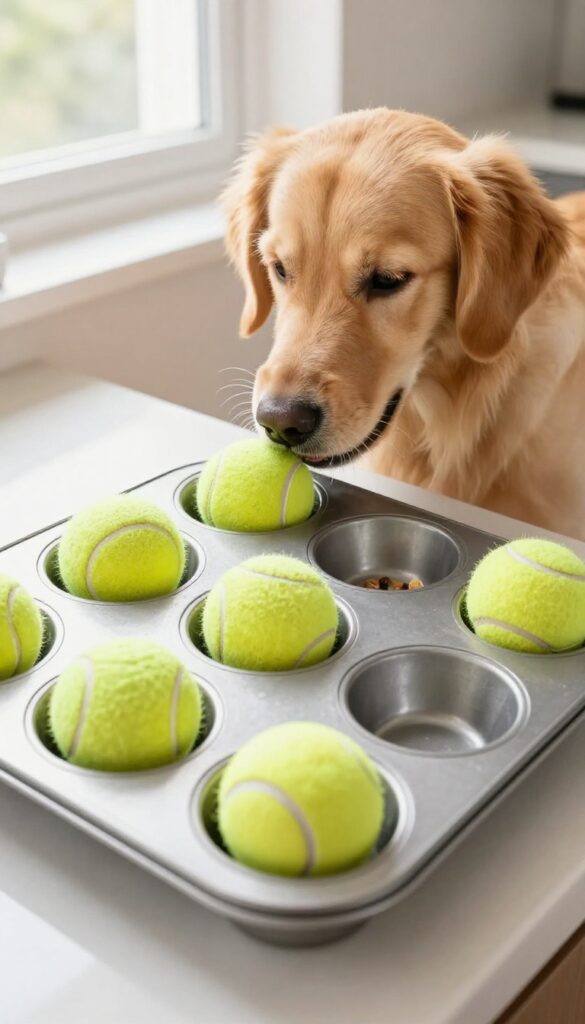
Who knew a muffin tin could double as a brain game? This easy DIY puzzle takes just seconds to set up and keeps your dog busy sniffing, pawing, and figuring things out.
The concept is simple: hide treats under tennis balls and let your dog work to uncover them. It taps into their natural foraging instincts and gives them a satisfying challenge without any fancy gadgets.
Why It Works
Dogs love using their noses and paws to solve problems. This puzzle encourages persistence and critical thinking, which can tire them out more than a physical run. Plus, the unpredictability of which cup has a treat keeps them engaged.
Best For
It's perfect for curious dogs who need a mental workout, especially in apartments or small homes where space is tight. Great for all breeds, but especially good for retrievers and terriers who love to nudge and dig.
Practical Tip
Use a standard 12-cup muffin tin and tennis balls that fit snugly over the cups. Place a few treats in randomly selected cups to keep your dog guessing. Supervise to prevent chewing on the tin, and clean it after use to avoid sticky residue.
4. Scent Work Games at Home
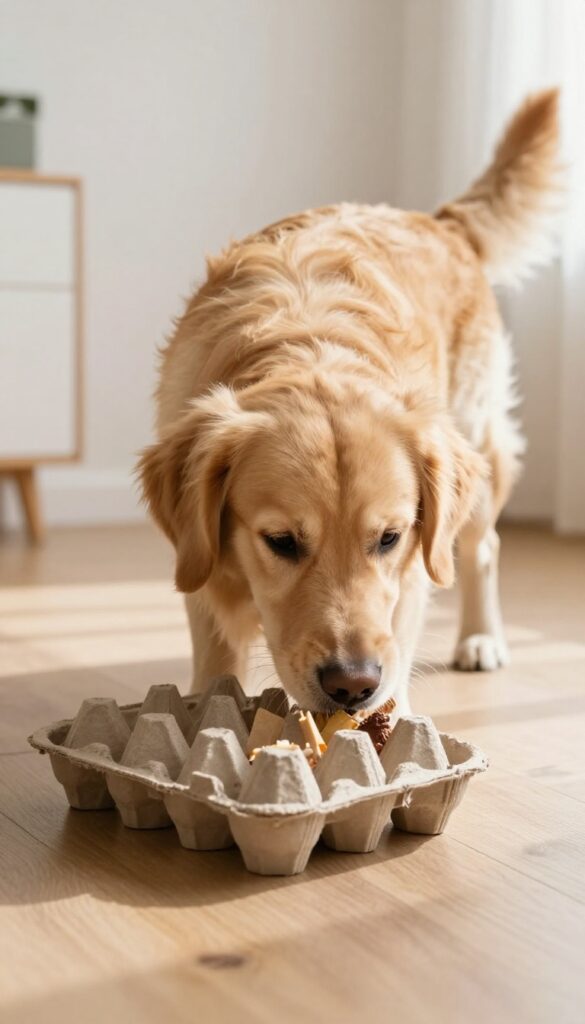
Your dog's nose is a powerful tool just waiting to be put to work. Scent work games turn everyday hiding spots into a mental workout that can tire out even the most energetic pup. It taps into their natural instincts and gives them a job to do, which feels rewarding and fun.
Why It Works
Dogs were built to sniff, and using their nose engages their brain in a way that physical exercise alone can't match. A 15-minute scent session can leave them as satisfied as an hour-long walk, making it perfect for rainy days or when you're short on time.
Best For
This game works wonders for high-energy breeds like hounds, retrievers, and shepherds, but any dog can join in. It's especially great for apartment dwellers or homes without a yard, since it requires no space and minimal setup.
Practical Tip
Start with easy hides in plain sight, like behind a couch cushion or under a blanket. Use high-value treats or a favorite toy to build excitement. As your dog gets the hang of it, make it harder by hiding items in closed boxes or under piles of laundry.
Always supervise to prevent chewing on hidden objects.
Budget-Friendly Option
No need for fancy scent kits. Use a cardboard egg carton or an old muffin tin with treats tucked inside—cover them with tennis balls for an added challenge. You can also repurpose empty toilet paper rolls as treat holders.
5. Tug-of-War with Rules
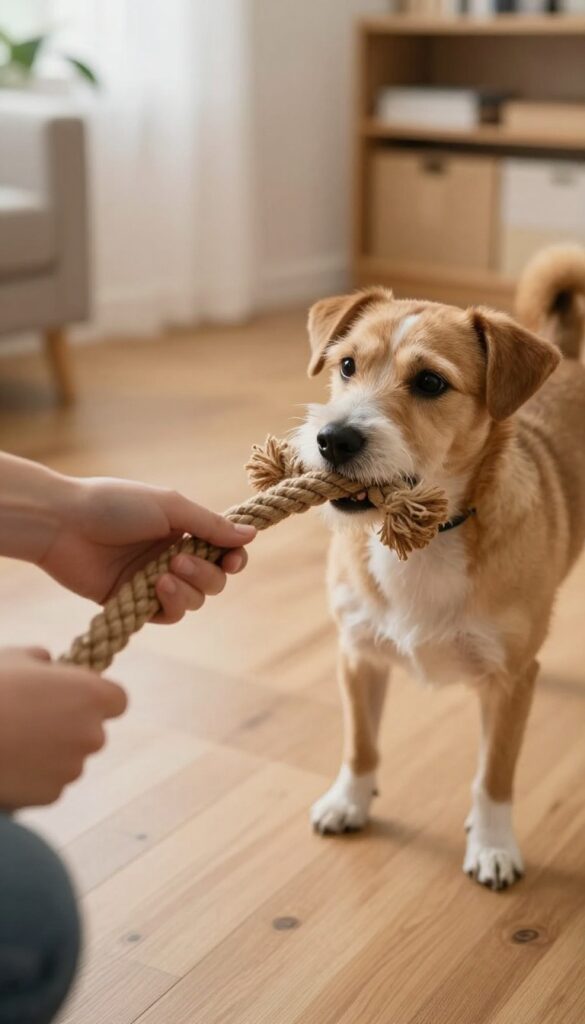
Tug-of-war gets a bad rap, but when played with a few simple rules, it's actually a fantastic structured game. It lets your dog channel their natural drive to pull and wrestle in a controlled way. The key is teaching a solid 'drop it' cue and taking short breaks to keep the excitement from boiling over.
Why It Works
Tug-of-war is a high-intensity game that burns mental and physical energy fast. The back-and-forth pulling satisfies a dog's instinct to tug, while the rules (drop it, wait for a cue) add a layer of impulse control. This combination tires out even the most energetic dogs in just a few minutes.
Best For
This game is perfect for high-energy breeds like terriers, herding dogs, and working breeds that love a good challenge. It also works well for dogs who struggle with impulse control or need a structured outlet for their prey drive. Apartment dwellers will appreciate that it requires very little space.
Practical Tip
Use a durable rope toy with knots or a rubber tug with a handle. Always start with your dog in a sit or down, and only begin tugging when you give a cue like 'take it.' Keep sessions short—two to three minutes—and take breaks to ask for a 'drop it' before resuming. This prevents over-arousal and keeps the game safe for both of you.
Budget-Friendly Option
Don't have a tug toy? Braid an old t-shirt into a rope. Cut three strips, braid them tightly, and tie knots at the ends.
It's free, washable, and your dog won't know the difference.
6. Treat-Dispensing Puzzle Toys
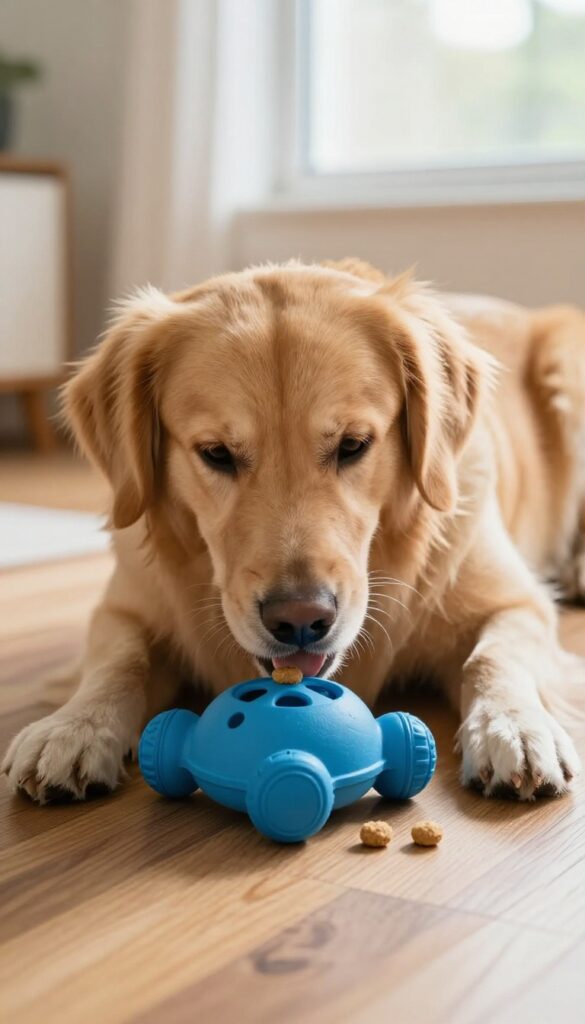
Some toys do more than just squeak. Puzzle toys that release treats as your dog rolls, slides, or flips them turn snack time into a rewarding challenge. They're perfect for keeping a bored pup busy while you work or relax.
Store-bought versions come in various difficulty levels, but you can also make simple DIY ones with items around the house.
Why It Works
These toys tap into your dog's natural problem-solving instincts. Instead of just eating from a bowl, they have to figure out how to get the treats out. This mental effort tires them out just as much as physical exercise, reducing destructive behaviors caused by boredom.
Best For
Ideal for independent dogs who can focus on a task alone. Great for owners who need to keep their pup occupied during work hours or while doing chores. Works well for most breeds, but especially for clever dogs like border collies, poodles, and terriers that need extra mental stimulation.
Practical Tip
Start with an easy setting if your dog is new to puzzles. If they get frustrated, show them how it works a couple of times. Always supervise the first few uses to ensure they don't chew off pieces.
Clean the toy regularly to prevent treat residue buildup.
Budget-Friendly Option
No puzzle toy handy? Try a muffin tin: place a few treats in some cups, cover each with a tennis ball, and let your dog figure out how to remove the balls to get the treats.
7. Bubble Chase for Indoor Fun
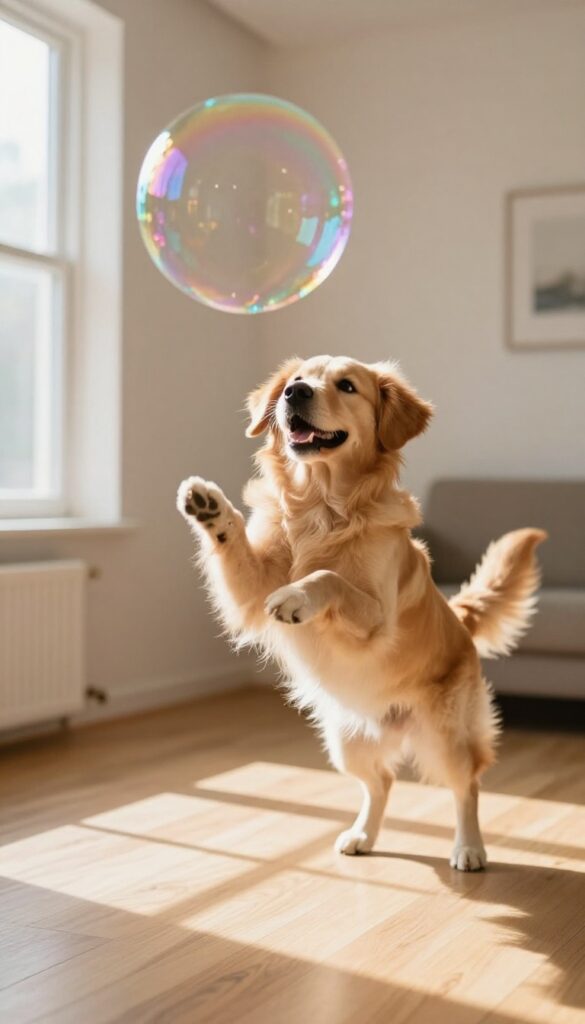
Watch your dog's eyes light up as you blow a stream of bubbles across the room. Most dogs can't resist the urge to chase and pop them, turning a simple bubble session into an exciting game of fetch. It's a fantastic way to burn off energy without needing much space or equipment.
Dog-safe bubbles are made with natural ingredients and come in scents like peanut butter or bacon that dogs find irresistible. The unpredictability of where each bubble will float keeps your pup engaged and on their toes.
Why It Works
The chase-and-pop action satisfies your dog's natural prey drive while providing light aerobic exercise. The unpredictable movement of bubbles keeps their mind focused, making it a great mental workout too. Plus, the popping sound adds an extra layer of fun that many dogs find exhilarating.
Best For
This activity is ideal for high-energy dogs who love to jump and pounce, especially breeds like terriers, herding dogs, and retrievers. It's also perfect for apartment dwellers or anyone needing a quick indoor energy outlet during bad weather.
Practical Tip
Clear a safe area free of breakables and sharp corners before starting. Use a bubble machine or blow bubbles at different heights to vary the challenge. Keep sessions short (5–10 minutes) to avoid overexcitement, and always supervise to prevent your dog from eating the bottle or nozzle.
Budget-Friendly Option
Skip the store-bought bubbles and make your own with a simple mix of water, a drop of dish soap, and a pinch of sugar. For scent, add a tiny amount of unsalted peanut butter or chicken broth. Just ensure all ingredients are dog-safe and non-toxic.
8. DIY Cardboard Box Destruction
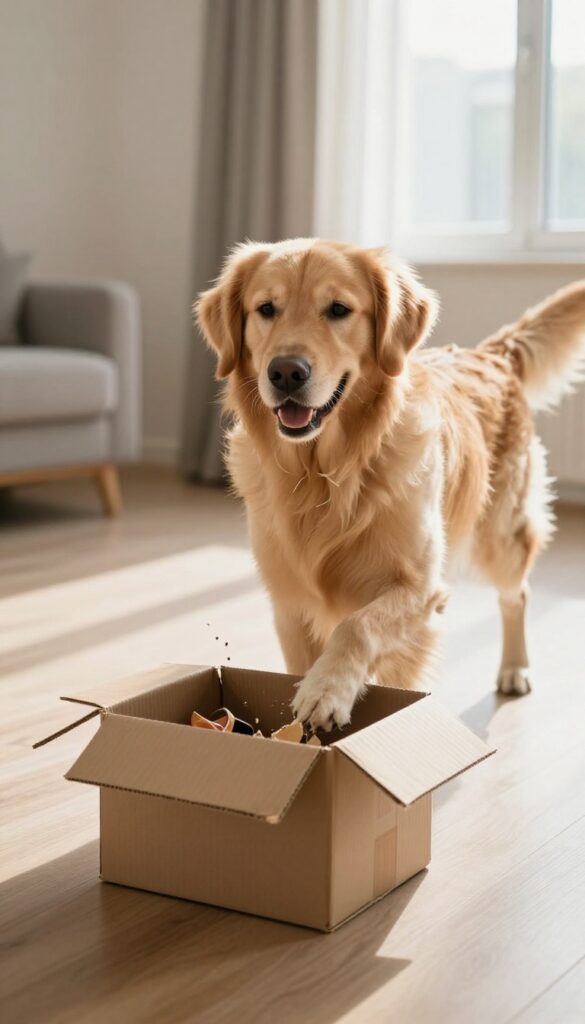
Let your dog unleash their inner shredder with a simple cardboard box. Hide treats and crumpled paper inside, then watch them tear into it with glee. It’s a safe outlet for that natural urge to rip and destroy, keeping them busy for minutes on end.
Why It Works
Shredding is a highly rewarding activity for many dogs, providing both mental and physical stimulation. The act of tearing cardboard and searching for hidden treats engages their problem-solving skills and satisfies their instinct to forage.
Best For
This idea is perfect for dogs who love to shred paper, cardboard, or toys. It works well in apartments or homes where you can easily contain the mess, and it’s especially great for high-energy breeds that need a constructive outlet.
Practical Tip
Use a clean, untreated cardboard box (remove tape and staples) and fill it with crumpled newspaper or packing paper. Supervise your dog at all times to prevent them from eating large pieces, and clean up shredded bits promptly to avoid ingestion.
Budget-Friendly Option
No box? No problem. Use a paper grocery bag or a cardboard tube from paper towels.
You can also reuse shipping boxes from online orders—just make sure they’re free of plastic tape or labels.
9. Training New Tricks
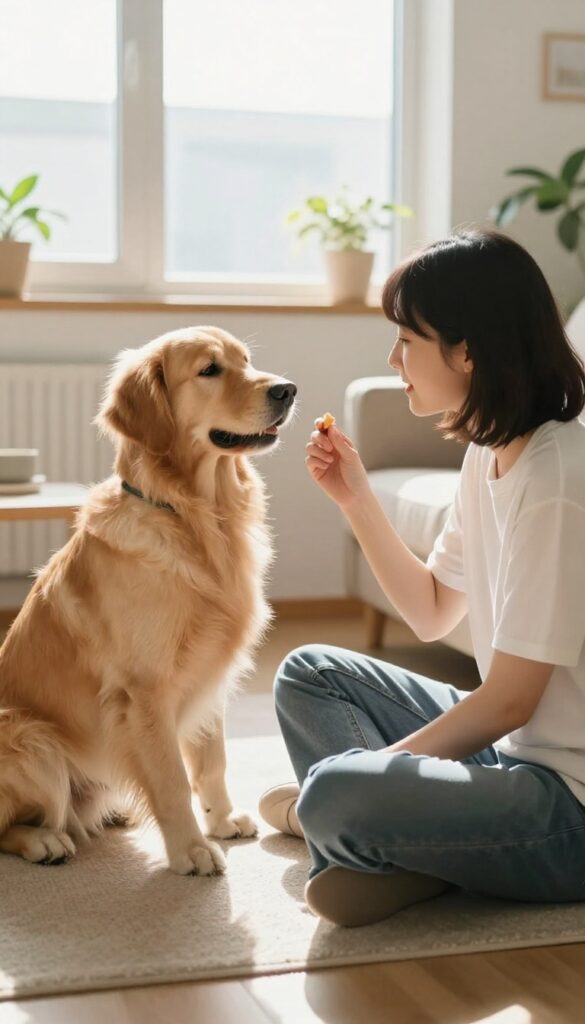
Teaching your dog a new trick is like giving them a puzzle to solve. It strengthens your bond and gives them a job to do. Plus, short 5-minute sessions keep it fun and frustration-free for both of you.
Why It Works
Mental work tires dogs out just as much as a long walk. Learning new behaviors requires focus, memory, and problem-solving, which engages their brain and releases calming endorphins.
Best For
This works for any dog, but it's especially great for high-energy breeds or smart pups that need a mental challenge. It's also perfect for rainy days or when you're short on time.
Practical Tip
Keep sessions short and end on a positive note. Use high-value treats like tiny pieces of cheese or chicken. Practice in a quiet space with few distractions, and always reward effort, not just perfection.
Budget-Friendly Option
No treats? Use your dog's kibble or a favorite toy as a reward. You can also use a clicker app on your phone instead of buying a clicker.
10. Flirt Pole for Predatory Drive
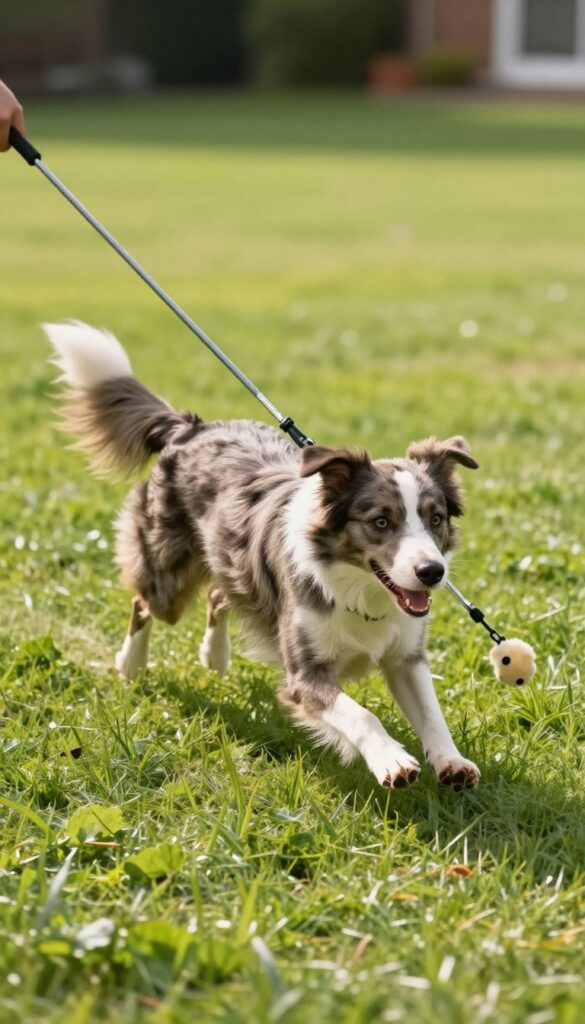
A flirt pole is basically a giant cat toy for dogs—a long stick with a toy attached to a rope. You drag it around the yard or living room, and your dog chases it like prey. It taps into that deep predatory instinct in a controlled, wear-them-out kind of way.
Owners love it because ten minutes of chasing can tire a dog out faster than an hour walk.
Why It Works
The erratic, fast movement triggers a dog's natural chase-and-catch drive. It's a full-body workout that engages their mind as they try to anticipate the toy's direction. The stop-start action also builds impulse control when you teach them to wait before chasing.
Best For
High-energy breeds like border collies, terriers, and huskies who need intense exercise in short bursts. It's also perfect for apartment dwellers with limited space—you can use it in a hallway or small yard.
Practical Tip
Always let your dog 'catch' the toy every few rounds to keep them satisfied. Use a soft toy on the end to avoid injury, and avoid overhead swings that could whip the dog in the face. Store the pole out of reach to prevent chewing when unsupervised.
Budget-Friendly Option
Make your own with a sturdy stick or PVC pipe, a 4-foot rope, and a fleece tug toy tied to the end. Total cost under $5.
11. Obstacle Course Indoors
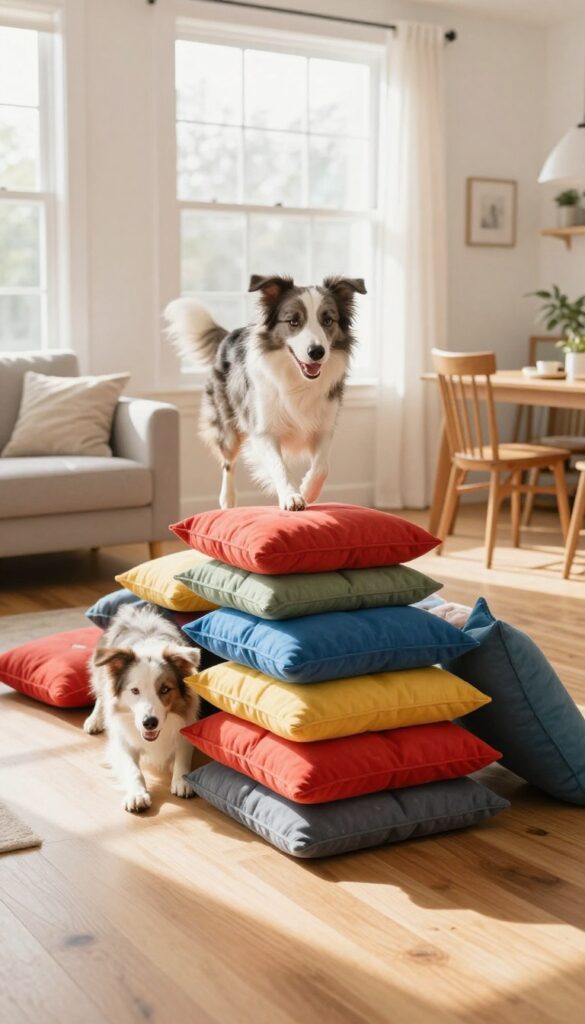
Transform your living room into a mini adventure zone. An indoor obstacle course uses pillows, chairs, and tunnels to create a fun challenge. It's a fantastic way to burn energy and strengthen your bond.
Why It Works
Dogs love navigating new paths and solving movement puzzles. This activity builds confidence, improves coordination, and provides both mental and physical exercise without needing outdoor space.
Best For
Perfect for high-energy breeds like Border Collies or Jack Russell Terriers, but any dog can enjoy it. Great for rainy days, small apartments, or when you want a structured play session.
Practical Tip
Use couch cushions for jumps, dining chairs for weaving poles, and a blanket over a table for a tunnel. Keep courses short and reward with treats. Always supervise to prevent injury.
Budget-Friendly Option
No need for store-bought agility gear. Repurpose cardboard boxes as tunnels, broomsticks as jumps, and towels as tunnels. Creativity is key.
12. Frozen Treats in a Bowl
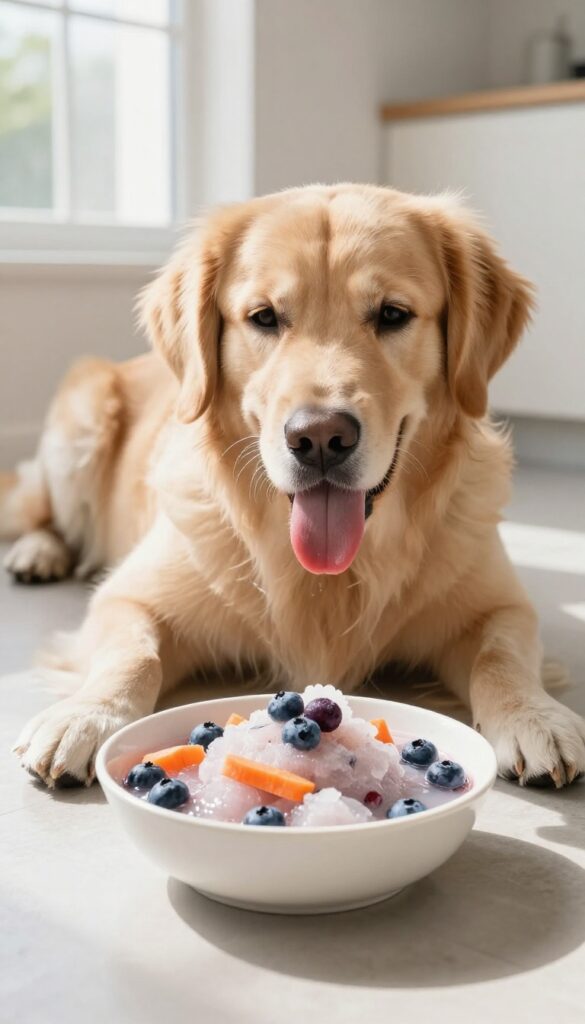
When the temperature rises or your dog needs a calm activity, frozen treats in a bowl are a simple lifesaver. Layer dog-safe fruits, veggies, and broth in a sturdy bowl, then freeze until solid. Your dog will spend a good chunk of time licking and chewing to reach the goodies, which keeps them occupied and helps cool them down.
Why It Works
Licking and chewing release calming endorphins in dogs, making this a great self-soothing activity. The frozen texture also soothes sore gums for teething puppies and provides hydration on hot days. Plus, the challenge of working for their food engages their brain and slows down fast eaters.
Best For
This idea is perfect for teething puppies, dogs who gulp their food too quickly, or any pup that needs a quiet, solo activity. It also works well for hot days or after a walk to help your dog cool off. Owners in apartments or without yards will appreciate how mess-free it can be if served on a towel or mat.
Practical Tip
Use a wide, shallow bowl so your dog can easily reach the layers. Freeze in stages: pour a thin layer of broth, add a few blueberries or carrot slices, freeze, then repeat. This prevents everything from floating to the top.
Always supervise to avoid choking on large pieces, and serve on a towel or silicone mat to protect floors.
Budget-Friendly Option
Skip fancy molds and use an old muffin tin or silicone cupcake liners for single-serving frozen treats. You can also repurpose a small plastic container. For the fillings, use leftover cooked veggies (no seasoning) or overripe fruit you'd otherwise toss.
FAQ
How long should enrichment activities last?
Most activities last 10-30 minutes. Watch your dog's interest—stop before they get frustrated or bored.
Can I use these ideas for puppies?
Yes, but supervise closely and adjust difficulty. Puppies have shorter attention spans and may need simpler puzzles.
Are there any safety concerns with DIY puzzles?
Always supervise to prevent ingestion of non-food items. Avoid small parts that could be swallowed.
How often should I rotate enrichment activities?
Rotate every few days to keep things novel. Having 3-4 favorites in rotation works well.
What if my dog loses interest quickly?
Try increasing the challenge or switching to a different type of activity. Some dogs prefer scent games over puzzles.
Conclusion
Start with one or two ideas that fit your dog's personality and your home setup. You'll quickly see which activities spark the most engagement and tail wags.
The goal isn't perfection—it's giving your pup a reason to sniff, solve, and explore every day. A little effort goes a long way toward a happier, more relaxed dog and a calmer home for everyone.

I’m Pallab Kishore, the owner of Little Pets Realm — an animal lover and pet care enthusiast sharing easy tips, healthy recipes, and honest advice to help every small pet live a happy, healthy, tail-wagging life.