Last updated on August 19th, 2026 at 04:19 pm
Warm weather means more playtime outside, but guinea pigs need protection from predators, heat, and escape routes. These 11 outdoor cage ideas balance fresh air with solid security, from quick pop-up playpens to permanent backyard setups.
You'll find budget-friendly DIY options and ready-made solutions that keep your piggies safe while they enjoy the sunshine. Shade and ventilation are non-negotiable for outdoor enclosures, so each design includes built-in cover or cooling features.
Whether you're working with a small patio or a large yard, there's a practical setup here that matches your space and skill level. No complicated builds—just real-world ideas that work.
1. Portable Mesh Playpen with Shade Cover
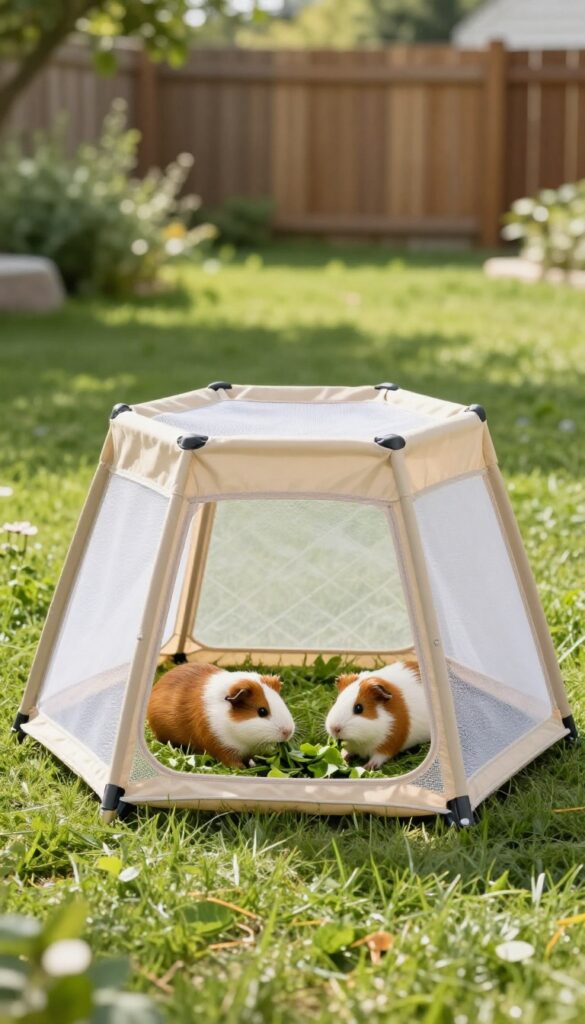
A portable mesh playpen is one of the easiest ways to give your guinea pigs outdoor time without a permanent setup. You can move it around the yard to follow the shade or find the best grass. Adding a breathable shade cover keeps the sun off while letting fresh air circulate.
Look for a foldable playpen made from sturdy mesh that's tall enough to prevent escapes. The mesh should have small openings so curious noses can't squeeze through. Most pop-up pens come with ground stakes to keep them anchored, which is essential on windy days.
Pair it with a lightweight shade cloth or a fitted canopy that blocks UV rays but doesn't trap heat. This setup is ideal for supervised play sessions and can be packed away in minutes.
Why Mesh Works Best
Mesh panels provide visibility for you and your guinea pigs while keeping out small predators like birds or cats. The open weave also promotes airflow, which is critical on warm days. Avoid solid-sided pens that can turn into ovens.
Shade Cloth Tips
Choose a shade cloth rated for 70-90% UV blockage. Drape it over the top and secure it with clips or bungee cords. Make sure there's a gap for air to escape so the pen doesn't get stuffy.
Portability Perks
These playpens fold flat for storage and weigh only a few pounds. You can take them to the park, the beach, or just rotate spots in your backyard to keep the grass healthy.
2. Repurposed Kiddie Pool with Secure Lid
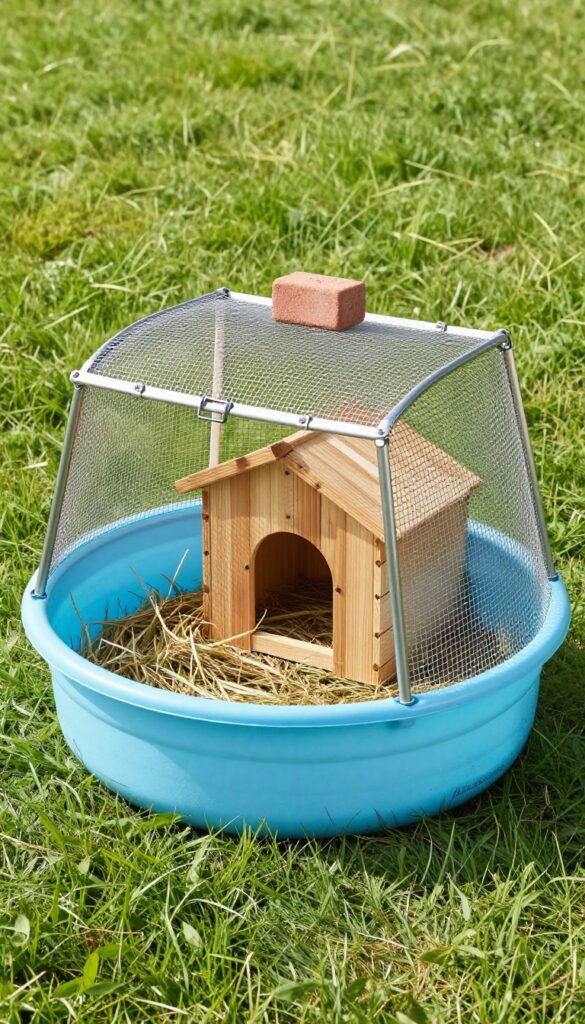
Plastic kiddie pools are cheap, easy to find, and just the right size for a guinea pig playpen. Their low walls let in plenty of sunlight and fresh air, but they also leave your piggies exposed to predators. The fix is simple: add a sturdy wire mesh lid that locks in place.
This setup gives your guinea pigs a safe, grassy space to explore without you worrying about hawks or raccoons.
An old kiddie pool becomes a spacious outdoor enclosure with minimal effort. The key is securing the top so nothing can get in—or out. Here's how to make it work.
Choosing The Right Pool
Look for a hard plastic pool at least 3 feet in diameter—the bigger, the better. Avoid inflatable ones, as guinea pigs can pop them with their nails. A solid pool with a smooth interior is easy to clean and won't trap moisture.
Building The Lid
Cut a piece of ½-inch hardware cloth or chicken wire slightly larger than the pool's opening. Attach it to a wooden frame or use zip ties to secure it directly to the pool's rim. Make sure the lid is tight and has no gaps.
Add a latch or heavy bricks on top to keep it from blowing away.
Setting Up For Comfort
Place the pool on grass or a soft surface so your piggies can nibble and dig. Add a hidey house, a water bottle, and a shade cloth over part of the lid to block direct sun. Move the pool to a fresh patch of grass every few days to keep it clean and interesting.
3. C&C Grid Cage on a Patio
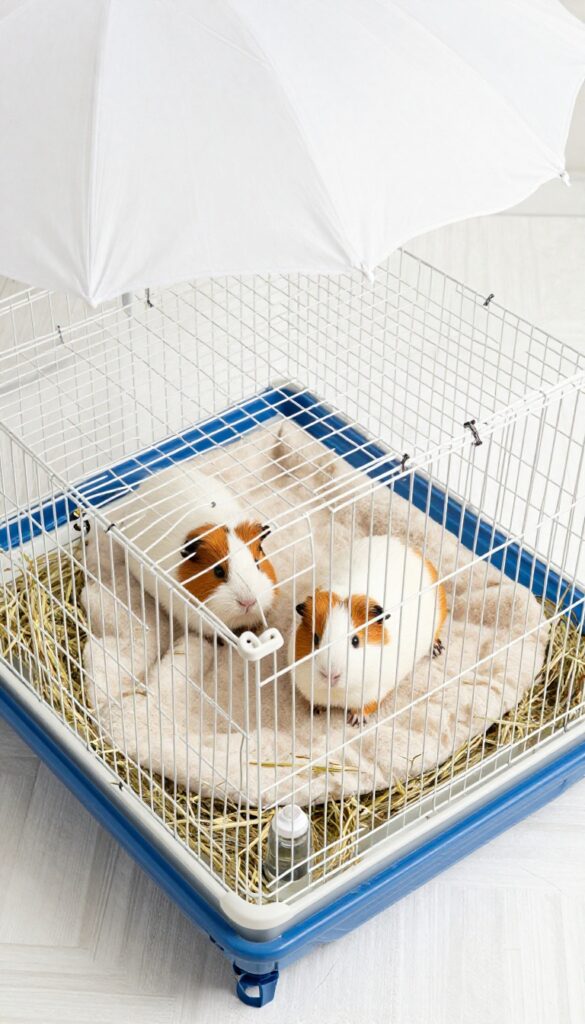
Standard C&C grids aren't just for indoor setups. You can easily assemble them into a large, secure outdoor pen on a flat patio. The open-grid design allows plenty of airflow, which is crucial on warm days.
Lay down a tarp underneath for quick cleanup, and add a canopy or shade cloth on top to keep the sun off your piggies.
C&C grids are modular, so you can customize the size to fit your patio perfectly. Use zip ties to secure the panels together and anchor the cage with heavy pots or bricks to prevent tipping. The tarp base protects your patio and makes sweeping up hay and poop a breeze.
For shade, a simple beach umbrella or a PVC frame with shade cloth works great.
Assembly Tips
Start by laying down a large tarp, then build the grid walls on top. Use cable ties at every joint for stability. If your patio is windy, add a few small sandbags or bricks along the bottom edge.
Shade And Cooling
Guinea pigs overheat fast, so shade is non-negotiable. Attach a shade sail or a fitted canopy over the top. You can also clip on a small fan for extra airflow on still days.
Cleaning And Maintenance
The tarp makes cleanup simple: just lift it up and dump the debris. Hose down the grids occasionally to keep them fresh. Store the cage indoors during bad weather to extend its life.
4. Wooden Hutch with Ramp and Run
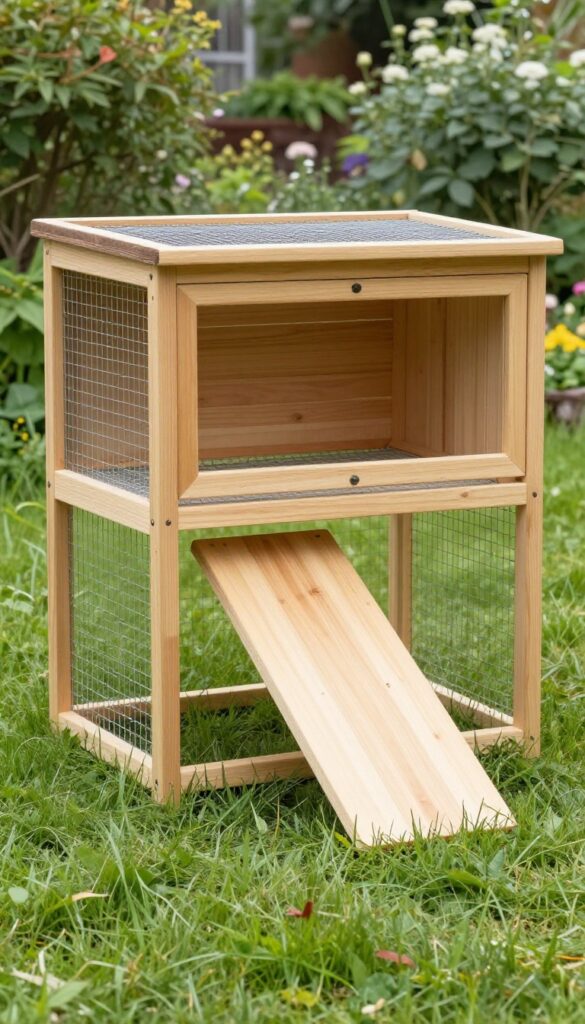
A two-level wooden hutch gives guinea pigs a shaded hideout upstairs and a grassy run below. Choose untreated wood and seal it with pet-safe waterproofing to keep the structure safe and durable. This setup works great for a permanent outdoor home that blends into the garden.
The upper level provides a dry, shaded retreat where piggies can nap or escape the sun. The ramp should be gentle with grip strips so even older or clumsy guinea pigs can climb safely. The lower run sits directly on grass, giving them natural foraging fun.
Make sure the run has a secure lid to keep out hawks, raccoons, and other predators.
Why Two Levels Work
Guinea pigs feel safer with a covered space above and open space below. The hutch offers protection from rain and direct sun, while the run lets them graze and stretch. This design also saves yard space by stacking the living area.
Wood And Safety Tips
Use untreated pine or fir—avoid cedar and pressure-treated lumber, which can be toxic. Seal all exterior wood with a pet-safe, non-toxic waterproofing stain. Check for splinters or sharp edges regularly.
Grass Management
Move the run to a fresh patch of grass every few days to prevent mud and overgrazing. If you keep it in one spot, lay down a wire mesh base to stop digging, then cover with hay or sod for comfort.
5. DIY PVC Pipe Frame with Netting
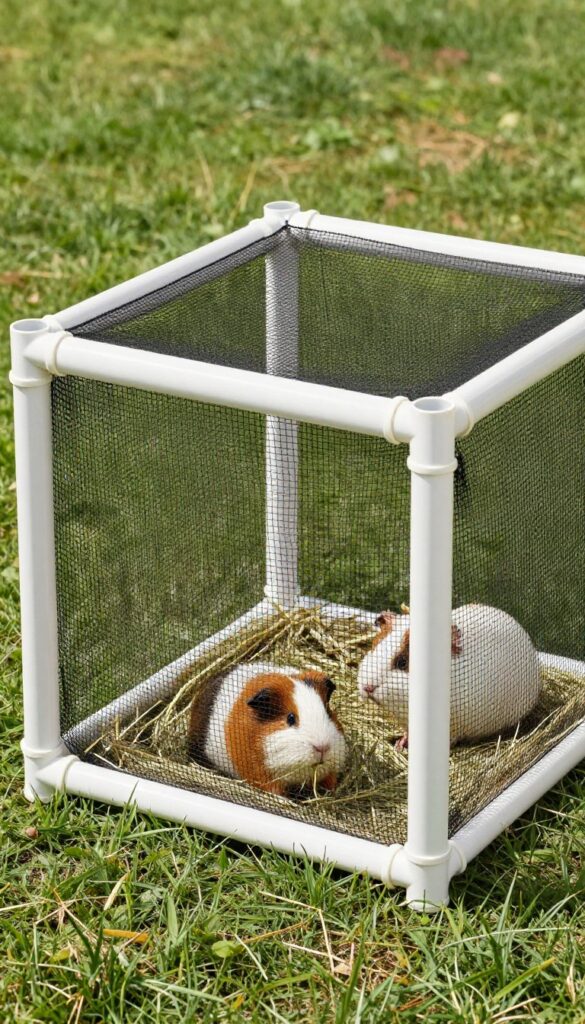
PVC pipes are cheap, lightweight, and super easy to work with. You can build a custom-sized frame in under an hour, then cover it with bird netting or hardware cloth for a safe, airy enclosure. The best part?
It breaks down flat for storage when not in use.
Start by cutting PVC pipes to your desired dimensions—4 feet by 6 feet is a good size for a small herd. Use elbow and T-joints to create a simple box frame. Drape bird netting over the top and sides, securing it with zip ties or binder clips.
For extra durability, swap netting for hardware cloth, which also keeps out tiny predators. Add a tarp or shade cloth over part of the top for sun protection.
Why It Works
PVC doesn't rust or rot, so it holds up well outdoors. The open mesh provides excellent ventilation—critical on hot days. And since the frame is modular, you can easily expand or reconfigure it.
Assembly Tips
Use schedule 40 PVC for sturdiness. Pre-drill small holes through the joints and add a dab of PVC cement if you want a permanent build. For a no-tools version, use push-fit connectors and stake the frame into the ground with tent pegs.
Safety Check
Make sure the netting holes are small enough that guinea pigs can't poke their heads through—½ inch or smaller. Check for sharp edges on the hardware cloth and cover them with duct tape or pipe insulation.
6. Elevated Rabbit Hutch on Legs
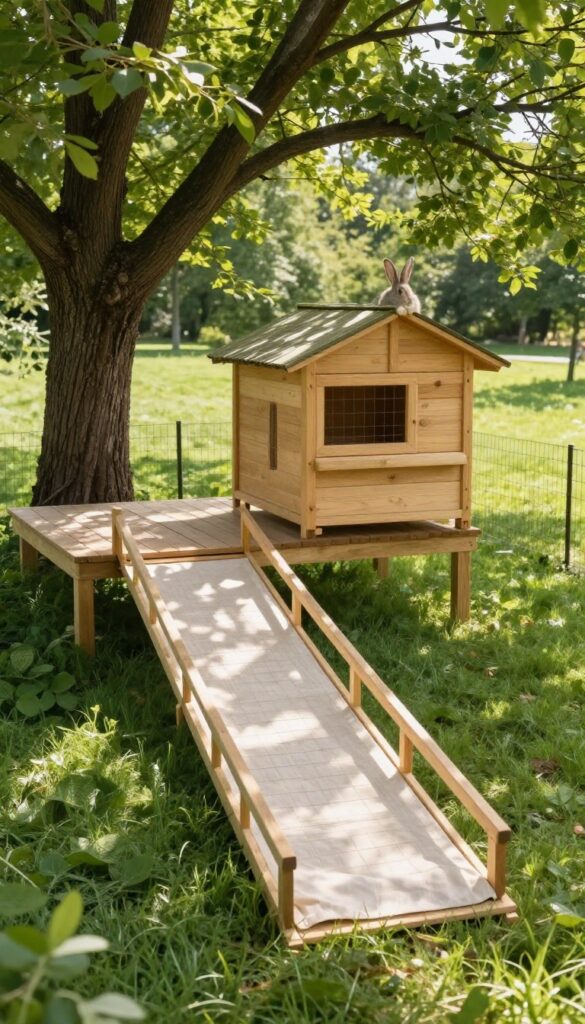
An elevated hutch keeps guinea pigs off damp ground and away from small predators. Place it on a shaded deck or under a tree, and attach a ramp to a fenced run. This setup gives them a cozy indoor-outdoor experience without the risks of being on the soil.
This design works especially well if you already have a rabbit hutch or can find one secondhand. The height keeps the floor dry and cool, while the enclosed top provides shade and security. Add a ramp leading to a portable playpen or a DIY fenced area so they can stretch their legs safely.
Why Elevated Works
Guinea pigs are sensitive to dampness and heat. Raising the hutch off the ground improves airflow underneath and prevents urine from soaking into the grass. It also makes cleaning easier since you can sweep or hose off the area below.
Ramp And Run Setup
Attach a sturdy, gently sloped ramp with side rails to prevent falls. The run can be a simple fenced enclosure made from wire grids or a foldable pet pen. Make sure the ramp is non-slip and the run has a shaded cover.
Placement Tips
Position the hutch in a spot that gets morning sun but afternoon shade, like under a tree or a patio awning. Avoid direct all-day sun, as the hutch can heat up quickly. Check for any gaps where predators could squeeze under.
7. Dog Exercise Pen with Ground Stakes
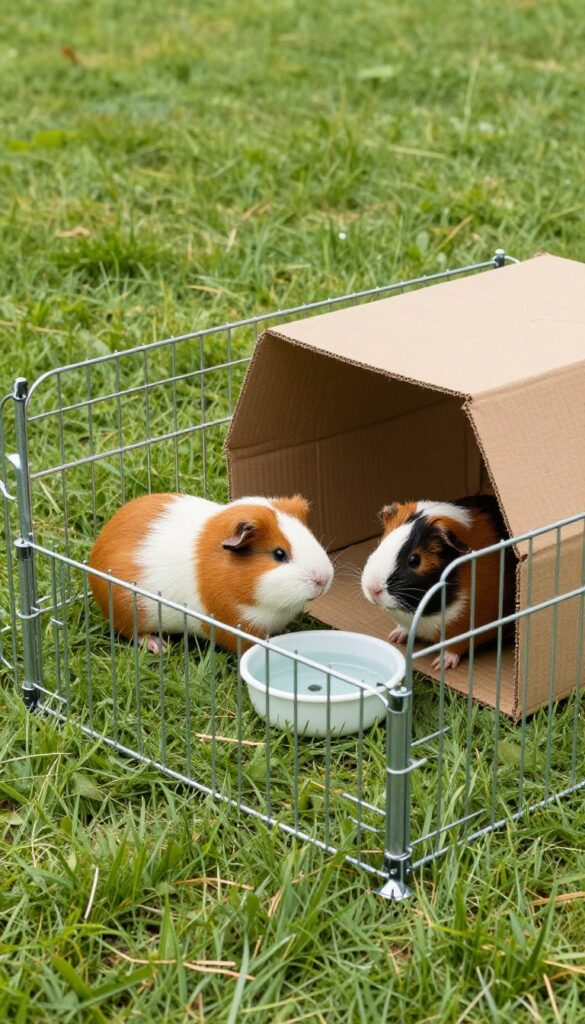
A metal dog exercise pen is one of the easiest ways to create a secure outdoor enclosure for your guinea pigs. These pens are designed to be sturdy and portable, and when you add ground stakes, they become almost impossible for predators to tip over. The metal bars provide good ventilation and visibility, while the open top lets you easily reach in for feeding or playtime.
To make the pen escape-proof, line the bottom with a layer of wire mesh or hardware cloth. Guinea pigs love to dig, and without this barrier, they could tunnel out in minutes. You can either attach the mesh directly to the pen with zip ties or lay it flat on the ground and place the pen on top.
A sunshade or a lightweight cover over part of the pen gives your piggies a shaded retreat on hot days.
Setting Up For Security
Choose a pen with vertical bars and small gaps (no wider than 1 inch) to prevent escape. Drive the ground stakes deep into the soil at each panel joint. If your pen has a door, secure it with a carabiner or padlock.
For extra protection against diggers, bury the wire mesh a few inches below the surface around the perimeter.
Adding Shade And Comfort
Guinea pigs overheat easily, so shade is a must. Clip a UV-resistant tarp or a shade cloth to the top of the pen using binder clips. You can also drape a lightweight blanket over one corner to create a dark, cozy hideout.
Place a shallow water dish or a water bottle in the shaded area, and add a few cardboard boxes or tunnels for enrichment.
8. Greenhouse Cold Frame Conversion
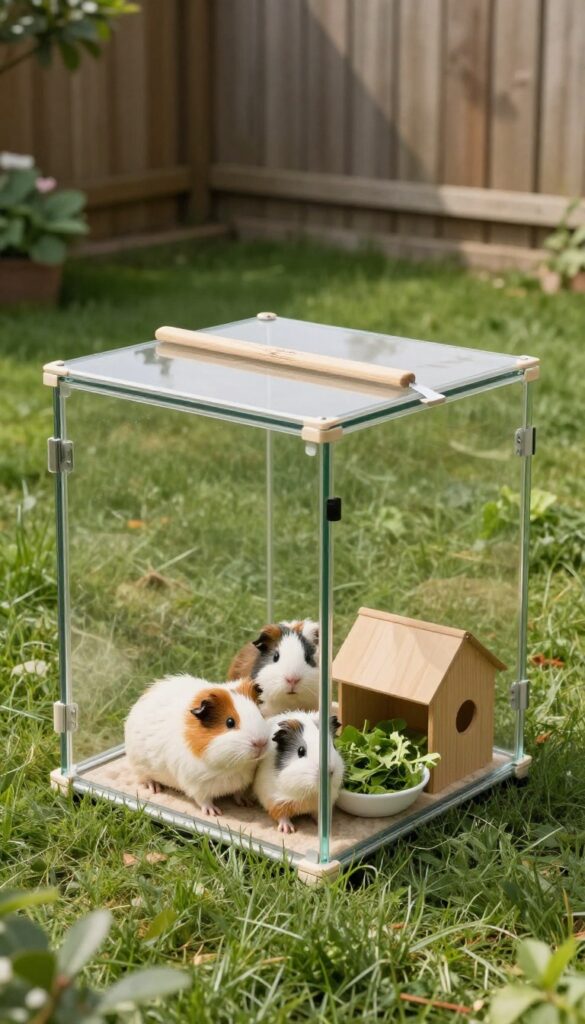
If you have an old cold frame or a mini greenhouse gathering dust in the shed, it can become a cozy sunroom for your guinea pigs. These structures are built to trap warmth, so you'll need to make a few adjustments to keep the space safe and comfortable on warm days. With some shade and airflow, your piggies get a protected outdoor spot with a view.
Repurposing a cold frame or small greenhouse gives guinea pigs a clear-walled enclosure where they can enjoy sunshine without direct exposure. The key is preventing overheating—open any vents or prop the lid slightly to allow hot air to escape. Place the structure in partial shade, like under a tree or beside a fence, so it doesn't turn into an oven.
Add a hidey house inside so they can retreat from light if needed.
Ventilation And Temperature Control
Cold frames are designed to retain heat, so ventilation is critical. Open all vents fully and consider adding a small battery-powered fan for airflow on still days. Monitor the temperature inside with a thermometer—if it climbs above 80°F, move the setup to a shadier spot or add a shade cloth over the top.
Never leave piggies in direct sun for extended periods.
Predator-proofing The Base
Many cold frames have gaps at the bottom or sit directly on the ground. Seal any openings with hardware cloth or a wooden frame to prevent digging predators like raccoons or snakes from getting in. If the structure is lightweight, weigh it down with bricks or stakes so it doesn't tip over in wind.
Comfort Add-ons
Line the floor with fleece or a thick layer of hay for soft footing. Add a shallow water dish or a water bottle attached to the frame. You can also place a small ceramic tile inside—it stays cool and gives piggies a place to chill on hot days.
Keep the space simple so it's easy to clean and move if needed.
9. Fenced Garden Section with Buried Wire
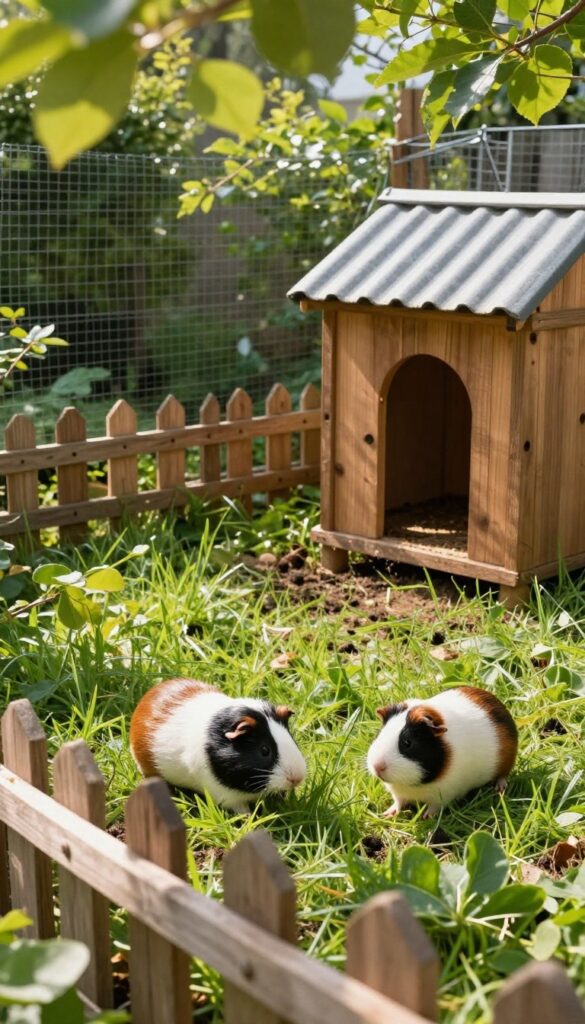
Turning a corner of your garden into a dedicated guinea pig zone gives them plenty of room to roam while you keep an eye on them. The key is to use hardware cloth—not chicken wire—and bury it at least a foot deep to stop diggers from tunneling out. This setup works best in a spot that gets morning sun and afternoon shade, with a sturdy wooden frame or metal posts to hold the fencing taut.
This permanent enclosure feels like a natural extension of your garden. Your guinea pigs get fresh grass, soil to explore, and a safe space to popcorn around. Just make sure the hardware cloth has small enough holes (½ inch or less) to keep out snakes and weasels.
Attach the fencing to the posts with zip ties or staples, and create a simple gate for easy access.
Buried Wire Details
Dig a trench 12 inches deep around the perimeter, then lay the hardware cloth so it extends from the ground up to at least 2 feet high. Bend the bottom edge outward in an L-shape to make it even harder for predators to dig in. Backfill the trench and tamp down the soil firmly.
Shade And Shelter
Add a wooden hidey house or a covered corner with a roof of corrugated plastic. A shade cloth over part of the enclosure gives relief on hot days. Place water bottles in the shade and check them often—they can heat up fast in direct sun.
Maintenance Tips
Mow the grass inside regularly or let your guinea pigs graze it down. Move the enclosure to a fresh patch of grass every few weeks to prevent mud and waste buildup. Check the buried wire edges after heavy rain to make sure no gaps have appeared.
10. Pop-Up Mesh Catio for Balconies
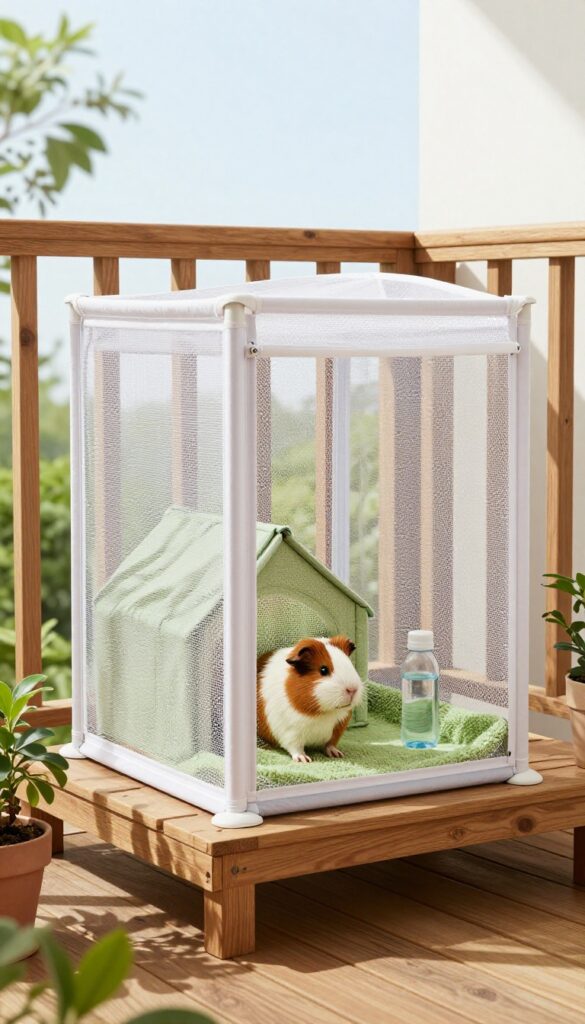
Balcony dwellers, this one's for you. A pop-up mesh catio designed for cats works just as well for guinea pigs. It's a lightweight, collapsible enclosure that sets up in minutes and gives your piggies a safe outdoor experience without taking up permanent space.
The mesh walls offer excellent airflow and visibility, so your pets can enjoy the breeze while you keep an eye on them.
These catios typically come with a zippered door and a waterproof floor, making them easy to clean and secure against escapes. They fold flat for storage when not in use, which is perfect for small balconies. Just place a few hideys and a water bottle inside, and your guinea pigs have a cozy outdoor retreat.
Why It Works For Guinea Pigs
The mesh is fine enough to keep out insects and small predators, yet breathable to prevent overheating. The poles create a stable frame that won't collapse, and the zippered closure ensures no one wanders off. Plus, the transparent walls give your piggies a panoramic view of the outdoors, which they love.
Setup Tips For Balcony Use
Place the catio in a shaded corner of your balcony to avoid direct sun exposure. You can add a small tarp or towel over part of the top for extra shade. Make sure the floor is level and secure, and weigh down the corners with potted plants or bricks if it's windy.
Where To Find One
Search for "pop-up mesh catio" or "collapsible cat enclosure" online. Many are affordable and come in various sizes. Look for one with a removable, washable floor and sturdy zippers.
Avoid models with large gaps that a guinea pig could squeeze through.
11. Under-Deck Enclosure with Cool Flooring
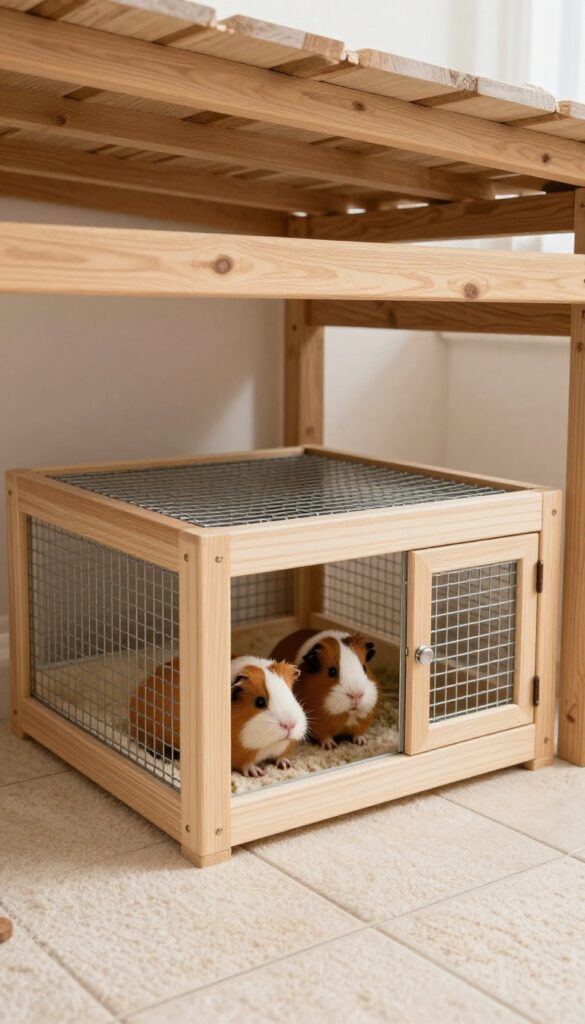
That shady spot under your deck or porch is prime real estate for a guinea pig run. It stays naturally cool, offers overhead protection from rain and sun, and keeps your piggies close to the action. With a few materials, you can turn this unused space into a secure, comfortable outdoor enclosure.
Measure the space under your deck or porch, then build a simple frame using 2x4s or PVC pipes. Attach hardware cloth or wire mesh to the frame, making sure to bury the edges a few inches into the ground to prevent digging escapes. Add a door or removable panel for easy access.
For the floor, lay down ceramic tiles or linoleum – both stay cool to the touch and are easy to clean. Cover the flooring with fleece or towels for comfort, and replace them as needed. This setup gives your guinea pigs a shaded, predator-proof area to explore during warm weather.
Why Under-deck Works
The deck provides built-in shade and rain cover, so you don't need to add a roof. It also keeps the enclosure elevated slightly, improving airflow and reducing ground moisture. Plus, it's out of direct sight, which can make nervous piggies feel safer.
Flooring Choices That Stay Cool
Ceramic tiles and linoleum are excellent for keeping the floor temperature down, even on hot days. Avoid metal or dark surfaces that absorb heat. Add a layer of fleece or bedding on top for softness, and swap it out regularly to keep the area fresh.
Security And Access Tips
Use heavy-duty wire mesh with small openings (½ inch or less) to keep out snakes and rodents. Secure the mesh with screws and washers, not staples. For easy cleaning and playtime, install a hinged door or a sliding panel that locks securely.
FAQ
What temperature is too hot for guinea pigs outdoors?
Guinea pigs are sensitive to heat. Temperatures above 80°F (27°C) can be dangerous. Always provide shade, fresh water, and a cool surface.
If it feels hot to you, it's too hot for them.
How can I protect my outdoor guinea pig cage from predators?
Use sturdy wire mesh (not chicken wire) with small openings (1/2 inch or less). Secure all openings with locks or clips. Cover the top to protect from birds and raccoons.
Bury the mesh at least 6 inches deep to prevent digging.
Can I leave my guinea pigs outside overnight?
It's not recommended. Nighttime temperatures can drop, and predators are more active. Always bring guinea pigs indoors at night or into a secure, insulated shelter.
What bedding is best for an outdoor guinea pig cage?
Use absorbent, dust-free bedding like paper-based pellets or aspen shavings. Avoid cedar or pine, which can cause respiratory issues. Change bedding frequently to keep it dry and clean.
How do I keep the outdoor cage clean?
Spot clean daily by removing soiled bedding and uneaten food. Do a full clean weekly with a pet-safe disinfectant. If the cage is on grass, move it regularly to prevent buildup of waste.
Conclusion
Your guinea pigs will love the fresh air and sunshine, but always prioritize their safety. Start with one outdoor setup that fits your space and climate, then tweak it as needed.
A little planning now means many happy, healthy days outside for your cavies.

I’m Pallab Kishore, the owner of Little Pets Realm — an animal lover and pet care enthusiast sharing easy tips, healthy recipes, and honest advice to help every small pet live a happy, healthy, tail-wagging life.