
A treat pouch is a classic training tool, but it's not the only one that can level up your sessions. Sometimes you need gear that addresses specific challenges—like loose-leash walking, reliable recall, or keeping your dog focused in distracting environments. The right accessory can make training smoother for both of you.
From a long line that builds trust at a distance to a clicker that marks behavior with precision, these nine ideas go beyond the pouch. Each one solves a real problem dog owners face, whether you're working on basic manners or advanced skills.
No fluff, just practical picks that fit your dog's daily routine. Let's look at tools that actually help you communicate better with your pup.
1. Long Training Leash for Reliable Recall
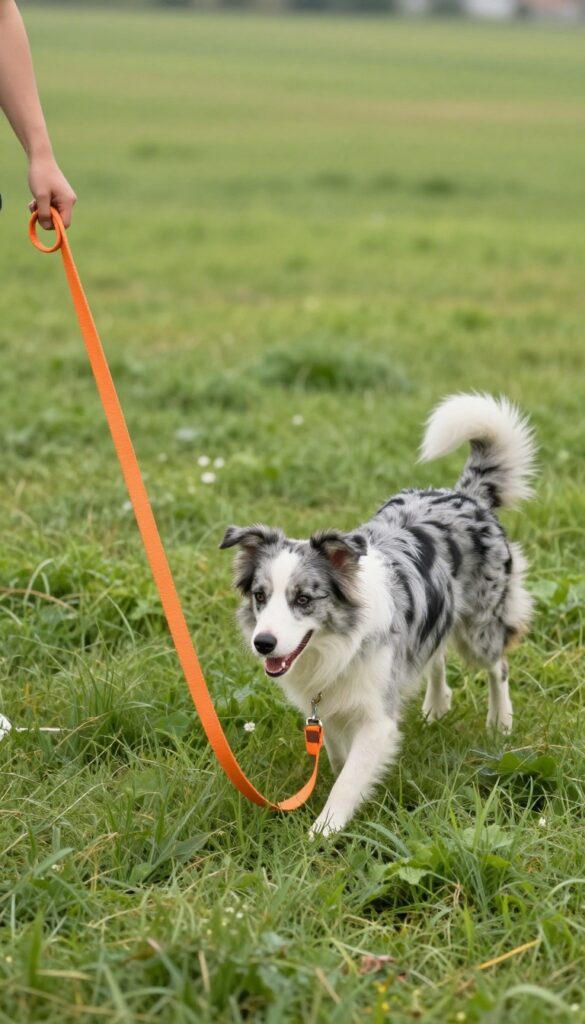
A long leash is a game-changer for recall training. It gives your dog freedom to roam and sniff while you maintain control and practice calling them back. Unlike a standard 6-foot leash, a 15- to 50-foot line lets you gradually increase distance, building reliability before going off-leash.
Dog owners love it because it reduces the frustration of a dog who won't come when called. It's also great for teaching a solid "leave it" or "stay" from a distance. Plus, it keeps your pup safe in open areas without the risk of a full off-leash escape.
Why It Works
Recall is one of the hardest skills to teach because dogs naturally want to explore. A long leash bridges the gap between freedom and safety, allowing you to reward your dog for coming back from farther away. Over time, your dog learns that returning to you is more rewarding than whatever they're chasing.
Best For
This accessory is perfect for dogs who are still learning recall, especially high-energy breeds like Border Collies, Labs, or Huskies. It's also ideal for owners who hike or visit large fields, dog parks with space, or their own backyard. Apartment dwellers can use a shorter long line (15-20 feet) in hallways or courtyards.
Practical Tip
Choose a leash made of biothane or nylon with a comfortable handle. Biothane is waterproof and easy to wipe clean after muddy adventures. Avoid retractable leashes for this purpose—they can snap or cause injury.
Practice in a low-distraction area first, and always keep the line visible to avoid tripping.
Budget-Friendly Option
If you don't want to buy a dedicated long leash, you can use two standard leashes clipped together, or a sturdy clothesline with a carabiner. Just make sure the material is strong enough for your dog's weight and that the clip is secure.
2. Clicker for Precise Timing
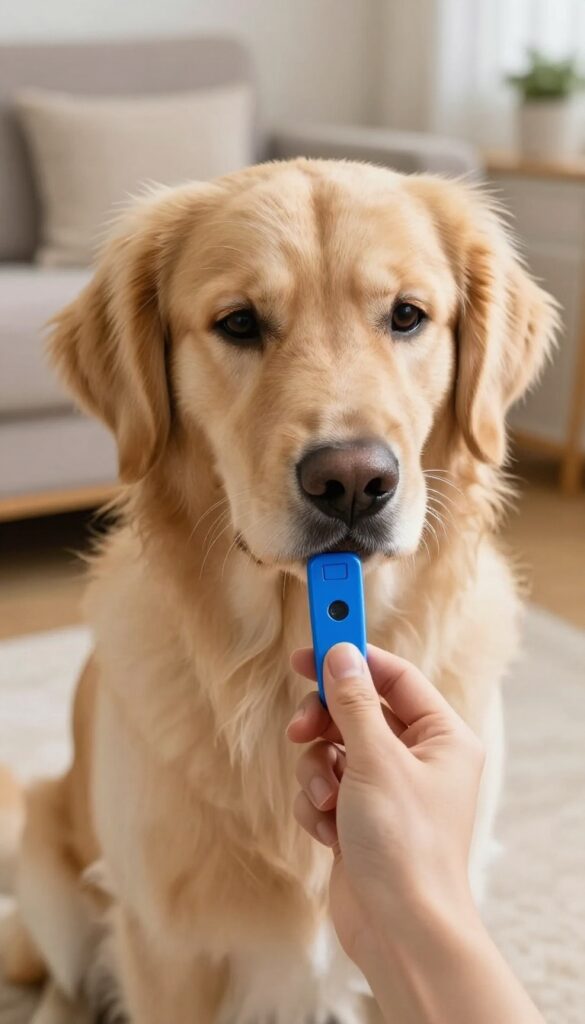
A clicker is a small device that makes a distinct clicking sound. It marks the exact moment your dog performs a desired behavior, making communication incredibly clear. Dog owners love it because it removes guesswork and speeds up training.
Why It Works
Dogs learn best when they get immediate feedback. The clicker bridges the gap between the action and the reward, telling your dog precisely what earned the treat. This precision helps shape complex behaviors faster than verbal markers alone.
Best For
Ideal for owners teaching new tricks, shaping behaviors, or working on precision skills like targeting or trick training. Great for puppies and adult dogs alike, especially in quiet home environments without distractions.
Practical Tip
Keep the clicker on a wrist lanyard or in a treat pouch for easy access. Practice clicking without your dog first to get comfortable. Use a distinct, consistent click for each session and pair it immediately with a high-value treat.
Budget-Friendly Option
If you don't have a clicker, use a pen that makes a clicking sound or a unique word like 'Yes!' with consistent timing. Not as precise, but works in a pinch.
3. Target Stick for Focused Movement
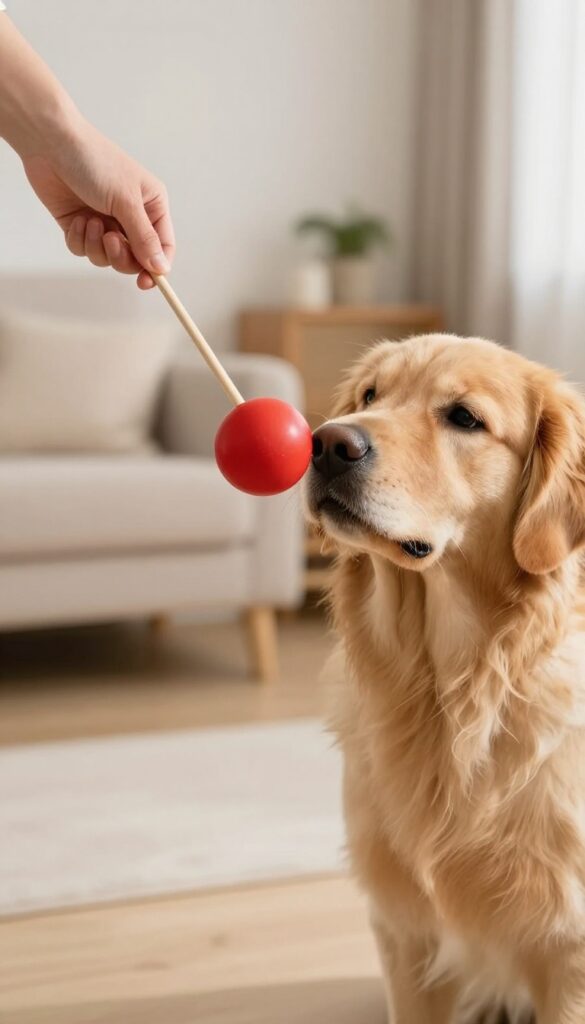
A target stick is a simple tool that teaches your dog to touch a specific spot, like a ball on the end of a wand. It's a gentle way to guide your dog into positions without pushing or pulling, making it great for tricks, agility, and even rehab. Many dog owners love it because it builds confidence and precision without force.
Why It Works
Dogs learn by targeting—once they understand that touching the stick earns a reward, you can move it to shape behaviors like spins, weaves, or backing up. It's especially useful for distance cues, because your dog learns to follow the stick rather than your hand. This reduces frustration and helps you communicate clearly, even from across the room.
Best For
Best for dogs who are a bit hesitant or easily overwhelmed, since the target stick offers a clear, non-threatening goal. It's also ideal for owners training advanced tricks, agility foundations, or working on recall to a specific spot. Apartment dwellers will appreciate that it takes up almost no space.
Practical Tip
Start with the stick close to your dog's nose and reward every touch. Once they're consistent, you can gradually move the target farther away or into different positions. Keep sessions short—5 minutes max—to maintain focus.
Clean the tip with a damp cloth after outdoor use to remove dirt or slobber.
Budget-Friendly Option
You can make your own target stick by attaching a tennis ball to a wooden dowel or an old broom handle. Just make sure the ball is secure and doesn't have any loose parts that could become a choking hazard.
4. Treat-Dispensing Puzzle Toy for Mental Stimulation
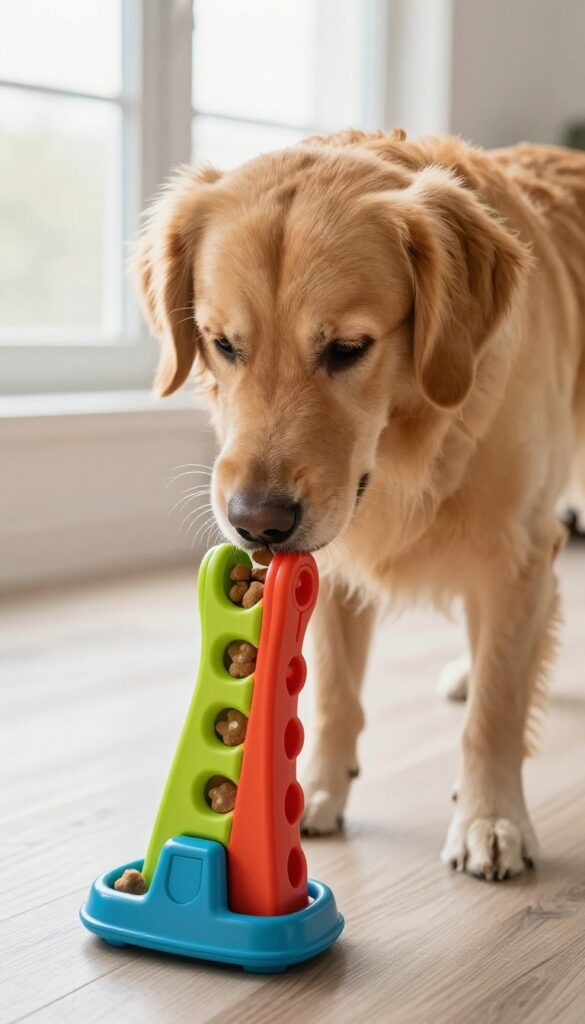
Puzzle toys that release treats as your dog figures them out are like a workout for the brain. They turn snack time into a game that keeps your pup engaged and thinking. Many owners find these toys are lifesavers on rainy days or when they need a few minutes of quiet focus.
Why It Works
Dogs are natural problem-solvers, and puzzle toys tap into that instinct. The challenge of nudging, rolling, or sliding parts to get a treat rewards persistence and builds confidence. It also tires them out mentally, which can be just as draining as a long walk.
Best For
Best for high-energy or intelligent breeds like Border Collies, Poodles, and Terriers who need more than physical exercise. Also great for puppies learning to work for rewards and for dogs who tend to get anxious or destructive when bored.
Practical Tip
Start with an easy setting and gradually increase difficulty to avoid frustration. Clean the toy regularly with warm soapy water, especially if you use wet or sticky treats. Always supervise the first few uses to ensure your dog doesn't chew off small parts.
Budget-Friendly Option
A DIY version: stuff treats into a muffin tin, cover each cup with a tennis ball, and let your dog figure out how to remove the balls. Or use a cardboard egg carton with treats inside for a one-time puzzle.
5. Portable Water Bottle with Bowl for Hydration
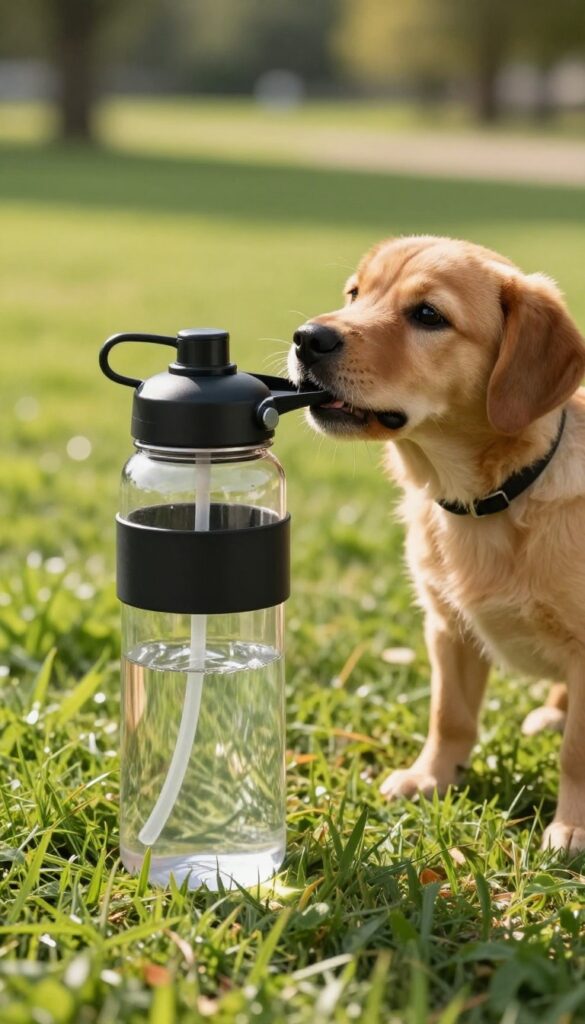
Training sessions can be thirsty work. A portable water bottle with a built-in bowl keeps your dog hydrated without stopping the flow of practice. These clever gadgets let you offer water on the go, so you can focus on reinforcing good behavior rather than hunting for a water source.
They're lightweight, leak-proof, and fit right in your training bag or pocket.
Why It Works
Hydration directly impacts your dog's energy and focus. A quick water break during a long session prevents fatigue and overheating, keeping your pup ready to learn. Having water readily available also reinforces positive associations with training time.
Best For
Perfect for active dogs who train outdoors, at parks, or on walks. Great for owners who enjoy extended training sessions in warm weather or travel frequently with their dog.
Practical Tip
Look for bottles with a one-handed squeeze design so you can control water flow easily. Clean the bowl after each use to prevent slime buildup, and store the bottle upside down to dry completely.
Budget-Friendly Option
A standard sports water bottle with a shallow collapsible bowl works just as well. Many silicone bowls fold flat and clip to your belt loop or bag.
6. Harness with Front Clip for Loose-Leash Walking
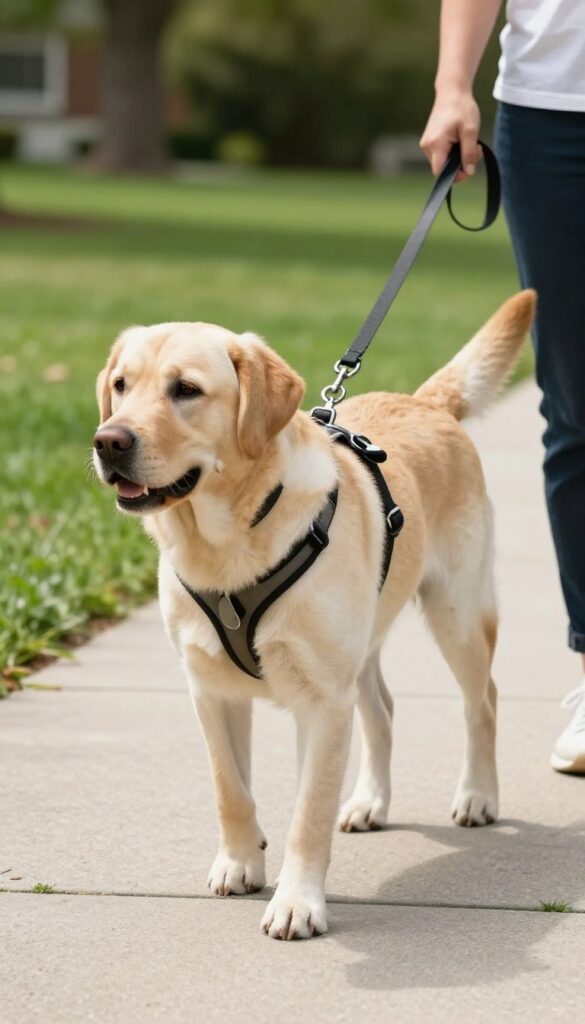
A front-clip harness attaches the leash at your dog's chest, not their back. When they pull, the harness gently turns them sideways, making it hard to keep going forward. It's a simple physics trick that teaches your dog that pulling doesn't get them where they want to go.
Unlike a flat collar or back-clip harness, which can encourage pulling, this design discourages it without causing discomfort. Many owners find it reduces pulling dramatically in just a few walks. Plus, it distributes pressure across the chest and shoulders, not the neck, so it's safer for dogs prone to tracheal issues.
Why It Works
The front clip gives you mechanical leverage without force. When your dog pulls, the harness rotates their body toward you, interrupting their forward momentum. This naturally teaches them that walking politely is more efficient.
Over time, they learn to check in with you instead of forging ahead.
Best For
Dogs who pull on leash, especially strong breeds like Labrador Retrievers, Boxers, or young, energetic dogs. It's also great for owners who want a gentler alternative to choke chains or prong collars. Works well for daily walks in neighborhoods or parks where loose-leash manners matter.
Practical Tip
Make sure the harness fits snugly but not too tight. You should be able to slip two fingers under any strap. Adjust the chest strap so the D-ring sits right on the breastbone, not up near the throat.
For dogs with short coats, look for padded straps to prevent chafing. Always use a backup safety clip if the harness has a quick-release buckle.
Budget-Friendly Option
If you don't want to buy a new harness, you can try a front-clip conversion strap that attaches to the back ring of a standard harness and redirects the leash to the front. It's a cheap way to test if this style works for your dog.
7. Training Mat or Bed for Place Command
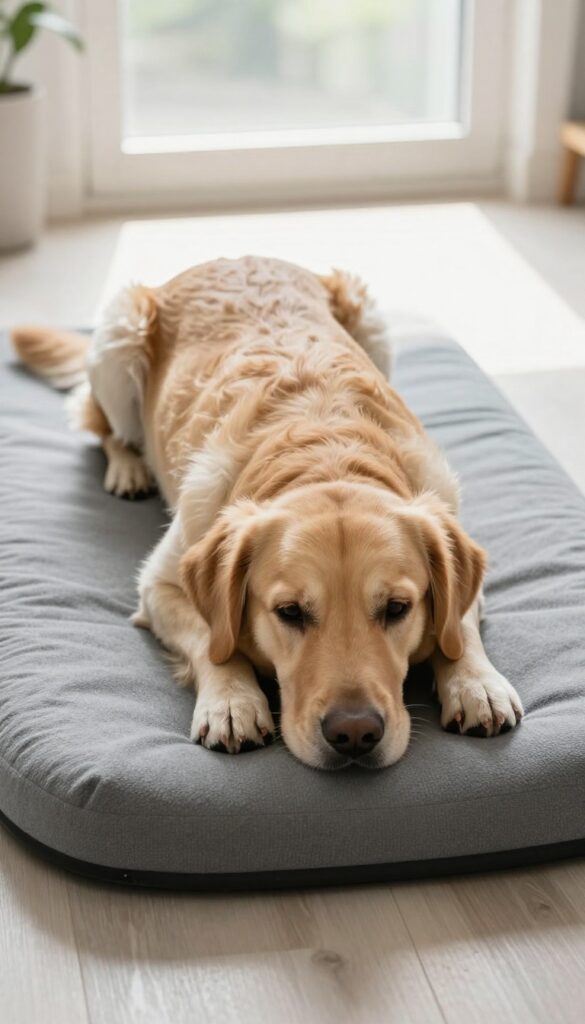
A designated mat or bed gives your dog a clear spot to settle on cue. It's a simple tool that teaches calm behavior, whether you're cooking dinner or hosting guests. Many dog owners find it surprisingly effective for building impulse control.
This accessory works because it creates a defined space your dog learns to associate with relaxation. Over time, they'll naturally head to their mat when they need to wind down.
People appreciate how versatile it is—use it at home, at a cafe, or even outdoors. It's a low-effort way to reinforce good manners in any setting.
Why It Works
Dogs thrive on clear boundaries. A mat gives them a physical spot where they know what's expected: settle and stay calm. This consistency helps reduce anxiety and overexcitement, making it easier for them to relax in busy environments.
Best For
Perfect for high-energy dogs that struggle to settle, puppies learning impulse control, or any dog that needs a calm spot in a multi-pet household. Also great for apartment dwellers who want a portable relaxation zone.
Practical Tip
Start by placing the mat in a low-traffic area and reward your dog for stepping on it. Gradually increase duration and add distractions. Choose a mat with a non-slip bottom to prevent sliding on hardwood or tile.
Machine-washable covers are a lifesaver for muddy paws.
Budget-Friendly Option
A cheap bath mat or a folded blanket works just as well as a pricey training mat. Just make sure it's distinct from other rugs so your dog clearly recognizes it as their spot.
8. Whistle for Consistent Recall Cues
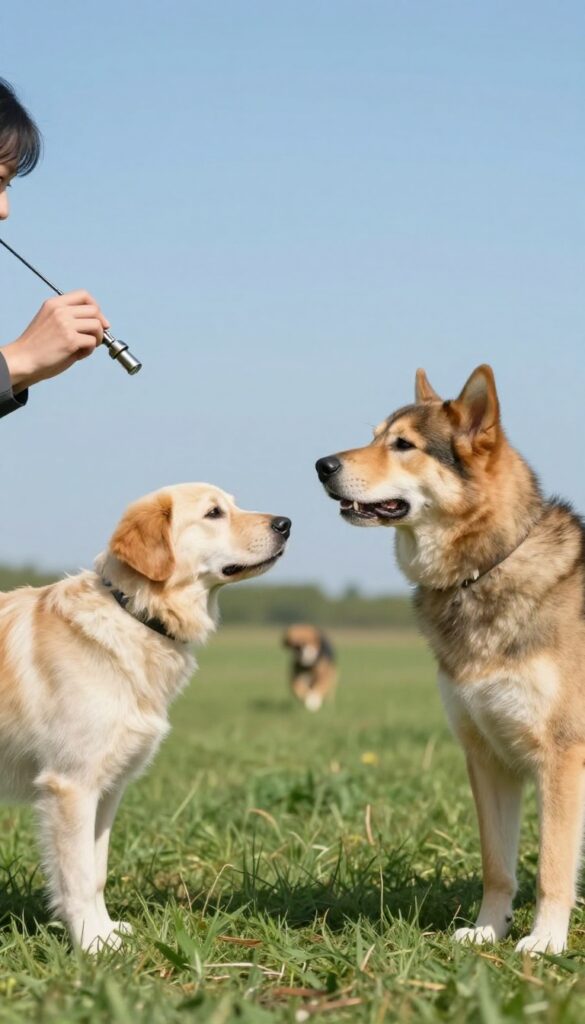
Your voice can only carry so far, especially when the wind picks up or your dog spots a squirrel. A whistle gives you a clear, consistent sound that travels farther and cuts through noise. It's a simple switch that can make recall training more reliable, no matter where you are.
Why It Works
Dogs learn to associate the whistle's distinct tone with coming back to you, and that sound stays the same every time—unlike your voice, which can change with mood or distance. Plus, whistles are compact and easy to carry, so you always have your recall cue handy.
Best For
This is perfect for dogs who love to explore off-leash, especially in open fields or hiking trails. It's also great for owners who struggle to project their voice or want a consistent cue that multiple family members can use.
Practical Tip
Choose a pealess whistle to avoid moisture buildup, and practice a specific pattern (like two short blasts) for recall. Introduce the whistle indoors first with treats, then move to low-distraction outdoor areas before relying on it in busy spaces.
Budget-Friendly Option
A basic metal whistle from a sports store works just as well as a fancy dog-specific one. Just make sure it's loud enough for your typical training environment.
9. Treat Tubes or Squeeze Pouches for Mess-Free Rewards
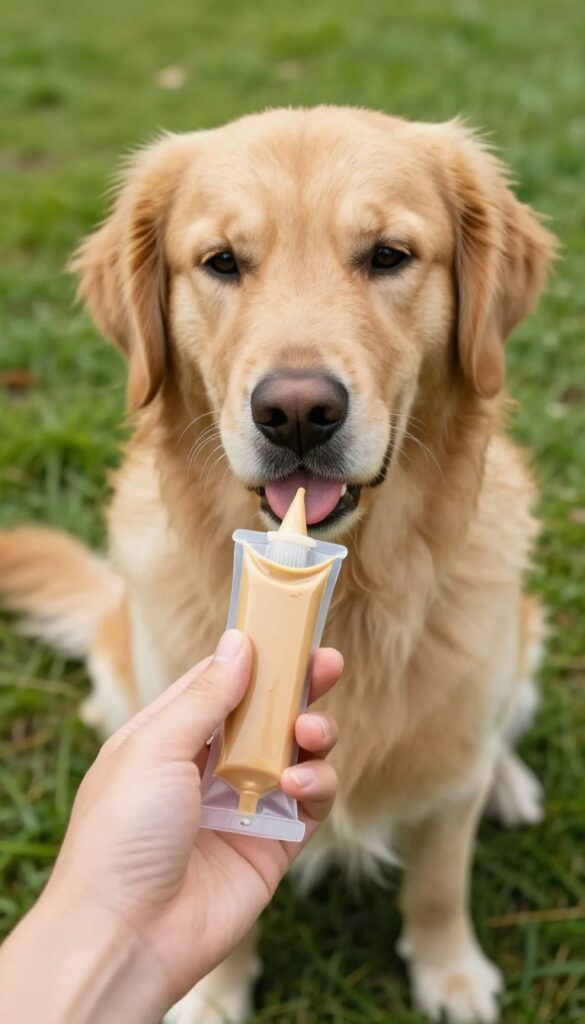
Squeeze tubes filled with soft treats or peanut butter are a game-changer for training sessions. They let you deliver a quick, clean reward without fumbling with a pouch or getting sticky hands. Your dog gets a satisfying lick or bite, and you keep your focus on the behavior you're reinforcing.
These tubes are especially handy for high-value luring, like shaping new behaviors or working on tricky moves. The narrow opening gives you precise control over how much your dog gets, so you can reward small efforts without overfeeding. Plus, they're portable and easy to refill.
Why It Works
The tube design keeps treats contained and accessible with one hand, so you can mark and reward instantly. Soft rewards are often more motivating than dry kibble, especially for distracted or stubborn dogs. The squeeze action also lets you deliver a continuous stream of reward during luring, which helps dogs follow your hand more closely.
Best For
Ideal for dogs who love peanut butter, wet food, or soft treats. Great for puppies learning to focus, senior dogs with dental issues, or any dog that needs a high-value motivator. Also perfect for outdoor training or walks where you want to avoid crumbly messes.
Practical Tip
Fill the tube with a mix of plain yogurt, pumpkin puree, or wet dog food for variety. Freeze it overnight for a longer-lasting reward in hot weather. Clean the nozzle and cap after each use to prevent spoilage—most tubes are dishwasher safe.
Keep a spare filled tube in your training kit so you're always ready.
Budget-Friendly Option
You can repurpose a small travel-size silicone squeeze bottle from a dollar store. Just wash it thoroughly and fill with your dog's favorite soft treat. It won't have a dog-specific nozzle, but it works for most training scenarios.
FAQ
Do I really need a clicker if I already use treats?
A clicker marks the exact behavior you want, which can speed up learning. Treats reward, but the clicker communicates timing more precisely.
What length should a long training leash be?
15 to 30 feet is a good range for most recall practice. Start shorter and gradually increase as your dog's reliability improves.
Can I use a regular harness for loose-leash training?
A front-clip harness is more effective because it redirects pulling. A standard back-clip harness may actually encourage pulling.
How do I introduce a target stick to my dog?
Start by letting your dog sniff the stick, then reward any touch. Gradually shape the behavior so your dog learns to follow the stick for treats.
Are treat-dispensing toys good for training or just play?
They're great for both. Use them during training to reward calm focus, or as a solo activity to keep your dog mentally engaged between sessions.
Conclusion
Training your dog doesn't have to revolve around treats alone. The right accessories can make sessions smoother, safer, and more engaging for both of you.
Start with one or two items that address your biggest training challenges, and build from there. Your dog will appreciate the variety, and you'll love the results.

I’m Pallab Kishore, the owner of Little Pets Realm — an animal lover and pet care enthusiast sharing easy tips, healthy recipes, and honest advice to help every small pet live a happy, healthy, tail-wagging life.