
Last updated on August 19th, 2026 at 04:15 pm
Your entryway is the first thing guests see, but it's also where your dog's bed often ends up—tucked awkwardly in a corner or blocking the path. A dog bed bench solves both problems at once.
It gives your pup a designated spot to rest while offering you a place to sit down and take off your shoes. The key is finding a design that fits your space and your style without looking like an afterthought.
These eight ideas range from built-in window seats to repurposed furniture, so you can pick the one that works best for your home and your dog's habits.
1. Built-In Window Seat Bench with Storage
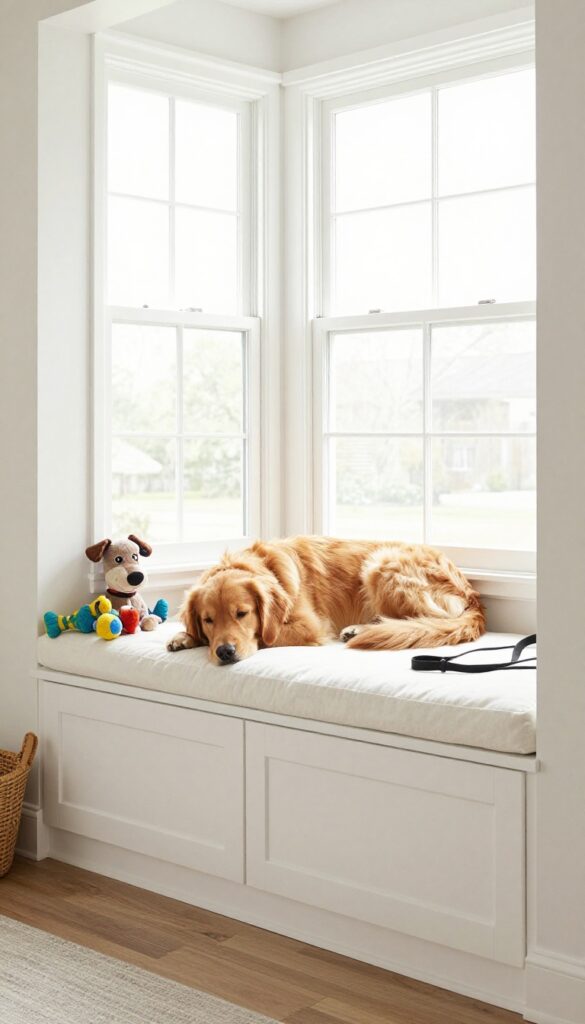
A window seat bench that doubles as a dog bed is the ultimate multitasker. It turns an underused nook into a cozy perch for your pup and a functional seating area for you. The storage underneath keeps entryway clutter like shoes, leashes, and dog gear neatly out of sight.
This built-in solution works best in a bay window or an alcove near the front door. The bench height should match standard seating (around 18 inches), with a cushioned top for comfort. The dog bed cubby below can be open or have a pull-out drawer for easy cleaning.
Add a small ramp or steps if your dog is senior or small.
Custom Dimensions For Your Dog
Measure your dog from nose to tail while they sleep in their favorite curled-up position. Add a few inches for wiggle room. The cubby should be at least 6 inches taller than your dog's shoulder height so they can sit up comfortably.
A depth of 24 to 30 inches works for most medium breeds.
Storage Solutions Inside
Use the bench top as a drop zone for keys and bags. Inside the cubby, install a removable cushion with a washable cover. The remaining space can hold bins for dog toys, treats, and leashes.
Consider a pull-out drawer with dividers for small items like poop bags and paw wipes.
Sunny Spot Benefits
Dogs love warmth and natural light. Placing the bench by a window gives your pup a front-row view of the neighborhood and a warm spot to nap. Just make sure the window isn't drafty in winter.
Use UV-protective glass or blinds to prevent overheating on hot days.
2. Repurposed Console Table with Dog Bed Insert
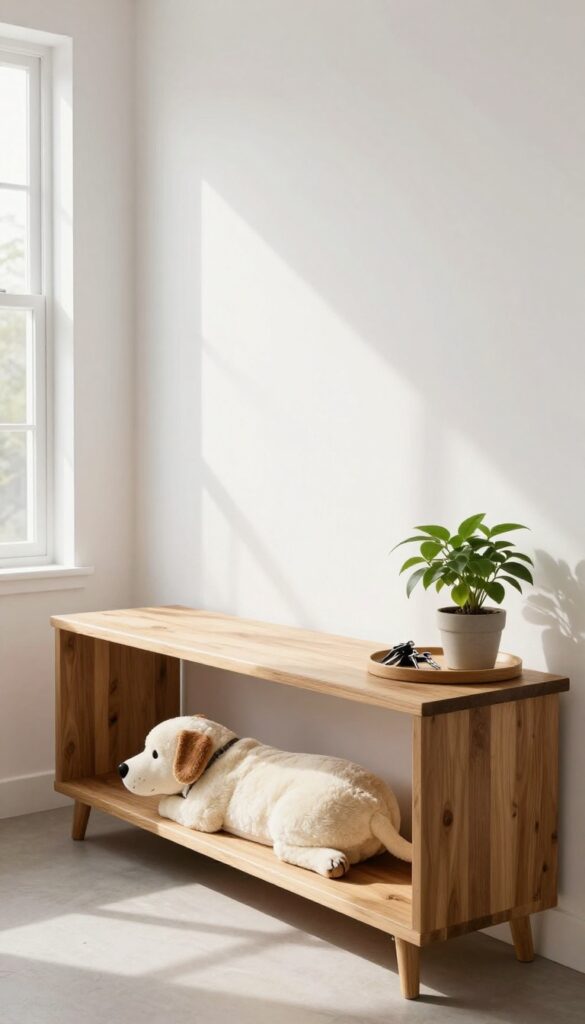
A long console table is a natural fit for an entryway, but it usually just collects clutter. By cutting out a section for a dog bed, you turn it into a practical bench that serves both you and your pup. The tabletop stays clear for keys and mail, while the open cubby below gives your dog a cozy spot to hang out near the door.
This idea works best with a console table that has a lower shelf or a solid base you can modify. You'll need to remove a section of the shelf or cut an opening in the base to fit a standard dog bed. The key is to keep the tabletop intact so it remains functional.
Finish the cut edges with trim or paint to match the table, then drop in a bed that's easy to remove for cleaning. Your dog gets a built-in spot that's part of the furniture, and you get a stylish entryway piece that doesn't scream "pet accessory. "
Choosing The Right Console Table
Look for a table with a solid base or a lower shelf that's at least 12 inches off the floor. The width should be wide enough for a standard dog bed (24 to 30 inches). Avoid tables with intricate legs that make cutting difficult.
A simple rectangular table with straight lines is easiest to modify.
Making The Cut
Measure your dog bed and mark the opening on the table's base or shelf. Use a jigsaw to cut along the lines, then sand the edges smooth. If the table is painted, touch up the cut edges with matching paint.
For a clean look, add a wooden trim or a metal edge banding.
Finishing Touches
Line the inside of the cubby with a washable liner or a thin piece of plywood to protect the table from scratches. Choose a dog bed that fits snugly but can be lifted out for washing. Add a small cushion or a blanket to make it extra cozy.
Place the table near the entryway so your dog can greet you without being underfoot.
3. Floating Bench with Cushion and Dog Nook
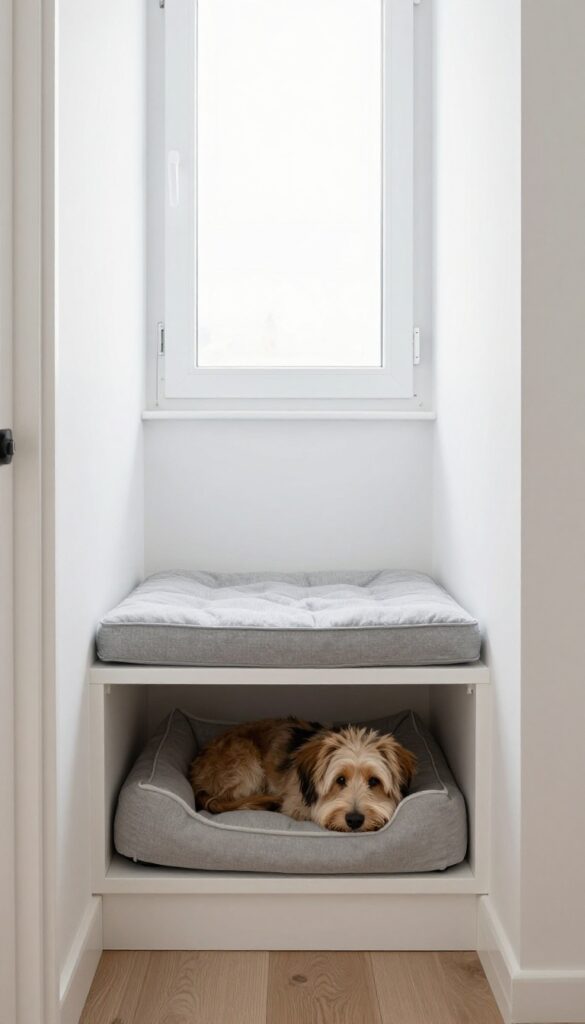
Wall-mounted furniture is a smart way to keep your entryway feeling open and uncluttered. A floating bench with a built-in dog nook takes that concept and makes it work for both you and your pup. The bench itself gives you a spot to sit while putting on or taking off shoes, and the lower cubby provides a cozy, contained space for your dog's bed.
This design works especially well in narrow hallways or small entryways where floor space is at a premium. By mounting the bench to the wall, you free up the floor underneath for the dog bed cubby, which can be open-fronted for easy access or fitted with a curtain for a tidier look. The bench seat can be topped with a cushion that matches your decor, and the dog bed slides out for cleaning or rearranging.
Why Floating Works
Floating benches create the illusion of more space because the floor remains visible beneath them. This visual trick makes a small entryway feel larger and less crowded. Plus, cleaning is easier since there are no legs to sweep around, and the dog bed cubby is elevated slightly off the floor, which can help with drafts.
Customizing The Dog Nook
The lower cubby can be built to fit your dog's bed exactly, or left slightly oversized so your pup can stretch out. Adding a removable liner or a washable cushion makes cleanup simple. You can also include a small lip or guard on the front edge to keep the bed from sliding out when your dog jumps on or off.
Material And Finish Options
Plywood or MDF with a sleek painted finish gives a modern look, while solid wood with a natural stain adds warmth. For a more industrial vibe, consider a metal frame with a wood seat. Just make sure the bench is securely anchored to wall studs, especially if you have a larger dog.
4. Crate-End Bench Combo
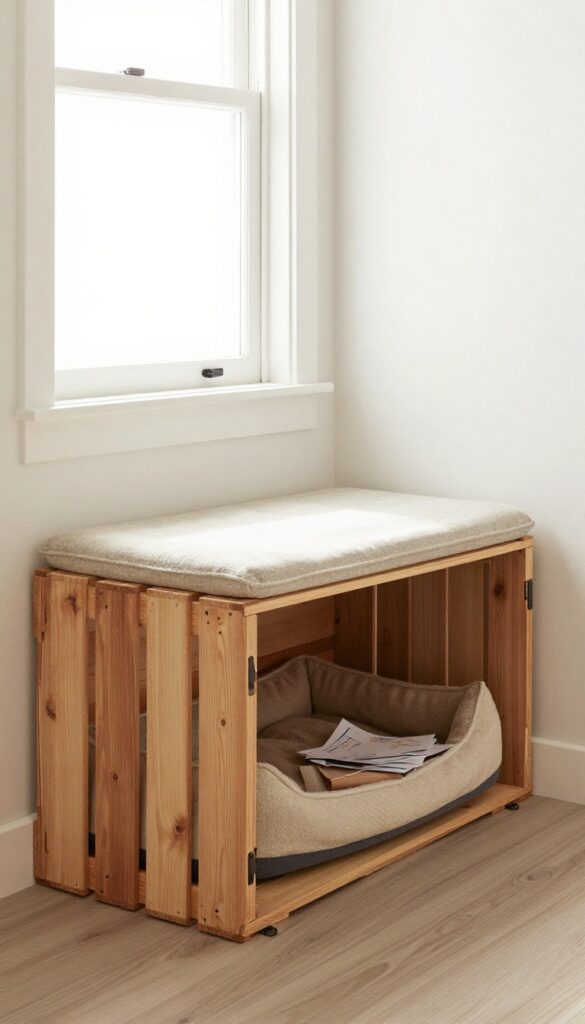
A crate-end bench combo is a smart way to give your dog a private den while adding functional seating to your entryway. The wooden crate sits on one end, topped with a bench that extends across, creating a cohesive piece of furniture. You can use the crate door as a side table or a small shelf for keys and mail.
This design works especially well in narrow entryways where you need to maximize every inch. The crate provides a cozy, den-like space that many dogs love, and the bench gives you a spot to sit while putting on shoes. Choose a crate that matches the bench style—painted or stained wood keeps it looking intentional.
Customization Options
You can build this combo yourself or buy a ready-made unit. If DIY, use a standard wire crate and build a wooden frame around it, then attach a bench seat on top. Add a cushion to the bench for comfort, and consider a hinged top that lifts for storage.
Placement Tips
Position the crate end against a wall so the bench extends into the room. This creates a natural flow and keeps the crate from feeling like an afterthought. If space allows, place a small rug underneath to define the zone.
Style Variations
For a rustic look, use reclaimed wood and a wrought-iron crate. For modern spaces, go with sleek plywood and a minimalist crate painted white or gray. You can also add hooks above for coats or leashes.
5. Mid-Century Modern Bench with Pull-Out Dog Bed
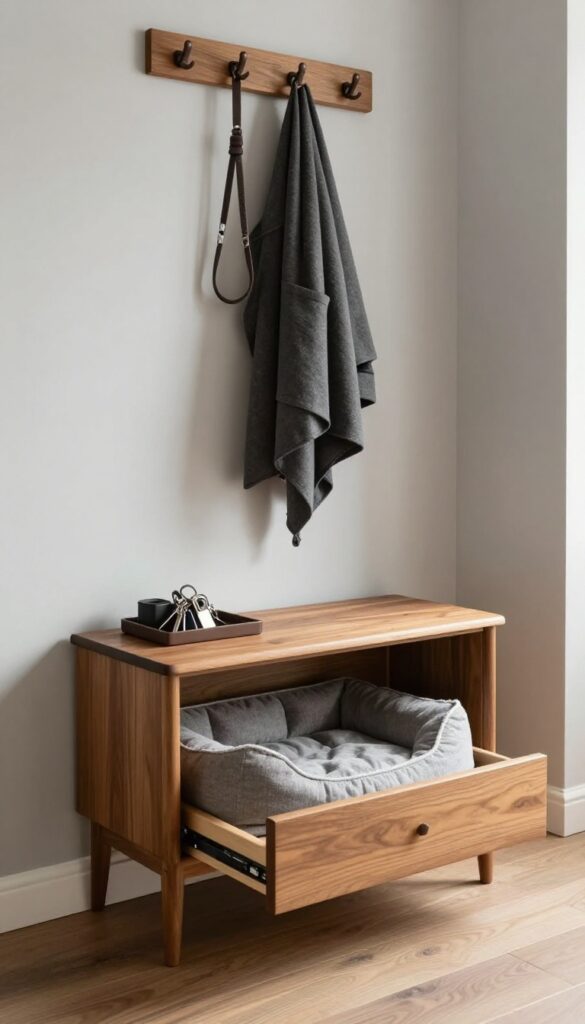
Mid-century modern design never goes out of style, and it works surprisingly well in an entryway. A bench with clean tapered legs and warm wood tones can anchor the space without feeling bulky. The trick is hiding the dog bed inside a pull-out drawer so the bench stays sleek when guests walk in.
This idea is perfect for small entryways where every square inch counts. The pull-out drawer slides out easily for your dog to hop in, then tucks away completely when not in use. You get a stylish bench that looks like a regular piece of furniture, plus a cozy nook your pup will love.
Why It Works For Small Spaces
A pull-out drawer eliminates the need for a separate dog bed on the floor. The bench itself can be narrow—around 16 to 18 inches deep—so it fits against a wall without eating up walking space. When the drawer is closed, no one would guess there's a dog bed inside.
Choosing The Right Materials
Look for solid wood like walnut or teak for that authentic mid-century look. The drawer should have smooth glides and a sturdy bottom to support your dog's weight. A washable cushion or removable cover makes cleanup easy after muddy paws.
Styling Tips For Entryway Harmony
Pair the bench with a simple wall hook rail above for coats and leashes. Add a small tray on top for keys and mail. Keep the color palette neutral—think warm browns, soft grays, or muted greens—to maintain that clean mid-century vibe.
6. Rustic Farmhouse Bench with Built-In Dog Bed
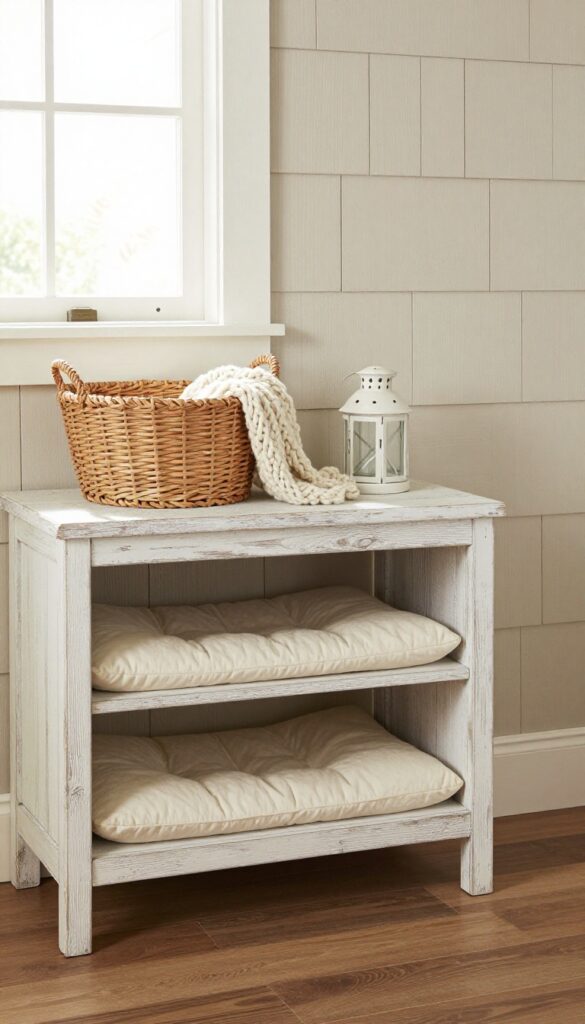
If your entryway leans toward warm, lived-in charm, a rustic farmhouse bench with a built-in dog bed fits right in. The chunky wood construction and open cubby underneath give your pup a cozy nook while keeping your mudroom or hallway looking intentional. This style works especially well in homes with shiplap walls, barn doors, or vintage accents.
Choosing The Right Wood And Finish
Go for solid woods like pine or oak with a distressed or whitewashed finish. That weathered look hides scratches and fur better than a glossy surface. If you prefer a pop of color, a muted sage or navy base keeps the rustic vibe while adding contrast.
Lining The Cubby For Comfort And Cleanup
A washable, plush dog bed is non-negotiable. Look for one with a removable cover that you can toss in the machine. For extra durability, add a waterproof liner underneath to protect the wood from accidents or muddy paws.
Styling The Bench Around It
Top the bench with a couple of woven baskets for leashes, hats, or mail. A chunky knit throw and a small lantern or plant on the seat make it feel styled, not cluttered. Keep the floor area clear so your dog can hop in and out easily.
7. Storage Ottoman Bench with Dog Bed Inside
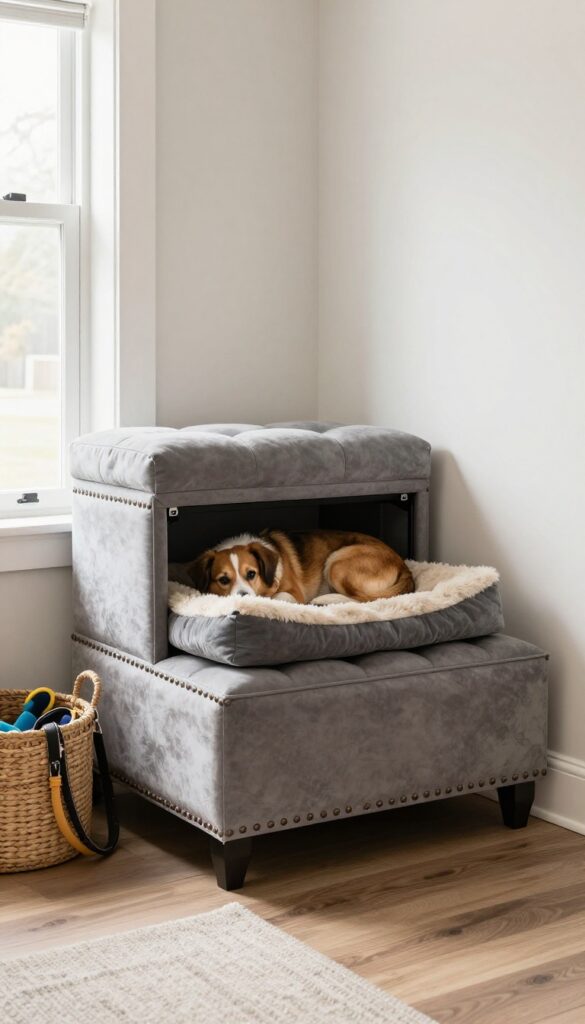
A storage ottoman that doubles as a bench is a clever way to keep your entryway tidy while giving your dog a cozy spot. Lift the top to reveal a hidden bed inside, perfect for when your pup needs a nap. When guests arrive, just close it up and it becomes a regular seat.
This dual-purpose piece works especially well in small entryways where every square inch counts. The hidden bed keeps your dog's space out of sight, and the storage inside can hold leashes, toys, or shoes. Look for an ottoman with a sturdy lid that can support sitting weight and a washable interior liner for easy cleaning.
Choosing The Right Size
Measure your dog when curled up to ensure the interior is spacious enough. Most ottomans come in standard sizes, but some brands offer customizable options. A 24-inch square ottoman works for small to medium dogs, while larger breeds need at least 30 inches.
Material Matters
Opt for durable, stain-resistant fabrics like microfiber or performance velvet. Leather is easy to wipe clean but can be slippery for dogs. A removable, machine-washable cover is a must for keeping the bed fresh.
Style Integration
Choose a color and design that complements your entryway decor. Neutral tones like gray, beige, or navy blend seamlessly. Some ottomans come with tufted tops or nailhead trim for a more polished look.
8. DIY Pallet Bench with Dog Bed Slot
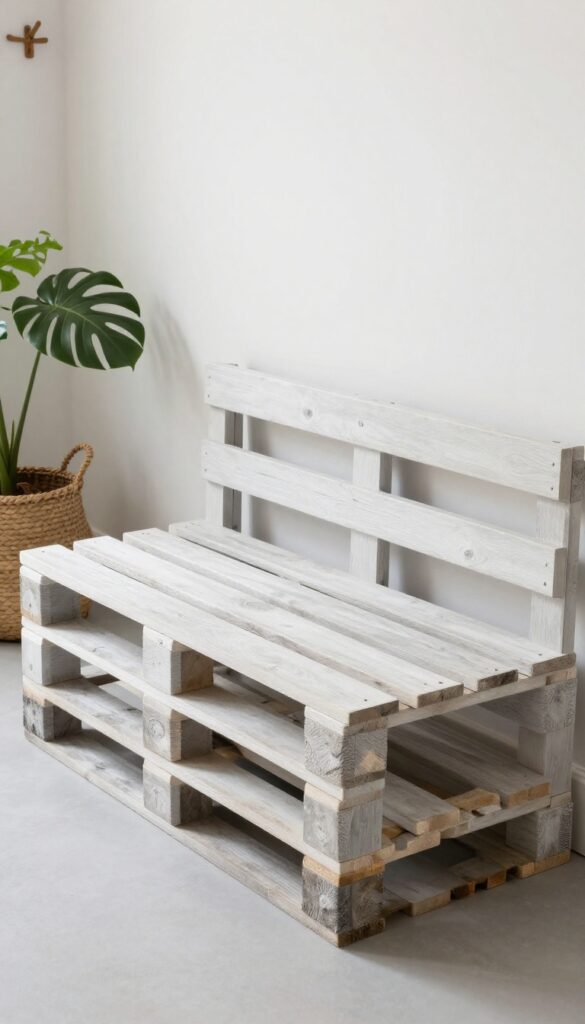
Wooden pallets are one of the most versatile and affordable materials for DIY furniture, and they work perfectly for a dog bed bench. By leaving a cutout in the center, you create a cozy nook for your pup while keeping the bench functional for sitting. The open slatted design also allows air to circulate, which helps keep the bed fresh and cool.
You can customize the look with paint or stain to match your entryway decor, making it a budget-friendly project that looks intentional and stylish.
Building a pallet bench with a built-in dog bed slot is a straightforward weekend project. Start by sourcing two or three sturdy pallets—look for heat-treated (HT) rather than chemically treated ones. Disassemble the pallets carefully, removing nails and sanding down rough edges.
Construct a rectangular frame for the bench seat, leaving a gap in the middle wide enough for your dog's bed. Attach slats across the top, skipping the area over the slot so the bed sits recessed. Add legs from leftover wood or purchase pre-made furniture legs for a cleaner finish.
Paint or stain the bench to protect it and coordinate with your entryway. Finally, drop in a plush dog bed that fits snugly into the opening. This design works especially well for small to medium dogs, and you can adjust the dimensions to suit your space.
Choosing The Right Pallets
Not all pallets are created equal. Look for pallets stamped with HT (heat treated) rather than MB (methyl bromide), which indicates chemical treatment. Avoid pallets that are broken, warped, or have excessive nails.
Inspect the wood for splinters and rot before starting your project. You can often find free pallets at hardware stores, warehouses, or online marketplaces.
Customizing The Finish
The beauty of a pallet bench is its versatility. For a rustic look, leave the wood natural and apply a clear matte sealer. If your entryway is more modern, paint the bench in a bold color like navy or charcoal.
You can also distress the paint for a shabby chic vibe. Consider adding a cushion on top for extra seating comfort, or attach hooks underneath for hanging leashes and bags.
Sizing The Dog Bed Slot
Measure your dog's bed before building the slot. Leave about an inch of clearance on each side so the bed slides in easily but stays put. The depth of the slot should be enough to hold the bed securely without it popping out.
If your dog likes to burrow, consider adding a small lip at the front edge to keep the bed in place.
FAQ
What size dog bed bench do I need for my entryway?
Measure your entryway space first. The bench should be at least as long as your dog's bed (typically 24-36 inches for small to medium dogs) and deep enough for them to stretch out. Leave at least 30 inches of walking space in front of the bench.
Can I use a regular bench and add a dog bed underneath?
Yes, if the bench has enough clearance. Look for benches with at least 6-8 inches of space between the seat and the floor. You can place a flat dog bed or a crate underneath, but make sure your dog can get in and out comfortably.
How do I keep the dog bed clean in an entryway?
Choose a dog bed with a removable, machine-washable cover. Place a washable mat or rug under the bench to catch dirt and fur. Vacuum the area weekly, and consider a waterproof liner for the bed itself.
Are dog bed benches safe for older dogs?
Yes, but choose a design with easy access. A low bench (12-15 inches high) with an open cubby or pull-out bed is best. Avoid high benches where your dog has to jump up, and make sure the bed is well-padded for joint support.
Can I build a dog bed bench myself?
Absolutely. Many DIY plans are available online for all skill levels. Start with a simple pallet or crate design.
Make sure the bench is sturdy, sand rough edges, and use pet-safe paint or stain. Always secure the bench to the wall if it's tall or top-heavy.
Conclusion
A dog bed bench is one of the smartest additions you can make to your entryway. It keeps your dog comfortable and close while adding function and style to your home. Whether you buy one or build it yourself, the right design will make your morning routine smoother and your space more inviting.
Take your time choosing a style that fits your decor and your dog's needs. A little planning now means years of cozy, clutter-free entryways.

I’m Pallab Kishore, the owner of Little Pets Realm — an animal lover and pet care enthusiast sharing easy tips, healthy recipes, and honest advice to help every small pet live a happy, healthy, tail-wagging life.