
Your dog's crate or corner might be cozy, but without mental stimulation, boredom can lead to chewed shoes and restless nights. Puzzle toys are a fantastic way to engage your pup's brain without requiring a huge backyard or expensive gear. The best part?
You can make them yourself with items you already have around the house. These 10 DIY dog puzzle ideas are designed to challenge your dog's nose, paws, and problem-solving skills.
They're perfect for apartment dwellers, rainy afternoons, or any time you want to add a little fun to your dog's day. Each idea is simple to set up and safe for most dogs.
1. Muffin Tin Memory Game
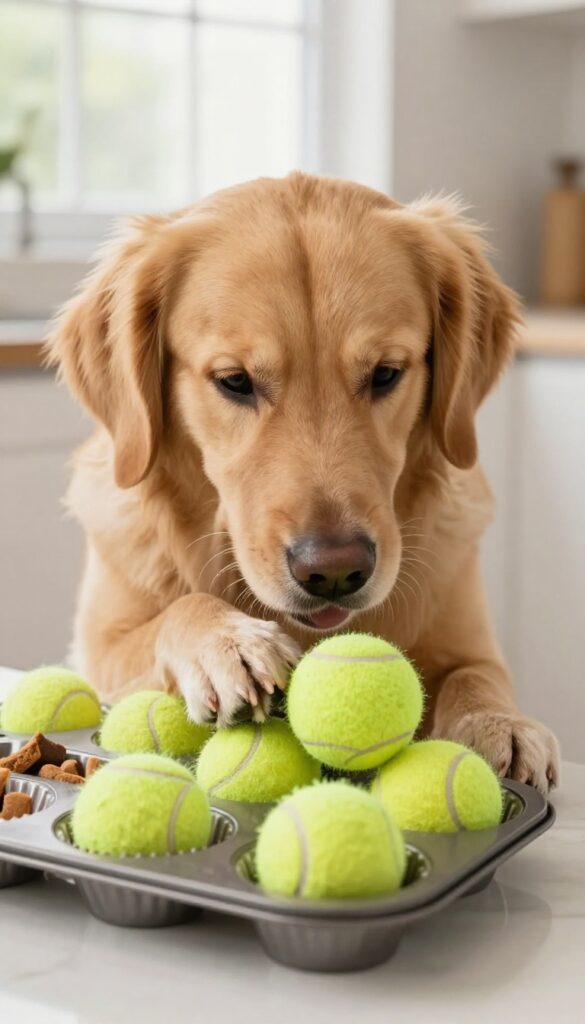
This puzzle turns a simple muffin tin into a brain game your dog will love. Place a few treats in some of the cups, cover each with a tennis ball, and let your dog figure out how to nudge the balls away to find the reward. It taps into their natural foraging instincts and keeps them focused for a solid 10–15 minutes.
Many owners love how easy it is to set up and how quickly dogs catch on, making it a go-to for quick mental workouts.
Why It Works
The game engages both problem-solving and nose work. Your dog has to use their nose to locate the treats and their paws or muzzle to move the balls, which builds persistence and cognitive skills. The unpredictability of which cups hold treats keeps them guessing and coming back for more.
Best For
Great for medium to high energy dogs who need a mental challenge, especially in apartments or small spaces where running isn't an option. Also works well for shy or nervous dogs because it builds confidence through success.
Practical Tip
Use a standard 12-cup muffin tin and tennis balls that fit snugly but aren't too tight. Start with just a few treats under one or two balls so your dog gets the idea without frustration. Supervise the first few times to ensure they don't chew the balls or tin.
Budget-Friendly Option
If you don't have a muffin tin, use a cardboard egg carton and small plastic cups or crumpled paper balls instead of tennis balls. Just as effective and fully recyclable.
2. Towel Roll-Up Treat Dispenser
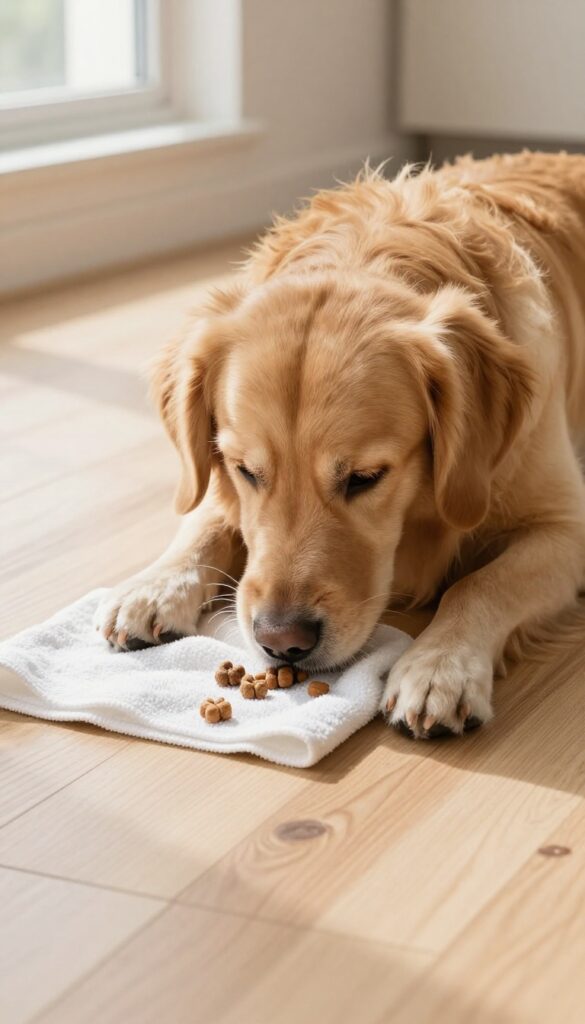
Sometimes the simplest ideas are the most engaging. A towel roll-up treat dispenser turns an ordinary kitchen towel into a puzzle that rewards your dog’s persistence. This no-cost activity is perfect for burning mental energy and keeping your pup occupied while you’re busy.
Why It Works
Dogs rely heavily on their sense of smell and natural foraging instincts. By rolling treats inside a towel, you create a problem that requires them to use their nose and paws to unravel the layers. This process mimics the mental challenge of finding hidden food in the wild, providing satisfying stimulation.
Best For
This puzzle works well for medium to large dogs who enjoy using their paws and noses. It’s also great for puppies who need a gentle introduction to problem-solving, as the difficulty can be adjusted by how tightly you roll the towel.
Practical Tip
Use a clean, absorbent kitchen towel that’s large enough to hold several treats. Roll the towel loosely at first, then gradually increase the number of twists as your dog gets the hang of it. Always supervise play to prevent your dog from chewing or swallowing the towel, and wash it regularly to keep it sanitary.
Budget-Friendly Option
If you don’t have a kitchen towel, an old T-shirt or a thin hand towel works just as well. You can also use a fleece blanket or a piece of fabric cut into a rectangle. The key is to use something soft and washable.
3. Egg Carton Treasure Hunt
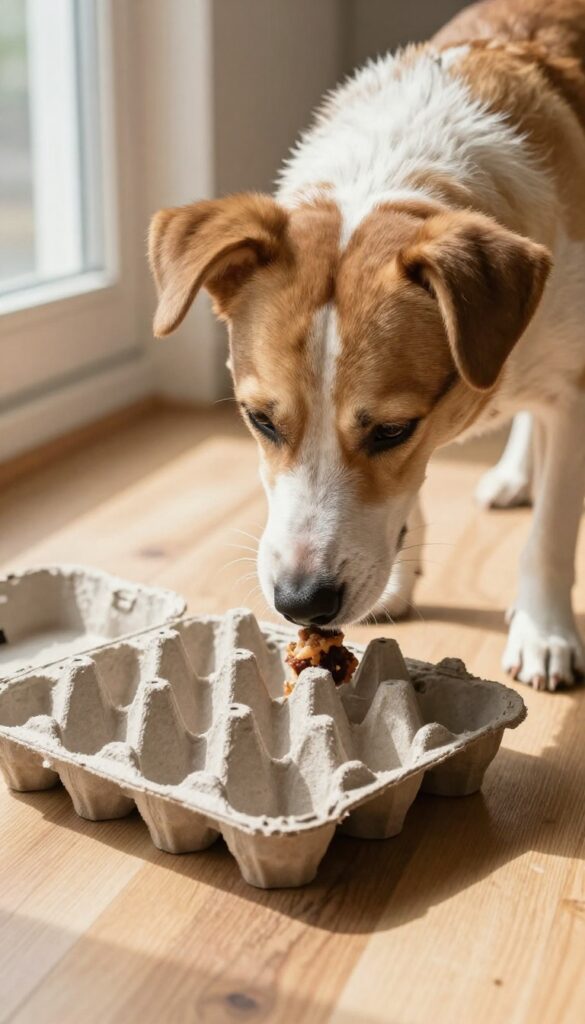
Empty egg cartons are a fantastic resource for a quick DIY puzzle. This activity taps into your dog's natural scavenging instincts, turning a simple cardboard container into a rewarding challenge. It's easy to set up, takes just seconds, and provides a few minutes of focused fun.
Why It Works
Dogs love using their noses and paws to uncover hidden treasures. The egg carton's compartments create a natural hiding spot for treats, and the slight resistance of the cardboard encourages problem-solving. Your dog will need to nudge, paw, or even carry the carton to access the goodies, engaging both mind and body.
Best For
This puzzle is perfect for dogs of all sizes and ages, especially those who enjoy sniffing and foraging. It works well for apartment dwellers because it's quiet and contained. It's also great for shy or nervous dogs who prefer a low-pressure activity.
Practical Tip
Place the egg carton on a non-slip surface or inside a shallow box to prevent sliding. For extra durability, you can tape the carton shut, but make sure it's easy for your dog to open. Always supervise to prevent ingestion of cardboard pieces.
Budget-Friendly Option
If you don't have an egg carton, use a muffin tin or an empty cardboard box with dividers. You can also hide treats under plastic cups or in a folded towel for a similar challenge.
4. PVC Pipe Puzzle Feeder
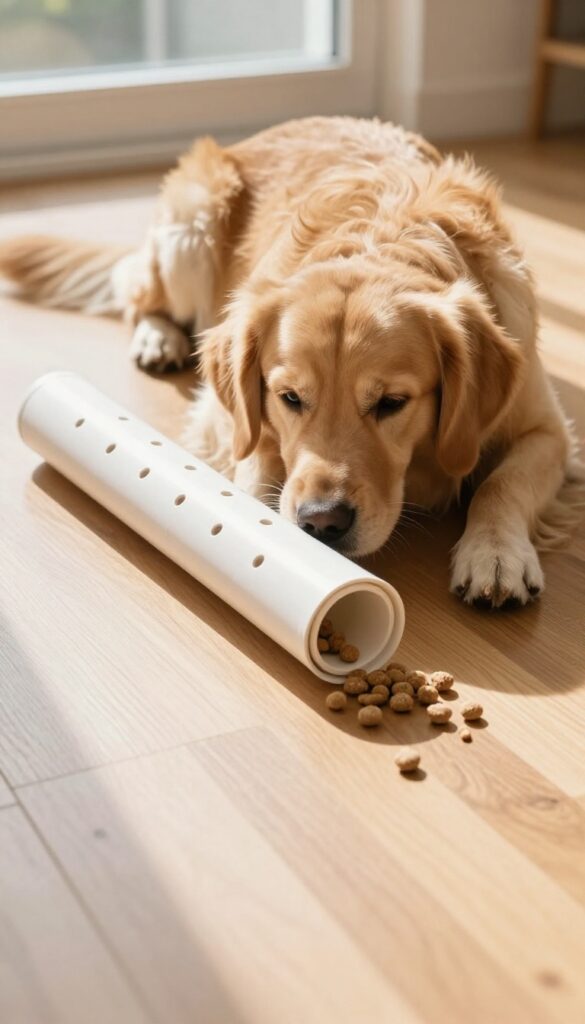
Cut a short section of PVC pipe, drill a few holes in it, cap one end, and drop treats inside. Your dog has to roll the pipe around to make the goodies fall out. It's a simple, durable puzzle that taps into their natural foraging instincts.
Dog owners love how easy it is to customize the difficulty by adjusting hole size and treat type.
Why It Works
The rolling motion combined with the unpredictable treat release keeps dogs engaged and mentally stimulated. It also slows down fast eaters and provides a satisfying challenge without being frustrating. Plus, PVC is easy to clean and nearly indestructible.
Best For
This puzzle is great for medium to large dogs who enjoy pushing and rolling objects. It's also perfect for apartment dwellers because it's quiet and doesn't require much space. Supervised play is recommended for heavy chewers who might try to destroy the pipe.
Practical Tip
Use a 4-inch diameter PVC pipe cut to about 8 inches long. Drill 3-4 holes around 1/2 inch wide. Sand the edges smooth to prevent splinters.
Cap one end with a PVC end cap (glue it on for safety) and leave the other end open for easy filling. Clean with soapy water and a bottle brush.
Budget-Friendly Option
If you don't have PVC, a empty plastic water bottle (with cap on) works similarly. Just poke holes in the sides and let your dog roll it. Replace the bottle when it gets crushed.
5. Cardboard Box Puzzle
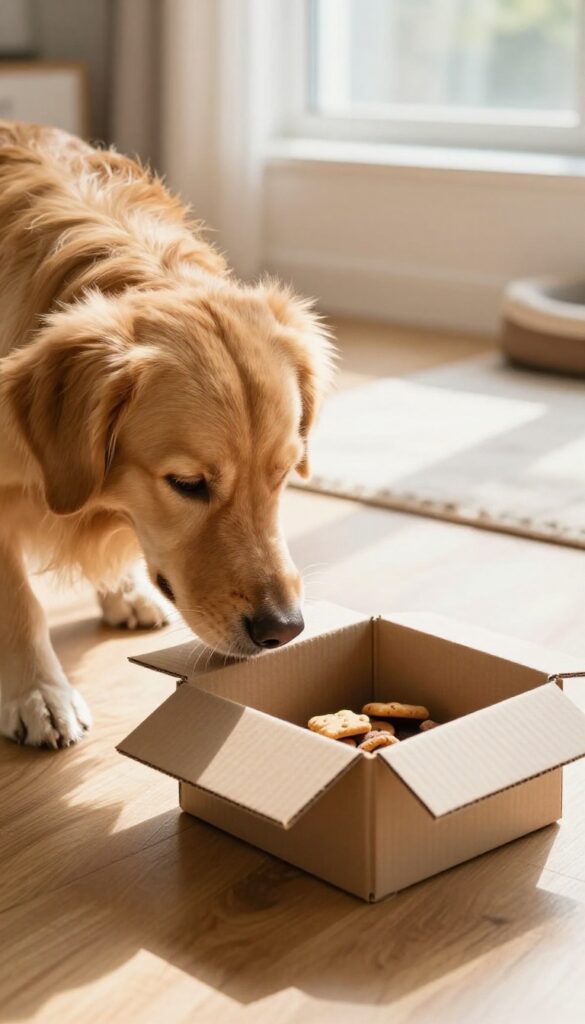
Got a cardboard box lying around? Turn it into a treat-dispensing puzzle that taps into your dog's natural shredding instincts. This is one of those setups that takes seconds to prepare but keeps your pup busy for a good while.
Dogs love the challenge of working through layers to find hidden rewards.
Why It Works
The nested boxes create a multi-step problem: your dog has to figure out how to get through the outer box, then the inner one, to reach the treats. This engages their nose, paws, and brain, providing great mental exercise. The shredding action also satisfies a natural urge, making it especially rewarding.
Best For
This puzzle is ideal for dogs who enjoy shredding or are moderate chewers. It works well in apartments or homes where you want a low-mess activity—just contain the boxes in a crate or on a washable floor. Supervised play is recommended to prevent ingestion of cardboard pieces.
Practical Tip
Use boxes without tape, staples, or labels to keep it safe. Start with one small box inside a slightly larger one; for advanced dogs, add a third layer or wrap treats in paper. Always supervise and remove any torn pieces to avoid choking hazards.
Budget-Friendly Option
Instead of buying specialized puzzle toys, save your shipping boxes and reuse them. You can also use paper bags or newspaper for a softer version.
6. Bottle Spin Game
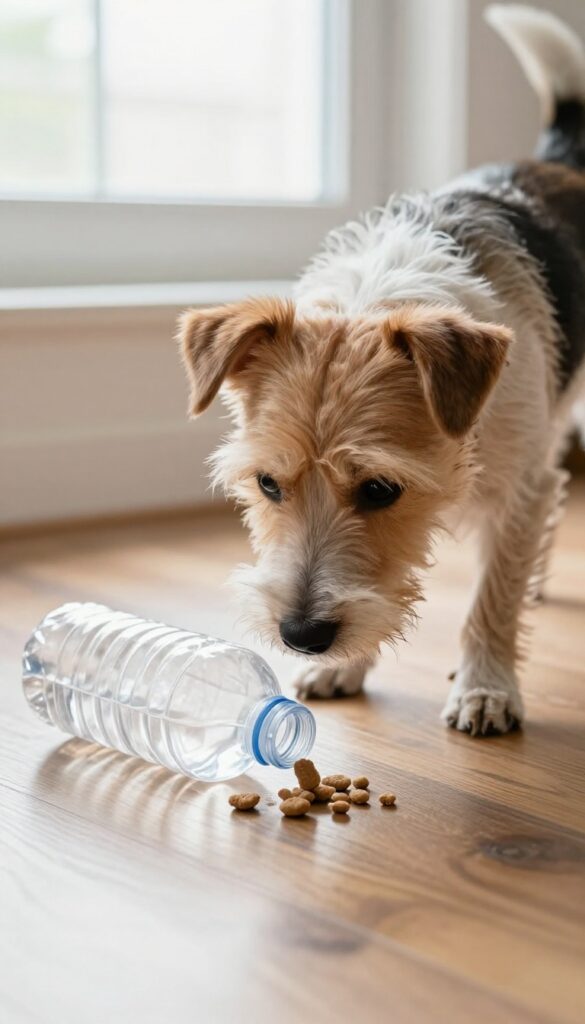
Plastic bottles are everywhere, and they make for a surprisingly fun puzzle. By poking holes in a bottle and adding treats, you create a rolling toy that rewards your dog's nudges and bats. It's a simple concept that keeps dogs busy as they figure out how to make the goodies fall out.
Just be sure to supervise—some dogs see the bottle as a chew toy first.
Why It Works
The unpredictability of the treats falling out keeps dogs engaged. They have to bat, nudge, or roll the bottle to get the reward, which taps into their natural foraging instincts. It's also a great way to use up that empty water bottle instead of tossing it in the recycling bin.
Best For
This game works well for dogs who enjoy batting or pawing at objects—think terriers, herding breeds, or any curious pup. It's also ideal for apartment dogs because it's quiet and doesn't require much space. Just clear a small area on the floor and let them go.
Practical Tip
Use a bottle with a sturdy cap and remove the label to avoid any choking hazards. Start with a few small holes near the middle so treats fall out easily. If your dog is a dedicated chewer, swap the plastic bottle for a thicker, hard plastic container or a reusable water bottle.
7. Snuffle Mat (DIY Version)
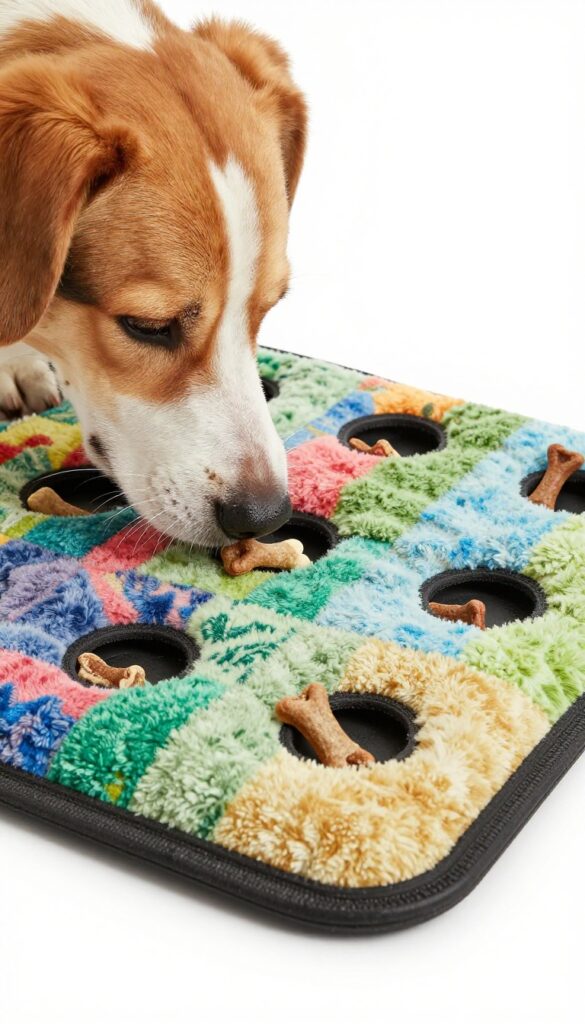
A snuffle mat mimics the experience of foraging in grass, letting your dog use their nose to hunt for hidden treats. This DIY version is easy to make and provides a calming, focused activity that wears out even high-energy pups. Many dog owners love it because it taps into natural instincts without needing expensive toys.
Why It Works
Snuffle mats engage your dog's strongest sense—smell—which can tire them out faster than physical exercise. The act of sniffing and rooting through fabric strips releases dopamine, reducing anxiety and boredom. It's a great way to slow down fast eaters who gulp their meals.
Best For
This puzzle is ideal for dogs who love to sniff, such as hounds, terriers, and herding breeds. It also works well for shy or nervous dogs who prefer a low-pressure activity. Perfect for apartment living or rainy days when outdoor play is limited.
Practical Tip
Use a rubber mat with holes (like a sink mat or drawer liner) as the base. Cut fleece strips about 1 inch wide and 8 inches long, then tie each strip securely through a hole. Make sure knots are tight so your dog can't pull them loose.
Wash the mat in a laundry bag on gentle cycle when needed.
Budget-Friendly Option
If you don't have fleece, old T-shirts or towels cut into strips work just as well. You can also use a plastic tray with holes from a dollar store instead of a rubber mat. The goal is just a sturdy base with plenty of fabric to hide treats in.
8. Ice Cube Treats
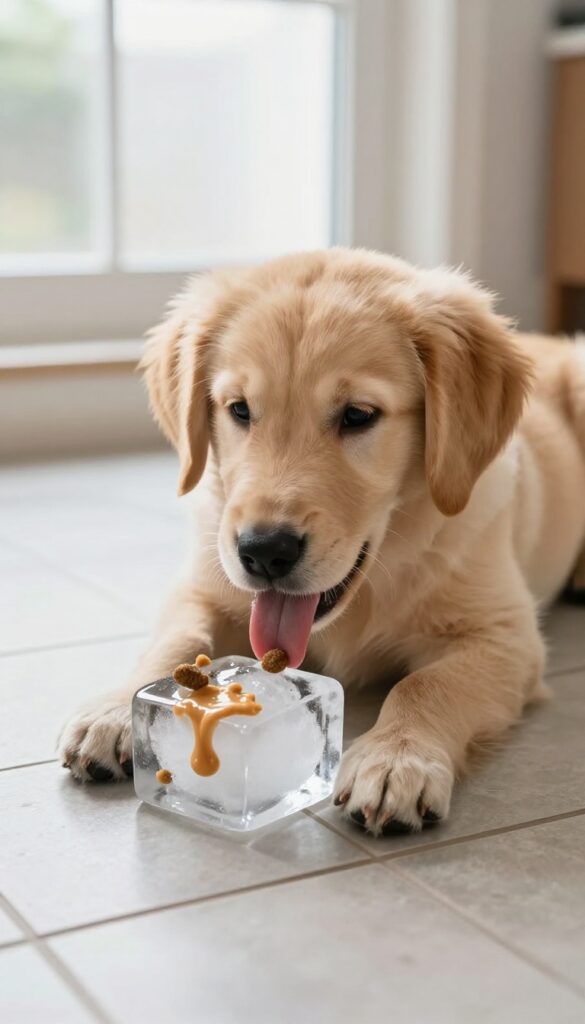
When the weather heats up or you just want a cool challenge for your pup, frozen treats are a simple go-to. Freeze kibble, peanut butter, or small bits of fruit in ice cube trays with water or low-sodium broth. Your dog will lick, paw, and nudge the ice cube until the goodies come loose, turning snack time into a mentally engaging game.
Why It Works
The cold texture and slow melting process force your dog to use their tongue and paws in different ways, which keeps them focused and entertained. It's also a great way to help your dog stay hydrated while they play.
Best For
This puzzle is perfect for warm weather, teething puppies, or dogs who love to lick and chew. It works well for any breed or size, just adjust the ice cube size for small mouths.
Practical Tip
Use silicone ice cube molds in fun shapes like bones or paws to make it more interesting. Always supervise your dog to prevent choking on large pieces, and use low-sodium broth to avoid excess salt.
Budget-Friendly Option
No ice cube tray? Freeze treats in a shallow bowl or on a baking sheet, then break the ice into manageable chunks. You can also use empty yogurt cups or muffin tins.
9. Toilet Paper Roll Puzzle
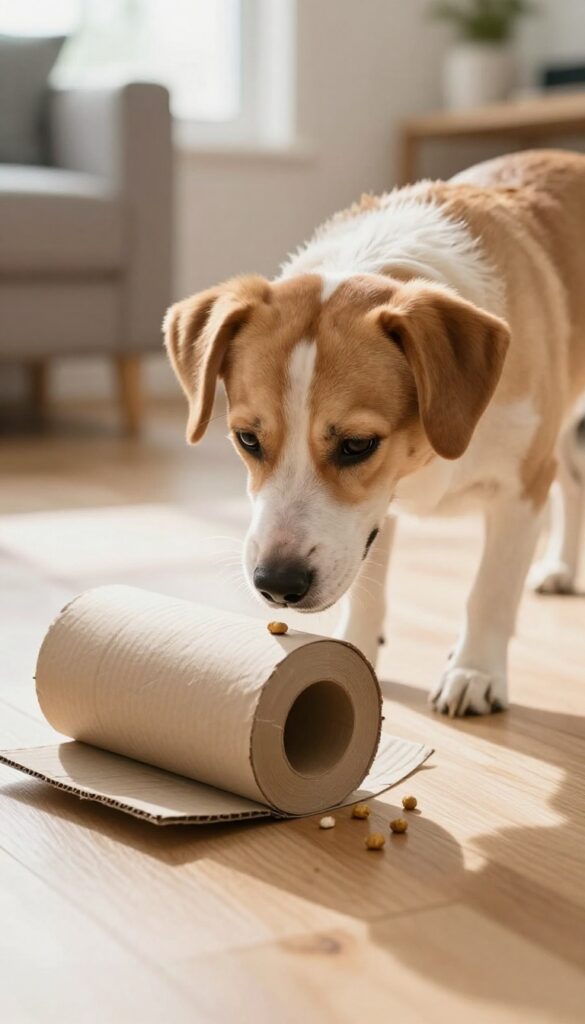
When you finish a roll of toilet paper, don't toss the cardboard tube. It's the perfect size for a quick treat-dispensing puzzle. Fold the ends inward to create a sealed capsule, then let your dog figure out how to crush and unroll it to get the reward inside.
This is one of the simplest DIY puzzles you can make, and most dogs love the challenge.
Why It Works
The toilet paper roll puzzle taps into your dog's natural foraging instincts. They have to use their paws and mouth to manipulate the cardboard, which provides both mental and physical stimulation. The crinkling sound and the mystery of what's inside keep them engaged for several minutes.
Best For
This puzzle is great for dogs who enjoy destroying things in a controlled way. It's especially suited for small to medium breeds, but larger dogs can also enjoy it—just make sure the roll is large enough that they can't swallow it whole.
Practical Tip
Use treats that are small and dry, like kibble or tiny training treats, to prevent the cardboard from getting soggy too quickly. You can also stuff the roll with a bit of peanut butter (xylitol-free) or wet food before folding, then freeze it for a longer-lasting challenge.
Budget-Friendly Option
If you don't have toilet paper rolls, paper towel rolls work too—just cut them into shorter sections. You can also use empty wrapping paper tubes for a bigger version.
10. Cup Hide-and-Seek
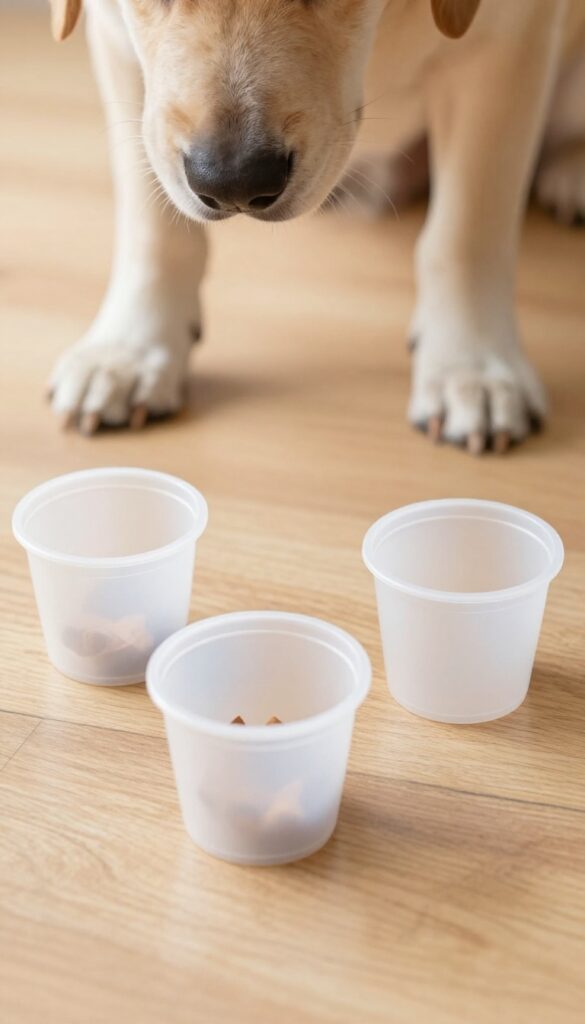
Turn three simple cups into a brain game that taps into your dog's natural sniffing instincts. This classic shell game challenges your pup to find the hidden treat by scent alone. It's quick to set up and keeps dogs entertained for multiple rounds.
Why It Works
Dogs rely heavily on their sense of smell, and this puzzle forces them to focus on scent cues rather than sight. The act of sniffing out the treat provides mental stimulation and reinforces natural foraging behaviors.
Best For
All dogs, from puppies to seniors, as long as they have a gentle nose (no aggressive pawing). It's especially great for apartment dwellers or small spaces since it requires almost no room.
Practical Tip
Use lightweight, opaque cups so your dog can't see through them. Start with one cup and one treat, then gradually add more cups as your dog gets the hang of it. Always supervise to prevent chewing or swallowing cups.
Budget-Friendly Option
Use paper cups or recycled yogurt containers instead of plastic. You can even use empty toilet paper rolls cut in half for a disposable version.
FAQ
Are DIY dog puzzles safe for all dogs?
Most are safe, but always supervise your dog, especially with plastic bottles or cardboard. Remove any small pieces that could be swallowed.
How often should I give my dog puzzle toys?
A few times a week is great. Rotate puzzles to keep them novel. Start with easier ones and increase difficulty as your dog learns.
What if my dog gets frustrated with a puzzle?
Simplify the puzzle or show your dog how it works. Praise small successes. The goal is fun, not frustration.
Can I use these puzzles for puppies?
Yes, but use larger treats and simpler setups. Avoid small parts that could be choking hazards. Supervise closely.
How do I clean DIY puzzle toys?
Wash fabric items in the laundry, wipe plastic with soapy water, and toss cardboard after use. Let everything dry completely.
Conclusion
DIY puzzles don't need to be complicated to make a big difference in your dog's day. Start with the ideas that use items you already have on hand, then watch your pup's confidence grow as they solve each challenge.
Rotate a few favorites to keep things fresh and mentally stimulating. A little creativity goes a long way toward a happier, more relaxed dog—and a stronger bond between you.

I’m Pallab Kishore, the owner of Little Pets Realm — an animal lover and pet care enthusiast sharing easy tips, healthy recipes, and honest advice to help every small pet live a happy, healthy, tail-wagging life.