Spilled red wine on your new beige carpet? Don't panic. A few simple tricks can lift even the toughest stains without harsh chemicals.
You don't need expensive equipment or professional help to keep your carpets looking great.
Dust and dirt settle deep into carpet fibers, making rooms look dull and feel less cozy. Regular vacuuming helps, but it's not enough. A deeper clean every few months makes a huge difference in both appearance and air quality.
These 15 tips cover everything from spot cleaning to whole-room freshening. They're easy to follow and use common household items. Your carpets will thank you.
1. Blot, Don't Rub – The Golden Rule of Stain Removal
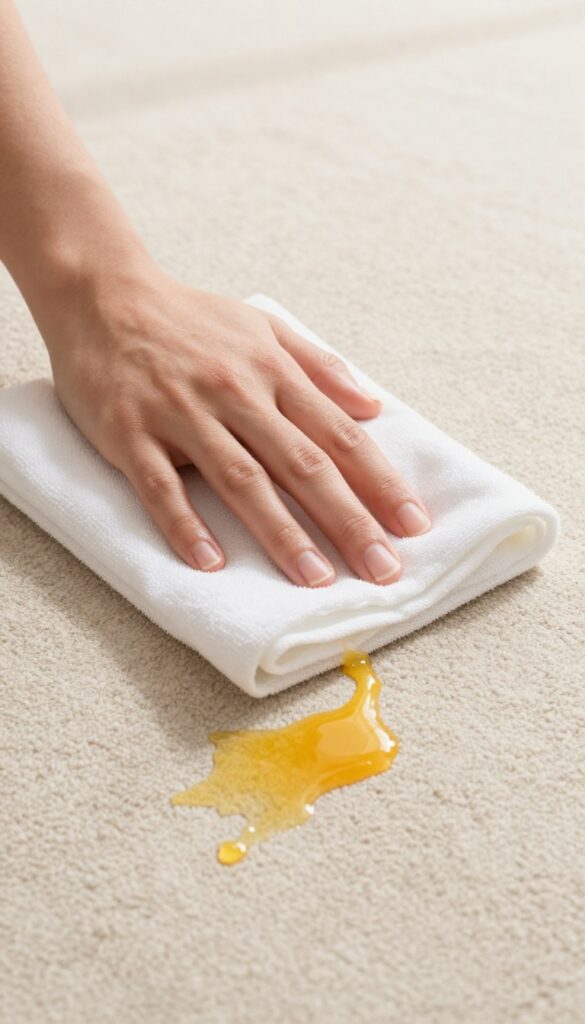
You've just knocked over a glass of juice. Your first instinct might be to grab a rag and scrub. Stop right there.
Scrubbing is the fastest way to turn a small spot into a permanent mess. The real trick is patience and the right motion.
Blotting lifts the liquid without grinding it into the fibers. Rubbing pushes the stain deeper and spreads it wider. Always start from the outside of the spill and work inward to keep it contained.
Use a clean white cloth or paper towel so no dye transfers to your carpet. Apply gentle pressure, then lift. Repeat until no more liquid comes up.
For dried stains, dampen the area first, then blot.
Why Rubbing Makes Things Worse
Carpet fibers are like tiny hooks. When you rub, you force the stain into those hooks and down to the backing. Once it's deep, it's much harder to remove.
Rubbing also frays the fibers, leaving a fuzzy, worn spot that looks different from the rest of the carpet.
The Right Blotting Technique
Place a clean cloth over the stain. Press down firmly with your palm or the heel of your hand. Hold for a few seconds, then lift the cloth straight up.
Don't wipe or scrub. If the cloth gets dirty, rotate to a clean spot. Keep going until the transfer stops.
Blotting Vs. Dabbing
Some people confuse blotting with dabbing. Dabbing is quick up-and-down motions that can still push stain deeper. True blotting is a steady press-and-hold.
Think of it like a stamp, not a paintbrush. Slow and steady wins the stain battle.
2. Club Soda for Fresh Spills
A fresh spill doesn't have to become a permanent stain. Club soda is one of the easiest and most effective tools you can grab from the fridge. The carbonation works to lift the spill from the fibers before it sets in.
When you spill something, act fast. Blot up as much liquid as possible with a clean cloth. Then pour a small amount of club soda directly onto the stain—just enough to cover it.
Let it fizz for a few seconds. The bubbles help push the stain particles up and out. Blot again with a dry cloth until the spot is damp, not wet.
Repeat if needed. This works best on fresh spills like wine, coffee, or juice. For dried stains, try a different method first.
Why Club Soda Works
Club soda contains carbonic acid, which creates carbon dioxide bubbles. These bubbles attach to stain particles and lift them away from the carpet fibers. The salt in club soda also helps absorb moisture, making blotting more effective.
Step-by-step Blotting
Start by blotting the spill with a paper towel or clean cloth. Don't rub—that pushes the stain deeper. Pour club soda over the area.
Let it fizz for 30 seconds. Blot again with a fresh cloth, pressing firmly. Repeat until no more stain transfers.
Finish by placing a dry towel over the spot with a weight on top to absorb leftover moisture.
When Not To Use Club Soda
Club soda is not ideal for old, set-in stains. It also may not work on oil-based spills like grease or butter. For those, use a degreasing dish soap solution instead.
Always test club soda on a hidden area first to make sure it doesn't discolor your carpet.
3. Vinegar and Baking Soda for Tough Stains
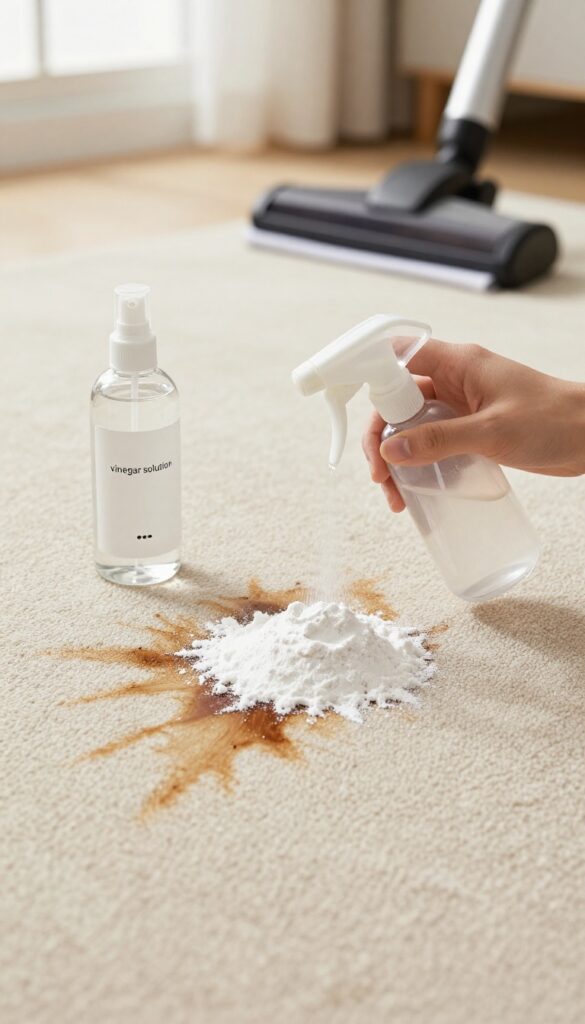
Some stains just won't budge with regular cleaners. Coffee spills, red wine, and pet accidents can set deep into carpet fibers if not treated quickly. That's where the classic duo of vinegar and baking soda comes in.
This simple, non-toxic combination breaks down stubborn stains without damaging your carpet.
Mix equal parts white vinegar and water in a spray bottle. Spray the stained area until it's damp but not soaked. Sprinkle a generous layer of baking soda over the spot.
Let it sit for 15 minutes—the fizzing action lifts the stain from the fibers. Blot with a clean cloth, working from the outside in. Repeat if needed.
Vacuum once dry.
Why This Combo Works
Vinegar is acidic and dissolves many stain compounds, while baking soda is a mild abrasive that helps scrub away residue. The fizzing reaction physically pushes dirt out of the carpet fibers. Together, they tackle stains without harsh chemicals, making them safe for pets and kids.
Best Stains To Treat
This method is especially effective on coffee, tea, red wine, and pet urine. For dried stains, pre-wet with vinegar solution and let it soak for 5 minutes before adding baking soda. Avoid using on wool carpets—vinegar can damage natural fibers.
Tips For Success
Always blot, never rub, to avoid spreading the stain. Use white vinegar only—apple cider or balsamic can cause discoloration. Test on a hidden area first.
For extra stubborn spots, add a drop of dish soap to the vinegar solution.
4. Hydrogen Peroxide for Blood and Organic Stains
Blood stains on carpet can look alarming, but they're actually one of the easier messes to clean—if you act fast. The key is to use an oxidizing agent that breaks down the proteins in blood without setting the stain. Hydrogen peroxide does exactly that, and it works on other organic stains like urine, sweat, or grass.
For fresh blood, blot up as much as possible with a dry cloth. Apply 3% hydrogen peroxide directly to the stain—it will start to bubble as it breaks down the organic matter. Let it work for a few minutes, then blot with a clean cloth.
Repeat if needed. For dried stains, scrape off any crusty bits first, then apply peroxide and let it sit longer before blotting.
Why Hydrogen Peroxide Works
Hydrogen peroxide releases oxygen when it contacts organic material, which lifts the stain from the fibers. It's a mild bleach, so it's safe for most synthetic carpets but can lighten wool or silk. Always test in an inconspicuous spot first.
Step-by-step Application
Blot the stain first to remove excess liquid. Pour a small amount of 3% hydrogen peroxide onto the stain—enough to saturate it but not soak through the backing. Let it bubble for 2–3 minutes.
Blot with a white cloth until the stain transfers. Rinse with cold water and blot dry.
Safety And Precautions
Never use hydrogen peroxide on wool, silk, or antique carpets—it can cause discoloration. Wear gloves to protect your skin. Keep the area well-ventilated.
If the stain doesn't lift after two tries, switch to an enzyme cleaner instead.
5. Dish Soap and Warm Water for Grease
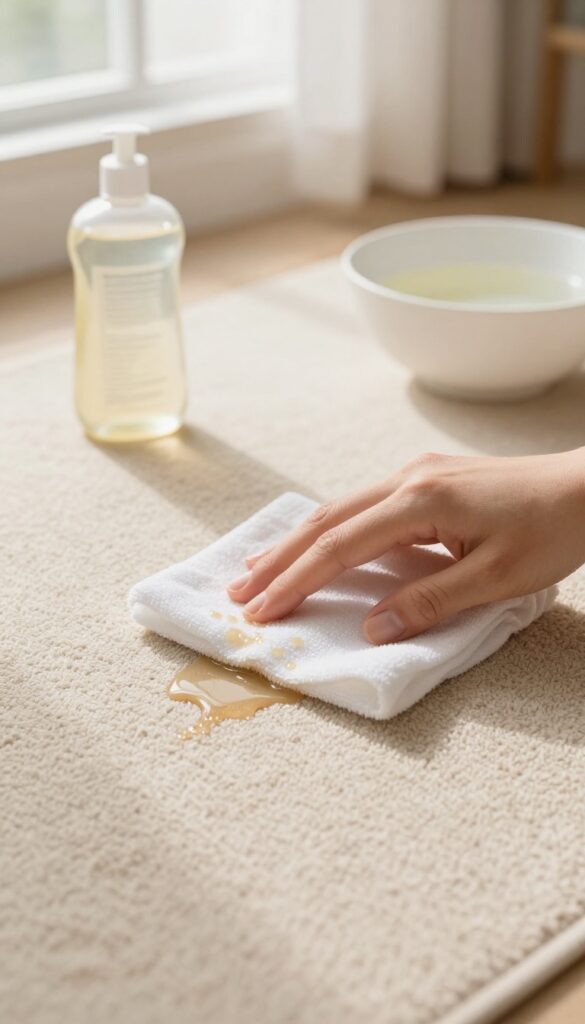
Grease stains from food spills or oily fingerprints can be stubborn, but dish soap is a natural degreaser that cuts through the grime without damaging carpet fibers. Unlike harsh solvents, a gentle dish soap solution works effectively on fresh or set-in grease marks. You probably already have everything you need in your kitchen.
Why Dish Soap Works
Dish soap is designed to break down grease on dishes, and it does the same on carpet. Its surfactants lift oil molecules from fibers so they can be blotted away. It's gentle enough for most carpet types, including synthetic blends and wool.
Step-by-step Cleaning
Mix a few drops of liquid dish soap with a cup of warm water. Dip a clean white cloth or paper towel into the solution, then dab—don't rub—the stain. Work from the outside inward to avoid spreading.
Blot with a dry cloth to absorb the loosened grease. Rinse the area with a damp cloth (no soap) to remove any residue, then blot dry.
Tips For Stubborn Spots
For older or dried grease stains, let the soap solution sit for 5 minutes before blotting. If the stain persists, repeat the process. Avoid using too much water, as it can soak into the carpet pad and cause mold.
Always test the solution on a hidden area first.
6. Ice Cube Trick for Gum and Wax
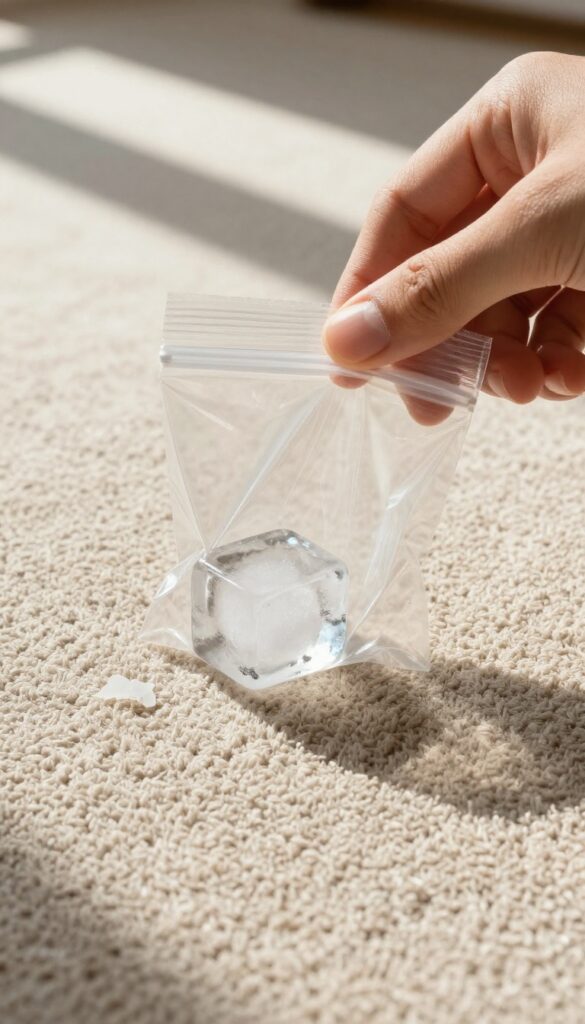
Chewing gum and candle wax are two of the most annoying things to get out of carpet. They smear, stick, and seem impossible to remove. But there's a simple trick that works every time: freeze them solid with an ice cube.
Once frozen, they crack right off without leaving a trace.
This method is incredibly easy and requires no chemicals. Just grab an ice cube, pop it in a plastic bag (so you don't wet the carpet), and hold it on the gum or wax for about 30 seconds. You'll feel it harden.
Then take a dull knife or a spoon and gently scrape it off. The frozen material should break away cleanly. If any small bits remain, repeat the process.
No sticky residue, no stains, no fuss.
Why Freezing Works Best
Gum and wax are sticky because they're soft and warm. When you freeze them, they become brittle and lose their adhesive grip. The carpet fibers stay unaffected because you're not rubbing or applying heat.
This method is also safe for all carpet types, including synthetic and wool blends.
Step-by-step: How To Do It Right
First, remove any large chunks of gum or wax by hand. Then place a plastic bag with an ice cube directly on the residue. Wait 30 seconds to a minute.
Test with your finger—it should feel rock hard. Use a dull knife or a plastic scraper to lift the frozen piece. Work from the edges inward.
If the gum or wax starts to soften again, reapply the ice. Finish by vacuuming the area to restore the carpet pile.
What If It Doesn't Come Off Completely?
Sometimes a thin film remains, especially with colored wax. In that case, place a paper towel over the spot and run a warm iron over it briefly. The heat will melt the residue into the towel.
But for most cases, the ice cube trick is all you need. It's fast, cheap, and leaves your carpet looking like new.
7. Vacuum Slowly and in Multiple Directions
Most people rush through vacuuming, but speed actually leaves dirt behind. Going slowly lets the brush agitate fibers and pull up deeply embedded dust. Overlap each pass by a few inches to avoid missing spots.
It takes a little longer, but the results are worth it.
Vacuuming in multiple directions is a game-changer. Carpet fibers are woven in a way that traps dirt from all angles. By vacuuming north-south, then east-west, you lift debris that a single-direction pass would miss.
This technique is especially effective in high-traffic areas where dirt gets ground in deep. Aim for at least two passes per section, changing direction each time.
Slow Down For Deep Cleaning
Set your vacuum to a slower speed if it has a setting, or simply push it at a deliberate pace. Think of it as a gentle stroll, not a race. Each second the brush roller spends on a spot gives it more time to loosen dirt.
You'll see more dust in the canister—proof it's working.
Overlap Each Pass
When you vacuum, overlap each stroke by about half the width of the head. This ensures no strip of carpet is skipped. It's like mowing the lawn—overlapping prevents those ugly missed patches.
For carpets, it means every fiber gets cleaned evenly.
Change Directions Every Time
Don't just vacuum back and forth in the same line. Start by going parallel to the longest wall, then switch to perpendicular. On the next cleaning, try diagonal.
This variety lifts dirt from different angles and prevents the carpet from developing a flattened, matted look.
8. Use a Carpet Rake for Matted Fibers
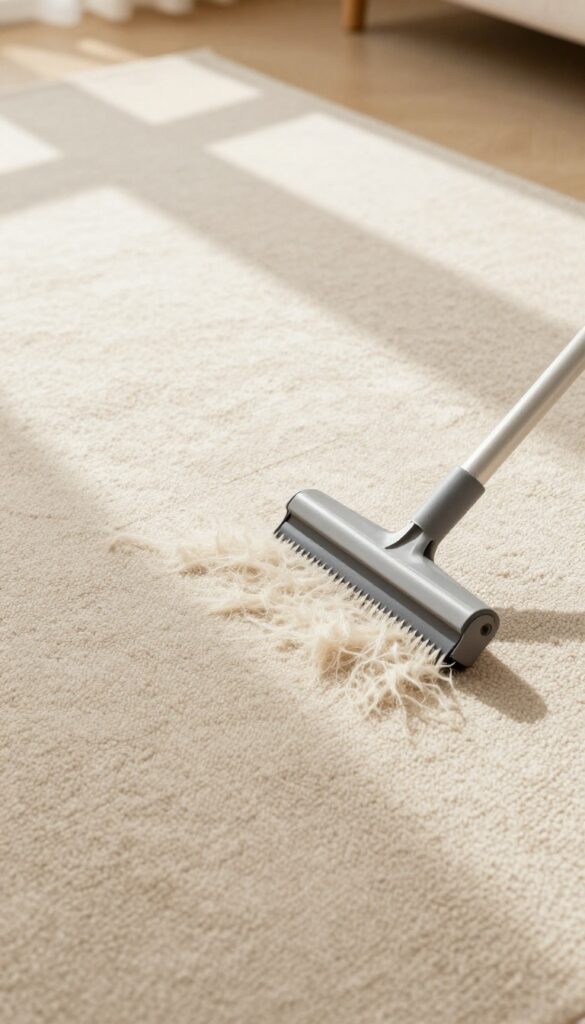
High-traffic areas like hallways and living room walkways take a beating. Over time, carpet fibers get crushed and matted, creating dull, flattened paths. A carpet rake is a simple tool that fluffs those fibers back to life, making your carpet look refreshed without any chemicals.
Matted fibers don't just look bad—they trap dirt deeper, making regular vacuuming less effective. A carpet rake lifts the pile and loosens embedded debris so your vacuum can pull it out. Use it before vacuuming for best results.
Why Carpet Fibers Get Matted
Foot traffic compresses fibers, especially in areas where people walk frequently. Furniture weight and even vacuuming in the same direction can worsen the flattening. Over time, the fibers lose their bounce and lie flat, creating a worn appearance.
How To Use A Carpet Rake
Start by raking in one direction, then switch to a perpendicular pass. Use gentle pressure—you're lifting fibers, not scratching the backing. Work in sections, and follow up with a thorough vacuum.
For heavily matted areas, repeat the process a few times.
When To Rake Vs. Steam Clean
Raking is for maintenance, not deep cleaning. Use it every few weeks to keep high-traffic areas looking fresh. If your carpet is heavily soiled or has set-in stains, steam cleaning is a better option.
Raking before a steam clean also helps the machine reach deeper.
9. Baking Soda Deodorizer – Let It Sit Overnight
Carpets trap odors from pets, cooking, and daily life. Even if they look clean, they might smell stale. Baking soda is a natural, inexpensive deodorizer that neutralizes odors without masking them with artificial scents.
Sprinkle baking soda generously over the entire carpet, focusing on high-traffic areas and spots where odors are strongest. Use a sieve or a shaker for even distribution. Let it sit for at least 6 hours—overnight is best—so it has time to absorb odors deep in the fibers.
Then vacuum thoroughly, making multiple passes to pick up all the powder. Your carpet will smell fresher immediately.
Why Overnight Works Best
Baking soda needs time to react with odor molecules. A quick 15-minute sprinkle won't do much. Letting it sit overnight gives it hours to penetrate and neutralize.
If you can, leave it for 12 to 24 hours for the best results.
Boost The Power With Essential Oils
Add a few drops of your favorite essential oil (like lavender, lemon, or tea tree) to the baking soda before sprinkling. Mix well with a fork to break up clumps. This adds a light, natural scent that lasts for days.
Don't Forget The Corners And Under Furniture
Odors lurk in corners and under furniture where vacuuming is less frequent. Use a small brush or your hand to work baking soda into those areas. Let it sit, then vacuum with a crevice tool to reach tight spots.
10. Essential Oils for a Custom Scent
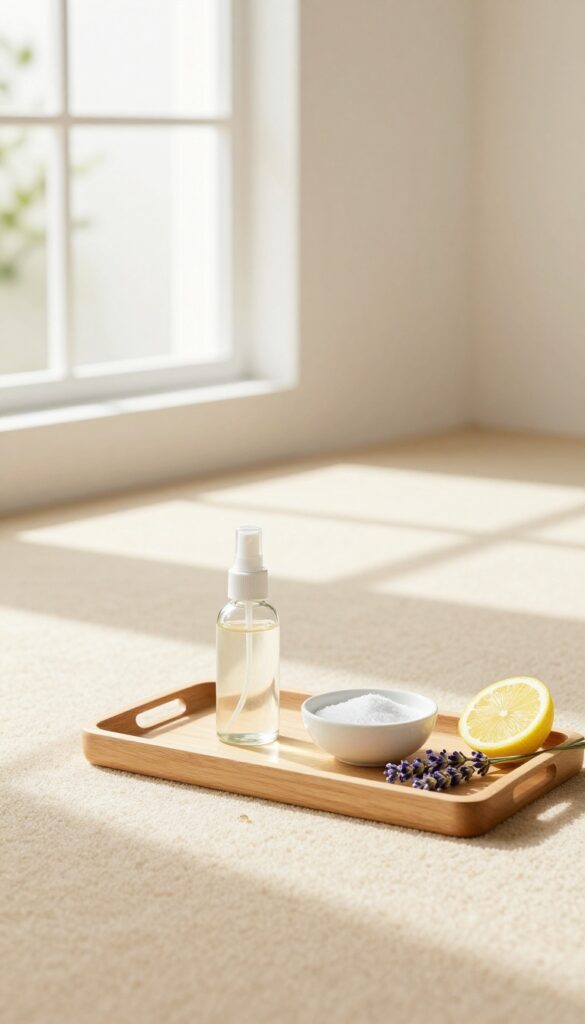
A fresh-smelling carpet can transform a room, but synthetic air fresheners often leave a chemical trail. Essential oils offer a natural alternative that not only smells great but also adds antibacterial properties. By pairing them with baking soda, you create a custom deodorizer that's safe for kids and pets.
Choosing Your Oils
Lavender is calming and great for bedrooms. Lemon and orange are uplifting and cut through grease. Tea tree oil is a powerful disinfectant, perfect for high-traffic areas or pet spots.
Start with 10–15 drops per cup of baking soda.
Application Tips
Mix the oil into the baking soda thoroughly to avoid clumps. Sprinkle evenly over the carpet, focusing on smelly areas. Let it sit for at least 30 minutes—longer for stubborn odors.
Vacuum slowly to pick up all the powder.
Safety And Storage
Test a small hidden area first to ensure the oil doesn't stain. Store leftover mixture in a sealed jar away from heat. Avoid citrus oils on wool carpets, as they can cause fading.
11. Steam Clean Every 6 Months
Vacuuming gets surface dirt, but it can't reach the grime embedded deep in carpet fibers. Over time, dust mites, allergens, and trapped odors build up. A steam clean every six months resets your carpet's freshness and extends its life.
Rent Or Buy?
If you only need to clean carpets twice a year, renting a machine from a grocery store or home improvement center is cost-effective. Many rentals come with cleaning solution and instructions. For larger homes or frequent messes, buying a budget-friendly steam cleaner pays off in the long run.
Prep The Room First
Move furniture to another room or onto plastic sliders. Vacuum thoroughly to remove loose dirt. Spot-treat stains with a carpet cleaner before steaming.
This prevents stains from setting deeper during the steam process.
Drying Is Non-negotiable
After steam cleaning, open windows, turn on fans, and avoid walking on the carpet for at least 6–12 hours. Damp carpets can lead to mold and mildew. Speed drying by placing towels in high-traffic areas and changing them when wet.
12. Shaving Cream for Upholstery and Carpet Spots
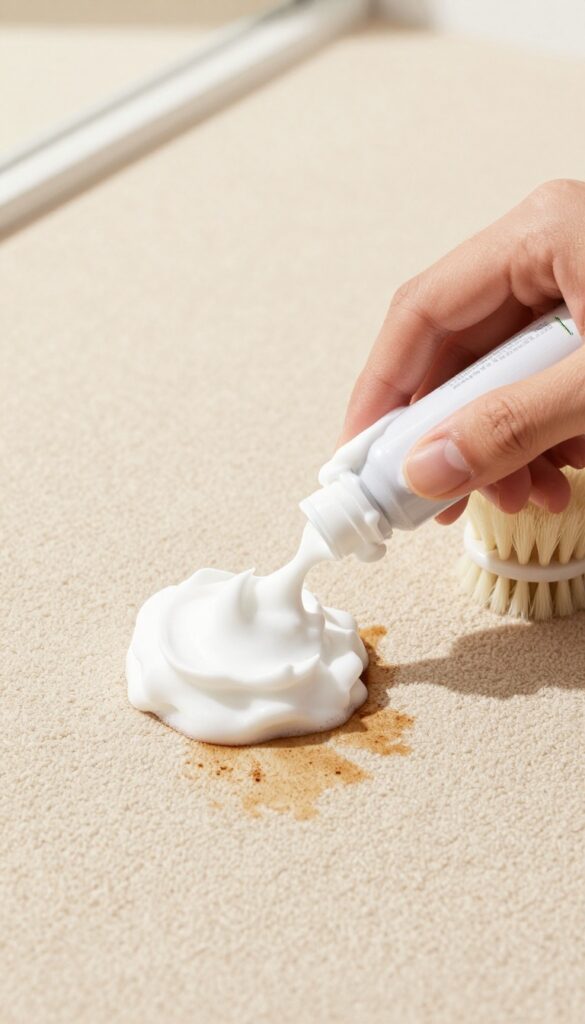
Plain shaving cream isn’t just for your morning routine—it’s a surprisingly effective spot cleaner for carpets and upholstery. The foamy texture lifts dirt and stains without soaking the fibers, making it gentle on even delicate materials. Best of all, you probably already have a can in your bathroom.
To use shaving cream on a carpet spot, start by blotting up any excess liquid or debris. Squirt a small amount of plain white shaving cream directly onto the stain—avoid gel formulas, as they contain oils that can leave residue. Gently rub the cream into the spot with a soft brush or your fingers, working from the edges inward to prevent spreading.
Let it sit for about 15 minutes to break down the stain. Then, blot the area with a damp, clean cloth, pressing firmly to lift the cream and dirt. Repeat if needed, then let the carpet air dry.
This method works wonders on fresh stains like coffee, juice, or even makeup.
Why Plain Shaving Cream Works
The magic lies in the ingredients: most plain shaving creams contain soap, water, and a foaming agent that gently lifts dirt without harsh chemicals. Unlike stain removers that can bleach or discolor fibers, shaving cream is pH-balanced and safe for most carpet materials. It’s also non-toxic, making it a great option for homes with kids or pets.
Best Stains For Shaving Cream Treatment
Shaving cream is particularly effective on water-based stains like soda, tea, and mud. It can also tackle grease spots from food or lotion, though you may need to let it sit longer. Avoid using it on old, set-in stains that have already dried—those may require a stronger cleaner or professional treatment.
Tips For Upholstery And Delicate Fabrics
When using shaving cream on upholstery, test a hidden area first to check for colorfastness. Apply the cream with a soft cloth rather than rubbing directly, and blot instead of scrubbing to avoid damaging the fabric. For delicate materials like velvet or silk, stick to dry cleaning methods or consult a professional.
13. Cornstarch for Greasy Footprints
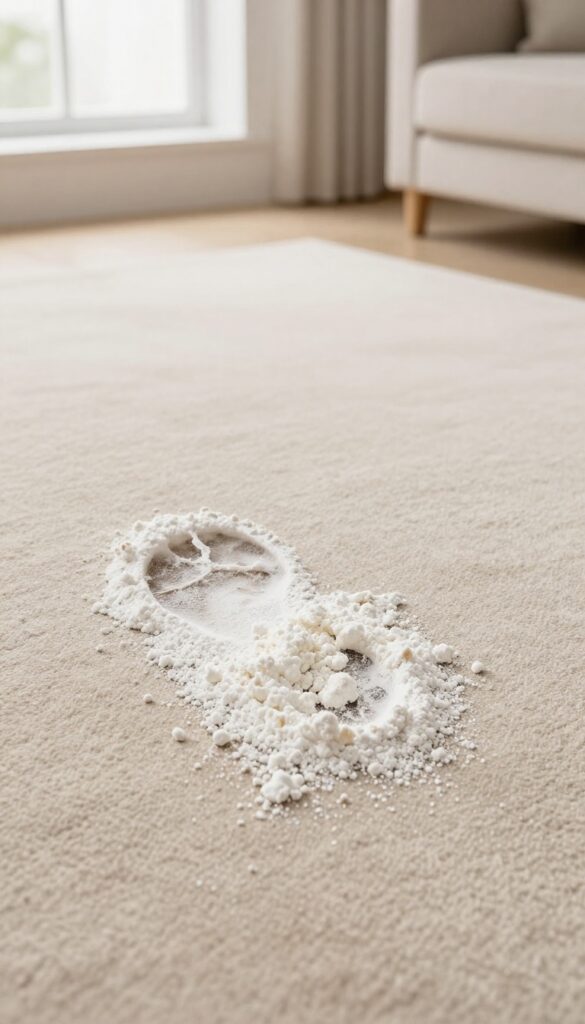
Greasy footprints from cooking oil, lotion, or bare feet can leave dark, stubborn marks on light carpets. Reaching for a chemical cleaner might seem like the only option, but cornstarch works just as well—and it's already in your pantry. This simple powder absorbs oil without scrubbing or spreading the stain.
Cornstarch is a natural absorbent that pulls grease out of carpet fibers. It's safe for all carpet types and won't leave residue. For best results, act quickly while the oil is still fresh.
How To Apply
Generously sprinkle cornstarch over the greasy footprint or oily spot. Use enough to create a visible white layer—about a quarter-inch thick. Let it sit for at least 30 minutes.
The cornstarch will gradually turn darker as it absorbs the oil. For heavier stains, leave it on for an hour or even overnight.
Vacuuming Tips
After the waiting period, vacuum the area thoroughly using a brush attachment. Go over it in multiple directions to lift all the powder. If a faint mark remains, repeat the process.
Avoid rubbing the stain before applying cornstarch, as that can push the oil deeper into the fibers.
When To Repeat
One treatment usually lifts fresh footprints, but older or heavier spots may need a second round. After vacuuming, check the area in good light. If you still see a shadow, sprinkle fresh cornstarch and let it sit again.
This method is gentle enough to use as often as needed without damaging the carpet.
14. Rubbing Alcohol for Ink and Marker
Ink stains look scary, but they don't have to be permanent. Rubbing alcohol breaks down the pigments in most inks and markers, making them lift right out of carpet fibers. This trick works on ballpoint pens, felt-tip markers, and even some permanent markers.
How To Apply
Dab a cotton ball or clean cloth in rubbing alcohol—70% is fine, 90% works faster. Blot the stain gently, starting from the outside and moving inward. Don't rub; that spreads the ink.
The alcohol dissolves the ink, and the cotton absorbs it. Replace the cotton as it picks up color.
Rinse And Dry
Once the ink is mostly gone, rinse the area with a little water on a clean cloth to remove any alcohol residue. Blot dry with a towel. Repeat if needed—some stubborn stains take a couple of rounds.
Let it air dry completely, then vacuum to restore the carpet's texture.
Test First
Always test rubbing alcohol on a hidden spot of your carpet first. Some dyes or synthetic fibers may react. If the test spot looks fine, you're good to go.
For delicate or antique carpets, consider calling a pro.
15. Professional Cleaning Once a Year
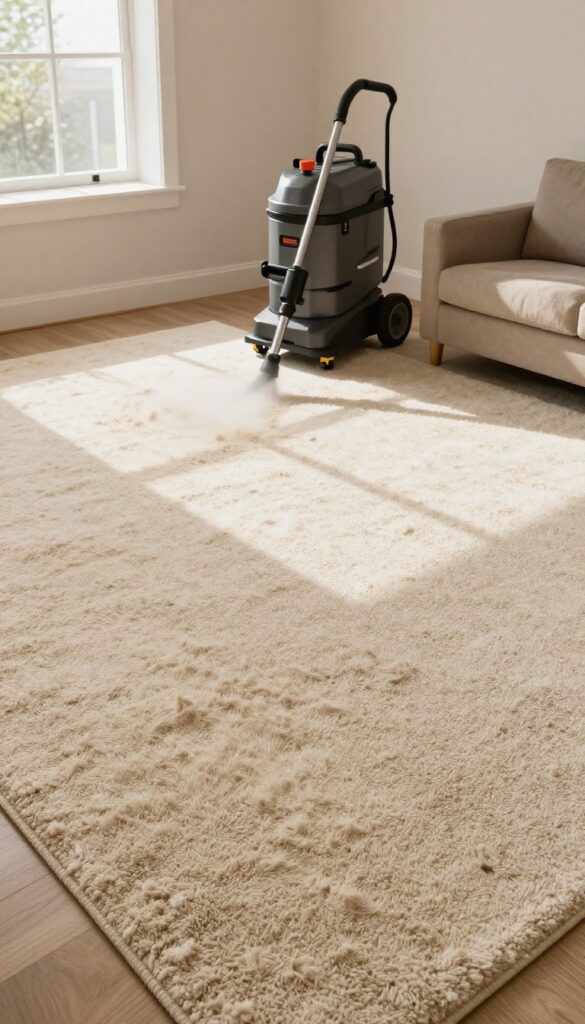
Even if you vacuum regularly and treat stains quickly, carpet fibers trap dirt, allergens, and dust mites that build up over time. A professional deep cleaning once a year removes that embedded grime and restores your carpet’s original texture and color. It’s an investment that pays off in longevity and freshness, especially in homes with kids or pets.
What Professional Cleaning Actually Does
Professional cleaners use hot water extraction (steam cleaning) to force hot water and cleaning solution deep into the fibers, then vacuum it all out along with the dirt. This process removes what regular vacuuming and spot treatments leave behind—like hardened oils, tracked-in soil, and microscopic allergens. The result is a deeper clean that makes your carpet look newer and feel softer.
How Often Is Enough?
For most households, once a year is sufficient. But if you have high-traffic areas, pets that shed, or allergy sufferers, consider every six months. Over-cleaning can wear down fibers, so stick to the minimum that keeps your carpet fresh.
A good rule of thumb: if your carpet looks dingy or smells musty despite regular care, it’s time to call a pro.
Choosing The Right Service
Not all carpet cleaners are equal. Look for companies that use truck-mounted steam cleaners (they’re more powerful than portable units) and eco-friendly solutions. Check reviews, ask about their drying time (faster is better to prevent mold), and get a written estimate.
Avoid services that push “bonus” treatments like stain protectors unless you really need them.
FAQ
How often should I vacuum my carpets?
Vacuum high-traffic areas at least twice a week and the rest of the house once a week. More often if you have pets or allergies.
Can I use bleach on carpet stains?
Avoid bleach—it can discolor or damage carpet fibers. Use hydrogen peroxide or vinegar-based solutions instead.
What's the best way to remove pet urine odor?
Blot up as much as possible, then apply a mixture of equal parts water and white vinegar. Let it sit, then sprinkle baking soda. Vacuum when dry.
How long does carpet take to dry after steam cleaning?
Typically 6 to 12 hours. Open windows and use fans to speed up drying. Avoid walking on it until fully dry to prevent re-soiling.
Is it safe to use baking soda on all carpet types?
Yes, baking soda is safe for most carpets. Test on a hidden area first, especially for delicate or natural fibers like wool.
Conclusion
You don't need a closet full of expensive products to keep your carpets looking and smelling fresh. These 15 tips prove that everyday ingredients and a little technique can handle everything from red wine spills to musty odors. Pick two or three that target your biggest carpet frustrations and give them a try this week.
Consistent care with the right approach makes a visible difference in texture and scent. Your carpets will stay plush and inviting without harsh chemicals or back-breaking effort. Start with what feels manageable, and build from there.