
Feeding time shouldn't leave your kitchen floor looking like a kibble battlefield. These nine budget-friendly DIY stations turn everyday items into organized hubs that keep meals tidy and accessible for your pup.
You'll find ideas that fit snugly in small apartments or spread out in backyards, all designed with simple materials and clear steps. From repurposing an old cabinet to crafting a rolling cart, each project focuses on practicality without sacrificing style.
They help reduce clutter, protect food from moisture, and create a dedicated spot that makes daily routines smoother for both you and your dog. Whether you're handy with tools or prefer quick fixes, these beginner-friendly builds offer realistic solutions to common feeding frustrations.
1. Repurpose an Old Cabinet for Hidden Storage
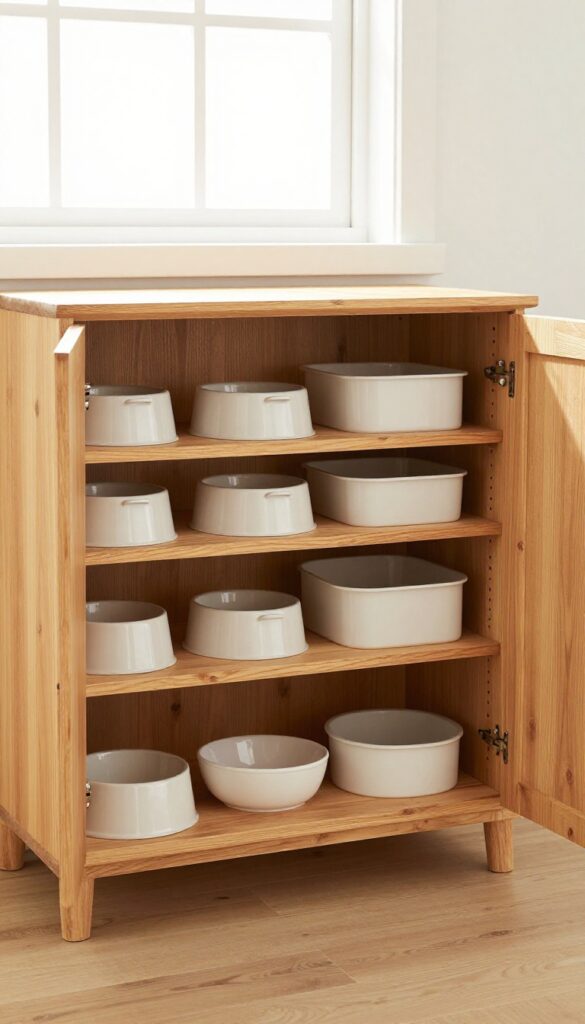
Got an old cabinet gathering dust in the garage or spotted one at a thrift store? It's a goldmine for creating a tidy dog food station that blends right into your home. This idea transforms unused furniture into a sleek hub with shelves for bowls and bins, keeping kibble and supplies neatly tucked away.
Dog owners love how it reduces kitchen clutter while giving their pup a dedicated spot that feels intentional and organized.
Why It Works
A repurposed cabinet works because it offers enclosed storage that protects dog food from moisture and pests, plus shelves keep bowls and accessories within easy reach. The doors hide the mess, making your space look cleaner without sacrificing functionality for daily feeding routines.
Best For
This setup is ideal for small homes or apartments where floor space is limited, as it uses vertical storage efficiently. It suits any dog breed, especially if you want to keep feeding areas discreet and maintain a cohesive look in shared living spaces.
Practical Tip
Add non-slip mats inside the cabinet to prevent bowls from sliding during mealtime. For safety, ensure the doors close securely to avoid curious noses getting into food bins, and wipe down surfaces regularly to prevent crumbs or spills from building up.
2. Build a Wall-Mounted Shelf with Hooks
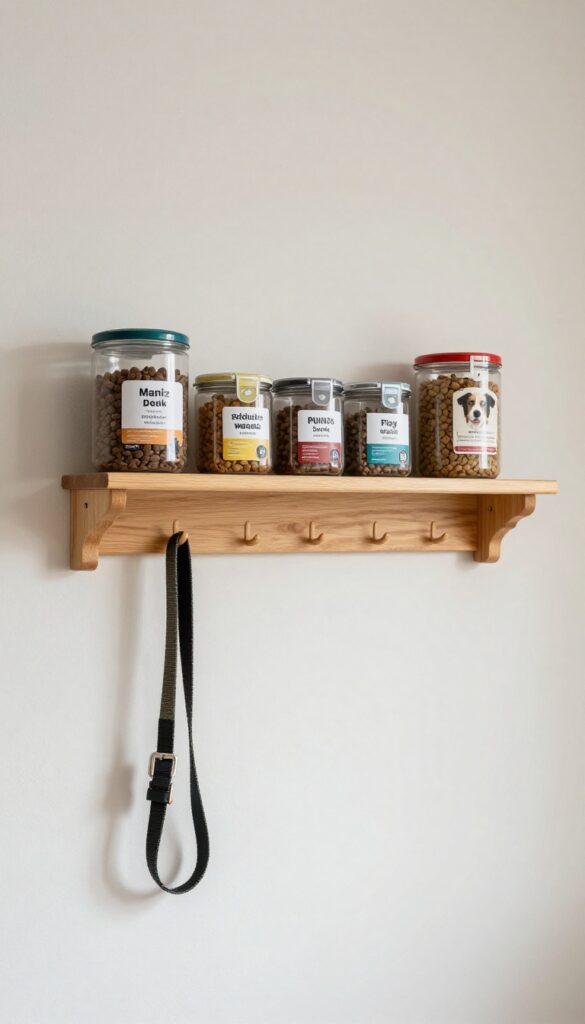
A wall-mounted shelf with hooks transforms unused vertical space into a tidy feeding zone. It keeps food containers off the floor and leashes within easy reach, making daily routines smoother and your home less cluttered.
Dog owners love this setup because it's simple to install and adapts to any wall size. You can customize it with paint or stain to match your decor, adding a personal touch without breaking the bank.
Why It Works
This idea works by maximizing vertical storage, which is perfect for tight spaces like small apartments or narrow hallways. It keeps food dry and organized while preventing tripping hazards from scattered leashes or bowls.
Best For
Best for apartment dwellers or anyone with limited floor space, especially those with small to medium dogs. It's also great for homes where you want a dedicated spot near the door for quick leash grabs before walks.
Practical Tip
Mount the shelf at a height that's easy for you to access but out of your dog's reach to avoid messes. Use sturdy hooks that can hold leashes without bending, and consider adding a non-slip mat on the shelf to keep containers secure.
Budget-Friendly Option
If you're on a tight budget, repurpose an old wooden board or use basic brackets from a hardware store instead of buying a pre-made shelf. Thrift stores often have cheap shelves that can be painted and fitted with hooks for a custom look.
3. Use a Rolling Cart for Flexible Feeding
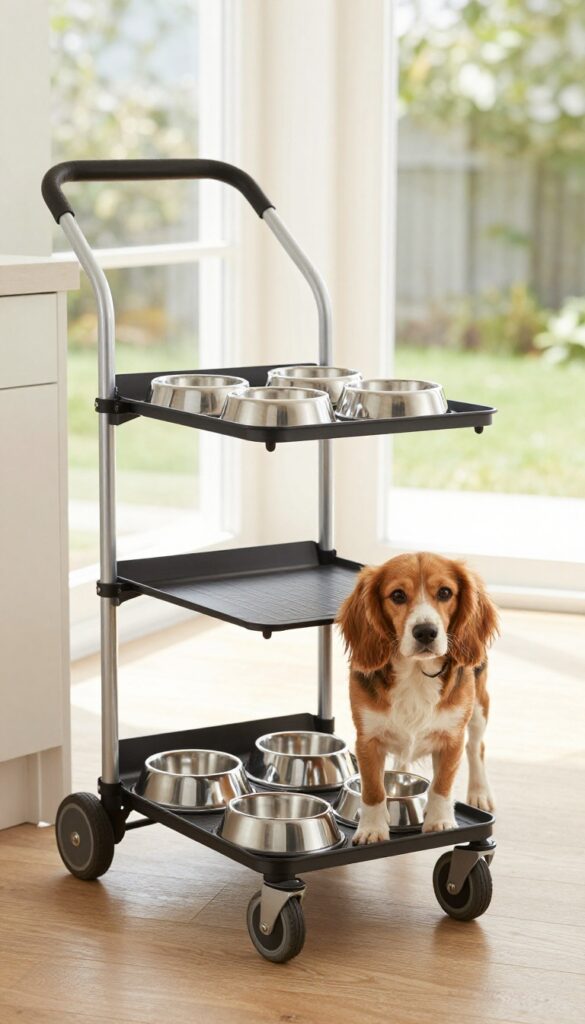
Imagine having a feeding spot that moves with your dog's day. A rolling cart lets you set up meals anywhere, from the kitchen to the patio, without lugging bowls around. It keeps everything in one place, so you can easily adapt to different routines or spaces.
Dog owners love this idea because it adds convenience without taking up permanent floor space. You can roll it out of the way when not in use, making it perfect for homes where every inch counts. Plus, it looks neat and organized, turning feeding time into a smooth part of your daily flow.
Why It Works
This setup works well because it centralizes food and water bowls on trays, reducing spills and messes. The wheels allow effortless movement, so you can switch between indoor and outdoor feeding based on weather or your schedule. It keeps supplies handy and makes cleanup a breeze with everything in reach.
Best For
This idea fits best for apartment dwellers or anyone with limited space who needs flexibility. It's great for dogs that eat in multiple areas or owners who like to feed outdoors occasionally. Small to medium breeds benefit most, as larger carts might be needed for bigger dogs.
Practical Tip
Choose a cart with sturdy wheels and non-slip trays to prevent tipping during mealtime. Place it on a flat surface and secure bowls with adhesive strips if your dog tends to nudge them. Wipe down the cart regularly to keep it clean and free of food residue.
Budget-Friendly Option
If a new cart isn't in your budget, repurpose an old utility cart or even a sturdy plant stand with casters. Look for second-hand options at thrift stores or online marketplaces—just ensure it's stable and easy to clean.
4. Convert a Plastic Bin into a Sealed Station
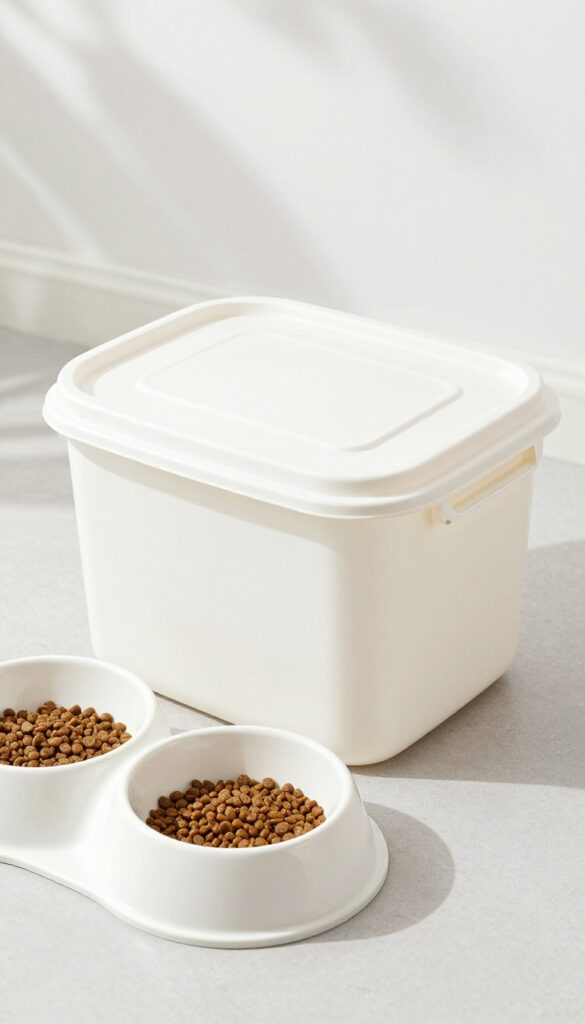
A large plastic bin with a lid can become a simple yet effective feeding station that keeps kibble fresh and messes minimal. Just cut out holes for bowls on top, and you've got a sealed setup that prevents spills and deters pests like ants or curious pets. Dog owners love this idea because it's affordable, easy to customize, and turns a basic storage item into a functional hub for mealtime.
Why It Works
The tight-fitting lid locks in freshness by blocking moisture and air, which helps preserve your dog's food longer. By placing bowls in cut-outs, you contain any slobber or scattered bits inside the bin, making cleanup a breeze and reducing floor messes significantly.
Best For
This station suits apartment dwellers or anyone with limited space, as it's compact and can tuck into a corner or under a counter. It's also great for multi-dog households where you need separate feeding spots without clutter, working well for all breeds from small pups to larger dogs.
Practical Tip
Choose a bin with sturdy sides to support the bowls without tipping. For added comfort, place a non-slip mat underneath to keep it stable during energetic meals. Regularly wipe down the interior to prevent residue buildup and ensure it stays hygienic for your dog.
5. Design a Corner Nook with Floating Shelves
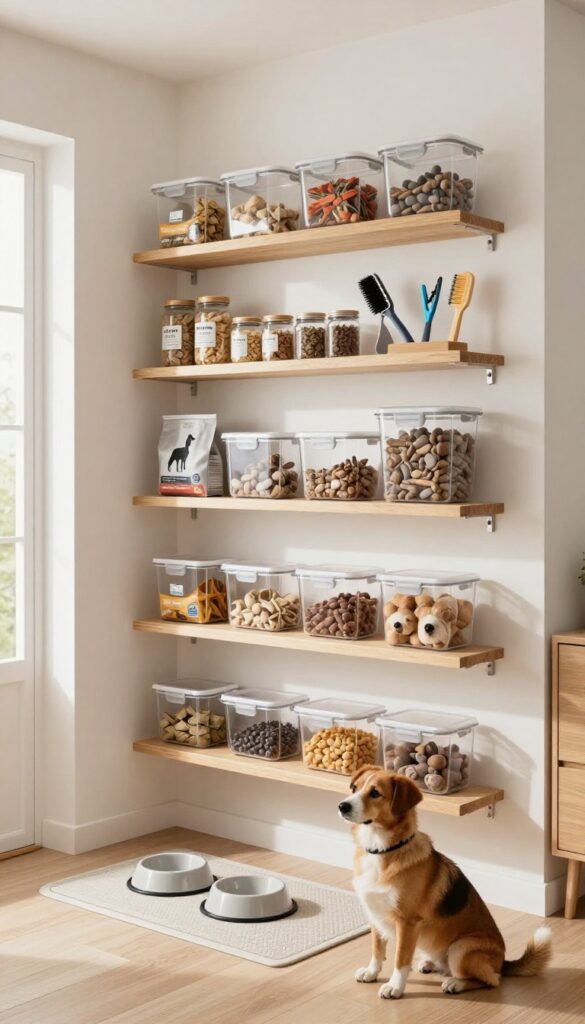
Corners often go unused in homes, but they're perfect for creating a compact dog food station. Floating shelves turn that awkward space into a functional hub for all your pup's essentials, keeping everything within easy reach without taking up floor area. Dog owners love how it declutters their living areas while adding a touch of organized charm to any room.
Why It Works
This setup maximizes vertical storage, which is ideal for small spaces like apartments or tight kitchens. By installing shelves at different heights, you can separate food bins, treat jars, and grooming tools to prevent mix-ups and spills. It keeps items off the ground, reducing mess and making cleanup a breeze after feeding time.
Best For
This idea suits apartment dwellers or anyone with limited square footage who needs smart storage solutions. It works well for small to medium breeds that don't require bulky feeding setups, and it's great for multi-dog households where organization is key to keeping routines smooth.
Practical Tip
Use sturdy brackets and secure the shelves firmly into wall studs to handle weight safely. Place heavier items like food containers on lower shelves for stability, and add non-slip mats to prevent bowls from sliding. Keep grooming tools in labeled bins or hooks on the side for quick access during daily care.
Budget-Friendly Option
If floating shelves aren't in your budget, repurpose old wooden crates or sturdy boxes mounted on brackets. You can also use tension rods with hanging baskets in the corner for a similar effect without drilling holes.
6. Craft a Wooden Crate Station on Wheels
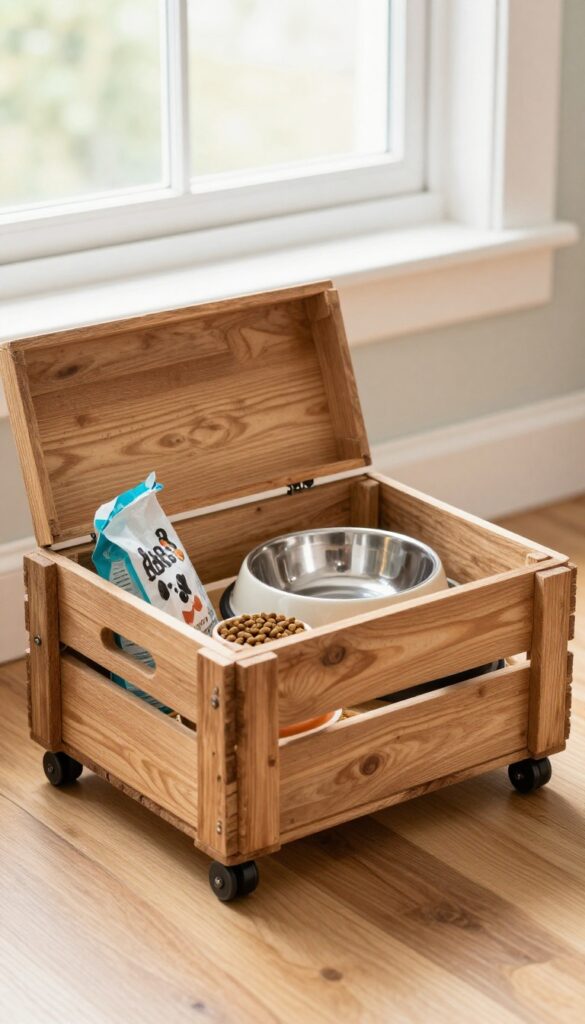
Rolling a wooden crate around might sound like a simple hack, but it transforms feeding time into a breeze. This station combines rustic charm with practicality, letting you store food bags and bowls in one spot that glides wherever your dog needs it. Dog owners love how easy it is to clean up spills or move it out of the way when not in use.
Why It Works
The casters make this station mobile, so you can shift it from kitchen to patio without lifting heavy bags. Its open design allows for quick access to bowls and kibble, while the wood offers durability against daily wear and tear.
Best For
This idea suits pet parents in homes with limited space or those who prefer flexible setups. It works well for medium to large breeds that eat in different areas, like moving from indoors to a backyard during meals.
Practical Tip
Sand the wood edges smooth to prevent splinters, and add a non-slip mat inside to keep bowls steady. For easier cleaning, consider applying a pet-safe sealant to protect against moisture and stains.
Budget-Friendly Option
If new casters are too pricey, check thrift stores for old furniture with wheels you can repurpose. You can also use a sturdy cardboard box as a temporary base before upgrading to wood.
7. Set Up a Pegboard Organizer for Supplies
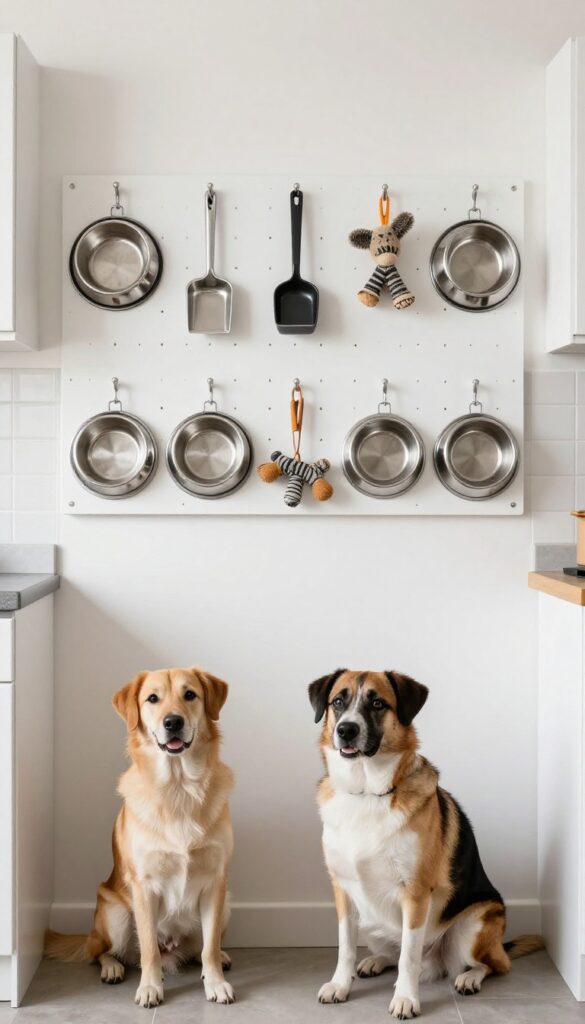
A pegboard organizer turns a plain wall into a functional feeding hub that keeps everything within easy reach. You can hang bowls, scoops, and toys on hooks, making it simple to grab what you need without digging through cabinets. Dog owners love how customizable it is—you can rearrange items as your needs change, and it adds a neat, visual touch to any space.
Why It Works
This setup uses vertical space efficiently, freeing up floor and counter areas in small homes or busy kitchens. It keeps supplies organized and visible, so you always know where things are, reducing clutter and saving time during feeding routines.
Best For
Ideal for apartment dwellers or anyone with limited floor space who wants a tidy feeding corner. It works well for all dog breeds, especially if you have multiple pets or need quick access to feeding essentials.
Practical Tip
Mount the pegboard securely to a wall near your dog's feeding area, using sturdy hooks that can hold bowls without tipping. Choose a spot that's easy to clean around, like a tiled backsplash or washable wall surface, to handle any spills or messes from kibble or water.
Budget-Friendly Option
If you don't want to buy a new pegboard, repurpose an old bulletin board or piece of plywood with nails or adhesive hooks. You can also use colorful bins or baskets hung on the board for extra storage without spending much.
8. Assemble a Tiered Stand for Multiple Dogs
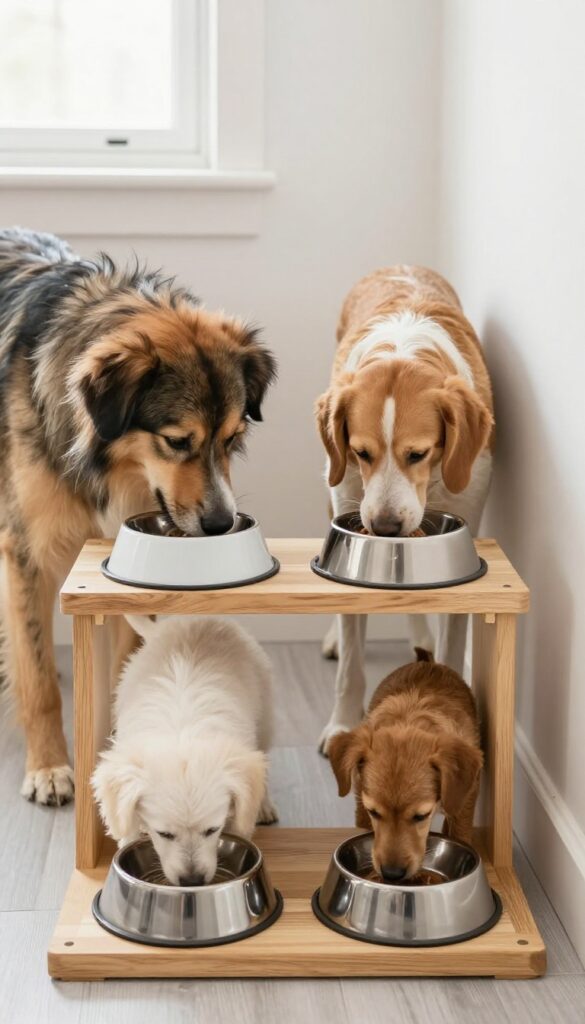
Feeding multiple dogs can turn into a chaotic scramble if they're all crowding around one bowl. A tiered stand gives each pup their own designated spot, spaced out to keep meals calm and organized. Dog owners love how it reduces food-stealing squabbles and makes cleanup easier, since bowls stay in place instead of sliding across the floor.
Why It Works
This setup works because it separates dogs physically during feeding, which minimizes competition and stress. Each dog gets their own level, promoting a more relaxed mealtime routine that can help prevent resource guarding behaviors in multi-dog households.
Best For
This idea fits best for homes with two or more dogs, especially if they tend to rush or argue over food. It's great for small spaces like apartments where floor space is limited, as the vertical design saves room while keeping things orderly.
Practical Tip
Use non-slip mats under each bowl to prevent sliding and spills. Choose sturdy materials like wood or metal for durability, and ensure the stand is stable so it won't tip over when dogs eat. Place it in a quiet corner to reduce distractions during meals.
Budget-Friendly Option
Instead of buying a pre-made stand, repurpose old shelves or crates stacked securely with brackets. You can also use PVC pipes cut to different heights as a lightweight, affordable alternative that's easy to clean.
9. Create a Outdoor Feeding Station with Weatherproofing
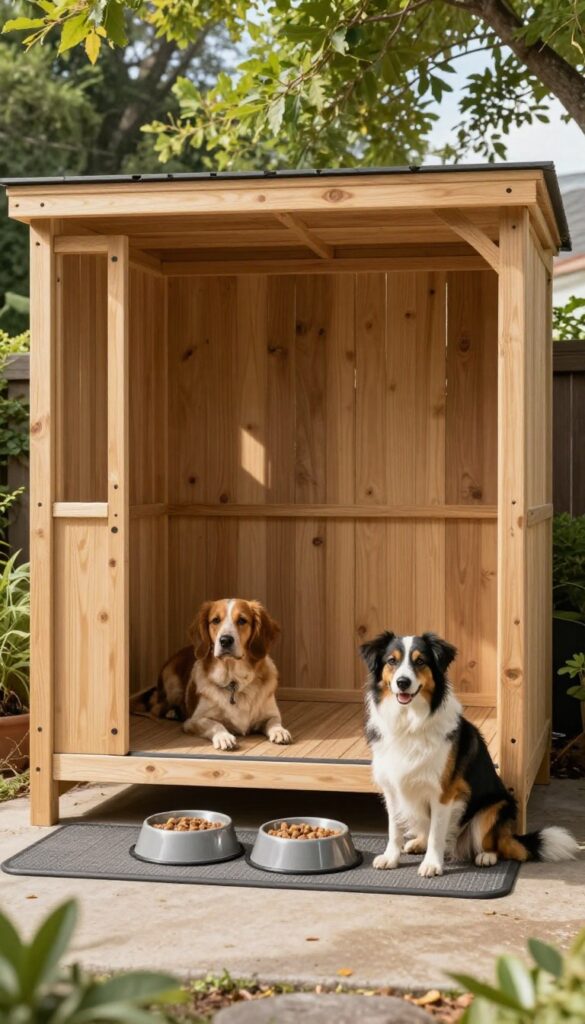
An outdoor feeding station with weatherproofing gives your dog a reliable spot to eat in the backyard, rain or shine. It's a simple build that uses waterproof materials like treated wood or plastic to keep food dry and clean, preventing soggy kibble and messy spills. Dog owners love how it adds convenience to outdoor routines, especially for pups who enjoy meals in the fresh air.
Why It Works
This setup works because it shields food from rain, sun, and wind, maintaining freshness and reducing waste. A covered design also deters pests and keeps the area tidy, making feeding time more hygienic for your dog.
Best For
This idea fits best for homes with backyards or patios, especially for active dogs who spend time outdoors. It's great for owners who want a durable, low-maintenance station that handles various weather conditions without constant upkeep.
Practical Tip
Place the station on a level surface like a patio or deck to prevent tipping. Add a non-slip mat under the bowls for stability, and check regularly for wear or water damage to ensure it stays safe and functional.
Budget-Friendly Option
If you're on a tight budget, use an old plastic storage bin with a lid as a base instead of buying new materials. Cut holes for bowls and add a simple roof made from scrap wood or a tarp for basic weather protection.
FAQ
What basic tools do I need for these DIY projects?
Most ideas require simple tools like a drill, saw, screwdriver, and measuring tape, along with affordable materials like wood, bins, or shelves from hardware stores.
How can I make a dog food station safe for my pet?
Ensure all materials are non-toxic, edges are smooth to prevent injuries, and the station is stable to avoid tipping, especially for active dogs.
Are these ideas suitable for apartments or small spaces?
Yes, many projects focus on compact designs like wall-mounted shelves or rolling carts that maximize space without overwhelming your home.
How do I keep the station clean and hygienic?
Use easy-to-wipe surfaces like plastic or sealed wood, and regularly wash bowls and storage areas to prevent bacteria buildup.
Can I customize these stations for different dog breeds?
Absolutely, adjust heights and bowl sizes based on your dog's size and needs, such as raised stations for larger breeds to aid digestion.
Conclusion
Creating a DIY dog food station on a budget is all about making mealtime simpler and your space more organized. Pick one idea that fits your home and start small—you'll see the benefits quickly.
Remember to focus on safety and ease of use, so both you and your pup enjoy the setup. With a little effort, you can turn feeding into a calm, tidy routine that works for years to come.

I’m Pallab Kishore, the owner of Little Pets Realm — an animal lover and pet care enthusiast sharing easy tips, healthy recipes, and honest advice to help every small pet live a happy, healthy, tail-wagging life.