Last updated on August 19th, 2026 at 04:19 pm
Guinea pigs need a variety of accessories to keep them healthy and entertained.
From feeding essentials to playtime fun, the right accessories can make a big difference.
Here are 13 ideas to enhance your guinea pig’s feeding and play experience.
Heavy Ceramic Food Bowl
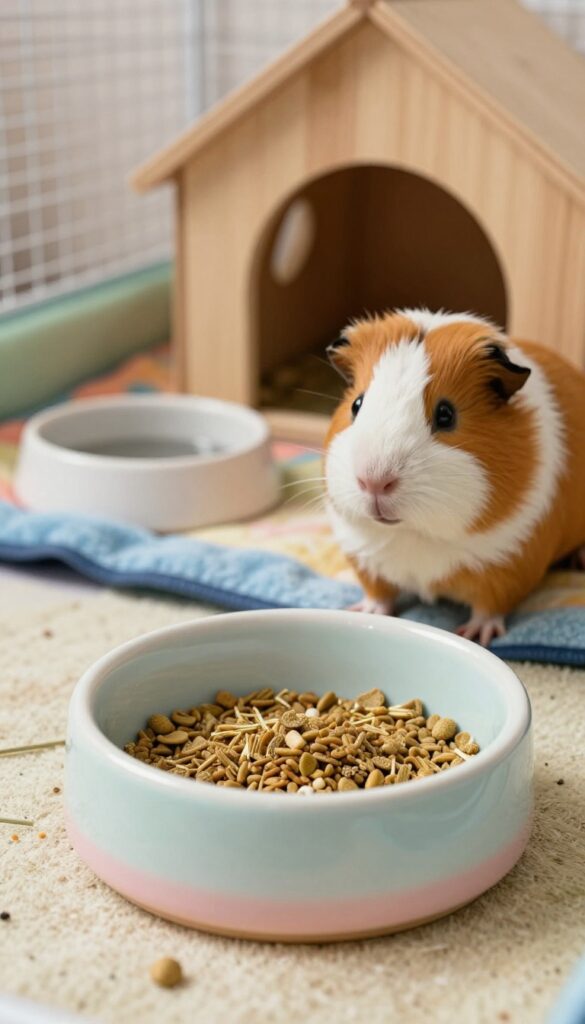
A heavy ceramic food bowl is a staple for any guinea pig feeding setup. Unlike lightweight plastic bowls, ceramic bowls stay put during mealtime and resist chewing, making them a safe and durable choice.
Ceramic bowls offer several advantages for guinea pigs. Their weight prevents tipping, even when enthusiastic eaters hop up to the bowl. They are also non-porous, so bacteria don’t linger, and most are dishwasher safe for easy cleaning.
Available in a range of colors and sizes, you can find one that fits your cage decor and your pet’s needs.
- Prevents tipping and chewing – no more spilled food or plastic shavings.
- Easy to clean – simply pop in the dishwasher or wash by hand.
- Variety of sizes and colors to match your cage setup.
Water Bottle with Ball Bearing
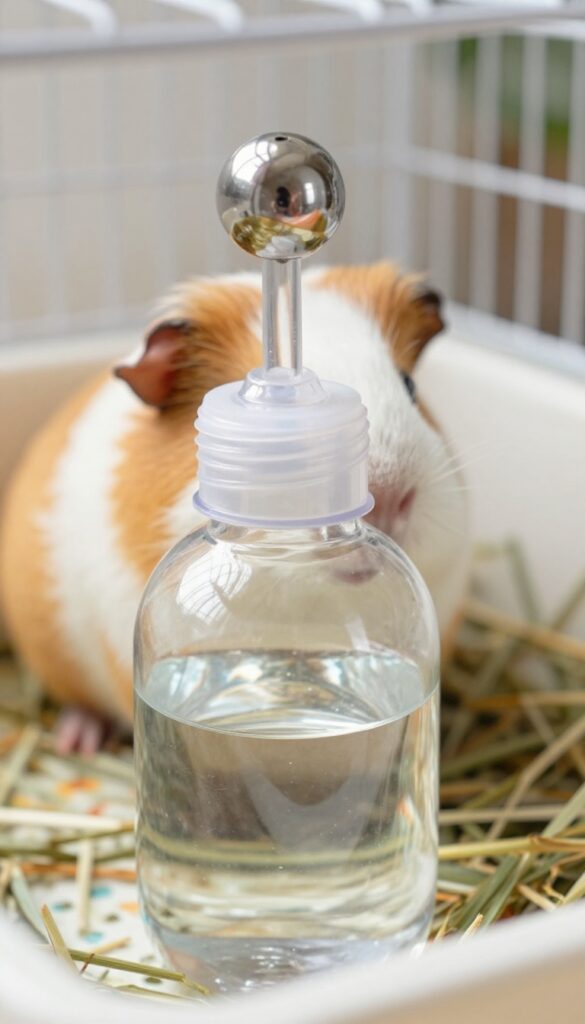
A water bottle with a ball bearing is a staple accessory for any guinea pig cage. Unlike open bowls, which can quickly become contaminated with bedding, droppings, or spilled food, a bottle keeps water clean and fresh. The ball bearing mechanism prevents leaks and drips, while also allowing your guinea pig to control the flow by licking the spout.
When choosing a water bottle, consider the capacity. A 16-ounce bottle is ideal for one or two guinea pigs, providing enough water for a day without needing constant refills. Larger bottles can be used for multiple pigs, but ensure the spout is at a comfortable height for your pets to reach.
Key Benefits
- Provides clean, fresh water without contamination
- Ball bearing design prevents drips and leaks
- Easy to attach to cage bars with a simple hook or bracket
Hay Feeder Rack
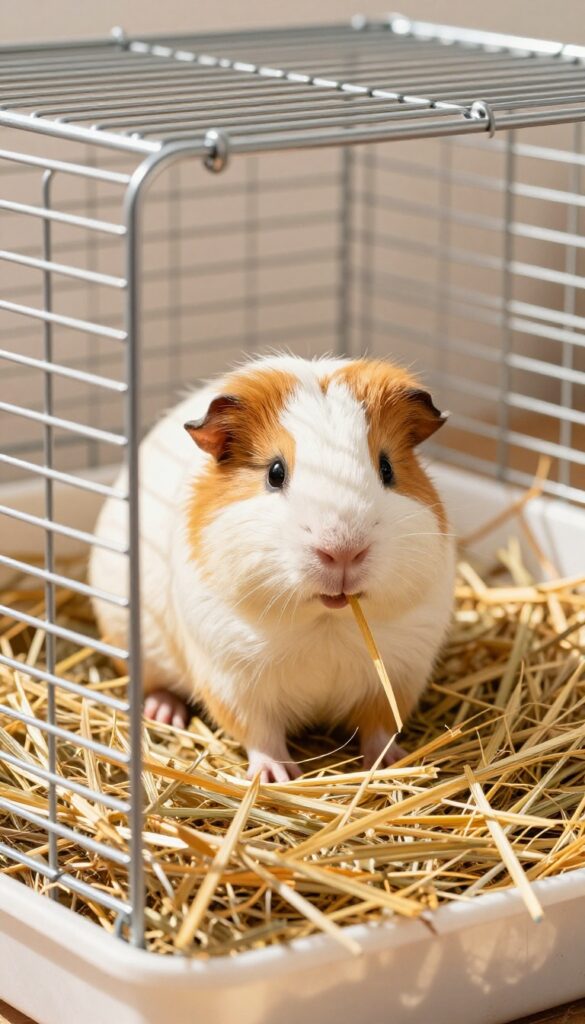
Hay is the cornerstone of a guinea pig’s diet, making up about 80% of what they eat. A hay feeder rack keeps this essential food clean, dry, and accessible while reducing waste and mess.
A hay rack mounts to the side of the cage or sits on the floor, holding hay off the bedding. This prevents soiling and lets your guinea pig pull out fresh strands as needed. It also encourages natural foraging behavior, as they work to extract the hay.
Key Benefits
- Keeps hay clean and free from urine or bedding
- Reduces hay waste by up to 30%
- Promotes natural foraging and chewing
Types of Hay Feeders
There are several styles to choose from: metal grid racks that attach to cage bars, plastic hoppers with wide openings, and fabric or wicker baskets that sit on the floor. Metal racks are durable and easy to clean, while soft fabric ones are safe for chewers. Whichever you choose, make sure the openings are large enough for your guinea pig to pull hay through easily.
Foraging Mat or Snuffle Mat
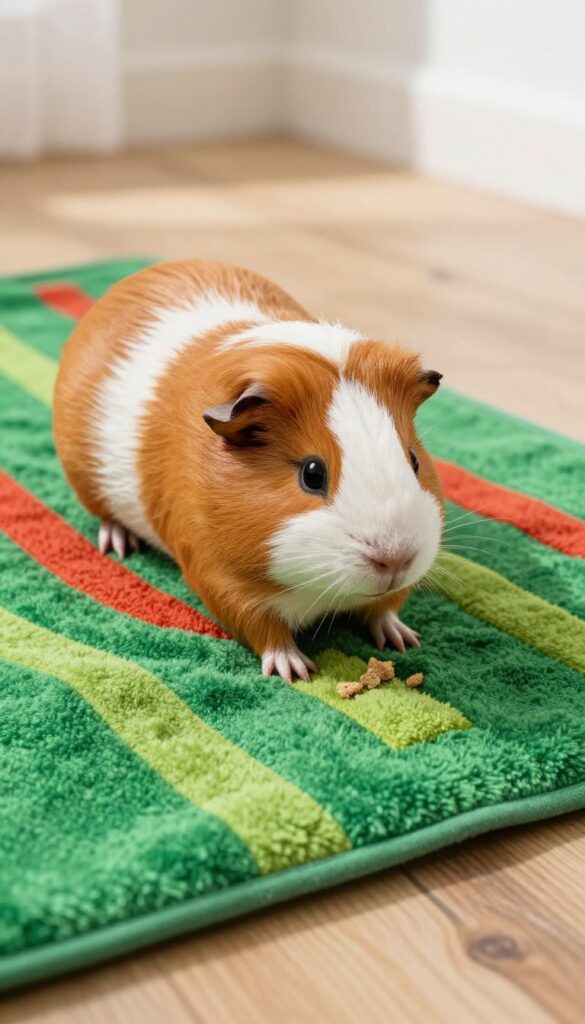
A foraging mat, also known as a snuffle mat, brings out your guinea pig’s natural instinct to search for food. Instead of simply eating from a bowl, your piggy gets to root around and find hidden treats, turning mealtime into a fun game.
Foraging mats are typically made of fleece or other soft fabric strips tied to a base. You can hide pellets, dried herbs, or small vegetable pieces among the strips. This activity mimics the way guinea pigs would forage for food in the wild, providing both mental stimulation and physical activity.
Key Benefits
- Mimics natural foraging behavior
- Hides treats and pellets for discovery
- Provides mental stimulation and prevents boredom
When choosing a foraging mat, make sure it’s made from guinea pig-safe materials like fleece or cotton. Avoid mats with small parts that could be chewed off and swallowed. Always supervise your guinea pig during first use to ensure they don’t ingest fabric fibers.
Tunnel or Tube Toy
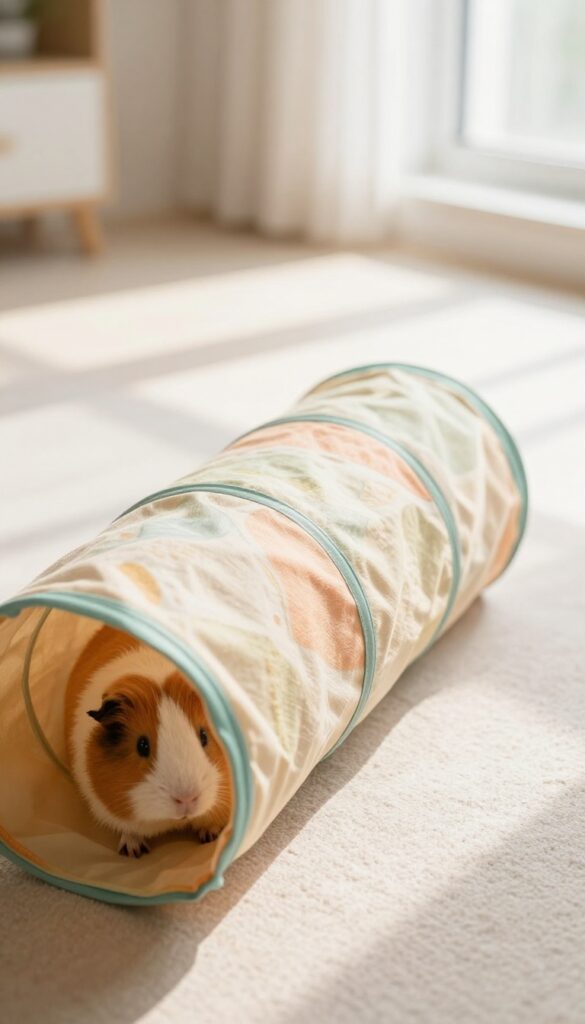
A tunnel or tube toy is a fantastic addition to any guinea pig’s play area, encouraging natural behaviors like exploring, running, and hiding. These toys provide both physical exercise and mental stimulation, helping to keep your pet happy and healthy.
Guinea pigs love to dart through tunnels, mimicking their instinct to burrow and explore. A tunnel toy can be a simple cardboard tube from a paper towel roll or a more durable fabric or plastic tunnel designed for small pets. Whichever you choose, it’s important to prioritize safety and material quality.
Key Benefits of Tunnel Toys
- Encourages exercise: Running through tunnels helps guinea pigs stay active and burn off energy.
- Provides hiding spots: Tunnels offer a sense of security, reducing stress and promoting natural hiding behavior.
- Available in various materials: Fabric tunnels are soft and collapsible, plastic tunnels are easy to clean, and cardboard tunnels are inexpensive and replaceable.
When selecting a tunnel, avoid any with sharp edges, loose threads, or toxic dyes. Ensure the tunnel is wide enough for your guinea pig to turn around comfortably, and always supervise playtime with new toys to prevent accidents.
Chew Toys (Wood, Willow, or Hay-based
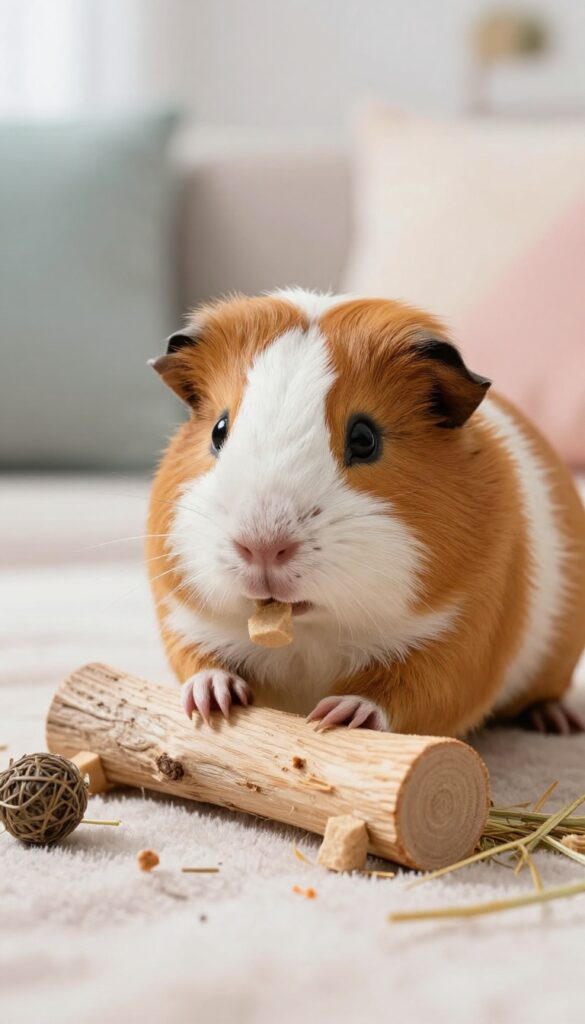
Guinea pigs’ teeth grow continuously, so providing safe chew toys is essential for dental health and mental stimulation.
Chew toys made from natural materials like wood, willow, and hay help wear down teeth and satisfy the natural urge to gnaw. They come in various shapes and textures, keeping your guinea pig entertained and healthy.
Key Benefits
- Helps wear down teeth naturally
- Safe materials like apple wood, willow, and hay
- Variety of shapes and textures prevents boredom
What to Look For
Choose toys made from untreated, pesticide-free wood. Avoid plastic toys that can be ingested or cause harm. Always supervise new toys to ensure they are being used safely.
Hidey House or Igloo
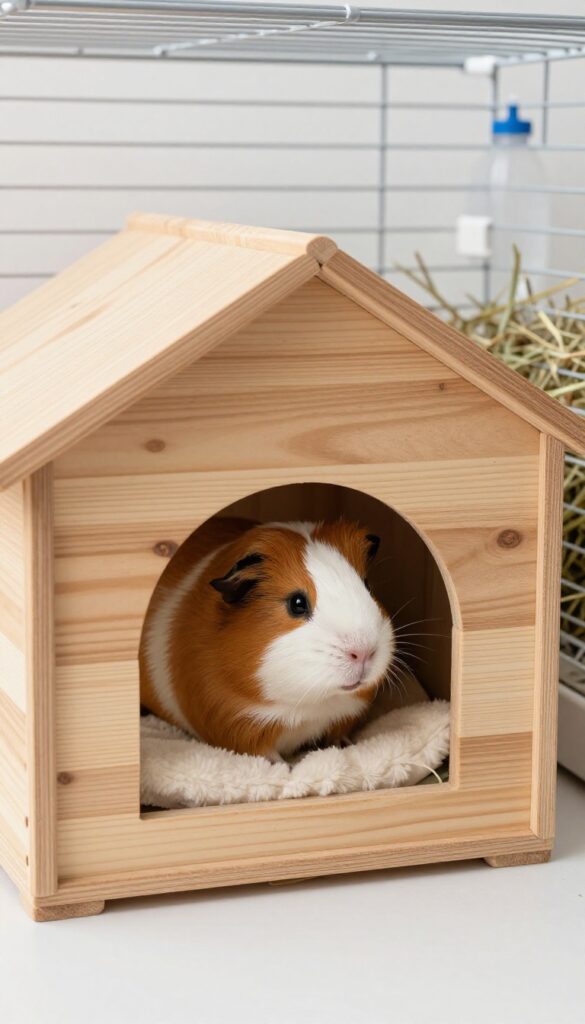
Every guinea pig needs a safe, cozy spot to retreat when they feel scared or just want some alone time. A hidey house or igloo provides that essential security, helping reduce stress and promoting natural hiding behavior.
When choosing a hidey house, consider the material and design. Wood houses are durable and chewable, but may absorb odors. Fleece houses are soft and washable, while plastic igloos are easy to clean and often have a smooth surface.
Whichever you choose, ensure it has at least two exits so your guinea pig never feels trapped—this is crucial for their sense of safety.
Key features to look for
- Multiple exits (at least two) for quick escape
- Good ventilation to prevent moisture buildup
- Chew-safe materials (untreated wood, pet-safe plastic, or washable fleece)
- Easy to clean and access for spot cleaning
Place the hidey house in a quiet corner of the cage, away from high-traffic areas. This gives your guinea pig a private refuge where they can relax and feel secure. Remember, a hidey house isn’t just a luxury—it’s a necessity for your pet’s well-being.
Pellet Dispenser or Slow Feeder
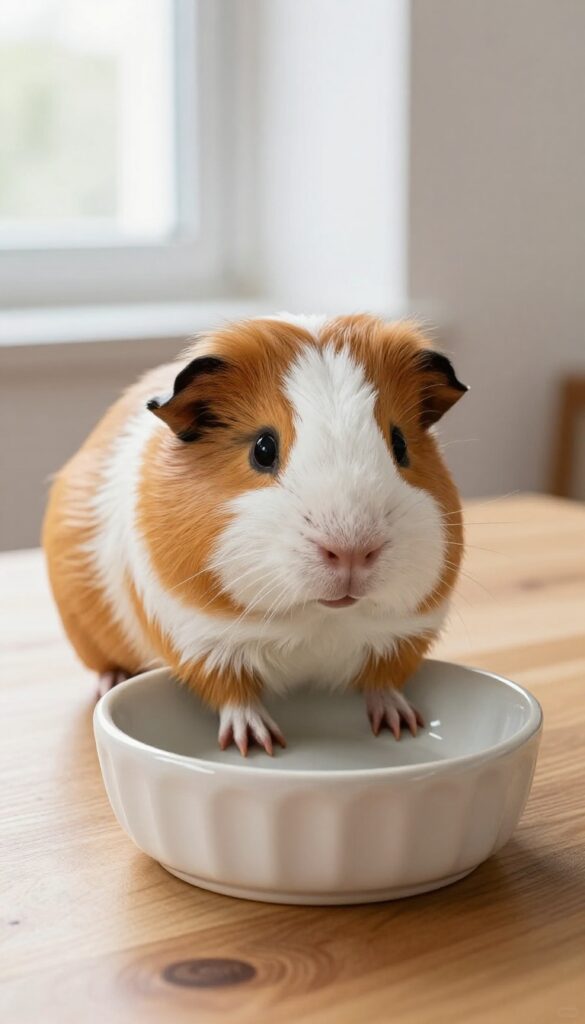
A pellet dispenser or slow feeder helps control portion sizes and prevents overeating, promoting healthier eating habits for your guinea pig.
Guinea pigs can easily overeat if given unlimited pellets, leading to obesity and health issues. A dispenser or slow feeder releases pellets gradually, encouraging slower eating and better digestion.
Benefits of Using a Pellet Dispenser or Slow Feeder
- Controls portion size to prevent overeating
- Encourages slower, more natural eating
- Reduces waste and mess in the cage
- Provides mental stimulation as your guinea pig works to get the pellets
Look for simple, sturdy dispensers that are easy to clean. Avoid complex designs that may frustrate your pet. A slow feeder bowl with ridges or a dispenser with adjustable openings works well.
Fleece Liners or Cage Liners
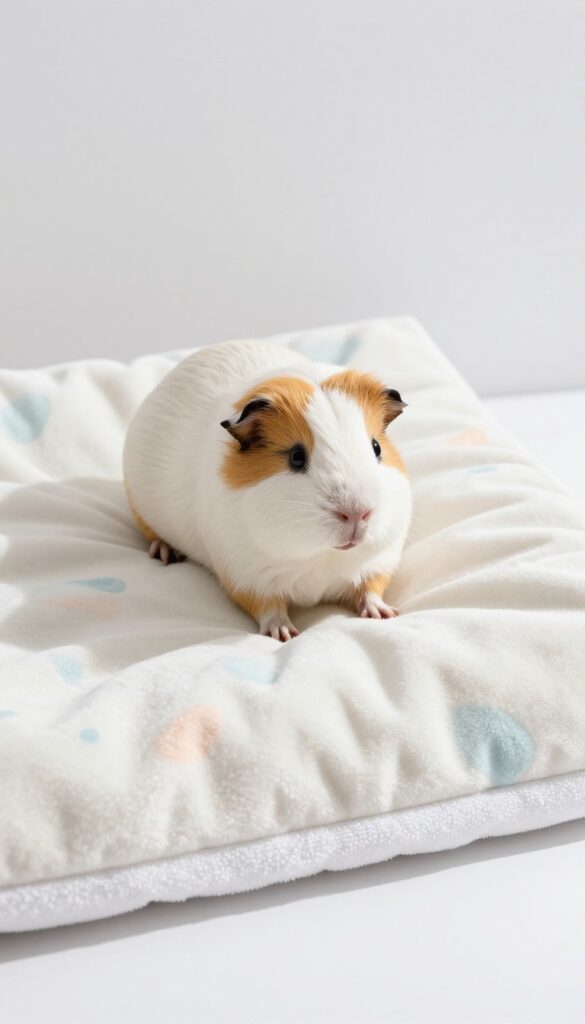
Fleece liners are a popular bedding alternative for guinea pig cages. They are soft on your pet’s feet, reusable, and help control odors when used with absorbent layers underneath.
Unlike loose bedding, fleece liners are washable and can last for months with proper care. They are especially great for guinea pigs with respiratory sensitivities, as they produce less dust than wood shavings or paper bedding.
Key Benefits
- Soft on feet: Prevents bumblefoot and keeps your guinea pig comfortable.
- Reusable and washable: Saves money and reduces waste—just toss in the washing machine.
- Absorbent layers prevent odor: Use a towel or absorbent pad underneath to wick moisture away.
Cleaning Routine
Spot clean daily by removing soiled fleece and replacing with fresh pieces. Do a full wash every 3–4 days using unscented, pet-safe detergent. Avoid fabric softeners, as they reduce absorbency.
Playpen or Exercise Pen
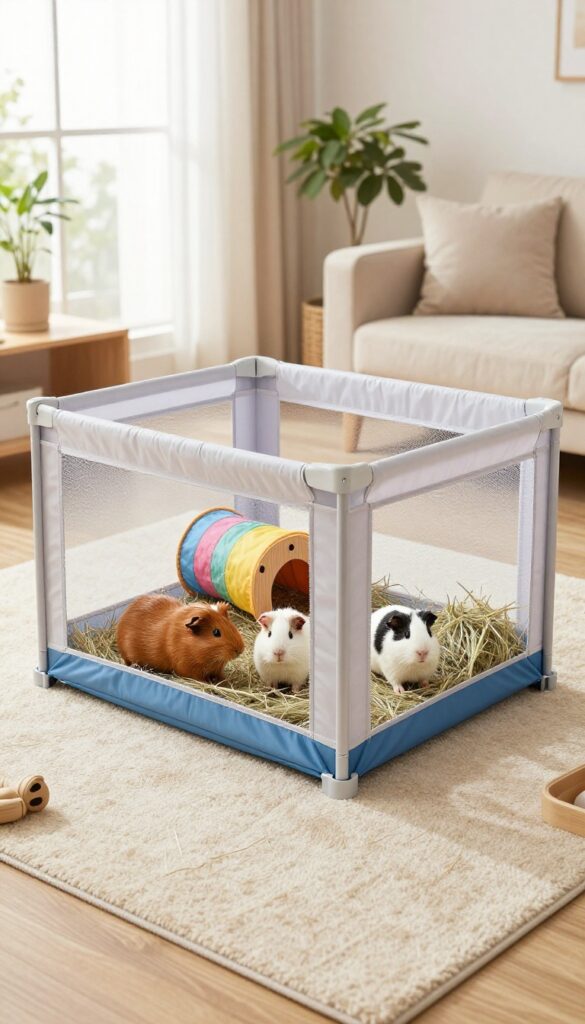
A playpen or exercise pen provides a safe, enclosed space for your guinea pigs to enjoy floor time outside their cage. It allows them to stretch their legs, explore, and play under your supervision without the risk of escaping or encountering household hazards.
Guinea pigs need daily exercise to stay healthy and happy, and a playpen is the perfect solution for giving them that freedom in a controlled environment.
Key benefits of a playpen
- Safe space for floor time: Keeps your pets contained and away from dangerous areas like cords, small objects, or other pets.
- Portable and expandable: Many playpens are lightweight and can be folded for storage or travel. Some allow you to add extra panels to create a larger area.
- Allows supervised exploration: You can set up tunnels, toys, and hideouts inside the pen to encourage natural behaviors like foraging and running.
When choosing a playpen, avoid models with gaps wide enough for guinea pigs to squeeze through or climb over. Look for pens with solid walls or narrow bar spacing, and ensure the height is sufficient to prevent jumping out. A playpen is a must-have Guinea Pig Accessory for Feeding and Play, as it gives your pets the exercise they need while keeping them safe.
Food Puzzle or Treat Ball
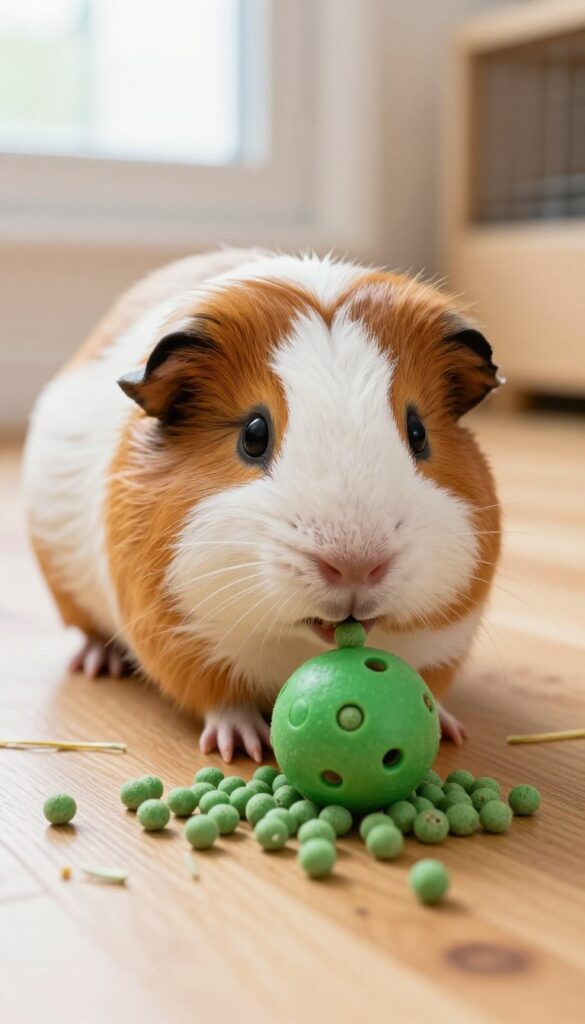
A food puzzle or treat ball turns mealtime into a fun challenge, keeping your guinea pig mentally stimulated while encouraging natural foraging behaviors.
These devices typically consist of a hollow ball or container with openings that dispense small treats or pellets as your guinea pig rolls or nudges it. This slows down fast eaters, prevents boredom, and adds variety to their daily routine.
Key Considerations
- Choose a puzzle with adjustable difficulty: start with larger openings, then make it harder as your piggy gets the hang of it.
- Ensure the material is safe and non-toxic—avoid puzzles with small parts that could break off or be swallowed.
- Opt for a size that is easy for guinea pigs to roll, but not so small it poses a choking hazard.
Popular options include the Treat Ball by Kaytee or the Super Pet Roll ‘N Treat. Always supervise first use to make sure your guinea pig interacts safely. Rotate the puzzle with other toys to keep interest high.
Hay Ball or Hay Toy
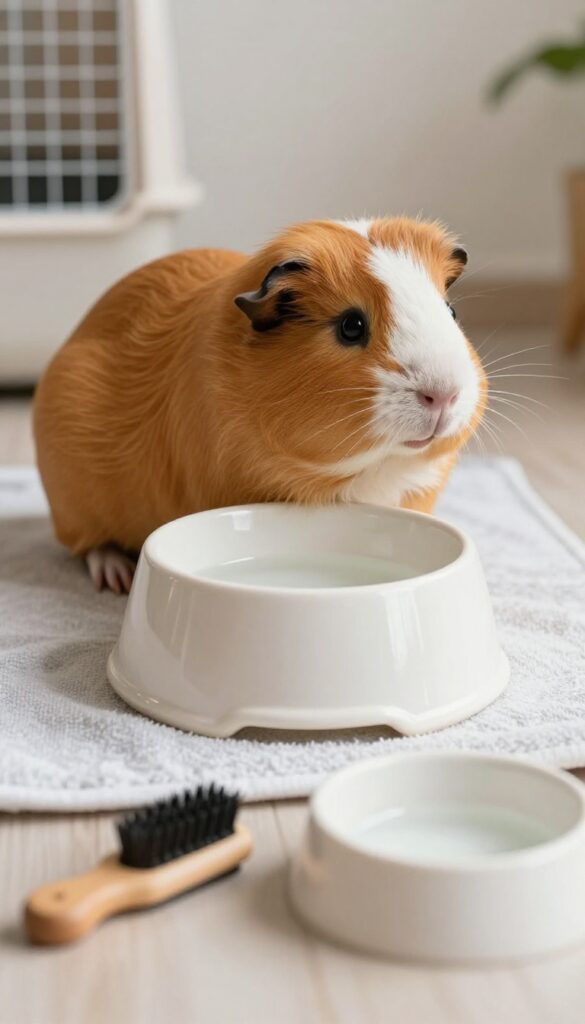
A hay ball or hay toy is a fantastic dual-purpose accessory that combines feeding and play. By stuffing hay into a hanging ball or woven toy, you encourage your guinea pig to forage and work for their food, which stimulates natural behaviors and reduces boredom.
Hay is the cornerstone of a guinea pig’s diet, but simply tossing it in the cage can lead to waste and mess. A hay toy turns mealtime into an engaging activity. Your guinea pig will push, roll, and nibble the toy to extract the hay, providing both physical exercise and mental stimulation.
Types of Hay Toys
There are several styles to choose from:
- Hanging hay balls: Metal or plastic spheres with openings that hold hay; hang them from the cage top.
- Woven hay toys: Made from natural materials like seagrass or willow; these are edible and fun to shred.
- Hay cubes or blocks: Compressed hay that can be placed in a holder or simply given as a chewable treat.
When selecting a hay toy, ensure there are no small parts that could be swallowed and that the openings are large enough to prevent head entrapment. Always supervise your guinea pig with a new toy until you’re sure it’s safe.
Vitamin C Supplement or Treats Dispenser
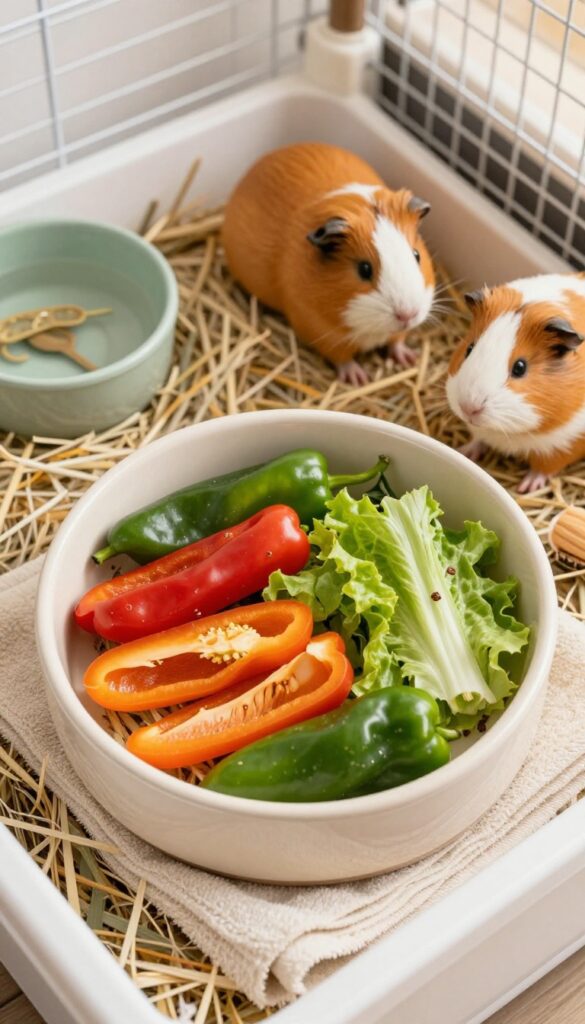
Guinea pigs, like humans, cannot produce their own vitamin C and must get it from their diet. A deficiency can lead to serious health issues like scurvy. While fresh veggies are a great source, a supplement ensures they meet their daily needs.
A treats dispenser makes giving this essential vitamin fun and engaging.
Why Vitamin C Matters
Guinea pigs require 10–30 mg of vitamin C per day, depending on their age and health. Without enough, they can become lethargic, lose appetite, or develop joint problems. A supplement provides a reliable safety net.
Supplement Forms
- Tablets or wafers – easy to hand-feed or crumble over food
- Liquid drops – can be added to water or directly into the mouth
- Treat dispensers – combine supplement with a fun, interactive toy
Using a Treats Dispenser
A treats dispenser, such as a small puzzle ball or a hanging dispenser, can hold vitamin C tablets or pellets. Your guinea pig will push, roll, or nudge the dispenser to release the treat, turning supplement time into playtime. This encourages natural foraging behavior and keeps them mentally stimulated.
FAQ
What is the best type of food bowl for guinea pigs?
Heavy ceramic bowls are best because they are tip-proof and cannot be chewed.
How often should I clean my guinea pig’s water bottle?
Clean the water bottle at least once a week with hot water and a bottle brush.
Can guinea pigs use tunnels made for other pets?
Yes, as long as the tunnel is wide enough and made of safe materials without sharp edges.
Do guinea pigs need chew toys?
Yes, chew toys help keep their teeth trimmed and provide enrichment.
What is a snuffle mat for guinea pigs?
A snuffle mat is a foraging toy where you hide treats or pellets for your guinea pig to find.
Conclusion
Providing the right accessories for feeding and play is essential for your guinea pig’s well-being. These 13 ideas cover a range of needs from basic feeding to interactive play.
Choose accessories that are safe, durable, and suited to your guinea pig’s personality.

I’m Pallab Kishore, the owner of Little Pets Realm — an animal lover and pet care enthusiast sharing easy tips, healthy recipes, and honest advice to help every small pet live a happy, healthy, tail-wagging life.