
A tired puppy is a good puppy, but physical exercise alone isn't enough. Mental stimulation wears them out faster and prevents destructive habits. These seven enrichment ideas are easy to set up with items you already have.
Each activity targets your puppy's natural instincts—sniffing, chewing, and problem-solving. You don't need expensive gear or hours of free time. Just a few minutes of focused play can make a big difference.
Start with one or two ideas and rotate them to keep things fresh. Your puppy will stay engaged, and you'll enjoy a calmer, more content companion.
1. Snuffle Mat for Foraging Fun
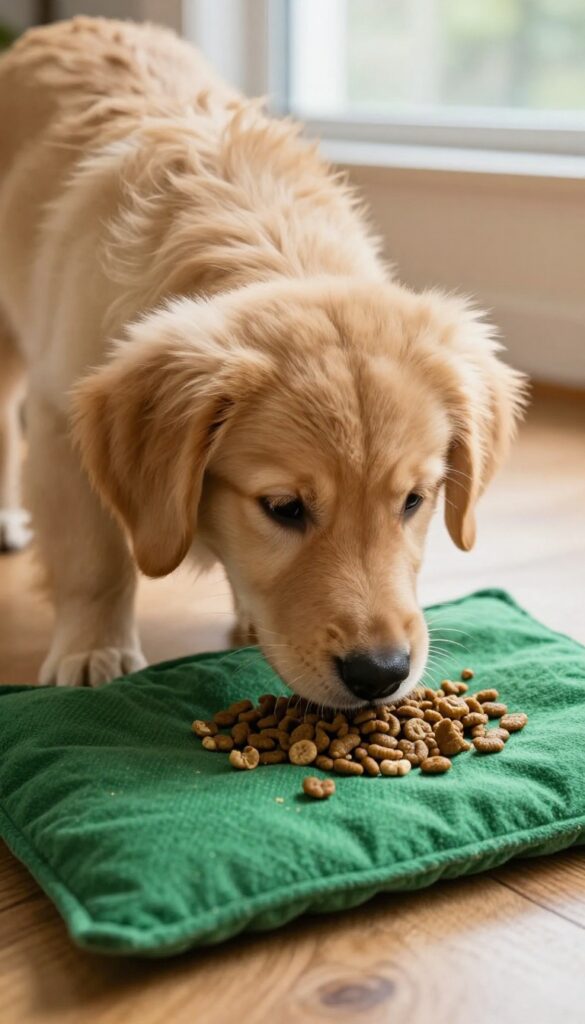
A snuffle mat is a soft mat with fabric strips that hide treats and kibble, turning mealtime into a treasure hunt. It taps into your puppy's natural foraging instincts, providing a calming and focused activity. Many dog owners love how it slows down fast eaters and occupies puppies for 10–15 minutes without any effort from you.
Why It Works
Snuffle mats engage your puppy's sense of smell, which is their strongest sense. The act of sniffing and searching releases dopamine, reduces stress, and mentally tires them out faster than a walk. It also encourages slower eating, which aids digestion and prevents bloat.
Best For
This is ideal for puppies who gulp their food, for high-energy breeds like Labradors or Border Collies, and for rainy days when outdoor play isn't possible. It's also great for apartment living where space is limited.
Practical Tip
Place the snuffle mat on a non-slip surface or inside a shallow tray to prevent it from sliding. Wash it weekly by shaking out debris and tossing it in a pillowcase for a gentle machine cycle. Always supervise your puppy to ensure they don't chew and ingest the fabric strips.
Budget-Friendly Option
Make your own snuffle mat by knotting fleece strips through a rubber sink mat or a plastic grid. Cut 1-inch wide strips, push them through the holes, and tie knots. Total cost: under $10 and 20 minutes of work.
2. Frozen Treats in a Kong or Toppl
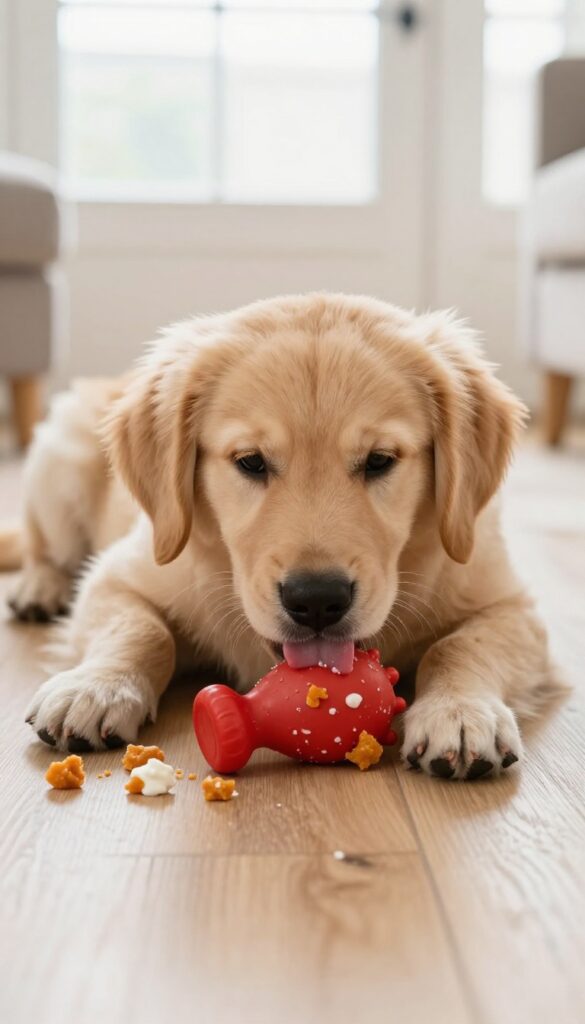
When your puppy needs a quiet activity that actually keeps them busy, a frozen stuffed toy is a game-changer. You fill a Kong or Toppl with something tasty like wet food, yogurt, or pumpkin, then pop it in the freezer. The result is a long-lasting, mentally engaging challenge that also soothes sore gums during teething.
Why It Works
Freezing the filling slows down eating, turning a quick snack into a 20- to 30-minute puzzle. Your puppy has to work with their tongue and paws to get every bit, which engages their brain and satisfies natural chewing instincts. The cold also numbs teething pain, making this a two-in-one enrichment and comfort tool.
Best For
This idea is perfect for puppies who need calm solo play, especially during teething phases (around 4–6 months). It also works great for high-energy breeds like Labradors, Goldens, and Border Collies who need a mental challenge after a walk. Apartment dwellers will love that it keeps pups quiet and occupied indoors.
Practical Tip
Start with an easier filling like plain yogurt or canned pumpkin that doesn't require much licking. As your puppy gets better, freeze the toy for longer (try 4+ hours) or use a mix of wet food and kibble to increase difficulty. Always supervise the first few times to make sure the toy is durable and the filling isn't too hard for their teeth.
Budget-Friendly Option
No Kong or Toppl? Use a silicone muffin liner or an ice cube tray. Spoon in the filling, freeze, and pop out a frozen treat.
You can also reuse small yogurt cups or plastic containers—just ensure no sharp edges and supervise your pup.
3. Muffin Tin Puzzle Game
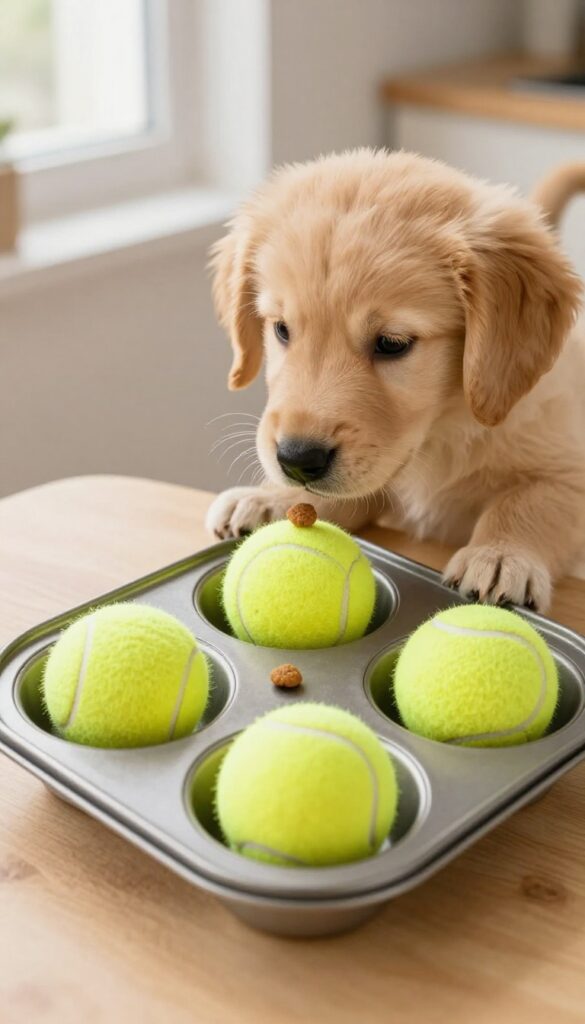
A muffin tin and a few tennis balls are all you need for a brain-boosting game that keeps puppies busy and thinking. This DIY puzzle taps into their natural drive to work for food, turning snack time into a rewarding challenge. It's a favorite among owners because it's quick to set up and surprisingly effective at tiring out an energetic pup.
Why It Works
Puppies are natural problem-solvers, and this game requires them to use their nose and paws to uncover hidden treats. The process of nudging or batting the balls out of the cups builds focus and persistence, which strengthens their cognitive skills. Plus, the mental effort involved can be just as exhausting as a long walk.
Best For
This puzzle is great for curious, food-motivated puppies who need a confidence boost. It works well in small spaces like apartments or kitchens, since it stays contained on a flat surface. Supervised play is recommended to prevent any chewing on the tin or balls.
Practical Tip
Start with just a few cups covered and gradually increase the difficulty as your puppy gets the hang of it. Use low-value treats at first so they don't get frustrated, and always supervise to ensure they don't try to eat the tennis balls. For easy cleanup, choose a standard 12-cup metal muffin tin that won't tip over.
Budget-Friendly Option
No muffin tin? Use a cardboard egg carton instead—just cut the lid off and place treats inside. Cover each egg cup with a small toy or crumpled paper ball.
It's less durable but works perfectly for a one-time activity.
4. Scent Work with Boxes or Towels
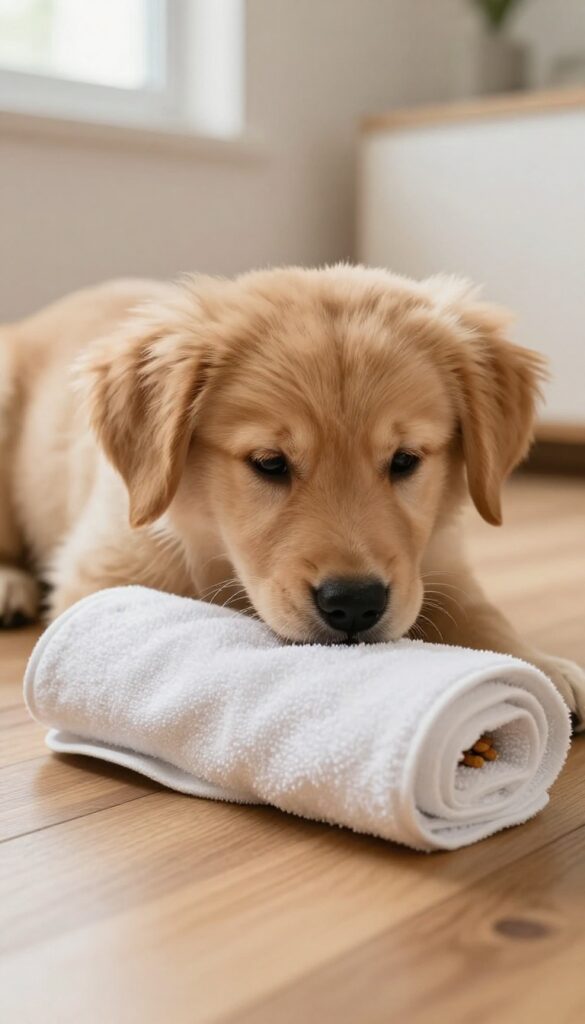
Your puppy’s nose is their most powerful tool. Scent work games tap into that natural ability and turn snack time into a focused, calming activity. Hide treats under boxes or inside rolled towels and let your pup sniff them out.
It’s simple, quiet, and surprisingly tiring for a young dog.
Why It Works
Scent work engages a puppy’s brain in a way that physical play can’t. The act of sniffing releases dopamine and lowers heart rate, making it an excellent activity for anxious or high-energy pups. It also builds confidence as they learn to solve problems on their own.
Best For
This game is ideal for puppies that need a calm outlet, especially those who get overstimulated with fetch or tug. It works well in apartments, small yards, or any space where you want a low-key activity. Breeds with strong scent drives, like hounds or retrievers, will be especially hooked.
Practical Tip
Start easy by placing a treat under one box and letting your puppy flip it over. As they get the hang of it, add more boxes or use rolled towels with treats tucked inside. Always supervise to prevent chewing on boxes or fabric, and swap in fresh towels after a few rounds to keep the game interesting.
Budget-Friendly Option
No boxes or towels? Use empty plastic containers or an old muffin tin with treats hidden under tennis balls. Even a cardboard toilet paper roll with treats pinched inside works.
The key is hiding the scent, not the container itself.
5. Training New Tricks with Positive Reinforcement
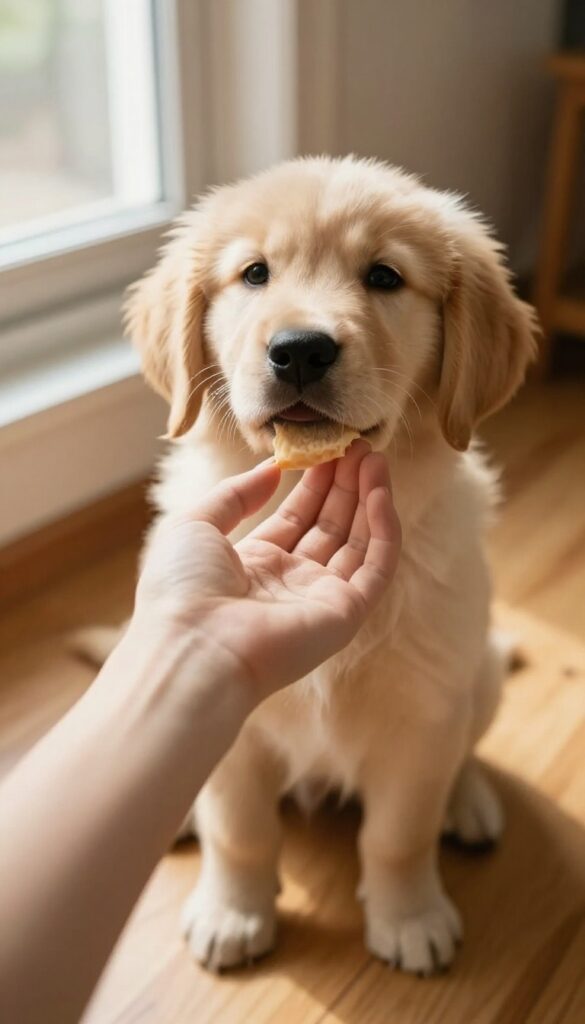
Training sessions are more than just obedience—they’re a fantastic way to challenge your puppy’s brain. Teaching a new trick like 'spin' or 'touch' forces them to think, focus, and problem-solve, all while strengthening the bond between you. The best part?
You don’t need any special equipment, just a handful of treats and a few minutes of your time.
Puppies love learning when it’s fun and rewarding. Positive reinforcement keeps them eager and engaged, turning each session into a game rather than a chore. Short, consistent practices build confidence and mental stamina, which leads to a calmer, happier pup.
Owners appreciate how easily this fits into any routine—no mess, no setup, just quality time. It’s a simple, effective way to tire out a high-energy puppy without running around the yard.
Why It Works
Learning a new trick requires concentration, impulse control, and memory—all of which are mentally taxing for a puppy. This cognitive workout helps drain excess energy just as effectively as a long walk. Plus, the positive reinforcement releases feel-good hormones, making the experience enjoyable and something your puppy will look forward to.
Best For
This activity is ideal for puppies of any breed or age, especially those who are food-motivated and love to engage with their owner. It works well in small spaces like apartments or during bad weather when outdoor exercise is limited. It’s also perfect for high-energy breeds like Border Collies or Labradors that need extra mental challenges.
Practical Tip
Keep training sessions short—about five minutes—to maintain focus and prevent frustration. Use high-value treats like small pieces of cheese or chicken, and always end on a positive note with a known trick. Consistency is more important than session length; a few minutes daily yields better results than a long session once a week.
Budget-Friendly Option
You don’t need any special gear. Use treats you already have or even small pieces of their regular kibble. A clicker is optional; your voice and a happy “yes!” work just as well.
For an even lower-cost option, teach tricks that don’t require props, like 'spin' or 'touch'.
6. DIY Obstacle Course at Home
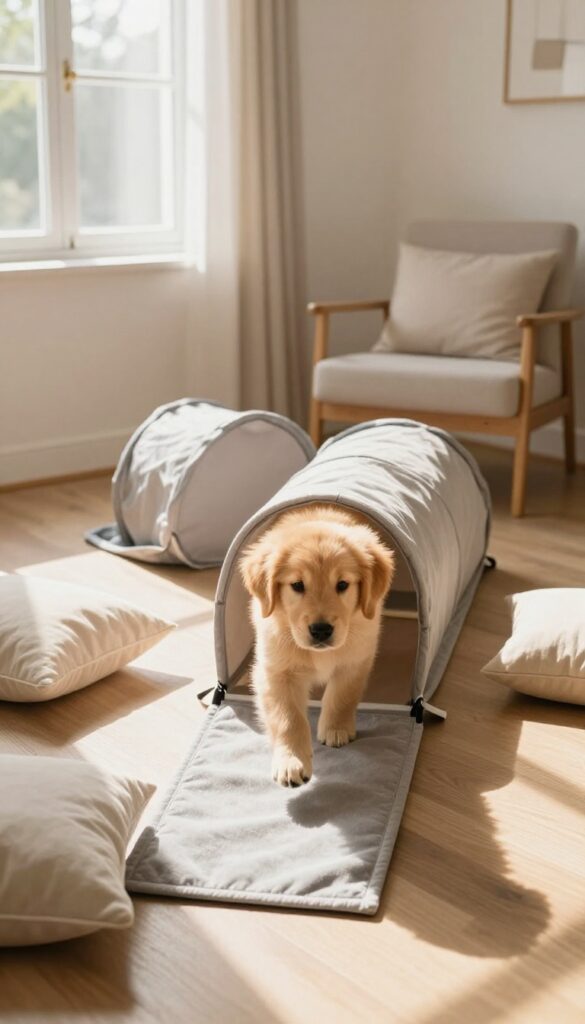
Turn your living room into a puppy playground with a simple obstacle course. Using pillows, chairs, and a blanket tunnel, you can create a fun circuit that challenges both body and mind. Guiding your puppy through with treats keeps them focused and builds confidence.
Why It Works
Obstacle courses combine physical movement with problem-solving, which tires puppies out faster than either alone. Navigating different textures and shapes also builds coordination and body awareness.
Best For
This is great for energetic breeds like Border Collies, Labradors, or terriers who need more than a walk. It works well in apartments or small yards where space is limited but creativity isn't.
Practical Tip
Keep sessions short—5 to 10 minutes—to avoid frustration. Use soft, stable objects that won't tip over easily. Always supervise to prevent chewing on blankets or pillows.
Budget-Friendly Option
No pillows? Use cardboard boxes cut open to crawl through. Chairs can be replaced with laundry baskets or stools.
A blanket over two chairs makes an instant tunnel.
7. Interactive Treat Dispensing Toys
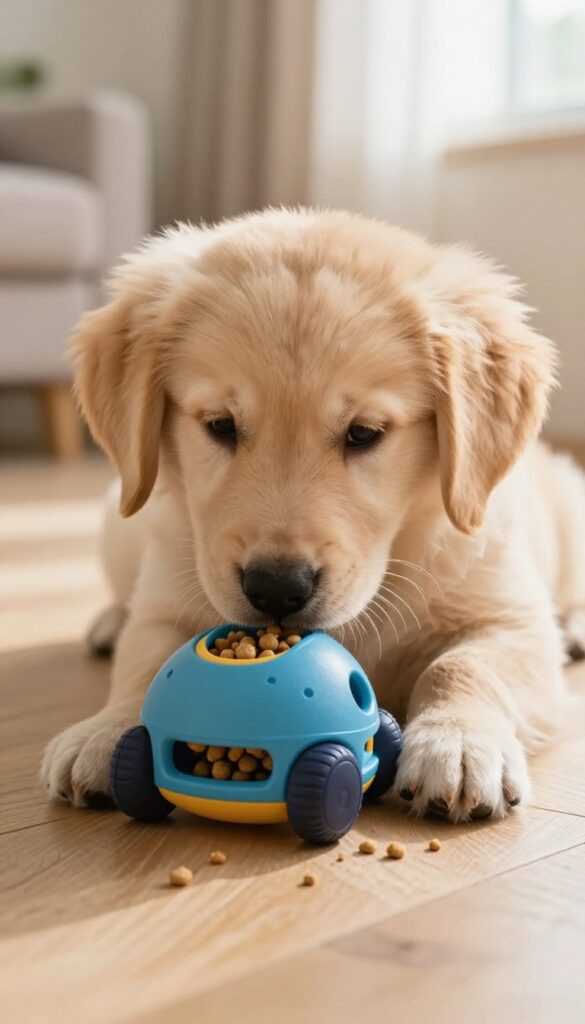
Not all toys are created equal. Interactive treat dispensers turn mealtime into a puzzle, making your puppy work for every bite. These toys tap into their natural foraging instincts and keep them busy long after the kibble is gone.
Why It Works
Puppies are wired to hunt and problem-solve. When they have to roll, nudge, or paw at a toy to release food, it engages their brain and slows down eating. This mental workout is just as tiring as a walk, and it helps prevent boredom-related chewing.
Best For
Great for puppies who gulp their food too fast or need a distraction while you work. Ideal for small spaces like apartments, since the toy stays contained. Works for any breed, but especially smart breeds that need extra challenges.
Practical Tip
Start with the easiest setting so your puppy doesn’t get frustrated. Gradually increase difficulty as they learn. Clean the toy after each use to avoid smelly residue.
Use part of their daily kibble ration to avoid overfeeding.
Budget-Friendly Option
You can DIY a treat dispenser by poking holes in a clean plastic water bottle or using a muffin tin with tennis balls on top. Not as durable, but great for testing if your puppy likes the concept.
FAQ
How often should I do enrichment activities with my puppy?
Aim for 10-15 minutes of mental stimulation twice a day. Short, frequent sessions are more effective than long ones.
Can enrichment replace physical exercise?
No, enrichment complements exercise but doesn't replace it. Puppies still need walks and playtime for physical health.
What if my puppy loses interest quickly?
Try higher-value treats or make the activity easier. Rotate toys and puzzles to keep novelty high.
Are store-bought puzzles safe for teething puppies?
Yes, but supervise to prevent chewing off small parts. Choose durable rubber or hard plastic toys.
Can I use my puppy's regular kibble for enrichment?
Absolutely. Using kibble in puzzles or snuffle mats makes mealtime more engaging and prevents gulping.
Conclusion
A tired puppy isn't just a sleepy puppy—it's a happy, well-adjusted one. These enrichment ideas are simple to set up and easy to rotate, so your pup stays curious and engaged without you needing a ton of extra time or supplies. Pick one or two to try this week and see which ones spark the most tail wags.
Your dog will get the mental workout they need, and you'll get a calmer, more confident companion. That's a win for both of you.

I’m Pallab Kishore, the owner of Little Pets Realm — an animal lover and pet care enthusiast sharing easy tips, healthy recipes, and honest advice to help every small pet live a happy, healthy, tail-wagging life.