
Your dog probably follows you from room to room, but does your home actually have a spot designed just for them? A dedicated pet area doesn't need to be elaborate—just practical, comfortable, and easy to maintain.
From cozy corners under the stairs to outdoor lounges that beat the heat, these nine designs turn everyday spaces into your pup's favorite hangout. Each idea focuses on real-world challenges like muddy paws, limited square footage, or crate clutter.
Whether you're a renter or a homeowner, there's a solution here that fits your lifestyle and makes your dog feel truly at home.
1. The Cozy Corner Nook
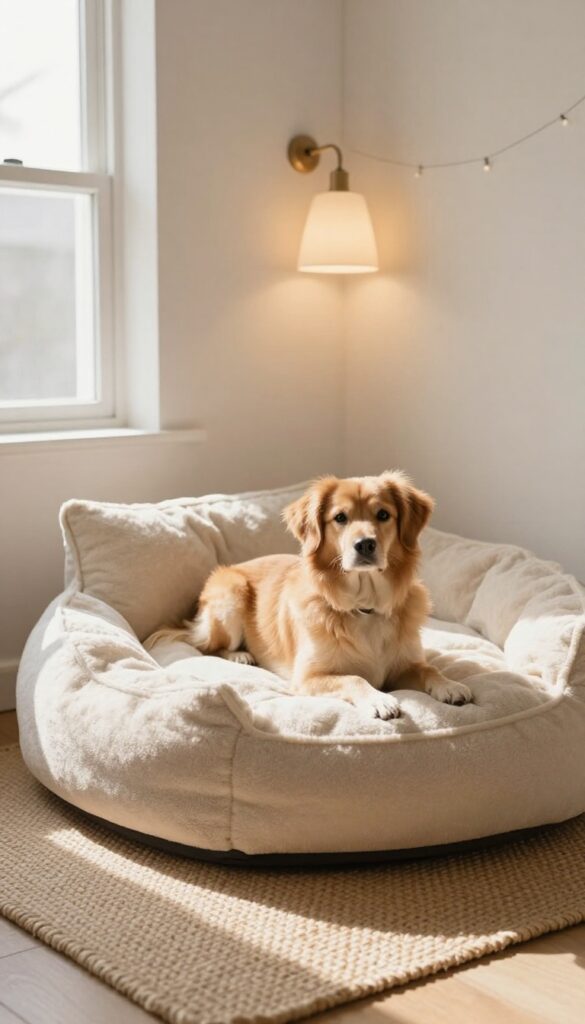
Every home has that one corner that feels awkward—too small for furniture but too big to leave empty. Turn it into your dog's personal retreat with a plush bed, soft lighting, and a small rug. This nook gives your pup a defined space to relax without taking over the room.
Apartment dwellers love this idea because it uses vertical space and fits into tight floor plans. A corner nook feels intentional rather than cluttered, and dogs naturally gravitate to cozy, enclosed spots.
The best part? You can customize the look to match your decor while keeping your dog's comfort front and center. A simple corner can become their favorite daytime nap spot.
Why It Works
Dogs are den animals—they feel safe in snug, enclosed areas. A corner nook mimics that natural instinct by providing boundaries on two sides, making it feel secure. Plus, it keeps them out of high-traffic zones where they might get stepped on or stressed.
Best For
Perfect for small apartments, condos, or any home with an unused corner. Works well for smaller breeds or senior dogs who prefer calm, low-traffic spots. Also great for puppies who need a designated quiet area for crate training or decompression.
Practical Tip
Start with a bed that fits the corner snugly—round or bolster beds work best. Add a soft throw blanket for extra coziness and easy washing. Use a small wall-mounted lamp or string lights overhead to create a calming glow without taking up floor space.
Budget-Friendly Option
Skip the expensive pet bed and use a large floor cushion or folded duvet instead. Repurpose an old side table as a mini shelf above the nook for toys and treats.
2. Built-In Window Perch
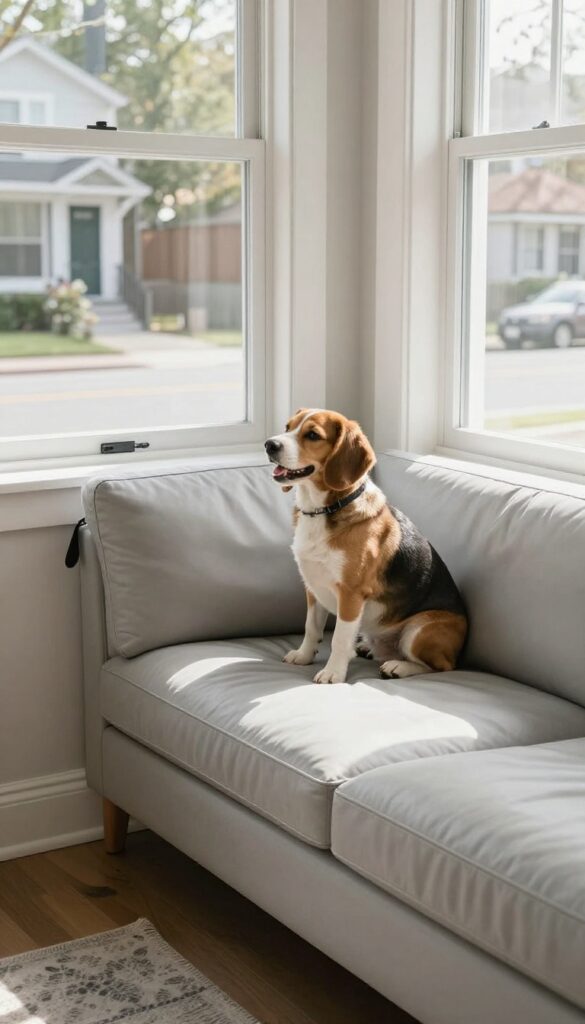
Dogs love looking out the window—it's their version of TV. A cushioned bench built right into the sill gives them a front-row seat to all the neighborhood action.
This design turns an often wasted spot into your dog's favorite lookout. Plus, it adds extra seating for you when guests come over.
The key is making it safe and easy to clean. A washable cover and a simple safety strap keep things practical for everyday use.
Why It Works
Dogs are natural watchdogs, and having a dedicated perch satisfies their instinct to monitor their territory. It also provides a cozy, elevated spot that many dogs find comforting—like a built-in bed that never gets in the way.
Best For
This is perfect for small or medium dogs who love to people-watch. It works great in living rooms, home offices, or any room with a low window. Renters can use a tension rod and removable cushion instead of building anything permanent.
Practical Tip
Use a thick, washable cushion that matches your decor—faux leather or outdoor fabric cleans up easily. Attach a safety strap (like a short leash clipped to a wall anchor) to prevent jumps from high perches. Keep the window clean for unobstructed views.
3. Under-Stairs Dog Den
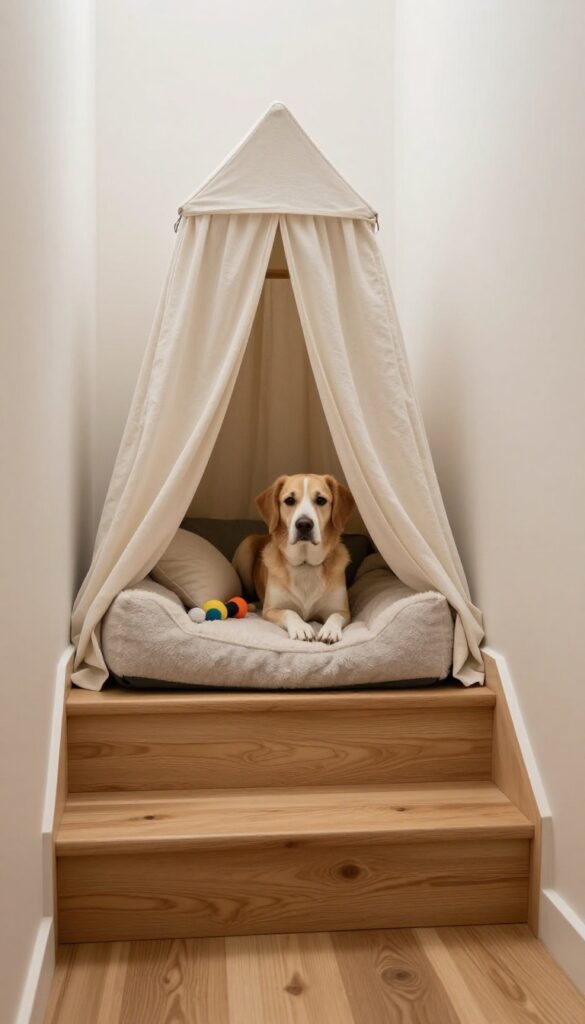
That awkward triangle under the stairs? Turn it into a cozy hideaway your dog will love. A dedicated den gives anxious pups a quiet retreat and keeps crates or dog beds out of main traffic areas.
It's a clever use of space that feels intentional, not like an afterthought.
Why It Works
Dogs instinctively seek out enclosed, den-like spaces when they feel stressed or need rest. The under-stairs nook provides natural boundaries on three sides, which can lower anxiety and give your dog a sense of security. Plus, it frees up floor space in other rooms.
Best For
This setup works great for anxious dogs who need a private spot to decompress, and for multi-pet households where one dog wants alone time. It's also ideal for renters who can't make permanent changes—just add a crate or curtain for an instant den.
Practical Tip
Place a crate or a custom-fit bed inside, then add soft bedding and a few favorite toys. Hang a curtain or tension rod with fabric across the opening to create privacy and block drafts. Keep the space clean by using washable covers and vacuuming weekly.
Budget-Friendly Option
Skip the custom crate—use an existing wire crate or even a large plastic storage bin turned on its side (with ventilation holes drilled in). A simple tension rod with an old sheet works just as well as a fancy curtain.
4. Mudroom Dog Wash Station
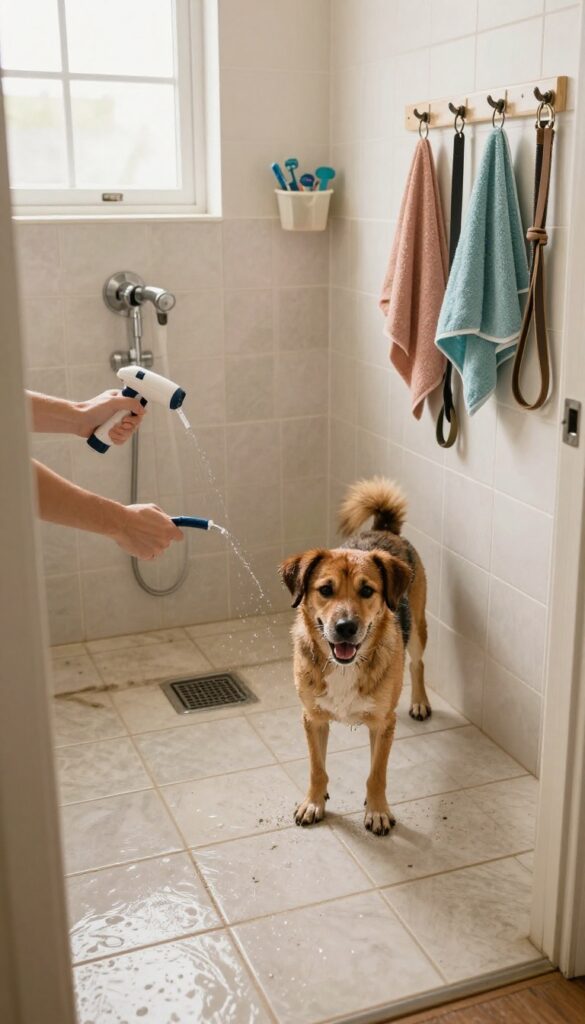
Rainy walks and muddy trails don't have to mean paw prints across your floors. A dedicated dog wash station in your mudroom or entryway turns post-walk cleanup into a quick, mess-free routine.
Think of it as a mini grooming corner that handles the dirt before it spreads. With a tiled alcove, a handheld sprayer, and a drain, you can wash paws, rinse bellies, or even give a full bath without tracking water through the house. It's the kind of practical upgrade that makes daily life with an active dog noticeably easier.
Why It Works
A built-in wash station keeps all the messy parts of dog care contained in one easy-to-clean spot. The tile and drain handle water and mud, while nearby hooks and bins keep leashes, towels, and grooming tools organized. No more bending over a tub or fighting with a wiggly dog in your shower—everything you need is right there.
Best For
This setup is ideal for active dogs who love romping in mud, rain, or snow. It's also great for owners who live in rainy climates or have fenced yards that turn into mud pits after a storm. If you have a dedicated mudroom or even just an alcove near your entry door, this design fits perfectly.
Practical Tip
Use large-format porcelain tiles for easy wiping and fewer grout lines to scrub. Install a handheld sprayer on a hose that reaches the floor so you can rinse paws without lifting your dog. Add a low ledge or raised platform so small dogs don't slide around during baths.
Budget-Friendly Option
Don't have space or budget for a full tiled alcove? Use a large plastic utility sink instead—it's affordable, easy to install, and has built-in drain holes. Set it on a sturdy stand and add a handheld sprayer attachment to your nearest faucet.
5. Outdoor Shaded Lounge
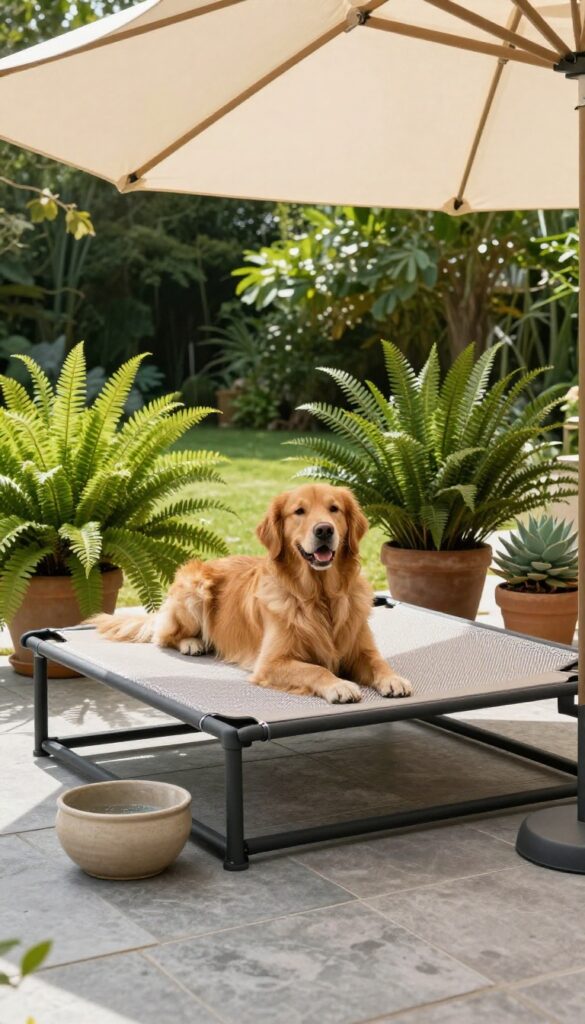
A hot patio isn't fun for bare paws. An outdoor shaded lounge gives your dog a cool retreat where they can relax safely while you enjoy the yard. The key is blocking direct sun and choosing surfaces that stay comfortable even in summer heat.
Think of it as a dog-friendly oasis—a spot with a cooling bed, fresh water, and plenty of airflow. It doesn't need to be fancy, just intentional. A shade sail, a low cot, and a few non-toxic plants can transform a sunny corner into your pup's favorite hangout.
Dogs love being outside with their humans, but they need a way to escape the heat. This setup gives them exactly that without taking over your entire patio.
Why It Works
Dogs overheat faster than people because they don't sweat efficiently. A shaded lounge with a cooling bed and constant water access helps regulate their body temperature. Plus, keeping them off hot concrete or artificial turf prevents paw pad burns and discomfort.
Best For
This idea works great for homes with a patio, deck, or corner of the yard that gets afternoon sun. It's perfect for flat-faced breeds like bulldogs or pugs who struggle in heat, as well as active dogs who need a cool-down spot after fetch or playtime.
Practical Tip
Install a shade sail or use a cantilever umbrella to cover the area from midday to late afternoon. Place a raised cooling cot (not just a bed on the ground) so air circulates underneath. Always keep a heavy ceramic water bowl in the shade—plastic ones tip easily and get too hot.
Budget-Friendly Option
Skip the expensive shade sail and use an old fitted sheet draped over two sturdy posts or trees. Secure it with clothespins or zip ties. A plastic kiddie pool filled with an old blanket also makes a quick cooling bed if you don't want to buy a special cot.
6. Feeding Station with Storage
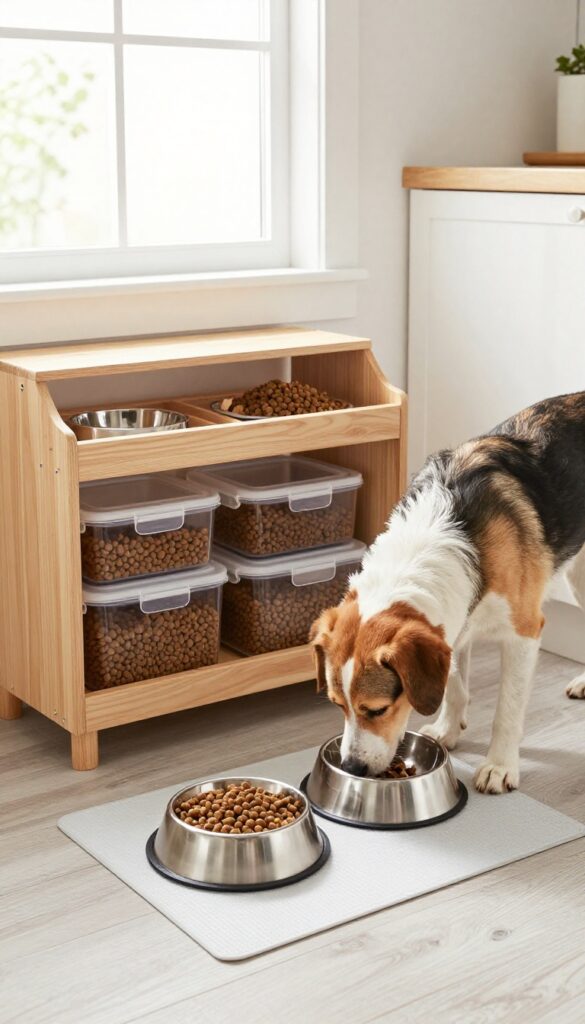
Mealtime can get messy, especially when bowls slide across the floor and bags of kibble clutter up the pantry. A dedicated feeding station solves both issues by combining elevated bowls with built-in storage.
The raised design puts food and water at a comfortable height, which is easier on your dog's neck and joints—especially for larger breeds. An airtight container nearby keeps kibble fresh and makes scooping quick and tidy.
Plus, a waterproof mat underneath catches splashes and stray pieces, so you're not scrubbing the floor after every meal. It's a simple setup that makes daily feeding smoother for both of you.
Why It Works
Elevated bowls reduce strain on a dog's neck and back during eating, which can help with digestion and posture. Having food storage right there means you never have to hunt for the bag or scoop from a messy bin. The mat keeps the area clean and protects your floors from water rings and crumbs.
Best For
Medium to large breeds that benefit from raised bowls, as well as multi-dog households where you want to keep feeding areas organized. It's also great for small kitchens or apartments where counter space is limited.
Practical Tip
Choose a feeding station with removable bowls for easy cleaning—stainless steel is best because it resists bacteria and scratches. Place the station on a non-slip mat to prevent sliding. If your dog is a messy drinker, opt for a deeper mat with raised edges to contain spills.
Budget-Friendly Option
DIY your own feeding station using a sturdy wooden crate or low bookshelf. Cut two holes in the top shelf for bowls and use the lower shelf for storing food bins. Add a simple tray or boot mat underneath for catch-all protection.
7. Crate with a Side Table
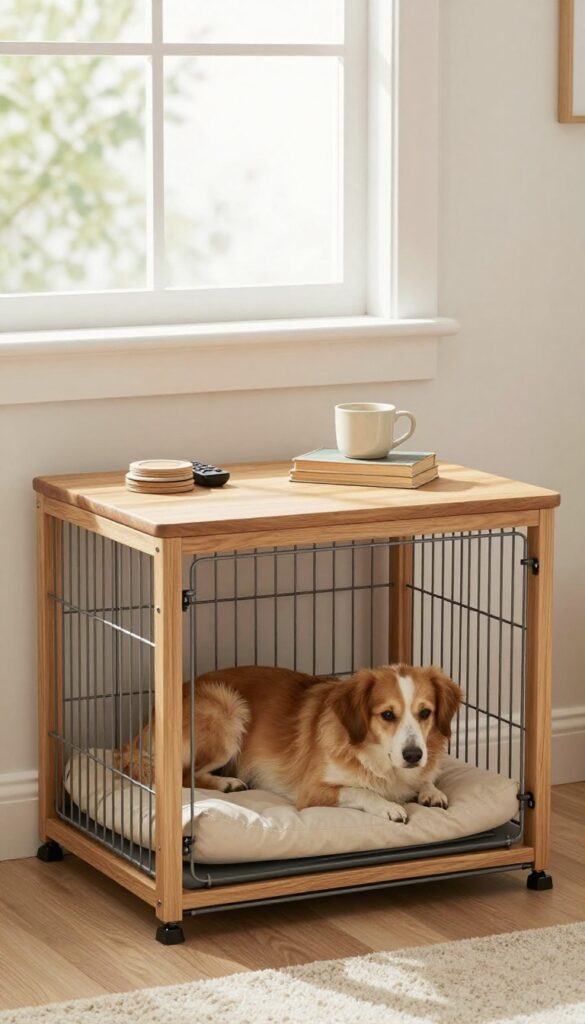
A crate doesn't have to be an eyesore in your living room. By adding a wooden top and a small basket for remotes, you can turn it into a functional side table. Your dog gets a cozy den, and you get extra surface space—win-win.
Why It Works
It solves the common problem of crate clutter by blending the crate into your existing decor. The flat top provides a spot for drinks, books, or decor, while the basket keeps small items organized and within reach.
Best For
Apartment dwellers or anyone short on living space who wants to keep their dog's crate in a main room without sacrificing style or function. Works well for small to medium dogs whose crates sit low enough to double as a table.
Practical Tip
Measure your crate's dimensions before buying or building a top. A plywood board cut to size with rounded corners is budget-friendly; paint or stain it to match your furniture. Add a fabric basket on one side for remotes and coasters.
Budget-Friendly Option
Skip the custom wood top—use a large serving tray or a flat storage ottoman that fits over the crate. Both options give you surface space without much cost.
8. DIY Agility Corner
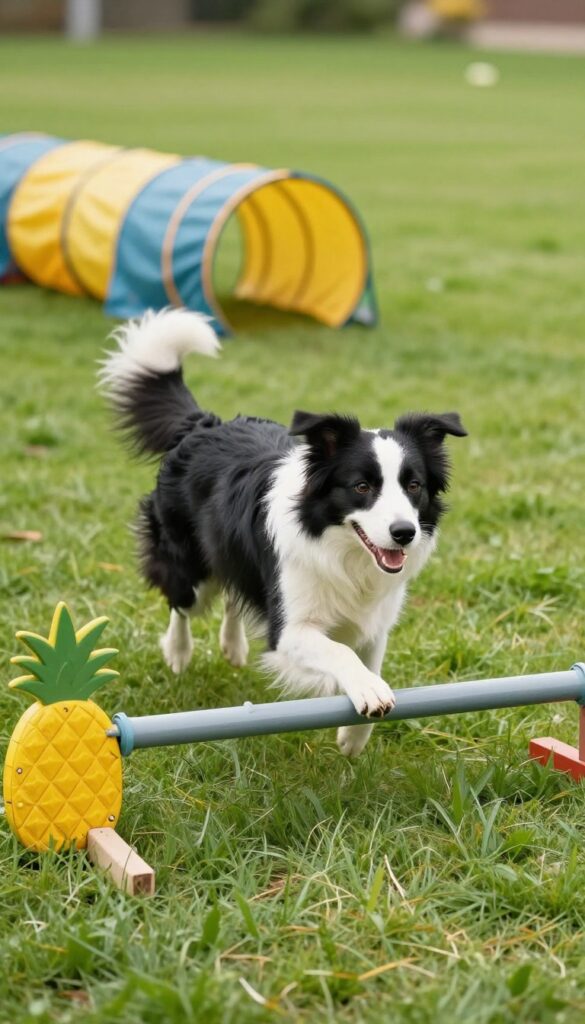
High-energy dogs need more than a walk around the block—they crave challenges that work their bodies and brains. A small agility setup in your yard can turn daily exercise into a fun game of jumps, tunnels, and weave poles.
You don't need a massive space or expensive gear. A few simple obstacles can help burn off excess energy, improve coordination, and strengthen your bond through play. Plus, watching your dog zoom through a tunnel never gets old.
This corner becomes their personal playground, giving them a job to do and a reason to love spending time outside.
Why It Works
Agility exercises provide both physical workout and mental stimulation. Dogs learn to focus, follow cues, and problem-solve as they navigate each obstacle. This combo tires them out more effectively than a straight run, reducing destructive behaviors at home.
Best For
Best for high-energy breeds like Border Collies, Australian Shepherds, Jack Russell Terriers, and Belgian Malinois. Also great for puppies learning body awareness or older dogs needing low-impact movement (adjust jump heights). Works in any yard with at least 10×15 feet of flat space.
Practical Tip
Start with three obstacles: one tunnel (collapsible for storage), two low jumps (use PVC pipes or pool noodles on cones), and four weave poles (stakes in the ground or weighted bases). Arrange them in a loose circle so your dog can run the course without sharp turns. Keep grass short for traction and safety.
Budget-Friendly Option
Save money by making jumps from PVC pipes and couplings (under $20), using a children's play tunnel ($15–30), and crafting weave poles from wooden dowels pushed into flower pots filled with sand. Total cost under $50 versus $200+ for pre-made sets.
9. Indoor Potty Patch Balcony
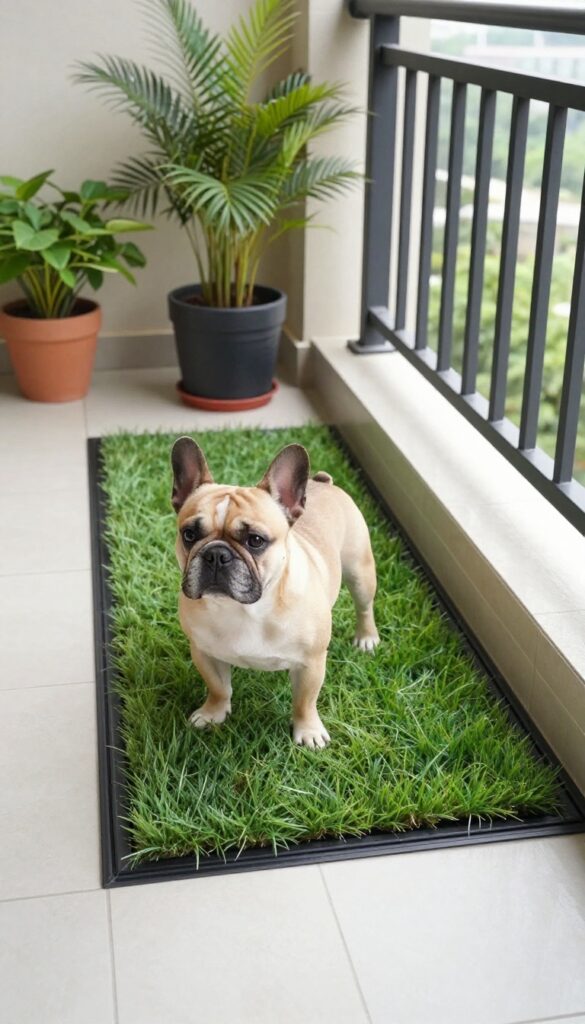
Apartment dogs often struggle when nature calls at odd hours or during bad weather. A balcony potty patch gives them a reliable spot without leaving home. Fake grass over a drainage tray mimics outdoor turf, so your pup knows exactly what to do.
It’s a game-changer for high-rise living or when you’re stuck working late. Plus, it keeps accidents off your floors and saves you from midnight elevator rides.
Why It Works
Dogs naturally prefer grass-like surfaces for elimination. The fake grass feels similar to real turf, while the drainage tray catches liquid and makes cleanup simple. Adding an enzymatic cleaner breaks down odors instantly, keeping the balcony fresh even in warm weather.
Best For
Apartment dwellers with small or medium dogs who don’t have easy yard access. Also great for puppies in training, senior dogs with bladder issues, or owners with unpredictable schedules.
Practical Tip
Choose a patch that fits your balcony size—most are around 2×3 feet. Place it near a wall for privacy and secure it with heavy pots or weights so it doesn’t slide. Rinse the fake grass weekly and spray with enzymatic cleaner to prevent lingering smells.
Budget-Friendly Option
DIY your own patch using a large plastic storage bin, a piece of artificial turf from a hardware store, and a layer of puppy pads underneath for absorption. Replace pads every few days.
FAQ
How do I choose the best spot for my dog's area?
Pick a quiet, low-traffic area where your dog already likes to relax. Avoid drafty spots or direct sunlight. Consider your dog's age, health, and personality.
What materials are safest for dog areas?
Use non-toxic, washable materials. Avoid treated woods, sharp edges, and small parts that could be chewed. Opt for stain-resistant fabrics and easy-clean surfaces.
Can I create a pet area without remodeling?
Absolutely. Use furniture like a crate end table, a corner bed, or a simple rug and toy bin. Many designs require no construction at all.
How do I keep my dog's area clean?
Choose washable bed covers, use mats under bowls, and vacuum regularly. Keep a lint roller handy and wipe down surfaces weekly with pet-safe cleaners.
What if I have multiple dogs?
Provide separate beds or crates to avoid resource guarding. Ensure each dog has their own space, and consider larger or modular setups that can accommodate multiple pets.
Conclusion
Your dog doesn't need a mansion—just a space that feels like theirs. Start with one idea that fits your home and your pup's personality.
A cozy corner or a clever storage nook can make a bigger difference than you'd think. Watch how they settle in, and you'll know you got it right.

I’m Pallab Kishore, the owner of Little Pets Realm — an animal lover and pet care enthusiast sharing easy tips, healthy recipes, and honest advice to help every small pet live a happy, healthy, tail-wagging life.