
Your dog keeps circling the same cold spot by the window, pawing at the floor like it owes them an apology. Winter corners get drafty fast, and a thin bed won't cut it once the temperature drops. The fix usually comes down to warmth, placement, and a little padding in the right places.
These twelve ideas cover store-bought beds, cheap upgrades, and setups you can build from things you already own. Some suit big dogs that sprawl, others fit tiny seniors who need extra heat. Pick what matches your space and your dog's sleep style.
A few of these take ten minutes. A couple need a free afternoon and a drill.
1. Heated Mat Under a Plush Bed
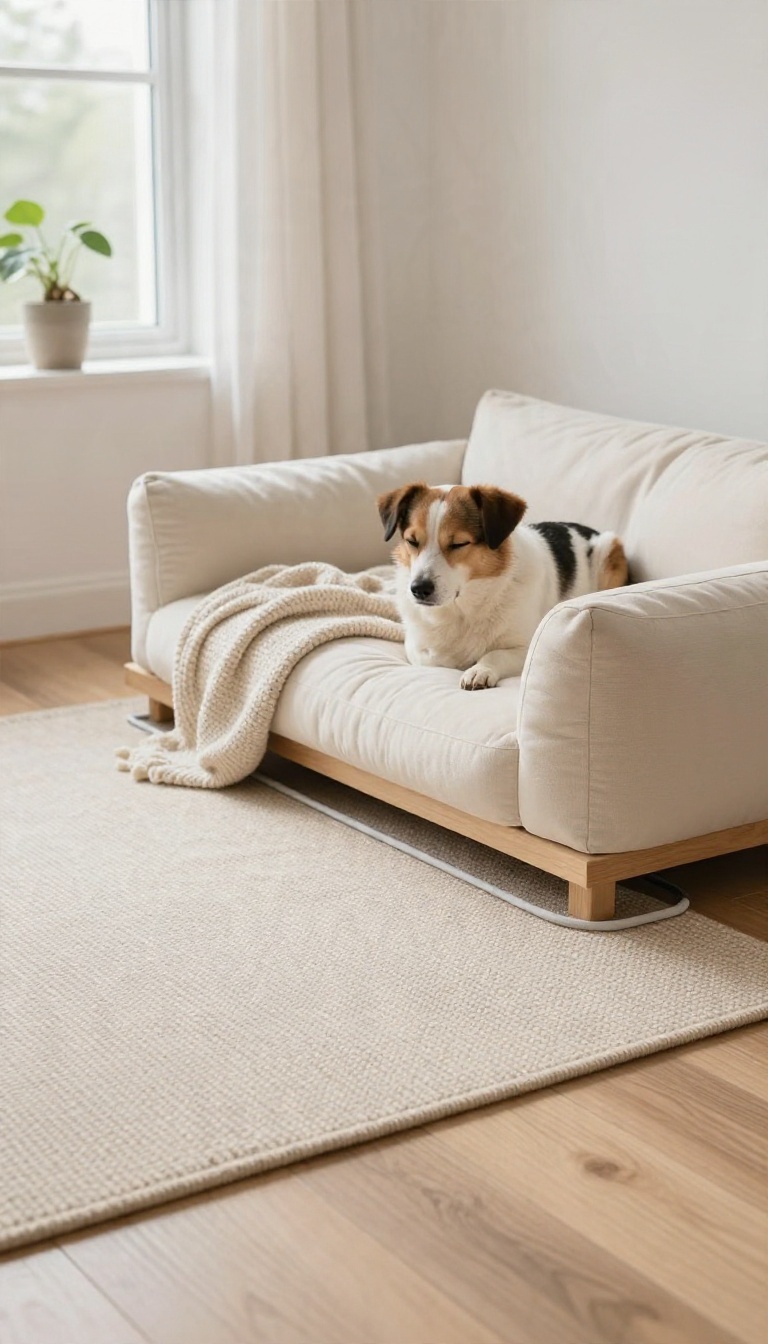
Some dogs feel the cold more than others, and you can usually tell which ones by where they sleep. The shivery ones curl tight, burrow under blankets, or follow the nearest sunbeam around the room. A heated mat tucked under a plush bed solves that problem without turning your corner into a space heater.
The setup is simple: mat on the floor, soft bed on top, warmth rising through the cushion. Your dog gets steady, gentle heat instead of a blast of hot air. It's one of the easiest upgrades on this list, and it works with almost any bed you already own.
The trick is layering, not cranking up the heat. A low-wattage mat does the quiet work underneath while the bed above it traps warmth and gives your dog something soft to sink into. You're basically building a little sandwich of comfort.
Most pet heating mats run at 15 to 40 watts, which is closer to a heated blanket than a radiator. That's plenty for a dog lying still for hours. You don't want the surface hot to the touch, just noticeably warm when you press your palm against it. ### Picking a Mat That Won't Overheat Look for a mat with a chew-resistant cord and a built-in thermostat or auto shutoff.
Those two features matter more than brand names or fancy covers. Dogs chew, cords fray, and a mat that shuts itself off removes most of the risk. Skip human heating pads.
They get hotter than pet mats, they don't handle claws well, and most aren't rated for constant use under a body. A mat made for pets costs about the same and holds up far better. ### Layering the Bed on Top Set the mat flat, then add a bed with a decent base. Memory foam or a thick bolster bed works well because it spreads the heat evenly and keeps the mat from bunching.
A thin fleece bed on top of a mat can slide around, so check the fit before your dog claims it. Leave the mat on the lowest setting and give your dog room to move off it. A bed that's big enough to have a warm side and a cooler side lets them self-regulate.
If they get too toasty, they'll shift over on their own. ### Keeping the Cord Out of Trouble Run the cord along a wall and tuck it behind furniture or under a cord cover. Avoid crossing doorways and walkways where someone might trip or a vacuum might yank it. If your dog is a chewer, a rigid cord channel is worth the few dollars.
Check the cord and plug every week or so. Look for fraying, bite marks, or a warm plug, and unplug the mat if anything seems off. A quick glance takes seconds and saves you a headache. ### Which Dogs Get the Most From This Short-haired breeds, seniors with stiff joints, and small dogs lose heat fast.
So do lean dogs with little body fat and any pup recovering from surgery or illness. If your dog shivers by the door or presses against the heat vent, this setup fits them. Thick-coated breeds like huskies or malamutes usually don't need it and may actively avoid the warmth.
Watch how your dog reacts the first few days. If they sprawl across it, you nailed it. If they step around it, drop the setting or move the mat to a cooler spot.
Picking A Mat That Won't Overheat
Look for a mat with a chew-resistant cord and a built-in thermostat or auto shutoff. Those two features matter more than brand names or fancy covers. Dogs chew, cords fray, and a mat that shuts itself off removes most of the risk.
Skip human heating pads. They get hotter than pet mats, they don't handle claws well, and most aren't rated for constant use under a body. A mat made for pets costs about the same and holds up far better.
Layering The Bed On Top
Set the mat flat, then add a bed with a decent base. Memory foam or a thick bolster bed works well because it spreads the heat evenly and keeps the mat from bunching. A thin fleece bed on top of a mat can slide around, so check the fit before your dog claims it.
Leave the mat on the lowest setting and give your dog room to move off it. A bed that's big enough to have a warm side and a cooler side lets them self-regulate. If they get too toasty, they'll shift over on their own.
Keeping The Cord Out Of Trouble
Run the cord along a wall and tuck it behind furniture or under a cord cover. Avoid crossing doorways and walkways where someone might trip or a vacuum might yank it. If your dog is a chewer, a rigid cord channel is worth the few dollars.
Check the cord and plug every week or so. Look for fraying, bite marks, or a warm plug, and unplug the mat if anything seems off. A quick glance takes seconds and saves you a headache.
Which Dogs Get The Most From This
Short-haired breeds, seniors with stiff joints, and small dogs lose heat fast. So do lean dogs with little body fat and any pup recovering from surgery or illness. If your dog shivers by the door or presses against the heat vent, this setup fits them.
Thick-coated breeds like huskies or malamutes usually don't need it and may actively avoid the warmth. Watch how your dog reacts the first few days. If they sprawl across it, you nailed it.
If they step around it, drop the setting or move the mat to a cooler spot.
2. Bolster Bed Tucked Into a Corner
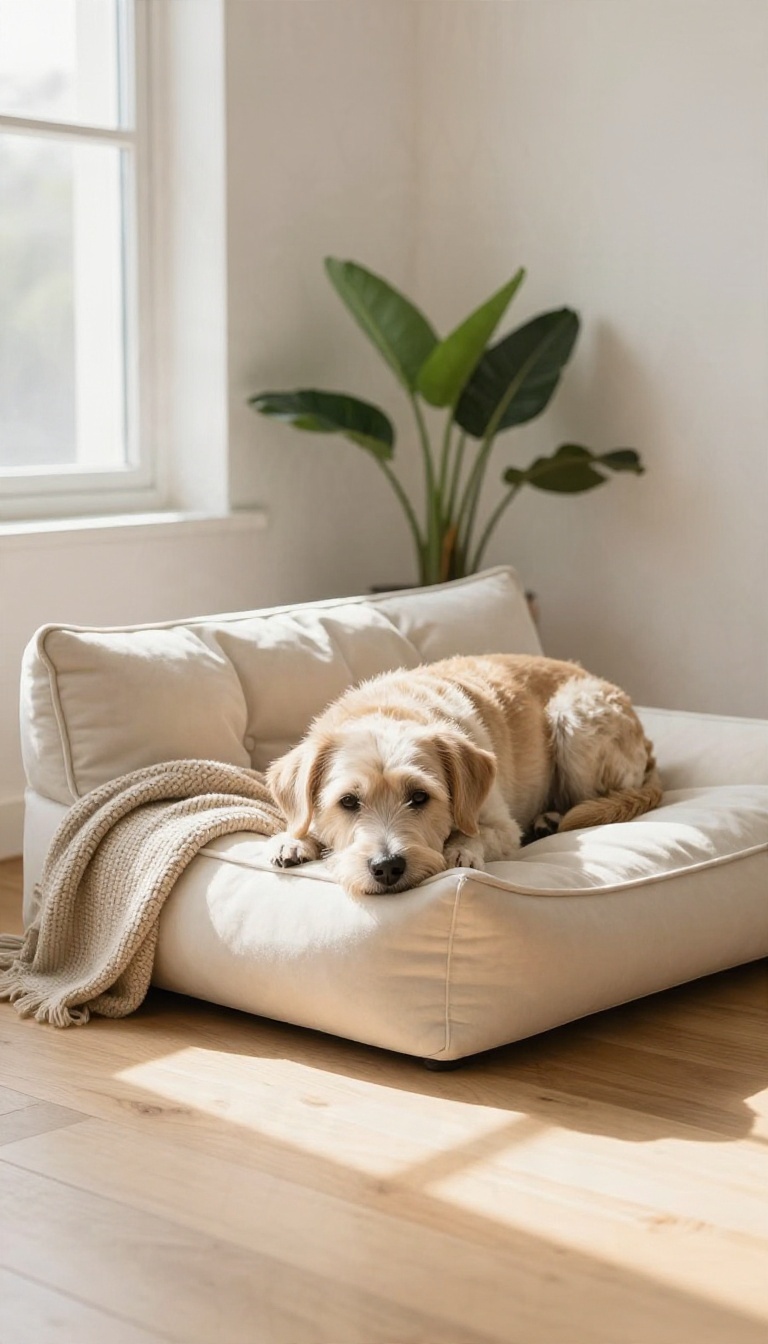
Dogs love a corner. It puts two walls at their back, cuts the number of directions they have to watch, and turns a wide-open room into something that feels like a den. A bolster bed leans into that instinct.
The raised sides give your dog something to curl against, and the corner placement blocks the drafts that creep along the floor and walls. Get the fit right and you have a sleeping spot your dog claims as their own. Get it wrong and you have a bed that slides around and gets ignored.
The trick is treating the corner as part of the bed, not just the spot where you dropped it. A bolster bed works best when it sits snug against both walls, with the padded sides facing out into the room. That way the walls handle two sides and the bolsters handle the rest, wrapping your dog in a full circle of cushion.
This setup suits almost any dog, but it shines for seniors, anxious pups, and small breeds that lose heat fast. Bigger dogs can use one too, as long as the bed is genuinely big enough for them to stretch out rather than just curl up.
Why Corners Calm Dogs Down
Wild canines den up for safety, and your living room corner scratches the same itch. Two solid walls mean fewer blind spots, so your dog can relax instead of half-sleeping with one ear cocked. The raised bolsters add another layer.
They block light, muffle sound, and give your dog a chin rest that feels like a pillow. Nervous dogs often settle faster in a bolstered corner bed than in a flat one sitting out in the open. There is a warmth bonus too.
Corners trap heat that would otherwise drift across the room, and the walls shield the bed from the cold seeping in through windows and exterior walls.
Sizing It For The Space And The Dog
Measure the corner first. You want the bed to fill it without bulging past the baseboards or blocking a door swing. For the dog, add a few inches to their nose-to-tail length when they sprawl, then check that against the bed's outer dimensions, not the inner sleeping area.
Bolsters eat up space, so a bed that looks huge online can leave a big dog cramped. Senior dogs and puppies do well with lower bolsters they can step over easily. Deep-sided beds feel cozy but turn into a hurdle for stiff joints.
Keeping The Bed From Wandering
Smooth floors are the enemy here. A bed that slides every time your dog hops in ends up halfway across the room by morning. A rubber-backed rug or a cheap non-slip mat underneath solves most of it.
If the bed has a slick base, stick on a few furniture pads or strips of grip tape. You can also wedge it lightly against the walls so it has nowhere to go. Just leave a small gap so air can move and the bed does not trap damp against the baseboard.
Blocking The Sneaky Drafts
Cold air pools low and slides along walls, so the corner nearest a window or exterior door is the draftiest spot in the room. Run a hand along the baseboard and window frame on a cold day. If you feel a chill, a rolled towel or draft stopper along the bottom of the bed helps a lot.
Pushing the bed a couple of inches off an exterior wall also keeps the cold surface from pulling heat straight out of the cushion. The bolsters still do their job, and your dog stays warmer.
3. DIY Blanket Nest With a Laundry Basket
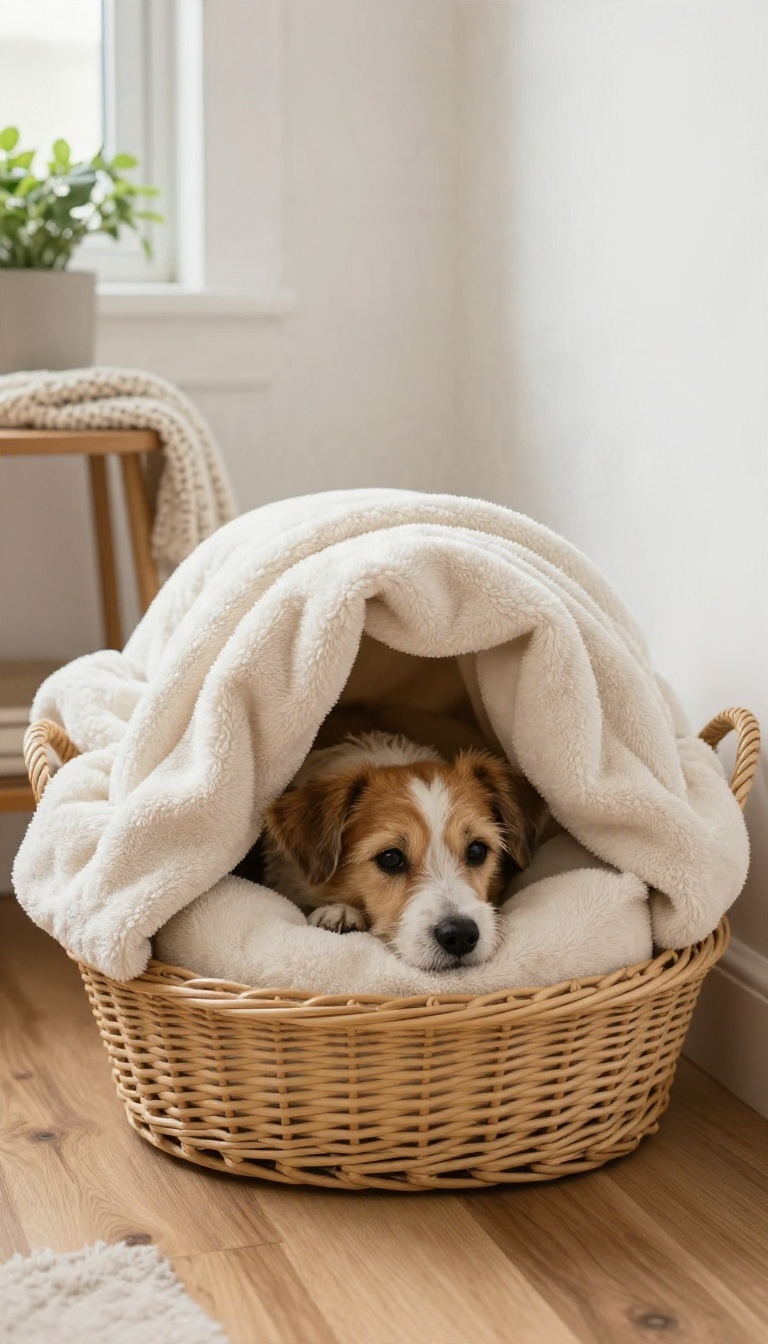
Some dogs don't just want warmth—they want to disappear into it. A laundry basket piled with fleece gives them that cave-like feeling without the price tag of a fancy burrow bed. It's cheap, easy to customize, and surprisingly sturdy for small to medium pups.
You probably have a basket and a few old blankets already. The trick is picking the right basket and layering it so your dog stays warm without overheating. Here's how to build a nest that lasts all winter.
Start with a sturdy plastic or wicker laundry basket—something with low sides so your dog can step in without a ramp. Avoid flimsy fabric bins that collapse when leaned on. A basket roughly one and a half times your dog's length gives them room to circle and dig.
Line the bottom with a folded towel or thin foam pad for insulation against cold floors. Then add two or three fleece blankets, loosely bunched so your dog can burrow. Fleece traps heat without feeling heavy, and it dries fast after washing.
Keep the nest away from drafty windows and direct heat sources. A corner near a wall or under a side table feels safer and stays warmer. Wash the blankets weekly and wipe the basket with a pet-safe cleaner to keep odors down.
Choosing A Safe Basket
Skip baskets with sharp edges, loose weave, or handles that stick out—they can catch a collar or scratch a nose. Plastic is easiest to clean; wicker looks cozier but check for splinters. Make sure the basket has ventilation holes so moisture doesn't build up.
Layering For Warmth
Start with a base layer that insulates: a folded fleece blanket or an old yoga mat cut to size. Add a middle layer of fleece or flannel for softness. Top with a lightweight blanket your dog can push around.
Avoid electric blankets unless they're pet-rated and chew-proof.
Keeping It Fresh
Fleece blankets collect hair and drool fast. Shake them out daily and wash weekly in hot water with a pet-safe detergent. Keep a spare set of blankets so you can swap them out without leaving your dog nest-less.
Wipe the basket with a diluted vinegar solution once a week.
4. Elevated Cot With a Winter Topper
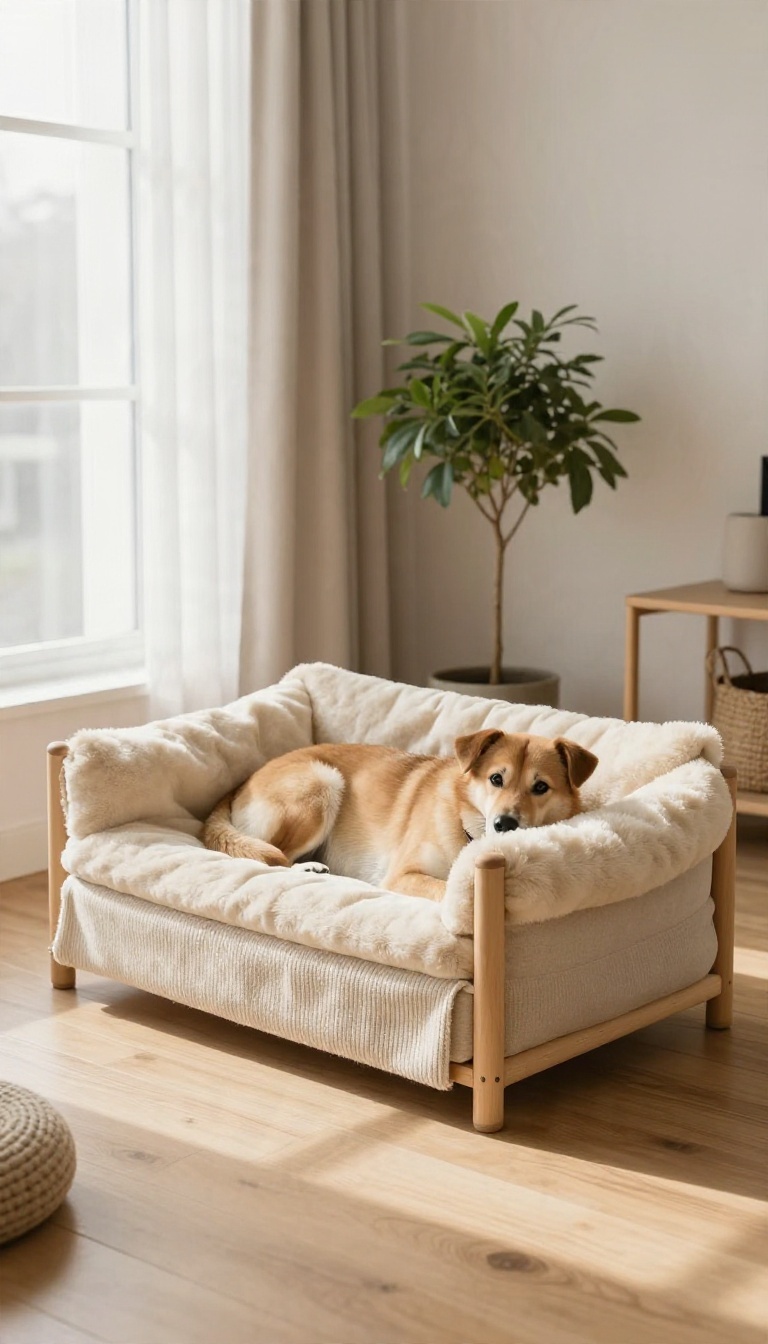
Not every dog wants to burrow. Some run hot, some live in damp climates, and some just prefer to feel the air around them. That's where an elevated cot earns its keep.
It lifts your dog off cold floors, lets air circulate underneath, and keeps bedding dry. But once winter hits, a bare cot can feel a little too breezy. The fix is simple: add a fleece topper and a draft skirt.
An elevated cot is basically a fabric hammock stretched over a frame. It keeps your dog off the ground, which matters if your floors are tile, concrete, or just plain chilly. The airflow underneath helps with dampness and odor, and it's a lifesaver for dogs that overheat on plush beds.
But in winter, that same airflow can turn into a draft. The trick is to block the wind without trapping heat. A fleece topper adds softness and warmth on top, while a draft skirt wraps the sides to keep cold air from sneaking under.
Together, they turn a summer cot into a cozy winter spot.
Why A Cot Works In Winter
Cold floors suck warmth out of your dog fast. A cot breaks that contact and gives them a dry, elevated surface. It's especially useful in damp climates where moisture lingers.
And for dogs that run hot, it prevents the overheating that comes with thick beds. The key is to add just enough insulation without turning it into a sauna.
Choosing The Right Topper
A fleece topper is your best bet. It's soft, warm, and easy to wash. Look for one that fits snugly over the cot's surface or has ties to keep it in place.
Avoid thick, padded toppers that defeat the cot's cooling purpose. If your dog is older or thin-skinned, a sherpa or faux-fur topper adds extra coziness without bulk.
Adding A Draft Skirt
A draft skirt is basically a fabric panel that hangs around the cot's perimeter. It blocks wind from blowing underneath and creates a pocket of still air. You can buy one made for your cot or DIY one from fleece or an old blanket.
Attach it with clips or velcro so you can remove it when winter passes. Just make sure it doesn't drag on the floor or trap moisture.
Placement And Setup Tips
Put the cot in a corner away from drafty windows and doors. If your floors are especially cold, add a rug underneath for extra insulation. Keep the setup dry—if the cot gets damp, dry it out before your dog uses it.
And check the topper regularly for wear. A little maintenance keeps the whole thing warm and safe.
5. Draft-Blocking Bed Nook
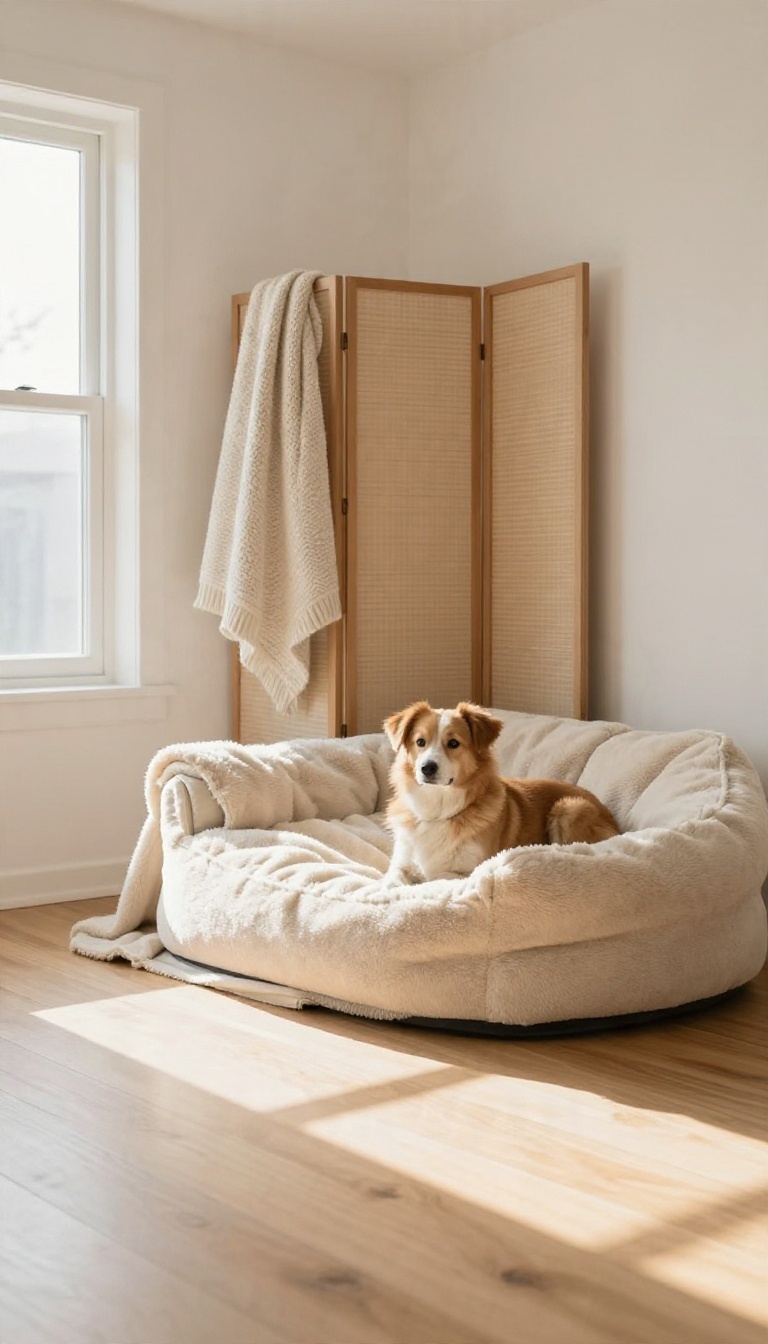
Cold air sneaks through gaps you can't see, especially in corners near windows or doors. A draft-blocking bed nook stops that chill by creating a buffer between your dog and the outside. It's less about buying a special bed and more about arranging what you have to trap warmth.
Here's how to set up a cozy pocket that actually keeps the cold out.
Start by finding the draftiest spot your dog already likes. Run your hand along the floor and walls to feel for moving air. Then use a rolled blanket, a low screen, or a piece of furniture to block the flow before it reaches the bed.
Check For Sneaky Drafts
Get down on the floor where your dog sleeps and hold a tissue near gaps under doors, windows, or baseboards. If it flutters, cold air is getting in. Seal obvious leaks with a draft stopper or a rolled towel, then place the bed just outside the blocked zone so your dog still gets warmth without sitting in a wind tunnel.
Build A Buffer With What You Have
A rolled fleece blanket along the base of a wall or a low folding screen can redirect airflow away from the bed. Even a sturdy cardboard box covered in a blanket works as a temporary barrier. The goal is to create a dead-air pocket around the bed, not to seal your dog in.
Watch The Airflow
After you set up the barrier, check that the spot still gets some air movement so it doesn't get stuffy. A small gap at the top or side keeps things fresh. Also make sure your dog can get in and out easily—no climbing over obstacles, especially for older dogs.
6. Self-Warming Pad for Senior Dogs
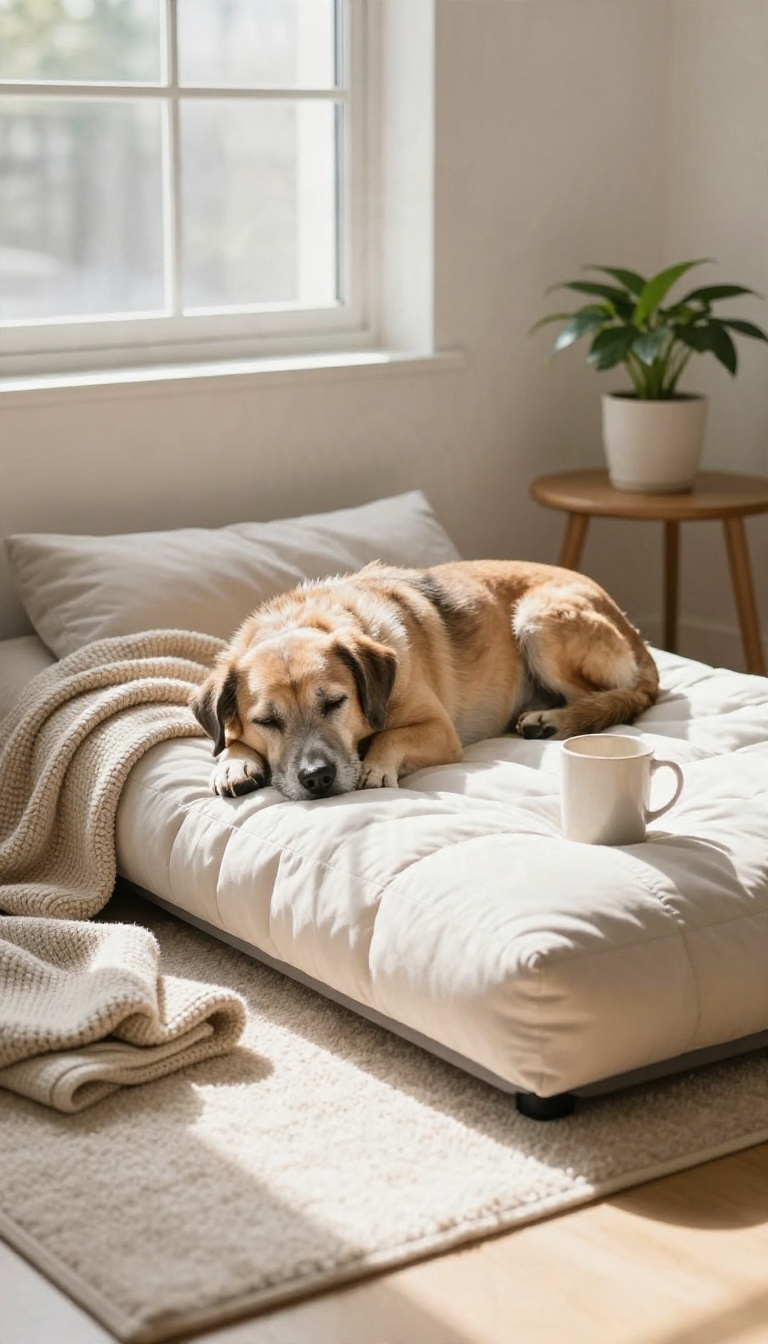
Older dogs often struggle with cold weather because arthritis and stiff joints make everything feel worse. A self-warming pad uses a reflective layer to bounce your dog's body heat back at them, creating gentle warmth without any electricity. It's a simple, low-effort way to add comfort to a senior dog's favorite corner.
These pads are typically made with a layer of heat-reflective material, like a space blanket, sandwiched between soft fabric. They don't generate heat on their own—they just trap what your dog already gives off. That makes them safe to leave out all day and night, with no cords to chew or outlets to worry about.
Why Senior Dogs Benefit
As dogs age, their circulation slows and they lose some of their natural ability to stay warm. Cold floors and drafty spots can make stiff joints ache even more. A self-warming pad gives them a cozy, insulated spot to settle into without adding a heating element that might get too hot.
Pairing With Memory Foam
A reflective pad works best when it has a supportive base underneath. Memory foam molds to your dog's body and cushions pressure points, while the pad adds warmth on top. Look for a pad that fits snugly over a memory foam bed, or choose a combo product that already includes both layers.
Placement And Care
Put the pad in a spot your dog already likes—near a wall or in a corner where they feel secure. Avoid placing it directly on cold concrete; a rug or mat underneath helps. Most pads are machine washable, so you can keep them fresh without much effort.
7. Cave Bed for Anxious Sleepers
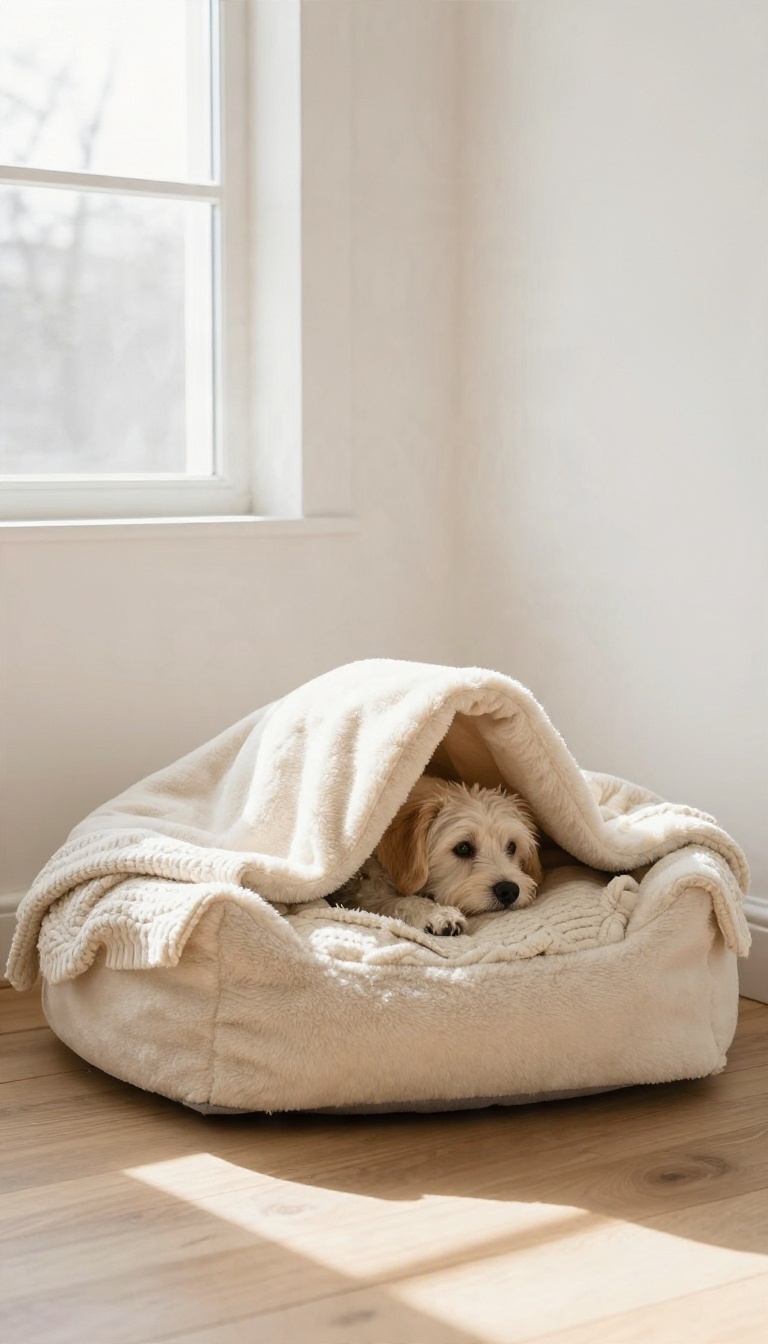
Some dogs don't just want warmth—they want to disappear into it. If your dog regularly shoves themselves under the coffee table or burrows behind the couch cushions, a cave bed gives them that same secure feeling without the dust bunnies. These enclosed beds wrap around your dog like a hood, blocking light and noise while trapping body heat.
For anxious sleepers, that combination can mean the difference between pacing all evening and actually settling down.
Cave beds come in a few styles: hooded beds with a soft canopy, deep bucket beds with high walls, and tent-like designs with a partial roof. The key feature is enclosure—something your dog can crawl into rather than just lie on top of. During winter, that enclosed space stays noticeably warmer than an open bed, especially in a drafty room.
The cover also muffles sounds, which helps when neighbors are setting off fireworks or the wind is rattling the windows.
Why Enclosed Beds Calm Anxious Dogs
Dogs are den animals by nature, and a cave bed mimics the safety of a burrow. The enclosed sides block peripheral movement, so your dog isn't constantly scanning for threats. That reduces alertness and helps them relax.
On noisy winter evenings—think holiday parties, storms, or garbage trucks—the fabric cover acts as a sound buffer. Many anxious dogs will choose a cave bed over a fancy orthopedic mattress simply because it feels more secure.
Getting The Fit Right
A cave bed should be snug but not cramped. Your dog needs to stand up, turn around, and stretch out without hitting the walls. Measure your dog from nose to tail and add a few inches.
For deep-chested breeds, look for beds with a wider opening. If your dog is a chewers, choose a bed with a removable cover so you can wash it easily—anxious dogs sometimes drool or paw at the fabric. Also check that the bed has a non-slip bottom, especially on hardwood floors.
Ventilation And Safety Checks
Enclosed doesn't mean airtight. Look for beds with mesh panels or a partially open front so air can flow. Avoid beds with heavy, non-breathable covers that could trap moisture.
If your dog likes to burrow completely, make sure the fabric isn't so thick that they overheat. A cave bed with a removable hood gives you options: use the cover on cold nights and take it off if your dog gets too warm. Finally, place the bed away from direct heat sources like radiators or space heaters.
8. Radiator-Side Bed With a Safe Gap
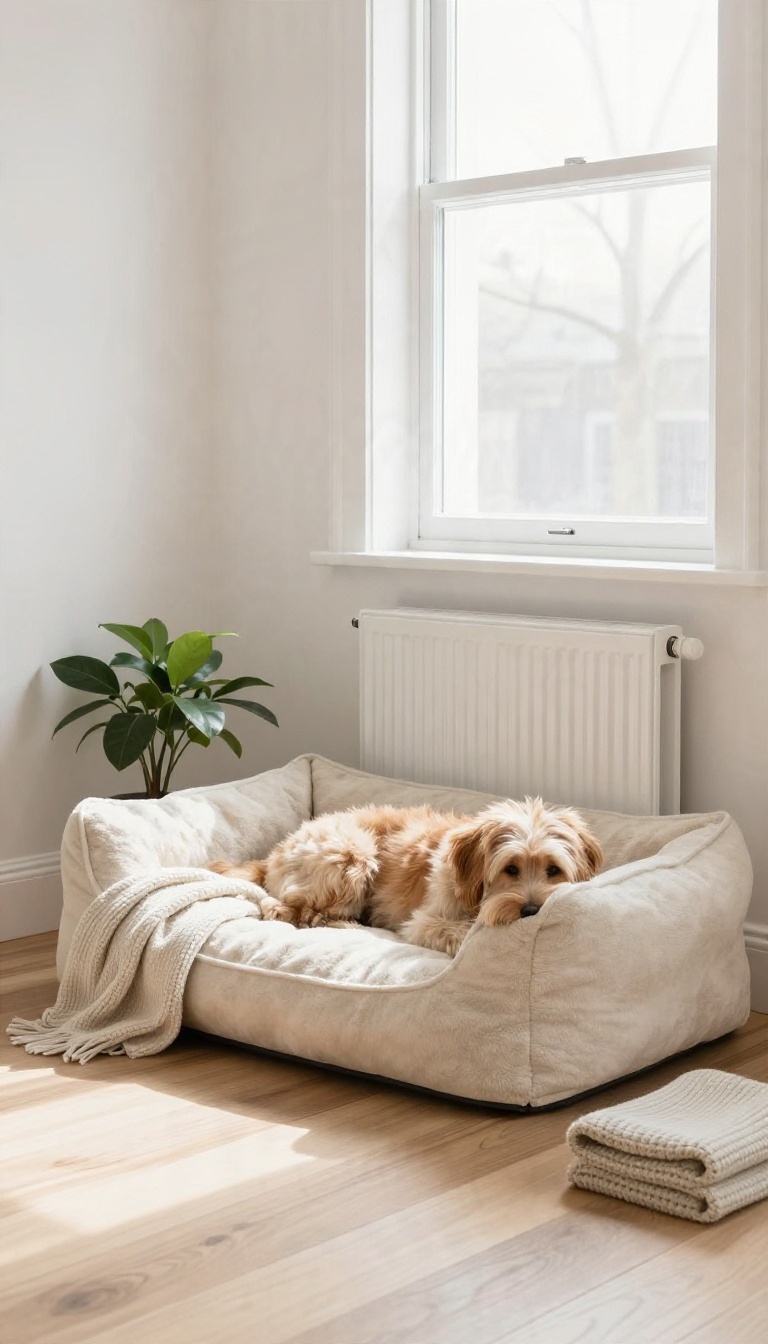
Radiators and warm exterior walls pull double duty in winter: they heat the room and radiate a steady glow that dogs gravitate toward. Park a bed too close, though, and you risk overheating, singed fabric, or a dog that can't get comfortable because the surface is too hot to lie on. The trick is capturing that warmth while keeping a buffer zone.
Get the gap right and you've basically built your dog a heated sleeping nook for free.
The sweet spot is usually somewhere between six and twelve inches from the radiator itself. Close enough that the ambient warmth reaches the bed, far enough that nothing touches the hot metal or fins. For older cast-iron radiators that get genuinely hot to the touch, lean toward the wider end.
Modern panel radiators that stay warm rather than scorching give you more flexibility. Measure before you buy anything. A bed that looks perfect online can end up jammed against the pipes or blocking the heat from reaching the rest of the room.
If floor space is tight, a low-profile bed slides under the gap more easily than a tall bolster style.
Why The Gap Matters
Dogs can't always tell when they're getting too warm until they're already uncomfortable, and a bed pressed right against a hot radiator leaves no escape. A gap lets your dog shift away if the heat builds up. It also keeps bedding material from resting against a surface that could scorch synthetic fabrics over time.
Airflow is the other reason. Radiators work by moving warm air around, and a bed shoved flush against one blocks that circulation. A little breathing room means the heat spreads into the bed instead of getting trapped and wasted.
Pick Materials That Handle Heat
Cotton canvas, wool blends, and tightly woven outdoor fabrics hold up well near a heat source. They resist scorching and don't off-gas the way some cheap synthetics can when they get warm. Avoid thin polyester covers and anything with a plastic backing right against the radiator side.
A removable, washable cover is worth prioritizing here. Warm spots collect dust and hair faster, and you'll want to toss the cover in the wash without dismantling the whole bed. Memory foam cores handle gentle warmth fine, but skip any bed with a heat-sensitive gel layer if it's sitting close to the radiator.
Watch For Overheating
Check on your dog the first few days rather than assuming the spot works. Signs of overheating include restless shifting, panting while resting, or abandoning the bed after a few minutes. If you see any of that, nudge the bed a few inches farther out.
Short-nosed breeds, thick-coated dogs, and seniors with heart conditions feel heat faster than others. A dog that loves the warmth will vote with their paws, so trust the behavior over the thermometer. Rotate the bed slightly away from the radiator on milder days if your dog seems reluctant.
9. Washable Fleece Layers for Wet Winter Paws
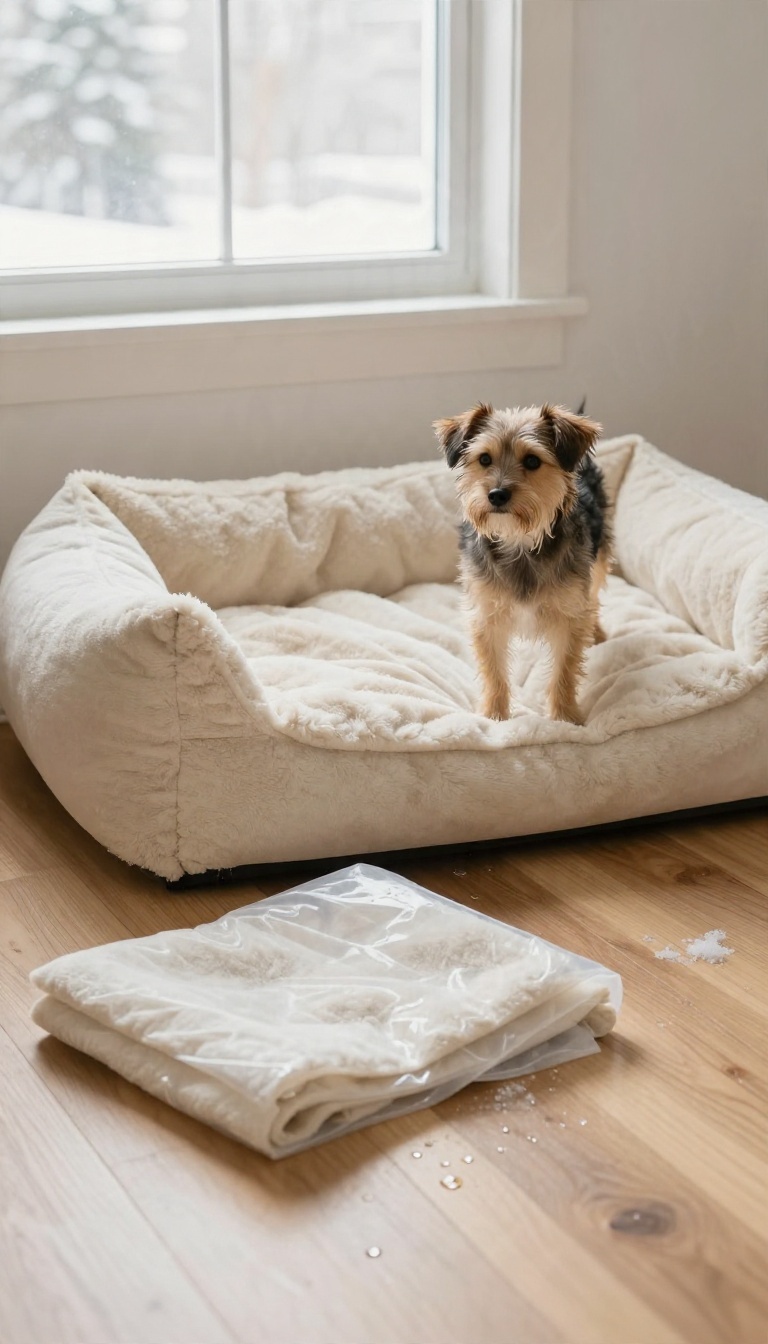
Wet paws and melting snow turn a cozy corner into a damp mess faster than you'd think. One good shake and there's grit ground into the fabric, and a soggy bed stays cold for hours. The fix here isn't a fancier bed—it's a smarter layering system that dries fast and washes easy.
Think of it as a bed with a waterproof base and a fleece top you can peel off and toss in the machine. Your dog gets a warm, dry spot, and you stop hauling the whole bed to the laundry every other day.
The setup is simple: a waterproof liner sits closest to the bed or floor, then a washable fleece cover goes on top. Water and slush stay on the surface instead of soaking through, and the fleece wicks away the little bit of moisture that clings to wet fur. What makes this work is that you're only washing the top layer.
The bulky base stays put, which means less wrestling with zippers and less time waiting for a thick bed to dry. Keep a spare fleece on hand and you can swap it in seconds.
Build The Waterproof Base First
Start with a waterproof liner or a crib mattress pad cut to size. Look for something with a soft backing so it doesn't crinkle loudly every time your dog shifts. A cheap waterproof picnic blanket works too if you're testing the idea before committing.
Lay it flat under the fleece and tuck the edges so nothing bunches up. If your dog digs before lying down, a slightly oversized liner stays put better than a snug one.
Pick Fleece You Can Actually Wash
Not all fleece survives the dryer. Choose covers labeled machine washable and tumble dry low, or go with cheap fleece blankets you won't mind replacing. Thin, plush throws dry in under an hour and stay soft after repeated washes.
Avoid anything with a stiff backing or heavy quilting—those hold water and take forever to dry. Two or three lightweight covers rotated through the week beat one thick one.
Make Swapping A Ten-second Job
Skip fiddly ties and long zippers. A fleece cover that drapes over the bed and tucks under the edges is the easiest to change one-handed while your dog waits. If you want it more secure, a few strips of hook-and-loop tape do the trick.
Keep the spare cover folded nearby so you're not digging through a closet with a wet dog on your heels. The faster the swap, the more likely you'll actually do it.
Handle The Mud Zone
A small absorbent mat right at the bed's edge catches the worst of the grit before it reaches the fleece. Shake it out outside and rinse it when it gets grimy. This one extra layer cuts down on how often the fleece needs a full wash.
For really sloppy days, keep a towel by the door and wipe paws before your dog heads to the corner. It's a small habit that keeps the whole setup drier.
10. Memory Foam Base for Cold Floors
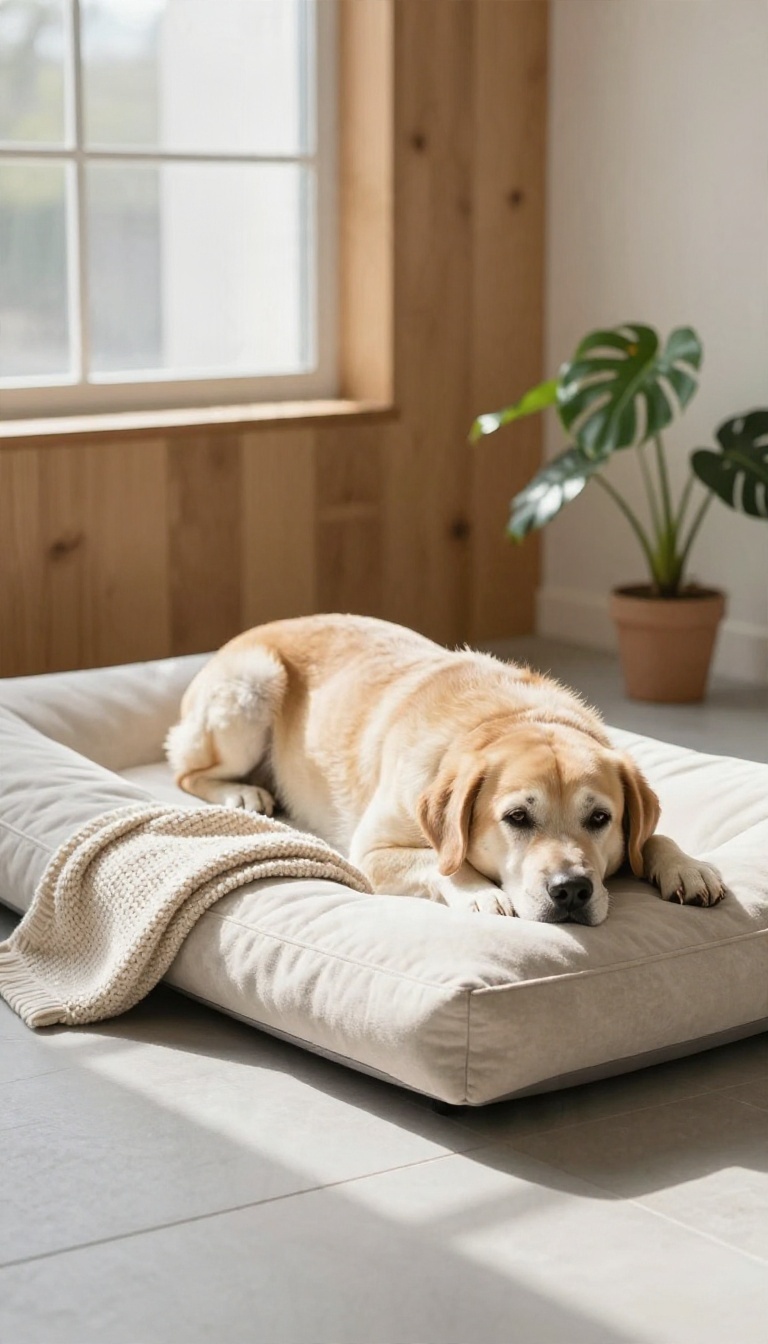
Tile and concrete feel cold for a reason: they pull heat out of whatever touches them, and your dog's body heat disappears into the slab within minutes. A thick memory foam base puts a layer of insulation between your dog and that heat sink, so the warmth they generate stays with them instead of draining away. It also does something a fluffy bed can't.
Memory foam spreads weight evenly, which takes pressure off hips and elbows. That matters most for heavier breeds, whose joints take a real beating on hard floors all winter.
The trick is thickness and density. A thin memory foam topper won't insulate much, so look for a base at least three to four inches deep. Higher-density foam holds up longer and won't flatten into a cold pancake by February.
You don't need a fancy bed frame to make this work. A foam slab inside a washable cover, dropped into a corner, does the job just fine.
Why Hard Floors Feel Colder
Tile, concrete, and stone conduct heat quickly, so they constantly steal warmth from anything resting on them. Bare floors can sit several degrees cooler than the air in the room. Insulation breaks that transfer, and foam is one of the easiest materials to work with.
A memory foam base slows the heat loss enough that your dog's own body warmth starts to build up instead of leaking away.
Picking The Right Foam
Go thicker for big dogs. A 90-pound dog compresses foam fast, so four inches of high-density memory foam beats six inches of the soft stuff. Smaller dogs can get away with three inches.
If your dog is a chewer, keep the foam inside a sturdy, zippered cover. Exposed foam doesn't survive determined teeth.
Setting It Up
Put the foam base down first, then add a washable cover and a fleece or sherpa layer on top for surface warmth. Slide the whole setup a few inches from the wall so air can move and moisture doesn't get trapped. For extra insurance on really cold floors, tuck a thin foam camping mat underneath.
It's cheap, it adds another insulating layer, and nobody will ever see it.
11. Window Bench Bed With Insulation

A window bench looks like prime real estate for a dog: elevated, sunny, and right in the middle of everything. But cold glass and leaky frames turn that spot into a draft trap once winter sets in. The fix is straightforward—insulate the bench, block the chill, and top it with a bed your dog actually wants to sink into.
You don't need to rebuild the bench. A few layers of foam and a curtain can turn it into the warmest seat in the house.
Insulate The Bench Surface
Start with a layer of rigid foam board cut to fit the bench top. Half-inch foam works for most benches and adds a solid thermal break between the cold wood and your dog. Cover it with a plywood sheet or just lay a thick cushion over it—either way, the foam stops heat from leaking downward.
If the bench has storage underneath, line the inside with reflective insulation to keep the whole unit warmer.
Block The Window Draft
Windows lose heat fast, especially single-pane ones. A heavy curtain hung close to the glass creates an air pocket that slows heat loss. Choose a floor-length curtain with a tight weave, and mount the rod as close to the ceiling as you can.
For extra credit, add a window insulation kit—the shrink-wrap kind you heat with a hair dryer. It's cheap, invisible, and makes a noticeable difference.
Add A Snug Bed On Top
Once the bench is insulated, top it with a bed that traps heat. A bolster bed with high sides works well because it blocks drafts from the window and gives your dog something to curl against. Look for one with a removable, washable cover and a non-slip bottom so it stays put.
If your dog runs cold, add a self-warming pad underneath the bed—no electricity needed, just reflective layers that bounce body heat back.
Make It Easy To Get On And Off
A warm bench is useless if your dog can't reach it comfortably. Add a small set of pet stairs or a ramp if the bench is high. For older dogs, a low-profile bed on the bench might be easier than a deep bolster.
And keep the path clear—no clutter or slippery rugs that could trip them up.
12. Portable Travel Bed for Winter Trips

A bed that lives permanently in the corner of your living room doesn't help much when the car is packed and you're headed to your parents' house for the holidays. Dogs sleep just as hard on the road as they do at home, and cold weather makes that harder. A travel bed that packs flat, holds heat, and smells like home solves most of the problem before you even start the engine.
The goal here isn't a fancy setup. It's a bed your dog recognizes, a layer that traps warmth, and a plan for the cold stretches in between stops. Everything below fits in a trunk and takes minutes to set up.
Pick A Bed That Packs Flat
Insulated travel mats roll up or fold into a thin rectangle, which means they slide behind a seat or into a duffel without eating the whole trunk. Look for a mat with a foil or foam layer on the bottom, since that's what keeps cold floors and cold car carpet from pulling heat out of your dog. Skip anything with a rigid frame or a bulky bolster.
They look cozy in photos and turn into a puzzle piece that fits nowhere once the luggage is in. A flat mat plus a folded blanket gives you the same warmth with far less bulk.
Bring The Blanket They Already Love
Familiar smell does a lot of heavy lifting in strange places. Pack the blanket your dog sleeps on at home, even if it's ratty, and lay it over the travel mat. The scent alone helps them settle in a new room faster.
If the blanket is thin, double it. Two layers trap more warmth than one, and you can fold the top layer back if the room runs hot. Just don't wash it right before the trip, or you'll lose the whole point.
Keep The Car Warm Between Stops
Cold-weather road trips mean the car cools down fast every time you stop for gas or a bathroom break. Crate your dog with the travel mat inside, and toss a blanket over the crate for the short stretches when you're out of the vehicle. For longer stops, bring the mat inside with you rather than leaving it in a cold car.
A mat that's been sitting at freezing temperatures takes a while to warm back up, and your dog will feel every minute of it.
Set Up Fast At Your Destination
Once you arrive, find a spot away from drafty doors and cold exterior walls, then unroll the mat and add the familiar blanket on top. It takes about thirty seconds, which matters when you're hauling bags in and your dog is already circling. If the floor is tile or concrete, put a folded towel or an extra blanket underneath the mat.
That one layer makes a noticeable difference on cold floors, and it's the kind of thing you can borrow from your host without packing extra gear.
FAQ
Do heated dog beds use a lot of electricity?
Most pet heating mats draw very little power, similar to a small blanket. Check the wattage on the label and look for models with chew-resistant cords and automatic shutoff.
How do I stop cold air from reaching my dog's bed?
Move the bed away from doors and single-pane windows, add a rolled blanket or low screen to block drafts, and place the bed on a rug or foam base instead of bare floor.
What bed works best for an older dog in winter?
A low-entry bed with memory foam and a self-warming or heated pad on top usually works well. Avoid high sides that are hard to step over, and keep the bed near a warm wall.
How often should I wash a winter dog bed?
Wash removable covers every one to two weeks, or more often if your dog comes in wet and muddy. Wipe down heated mats and waterproof liners weekly.
Can I put a regular bed next to a radiator?
Keep a safe gap so the bed doesn't overheat, and avoid placing it directly against hot pipes. Check the bed's material and feel the spot with your hand before your dog settles in.
Conclusion
A warm winter corner doesn't need fancy gear. Start with the floor, block the drafts, and add heat only where your dog actually needs it. Then watch where they choose to nap and adjust from there.
Swap layers as the season shifts, wash things often, and keep cords and heaters out of reach. A little setup now means a dog that sleeps through the cold months instead of pacing the hallway.