
Snow turns a Bernese Mountain Dog puppy into a walking postcard, but cold fingers and a wiggly dog can wreck the shot fast. The fix isn't fancy gear. It's picking a few setups that work with the breed's thick coat and calm, people-loving personality.
These nine ideas keep sessions short and warm. Each one gives you a clear shot to aim for, plus small tweaks that make it easier on both of you.
You don't need a studio or a pro camera. A phone, good timing, and a pocket full of treats will get you photos worth framing.
1. The Classic Snow Nose Close-Up

Start with the shot that always works. A tight close-up of your Bernese Mountain Dog puppy's face with snowflakes caught on their muzzle gives you a portrait that's simple, striking, and unmistakably winter. The breed's dark nose and bright eyes pop hard against a white backdrop, so you barely have to try.
Get close, stay low, and let the snow do the decorating.
The trick with this shot is getting your puppy to hold still just long enough. You don't need a long window, either. A few seconds of a curious head tilt is plenty.
Keep the frame tight. Fill it with the face, crop out the body, and let the snowflakes on the nose and whiskers carry the whole image. The less background you show, the more those eyes and that nose stand out.
Getting The Snow To Stick
Fresh, dry snow works best because it clings to fur instead of melting on contact. Let your puppy trot around for a minute so flakes settle naturally on the muzzle and brows. Avoid brushing them off, since the messy dusting is the whole point.
If the snow is wet and slushy, wait for a colder day or shoot right as flakes fall.
Camera Angle And Focus
Get down to your puppy's eye level. Kneel or lie on the ground so you're shooting straight into that face rather than looking down at it. Tap to focus on the nose or the nearest eye, then hold steady.
A slightly blurred snowy background keeps attention on the face without any extra effort.
Keeping It Short And Warm
This shot takes under a minute once you're set up, so have everything ready before your puppy steps outside. Pre-focus, check your light, and keep treats in a warm pocket. Snap a handful of frames, then head back in.
A quick session means a happy puppy and a sharper photo.
2. Puppy Tracks in Fresh Powder
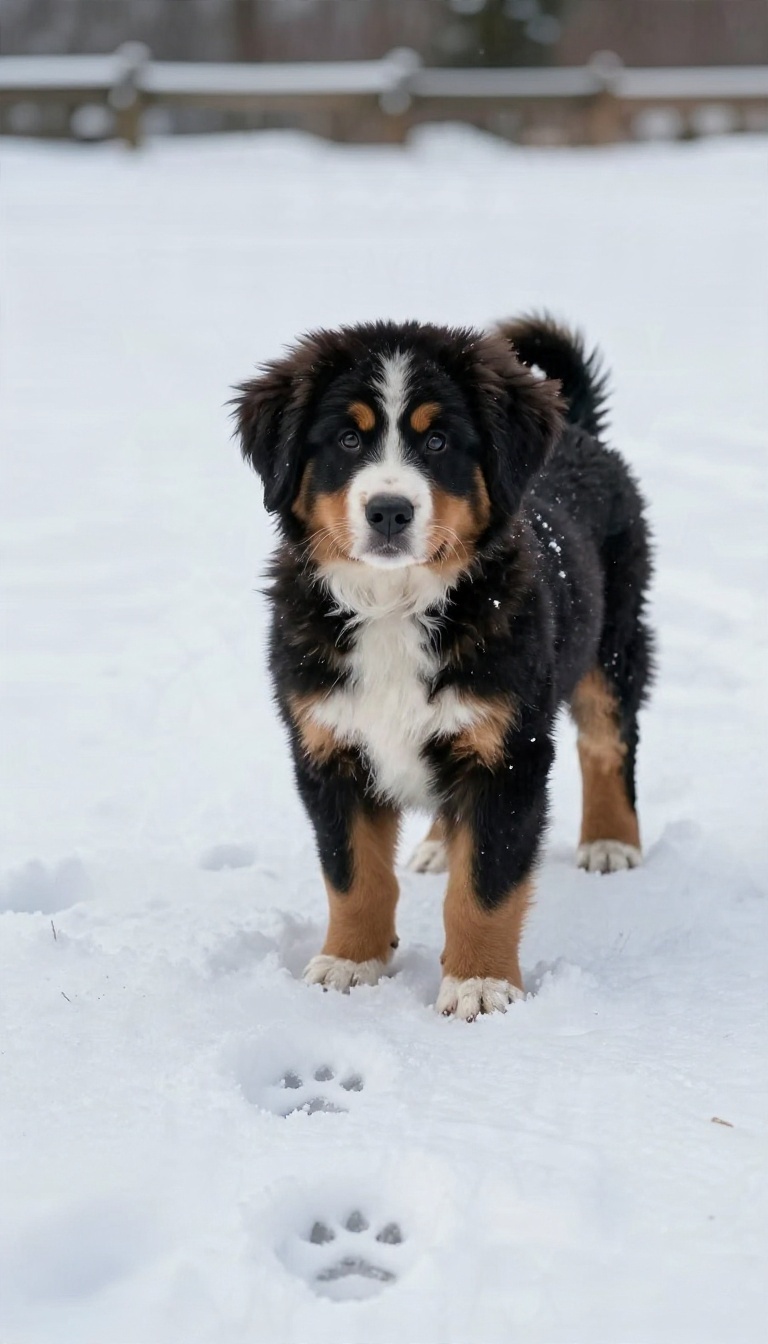
Fresh snow is basically a blank canvas, and your puppy's paws are the brush. This shot works because it tells a tiny story: the trail comes in from one side, and the dog anchors the other. It also happens to be one of the easiest winter setups to pull off, even with a puppy who's more interested in eating snow than posing.
The trick is to shoot the tracks before the dog tramples them. Walk your puppy through untouched powder on a leash, then circle back to the start of the trail. Crouch low so the paw prints lead the eye straight toward your dog.
When the puppy turns to check on you, that's your frame.
Set The Trail First
Pick a patch of clean snow with a simple background, like a fence line or open field. Lead your puppy in a gentle curve rather than a straight line, since curves look more natural in a photo. Keep the leash slack and step to the side so it doesn't cut across the shot.
Get Low And Wait For The Look-back
Drop to knee level or lower. A low angle makes the paw prints look bigger and the puppy look braver, like a tiny explorer. Then call your puppy's name softly and hold the shutter halfway.
The moment they turn their head, snap a few frames in a row.
Light And Snow Tricks
Overcast days actually help here, because soft light keeps the snow from blowing out. If the sun is out, shoot with it behind you and slightly to the side so the paw prints cast small shadows. A quick exposure tweak on your phone keeps the snow white instead of gray.
3. Wrapped in a Cozy Plaid Blanket
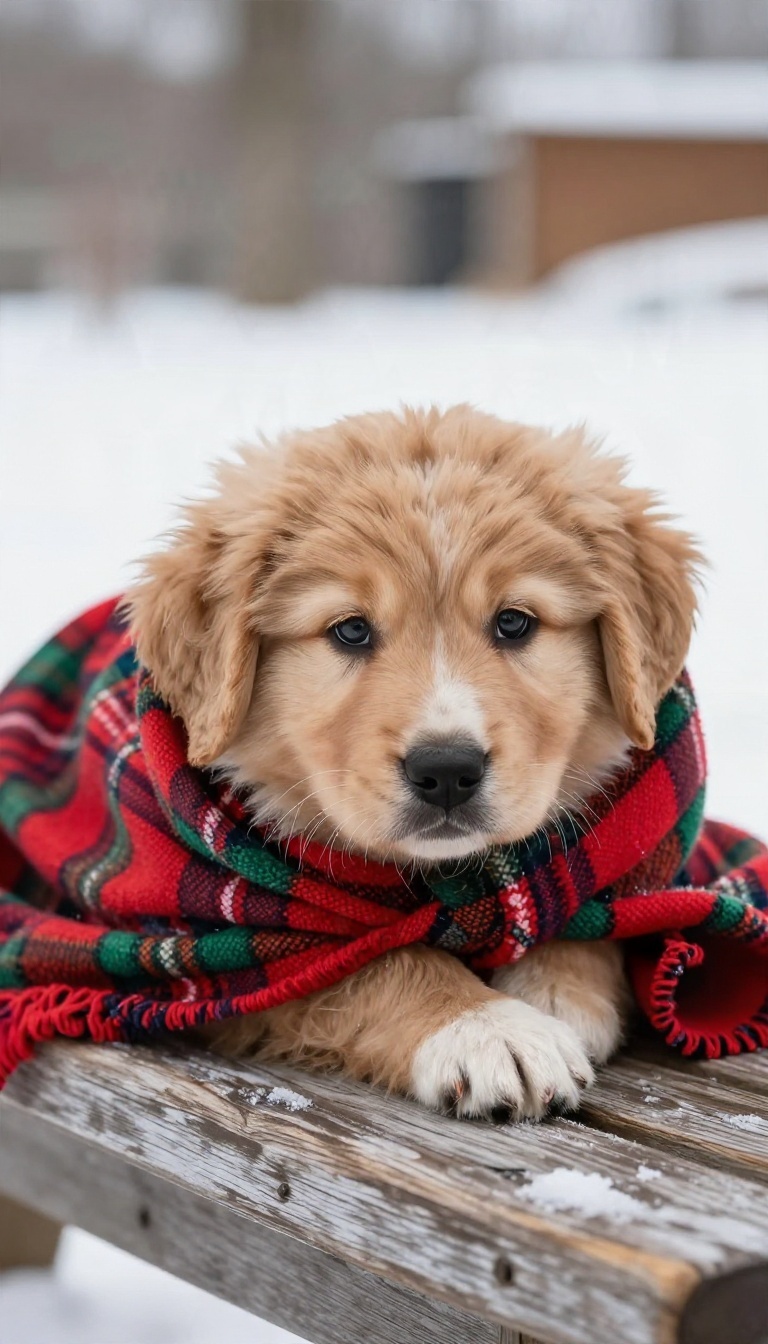
A plaid blanket does two jobs at once: it keeps your puppy warm and it frames that face like a picture. The pattern adds color and texture to a snowy scene that can otherwise look flat and gray. Best of all, most Bernese puppies settle right down once they're bundled, which buys you a few calm seconds to shoot.
Set this one up on a covered porch, a sled, or a bench where the snow won't soak through. You want the blanket dry and the puppy dry too, since wet wool looks muddy in photos. Pick a plaid with red, green, or navy so it pops against white snow and dark fur.
Get Low And Shoot Up
Crouch or kneel so your camera sits at your puppy's eye level or slightly below. Tilt the lens up just a touch and the fluffy face fills the frame while the blanket wraps around the edges. This angle makes a small puppy look bigger and softer, and it hides background clutter like porch rails and boots.
Leave The Face Peeking Out
Wrap the blanket around the body but keep the muzzle and eyes clear. Tuck one corner near the chin so it looks like your puppy burrowed in on purpose. A little paw poking out of the fold adds charm without much effort.
Keep The Session Short
Blanket shots work best in the first few minutes, before your puppy decides the wrap is a toy. Have treats ready and hand them out between frames. If the blanket starts sliding off, reset it once, then call it done and move to a different setup.
4. Golden Hour in the Snowy Yard

Winter light pulls a trick most photographers wait all year for. In late afternoon, the sun drops low and turns flat snow into a soft, warm glow that flatters your puppy's black, white, and rust coat. It's the easiest way to make a backyard snapshot look like it belongs on a calendar.
The catch is timing and temperature. Golden hour in winter is short and cold, so you want a plan before you step outside. Keep the whole thing to ten or fifteen minutes and your puppy will stay happy the entire time.
Golden hour lands earlier than you might expect once the days get short. Check your weather app for sunset, then head out about thirty to forty-five minutes before it. That window gives you warm light without the harsh glare of midday sun bouncing off the snow.
Pick a spot where the low sun hits your puppy from the side. Side light brings out the texture in that thick coat and adds a gentle glow along the edges of the fur. A fully backlit shot can work too, but it takes more fiddling, so start simple.
Scout The Light First
Walk your yard the day before without the puppy. Find where the low sun lands and where shadows fall across the snow. A spot near a fence or tree line often gives you soft, filtered light instead of a blown-out white background.
Once you know your spot, you can move fast when you bring the puppy out. That saves you from wandering around while little paws get cold.
Keep Paws Off The Deep Freeze
Snow can sting small paws faster than most people expect. Clear a small patch down to the grass or lay a thin mat where your puppy will stand. That gives you a warm-ish surface for the few seconds you actually need.
Watch for lifting paws, shivering, or a puppy who suddenly wants to go inside. Those are your cues to wrap it up. A quick towel dry and a warm spot afterward keeps the whole thing pleasant.
Catch The Glow, Not The Squint
A puppy facing straight into low sun will squint and look miserable. Angle your puppy so the light comes from the side or slightly behind, and stand where you can see those bright eyes. Treats held just above your lens pull the head up and keep attention where you want it.
Shoot in short bursts and take breaks. You only need a handful of good frames, and a relaxed puppy beats a perfectly lit grumpy one every time.
5. The Snowball Curiosity Shot
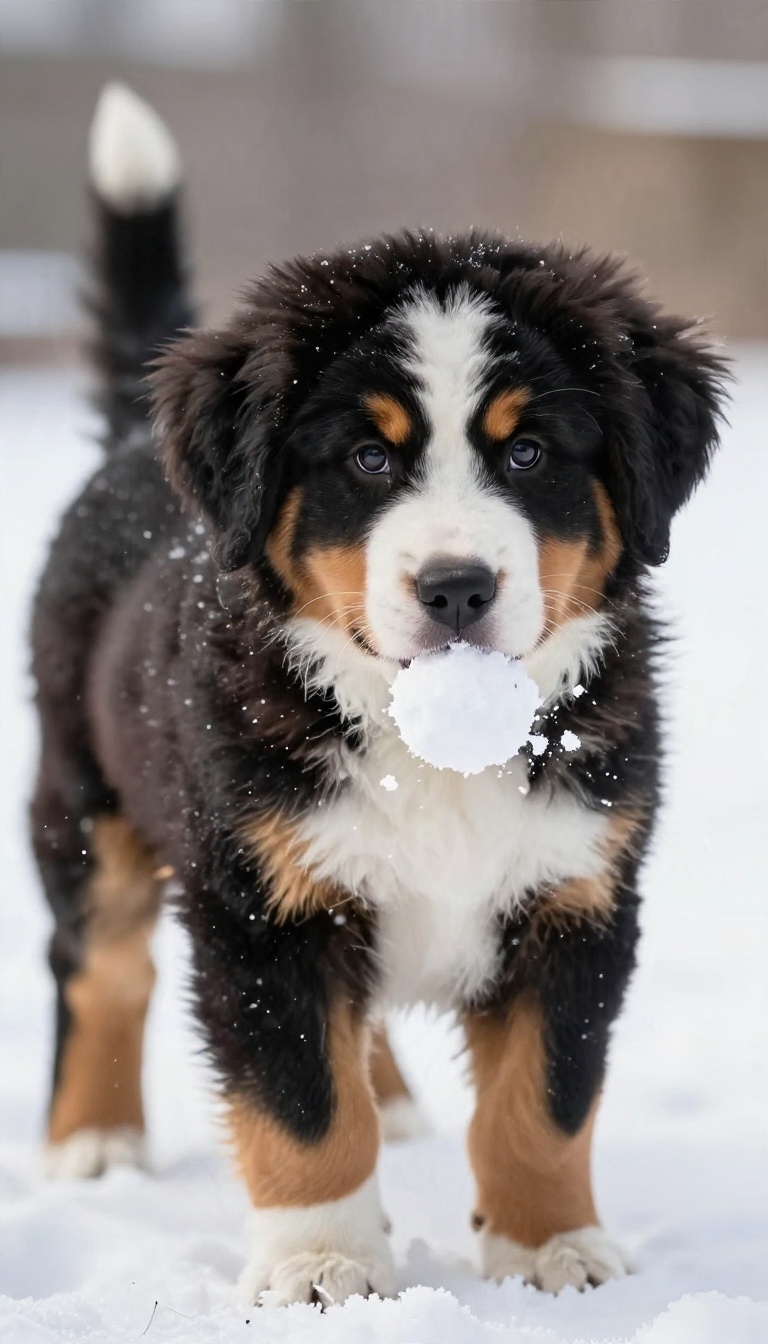
Bernese puppies meet their first snowball with the same energy they bring to a new toy: full commitment and zero caution. Toss a loose handful of snow into the air and you get a split second of pure curiosity, ears up and nose working. That tiny window is where the personality lives.
The trick is to keep the snowball soft and small so it breaks apart instead of hitting your puppy in the face. Pack it lightly, toss it low, and let it fall apart just in front of their nose. They'll lean in, sniff, and often swat at the flakes as they scatter.
You're not trying to nail a perfect catch. You want the moment before the paw lands, when your puppy is locked in on something small and mysterious. That expression reads as playful and a little confused, which is exactly the charm.
Shoot in short bursts and expect a lot of throwaways. Out of twenty frames you might get two keepers, and that's a good ratio for action shots.
Set Up The Toss
Stand with the sun behind you so your puppy's face stays bright and the falling snow catches the light. Hold the snowball at chest height and toss it underhand so it arcs down slowly. A gentle lob gives your puppy time to track it and gives you time to focus.
Keep your distance to about four or five feet. Too close and the snowball blurs out of frame; too far and your puppy loses interest before it lands.
Lock Focus Before The Throw
Tap and hold on your puppy's face to lock focus, then toss with your free hand. On a phone, burst mode is your best friend here. Hold the shutter down through the whole toss and sort through the frames later.
If your camera hunts for focus mid-air, switch to a wider shot. A little more background gives you room to crop and keeps the puppy sharp.
Catch The Paw, Not Just The Face
The best version of this shot often shows a raised paw or a head tilt, not just a nose in the snow. Frame a bit lower so you include the front legs. That way the reaching motion makes it into the picture.
Watch for the pause right before they commit. Puppies usually freeze for a beat, then pounce. That beat is your shot.
Keep It Short And Warm
Do three or four tosses, then stop and reward with a treat and a quick cuddle. Cold paws and short attention spans both cut sessions short, so quit while your puppy still wants more. If the snow is deep or the wind is sharp, move this idea to a shoveled patch near the door.
You'll still get the falling-flakes look without the shivering.
6. Portrait by the Frosted Window

Cold weather doesn't have to mean cold hands. A foggy window and a warm room give you a moody portrait setup that keeps your puppy comfortable the whole time. The glass does most of the work, softening the light and adding a soft winter haze behind those big brown eyes.
You can shoot this one in slippers. Set your Bernese puppy near a window on a chilly morning, let the glass fog up, and work the angle from inside or from just outside the pane. It's a low-effort shot with a surprisingly polished look.
The trick is the fog. Warm air inside meets cold glass outside, and the window turns into a soft, milky backdrop. That haze hides the messy yard behind it and pushes all the attention onto your puppy's face.
You don't need snow on the ground for this to read as winter. A frosted or foggy window does the storytelling for you.
Set Up The Fog
Breathe on the glass or run a warm, damp cloth across it, then let it settle for a minute. You want an even haze, not drips. If the window is genuinely cold outside, the fog builds on its own and looks best.
Wipe a small clear patch at puppy eye level if you're shooting from outside. That gives you a crisp view of the face while the rest of the pane stays soft and dreamy.
Pick Your Angle
Shooting from outside through the glass gives you that hazy, intimate feel, like you're peeking in on a cozy moment. Stand at a slight angle so reflections don't wash out the shot. If you're indoors, shoot toward the window and let the fog glow behind your puppy.
Keep your puppy's face close to the glass but not pressed against it. A few inches back keeps the nose in focus and avoids smudges.
Warm It Up
Window light runs cool and blue, so nudge the warmth in editing or with a lamp nearby. A soft indoor light behind you adds a gentle glow to that thick coat. Treats held just above the camera keep the head up and the eyes bright.
Take a few frames, then let your puppy break and stretch. Short bursts work better than one long session.
7. Holiday Lights and Fluffy Coat

Holiday lights do a lot of heavy lifting in winter photos, and your Bernese puppy is the perfect subject to take advantage of it. The warm glow against a dark evening sky makes that black, white, and rust coat look almost luminous. Best of all, you can pull this off in your own yard or living room with a strand of lights and about ten minutes.
The trick is timing. Wait until the sky is deep blue rather than pitch black, usually a half hour after sunset. That window gives you enough ambient light to keep the background from going muddy while the string lights still read as bright and warm.
Set your puppy a few feet in front of the lights, not directly under them. You want the glow to wrap around the edges of that fluffy coat, not blow out the white chest into a bright blob. A quick tap on your phone screen to lock exposure on the puppy's face usually solves it.
Keep the session short and reward often. Holiday lights are new and slightly weird to a young dog, so a few treats and a calm voice go a long way.
Working With Dusk Light
Dusk is forgiving in a way that full darkness isn't. You get soft, even light on the puppy's face plus a rich background that makes the lights pop. If your phone struggles, brace it against a fence post or a chair.
A tiny bit of stability sharpens everything and lets the camera pull in more light without blurring the shot.
Tree Glow Indoors
No yard? A decorated tree works just as well. Place your puppy beside it rather than in front of it, so the branches and lights frame the shot instead of blocking it.
Turn off the room's overhead lights and let the tree be the only source. That single light source is what makes the coat look rich and dimensional instead of flat. Watch for chewing.
Ornaments and cords are tempting, so keep a toy in reach and swap it in fast when your puppy's attention drifts.
Keeping The Coat Looking Its Best
Brush your puppy before the shoot. A quick pass with a slicker brush fluffs the coat and catches the light better than a rumpled one. Skip the flash.
It flattens the fur and turns those warm lights into harsh white dots. Natural glow from the strands will always look softer and more true to the breed.
8. Running Through the Snow
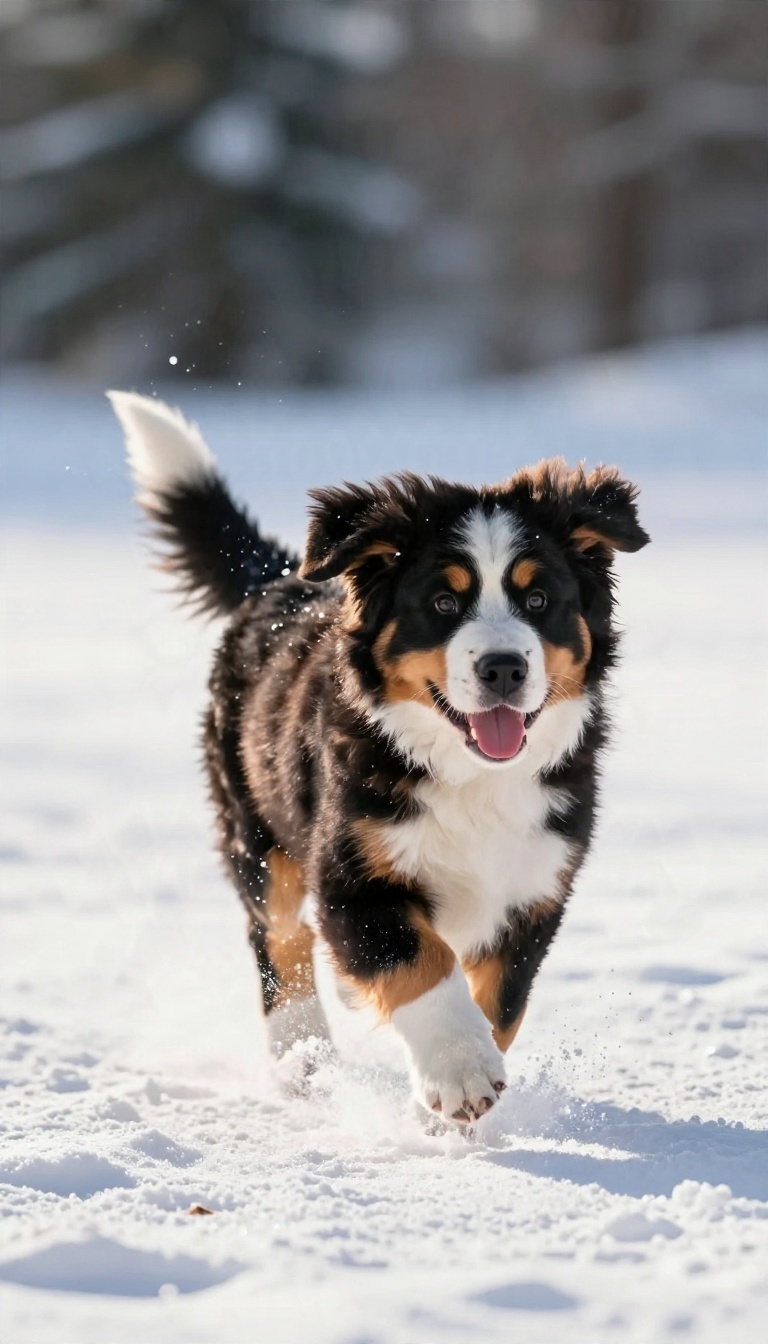
A Bernese puppy at full speed is a completely different animal from the calm one sitting for a portrait. Ears flopping, paws kicking up powder, tongue out — that's the shot that captures the breed's playful side. The trick is setting up before the chaos starts, because once your puppy launches, you have about two seconds to get it right.
Fast movement and winter light can work against each other, so plan your camera settings before your puppy takes off. A shutter speed of at least 1/1000 freezes the action, and burst mode gives you a dozen frames to pick from. If you're on a phone, hold the shutter button down for a quick burst and lock focus on your puppy ahead of time.
Set Up Before The Zoomies
Pick your spot first: a stretch of untouched snow with a clean background makes the run easier to read. Have a helper stand behind you with a toy or treat so your puppy runs toward the camera instead of away. Crouch low to shoot at eye level — it makes the bound look bigger and keeps the snow spray in frame.
Freeze The Motion
Aim for a fast shutter and let the camera do the rest. On a phone, use burst mode and expect plenty of throwaway frames; the keeper is usually the one where all four paws are off the ground. Shoot with the sun behind you or off to the side so the flying snow catches the light.
Catch The Floppy-eared Moment
The best frames come mid-stride, when those ears are flying sideways and the coat is full of momentum. Keep your finger ready and don't stop shooting until your puppy slows down. Review later, not during — you'll miss the good one if you're scrolling.
9. The Sled or Toboggan Pose
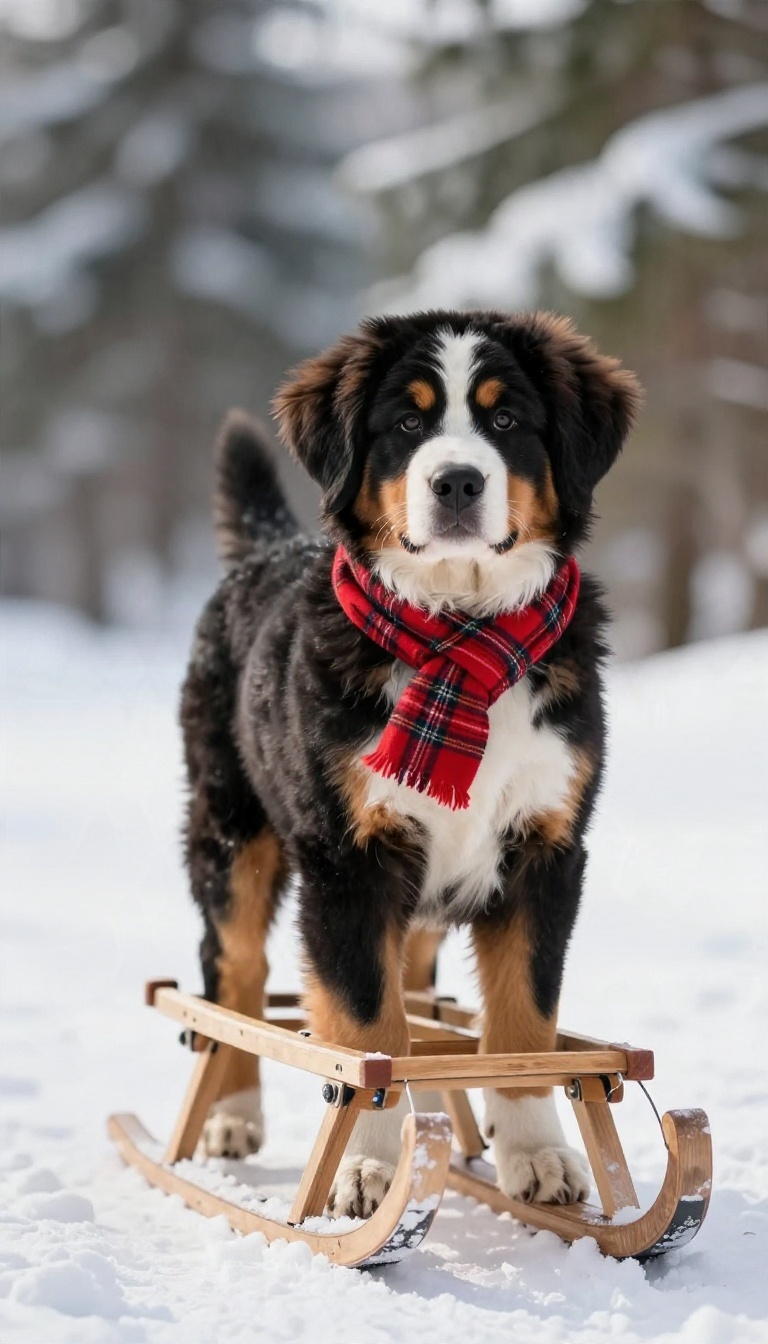
A sled does double duty in winter photos: it props up your puppy at a nice height and instantly tells the story of the season. Sit a Bernese Mountain Dog puppy on a wooden toboggan with a festive scarf looped around their neck, and you get a shot that looks like a vintage holiday card. The breed's calm, sturdy build makes this pose more realistic than it sounds.
These dogs tend to settle well when they have something solid under them, and a sled gives them that. Keep the setup simple, keep the session short, and let treats do the persuading.
The key is treating the sled as a seat, not a ride. Set it on flat, packed snow so it won't slide out from under your puppy mid-pose. A little wobble is fine, but a moving sled turns a calm sit into a scramble.
Have a helper hold the sled steady if you can. If you're solo, wedge the runners against a small snowbank or pack snow around the base to lock it in place. That one step removes most of the risk and most of the blur.
Setting Up The Sled Safely
Pick a wooden toboggan or a classic runner sled with a flat seat area. Plastic saucers work too, but they're slick and harder to balance a puppy on. Whatever you choose, clear off any ice and lay down a small towel or blanket for grip.
Position the sled so the light hits your puppy's face rather than their back. A slight angle toward the sun keeps the shot warm and shows off that thick coat. Avoid steep slopes entirely, even for a posed shot.
Dressing The Scene
A festive scarf is the easy win here. Red, green, or a simple plaid reads clearly against dark Bernese fur and white snow. Tie it loose enough that it sits on the chest without pulling at the neck.
Skip anything that dangles low enough to chew. If your puppy starts mouthing the scarf, tuck the ends or swap to a bandana that sits snug. A small sprig of pine or a knit hat nearby adds charm without cluttering the frame.
Getting The Calm Sit
Lure your puppy onto the sled with a treat held just above the seat, then reward the moment their rear hits the surface. Repeat two or three times before you even pick up the camera. Calm sits earn treats, and that lesson sticks fast with this breed.
Once they're settled, back up a step and shoot from their eye level. Fire off a few frames while they're still, then call it done. Ten good seconds beats two minutes of coaxing every time.
FAQ
How cold is too cold for a Bernese Mountain Dog puppy photoshoot?
Keep sessions short when temps drop below freezing, and watch for shivering or lifted paws. Their coat helps, but puppies lose heat fast, so aim for 10 to 15 minutes and warm up between shots.
Do I need a professional camera for winter puppy photos?
No. A modern phone handles snow scenes well if you tap to focus on your puppy and avoid harsh midday sun. Good light and patience matter more than gear.
How do I keep my puppy still for photos?
Use treats, a favorite toy, and a helper to get attention. Take lots of quick shots and accept that some blur is part of the charm with a young dog.
What should I avoid putting on my puppy in the snow?
Skip tight clothing that restricts movement and avoid anything with small parts they could chew off. A simple bandana or well-fitted coat is plenty.
Is it safe to use props like sleds and blankets outdoors?
Yes, as long as your puppy stays supervised and secure. Place props on flat ground, avoid slippery surfaces, and never leave your dog unattended on a sled.
Conclusion
Winter photo shoots can go sideways fast, so start with one idea that matches your puppy's energy and the light you actually have. A cozy indoor setup on a snowy afternoon beats a rushed outdoor shoot every time. Take a few shots, reward generously, and stop while your pup still thinks it's a game.
The best winter photos come from short sessions and a little patience, not perfect props. Try another idea next week and watch your collection grow.