
Tired of dog food bags cluttering your pantry? These ten storage ideas turn messy corners into organized spots that keep kibble fresh and accessible. Each solution focuses on durability and easy cleanup, fitting seamlessly into kitchens or utility areas without breaking the bank.
Start with pull-out baskets for quick access or airtight containers to lock in freshness. From repurposed trash cans to hidden shelving, these picks are tailored for real homes and busy routines.
You’ll find options like clear bins for visibility and rolling carts for flexibility, all designed to simplify daily feeding. Labeling containers adds a final touch that saves time and reduces waste.
1. Use a Pull-Out Basket for Easy Access
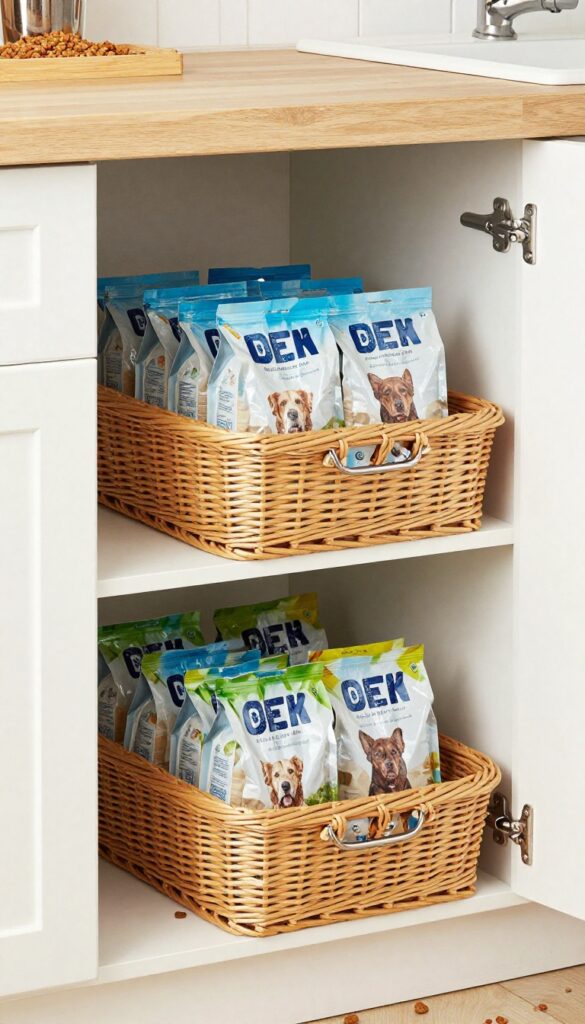
A pull-out basket slides right into your pantry, tucking dog food bags neatly away. It keeps kibble handy for mealtime without the clutter, making your space look cleaner instantly. Dog owners love how it simplifies feeding and cuts down on spills around the house.
Why It Works
This setup works because it uses vertical space efficiently, keeping bags off the floor and reducing mess. The sliding mechanism allows quick access, so you can grab food fast without digging through piles.
Best For
It’s perfect for busy households with medium to large dogs, especially in kitchens or pantries with limited floor space. Apartment dwellers or anyone wanting a tidy, accessible storage solution will find it ideal.
Practical Tip
Choose a basket with sturdy handles and smooth glides to prevent jams. Place it at waist height for easy reach, and consider adding a liner for easy cleanup if any kibble escapes.
Budget-Friendly Option
If a new pull-out basket isn’t in the budget, repurpose an old drawer or use a basic plastic bin on wheels. Just ensure it fits your pantry dimensions and slides smoothly to serve the same purpose.
2. Opt for Airtight Containers with Lids
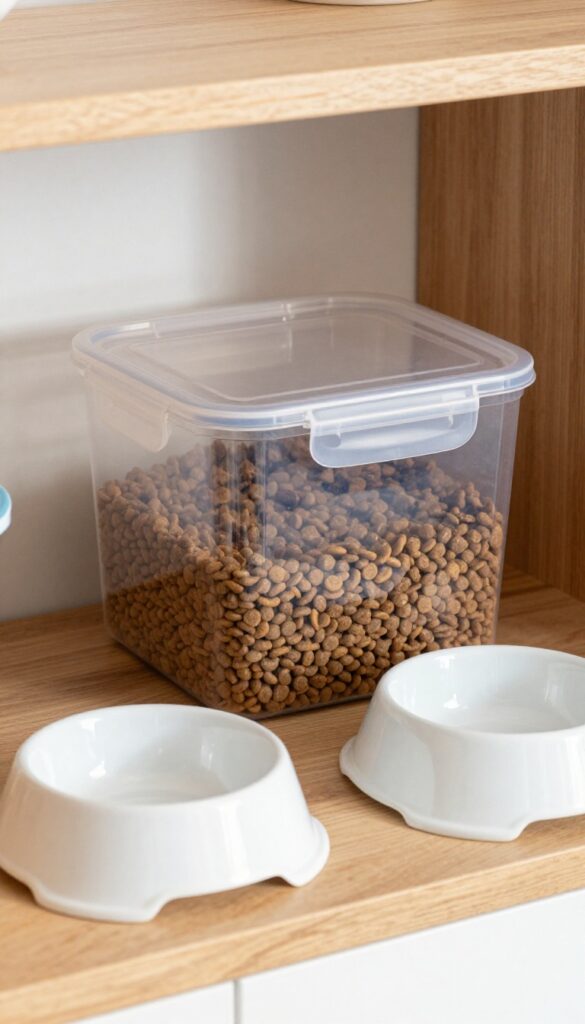
Airtight containers are a game-changer for keeping dog food fresh and your pantry tidy. They lock in that just-opened crunchiness while keeping pests like ants or moths at bay. Many dog owners love how these containers snap shut securely, preventing spills and making feeding time a breeze.
Why It Works
These containers create a seal that blocks air and moisture, preserving kibble’s flavor and nutrients longer than open bags. The tight lids also deter curious pets from sneaking extra snacks, adding a layer of safety to your storage setup.
Best For
This idea fits well for homes with limited space or multiple dogs, where freshness matters most. It’s especially handy for apartment dwellers or anyone dealing with humid climates that can spoil food quickly.
Practical Tip
Place your container on a low shelf or in a corner near feeding bowls for easy access. Clean it monthly with mild soap to prevent residue buildup, and consider labeling it with the food type and expiration date to stay organized.
Budget-Friendly Option
If new containers aren’t in the budget, repurpose large glass jars or plastic bins with tight-sealing lids from around the house. Just ensure they’re thoroughly cleaned and dry before use to keep kibble safe.
3. Repurpose a Decorative Trash Can
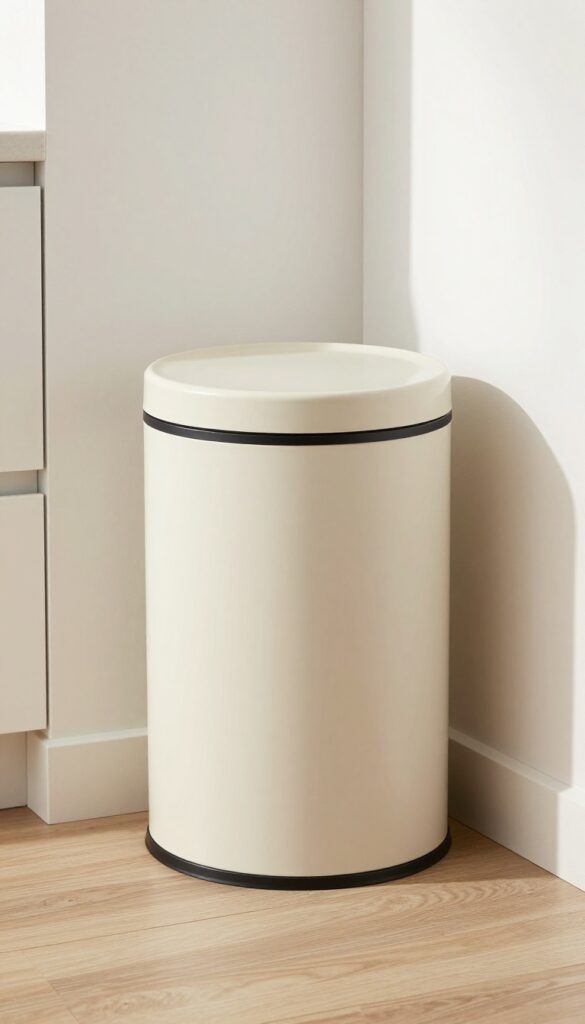
A decorative trash can with a lid might seem like an odd choice for dog food storage, but it’s surprisingly effective. Its sturdy build and sealed top keep kibble fresh while hiding the mess from view. Many dog owners love how it blends into pantry corners without drawing attention, making cleanup a breeze.
Why It Works
This option works because the lid seals tightly to lock out moisture and pests, preserving your dog’s food quality. The durable material resists scratches and spills, so it holds up well in busy households. Plus, its discreet design means you can tuck it away easily without sacrificing style.
Best For
It’s ideal for apartment dwellers or anyone with limited pantry space who needs a compact storage solution. Small to medium-sized dogs benefit most, as the can holds enough food for regular refills without taking up too much room. It also suits homes where aesthetics matter but practicality is key.
Practical Tip
Place the trash can in a corner of your pantry or near your feeding area for quick access during mealtimes. Choose one with a smooth surface for easy wiping down after spills, and consider adding a small scoop inside to simplify portioning. Keep the lid closed when not in use to maintain freshness and prevent curious pets from getting into it.
4. Install Shelving with Hidden Compartments
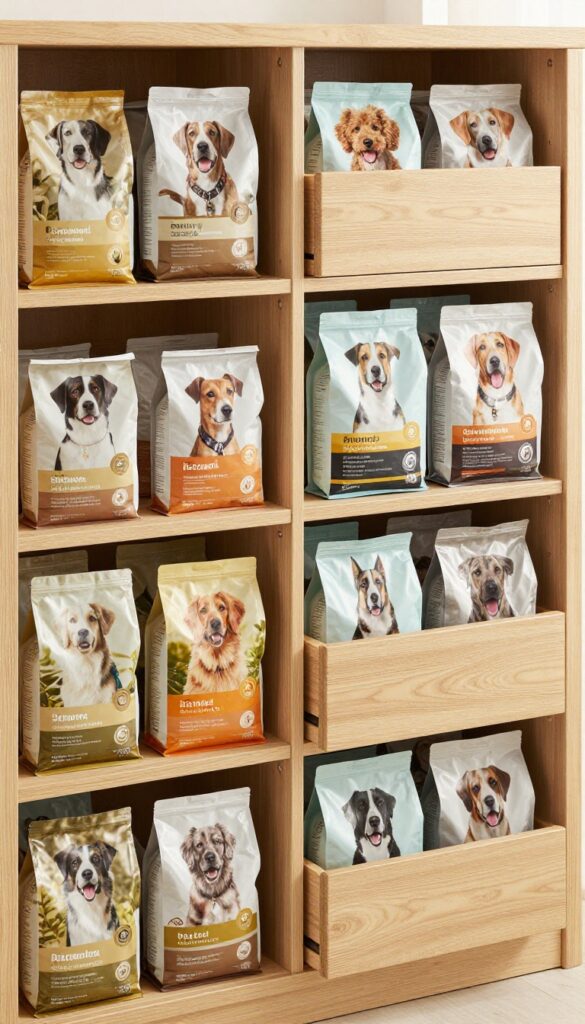
Hidden compartments in shelving offer a sleek way to stash dog food bags out of sight. This approach maximizes pantry space while keeping everything looking neat and organized. Dog owners love how it blends storage with style, making daily feeding routines smoother.
Why It Works
Custom shelving with hidden compartments keeps dog food secure and accessible without cluttering your pantry. It helps maintain freshness by protecting bags from light and moisture, and the tidy setup reduces spills and messes.
Best For
This idea fits well for homeowners or renters with limited pantry space who want a built-in solution. It’s great for medium to large breed dogs where bigger food bags need discreet storage, and it works in kitchens or utility rooms.
Practical Tip
Install shelves at a height that’s easy to reach but out of your dog’s way. Use sturdy materials like wood or metal to handle the weight, and add labels on the compartments for quick identification during busy mornings.
Budget-Friendly Option
If custom shelving isn’t in your budget, try adding simple pull-out drawers or bins to existing shelves. You can also repurpose old cabinets with added dividers to create hidden spots for dog food storage.
5. Utilize Clear Bins for Visibility
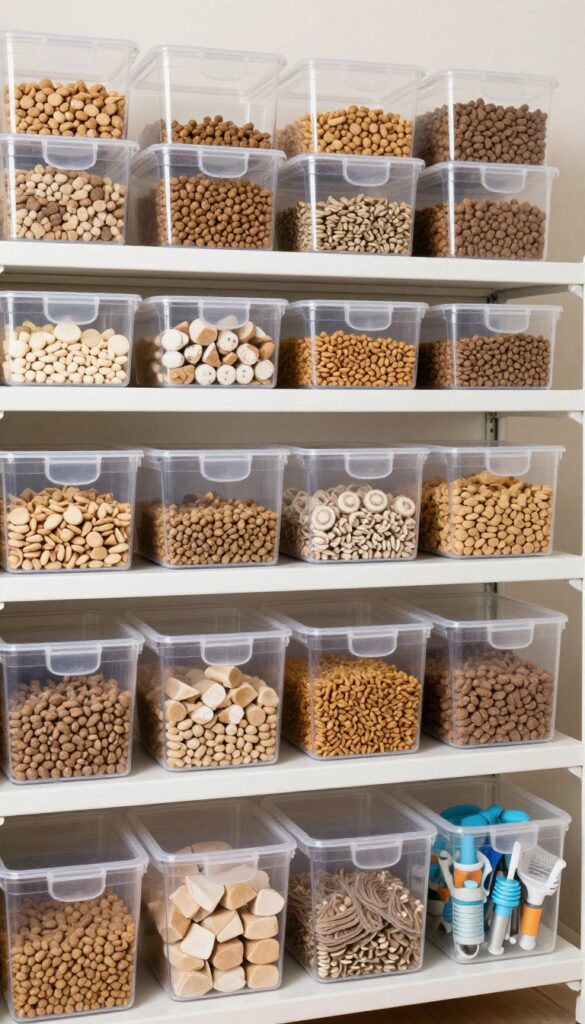
Clear plastic bins offer a straightforward way to manage dog food storage without the guesswork. You can quickly glance at your pantry and know exactly how much kibble is left, which helps avoid those last-minute trips to the store. Plus, they keep everything contained and organized, making it easier to pair with other pet supplies like treats or grooming tools.
Why It Works
This idea works because transparency eliminates the need to dig through bags or containers to check stock levels. It reduces clutter by holding all the kibble in one neat spot, and the bins often stack well, saving space in tight areas like pantries or utility closets.
Best For
It’s best for busy dog owners who want a no-fuss system, especially in apartments or small homes where every inch counts. It also suits multi-pet households where keeping track of different foods is key.
Practical Tip
Place the bin on a low shelf for easy access during feeding times. Consider adding a scoop inside to make portioning simple, and wipe down the exterior occasionally to prevent dust buildup.
6. Try a Rolling Cart for Flexibility
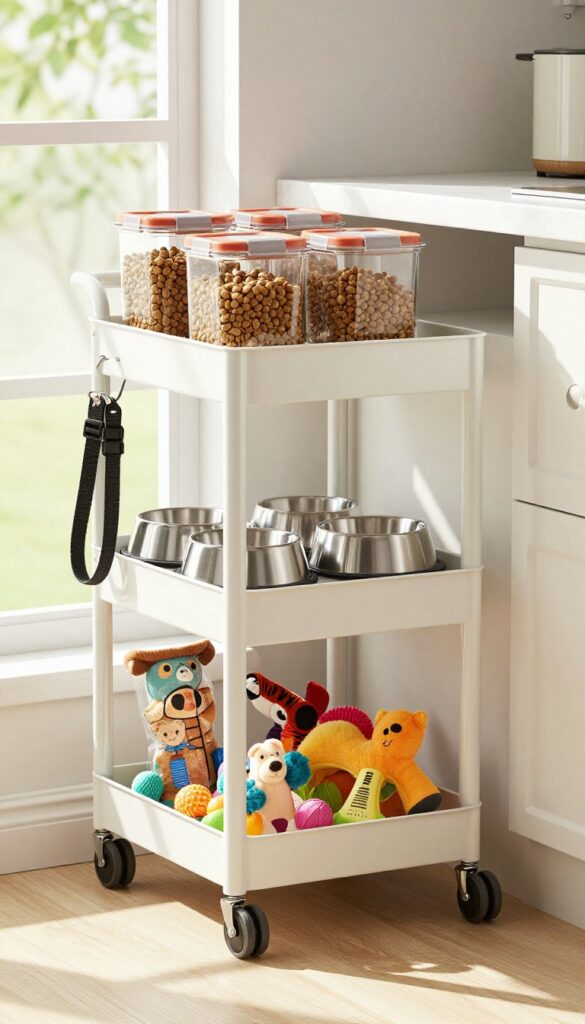
Rolling carts bring a touch of mobility to your dog food storage setup, letting you slide everything from kibble to bowls wherever you need it. They’re perfect for homes where feeding spots change or cleaning up quickly is a priority. Many dog owners love how these carts keep essentials together and out of sight when not in use, adding a neat, adaptable touch to any room.
Why It Works
A rolling cart works because it combines storage with portability, making it easy to move food and accessories for feeding or tidying up. Its wheels allow you to tuck it into a corner or under a counter, freeing up floor space and reducing clutter. This setup keeps dog food fresh and accessible without the hassle of heavy lifting.
Best For
This idea fits best for apartment dwellers or anyone with limited space who needs flexible storage solutions. It’s also great for multi-dog households or owners who feed in different areas, like moving from kitchen to patio. Small to medium breeds benefit from the easy access and organized setup.
Practical Tip
Choose a cart with sturdy wheels and shelves that can hold airtight containers for dog food, plus hooks for leashes or bowls. Place it near your feeding area but roll it away after meals to keep floors clear. For safety, ensure the cart is stable and won’t tip if your dog bumps into it during excited moments.
Budget-Friendly Option
If a new rolling cart isn’t in your budget, repurpose an old utility cart or even a small trolley from a thrift store. Clean it thoroughly and add non-slip mats on the shelves to prevent spills. You can also use a basic plastic bin on casters for a simpler, cost-effective version that still offers mobility.
7. Build a Dedicated Pet Food Cabinet
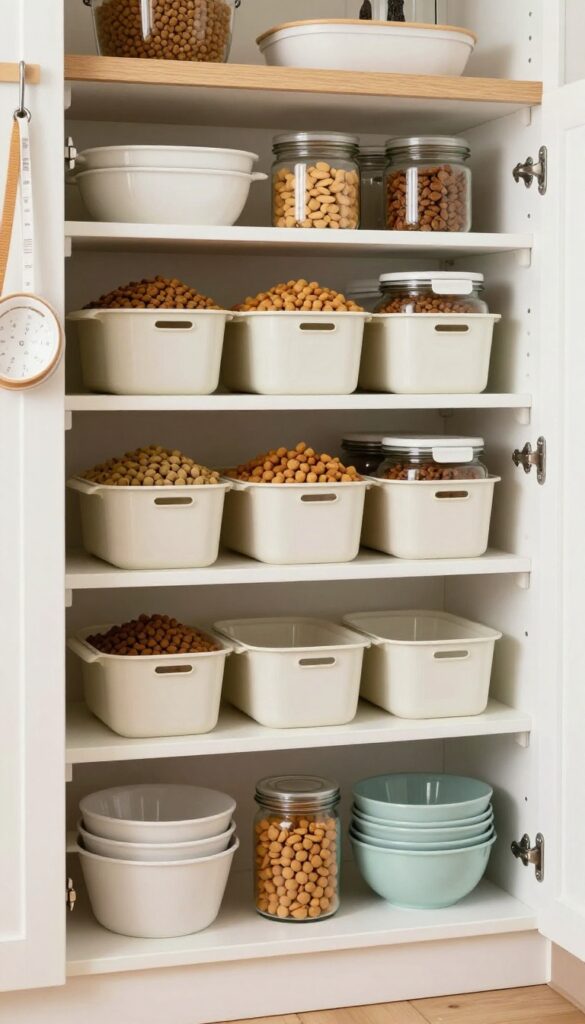
Imagine having all your dog’s essentials tucked away in one neat spot, right inside your pantry. A dedicated pet food cabinet keeps kibble, treats, and bowls organized and out of sight, making your kitchen feel less cluttered and more functional. Dog owners love this approach because it simplifies feeding routines and adds a clean look to their storage areas without requiring major renovations.
Why It Works
This setup works by consolidating everything in a single, accessible location, reducing the time spent searching for supplies. It helps maintain freshness by keeping food sealed and protected from pests or moisture, while also preventing spills and messes from spreading across your pantry shelves.
Best For
This idea is ideal for families with multiple dogs or those who stock up on bulk food, as it offers ample space for storage. It fits well in homes with pantries or utility rooms where you can carve out a small section, and it’s great for owners who prefer a tidy, hidden storage solution over visible containers.
Practical Tip
Install adjustable shelves inside the cabinet to accommodate different-sized items like bags of kibble, cans, and grooming tools. Add hooks on the door for leashes or measuring cups to maximize space, and use airtight bins or jars on the shelves to keep food fresh and prevent odors from lingering in the cabinet.
Budget-Friendly Option
If building a new cabinet isn’t feasible, repurpose an old bookshelf or small wardrobe by adding doors or curtains to hide the contents. You can also use stackable plastic drawers or a rolling cart placed in a pantry corner to achieve similar organization without the cost of custom carpentry.
8. Use Hanging Bags on Hooks
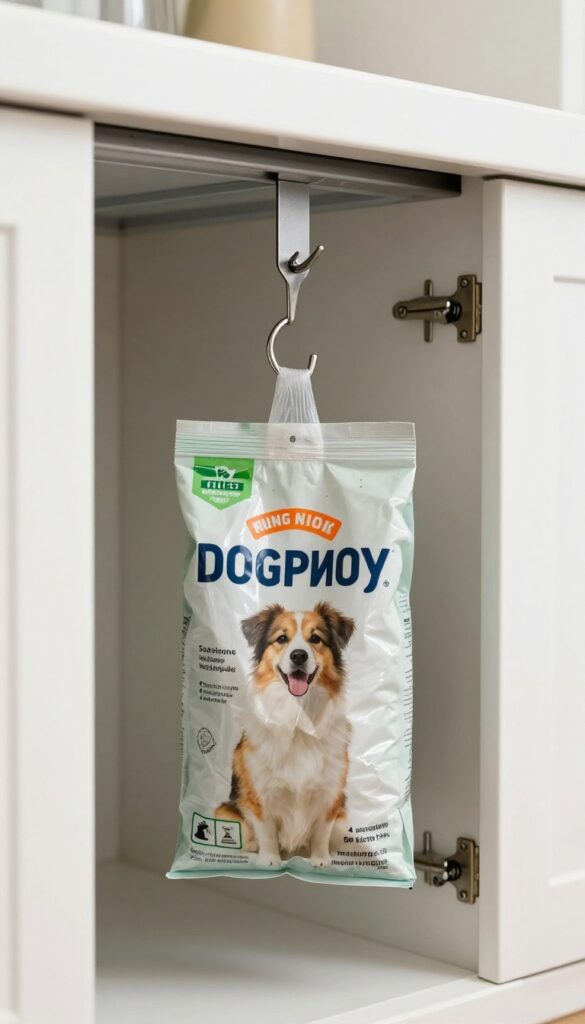
Hanging dog food bags on sturdy hooks inside your pantry door is a simple trick that frees up floor space and keeps things tidy. It’s a favorite among owners who want to avoid bags tearing or getting knocked over by pets or kids. This approach makes feeding time smoother and keeps your pantry looking organized without much effort.
Why It Works
This method works because it lifts bags off the ground, reducing the risk of rips from sharp edges or curious paws. Hooks provide easy access while keeping the bag secure, so you can grab kibble quickly without bending down or moving other items.
Best For
It’s ideal for small pantries or apartments where every inch counts, and for households with active dogs that might bump into floor-stored bags. Owners of medium to large breeds often find this helps manage bulkier food packages efficiently.
Practical Tip
Install heavy-duty hooks that can support the bag’s weight, and position them high enough to prevent dogs from reaching. For added neatness, use a clip to seal the bag top after opening, and wipe down hooks occasionally to prevent dust buildup.
9. Incorporate a Bench with Storage
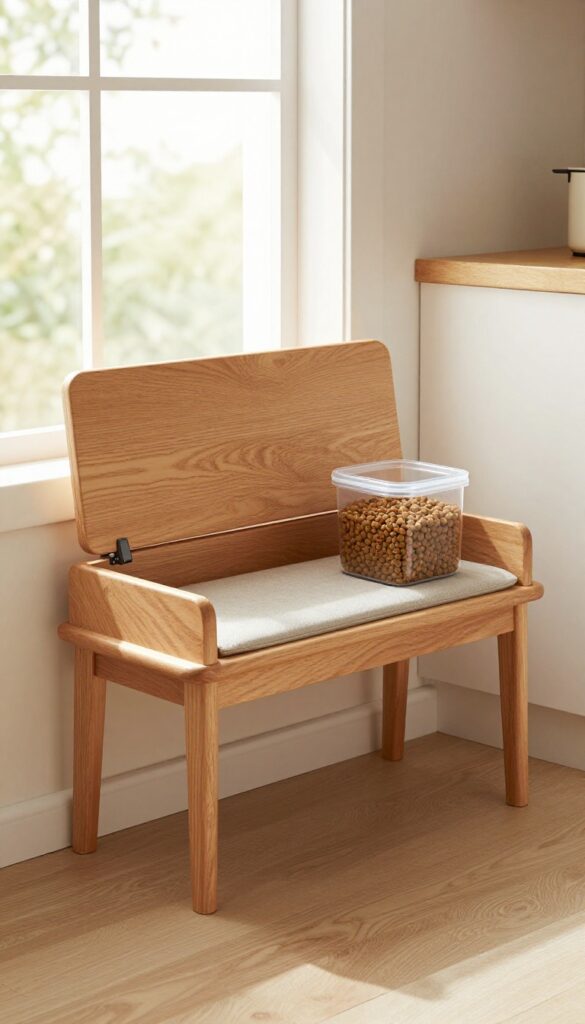
A bench with built-in storage in your pantry entry is a clever way to hide dog food while adding seating. It keeps kibble accessible yet out of sight, blending function with style for a tidy look. Dog owners appreciate this dual-purpose solution because it maximizes space without extra clutter.
Why It Works
This idea works by using vertical space efficiently, storing dog food in a hidden compartment under the seat. It reduces pantry mess and makes feeding time easier, as you can lift the lid to grab what you need quickly.
Best For
Best for homes with limited floor space or families who want a neat entryway. It suits medium to large dogs where bulk storage is needed, fitting well in apartments or houses with compact pantries.
Practical Tip
Choose a bench with a sturdy lid and smooth hinges for easy access. Add a cushion on top for comfort, and keep the storage area clean by wiping it down regularly to prevent crumbs or spills.
Budget-Friendly Option
If buying a new bench isn’t in your budget, repurpose an old trunk or wooden crate with a lid. Add casters for mobility and paint it to match your decor for a similar effect.
10. Label Containers for Quick Identification
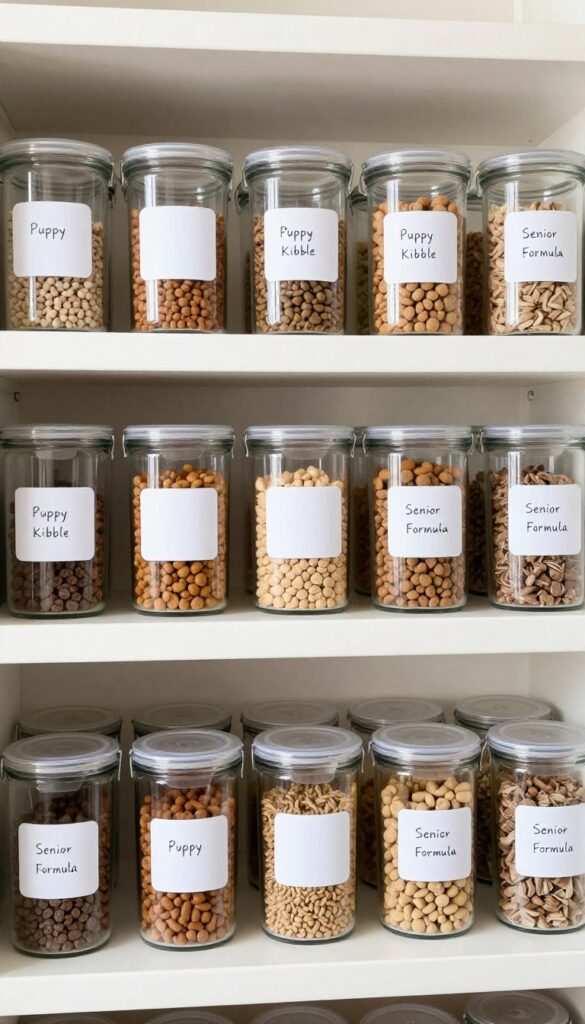
Ever find yourself rummaging through containers to figure out which one holds the puppy kibble or the senior formula? Labeling your dog food storage containers cuts through that clutter instantly. It’s a simple habit that turns a jumble of bins into an organized system, making mealtime smoother and reducing mix-ups.
People love this idea because it saves time and keeps things fresh. You’ll always know what’s inside and when it expires, so nothing goes to waste. Plus, it adds a neat, personalized touch to your pantry or storage area without any fuss.
Why It Works
Labeling works by providing clear, at-a-glance information that eliminates guesswork. You can quickly identify different food types, track expiration dates, and maintain a rotation system to use older supplies first. This helps ensure your dog gets the right nutrition and keeps their food from spoiling unnoticed.
Best For
This idea is perfect for multi-dog households or owners who switch between different formulas, like grain-free or prescription diets. It also suits busy families who need quick access during hectic mornings or anyone living in small spaces where organization is key to keeping things tidy.
Practical Tip
Use waterproof labels or a permanent marker on clean, dry surfaces to prevent smudging. Place labels on the front and top of containers for easy viewing from any angle. For added convenience, include the purchase date or a ‘use-by’ reminder to help you stay on top of freshness.
Budget-Friendly Option
If you don’t want to buy fancy labels, try masking tape and a pen—it’s cheap and easy to replace. Old sticker sheets or even chalkboard paint on containers can work too, offering a reusable option that lets you update info as needed.
FAQ
How can I keep dog food fresh in pantry storage?
Use airtight containers or sealed bags to block moisture and pests, and store in a cool, dry place away from direct sunlight.
What’s the best way to hide dog food in a small pantry?
Opt for pull-out baskets, hanging bags, or multi-use furniture like benches with storage to maximize space discreetly.
Are there budget-friendly storage options for dog food?
Yes, repurpose items like decorative trash cans or clear bins, which are affordable and effective at containing mess.
How do I prevent spills when storing dog food?
Choose containers with secure lids or use bins with tight seals, and keep bags upright in designated spots to minimize tipping.
Can I store dog food with other pantry items safely?
Yes, but keep it in sealed containers to avoid cross-contamination and odors, and place it away from human food for hygiene.
Conclusion
With these ten pantry storage ideas, you can keep your dog’s food fresh and your kitchen clutter-free. Choose options that fit your space and budget, focusing on airtight containers or hidden spots to simplify daily routines.
Your pup will benefit from consistent, safe meals, and you’ll enjoy a tidier home. Mix and match these solutions to create a setup that works for both of you, making feeding time effortless and stress-free.

I’m Pallab Kishore, the owner of Little Pets Realm — an animal lover and pet care enthusiast sharing easy tips, healthy recipes, and honest advice to help every small pet live a happy, healthy, tail-wagging life.