
Winter can be tough on outdoor dogs, especially when temperatures drop below freezing. A standard dog house often isn't enough to keep your pup warm and comfortable during the coldest months.
That's where heated dog houses come in—they provide a safe, cozy retreat that protects your dog from harsh weather while still allowing them to enjoy the outdoors. Whether you're looking for a ready-made solution or a weekend DIY project, these 10 heated dog house ideas will help you find the perfect setup for your furry friend.
From solar-powered options to portable designs, each idea focuses on practicality, safety, and your dog's comfort.
1. Insulated Dog House with a Heated Pad
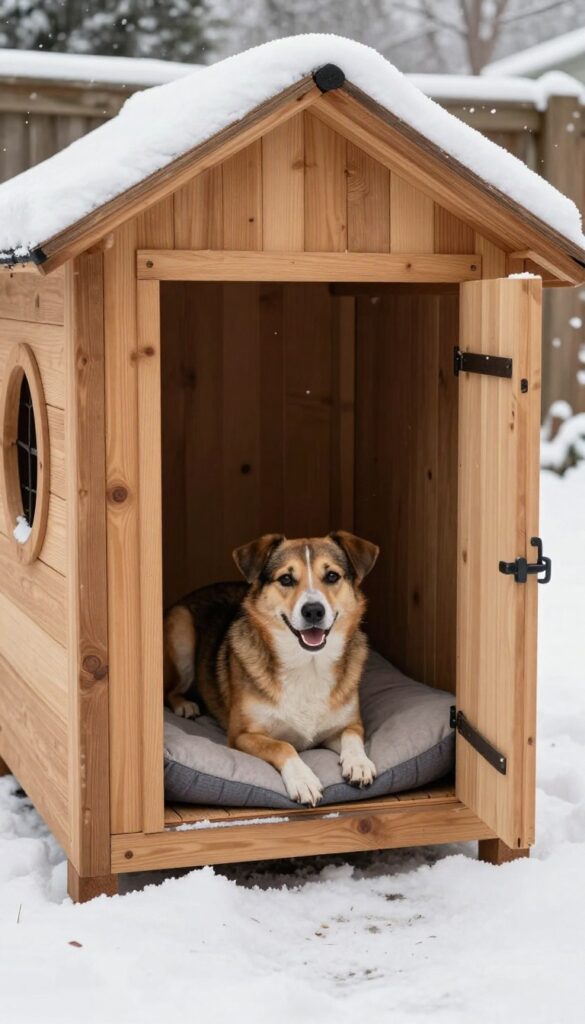
A well-insulated dog house paired with a heated pad offers a straightforward way to keep your pup warm without overcomplicating things. The insulation acts as a barrier against the cold, while the pad delivers steady, gentle heat right where your dog lies. Many owners love this combo because it's easy to set up and works reliably in moderate winter conditions.
Why It Works
Thick foam or fiberglass insulation traps your dog's body heat inside the house, reducing the workload on the heated pad. The pad itself provides a warm surface that prevents heat loss through the floor, which is often the coldest part of any dog house. Together, they create a cozy microclimate that stays comfortable even when temps dip below freezing.
Best For
This setup is ideal for dogs in climates where winter temperatures hover around freezing but rarely drop into extreme lows. It works great for medium to large breeds that have some natural insulation of their own, like Huskies or Labs, as well as short-haired dogs that need a little extra warmth. It's also a good fit for owners who want a simple, low-maintenance solution.
Practical Tip
Place the heated pad inside a waterproof cover or use a pressure-activated pad that only heats when your dog is lying on it. This saves energy and reduces wear. Make sure the pad cord is chewed-proof and routed through a small hole sealed with silicone to prevent drafts.
Elevate the dog house slightly off the ground to keep moisture from seeping in.
Budget-Friendly Option
If you're watching your wallet, skip the heated pad and use a self-warming pet mat instead. These mats reflect your dog's body heat back to them and cost a fraction of the price. Pair it with a thick layer of straw or cedar shavings on the floor for extra insulation.
2. Solar-Powered Heated Dog House
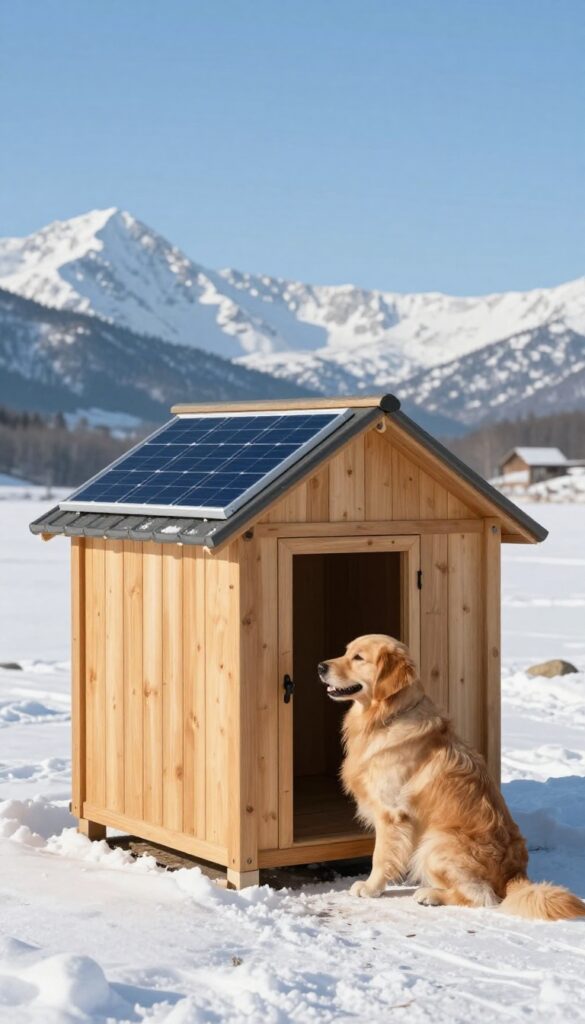
Harnessing the sun's energy to warm your dog's shelter is both smart and sustainable. A solar-powered heated dog house uses photovoltaic panels to run a small heating element, keeping the interior cozy without adding to your electric bill. It's an excellent choice for eco-conscious pet parents who want a low-maintenance, off-grid solution.
Why It Works
Solar panels convert sunlight into electricity, which powers a thermostatically controlled heater inside the dog house. On sunny winter days, the system can maintain a comfortable temperature, and the thermal mass of the house stores heat for cooler evenings. It's reliable in regions with good winter sun exposure.
Best For
This setup is ideal for dogs that spend a lot of time outdoors in sunny climates, like the Southwest or Rocky Mountain areas. It suits active breeds such as Huskies or Labs that enjoy being outside but need a warm retreat. It's also great for owners who want to reduce their carbon paw print.
Practical Tip
Place the dog house facing south to maximize sun exposure, and tilt the solar panel at an angle that matches your latitude. Use a deep-cycle battery to store energy for cloudy days. Keep the panels free of snow and debris to ensure efficient operation.
Budget-Friendly Option
If a full solar setup is too pricey, start with a solar-powered vent fan that circulates warm air, or use a small solar battery charger to power a low-wattage heated pad.
3. Heated Dog House with a Built-In Thermostat
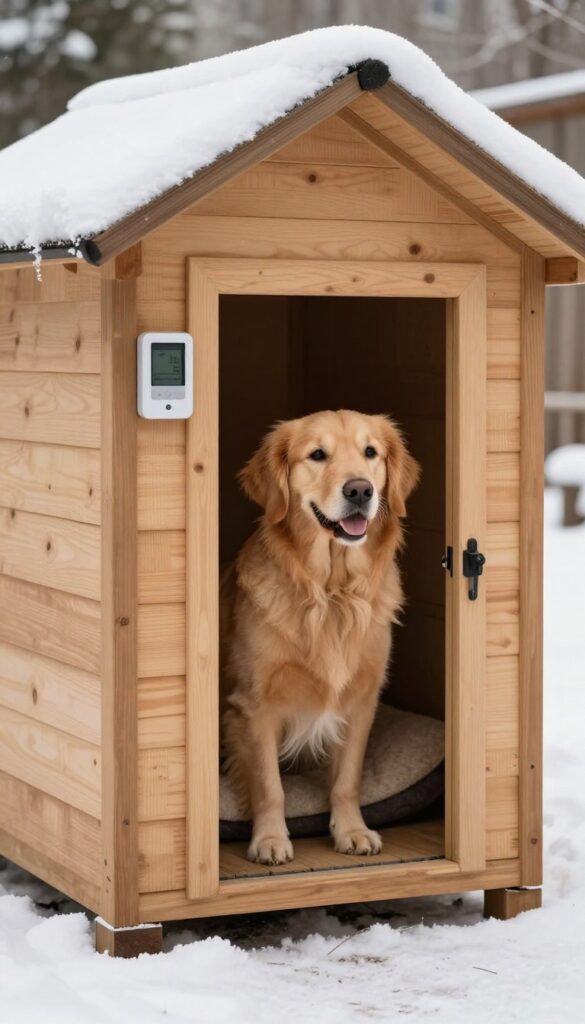
A thermostat isn't just a fancy feature—it's a game-changer for keeping your dog warm without wasting energy. These heated dog houses automatically regulate the temperature, kicking on only when it gets cold enough. That means your pup stays comfortable all night long, and you don't have to worry about the heater running nonstop.
Why It Works
A built-in thermostat prevents overheating by maintaining a steady temperature inside the dog house. This is especially important for extreme cold snaps because it keeps the heat consistent without manual adjustments. Plus, many models include safety shutoffs and chew-proof cords, so you can leave your dog unsupervised with peace of mind.
Best For
This is ideal for owners who live in areas with harsh winters and need a set-it-and-forget-it solution. It's also great for dogs that spend several hours outdoors during the day, whether they're working breeds or just love playing in the snow.
Practical Tip
Place the dog house in a sheltered spot, like against a wall or under an overhang, to reduce wind exposure. Make sure the thermostat sensor isn't blocked by bedding, and test the system before the first big freeze. Clean the heating unit periodically to prevent dust buildup.
Budget-Friendly Option
If a fully heated house is out of budget, buy a quality insulated dog house and add a thermostat-controlled heated pad. You'll get similar temperature regulation for a fraction of the cost.
4. DIY Heated Dog House Using a Heat Lamp
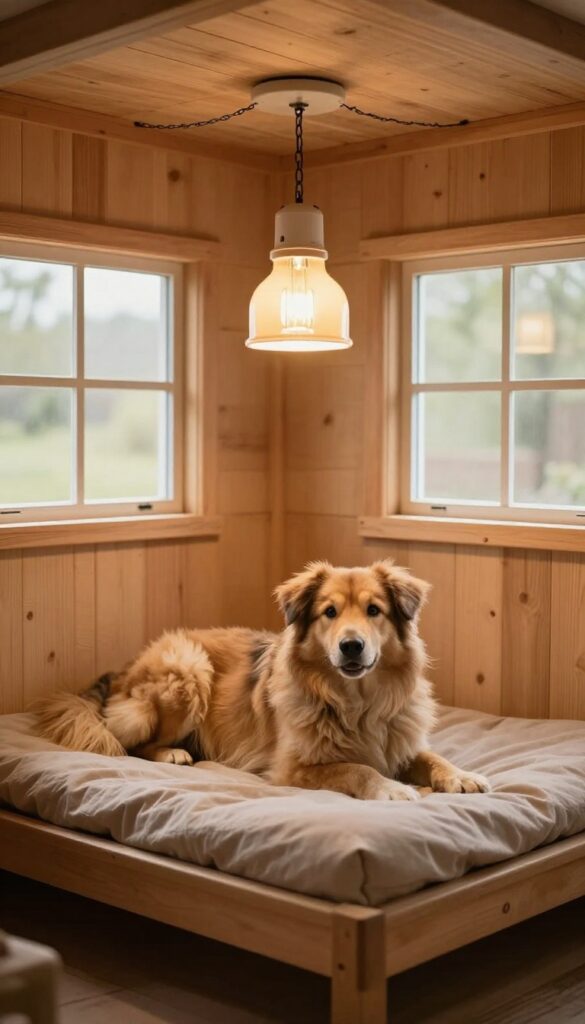
Sometimes the simplest solutions are the most effective. A ceramic heat lamp mounted in the ceiling of your dog house can provide steady, radiant warmth without taking up floor space.
This approach is popular among DIYers because it's affordable and straightforward to install. You just need a heat lamp fixture, a ceramic bulb, and a wire guard for safety.
It's a no-fuss way to add heat to an existing dog house, especially if you're on a tight budget or want a quick project before a cold snap hits.
Why It Works
Ceramic heat lamps emit infrared heat that warms your dog directly without heating the air too much. This means your pup stays cozy even in a drafty house, and the heat is focused where they need it most.
Best For
This idea works great for single-dog households with a medium to large dog house. It's ideal for owners who are handy with basic tools and want a low-cost, temporary heating solution for occasional cold nights.
Practical Tip
Mount the lamp securely to the ceiling with a chain or bracket, and always use a wire guard to prevent burns. Place the lamp away from bedding and ensure the cord is chewed-proof. Monitor the temperature closely, especially at first.
Budget-Friendly Option
If you want to save even more, use a clamp-style work light with a ceramic bulb instead of a dedicated heat lamp fixture. Just make sure it's rated for high heat and secured well.
5. Heated Dog House with a Heated Floor
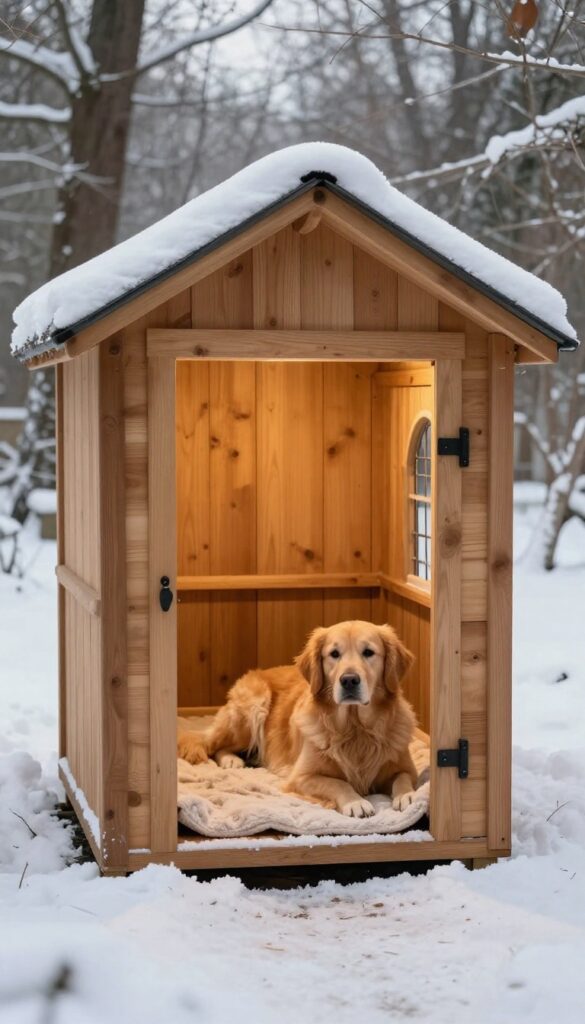
Radiant floor heating isn't just for humans—your dog can enjoy it too. Installing a heated floor in your dog house provides consistent warmth from the ground up, which is especially comforting on icy winter days.
Many dog owners love this setup because it mimics the cozy feeling of a heated home. The warmth rises evenly, eliminating cold spots and keeping your pup snug all night long.
Why It Works
Dogs lose a lot of heat through the floor when lying down. A heated floor directly counteracts that by warming the surface they rest on. This steady, gentle heat is more efficient than air-based heaters and doesn't dry out the air, making it comfortable for extended use.
Best For
This idea is ideal for older dogs or those with arthritis, as the warmth soothes sore joints. It's also great for short-haired breeds that feel the cold quickly, and for dogs that spend long hours in their outdoor house.
Practical Tip
Use a waterproof heated mat designed for pets or install electric radiant heating panels under a plywood floor. Always follow manufacturer safety guidelines, and cover the heated surface with a washable, chew-resistant blanket for easy cleaning.
Budget-Friendly Option
If radiant floor installation is too pricey, a self-warming mat with a reflective layer can be a cost-effective alternative. It traps your dog's body heat and works well in an insulated house.
6. Portable Heated Dog House for Travel
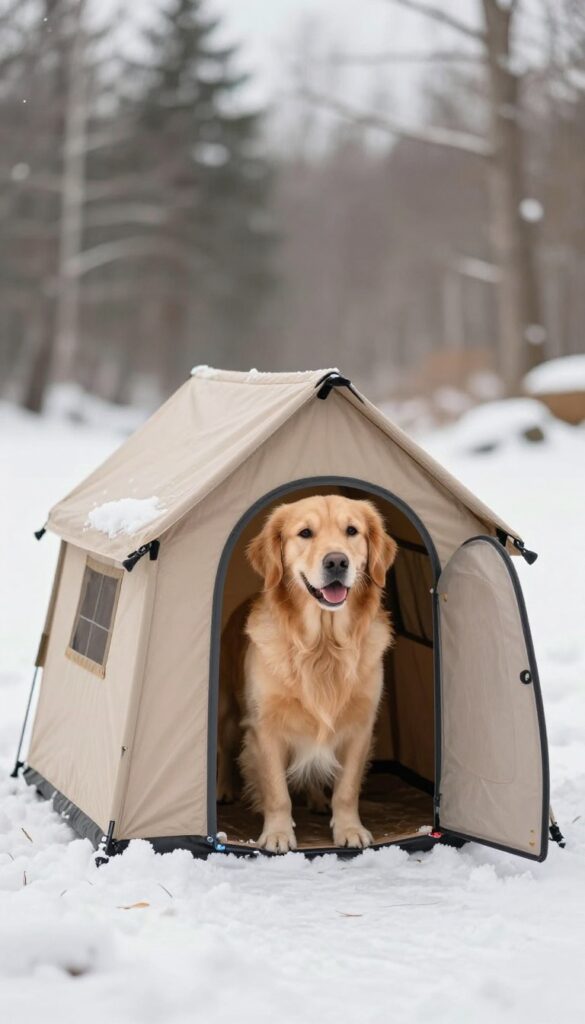
For dog owners who love to hit the road, a portable heated dog house is a game-changer. These lightweight, foldable designs pack down small but set up quickly with a built-in heating element to keep your pup warm wherever you go. Whether you're camping in the mountains or taking a cross-country road trip, your dog gets a familiar, cozy spot that stays toasty even on chilly nights.
The key is finding a model that balances portability with reliable heat and weather resistance.
Why It Works
Portable heated dog houses typically use low-voltage heaters that are safe for pets and energy-efficient, so you can run them off a car adapter or portable battery pack. The insulated walls and waterproof exterior keep wind and moisture out, while the heating element maintains a comfortable temperature inside. Many designs also include a removable, washable floor pad for easy cleanup after muddy paws.
Best For
This idea is ideal for adventure-loving dog owners who frequently camp, hike, or travel with their pet. It's also great for people who need a temporary warm shelter for their dog during outdoor events, trips to the cabin, or while visiting friends who don't have a fenced yard. Breeds that are sensitive to cold, like short-haired dogs or seniors, will especially appreciate the consistent warmth.
Practical Tip
When choosing a portable heated dog house, look for one with a zippered or flap door to help trap heat. Set it up on a level, dry surface—use a tarp underneath if the ground is damp. Test the heater at home first to make sure it's working properly and that the cord is safely tucked away where your dog can't chew it.
After each trip, let the house air out before folding to prevent mold or odors.
Budget-Friendly Option
If you're handy, you can DIY a portable heated dog house by modifying a foldable pet crate. Add rigid foam insulation panels to the sides and top, then attach a low-wattage, pet-safe heating pad to the floor. Cover the interior with a waterproof liner and create a flap door using heavy-duty vinyl.
This can save you money while still giving you a warm, travel-friendly setup.
7. Heated Dog House with a Windbreak Entry
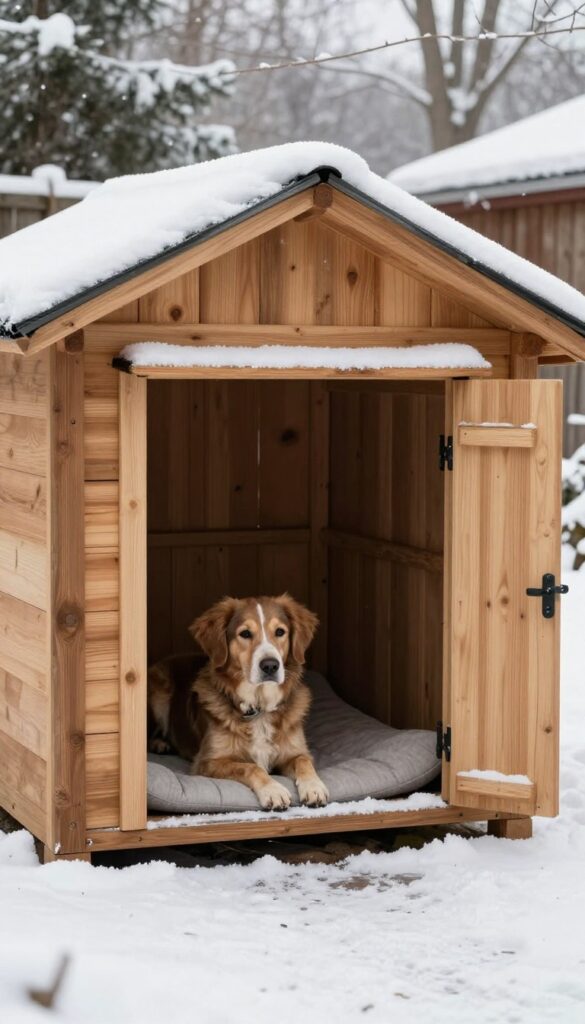
Drafty doors are one of the biggest culprits of heat loss in outdoor dog houses. A windbreak entry—like a flap door or a baffle system—blocks cold gusts while keeping warmth inside. Pair it with a heated bed, and you have a toasty retreat that stays cozy even on blustery winter days.
Dog owners love this setup because it's simple, effective, and doesn't require a complete house overhaul.
Why It Works
A flap or baffle creates an airlock effect, preventing wind from directly entering the sleeping area. This reduces heat loss significantly, so your dog's body heat and the heated bed work more efficiently. The result is a consistently warmer interior without running the heater at full blast.
Best For
This idea is perfect for dogs that spend several hours outdoors in windy climates, especially breeds with short coats or low body fat. It's also great for multi-dog households where the house door gets opened frequently.
Practical Tip
Choose a heavy-duty vinyl flap door that's flexible but thick enough to resist flapping. Make sure the flap hangs slightly overlapping the frame to seal gaps. For an extra layer, add a second flap a few inches inside for a double airlock.
Budget-Friendly Option
If you're handy, build a baffle entry from plywood scraps—create a small L-shaped or U-shaped tunnel inside the door. It works just as well as a store-bought flap and costs almost nothing.
8. Heated Dog House Using a Heated Water Bowl
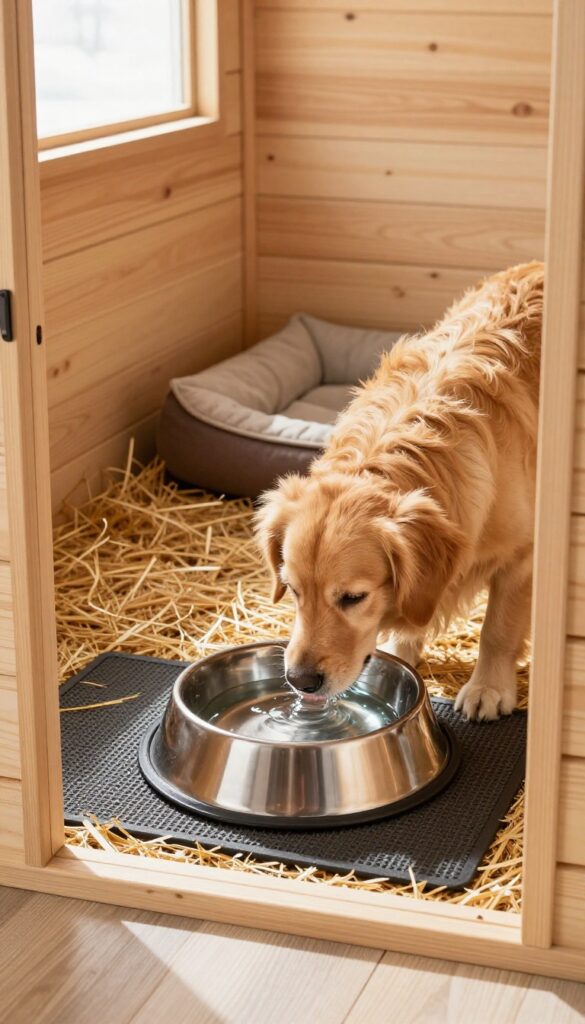
Combining a heated water bowl with your dog house is a smart way to tackle two winter problems at once: freezing water and a chilly shelter. The bowl's built-in heater gently warms the water, preventing ice from forming even on the coldest days. Placing it inside the house adds a subtle heat source that helps take the edge off the cold, all while keeping your pup hydrated.
Why It Works
Heated water bowls use a low-wattage thermostatically controlled heating element to keep water from freezing, typically around 50°F. When placed inside a well-insulated dog house, the bowl radiates a small amount of warmth that can raise the interior temperature by a few degrees. This dual-purpose setup ensures your dog has access to liquid water and a slightly warmer environment without needing a separate heating system.
Best For
This idea is ideal for single-dog households with a medium to large breed that spends several hours outdoors. It works well for owners who want an affordable, low-maintenance upgrade to an existing insulated dog house, especially in climates where temperatures dip below freezing but not extreme cold.
Practical Tip
Position the heated water bowl in a corner away from the door to minimize drafts and spills. Choose a bowl with a rubber base to prevent sliding. Check the cord regularly for damage and use a chew-proof cord cover if your dog is a chewer.
Pair with a heated bed or straw bedding for extra warmth.
Budget-Friendly Option
If a heated bowl is out of budget, try a deep ceramic bowl placed inside a larger container filled with insulating foam. While not as effective, this can slow freezing. Alternatively, a simple heated bowl can be found for under $30.
9. Heated Dog House with a Raised Floor
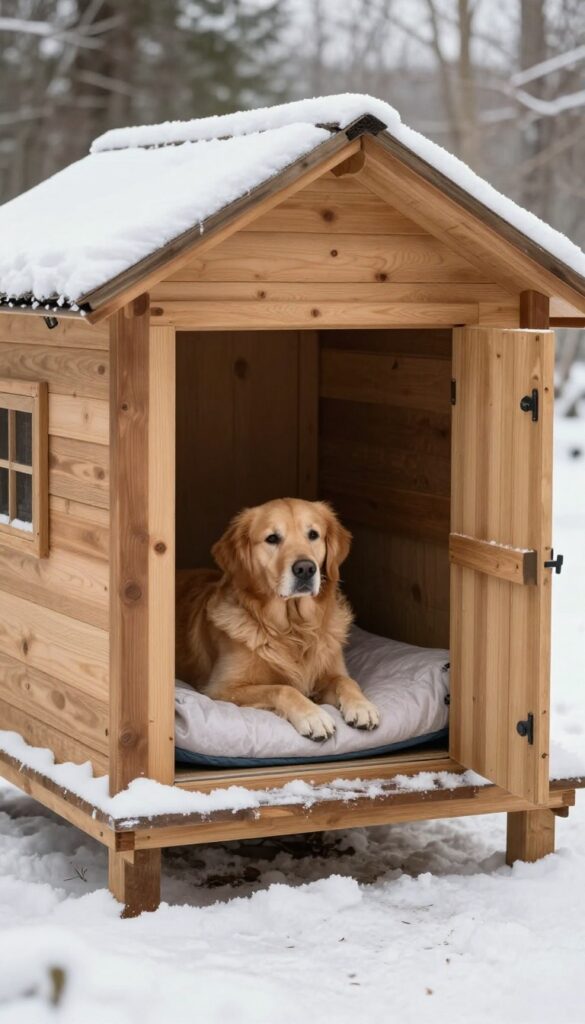
Elevating your dog's house off the ground is a simple but effective upgrade. It prevents cold from seeping up through the floor and keeps the interior drier, especially in snowy or rainy weather. Adding a heat source underneath creates a warm pocket of air that rises, making the whole space cozier without needing a lot of extra energy.
Why It Works
Cold ground can suck heat right out of a dog house. By raising it, you create an air gap that acts as insulation. Place a heated pad or a small space heater underneath (in a protected, pet-safe enclosure), and the warmth naturally rises through the floor, keeping your dog toasty without direct contact with hot surfaces.
Best For
This setup is ideal for larger breeds that need more floor space and for dogs that tend to lie directly on the floor. It also works well in areas with heavy snow or rain, as the raised floor stays dry and mold-free.
Practical Tip
Use pressure-treated lumber or composite decking for the base to resist moisture and rot. Make sure the raised platform is sturdy enough to support your dog's weight. For the heat source, choose a thermostatically controlled heated pad rated for outdoor use, and place it in a waterproof housing underneath.
Budget-Friendly Option
If you're on a tight budget, skip the heated pad and just elevate the house on concrete blocks or wooden pallets. Add a thick layer of straw or cedar shavings on the floor for natural insulation—it's a low-cost way to keep your dog warmer.
10. Heated Dog House with a Remote Thermostat
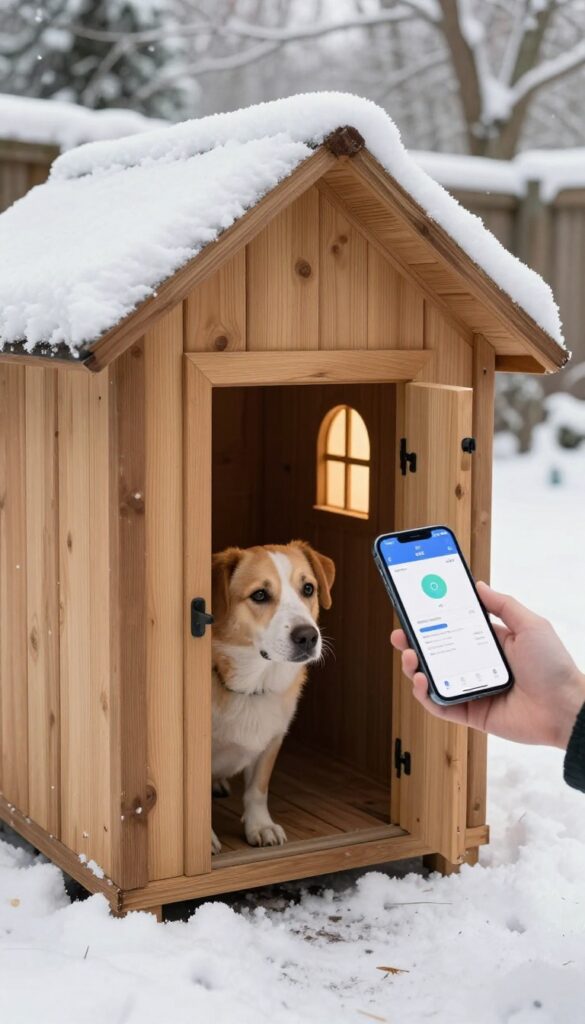
Imagine being able to adjust your dog's house temperature without stepping outside. A remote thermostat lets you monitor and control the heat from your couch, phone, or tablet. It's a convenient way to keep your pup comfortable while saving energy—no more guessing if it's too hot or too cold.
Why It Works
Remote thermostats give you precise control over the temperature, so you can set it just right for your dog. Many models let you create schedules, lowering heat when your dog is inside and raising it when they go out. This saves electricity and ensures your pup always has a cozy spot.
Best For
This setup is perfect for owners who work long hours or travel frequently. It's also great for dogs that spend extended time outside, like working breeds or active dogs who prefer the yard. If you want peace of mind without constant checking, this is the way to go.
Practical Tip
Install the thermostat in a weatherproof housing to protect it from snow and rain. Place the temperature sensor at dog level—not near the heat source—to get accurate readings. Test the system before winter fully hits to make sure everything syncs properly.
Budget-Friendly Option
If a full smart thermostat is out of budget, try a simple plug-in timer thermostat. It lets you set on/off cycles for around $20. Pair it with a space heater designed for outdoor use to get similar control without the high price tag.
FAQ
Are heated dog houses safe for my dog?
Yes, when used correctly. Choose models with chew-proof cords, thermostats, and safety certifications. Always supervise initially and check for any damage.
What temperature should I set the heater to?
Aim for 50-60°F (10-15°C) inside the dog house. This is warm enough to take the chill off without overheating. Adjust based on your dog's breed and coat.
Can I use a regular space heater in a dog house?
It's not recommended due to fire and burn risks. Use pet-specific heating pads or heaters designed for outdoor use with safety features.
How do I keep the dog house warm without electricity?
Use passive heating methods like insulation, straw bedding, and a windbreak. Solar-powered options are also available for off-grid setups.
What size heated dog house does my dog need?
The house should be just big enough for your dog to stand, turn around, and lie down. Too much space makes it harder to keep warm. Measure your dog's length and height.
Conclusion
Your dog doesn't need a mansion—just a warm, dry spot to escape the cold. Pick one of these heated dog house ideas that fits your space and budget, then add a cozy bed and maybe a draft cover.
Your pup will thank you with wagging tails and peaceful naps all winter long. Start planning today, and give your furry friend the comfort they deserve.

I’m Pallab Kishore, the owner of Little Pets Realm — an animal lover and pet care enthusiast sharing easy tips, healthy recipes, and honest advice to help every small pet live a happy, healthy, tail-wagging life.