
Your dog deserves a cozy spot that’s all their own, but store-bought options can be pricey or too small. These 11 DIY dog house plans let you build the perfect retreat with basic tools and materials, from salvaged pallets to insulated plywood.
Each step-by-step guide focuses on durability, comfort, and your pup’s specific needs. Whether you need a portable house for camping or a heated shelter for chilly winters, there’s a design here that fits your space and skill level.
The projects range from a simple A-frame to a two-story model with a deck, so you can match your dog’s personality and your yard’s layout. No advanced carpentry required—just a weekend, some lumber, and a little patience.
1. Classic A-Frame Dog House
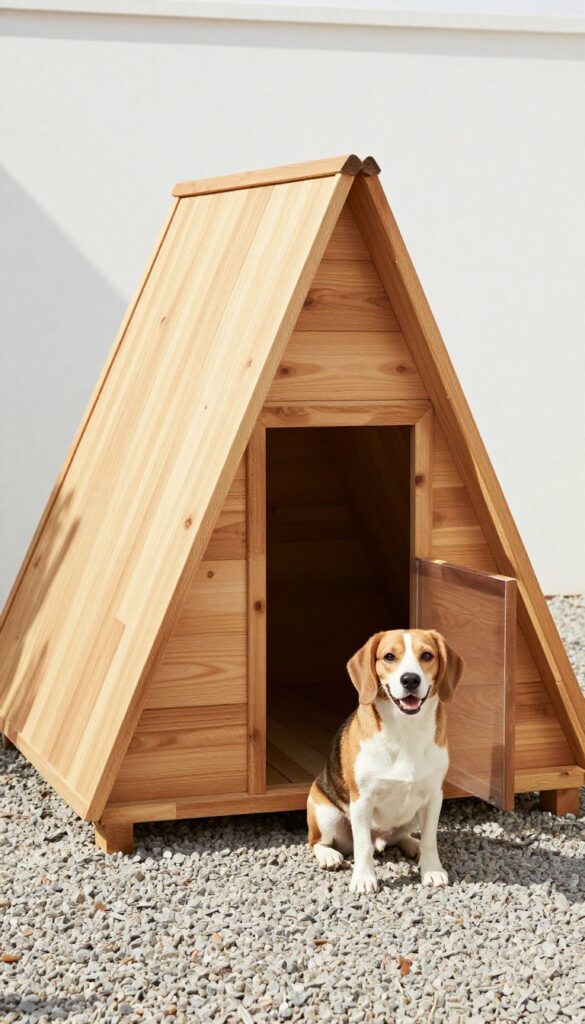
The A-frame is a beloved classic for good reason. Its steeply sloped roof sheds rain and snow effortlessly, keeping the interior dry. The raised floor adds ventilation and prevents dampness.
Builders love how straightforward the design is—just plywood and 2x4s, with simple cuts and angles. It's a perfect weekend project for any skill level.
Why It Works
The triangular shape naturally channels water away, so you won't have to worry about leaks. The raised floor also keeps your dog off cold or wet ground, which is great for joint health. Plus, the open front allows easy entry while still providing shelter from wind.
Best For
This plan suits beginner builders and small to medium dogs like Beagles, Corgis, or Terriers. It's ideal for yards with moderate weather, as the design handles rain and snow well but isn't heavily insulated.
Practical Tip
Paint the exterior with a weatherproof stain or outdoor paint to extend its life. Add a flap of heavy-duty vinyl over the doorway for extra wind protection. Place it on a gravel or paver base to prevent the wood from rotting.
Budget-Friendly Option
Use 3/8-inch exterior-grade plywood instead of 1/2-inch to save money. You can also repurpose old pallets for the floor and walls, just make sure they're untreated and free of chemicals.
2. Insulated Dog House for Cold Climates
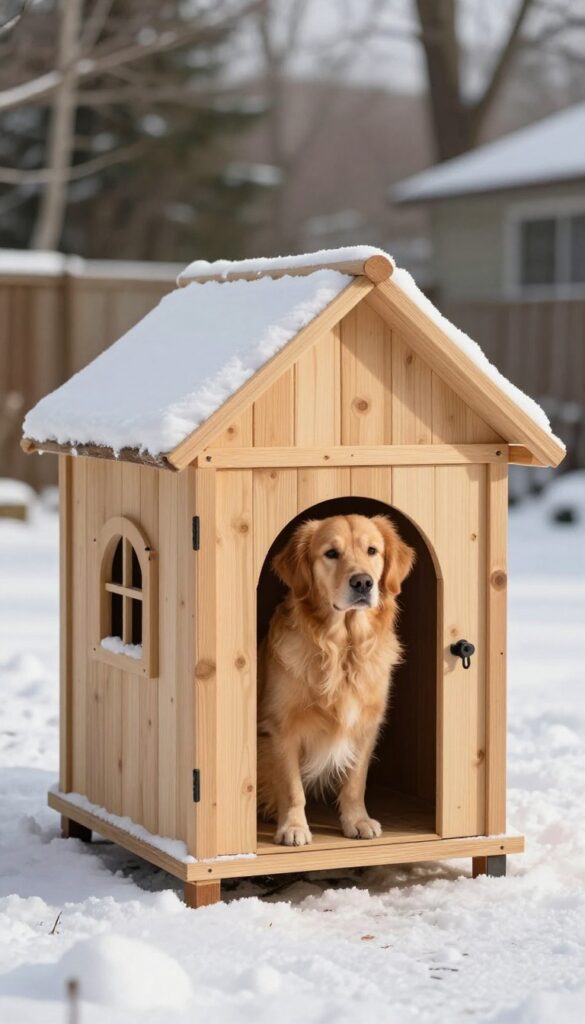
When winter winds howl, a standard dog house just doesn’t cut it. This insulated design uses foam board between double walls and a flap door to keep your pup warm and dry. It’s a sturdy, weatherproof shelter that feels like a cozy den even on freezing nights.
Why It Works
The double-wall construction traps heat, while the foam board blocks drafts. A heavy-duty flap door stops wind and snow from getting inside, and the removable roof makes cleaning a breeze. Your dog stays comfortable without needing a space heater.
Best For
Dogs that live outdoors in cold climates, especially short-haired breeds or older pups that feel the chill. Also great for anyone who wants a low-maintenance, energy-efficient shelter that stands up to snow and ice.
Practical Tip
Seal all seams with exterior caulk to prevent moisture from seeping into the insulation. Paint the exterior with weatherproof paint, and add a small vent near the top for airflow—without creating a draft.
Budget-Friendly Option
Skip the foam board and use doubled-up cardboard or old blankets sealed in plastic for a temporary fix. Replace the flap door with a heavy curtain or an old rubber mat cut to size.
3. Portable Dog House on Wheels
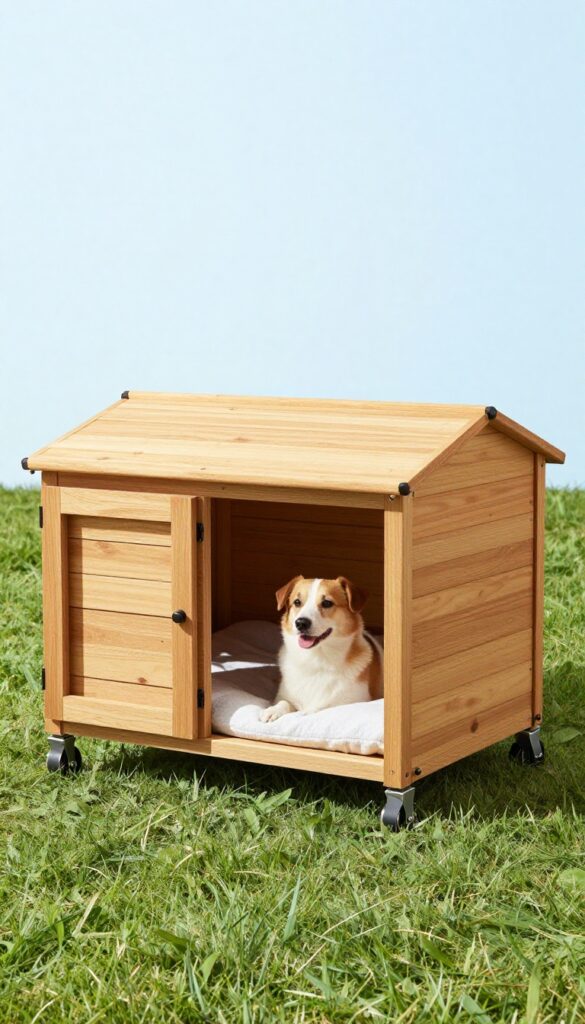
Want a dog house that follows the sun? Building a portable house on a wheeled platform lets you shift your pup’s shelter wherever it’s most comfortable. It's especially handy for renters who can't commit to a permanent structure or for owners who like to rotate their yard setup.
The design is simple: a lightweight wooden box mounted on a sturdy dolly or casters, with a ramp for easy access. You can even pull it into the garage during storms.
Why It Works
Mobility means you can chase shade in summer and shelter from wind in winter. The wheels also protect grass underneath, since you can move it before the lawn gets worn. Plus, it’s easy to clean—just roll it to a hose or into the driveway for a quick scrub.
Best For
Best for small to medium dogs who don’t mind a slightly elevated entry. Ideal for renters, apartment dwellers with patios, or anyone who wants flexibility in their yard layout. Great for camping too, since you can roll it into a truck bed or trailer.
Practical Tip
Use marine-grade plywood and exterior paint to weatherproof the house. Attach locking casters so it stays put when parked. Add a soft, washable bed inside that you can remove easily—mobility should also mean easy cleaning.
Budget-Friendly Option
Skip expensive casters and use a salvaged furniture dolly from a thrift store. You can often find them for under $10. If you don’t have a ramp, a sturdy plank with grip tape works fine.
4. Upcycled Pallet Dog House
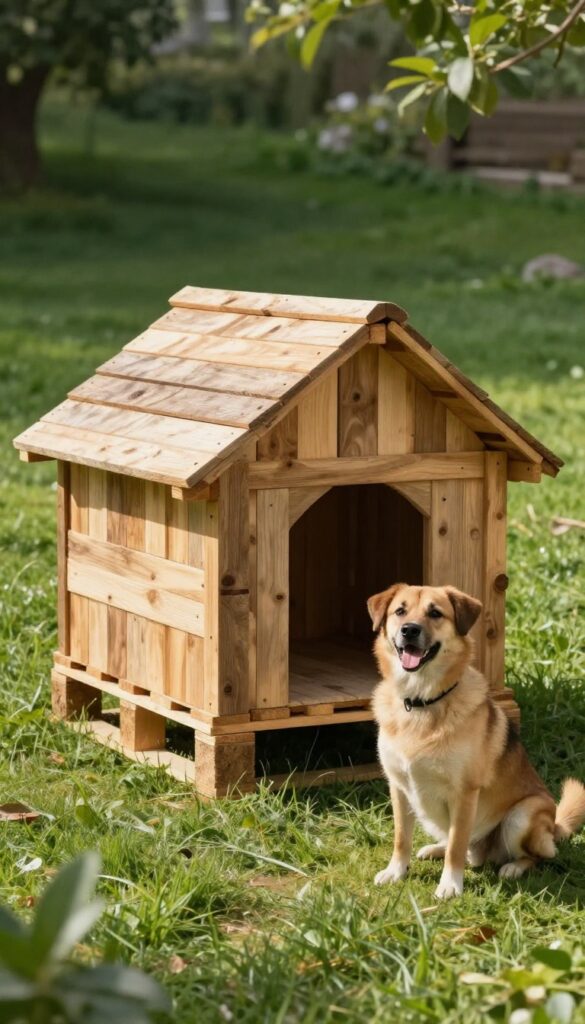
Turning old pallets into a dog house is a rewarding weekend project that saves money and reduces waste. The natural wood look fits right into rustic backyards, and the sturdy construction holds up well to weather. You'll need to disassemble pallets carefully, sand thoroughly, and add a waterproof roof, but the result is a charming, eco-friendly shelter your dog will love.
Why It Works
Pallets are free or very cheap, making this one of the most budget-friendly dog house options. The thick wood provides good insulation, and the slatted design allows for ventilation. With proper sealing and a sloped roof, it stays dry and comfortable for your pup year-round.
Best For
This is ideal for DIYers who enjoy working with reclaimed materials and want a rustic look. It suits medium to large dogs that need a sturdy, ground-level house. Great for backyards with a natural or farmhouse aesthetic.
Practical Tip
Sand all surfaces thoroughly to remove splinters, then apply a non-toxic, water-based sealant or paint. Add a hinged roof for easy cleaning, and elevate the floor on skids to prevent moisture from seeping in. Line the interior with a washable cushion or cedar shavings for extra comfort.
Budget-Friendly Option
If you can't find free pallets, check local hardware stores or warehouses for discarded ones. Alternatively, use scrap lumber from other projects to keep costs low.
5. Modern Minimalist Dog House
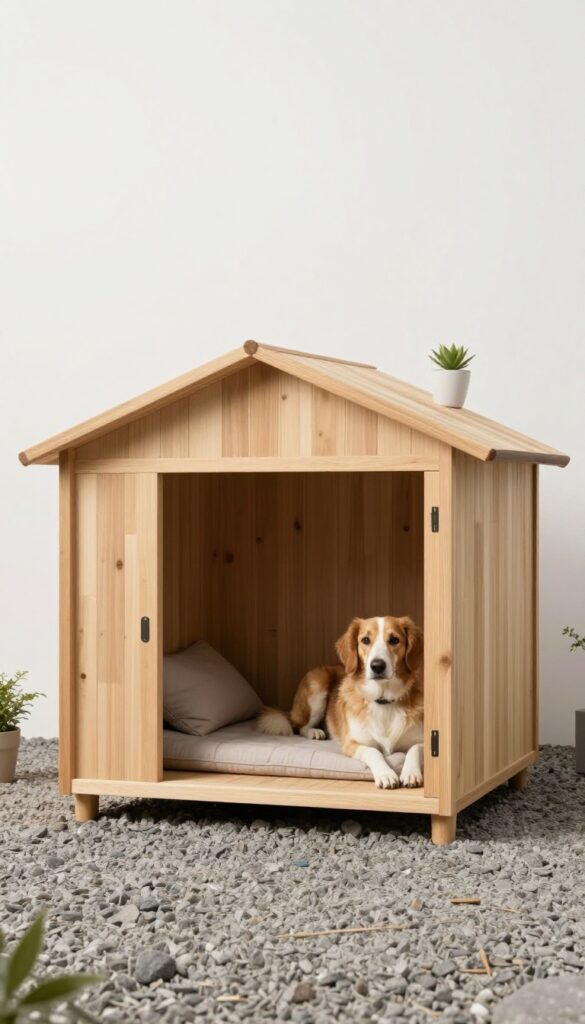
Clean lines and a flat roof make this dog house a natural fit for contemporary yards and patios. The design focuses on simplicity and blends into modern landscaping without sticking out. It's a great option if you want something that looks like a piece of outdoor furniture rather than a traditional dog house.
Why It Works
The open interior with a large front opening gives your dog plenty of room to move in and out easily. Cedar or pressure-treated wood resists weather and pests, so the house stays sturdy for years. The flat roof can double as a plant shelf or a spot for your dog to sunbathe.
Best For
This design suits modern homes, apartments with patios, or any yard with a clean aesthetic. It's ideal for medium to large dogs that like to stretch out, and works well for owners who want a low-maintenance, visually appealing shelter.
Practical Tip
Paint or stain the exterior to match your home's trim or deck. Add a removable cushion inside for comfort, and consider a hinged roof for easy cleaning. Place it on a gravel or stone base to prevent moisture from seeping up.
Budget-Friendly Option
Replace cedar with exterior-grade plywood and paint it with outdoor paint to save money. You can also use leftover decking boards or reclaimed wood for a more rustic look.
6. Two-Story Dog House with Deck
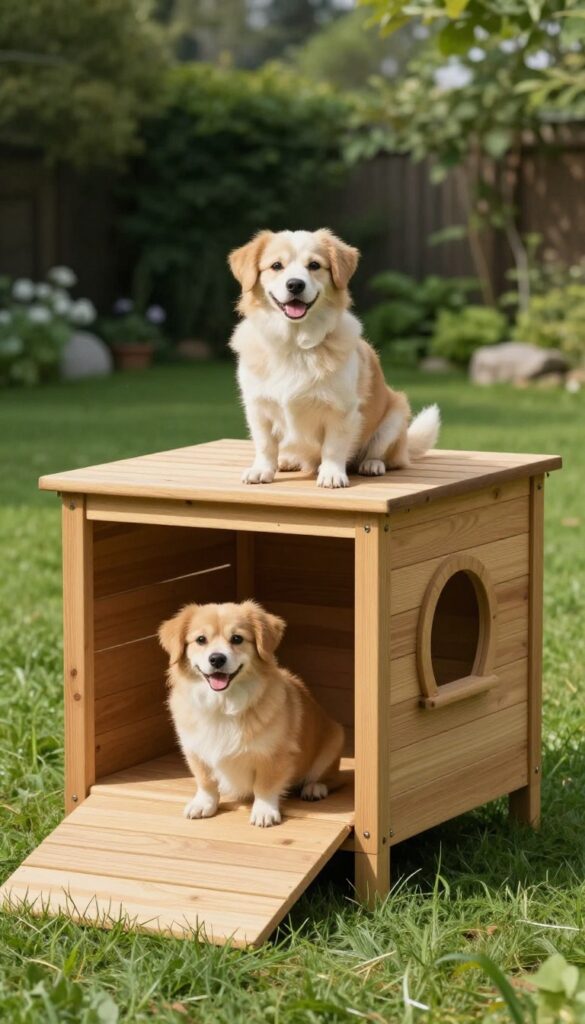
A two-story dog house with a deck gives your pup the ultimate lookout spot. The lower level offers a cozy, enclosed sleeping area, while the upper deck is perfect for lounging and surveying the yard. Adding a gentle ramp makes it accessible for small dogs or seniors, so every pup can enjoy the view.
Why It Works
Dogs love being up high—it satisfies their natural instinct to watch over their territory. The separate levels also give them options: a quiet den for napping and an open deck for sunbathing or keeping an eye on things. This design encourages activity and mental stimulation, which is great for energetic breeds.
Best For
Active dogs who love to climb and observe, especially breeds like Jack Russell Terriers, Beagles, or Australian Shepherds. Also ideal for multi-dog households where one dog prefers the deck while the other chills inside.
Practical Tip
Build the ramp with a non-slip surface by attaching small wooden slats or using outdoor carpet. Place the dog house in a shaded spot so the deck doesn’t get too hot in summer. Add a cushion on the deck for extra comfort.
Budget-Friendly Option
Skip the deck railing to save on lumber and simplify the build. You can also use a sturdy plastic dog crate for the lower level and build the deck on top.
7. Dog House with Built-In Storage
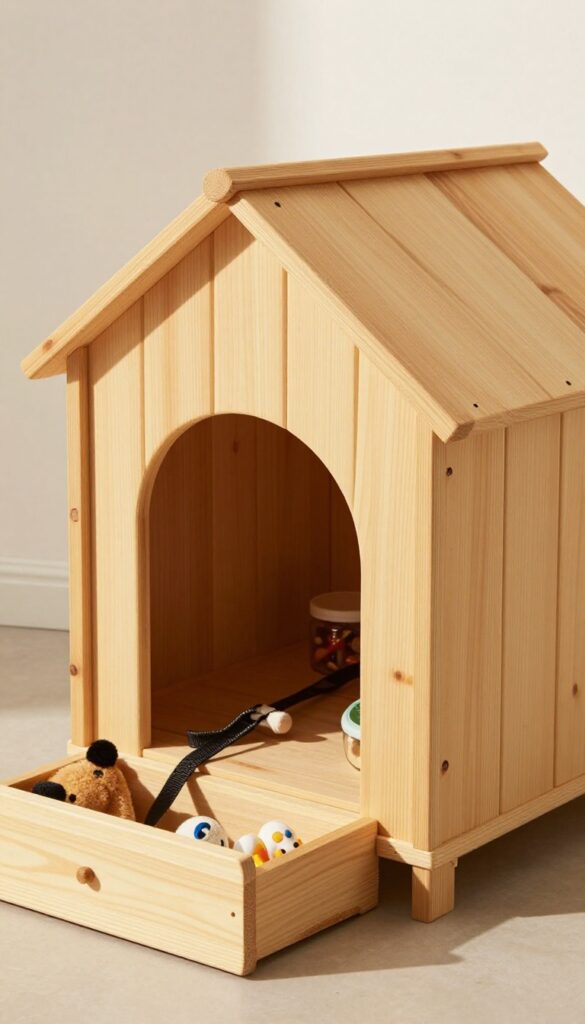
A dog house that doubles as a storage unit is a smart solution for small yards or patios where every inch counts. The side compartment keeps leashes, toys, and treats neatly tucked away yet easy to grab when heading out for a walk. It’s a clean, organized setup that makes daily dog care a little simpler.
Why It Works
Having a dedicated storage spot right next to the dog house means you never have to hunt for a poop bag or a favorite chew toy. It also encourages you to keep the area tidy, which benefits both your pup’s health and your own sanity.
Best For
This design is perfect for owners with limited outdoor space, like apartment balconies or small backyards, and for anyone who likes a clutter-free environment. It’s also great for multiple-dog households where extra supplies pile up fast.
Practical Tip
Paint the storage compartment a contrasting color or use a weatherproof label to mark what goes where. Add a small hook inside the door for hanging leashes, and line the bottom with a removable tray for easy cleaning.
Budget-Friendly Option
Skip the expensive outdoor storage bin and use a repurposed plastic crate or wooden wine box instead. Attach it to the side of the dog house with hinges for a low-cost, DIY storage solution.
8. Heated Dog House for Winter
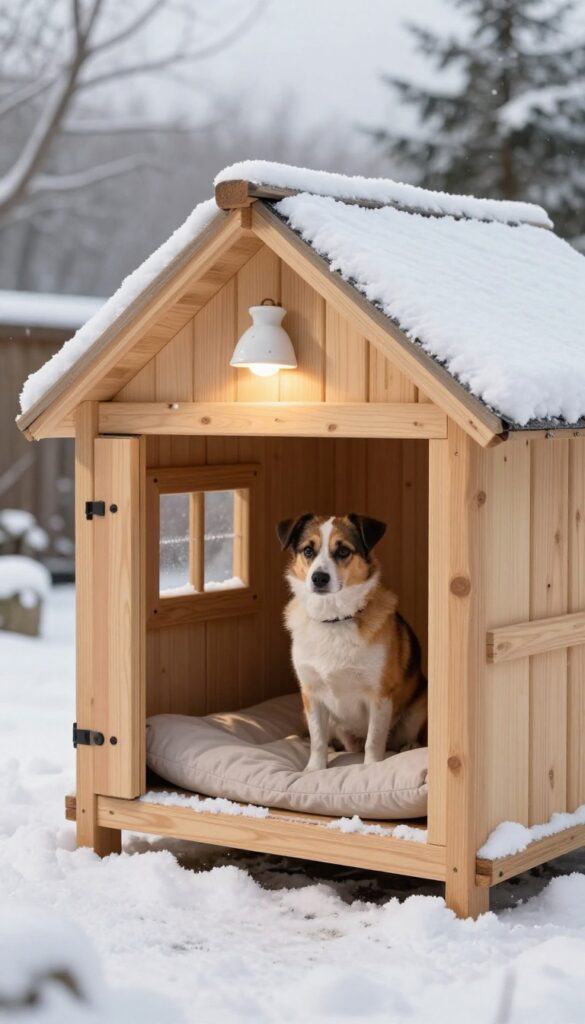
When temperatures drop, a standard dog house might not cut it. A heated dog house keeps your pup warm and comfortable, even in freezing weather. The key is using a safe, low-wattage heater that won't overheat or pose a fire risk.
Why It Works
A ceramic heat emitter paired with a thermostat delivers consistent warmth without light, so it won't disrupt your dog's sleep. Chew-proof cord covers prevent accidents, and proper insulation helps the heater work efficiently. This setup is reliable for harsh winters.
Best For
This design is ideal for outdoor dogs in cold climates, especially short-haired breeds or senior dogs that struggle to stay warm. It's also great for owners who worry about their pup's comfort during winter storms.
Practical Tip
Place the heater on a wall or ceiling, out of reach, and use a thermostat to keep temperatures around 50-60°F. Insulate the walls with foam board and seal gaps to prevent drafts. Check the cord regularly for wear.
Budget-Friendly Option
If you're on a tight budget, use a heated pet bed instead of a built-in heater. Just make sure the bed has a chew-resistant cord and is rated for outdoor use.
9. DIY Dog House from a Plastic Storage Bin
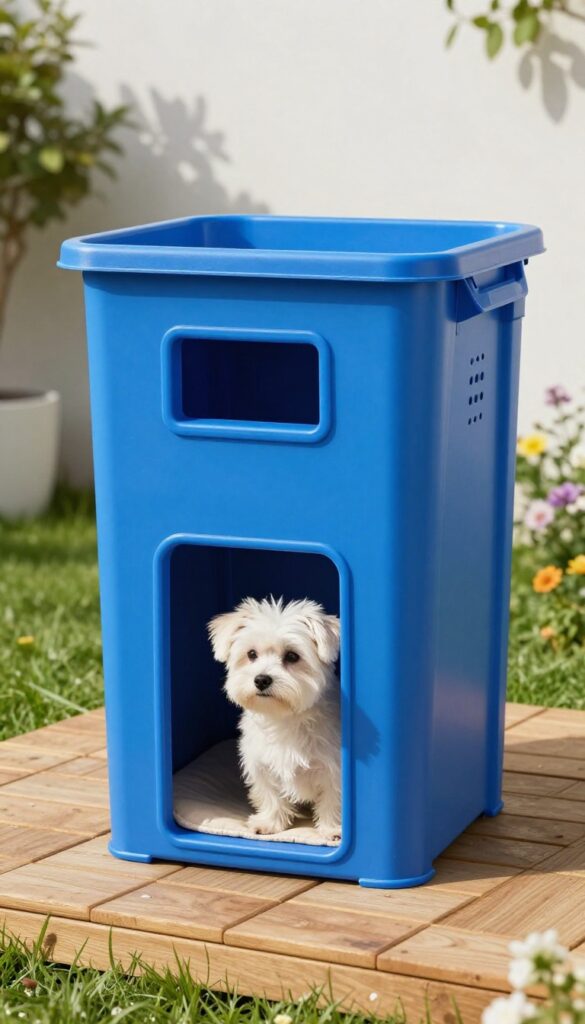
A large plastic storage bin can become a surprisingly cozy dog house in under an hour. No sawing or measuring required—just cut a door, add ventilation, and toss in a soft bed. It's lightweight, waterproof, and easy to clean, making it a favorite for temporary setups or travel.
Why It Works
The plastic bin is naturally waterproof and easy to wipe down, so mud and accidents don't soak in. The enclosed space holds your dog's body heat, and the smooth surface won't splinter or harbor pests. Plus, you can move it anywhere with minimal effort.
Best For
This is perfect for small to medium dogs who need a portable shelter for camping, road trips, or as a backup house. It also works well for puppies who might chew wooden houses, since plastic is easy to replace.
Practical Tip
Cut the door on one short side, leaving a lip at the bottom to keep bedding inside. Drill several 1-inch holes near the top for airflow, and place the bin on a slightly raised platform to prevent water from seeping in. Line the bottom with a washable mat or old towel for easy cleanup.
Budget-Friendly Option
If you don't have a large bin, look for a heavy-duty storage tote at a thrift store or discount retailer. You can often find one for under $10. Alternatively, use a plastic crate turned on its side and cover the top with a tarp.
10. Dog House with a Porch
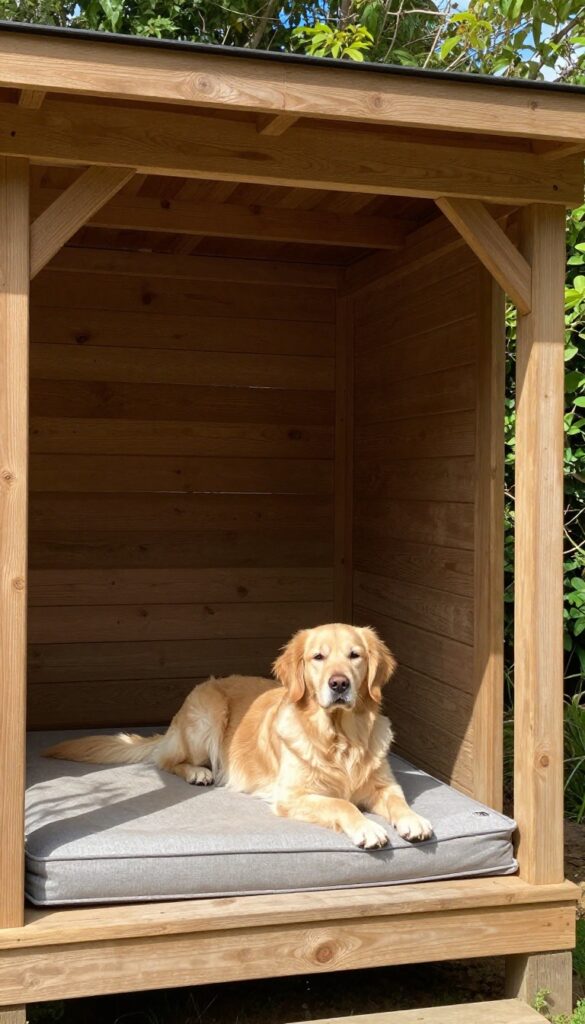
A covered porch gives your dog a dry spot to lounge outdoors while still feeling part of the action. This design extends the roof past the main house, creating a shaded area that stays mostly rain-free. Add a removable cushion, and your pup gets a cozy perch for watching the yard or greeting you at the gate.
Why It Works
Dogs often want to be outside but need protection from sun or sudden showers. The porch roof shields them from direct weather, while the open sides keep them visible and connected to their environment. This setup encourages more time outdoors without sacrificing comfort.
Best For
This plan is ideal for dogs that like to be near their humans but still want a private den. It works well for medium to large breeds that enjoy lounging outside, especially in yards where a full covered patio isn't an option.
Practical Tip
Build the porch floor with a slight slope away from the house so water drains off easily. Use outdoor-grade plywood and seal all edges with waterproof paint or stain. For the cushion, pick a waterproof outdoor fabric with a zippered cover that you can toss in the wash.
Budget-Friendly Option
Instead of buying a custom cushion, use a repurposed outdoor chair pad or a folded outdoor blanket. You can also skip the cushion entirely and lay down a rubber mat or artificial turf for easy cleaning.
11. Convertible Dog House with Removable Panels
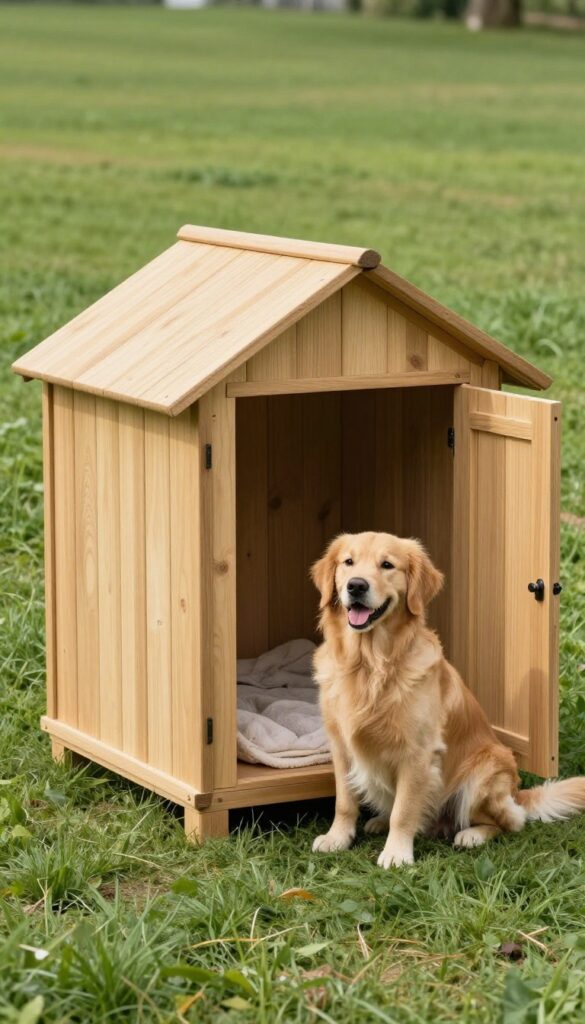
Seasons change, but your dog's house doesn't have to stay the same. This convertible design uses removable panels that you can pop off for summer breezes or snap on for winter warmth. It's like having two dog houses in one, and you can adjust it in minutes with just a few wing nuts.
Why It Works
The modular panels let you customize airflow and insulation based on the weather. In summer, you remove the front and side panels to create an open, shady spot. In winter, you reattach them and add a thick blanket or straw for cozy insulation.
This flexibility means your dog stays comfortable all year without you building a separate structure.
Best For
Perfect for owners in regions with distinct seasons, especially those who want a single dog house that works for both hot summers and cold winters. It's also great for multi-dog households where one pup likes it breezy and another prefers snug.
Practical Tip
Use wing nuts and bolts for the panels so you can swap them out without tools. Paint the panels a light color for summer to reflect heat, and a darker color for winter to absorb warmth. Add a weatherproof seal around the edges when panels are attached to keep drafts out.
Budget-Friendly Option
Instead of buying new hardware, repurpose old cabinet hinges and latches from a home improvement store's clearance bin. You can also use leftover plywood from other projects for the panels.
FAQ
What type of wood is best for a dog house?
Cedar and pine are popular choices because they're durable and naturally resistant to insects. Avoid treated lumber that may contain chemicals harmful to dogs.
How big should a dog house be?
The house should be just big enough for your dog to stand up, turn around, and lie down comfortably. Too large and it won't retain heat well.
Do I need to insulate the dog house?
If you live in a cold climate, insulation helps keep your dog warm. In mild climates, proper ventilation is more important to prevent overheating.
How do I waterproof a DIY dog house?
Use a sloped roof with shingles or metal sheeting, seal all seams with caulk, and apply a non-toxic exterior paint or stain. Raised floors also help keep moisture out.
Can I build a dog house without power tools?
Yes, you can use a handsaw, hammer, and screwdriver for simple designs like the plastic bin house or a basic A-frame. Many plans require only basic tools.
Conclusion
Building your own dog house is a satisfying weekend project that gives your pup a cozy, personalized retreat. With these step-by-step plans, you can create a sturdy shelter that fits your yard and your dog's needs.
Start with a design that matches your skill level, use weather-resistant materials, and add soft bedding for comfort. Your furry friend will love having their own space, and you'll enjoy the pride of a job well done.

I’m Pallab Kishore, the owner of Little Pets Realm — an animal lover and pet care enthusiast sharing easy tips, healthy recipes, and honest advice to help every small pet live a happy, healthy, tail-wagging life.