
Sharing a dog house sounds cozy in theory, but in practice, two dogs need more than just extra square footage. They need separate sleeping spots, easy cleanup, and enough room to stretch without stepping on each other. Whether you're setting up a shared crate indoors or a backyard kennel, the right design makes all the difference.
A good double dog house balances comfort with durability. You want materials that hold up to scratching and weather, plus a layout that gives each dog their own zone.
Think about how your dogs interact—some love to snuggle, others need personal space. These 11 ideas cover everything from budget-friendly DIY builds to ready-made options.
1. Side-by-Side Crate Setup with a Shared Divider
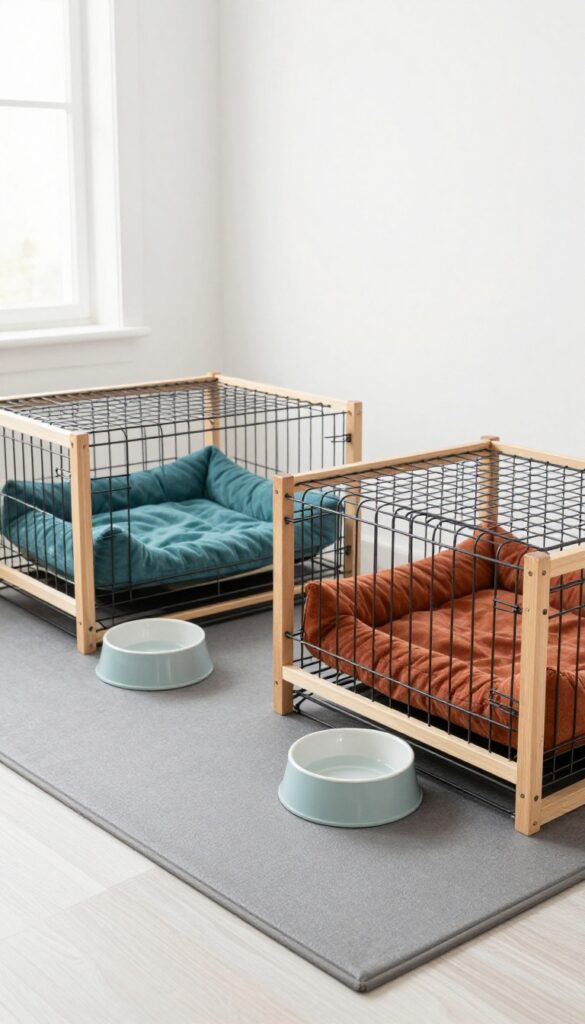
Two crates side by side with a removable divider give each dog their own den while keeping them close. It's a simple setup that respects personal space but still allows for companionship. Dog owners love how versatile it is—you can separate them during meals or let them cuddle by pulling out the divider.
Why It Works
Dogs are den animals, and having their own crate reduces resource guarding and stress. The divider gives clear boundaries, so each pup has a safe spot to retreat. At the same time, being able to see and smell each other maintains their bond.
Best For
Best for households with two dogs that get along but still need occasional alone time. Ideal for indoor spaces like living rooms or bedrooms where you want a neat, coordinated look. Works well for small to medium breeds that fit standard crate sizes.
Practical Tip
Place the crates on a durable mat to protect floors and make cleanup easier. Use identical bedding in contrasting colors to give each dog visual ownership. Leave the divider in during feeding or when you're away, then remove it for supervised snuggle time.
Budget-Friendly Option
Skip pricey custom crates—buy two identical wire crates and use a plastic panel or heavy-duty cardboard as a DIY divider. You can also repurpose a large single crate by adding a custom partition from plywood or acrylic.
2. Stackable Double Crate Tower
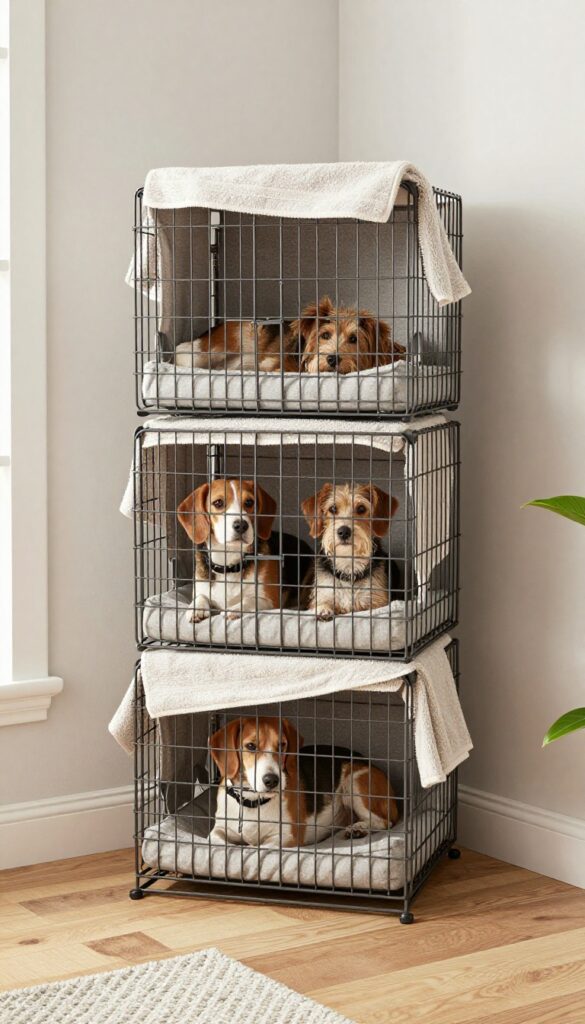
When floor space is tight, going vertical is a smart move. A stackable double crate tower gives each dog their own secure den without taking up extra square footage. It's a favorite for apartment dwellers and small-home owners who still want two separate sleeping zones.
Why It Works
Two crates stacked on a sturdy frame create a compact footprint. The bottom crate acts as the base, so it needs to be heavy-duty or anchored to the wall. The top crate sits securely on top, often with anti-slip pads or brackets to prevent shifting.
This setup keeps both dogs contained and comfortable while freeing up floor space for other furniture.
Best For
Small spaces like apartments, condos, or tight corners in a living room or bedroom. Works well for small to medium breeds that don't exceed 50 pounds each, since the weight limit of the lower crate matters.
Practical Tip
Always secure the tower to the wall with furniture straps or L-brackets—especially if you have an active jumper. Use a sturdy plastic or wire crate on bottom and a lighter one on top. Add crate mats for comfort and place a towel over the top crate to create a cozy cave feel.
Budget-Friendly Option
DIY your own tower by stacking two identical wire crates and connecting them with zip ties or heavy-duty clips. Make sure the bottom crate is reinforced with plywood underneath for stability.
3. Outdoor Double Kennel with a Covered Run
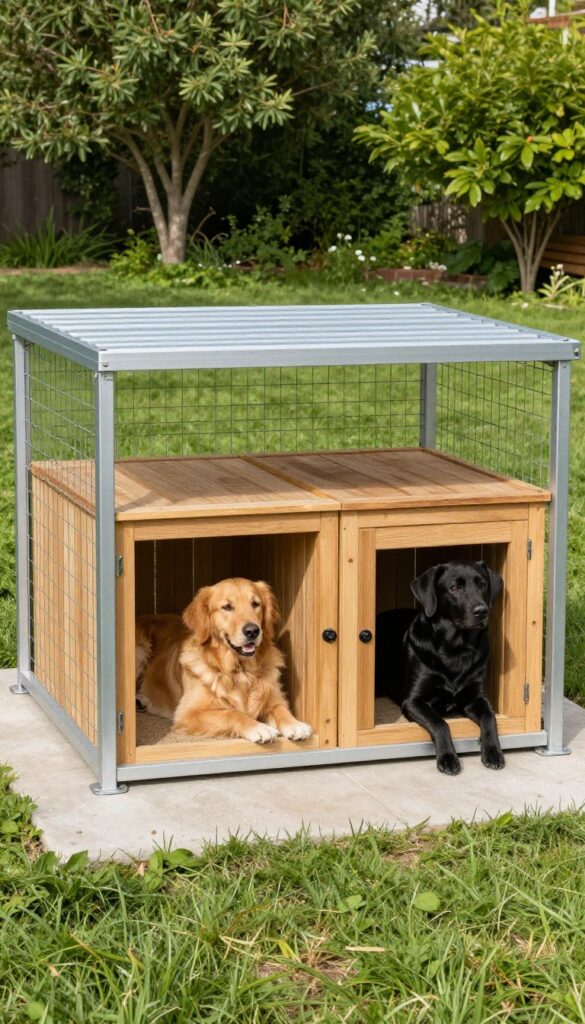
An outdoor double kennel gives each dog their own sleeping compartment while sharing a covered run. It's perfect for dogs that enjoy being outside during the day but need separate cozy spots to retreat. The covered run keeps them dry and shaded, making it a practical setup for active pups who love spending time in the yard.
Why It Works
Separate sleeping areas prevent resource guarding and give each dog a quiet den. The shared run encourages play and exercise together, so they get both independence and companionship.
Best For
Best for two medium to large dogs that are comfortable together but benefit from their own space. Ideal for owners with a fenced yard who want a sturdy, weatherproof outdoor solution.
Practical Tip
Use treated wood or galvanized metal for durability. Add a sloped metal or asphalt roof to channel rain away. Place the kennel on a concrete or gravel base for easy cleaning and to prevent digging out.
Budget-Friendly Option
Build your own using repurposed pallets or fencing materials. Use corrugated plastic sheeting instead of metal roofing to save money while still shedding water.
4. DIY Pallet Double Dog House
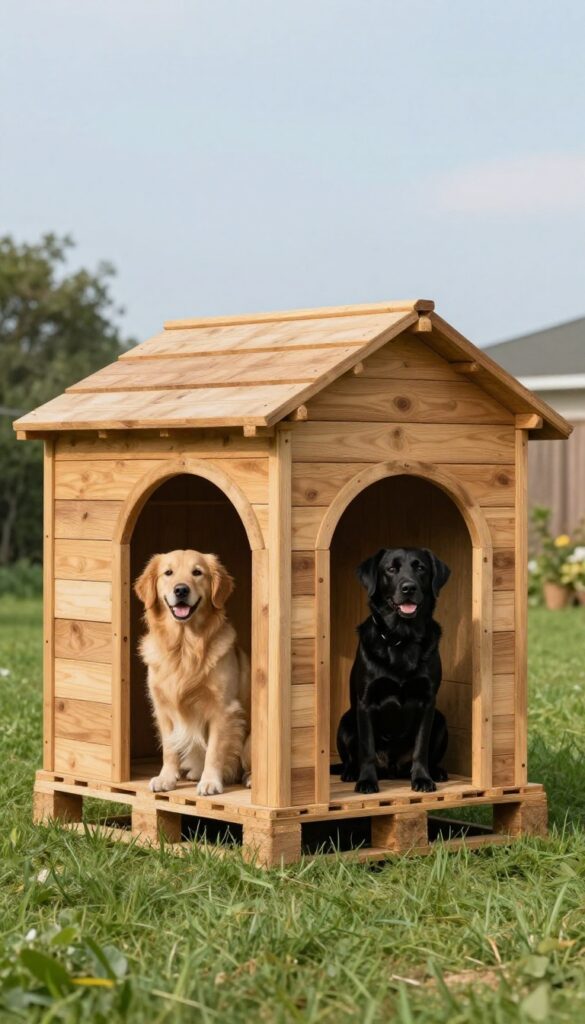
Building a double dog house from wooden pallets is a weekend project that saves money and gives your dogs a cozy shared space. The key is to create two separate chambers with a solid partition so each pup has their own private den. Sand everything smooth, add a waterproof roof, and seal with non-toxic paint for a rustic look that holds up outdoors.
This design works great for backyard DIYers who like repurposing materials. You can adjust the size based on your dogs' breeds and your available pallets.
Why It Works
Pallets are cheap (often free) and sturdy enough for a weather-resistant dog house. The shared wall cuts down on material costs while giving each dog their own entrance and sleeping area. Plus, the rustic finish blends nicely into most yards.
Best For
Best for medium to large dogs that get along but appreciate personal space. Ideal for owners with basic woodworking skills and access to pallets.
Practical Tip
Use a non-toxic exterior paint or sealant to protect the wood from rain and chewing. Add a slanted roof with slight overhang to keep water out. For extra comfort, place washable pet beds inside each chamber.
5. Under-Stairs Double Dog Den
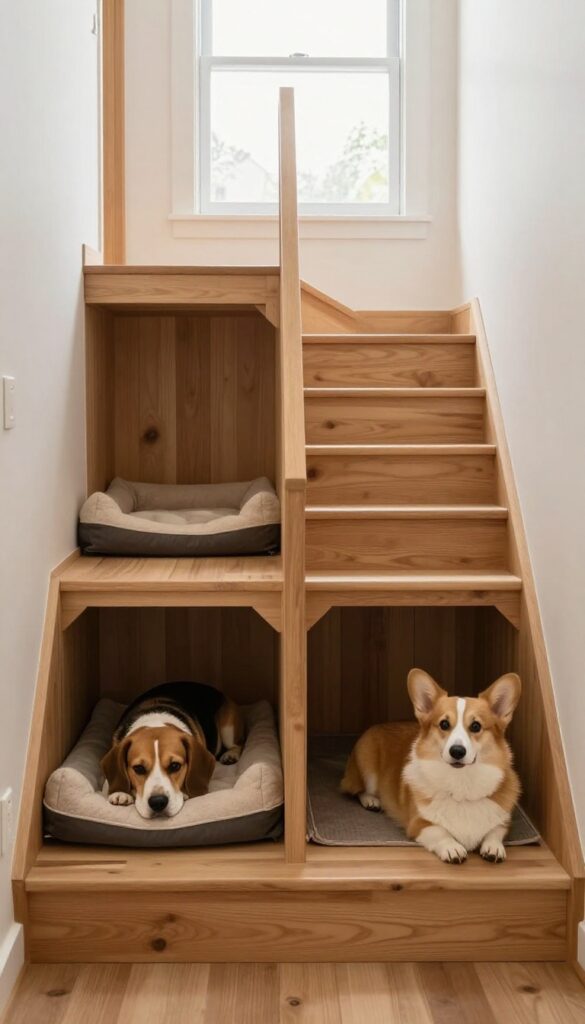
That awkward space under the stairs often ends up as a catch-all for shoes and clutter. Instead, turn it into a custom double dog den that gives your pups their own cozy corners. With two separate entrances and a divider inside, each dog gets their own space without fighting over the same bed.
It's a smart use of dead space that keeps the dogs tucked away but still part of the family room action.
Why It Works
Under-stairs areas are naturally enclosed, which dogs love because it feels like a secure den. By adding two entrances and a divider, you prevent resource guarding and give shy dogs their own retreat. The sloped ceiling actually works in your favor—most dogs prefer a lower ceiling for that cave-like comfort.
Best For
This setup is ideal for homes with a staircase and two small to medium-sized dogs who get along but appreciate personal space. It's perfect for breeds like beagles, corgis, or French bulldogs that don't need towering headroom.
Practical Tip
Measure the height at both ends before building—the low side might only fit a small dog bed. Use plywood for the walls and add a hinged door on one side for easy cleaning. Install a small fan or ventilation grille near the top to keep air moving, especially if the stairs are in a warm spot.
Budget-Friendly Option
Skip custom carpentry by repurposing two large wire crates placed side by side under the stairs. Build a simple plywood front with two cutout doors to hide them. This costs under $100 and gives you the same separate zones without measuring every angle.
6. Double Igloo Dog House with Insulation
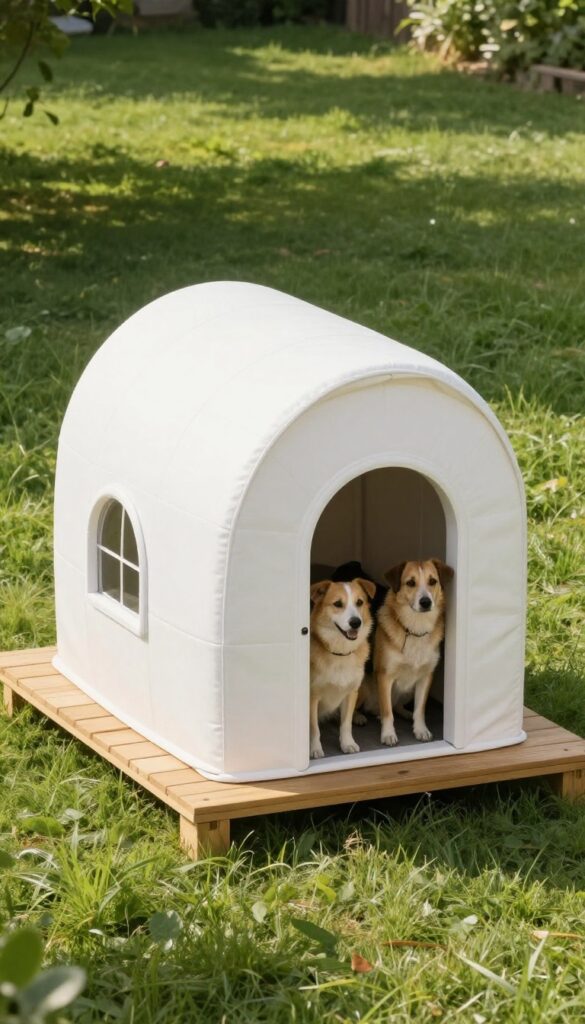
An igloo-style dog house isn't just for snowy climates. Its dome shape naturally circulates air and holds body heat when it's cold, while reflecting sunlight in summer. For two dogs sharing the same space, look for models that are extra wide or have a center partition so each pup has their own zone.
Why It Works
The insulated walls keep temperatures stable year-round, making it comfortable for dogs that live outside or spend long hours in the yard. The rounded design also sheds rain and snow easily, so the inside stays dry.
Best For
Best for owners of two medium-sized dogs who get along well and don't mind curling up close. It's especially useful in climates with hot summers or cold winters because the insulation saves you from worrying about overheating or freezing.
Practical Tip
Place the igloo on a raised platform or concrete blocks to prevent moisture from seeping in from the ground. Add a thick washable mat inside and check the entrance flap—some models let you add a vinyl door to block drafts without trapping humidity.
Budget-Friendly Option
If a pre-made double igloo is out of budget, buy two single igloos and nestle them side by side under a shared awning or roof. They'll still get the insulation benefits and you can remove one if your pack grows.
7. Custom Built-In Double Crate with Storage
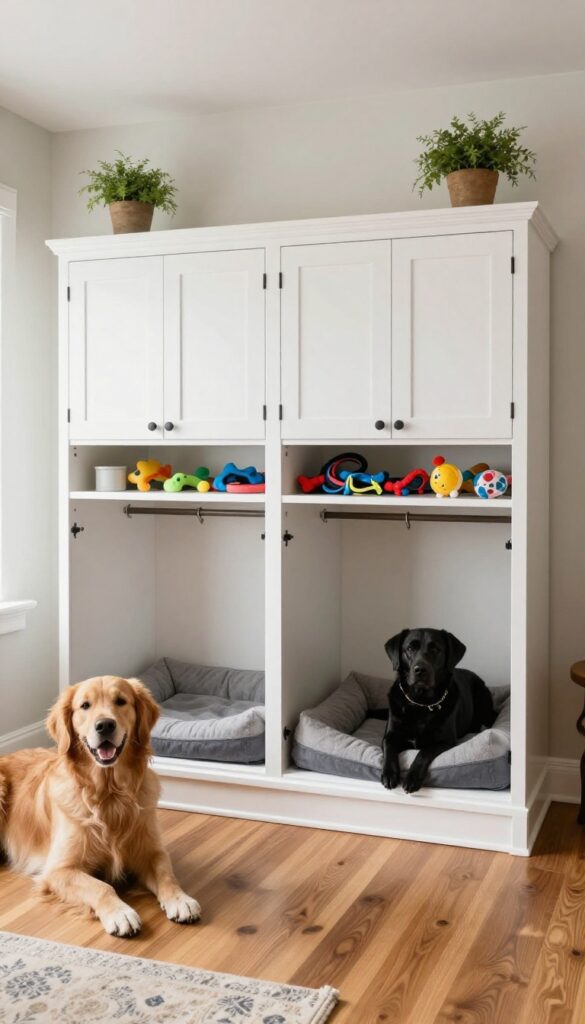
A furniture-style built-in that houses two crates side by side turns a functional necessity into a stylish home feature. With drawers or shelves above or below, it maximizes storage while giving each dog their own cozy den. Dog owners love how seamlessly it blends into living rooms or mudrooms, making crate training feel less like an eyesore and more like intentional design.
Why It Works
Having two separate crates prevents resource guarding and gives each dog a quiet retreat. The built-in look keeps crates from dominating the room, while the extra storage holds leashes, toys, and treats within arm's reach.
Best For
Great for households with two dogs that need their own space but don't mind being close. Fits best in larger living rooms, entryways, or mudrooms where you can dedicate a wall to the unit.
Practical Tip
Choose a finish that matches your existing trim or cabinetry so it feels like original millwork. Add a comfortable crate mat and leave the door open when not in use so dogs can come and go freely.
Budget-Friendly Option
If custom carpentry is out of budget, stack two identical wire crates in a heavy-duty shelving unit and add fabric curtains for a similar look at a fraction of the cost.
8. Double Dog House with a Shared Porch
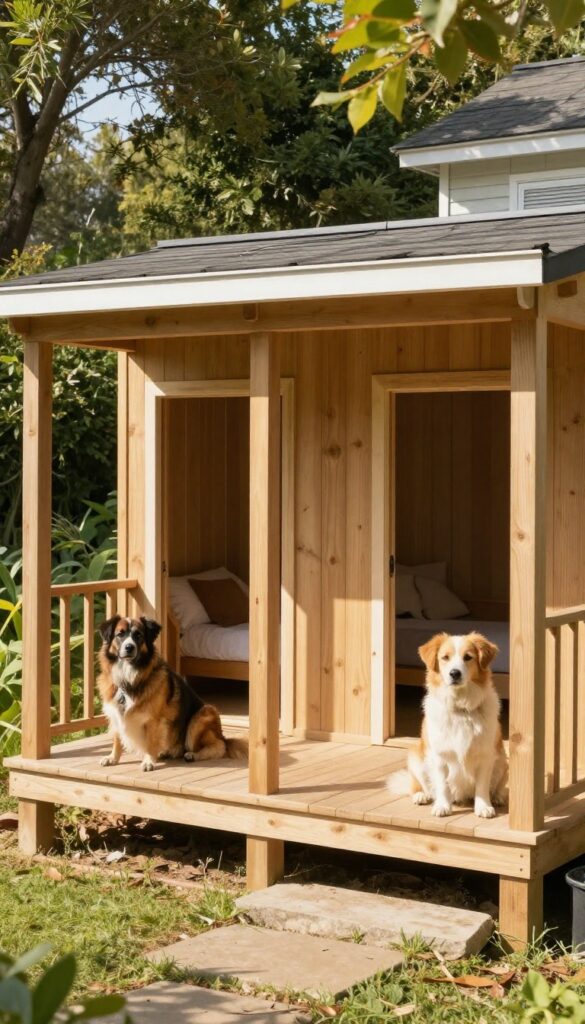
Picture this: two cozy bedrooms connected by a little front porch where your dogs can lounge side by side. This design gives each pup their own private sleeping nook while offering a shared hangout spot. It's like a duplex for dogs, and it works surprisingly well in real life.
The shared porch keeps them close without forcing them to share a bed. They can nap together in the sun or retreat to their own space when they need a break. Owners love how easy it is to clean—just sweep off the porch and wipe down each compartment.
Why It Works
Dogs are social but also territorial. A shared porch gives them that middle ground where they can interact on their own terms. It reduces squabbles over space while still encouraging bonding.
Plus, the covered porch protects them from rain and direct sun, so they can enjoy fresh air without getting soaked.
Best For
This setup is ideal for two dogs that get along well but have different sleeping habits—maybe one likes to burrow under blankets while the other sprawls out. It's also great for homes with a covered patio or deck where the dog house can sit protected from the elements.
Practical Tip
Use marine-grade plywood or pressure-treated lumber for the base and porch floor to resist rot and moisture. Add removable roof panels for easy access when cleaning each bedroom. Consider adding a small ramp if you have senior dogs or short-legged breeds.
Budget-Friendly Option
Skip expensive cedar and use exterior-grade plywood painted with non-toxic outdoor paint instead. You can also repurpose an old wooden pallet as the porch floor—just sand it smooth and seal it well.
9. Heavy-Duty Metal Double Kennel for Large Breeds
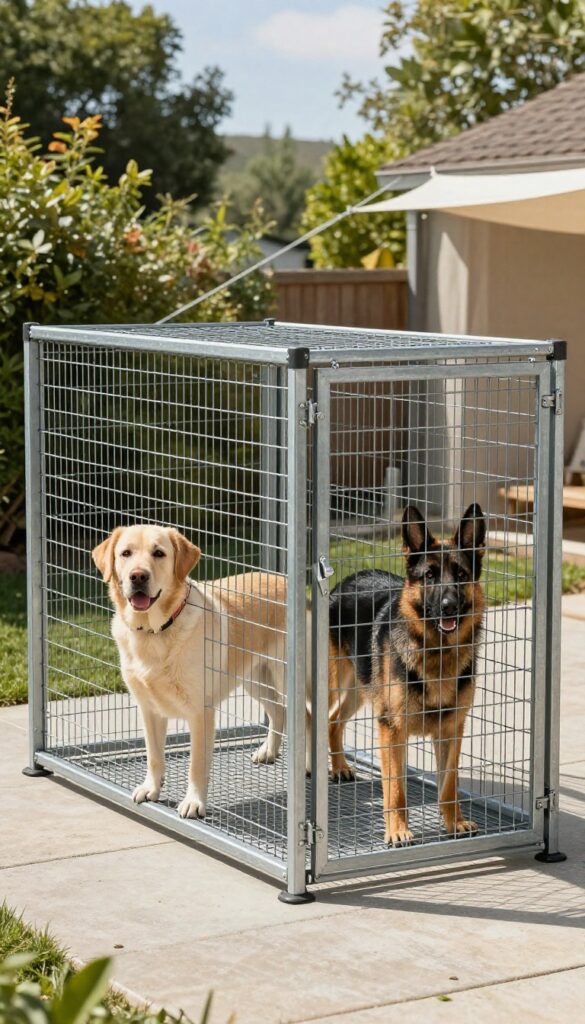
When your dogs are big and strong, a flimsy wooden house won't cut it. A heavy-duty metal double kennel offers two separate compartments with a shared outdoor run, giving each dog their own sleeping area while still allowing them to hang out together. The metal construction stands up to scratching, chewing, and weather, making it a long-lasting solution for energetic large breeds.
Why It Works
The steel frame and locking doors keep even determined escape artists secure. The raised floor improves air circulation and keeps dogs dry, while the weather-resistant coating prevents rust. Assembly is straightforward with basic tools, and the modular design lets you add panels if you need more run space.
Best For
Ideal for owners of large or strong dogs like Labrador Retrievers, German Shepherds, or Siberian Huskies who need a durable outdoor kennel that can handle rough play and harsh weather. Perfect for backyards where you want a permanent structure that's easy to clean with a hose.
Practical Tip
Place the kennel on concrete pavers or gravel to prevent mud buildup underneath. Add a shade cloth over the run area during hot months, and use elevated cots or thick crate mats in each compartment for extra comfort. Check the locking mechanism regularly to ensure it stays secure after repeated use.
10. Double Dog House with Removable Roof for Easy Cleaning
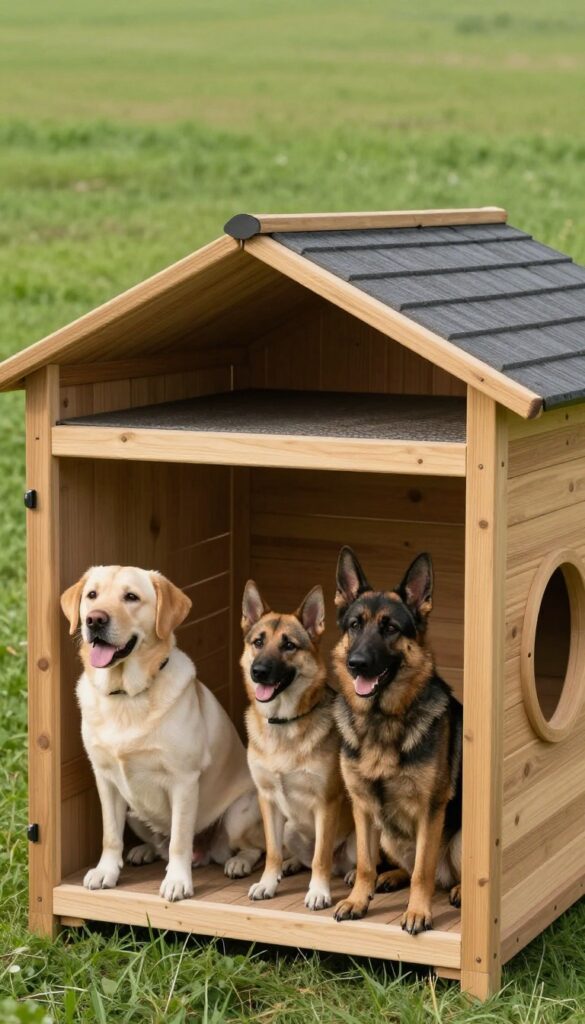
Cleaning a dog house can be a chore, especially when you have two dogs sharing the space. A removable roof solves that by giving you full access to both compartments—just lift it off and hose everything down. This design is all about practicality without sacrificing comfort or style.
A sloped roof helps water run off, keeping the interior dry, while non-slip flooring inside prevents accidents. It’s a simple upgrade that makes daily maintenance much easier.
Why It Works
The removable roof means you can reach every corner for thorough cleaning, reducing odors and bacteria buildup. Non-slip flooring adds safety for older dogs or those with joint issues. The sloped roof also prevents water pooling, extending the life of the house.
Best For
This design works great for outdoors in rainy climates or for dog owners who want a low-maintenance setup. It’s ideal for medium to large breeds that produce more mess, like Labradors or German Shepherds.
Practical Tip
Choose a lightweight but durable roof material like polycarbonate or treated plywood with weatherproof coating. Add a weather seal around the edges to keep drafts out. For the floor, use textured rubber mats or interlocking foam tiles that can be removed and washed separately.
Budget-Friendly Option
If you're on a tight budget, repurpose an old plastic storage bin with a lid as a temporary dog house—just cut out an entrance and hinge the lid so it lifts off. Not as durable but works in a pinch.
11. Heated Double Dog House for Cold Climates
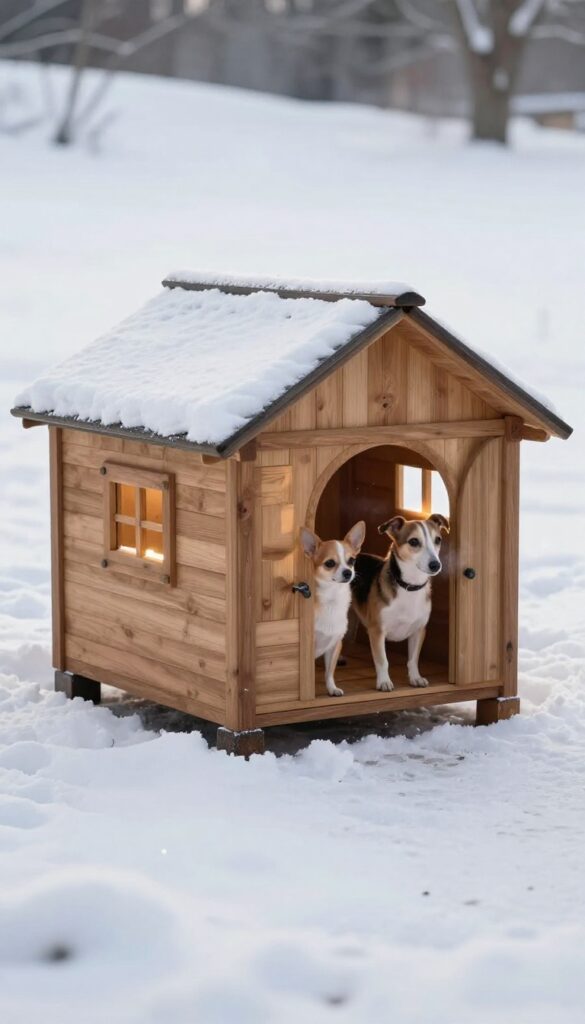
When temperatures drop, your dogs deserve a warm retreat. A heated double dog house combines insulation with a safe heating element, keeping both pups cozy even on freezing nights. Separate sleeping areas prevent heat loss when doors open and let each dog curl up in their own warm spot.
Why It Works
Dogs lose body heat quickly in cold weather, especially smaller breeds or those with short coats. A heated house maintains a consistent temperature without drafts, reducing the risk of hypothermia or joint stiffness. Thermostatic control ensures it stays warm but never too hot, giving you peace of mind.
Best For
Owners in northern climates with harsh winters, or for short-haired breeds like Chihuahuas, Greyhounds, or Dobermans that feel the cold easily. Also great for senior dogs with arthritis who need extra warmth.
Practical Tip
Place the house in a sheltered spot away from prevailing winds. Elevate it slightly off the ground to prevent moisture from seeping in. Use weatherproof extension cords rated for outdoor use and check them regularly for damage.
A flap over the door helps retain heat.
Budget-Friendly Option
If a pre-heated model is out of budget, buy an insulated dog house and add a self-warming pad (reflects body heat) or a microwavable pet-safe heating disk wrapped in a towel. Alternatively, use a heated pet bed with a chew-resistant cord inside a standard double dog house.
FAQ
How big should a double dog house be?
Measure your largest dog from nose to tail and add 6-12 inches for length, and from floor to top of head for height. For two dogs, double the width or add a divider. Each dog should be able to stand, turn around, and lie down comfortably.
Can two dogs share one dog house?
Yes, if they get along and the house is large enough. However, many dogs prefer their own space. A double dog house with a divider or separate compartments often works better to prevent conflicts.
What is the best material for a double dog house?
Wood is durable and insulating but requires maintenance. Plastic (like igloo houses) is easy to clean and weather-resistant. Metal is strong but can get hot or cold.
Choose based on your climate and your dogs' chewing habits.
How do I keep a double dog house clean?
Use removable bedding, washable mats, and a design with easy access (like a hinged roof or large door). Regularly sweep out dirt and hair, and disinfect with pet-safe cleaners. Good ventilation helps reduce odors.
Should I insulate a double dog house?
Yes, especially if you live in extreme temperatures. Insulation helps keep the house warm in winter and cool in summer. Use foam boards or reflective insulation, and ensure there's no exposed material your dogs can chew.
Conclusion
Finding the right double dog house comes down to your space, your dogs' personalities, and your budget. Whether you build a custom den under the stairs or buy a heated kennel, the goal is to give each pup a comfortable spot they can call their own. A little planning goes a long way.
Measure your dogs, think about cleanup, and choose materials that last. With the right setup, your two dogs can share a space happily—without stepping on each other's paws.

I’m Pallab Kishore, the owner of Little Pets Realm — an animal lover and pet care enthusiast sharing easy tips, healthy recipes, and honest advice to help every small pet live a happy, healthy, tail-wagging life.