
Small spaces and dog food storage often clash, leaving kibble bags spilling over and bowls scattered. You need smart solutions that fit tight corners without sacrificing accessibility for daily feeding routines.
This listicle offers ten cabinet ideas tailored to maximize every inch while keeping your pup's meals fresh and organized. From wall-mounted units that free up floor space to under-stair nooks that hide clutter, each option prioritizes safety and ease of use.
Think about materials that resist moisture and designs that prevent spills, ensuring a clean setup for both you and your dog. Whether you're in an apartment or a house with awkward angles, these practical ideas blend seamlessly into your home.
1. Wall-Mounted Cabinets for Floor Space Savings
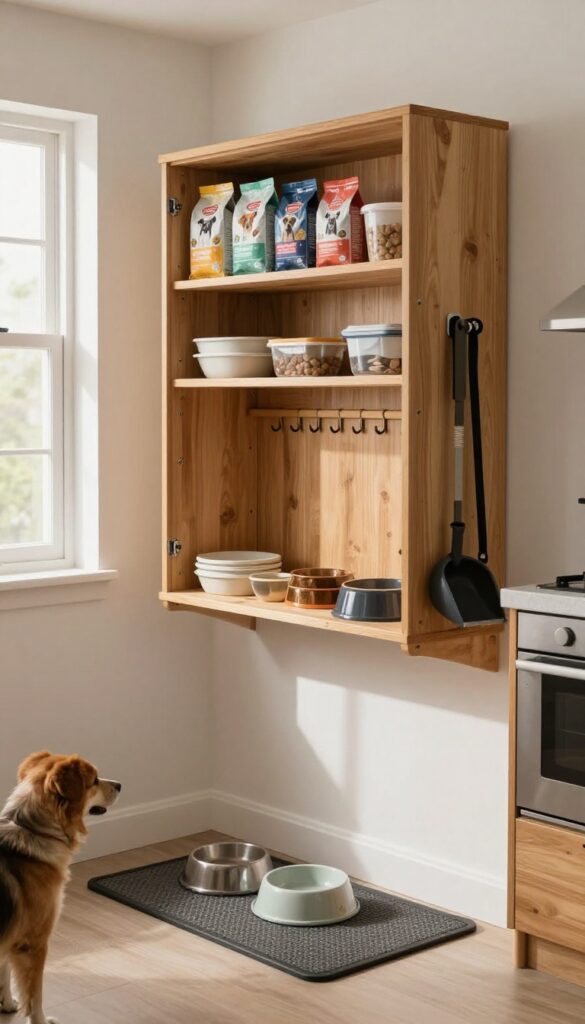
Tired of tripping over dog bowls or squeezing past bulky storage in a cramped kitchen? A wall-mounted cabinet lifts everything off the ground, creating a tidy feeding station that feels surprisingly spacious. It's a simple upgrade that keeps kibble and accessories within easy reach while clearing clutter from your floors.
Dog owners love this setup because it turns unused vertical space into functional storage, making small rooms feel more open and organized. Plus, having food and bowls up high can help deter curious pets from sneaking extra snacks when you're not looking.
Why It Works
This idea works by utilizing wall space that often goes unused, freeing up valuable floor area for movement or other furniture. It keeps dog food sealed and bowls stored neatly, reducing mess and making daily feeding routines smoother without taking up extra room.
Best For
Best for apartment dwellers or anyone with limited floor space, especially in studios or small kitchens. It's great for dogs of all sizes, as you can adjust the cabinet height to suit your pup's needs and keep things accessible.
Practical Tip
Mount the cabinet at a comfortable height for both you and your dog—aim for waist level to avoid bending too much. Use hooks inside for leashes or scoops, and consider adding a non-slip mat underneath bowls to catch spills and reduce noise during mealtime.
Budget-Friendly Option
If a new cabinet isn't in the budget, repurpose an old shelf or use sturdy brackets with a wooden plank painted to match your decor. You can add baskets or bins for storage instead of a full cabinet door.
2. Under-Stair Storage Nooks for Hidden Organization
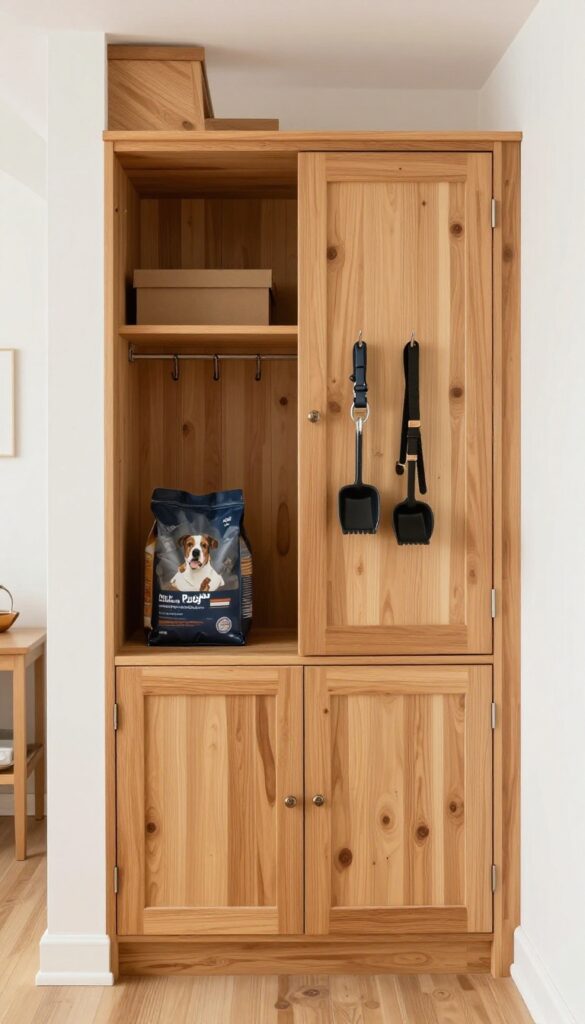
That awkward space under your stairs doesn't have to sit empty or collect dust. By adding a custom cabinet, you can transform it into a clever spot for storing dog food and supplies, keeping everything neatly tucked away. It's a favorite among dog owners because it maximizes unused areas in small homes, making clutter disappear while keeping essentials within easy reach.
Why It Works
This setup works well because it capitalizes on often-wasted vertical and horizontal space, fitting snugly into tight layouts without taking up extra room. A well-built cabinet with secure doors prevents spills and keeps food fresh, while the hidden nature reduces visual mess in living areas.
Best For
Ideal for apartment dwellers or homeowners with limited floor space, especially those with medium to large dog breeds that require bulkier food bags. It suits anyone wanting a discreet storage solution that blends into their home's architecture.
Practical Tip
Opt for moisture-resistant materials like sealed wood or plastic to protect against humidity and spills. Add hooks inside for leashes or scoops, and consider a sliding door if swing space is tight to ensure smooth access during feeding times.
Budget-Friendly Option
If a custom build isn't feasible, repurpose an old bookshelf or use stackable bins under the stairs. Just make sure they're sturdy and have lids to keep pests out and maintain organization on a budget.
3. Multi-Functional Furniture with Built-In Compartments
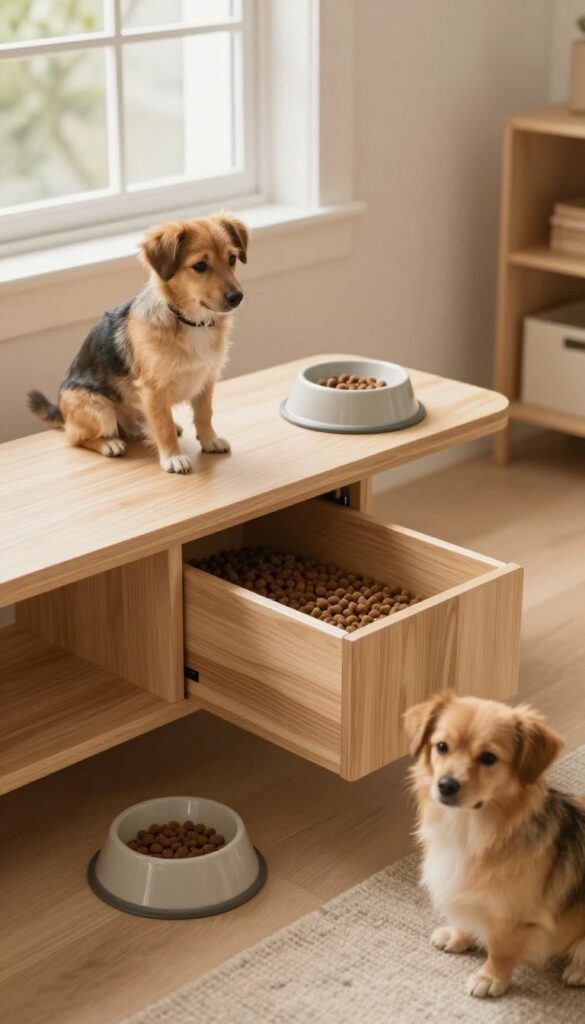
Ever notice how dog food bags can take over a corner of your living room? Multi-functional furniture solves that by hiding kibble in plain sight. Think of a stylish bench or side table that doubles as storage, keeping everything tidy without extra clutter.
These pieces blend seamlessly into your home decor, so you don't sacrifice style for practicality. Dog owners love how they make feeding time easier while maintaining a clean, organized space.
Why It Works
Built-in compartments keep dog food secure and fresh, away from pests and moisture. The furniture's design often includes easy-access lids or drawers, so you can grab kibble quickly during busy mornings or evenings.
Best For
This idea fits apartment dwellers or anyone with limited floor space. It's great for small to medium dogs where bulk storage isn't needed, and works well in living rooms or entryways.
Practical Tip
Place the furniture near your dog's feeding area for convenience. Choose materials like wood or metal that are easy to wipe clean, and ensure lids close tightly to prevent spills and keep odors contained.
Budget-Friendly Option
Look for second-hand furniture at thrift stores or online marketplaces; you can often find benches or tables with hidden storage at a lower cost. Alternatively, repurpose an old trunk or chest with a sealable interior.
4. Rolling Carts for Flexible Feeding Stations
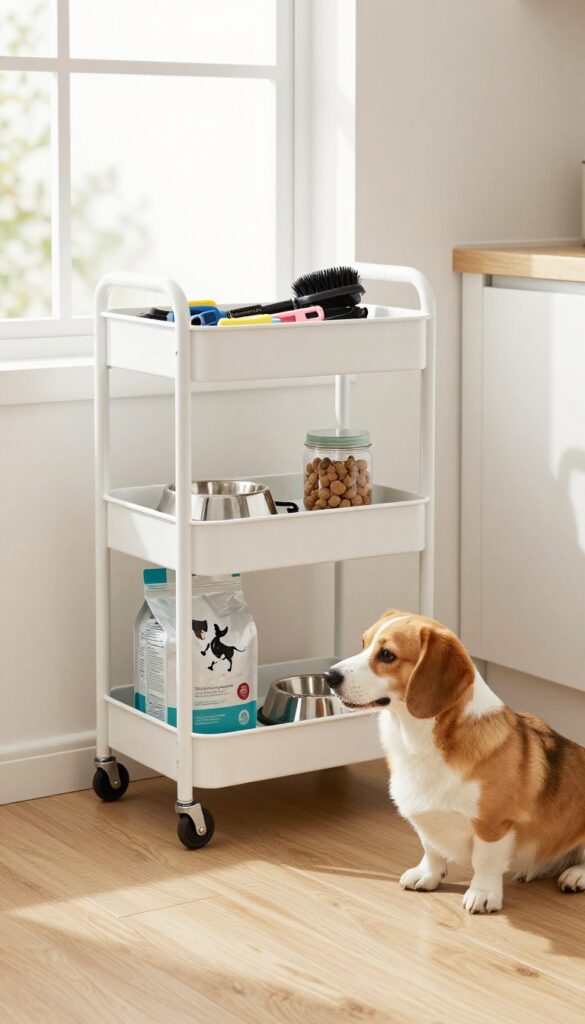
Imagine a storage solution that glides across your floor, adapting to your dog's mealtime needs without taking up permanent space. Rolling carts with shelves offer a mobile hub for kibble, treats, and bowls, making them perfect for apartments where every inch counts. Dog owners love how these carts can tuck away when not in use or roll right to the feeding spot, keeping things tidy and accessible.
Why It Works
This setup works because it combines storage with mobility. You can store all your dog's food supplies in one spot and move it as needed—like from a kitchen corner to a dining area during meals. It prevents clutter buildup and makes feeding routines smoother, especially in tight spaces where flexibility is key.
Best For
This idea fits best for apartment dwellers or anyone with limited floor space who needs versatile storage. It's great for small to medium breeds where feeding areas might shift daily, or for multi-dog households that benefit from a centralized, movable station.
Practical Tip
Opt for a cart with sturdy wheels and non-slip surfaces to prevent tipping or spills. Place heavier items like full food bags on the bottom shelf for stability, and use bins or containers on upper shelves to organize treats and accessories. Keep it clean by wiping down regularly to avoid crumbs or moisture buildup.
Budget-Friendly Option
If you're on a tight budget, repurpose an old rolling cart from a garage sale or thrift store—just give it a good clean and maybe add some baskets for organization. Alternatively, use a basic utility cart from hardware stores, which often costs less than specialized pet furniture.
5. Corner Cabinets to Utilize Awkward Spaces
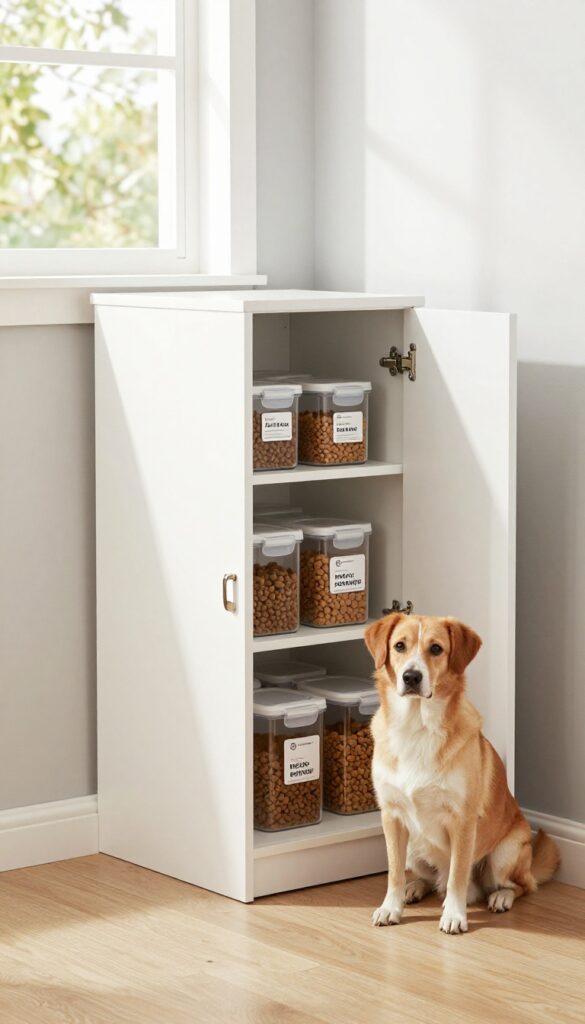
Corners in small rooms often get overlooked, but they're perfect for tucking away a dog food cabinet without eating up valuable floor space. By installing a corner unit, you can transform an unused nook into a functional storage spot that keeps kibble fresh and accessible. Dog owners love how this idea maximizes every inch, making feeding routines smoother and rooms feel less cluttered.
Why It Works
Corner cabinets fit snugly into tight angles, so they don't block pathways or interfere with daily movement. They provide ample storage for bags or bins of dog food while keeping everything organized and out of sight. This setup helps maintain a clean, safe environment by reducing tripping hazards and preventing spills in high-traffic areas.
Best For
This idea works great for apartment dwellers or anyone with limited square footage who needs to optimize storage. It's ideal for small to medium-sized dogs where food quantities are manageable, and it suits homes with awkward corners in kitchens, laundry rooms, or entryways that otherwise go unused.
Practical Tip
Choose a cabinet with a secure latch to keep curious pups from getting into the food. For easy access during feeding times, consider adding pull-out shelves or bins inside. Place it at a comfortable height to avoid bending over, and use moisture-resistant materials to protect against humidity and spills.
Budget-Friendly Option
If a custom corner cabinet is too pricey, repurpose an old bookshelf or small wardrobe by angling it into the corner. Add some baskets or airtight containers inside to organize the dog food neatly. A simple curtain or door can hide the storage while keeping costs low.
6. Over-the-Door Organizers for Quick Access
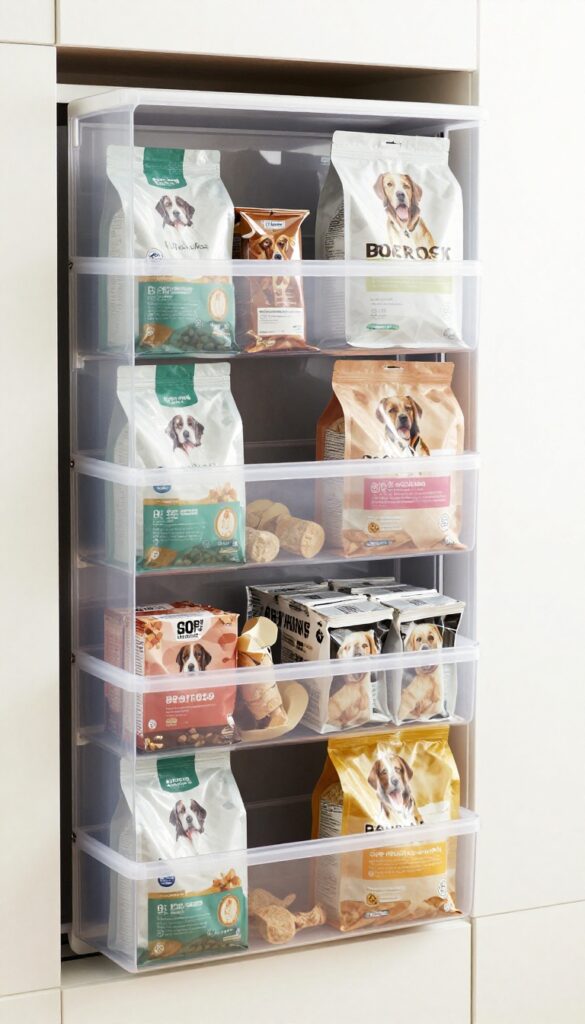
Hang an over-the-door organizer on a pantry or closet door to store small bags of dog food and treats, keeping them handy without taking up shelf space. This clever trick uses vertical real estate you might not have considered, turning an often-wasted area into a functional storage spot. Dog owners love how it keeps kibble within easy reach for daily feeding, all while maintaining a tidy look in tight quarters.
Why It Works
It works because doors offer unused vertical space that doesn't interfere with floor or shelf areas. The pockets or shelves in these organizers hold bags securely, preventing spills and keeping food fresh. Plus, it's a breeze to install and adjust as your storage needs change.
Best For
This idea fits best for apartment dwellers or anyone with limited kitchen or pantry space. It's great for small to medium dog breeds where food bags are manageable in size, and for owners who prefer quick grab-and-go access during busy mornings or evenings.
Practical Tip
Choose an organizer with clear pockets or labels so you can easily see what's inside. Mount it at a height that's comfortable for you to reach without straining, and ensure the door can still close properly to avoid damage. For safety, check that the organizer is sturdy enough to hold the weight without sagging.
Budget-Friendly Option
If you're on a tight budget, repurpose a shoe organizer with pockets—they often work just as well for storing smaller bags of dog food. Look for second-hand options online or at thrift stores to save money while still getting the job done.
7. Stackable Bins in Closets for Bulk Storage
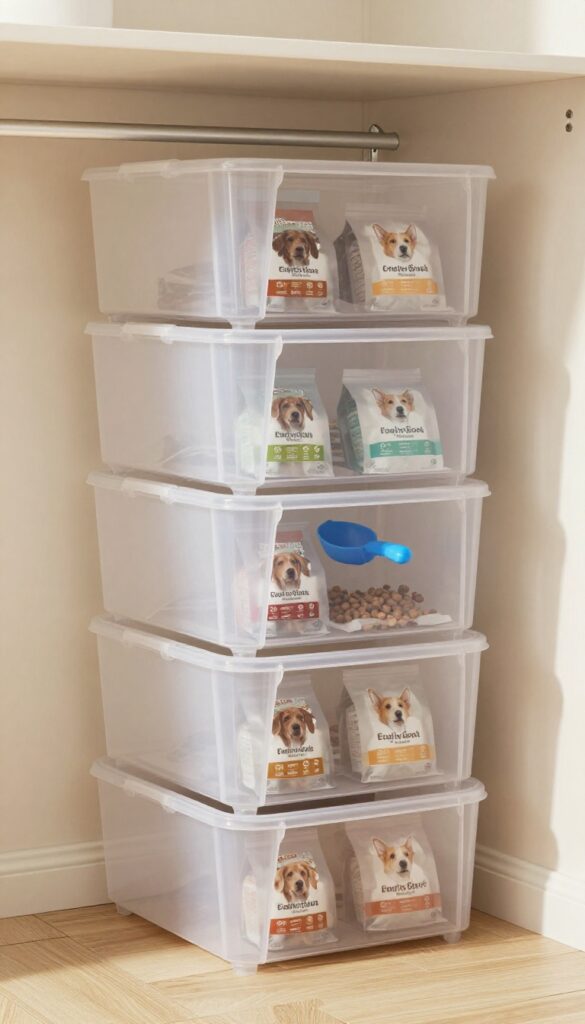
Closets often hold more potential than we realize, especially when it comes to taming bulky dog food bags. By sliding in stackable bins, you can transform that underused space into a neat storage hub that keeps kibble sealed and pests at bay. Dog owners love how this setup declutters their homes while making meal prep quick and mess-free.
Why It Works
Stackable bins maximize vertical space efficiently, allowing you to store multiple bags without wasting floor area. Their tight lids lock in freshness and prevent spills, so your dog's food stays safe from moisture and critters. This simple system turns a cluttered corner into an organized spot that's easy to access daily.
Best For
This idea fits apartment dwellers or anyone with limited square footage who buys dog food in bulk. It's great for medium to large breed owners needing to stash bigger bags, and works well in homes with spare closets or pantry nooks. If you're tired of tripping over kibble sacks, this keeps things tidy without a major renovation.
Practical Tip
Choose clear or labeled bins so you can see inventory at a glance, and opt for sturdy materials like plastic that resist odors. Place heavier bags on bottom bins for stability, and keep a scoop nearby for easy feeding. Regularly wipe down bins to prevent dust buildup and ensure your dog's meals stay fresh.
8. Custom-Built Shelving with Pet-Safe Materials
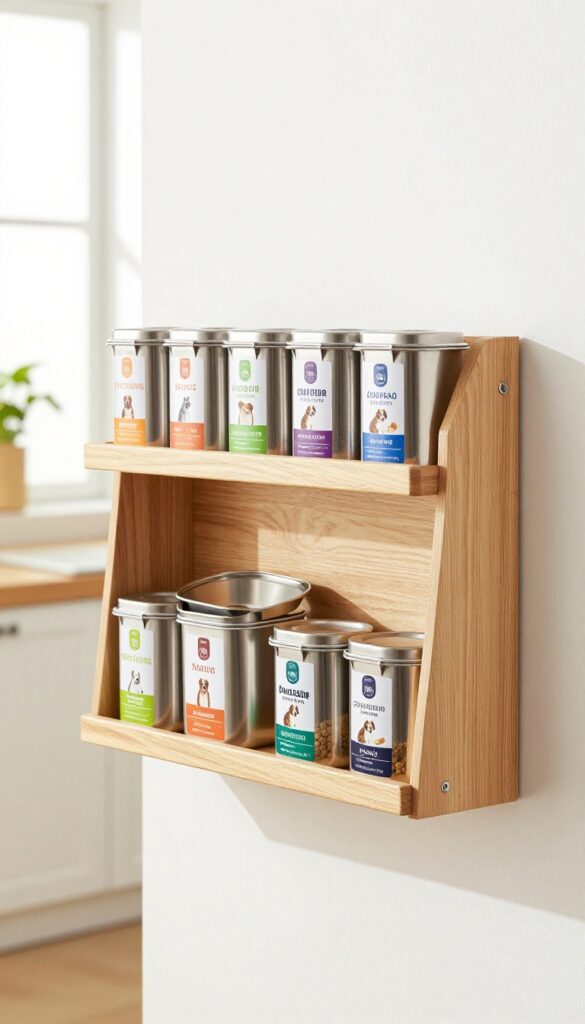
Tired of bulky dog food bags cluttering your small space? Custom-built shelving offers a sleek, tailored solution that fits right into your home's layout. By designing shelves at a safe height, you can store kibble securely while keeping it easily accessible for daily feeding.
Dog owners love this approach because it maximizes vertical space and uses durable, non-toxic materials to protect their pet's health in compact living areas.
Why It Works
This idea works because custom shelves can be sized precisely for your dog food containers, eliminating wasted space and reducing spill risks. Using pet-safe materials like untreated wood or stainless steel ensures no harmful chemicals leach into the food, keeping your pup healthy. The elevated design also helps prevent pests and moisture buildup, maintaining freshness longer.
Best For
It's best for apartment dwellers or homeowners with limited floor area who want a permanent, organized storage spot. This setup suits any dog breed, especially in homes where safety and cleanliness are top priorities. If you enjoy DIY projects or have specific nooks to fill, custom shelving adapts perfectly to your needs.
Practical Tip
Install the shelves at a height that's easy for you to reach but out of your dog's jumping range to avoid accidents. Add labels or clear bins to quickly identify food types and expiration dates. For extra safety, secure the shelves firmly to the wall and choose rounded edges to prevent injuries during setup or cleanup.
Budget-Friendly Option
If hiring a carpenter isn't in your budget, use ready-made floating shelves from a hardware store and finish them with non-toxic paint or sealant. Repurpose old bookshelves by adjusting the shelves to fit dog food containers and lining them with pet-safe materials like food-grade liners.
9. Converted Bookshelves for Stylish Displays
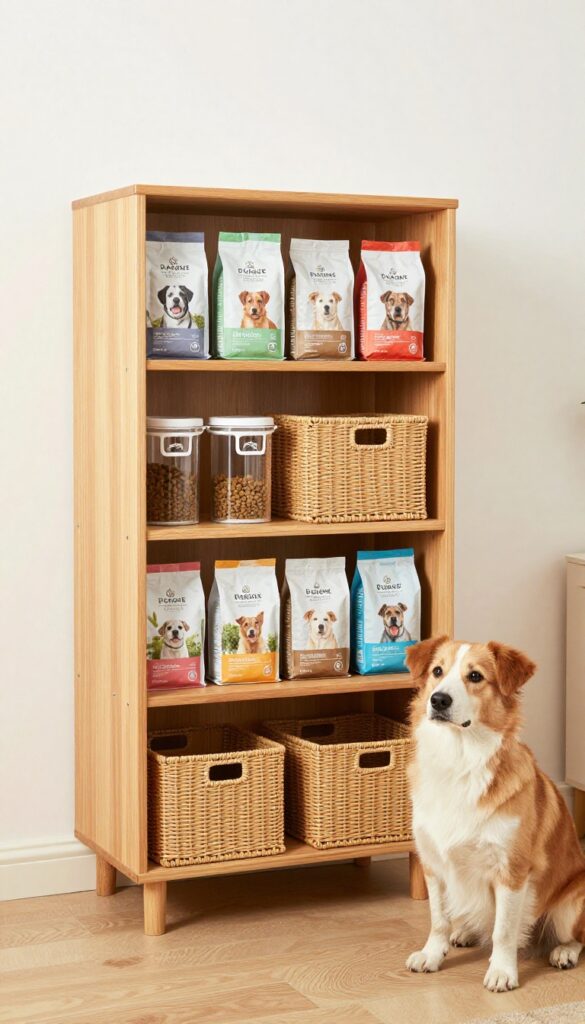
Got an old bookshelf gathering dust? Turn it into a chic dog food station that blends right in with your decor. By adding baskets or containers, you create a neat storage spot that keeps kibble accessible and looks great in any room.
This setup works because it uses vertical space smartly, freeing up floor area in tight spots. Dog owners love how it transforms clutter into something functional and attractive, making feeding time feel more organized.
Why It Works
Bookshelves offer sturdy shelves at different heights, perfect for holding heavy dog food bags or containers without tipping over. The open design lets you see what you have at a glance, so you never run out unexpectedly, and it encourages regular cleaning to keep things tidy.
Best For
This idea suits apartment dwellers or anyone with limited floor space who wants a storage solution that doesn't look out of place. It's great for small to medium-sized dogs, as the shelves can handle typical bag sizes without straining the structure.
Practical Tip
Choose baskets with handles for easy lifting and opt for airtight containers to keep food fresh and deter pests. Place the bookshelf near your feeding area to streamline mealtime, and secure it to the wall if you have an energetic pup to prevent accidents.
Budget-Friendly Option
If new baskets are too pricey, repurpose old storage bins or use fabric-lined cardboard boxes. You can also paint a thrifted bookshelf to match your home's color scheme, giving it a fresh look without spending much.
10. Outdoor Storage Boxes for Balcony or Patio Use
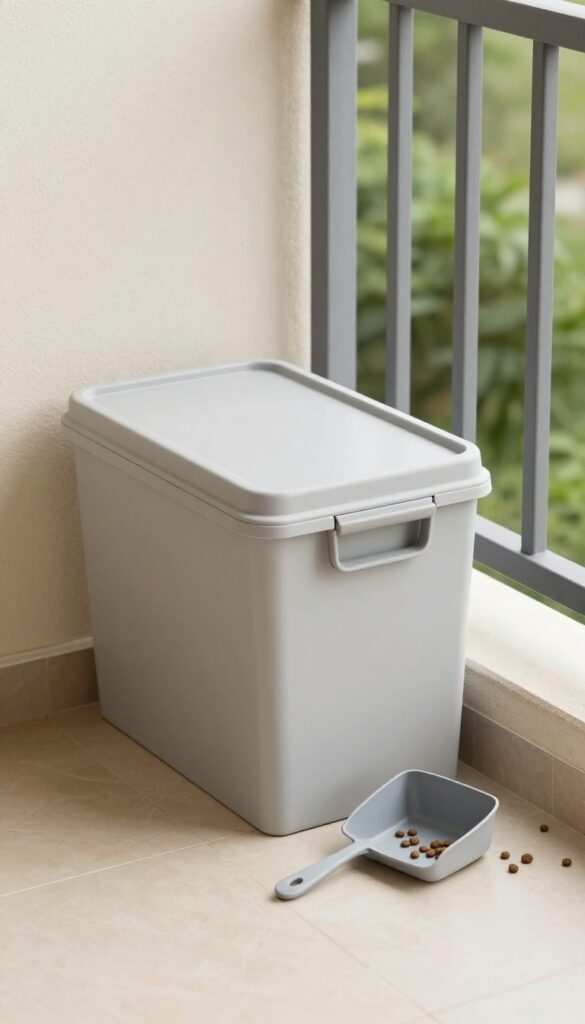
Balconies and patios offer a clever spot to stash dog food, keeping it out of your living area. A weather-resistant storage box placed outside can hold kibble securely, freeing up precious indoor space. Many dog owners love this idea because it keeps food dry and accessible without cluttering their homes.
Why It Works
These boxes are designed to withstand rain, sun, and wind, protecting dog food from moisture and pests. They often come with tight-sealing lids to lock in freshness and prevent spills. This setup ensures your pup's meals stay safe while you gain extra room inside.
Best For
This idea fits apartment dwellers or anyone with a small balcony or patio. It's great for dogs of all breeds, especially if you feed larger bags that take up too much floor space indoors. It works well in urban settings where every square foot counts.
Practical Tip
Choose a box with a sturdy latch to keep curious critters out. Place it in a shaded corner to shield it from direct sunlight, which can degrade food quality. Add a small scoop inside for easy feeding, and clean the box regularly to avoid odors.
Budget-Friendly Option
If you're on a tight budget, repurpose an old plastic bin with a tight lid instead of buying a new storage box. Just make sure it's waterproof and durable enough for outdoor conditions. You can even decorate it with pet-safe paint to match your outdoor decor.
FAQ
How do I choose the right cabinet size for my dog's food?
Measure your dog food bags and consider how much you store at once; opt for a cabinet that fits your supply without wasting space, ensuring it's easy to access in your small area.
Are there safety tips for storing dog food in cabinets?
Yes, keep cabinets at a height your dog can't reach to prevent overeating, use airtight containers to maintain freshness, and avoid placing heavy items above to prevent accidents.
Can I use these ideas in an apartment?
Absolutely, many ideas like wall-mounted cabinets or rolling carts are designed for apartments, helping you maximize limited space without permanent changes.
What materials are best for dog food storage cabinets?
Choose durable, non-toxic materials like wood or metal that resist moisture and pests, ensuring they're easy to clean and safe for your pet's environment.
How can I make a storage cabinet blend with my home decor?
Select cabinets that match your style, such as painted units or furniture with hidden storage, and use decorative baskets or labels to keep it looking neat and integrated.
Conclusion
Finding the right dog food storage cabinet for a small space doesn't have to be a challenge. With these ideas, you can create an organized feeding area that works for your home and your pet. Remember to prioritize safety and accessibility in your setup.
A little planning goes a long way in keeping your space tidy and your dog happy. Start with one solution that fits your needs and build from there.

I’m Pallab Kishore, the owner of Little Pets Realm — an animal lover and pet care enthusiast sharing easy tips, healthy recipes, and honest advice to help every small pet live a happy, healthy, tail-wagging life.