
A lot of grooming problems start with using the wrong brush, not with the dog’s coat itself. People blame shedding, knots, or “bad fur,” then keep dragging the same useless tool through everything like it somehow deserves a second chance.
The right brush makes grooming faster, gentler, and way less annoying for both of you. It also keeps loose hair under control, helps the coat sit better, and saves you from turning every brushing session into a small wrestling match.
Start With the Coat Type, Not the Brush Aisle
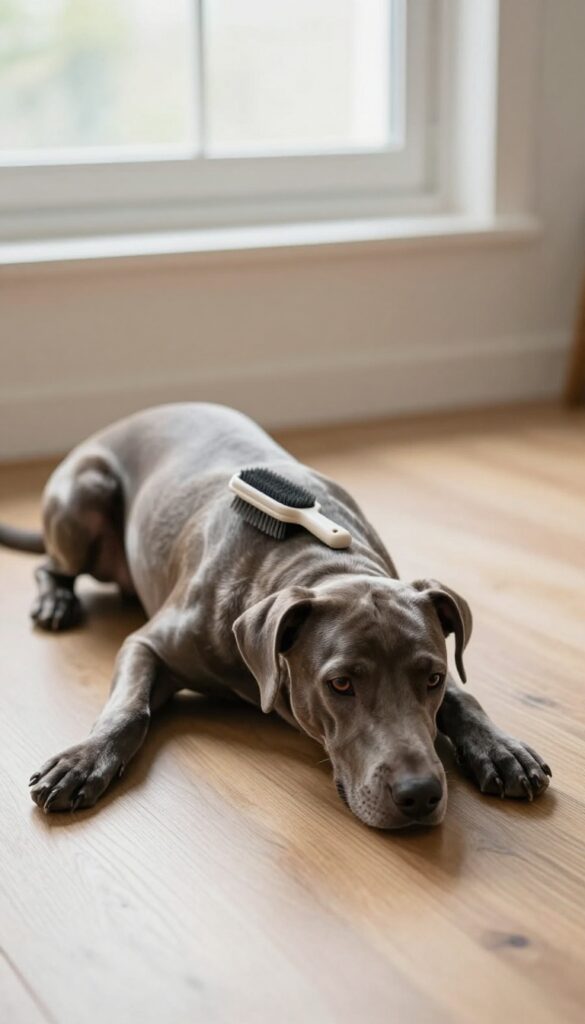
Most people shop for dog brushes backward. They look at a cute package, see words like “de-shedding” or “professional,” and buy first, then try to make that brush work on a coat it was never built for.
A short, smooth coat needs a very different kind of grooming than a curly coat, a double coat, or a long silky coat. That sounds obvious, but I’ve seen plenty of owners use a slicker brush on a tight, short coat and wonder why the dog acts offended, which honestly feels fair.
Before picking any tool, look at how the coat behaves instead of how it looks in one photo. Ask simple things like whether the hair mats easily, whether it sheds in handfuls, whether it feels dense near the skin, and whether it grows in curls, waves, or flat layers.
That little check tells you more than brand names ever will. A brush should match the structure of the coat, because brushing only the top layer while leaving loose hair, tangles, or compacted undercoat underneath just wastes time.
Dogs usually fall into a few practical coat groups that make brush choice easier. Smooth coats need light grooming, double-coated dogs need tools that reach the undercoat, long coats need detangling support, wiry coats need control without over-softening, and curly coats need regular line brushing to stop mats from building near the skin.
Breed can help, but it should not control the whole decision. Two dogs from the same breed can have different coat density, length, and texture, especially with doodles, mixes, and dogs whose coats changed after adulthood, so I always trust the actual fur in front of me more than the breed label.
What Each Common Brush Actually Does
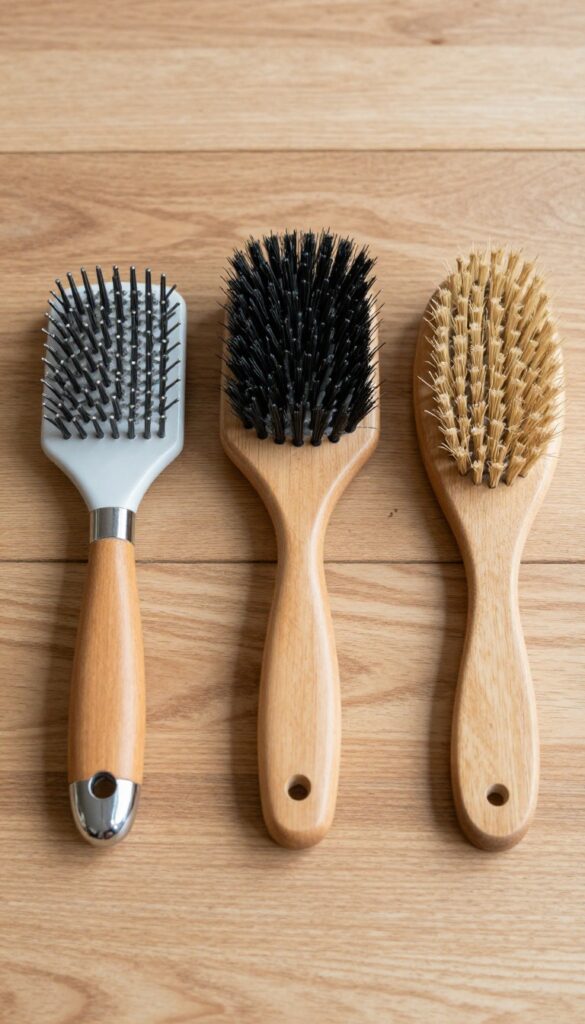
The slicker brush gets recommended constantly, and for good reason. It handles tangles, removes loose hair, and works especially well on medium to long coats, curly coats, and dogs that mat easily, but it needs a light hand because those fine pins can irritate skin fast.
A pin brush looks softer and more harmless, and in many cases it is. It works best for long, silky, or drop coats because it glides through the hair, helps separate strands, and tidies the coat without grabbing aggressively like a slicker sometimes does.
Bristle brushes suit short-haired dogs better than people think. They do not dig deep into thick coats, but they lift dirt, spread natural oils, and make smooth coats look cleaner and shinier, which is why they work nicely for dogs like Beagles, Boxers, and similar coat types.
Rubber grooming brushes or curry-style tools shine on short coats and heavy shedders. Dogs often love the feel of them, and they pull off loose hair surprisingly well, so they can turn grooming into something closer to a massage and less like an official complaint session.
Undercoat rakes and de-shedding tools do a different job from everyday brushes. They target dense undercoat in dogs like Huskies, German Shepherds, Golden Retrievers, or similar fluffy chaos machines, and they help during shedding season when hair starts appearing in places that make no sense.
Combs matter more than most owners think, and I’d argue a good metal comb tells the truth better than almost any brush. A brush can make a coat look neat on top, but a comb will expose hidden mats behind the ears, in the armpits, around the collar area, and near the tail where trouble loves to hide.
Choosing the Best Brush for Short, Medium, and Long Coats
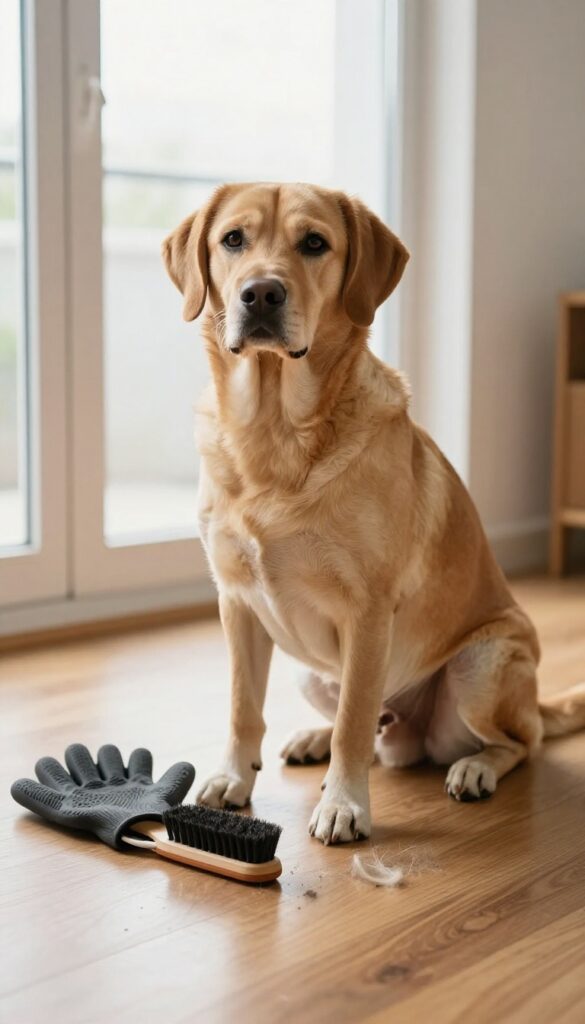
Short-coated dogs usually need less force and more consistency. A rubber brush, grooming glove, or soft bristle brush often works best because these coats do not need heavy detangling, but they still collect loose hair, dust, and dander that end up on the couch five minutes later.
For short coats that shed a lot, I like rubber grooming tools more than stiff brushes. They grab loose hair well, feel comfortable on the dog, and make regular grooming easier to keep up with, which matters because the best brush in the world means nothing if it stays in a drawer.
Medium coats create more confusion because they sit right in the middle. Some need basic weekly brushing with a slicker or pin brush, while others hide a dense undercoat underneath and need a mix of tools, so this coat length usually asks for a little observation instead of lazy guessing.
Long coats need a brush that detangles without yanking and a comb that checks your work. A pin brush often handles daily maintenance well, but if the dog mats easily, a slicker brush and metal comb usually do the real heavy lifting together.
Silky coats need gentleness more than aggression. You want a tool that keeps the coat flowing and separated, not one that tears through it like it has a personal grudge, so soft pin brushes and wide-to-fine combs usually make more sense than harsh de-shedding gear.
Longer feathering on legs, tail, and chest also changes what you need. Even dogs with moderate body length can need extra detangling in those zones, which is why I never choose a brush only by overall coat length and ignore the areas where knots actually form.
Double Coats, Curly Coats, and Coats That Love to Misbehave
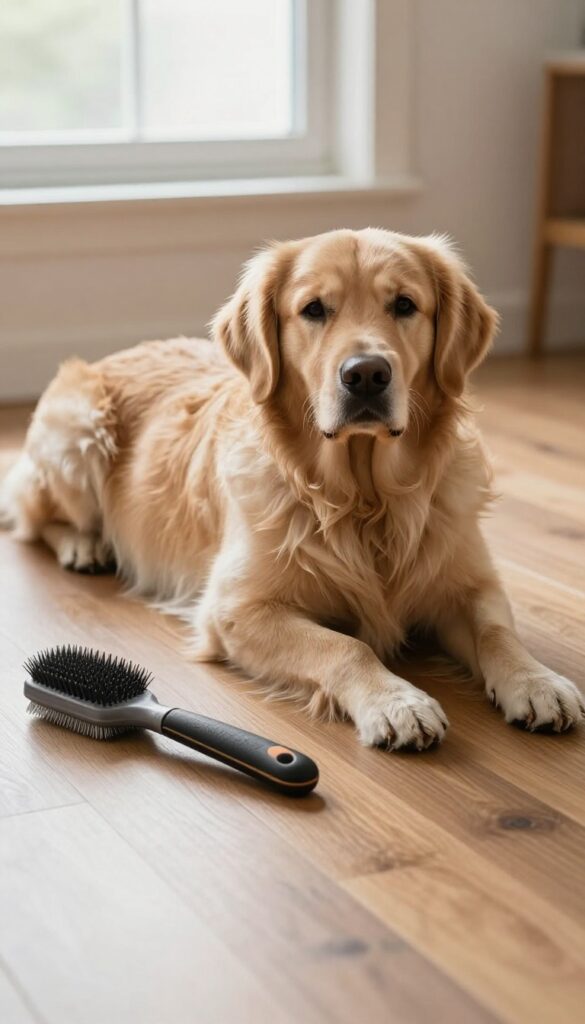
Double-coated dogs need tools that reach beyond the surface. If you only brush the top layer, the coat may look fluffy and nice for a day, but loose undercoat stays trapped underneath and starts forming compacted patches that make the dog hotter, dirtier, and harder to groom later.
For those dogs, a slicker brush paired with an undercoat rake usually makes the most sense. The slicker clears surface tangles and loose hair, while the rake reaches deeper into the dense undercoat, and together they do a much better job than one trendy tool trying to act like a miracle worker.
Curly and wavy coats bring a different challenge because mats can hide close to the skin. A dog can look fluffy on the outside and still have tight tangles underneath, which is why doodles fool people all the time and then suddenly end up needing a full shave nobody wanted.
For curly coats, I always lean toward a quality slicker brush and a sturdy metal comb. The brush opens the coat, and the comb confirms whether you actually got through it, because if the comb cannot pass from skin to tip, the brushing job is not done no matter how pretty the top looks.
Wiry coats need control without flattening or damaging their texture. A pin brush, slicker, or comb may help with maintenance depending on the dog, but you usually want to avoid overdoing softening tools if you care about preserving that rough, crisp feel.
Then there are mixed coats, which love making simple shopping impossible. A dog might have a soft body coat, feathery legs, a fluffy tail, and a dense neck all at once, so in real life, a two-tool setup often works better than chasing one brush that promises to do everything and quietly does half the job.
Signs a Brush Is Wrong for Your Dog
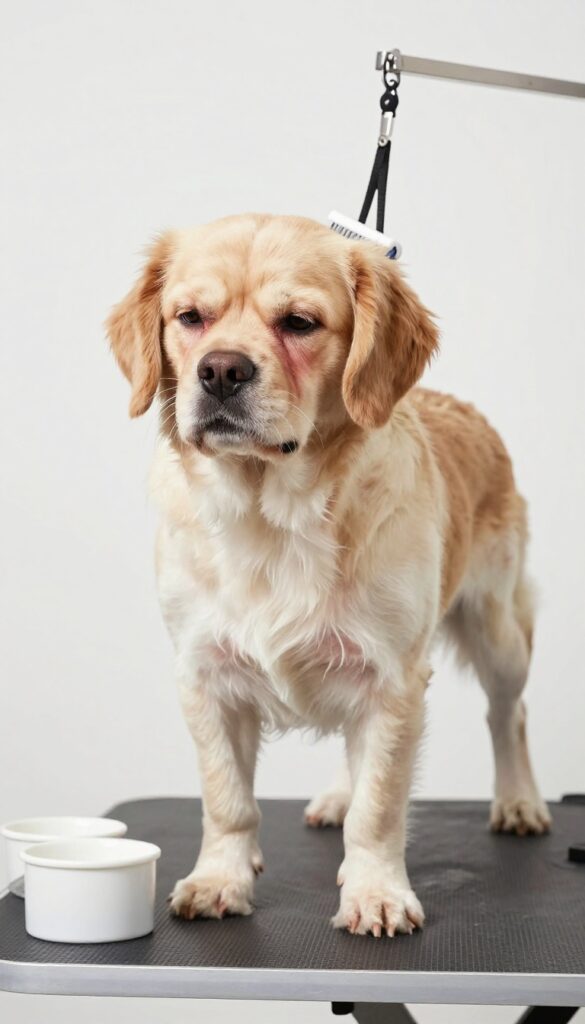
The biggest clue shows up in your dog’s reaction. If the dog pulls away, flinches, avoids the brush, or starts acting stressed every single time, do not assume the dog just “hates grooming” because sometimes the brush feels terrible and the dog has already filed that complaint very clearly.
Skin redness after brushing is another red flag. A good brush removes hair and tangles without scraping the skin raw, so if you see irritation, too much scratching afterward, or obvious discomfort, either the brush type is wrong, your pressure is too heavy, or both decided to team up against you.
Another sign appears when the brush seems busy but gets nothing done. You brush for ten minutes, hair still flies everywhere, the coat still feels rough, and mats stay put like they signed a lease, which usually means the tool is only skimming the top and missing the real issue.
Some brushes create breakage instead of progress. If hair starts snapping, the coat looks frizzy after grooming, or the dog’s feathering looks thinner over time, you may be using pins that are too harsh, brushing dry tangles too aggressively, or forcing a de-shedding tool where it does not belong.
A wrong brush also wastes your time by creating false confidence. The coat looks smooth on the surface, but when you run a comb underneath, it catches everywhere, and that is the exact moment when many owners realize they have basically been styling the problem instead of solving it.
Pay attention to how much effort you need every session. Brushing should take some work, sure, but it should not feel like trying to drag a fork through a winter blanket, and when it does, I usually stop blaming the coat and start blaming the tool choice.
How to Test a Brush Before Fully Committing
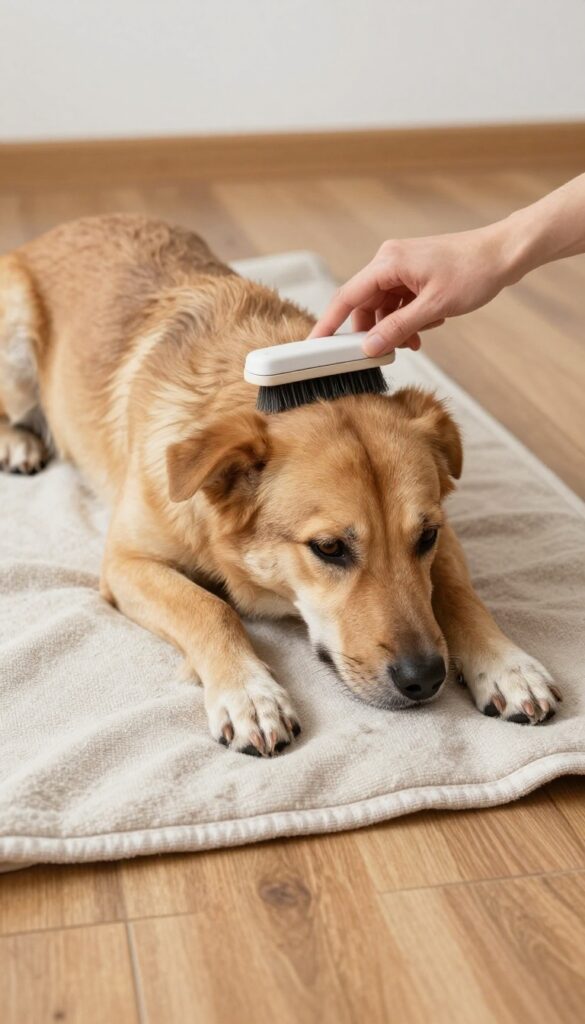
Start small and brush one easy area first, like the shoulder or side of the body. That gives you a clean test zone where you can feel how the brush moves, check your dog’s reaction, and see whether it lifts loose hair, glides through, or snags immediately.
Use light pressure on the first pass. A lot of people judge a brush too fast while pressing way too hard, and then the brush gets blamed for pain that really came from overenthusiastic human behavior, which happens more often than anyone likes to admit.
After a minute or two, inspect the coat with your fingers and then with a metal comb if you have one. You want the coat to feel cleaner, lighter, and more separated, and the comb should move through without catching badly if the brush actually suits the job.
Watch the skin and the dog’s mood right away. If the skin stays calm and the dog remains relaxed, that is a strong sign you are close to the right tool, but if the dog stiffens or the skin looks irritated, I would stop there instead of pushing through like stubbornness counts as technique.
Try the brush in a problem area next, not just the easy zone. Behind the ears, the chest, the tail base, the pants, and the armpits usually reveal the truth fast, because some brushes look great on open body coat and completely fail where real tangles and trapped undercoat live.
Give the tool a couple of sessions before making a final call, but do not stretch the experiment forever. A suitable brush usually proves itself pretty quickly by making grooming easier, more effective, and less dramatic, and if every session feels like the same mess in a slightly different outfit, move on.
Why Technique Matters Almost as Much as the Brush
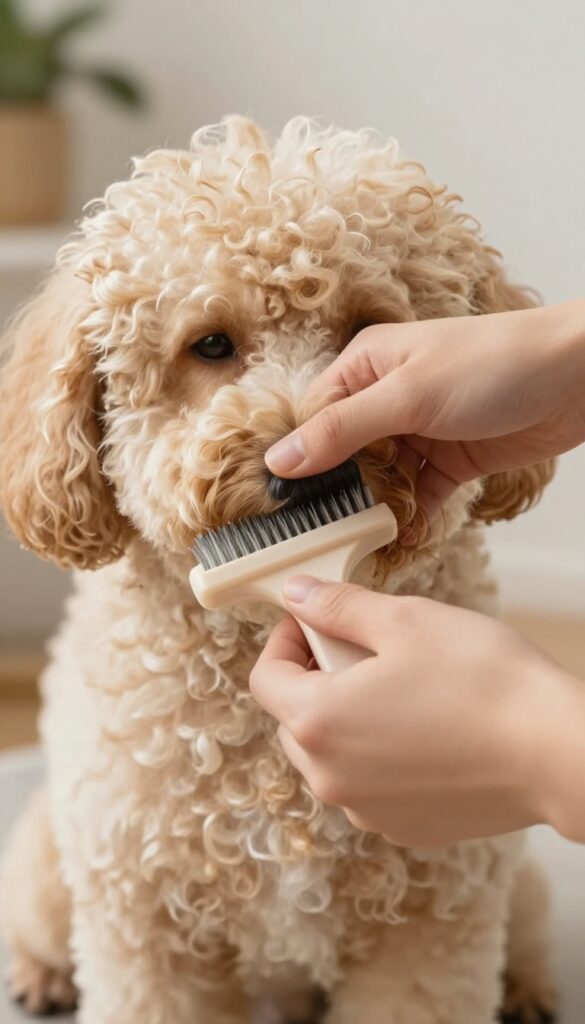
Even the best brush can turn into a bad experience with rough technique. Fast, careless strokes, random yanking, and brushing only the visible top layer will make grooming harder no matter how much money you spent on the tool.
Short strokes usually work better than long, dramatic ones. They give you more control, reduce pulling, and help you work through small sections properly, especially on curly, long, or dense coats where hidden tangles love waiting under the surface like tiny little traps.
Line brushing makes a huge difference on coats that mat. You part the hair, brush one layer at a time from the skin outward, then move up section by section, and yes, it takes more patience, but it saves you from discovering a full mat wall later and pretending nobody could have seen this coming.
You also need to brush on a schedule that matches the coat. A smooth coat may do fine with quick weekly grooming, while a doodle or long-coated dog may need brushing several times a week, because no brush can make up for neglect and then magically clean the whole situation in one heroic session.
Detangling sprays can help when the coat feels dry or knotty. I do not think every grooming session needs extra products, but a light spray before brushing can reduce breakage, help the tool glide better, and make the whole process feel less like an argument.
The goal is not just to own the right brush. The goal is to build a grooming routine your dog can tolerate, your schedule can handle, and the coat can actually benefit from without turning every week into a dramatic cleanup job.
When You Need More Than One Brush
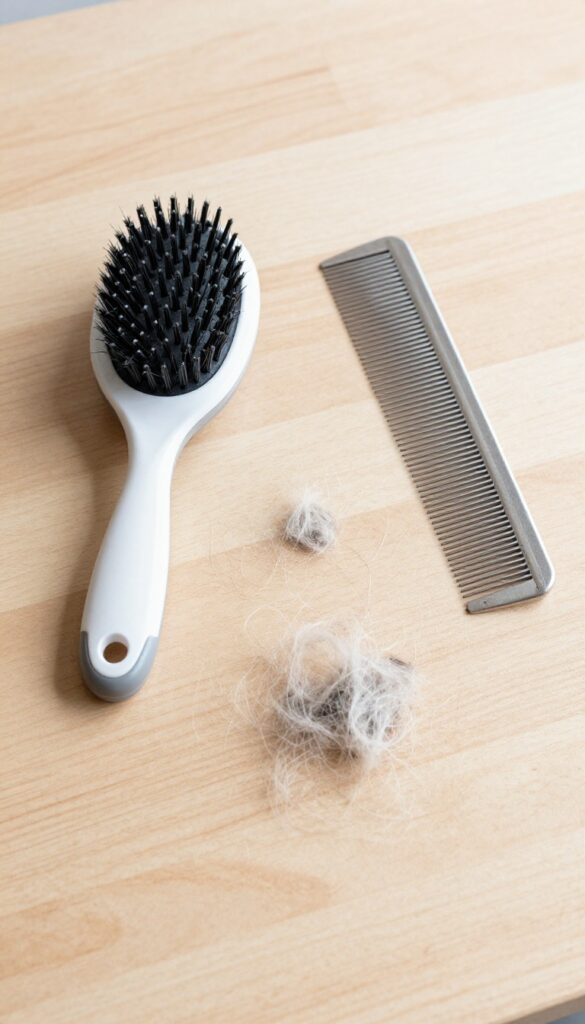
A single brush works for some dogs, but many coats do better with a small grooming combo. I actually prefer that setup in a lot of cases because one tool handles daily maintenance while the other tackles details, and that feels much smarter than forcing one brush into jobs it clearly hates.
A common and useful pair is a slicker brush plus a metal comb. The slicker loosens tangles and removes hair, then the comb checks hidden spots and confirms you reached the skin, which is simple, practical, and hard to beat for curly, long, or mat-prone coats.
For double-coated dogs, I like a slicker or pin brush paired with an undercoat rake. One helps manage the topcoat and surface mess, while the other reaches the dense fluff underneath, and that division of labor usually works better than using a de-shedding blade nonstop and hoping for a miracle.
Short-coated dogs may need less, but even they can benefit from two tools during heavy shedding. A rubber brush for hair removal and a bristle brush for finish and shine make a nice combo, especially if you care about keeping fur off clothes without irritating the skin.
The trick is knowing why each tool belongs in the routine. I would rather own two affordable, well-matched tools than a drawer full of random gadgets with dramatic marketing and zero real purpose, because pet stores love selling grooming fantasies and some of those things feel a little silly.
If brushing still feels confusing, ask your groomer what they use on your specific dog’s coat. That question can save a lot of money and trial-and-error, and most good groomers can point you toward a realistic setup in about thirty seconds because they deal with coat nonsense all day.
Common Mistakes People Make When Buying Dog Brushes
One of the biggest mistakes is buying by breed photo instead of actual coat condition. A chart may say one thing, but if your dog has a softer, denser, curlier, thinner, or mixed coat than expected, that chart can send you straight toward the wrong brush.
Another mistake involves choosing the harshest tool because shedding feels urgent. People see a mountain of fur, grab the most aggressive de-shedding thing they can find, and go to work like they are sanding furniture, which usually annoys the skin and still fails to fix the routine problem underneath.
A lot of owners also skip the comb entirely. That sounds minor, but it matters because combs catch the mats and missed spots that brushes often glide over, so ignoring one leaves you guessing whether the coat is truly maintained or just fluffed up on the surface.
Cheap construction causes trouble too. Bent pins, rough tips, flimsy handles, and bad spacing can make brushing uncomfortable, and I am not saying you need some luxury gold-plated celebrity brush, but a badly made tool can absolutely ruin an otherwise decent grooming session.
People also stick with a bad brush for too long because they already bought it. I get it, nobody loves admitting a purchase missed the mark, but hanging onto the wrong tool out of pride helps nobody, especially the dog who now sees that brush coming and decides to vanish into another room.
The smartest approach stays pretty simple. Match the brush to the real coat, test gently, watch the dog’s response, and adjust early instead of trying to power through with the wrong setup like brute force somehow counts as expertise.
Simple Questions That Make Brush Shopping Easier
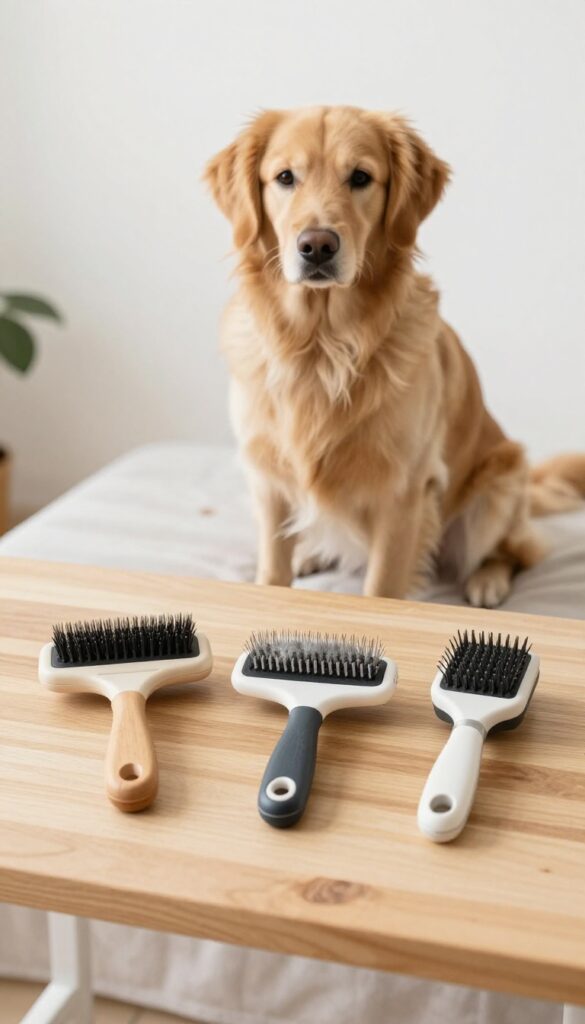
Ask whether your dog sheds from the surface, the undercoat, or both. That one answer narrows the field fast because a smooth shedder, a double-coated shedder, and a curly mat-prone dog each need totally different tools even if all three leave hair in annoying places.
Then ask whether mats form close to the skin or mostly on the outer coat. Surface tangles may need lighter maintenance, but tight mats near the skin demand a brush-and-comb combo that can work in sections without causing pain or just skating over the problem.
Think about how often you will realistically groom. I love an ideal routine as much as the next person, but if daily brushing is never going to happen in your house, choose tools that support a manageable habit instead of buying for some fantasy version of yourself who suddenly becomes a full-time groomer.
Also consider your dog’s patience level. A fast, comfortable brush that your dog accepts willingly often beats a technically perfect tool that causes drama every time, because consistency wins in grooming and the “best” brush on paper means very little if the dog turns into a slippery escape artist.
Last, remember that coat needs can change with age, season, health, and grooming style. A clipped doodle coat, a winter undercoat blowout, or a senior dog with thinner skin may all need a different approach than before, so brush choice is not something you lock in once and never revisit.
That flexibility matters more than people realize. Good grooming does not come from blindly following one rule forever, and the owners who do this well usually pay attention, make simple adjustments, and stop expecting one random tool to solve every coat issue for the rest of the dog’s life.
Conclusion
The right dog brush depends on coat type, coat behavior, and how the dog responds during grooming. Once those pieces line up, brushing gets easier, the coat looks better, and the whole routine stops feeling like an unnecessary side quest.
I always think grooming works best when it feels practical instead of overcomplicated. Pick tools that match the real coat, keep the routine consistent, and trust what the fur and the dog tell you, because they usually make the answer pretty obvious once you actually pay attention.

I’m Pallab Kishore, the owner of Little Pets Realm — an animal lover and pet care enthusiast sharing easy tips, healthy recipes, and honest advice to help every small pet live a happy, healthy, tail-wagging life.