
Last updated on April 26th, 2026 at 03:04 pm
You love your dog, but store-bought dog houses can be pricey and take up a lot of space. Cardboard offers a cheap, lightweight alternative that you can customize in an afternoon. Plus, your pup will love the novelty of a new hideout.
These eight ideas range from simple to slightly more involved, but all are doable with basic supplies like boxes, tape, and scissors. Some even double as enrichment toys or cozy napping spots.
Ready to get crafting? Let's dive into some cardboard dog house designs that will have your dog wagging their tail.
1. The Classic Box Castle
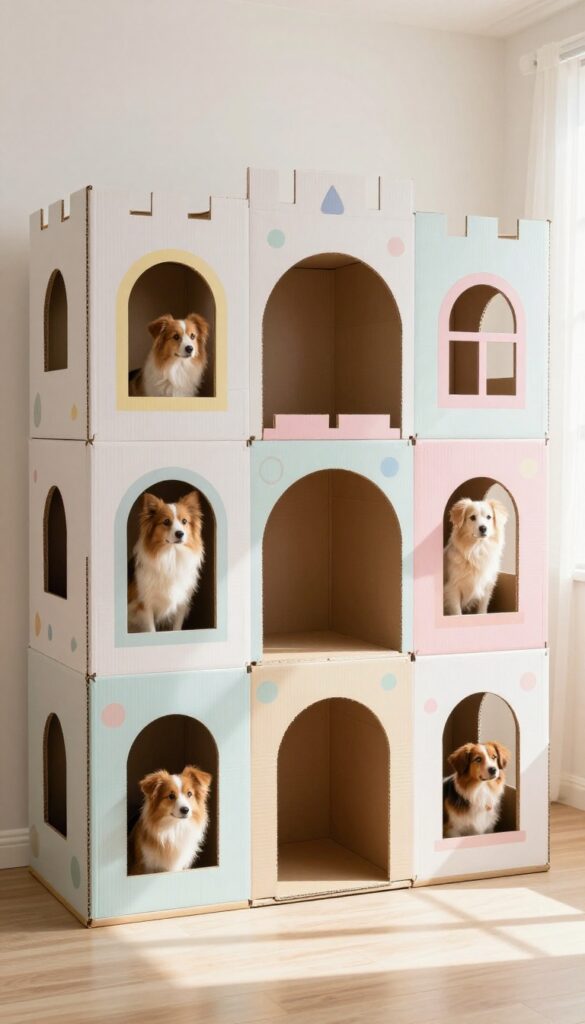
Start with the simplest build: a multi-room castle made from stacked cardboard boxes. It’s an easy weekend project that feels like a real treat for your dog. Tape a few large boxes together, cut out arched doorways and windows, and you’ve got an instant fortress.
The best part? You can paint or draw on it to match your home or your pup’s personality.
Why It Works
Dogs love exploring separate spaces, and the castle’s multiple rooms give them choices—a cozy nap nook here, a lookout tower there. It also satisfies their natural denning instinct while being completely collapsible for storage.
Best For
This works great for medium to large dogs who enjoy having their own territory. It’s also perfect for owners who want a fun, interactive project that doesn’t require special tools.
Practical Tip
Reinforce the bottom box with extra tape or a piece of cardboard inside to support your dog’s weight. Cut doorways big enough for easy entry, and add a soft blanket or cushion inside for comfort.
2. The A-Frame Cabin
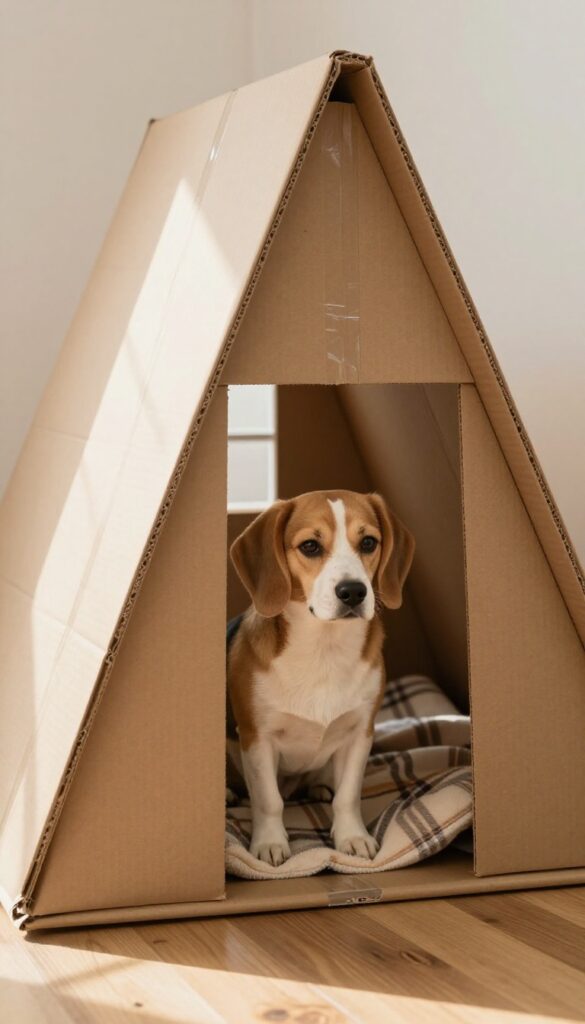
This classic design is as charming as it is functional. By folding a large piece of cardboard into an A-shape, you create a sturdy, den-like retreat that many dogs instinctively love. It's quick to make and doesn't require any complex cuts or measurements.
Why It Works
The triangular shape naturally feels safe and cozy for dogs, who often seek out enclosed spaces. The angled sides also help distribute weight, making the house surprisingly durable despite being made of cardboard.
Best For
Small to medium breeds like Dachshunds, French Bulldogs, or Corgis. It's also great for apartment dwellers who want a lightweight hideout that can be easily moved or stored when not in use.
Practical Tip
Add a soft blanket or cushion inside for extra comfort. You can also cut a small window on one side for ventilation and visibility—just make sure the edges are smooth to prevent any snags.
Budget-Friendly Option
Use a large appliance box (like from a refrigerator) instead of buying new cardboard. Just break it down flat, cut along the folds, and tape it back together in your desired shape.
3. The Cardboard Igloo
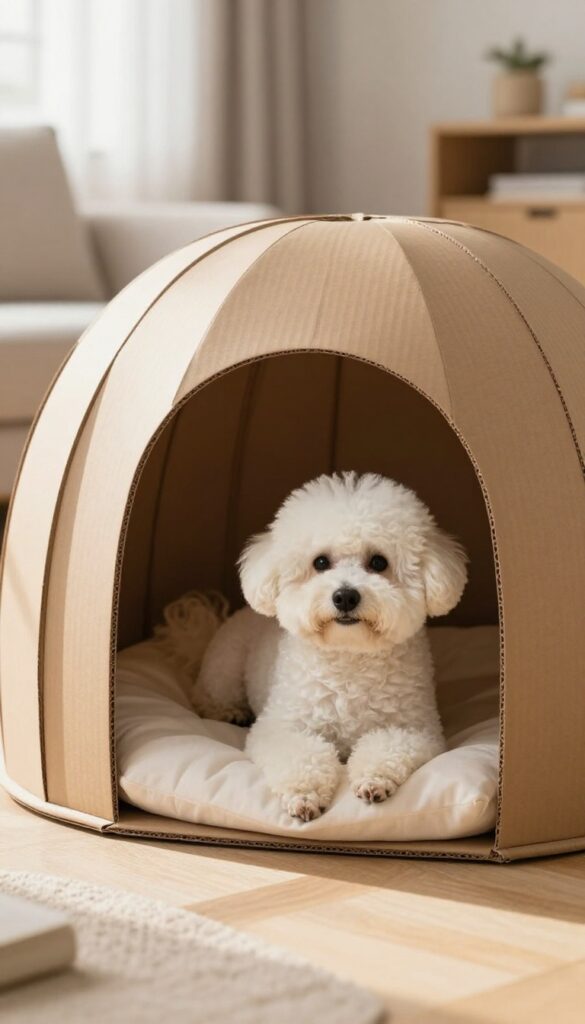
Imagine your dog curled up in their own little snow den—without the cold. The cardboard igloo uses curved strips layered into a dome shape, creating a cozy cave that feels safe and private. It’s surprisingly sturdy once assembled, and the arched entrance gives it that iconic igloo look.
Plus, the enclosed space helps some dogs feel more secure, especially if they enjoy burrowing under blankets.
Why It Works
The curved dome structure distributes weight evenly, so it holds up better than a simple box. The small opening retains your dog’s body heat, making it a warm spot for naps. And because it’s made from lightweight cardboard, you can easily move it from room to room or take it outside on mild days.
Best For
This design is perfect for small to medium dogs who love cozy, den-like spaces. It also works well for anxious dogs that prefer a covered hideout, or for owners in apartments where a permanent dog house isn’t practical.
Practical Tip
For extra durability, reinforce the interior seams with duct tape and consider adding a soft cushion or blanket inside. If you want to get creative, paint the outside white with gray shading to mimic real ice blocks—just use non-toxic paint and let it dry fully before letting your dog investigate.
4. The Flat-Pack Travel House
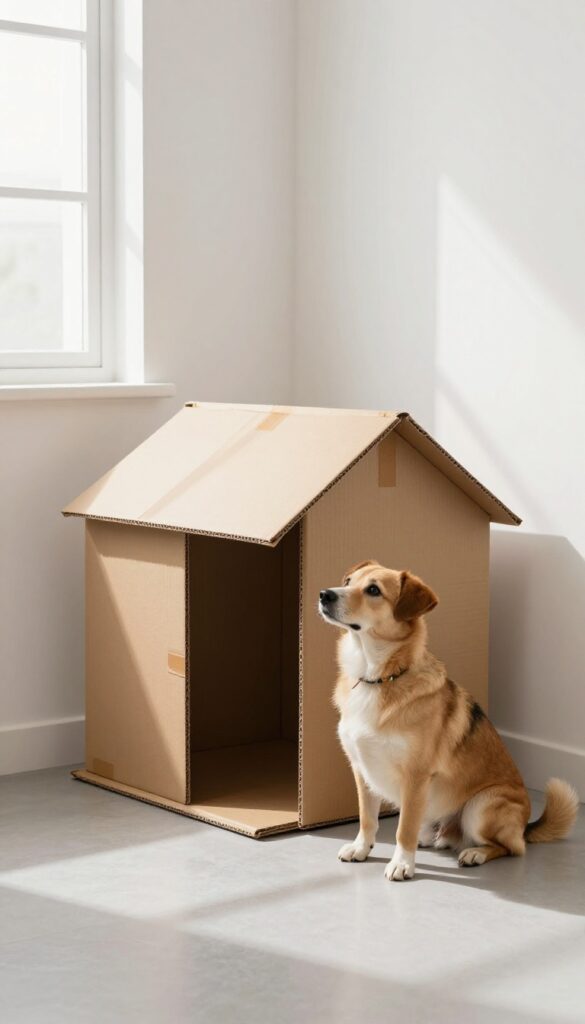
If you love the idea of a cardboard dog house but need something that disappears when not in use, this fold-flat design is your answer. It’s built from a single box with scored sides so the whole thing collapses into a slim panel. A few Velcro strips or tabs hold it together during playtime, then release for storage.
This makes it perfect for road trips, camping, or small apartments where floor space is precious.
Why It Works
The collapsible design means you can tuck it behind a couch or under a bed when your dog isn’t using it. It’s lightweight and easy to reassemble, so you can bring your pup’s favorite hideout anywhere without hauling a bulky structure.
Best For
Travelers, campers, or anyone living in tight quarters like an apartment or tiny home. Great for small to medium dogs who like a cozy den but don’t need a permanent setup.
Practical Tip
Score the box along the fold lines with a dull knife before cutting—this gives clean creases that make folding and unfolding effortless. Add a soft mat inside for comfort, and check the Velcro bond occasionally to keep the house sturdy.
5. The Two-Story Mansion
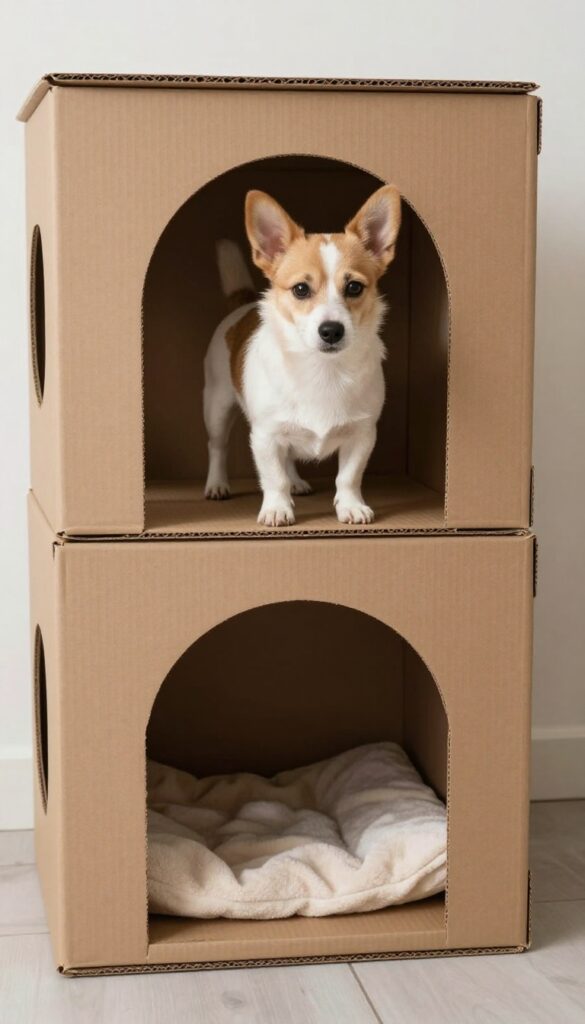
Take your cardboard dog house to new heights—literally. Stack two boxes vertically, cut a hole in the top of the lower box and the bottom of the upper box, then add a ramp or ladder between them. Your dog gets a lookout tower and a cozy lower den.
It’s a fun project that turns basic boxes into an adventure.
Why It Works
Vertical space adds enrichment without taking up more floor area. The two levels give your dog options: they can survey their kingdom from above or curl up in the quiet den below. The ramp or ladder adds a gentle physical challenge that many dogs enjoy.
Best For
Active, curious dogs who love to climb or explore. Smaller to medium breeds with good agility will get the most use out of both levels. Also great for homes with limited floor space but plenty of vertical room.
Practical Tip
Use sturdy boxes with thick cardboard so the structure holds weight. Cut the openings large enough for your dog to move through easily, and tape all seams securely. Place the house against a wall for stability, and consider adding a soft pad or blanket on each level for comfort.
6. The Cardboard Teepee
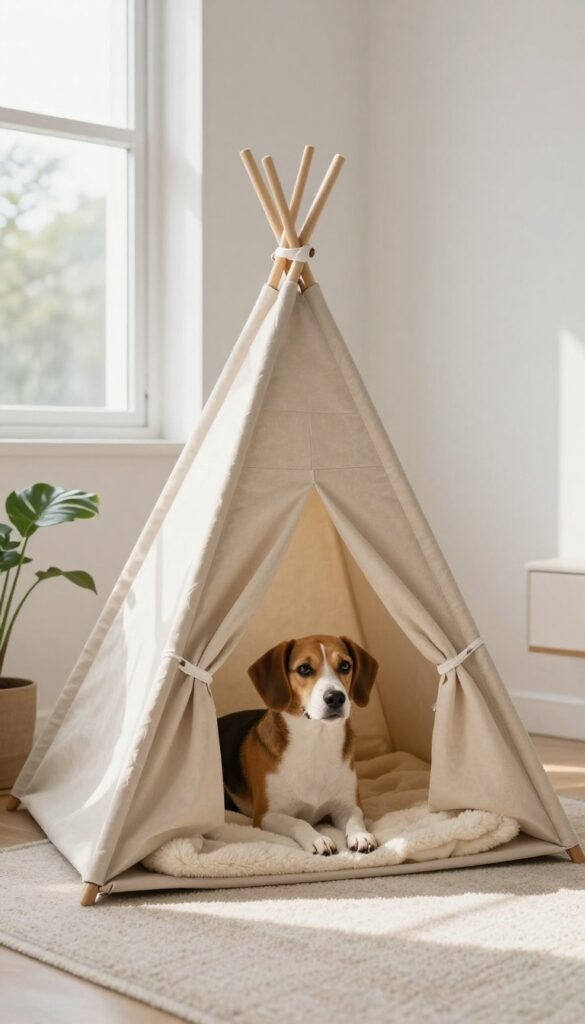
Give your pup a taste of the wild with a cardboard teepee that’s both playful and private. This simple design uses three or four long cardboard triangles taped together at the top, with a gap left at the bottom for an entrance. It’s lightweight, easy to decorate, and instantly creates a cozy den your dog will love to curl up in.
Why It Works
Dogs naturally seek out small, enclosed spaces—they feel safe and secure. The teepee shape mimics a den, giving your dog a quiet retreat while still allowing airflow through the open top. Plus, it’s sturdy enough for most medium breeds but light enough to move around the house.
Best For
This idea is perfect for small to medium dogs like terriers, dachshunds, or beagles. It also works well in apartments or rooms where floor space is limited, since the teepee has a small footprint and can be tucked into a corner.
Practical Tip
For extra coziness, line the inside with a soft fleece blanket or a dog bed that fits the triangular base. Paint or cover the outside with fabric that matches your decor—just avoid heavy materials that might collapse the structure. To keep it stable, reinforce the seams with duct tape on the inside.
7. The Puzzle House with Treats
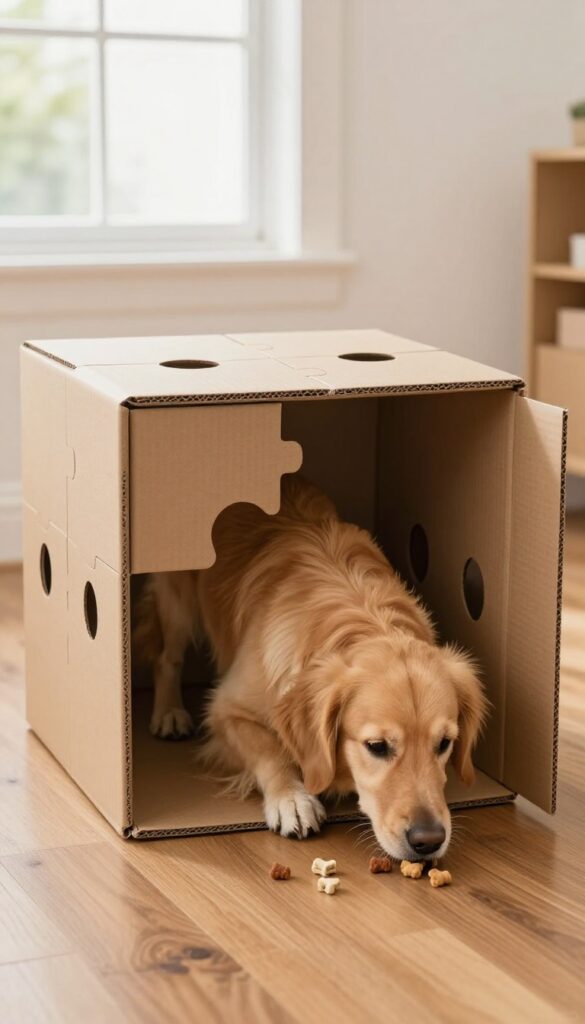
Turn a simple cardboard box into an interactive game that challenges your dog's mind and rewards their curiosity. By adding flaps, pockets, and small holes for treats, this house becomes more than a hideout—it's a puzzle that keeps them entertained for hours. Dogs love sniffing out hidden goodies, and this DIY project is a win-win for both of you.
Why It Works
Dogs are natural foragers, and hiding treats inside a cardboard house taps into their instinct to search and problem-solve. The mental stimulation helps reduce boredom and destructive behavior, while the physical activity of pawing and sniffing provides light exercise. Plus, the cardboard is safe if your dog gets a little rough with it.
Best For
This design is perfect for dogs who are food-motivated or need extra mental enrichment. It works well for puppies who are learning to use their nose, as well as senior dogs who prefer gentle play over running around. Owners in apartments or small homes will appreciate that it doesn't take up much space.
Practical Tip
Use a sturdy shipping box with strong sides. Cut flaps on the top or sides that can be lifted easily, then poke dime-sized holes near the bottom for treats to fall out when nudged. Avoid using glue or tape inside where your dog might chew—stick to simple folds and slots.
Budget-Friendly Option
No treats? Use pieces of their regular kibble or break up a dental chew into small bits. You can also stuff the pockets with an old sock filled with crinkly paper for a non-food option.
8. The Cardboard Camper Van
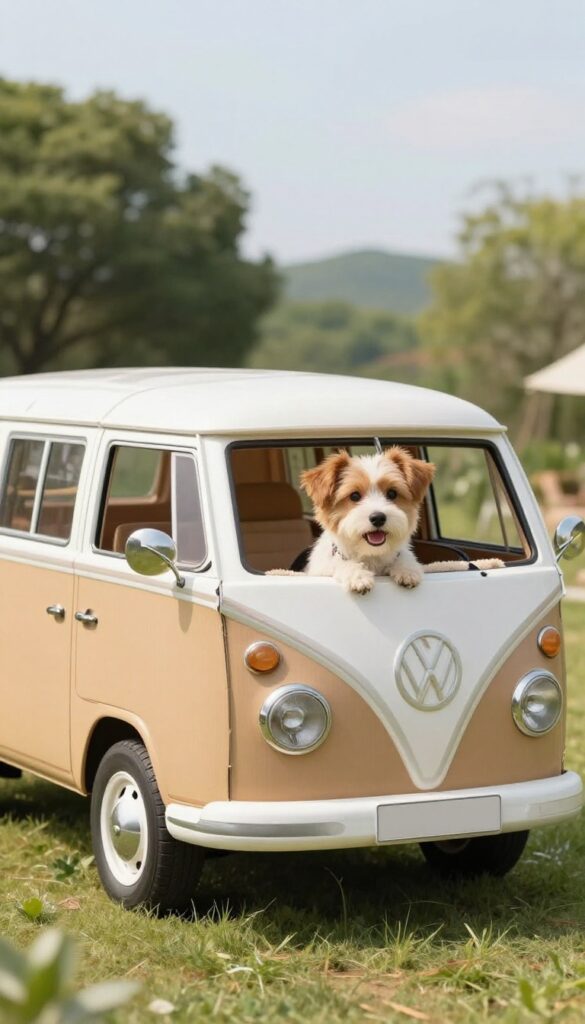
Turn a large box into a retro camper van that sparks your dog’s wanderlust. Shape the box with rounded edges, cut out side windows and a front windshield, then add a comfy cushion inside. It’s a fun little escape that fits right into a living room or backyard patio.
Your pup will love peeking out the windows and curling up in their own adventure mobile.
Why It Works
Dogs love cozy, enclosed spaces that still let them see what’s happening around them. The camper van’s windows give your dog a clear view of the room while keeping them snug inside. It also satisfies their natural denning instinct without feeling too closed off.
Best For
This design is perfect for small to medium dogs who enjoy having their own little hideaway. It works especially well in apartments or homes where floor space is limited—the van shape is compact and easy to tuck into a corner.
Practical Tip
Use non-toxic paint or markers to decorate the outside with retro stripes or a cute license plate with your dog’s name. Line the interior with a removable fleece pad or an old towel so you can wash it easily. Keep the cardboard away from damp areas to prevent sagging.
Budget-Friendly Option
Skip the paint and use wrapping paper or contact paper to cover the box instead—it’s cheaper and adds a fun pattern. You can also repurpose an old pillow as the bed cushion.
FAQ
Is cardboard safe for dogs to chew?
Generally yes, but supervise your dog. Cardboard is not toxic, but ingesting large pieces can cause blockages. Remove any chewed pieces and replace the house if it gets too damaged.
How long does a cardboard dog house last?
It depends on your dog's chewing habits. For gentle dogs, it can last weeks. For heavy chewers, it might be a day or two.
Consider it a temporary, fun project.
Can I use cardboard dog houses outdoors?
Only in dry weather. Cardboard will fall apart if it gets wet. Use them indoors or on a covered porch.
You can spray with a waterproof sealant, but it's still not ideal for rain.
What size cardboard box do I need?
Choose a box that is at least as long as your dog from nose to tail, and tall enough for them to stand up. For larger breeds, you may need to tape multiple boxes together.
Can I paint or decorate the cardboard?
Absolutely! Use non-toxic, water-based paints or markers. Avoid anything with strong fumes.
Let the paint dry completely before letting your dog inside.
Conclusion
Cardboard dog houses are a budget-friendly way to give your pup a fun, personalized hideaway. Start with a simple box and add features your dog actually uses—like a chew-proof entrance or a cozy blanket inside. You'll be surprised how much they love it.
Just keep an eye on wear and tear, and replace the house when it gets too beat up.
The best part? You can try a new design each time without breaking the bank. Your dog gets a fresh adventure, and you get easy DIY fun.

I’m Pallab Kishore, the owner of Little Pets Realm — an animal lover and pet care enthusiast sharing easy tips, healthy recipes, and honest advice to help every small pet live a happy, healthy, tail-wagging life.