
Building a durable outdoor dog house doesn't have to drain your wallet. With a little creativity and some basic materials, you can craft a sturdy shelter that withstands rain, sun, and snow while keeping your pup comfortable.
These nine farm-inspired ideas focus on budget-friendly solutions that are easy to build and built to last.
From repurposed crates to galvanized stock tanks, each option offers practical protection for your four-legged friend without breaking the bank.
1. Repurposed Wooden Crate Dog House
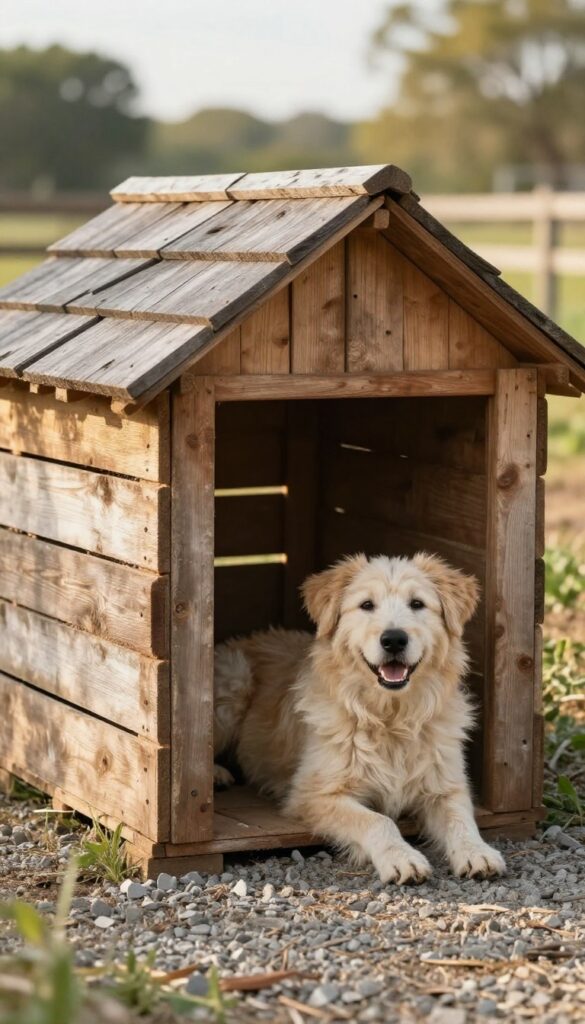
Turn a sturdy wooden shipping crate or pallet box into a charming, low-cost dog house that blends right into a farm setting. These crates are built tough to begin with, so with a little weatherproofing you get a shelter that lasts through seasons. Plus, the natural wood look adds rustic appeal without any extra effort.
Why It Works
Wooden crates are already strong and well-ventilated, making them ideal for converting into a dog house. Their thick walls provide natural insulation, and the slatted design allows airflow to keep your pup cool in summer. A simple slanted roof and sealant protect against rain and snow.
Best For
Medium to large dogs who need a solid, insulated outdoor shelter. Great for farm dogs or backyard pups who spend plenty of time outside. Works well on a budget or if you have leftover crates from shipping.
Practical Tip
Use exterior-grade wood sealant or paint to protect the crate from moisture and rot. Add a removable roof hinged at one side for easy cleaning inside. Place the dog house on gravel or pavers to keep it off damp ground.
Budget-Friendly Option
If you can't find a free crate, check local hardware stores for used pallets—you can disassemble them and build a similar box from the wood. Or look on Craigslist for free or cheap shipping crates.
2. Insulated Plastic Barrel Dog House
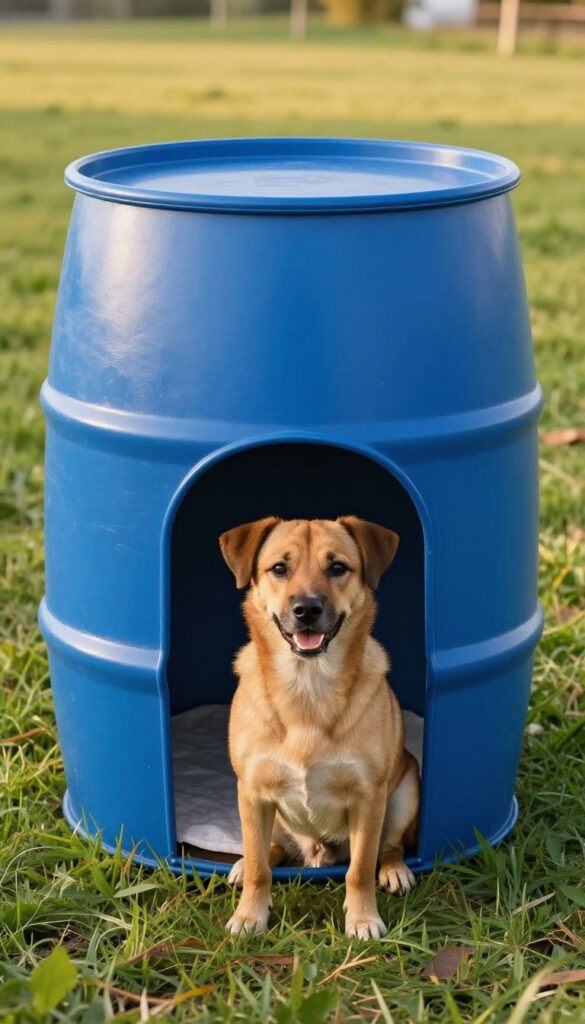
A large plastic barrel can become one of the most durable and affordable dog houses you'll ever build. By cutting it horizontally, adding a door, and lining the inside with foam insulation, you get a waterproof shelter that's easy to keep clean and stands up to any weather. This design is popular with farm owners because it's simple to make and lasts for years.
Why It Works
Plastic barrels are naturally waterproof and rot-proof, so they won't degrade like wood in wet conditions. The foam insulation keeps your dog warm in winter and cool in summer, making it comfortable year-round. Plus, the smooth interior surface wipes down easily for quick cleaning.
Best For
This house is ideal for medium to large dogs who spend a lot of time outdoors, especially in rainy or snowy climates. It's also great for multi-dog households since you can build several at a low cost.
Practical Tip
Paint the exterior with outdoor-grade paint to match your farm aesthetic or add a reflective coating to reduce heat absorption. Ensure the door opening is just large enough for your dog—too big lets in drafts. Add a hinged roof for easy access when cleaning.
3. Lean-To Shed Dog House
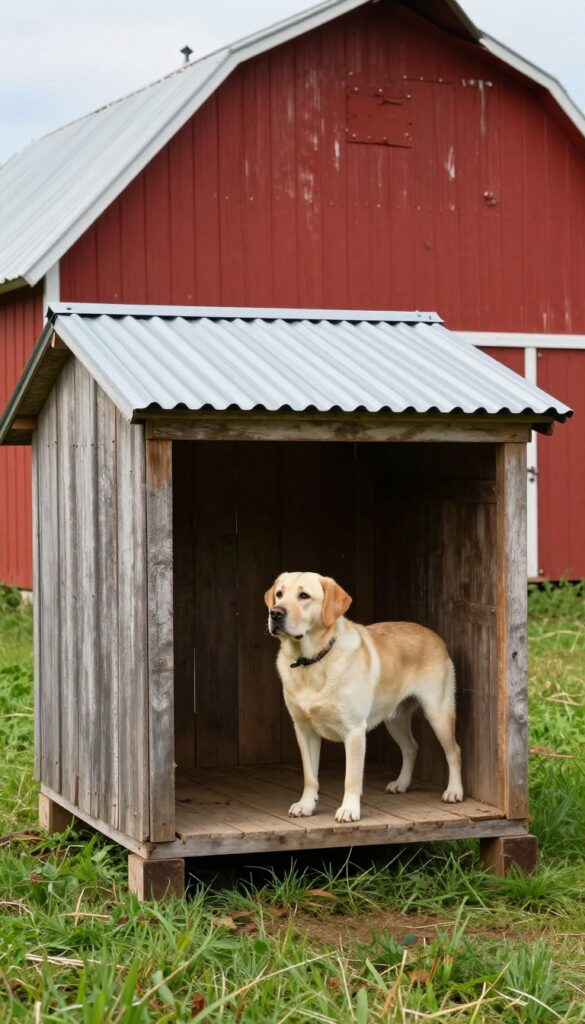
Attaching a small lean-to against an existing barn or fence wall is one of the smartest ways to build a dog house. It uses less material because one side is already there, and the wall naturally blocks wind and weather. Plus, it blends right into your farm setup without looking like an afterthought.
Why It Works
The existing wall provides excellent wind protection and structural support, so you only need to build three sides and a roof. Corrugated metal roofing sheds rain and snow easily, keeping the interior dry. The open front can face south for maximum sun exposure in colder months.
Best For
Farm dogs who already spend time near barns or sheds, especially larger breeds like Labradors, Australian Shepherds, or Great Pyrenees that need a roomy shelter with good airflow.
Practical Tip
Raise the floor a few inches off the ground using pressure-treated skids to prevent moisture seeping in. Add a flap door made from heavy vinyl or rubber for extra insulation in winter, but remove it during hot months to keep air moving.
Budget-Friendly Option
Instead of buying new corrugated metal, look for used roofing panels at salvage yards or on Facebook Marketplace. Old tin signs or scrap plywood can also work if you seal them well.
4. Pallet Dog House With Raised Floor
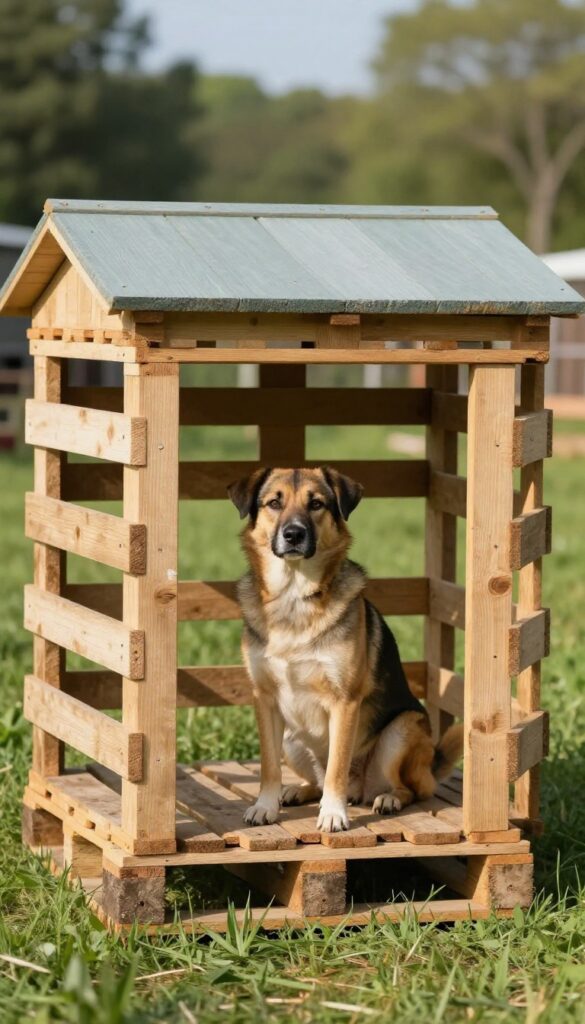
Pallets are a favorite building material for farm projects, and they work great for dog houses too. Stacking and securing pallets creates sturdy walls and a naturally ventilated raised floor that keeps your pup dry and cool. The open slats allow air to flow underneath, preventing moisture buildup and making this a smart choice for humid climates or rainy seasons.
Why It Works
The raised floor is the star here—it lifts your dog off damp ground, reducing the risk of mold, mildew, and pests. Pallet wood is thick and durable, holding up well against wind and weather when treated or painted. Plus, the gaps between slats give you natural drainage if water does get inside.
Best For
This idea is perfect for medium to large dogs who need extra floor space. It's also great for owners on a tight budget who have access to free pallets. Works well in backyards with uneven ground since you can level the pallets easily.
Practical Tip
Use exterior-grade screws to fasten pallets together tightly. Add a plywood roof with at least a 4-inch overhang on all sides to keep rain from soaking the walls. You can also paint or stain the wood with pet-safe sealant to extend its life outdoors.
5. Concrete Block Dog House
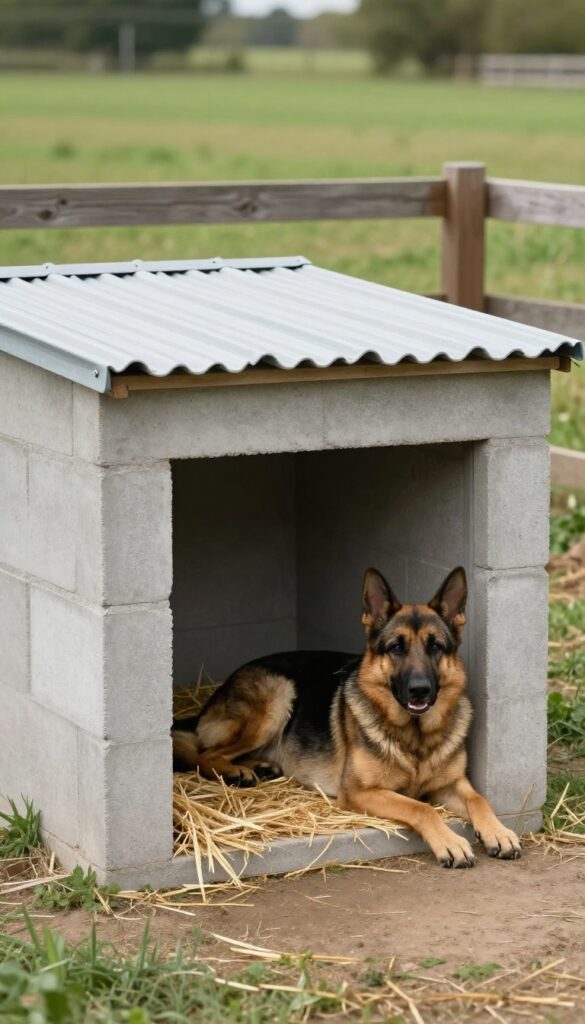
If you want a dog house that can handle anything the weather throws at it, concrete blocks are the way to go. Stack them in a simple square shape with a door opening, and you've got a shelter that's both fireproof and chew-proof. It's a no-nonsense option that feels right at home on a farm.
Why It Works
Concrete blocks are incredibly durable and provide excellent insulation when filled with mortar or gravel. The solid walls keep the interior cool in summer and protect against wind in winter. Plus, no dog can gnaw through this material, so it stays intact for years.
Best For
This is ideal for large or powerful dogs who love to chew, as well as farm dogs that spend most of their time outdoors. It also works great in areas with extreme weather because the concrete stands up to rain, snow, and heat without rotting or warping.
Practical Tip
To make it comfortable, add a thick layer of straw or cedar shavings inside for warmth. You can also paint the exterior blocks with outdoor masonry paint to match your barn or fence. Make sure the roof overhangs slightly to keep rain out of the entrance.
Budget-Friendly Option
Instead of buying new blocks, look for used ones on Craigslist or at construction sites. For the roof, use scrap metal roofing or reclaimed wood pallets to keep costs low.
6. Galvanized Stock Tank Dog House
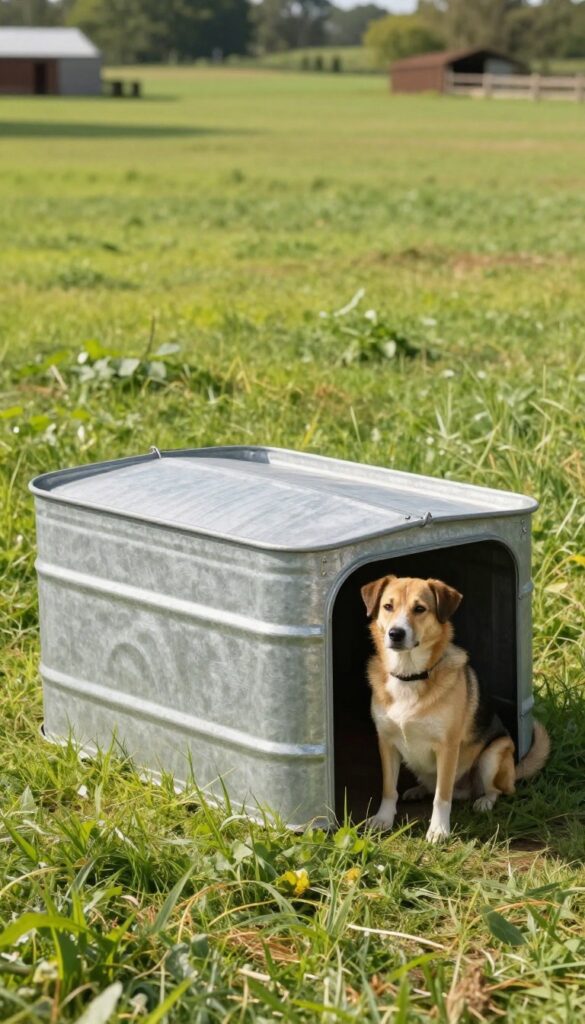
A galvanized stock tank flipped upside down makes a surprisingly tough and weather-resistant dog house. The metal shell reflects sunlight to keep the interior cooler in summer and resists rust for years of outdoor use. With just a few cuts and some bedding, you get a sturdy shelter that looks right at home on any farm or ranch.
Why It Works
The thick galvanized steel stands up to chewing, scratching, and rough weather far better than wood or plastic. It won't rot, warp, or splinter, and the smooth surface is easy to hose out when it gets dirty. The metal also holds up under heavy snow loads and strong winds.
Best For
This is a great choice for medium to large dogs who need a solid, long-lasting outdoor shelter. It works especially well for breeds that like to chew or dig, since the metal is virtually indestructible. Perfect for farms, homesteads, or any backyard where durability matters more than looks.
Practical Tip
Cut a door opening large enough for your dog but small enough to keep out drafts—about 12 inches wide and 18 inches tall for most medium breeds. Drill several 1-inch ventilation holes near the top of the sides to let hot air escape. Add a thick layer of straw or cedar shavings inside for insulation and comfort.
7. Straw Bale Dog House (Temporary)
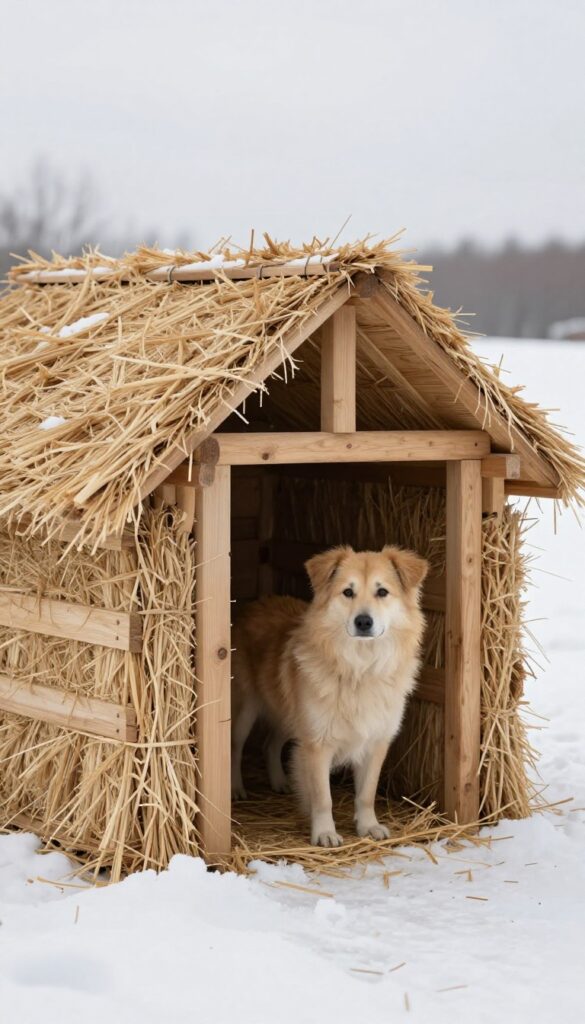
When winter hits hard, a straw bale dog house is a quick and cozy solution. You arrange bales in a U-shape, top it with a plywood roof, and fill the floor with fresh straw. It's surprisingly warm and costs very little.
Why It Works
Straw is an excellent insulator—it traps heat inside while blocking wind. The thick walls keep your dog comfortable even in freezing temperatures. Plus, it's fully biodegradable when you're done.
Best For
This setup is perfect for cold climates or emergency shelter needs. It works well for short-term use during harsh seasons, especially for outdoor dogs who need extra warmth.
Practical Tip
Place the dog house on a slight mound or pallet to keep it dry from ground moisture. Replace wet or moldy bales immediately to maintain insulation and prevent respiratory issues.
Budget-Friendly Option
Instead of buying new straw bales, check local farms or feed stores for slightly damaged bales—they often sell them at a discount. You can also use hay, though it's less durable.
8. Reclaimed Barn Wood Dog House
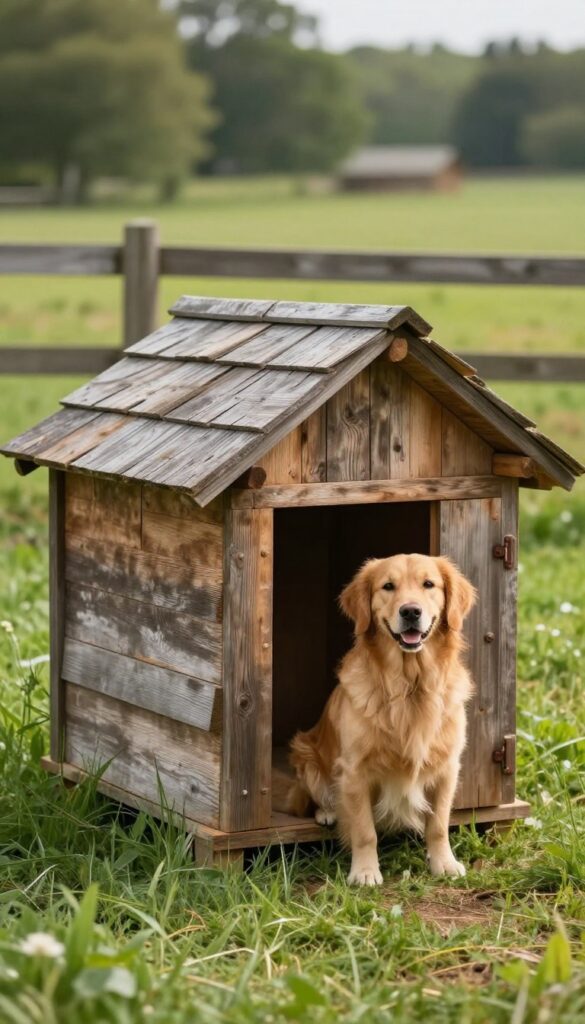
Old barn boards have a weathered charm that new lumber just can't match. The aged wood is already naturally resistant to moisture and pests, making it an ideal material for an outdoor dog house. Plus, you're giving discarded materials a second life.
A reclaimed barn wood dog house blends right into a rustic farm setting or even a modern backyard with a touch of character. It's sturdy, breathable, and gets better with age as the patina deepens.
Why It Works
The thick, dense wood from old barns is often hardwood or old-growth pine that holds up to rain and sun without warping. The natural oils in aged wood repel water, and the tight grain resists rot. A simple coat of linseed oil seals the surface without trapping moisture inside.
Best For
This dog house is perfect for farm dogs or outdoor pups who spend long hours in the yard. It's also a great choice for owners who love a DIY project with vintage appeal and want a durable shelter that looks like it belongs on the homestead.
Practical Tip
Leave some gaps between the wall boards for natural ventilation during hot months, but make sure the roof overhangs to keep rain out. Use a removable roof panel for easy cleaning – hinge one side so you can flip it up to sweep out dirt and bedding.
Budget-Friendly Option
If you can't source real barn wood, buy rough-sawn cedar fence pickets and weather them yourself with a vinegar-and-steel-wool solution. They'll gray nicely in a few weeks and cost a fraction of reclaimed lumber.
9. PVC Pipe Frame With Canvas Cover
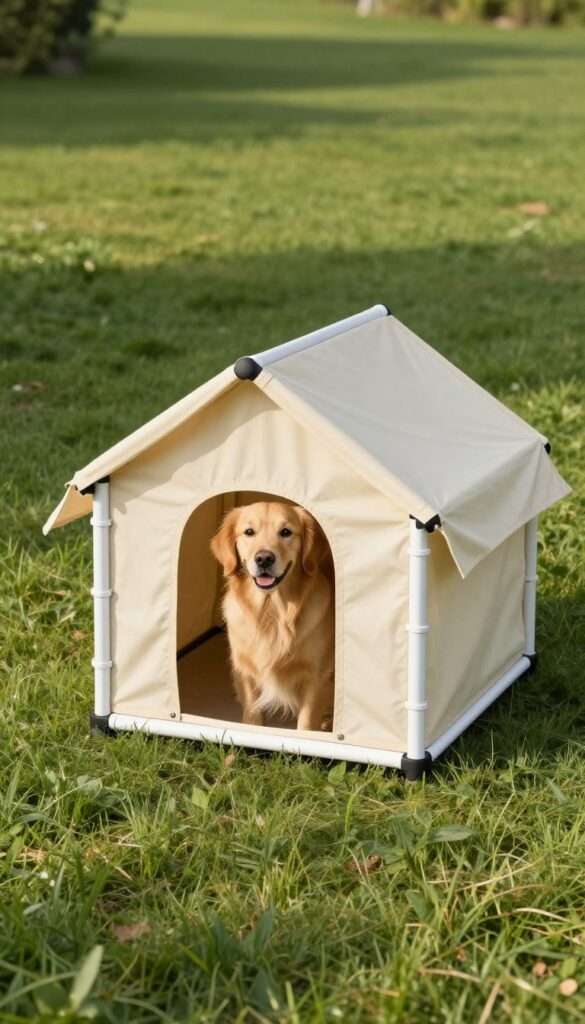
A PVC pipe frame with a canvas cover is one of the lightest and most portable dog houses you can build. The frame snaps together without tools, and the canvas slides right over it for instant shelter. It’s a favorite for folks who need a house that can move with them—whether that’s around the yard or to a campsite.
Why It Works
The PVC frame won’t rust, rot, or splinter, so it lasts for years with minimal upkeep. The canvas cover breathes better than plastic or metal, which helps keep your dog cooler in summer and drier in humid weather. Plus, if a section gets damaged, you can replace just that part instead of the whole house.
Best For
This setup is ideal for dogs who spend time in different parts of the yard or travel with their owners. It’s also great for renters who can’t put up permanent structures. Medium to large breeds like Labs, Goldens, and mixed breeds fit comfortably inside.
Practical Tip
Use schedule 40 PVC for extra strength—schedule 20 is too flimsy for bigger dogs. Sew or glue loops onto the canvas so you can stake it down through the loops; this keeps the house from flipping over in gusty wind. Add a second layer of canvas on top for rain protection.
FAQ
What is the most durable material for an outdoor dog house?
Concrete blocks and galvanized metal are extremely durable and resistant to chewing, weather, and pests. Wood can last if properly sealed and maintained.
How do I insulate a farm dog house on a budget?
Use straw, hay, or foam board insulation inside the walls. For plastic or metal houses, add a layer of reflective insulation or a thick bedding pad.
Should I elevate the dog house off the ground?
Yes, elevation prevents moisture from seeping in, improves airflow, and keeps the floor cooler in summer and warmer in winter.
How do I keep the dog house cool in summer?
Provide shade, ensure ventilation with windows or vents, and use reflective roofing. A raised floor also helps air circulate underneath.
Can I use a plastic barrel for a dog house in cold climates?
Yes, but you must insulate it well with foam or straw. Plastic alone does not retain heat, so add thick bedding and a windproof door flap.
Conclusion
Building or buying a farm dog house doesn't have to break the bank. Simple upgrades like insulated floors, removable roofs, and weatherproof materials make a huge difference in durability and comfort.
Start with one or two ideas that match your yard and your dog's needs. A sturdy outdoor shelter means your pup stays safe, dry, and happy—rain or shine.

I’m Pallab Kishore, the owner of Little Pets Realm — an animal lover and pet care enthusiast sharing easy tips, healthy recipes, and honest advice to help every small pet live a happy, healthy, tail-wagging life.