
Last updated on April 26th, 2026 at 03:04 pm
That narrow strip of yard along the side of your house often goes unused—but it’s prime real estate for a dog kennel. With a little planning, you can turn that awkward space into a cozy retreat your pup will love.
Side yards are naturally sheltered from wind and sun, making them ideal for a kennel that stays comfortable year-round. Plus, they keep the kennel out of sight from the front of the house.
Whether you’re handy with tools or prefer a ready-made solution, these nine ideas will help you make the most of that side space. Your dog gets a safe spot, and you reclaim the rest of your yard.
1. Custom Built-In Wooden Kennel
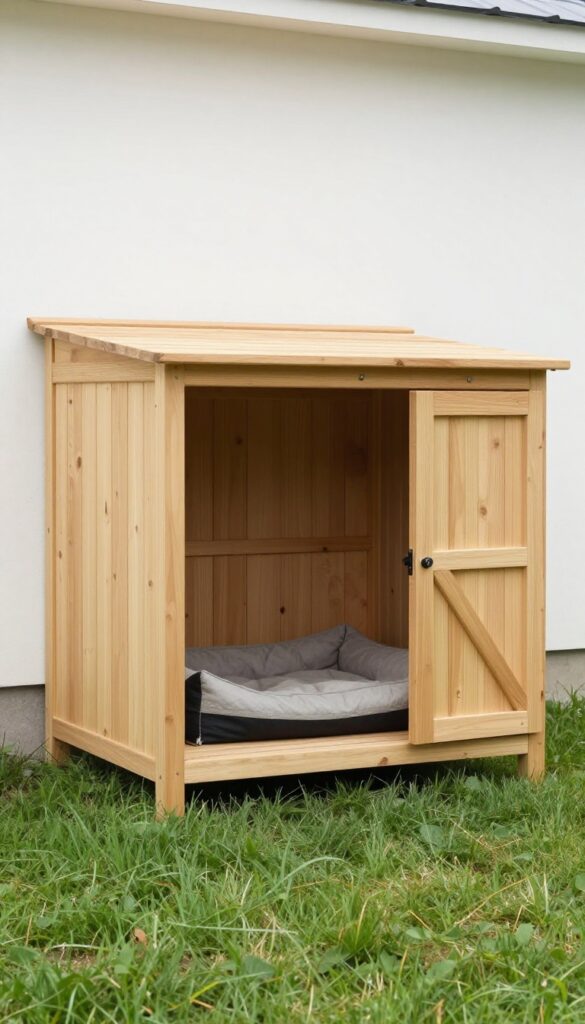
A custom built-in wooden kennel turns that awkward side yard into a tailored dog retreat. By building to your exact space, you can maximize every inch and create a structure that blends with your home’s exterior. Many dog owners love this option because it feels permanent and sturdy—like a real addition to the house rather than an afterthought.
Why It Works
Pressure-treated lumber resists rot and insects, so the kennel holds up against rain and sun. A sloped roof directs water away, keeping the interior dry. The hinged door makes cleaning a breeze—just open it up and sweep out dirt or old bedding.
Best For
This idea is perfect for homeowners with a narrow side yard who want a durable, long-term solution. It works well for medium to large dogs that need a bit more space, especially breeds that enjoy spending time outdoors in a secure spot.
Practical Tip
Paint or stain the wood to match your house trim for a cohesive look. Add a weatherproof pad or cot inside to keep your dog off the cold ground. Consider installing a small latch on the door to prevent escapes while still allowing airflow.
2. Repurposed Garden Shed Kennel
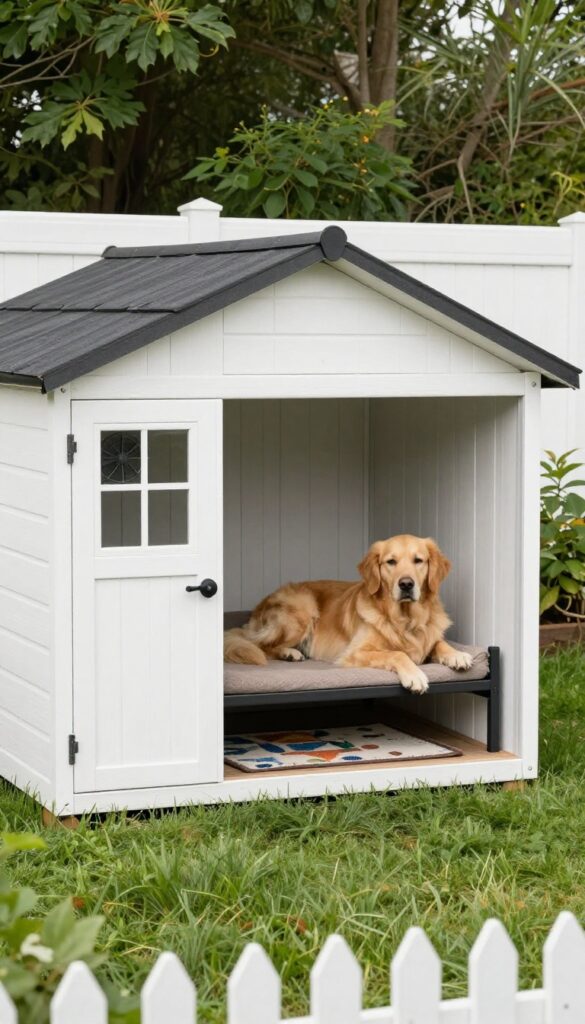
Got an old garden shed gathering dust? Turn it into a spacious kennel your dog will love. This project is surprisingly simple: clear out shelves, add windows or vents for airflow, and install a dog door so your pup can come and go.
The result is a sturdy, weatherproof shelter that blends right into your yard.
Why It Works
Sheds are built to last, with solid walls and a roof that keep rain, wind, and sun at bay. They’re also roomy enough for multiple dogs or a large breed, and the existing structure means you skip most of the construction work. Plus, the side yard location keeps the kennel discreet while still giving your dog easy access to the yard.
Best For
This idea works great for owners of two or more dogs, or for large breeds like Labradors or German Shepherds who need extra floor space. It’s also ideal if you’re on a tight budget but have a shed you’re not using.
Practical Tip
Paint the shed to match your house or fence for a cohesive look. Add a weatherproof outdoor rug inside for comfort and easy cleanup. A raised bed or cot keeps your dog off cold floors, and consider installing a small fan in summer for extra airflow.
Budget-Friendly Option
If you don’t have an old shed, check local classifieds or salvage yards for used garden sheds—often free or cheap if you haul them away. You can also repurpose a large wooden playhouse or tool shed with similar modifications.
3. Vinyl Privacy Fence Kennel
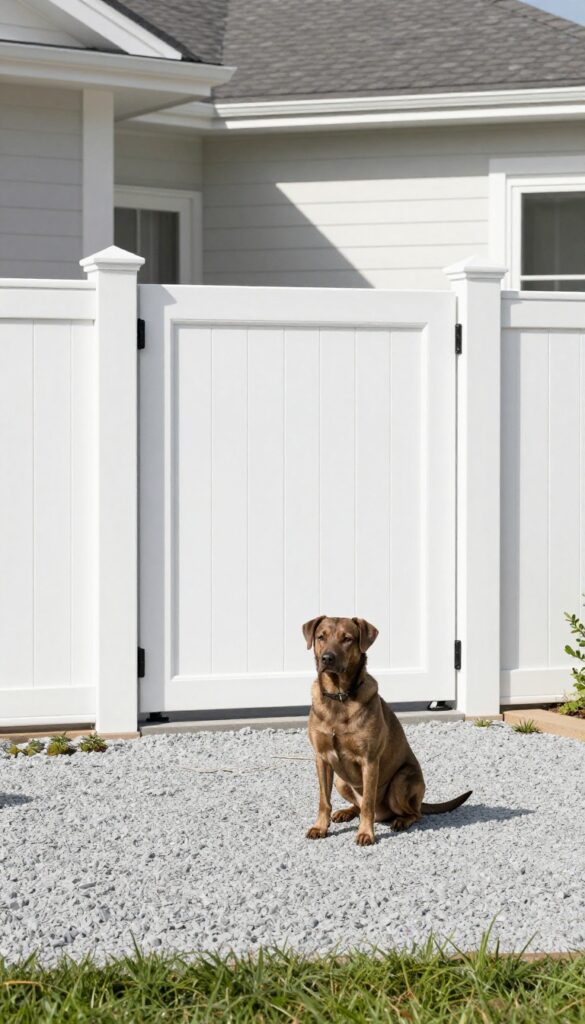
Vinyl fencing isn’t just for keeping the neighbors out—it makes a fantastic, low-maintenance kennel for your dog. By using matching vinyl panels, you can create a seamless extension of your home’s look while giving your pup a private, weather-resistant space.
This setup works especially well in side yards where you want something that cleans up with a hose and won’t rot or warp. Plus, the solid panels block visual distractions, which is a big plus for shy or reactive dogs who need a calm spot to unwind.
Why It Works
Vinyl is non-porous and easy to spray down, so mud, drool, and fur don’t stand a chance. It holds up against sun, rain, and snow without fading or cracking, meaning less upkeep for you and a consistently clean kennel for your dog.
Best For
This kennel is ideal for owners who want a tidy, all-weather solution that blends with their home’s exterior. It’s especially good for shy dogs who appreciate privacy and for families who don’t want to spend weekends on fence maintenance.
Practical Tip
Lay down a gravel base about 4 inches deep to handle drainage—your dog stays dry, and you avoid muddy paw prints. Add a vinyl gate with a latch that’s secure but easy for you to open. You can also install a small roof panel over part of the kennel to provide shade.
Budget-Friendly Option
If full vinyl panels are out of budget, use vinyl lattice panels on top of pressure-treated lumber posts. Lattice still offers privacy and durability but costs much less per foot.
4. Portable Exercise Pen Setup
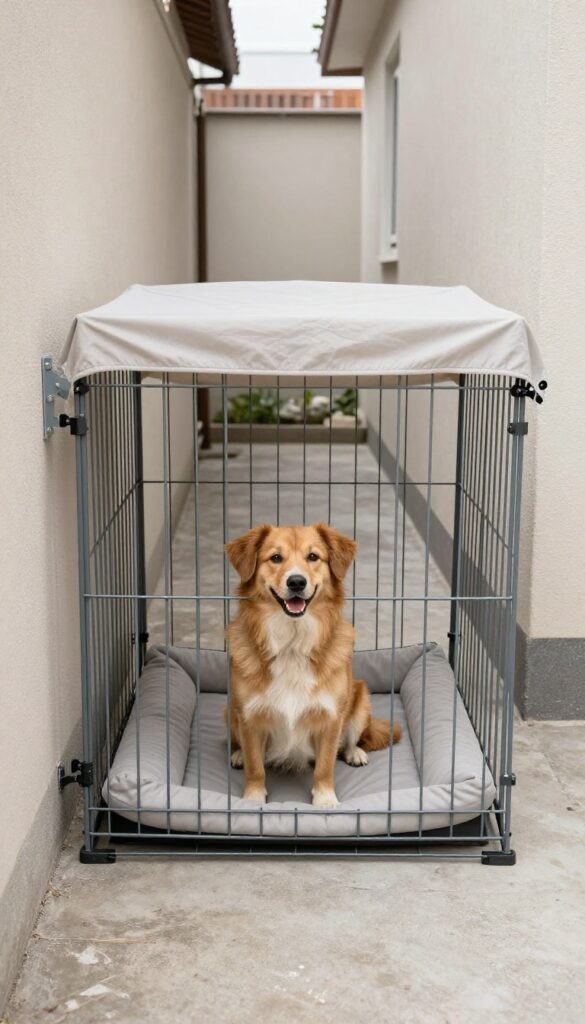
Not everyone wants a permanent structure, and that’s totally fine. A portable exercise pen can turn your side yard into a secure dog zone in minutes—and disappear just as fast when you need the space back.
These pens are lightweight but sturdy, and they give your dog room to move without feeling cooped up. Attach one side to your house wall with simple brackets, and you’ve got a stable enclosure that won’t tip over.
Why It Works
Side yards are often narrow and awkward for permanent builds, but an exercise pen fits right in. By securing it to the house, you eliminate the need for stakes or heavy anchors, and the pen stays put even with an enthusiastic pup. Plus, you can fold it flat for storage when guests come over or during bad weather.
Best For
Renters who can’t install permanent fencing, small-to-medium dogs that don’t need acres of space, and owners who want a quick setup they can take to the park or camping. Also great for puppies who aren’t ready for full-yard freedom.
Practical Tip
Choose a heavy-duty metal or coated wire pen with welded joints—they hold up better than flimsy plastic panels. Attach the side closest to the house using wall brackets (the ones meant for wire crates work well), then drape a shade cloth over the top or one side to keep your dog cool on hot days. Place a cot or pad inside so your pup doesn’t have to lie on dirt or grass.
5. Under-Eave Dog House with Run
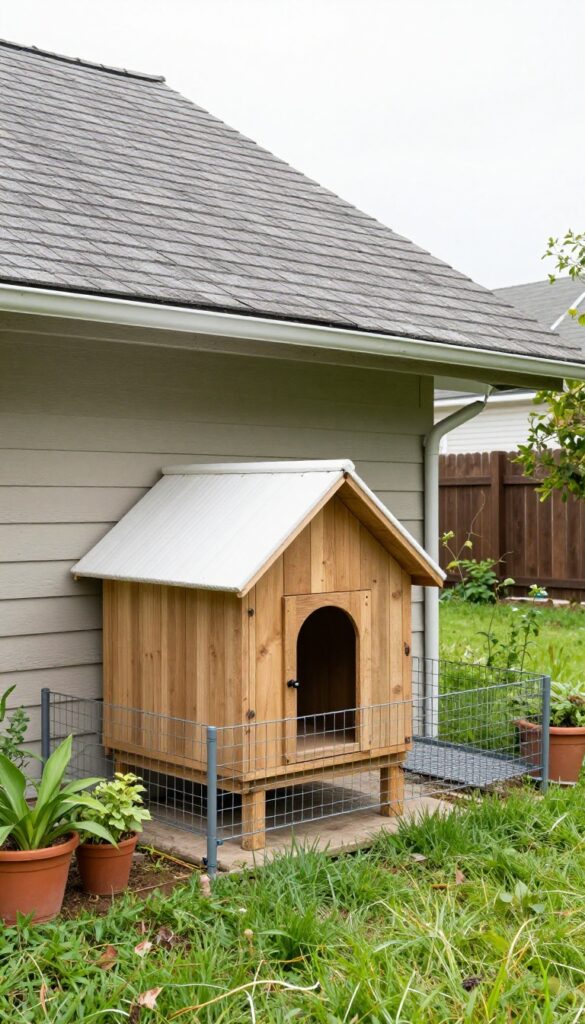
Does your side yard have a roof overhang? That shaded strip is perfect for an under-eave dog house with an attached run. The eave shields the house from rain and harsh sun, while the run gives your dog a safe place to stretch.
It’s a smart way to use otherwise wasted space along the house.
Why It Works
The overhang protects the dog house from weather, so it stays drier and cooler than a freestanding kennel. The attached run keeps your dog confined safely without blocking the entire side yard—you can still walk past easily.
Best For
Dogs that love being outside but need shelter from rain or heat. Great for narrow side yards with existing eaves, especially when you want a simple, semi-covered setup for small to medium breeds.
Practical Tip
Choose a dog house that fits snugly under the eave—leave a few inches of clearance for air circulation. Use a wire or mesh run that attaches to the house so your dog can go in and out freely. Add a weatherproof flap on the door for extra protection.
Budget-Friendly Option
Skip the run kit and use lightweight garden fencing panels instead. You can stake them into the ground along the side yard and create a custom-sized run for less than $50.
6. Pallet Wood Kennel with Corrugated Roof
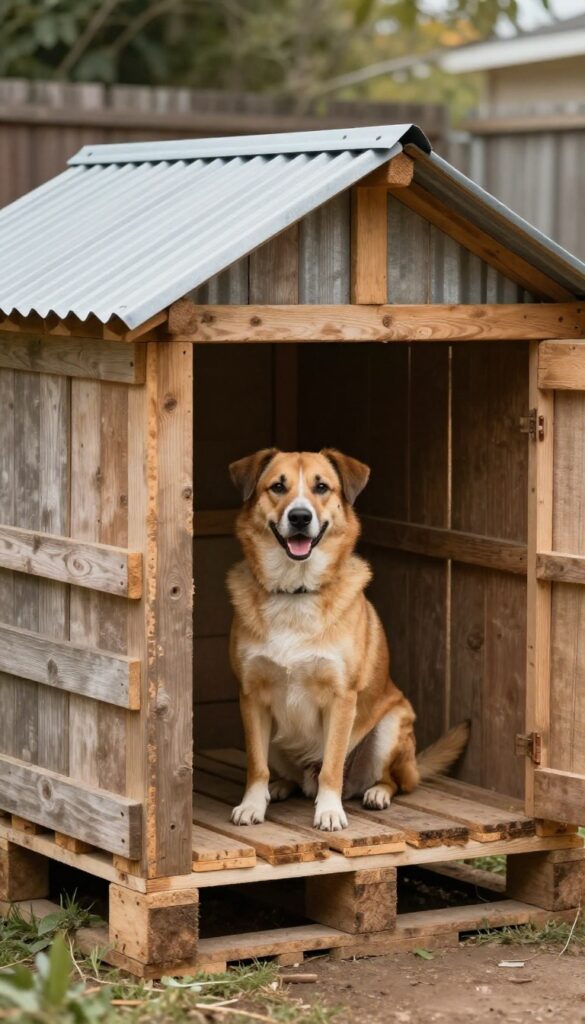
Reclaimed pallets are a budget-friendly way to build a rustic kennel that blends right into a side yard. The corrugated metal roof adds durability and a touch of farmhouse charm. This DIY project is perfect for dog owners who enjoy a hands-on weekend build.
Why It Works
Pallets are often free or very cheap, and the corrugated roof sheds rain and snow easily. The natural wood look softens the side yard, while the metal top keeps the interior dry and cool. Plus, you can customize the size to fit your space exactly.
Best For
Medium to large dogs that need a sturdy outdoor shelter. Great for renters or homeowners on a tight budget who want a permanent-looking kennel without spending much. Also suits farmhouse or rustic backyard styles.
Practical Tip
Sand all pallet wood thoroughly to prevent splinters, and seal it with a pet-safe outdoor wood sealant. Use galvanized screws and hinges for longevity. Add a simple latch that’s easy for you but secure against curious noses.
Budget-Friendly Option
If pallets aren’t available, look for free wood pallets from local hardware stores or factories—just avoid chemically treated ones (look for HT stamped). You can also use leftover lumber from other projects.
7. Elevated Dog House with Deck
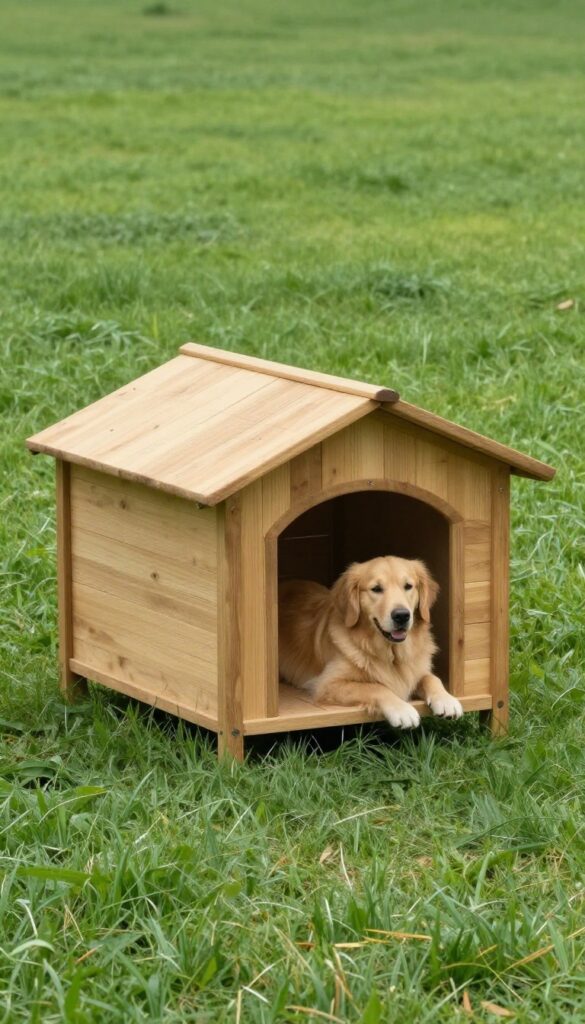
Lifting your dog’s house off the ground does more than just look good. An elevated dog house with a small deck keeps the interior dry during rain and cooler in summer by allowing air to circulate underneath. The deck gives your pup a sunny spot to lounge just outside the door, extending their living space without taking up more room in your side yard.
Why It Works
Elevating the dog house prevents moisture from seeping in and keeps pests like ants or rodents from nesting underneath. The deck provides a clean, dry area for your dog to relax outside the kennel, which is especially useful on damp mornings or hot afternoons when the ground is uncomfortable.
Best For
This setup is ideal for medium to large breeds that like spending time outdoors but need a comfortable place to retreat. It works well in side yards with poor drainage or areas that stay damp after rain.
Practical Tip
Build the deck at least six inches off the ground using pressure-treated lumber or composite decking for durability. Add a gently sloping ramp with traction strips so older dogs or puppies can climb up safely without slipping.
Budget-Friendly Option
If you’re handy, build the platform yourself using recycled pallet wood—just make sure it’s sturdy and free of chemical treatments. For the deck surface, inexpensive rubber stall mats cut to size provide a non-slip, weather-resistant alternative to costly materials.
8. Chain Link Kennel with Privacy Slats
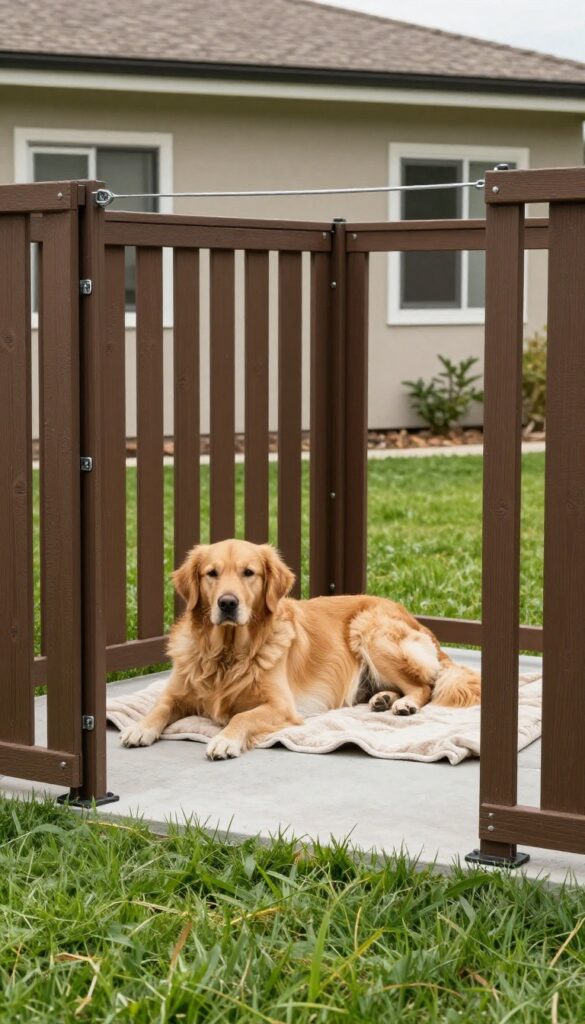
Chain link kennels are a classic choice for a reason—they’re affordable, durable, and simple to set up. Adding privacy slats transforms the look and feel, blocking wind and giving your dog a more den-like space that feels safe and cozy. It’s a straightforward upgrade that makes a big difference without breaking the bank.
Why It Works
Privacy slats cut down on drafts and visual distractions, which helps nervous dogs settle. The chain link itself is strong and allows airflow, so your pup stays comfortable even on warmer days.
Best For
This setup is ideal for budget-minded owners who want a secure outdoor space without a major construction project. It works great for dogs that are easily spooked by activity outside the yard or need a calm retreat.
Practical Tip
Use a concrete or paver base to prevent digging escapes—lay landscaping fabric underneath to stop weeds from popping through. Choose slats in a neutral color like brown or green so the kennel blends with your home’s exterior.
Budget-Friendly Option
Skip pre-cut slats and buy a roll of outdoor privacy mesh instead. It’s cheaper, easy to zip-tie to the fence, and still provides good wind protection.
9. Multi-Dog Kennel with Separate Compartments
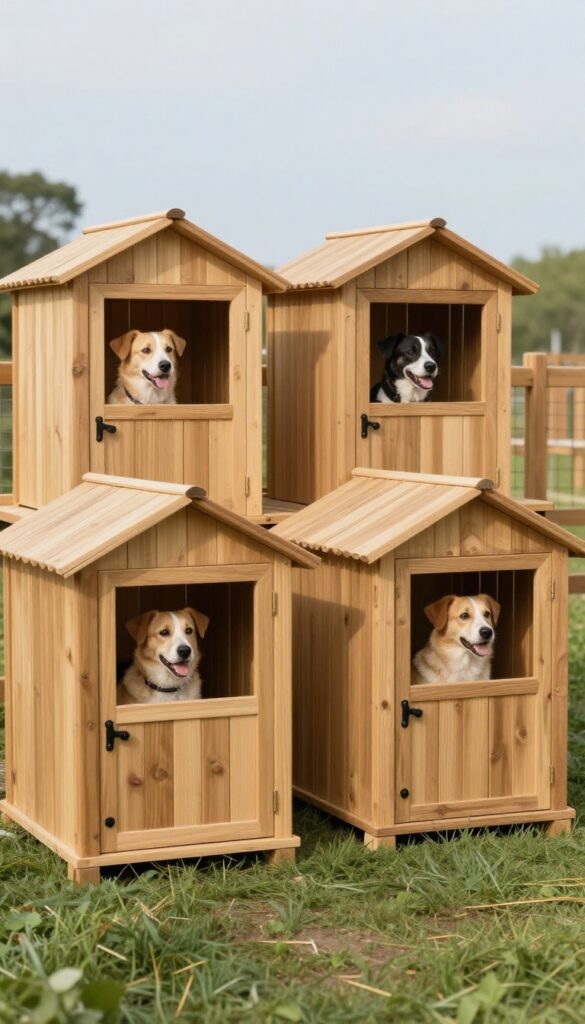
If you have more than one dog, sharing a single kennel can lead to tension. A multi-dog kennel with separate compartments gives each pup their own private space while still letting them share a common run. It’s a smart solution for keeping the peace and giving every dog a sense of ownership over their spot.
These setups typically feature individual houses or crates lined up side by side, each with its own door to a shared fenced area. The dogs can see and interact safely through the dividers, but they have their own bed and food bowl without competition. It’s like having a tiny doggie apartment complex in your side yard.
Dog owners love this design because it reduces resource guarding and lets you manage feeding or alone time easily. Plus, if you use removable dividers, you can reconfigure the space as your pack changes.
Why It Works
Each dog gets a personal den where they can retreat without feeling crowded. This lowers stress and prevents fights over toys, food, or resting spots. The shared run still gives them group playtime when supervised.
Best For
Households with two or more dogs that get along but need their own space. It’s also great for introducing a new dog gradually—you can keep them in adjacent compartments so they get used to each other through the divider.
Practical Tip
Build the compartments with removable plywood dividers so you can open up the space later if needed. Add a roof over the entire structure for shade and rain protection, and use heavy-duty latches on each door to prevent escape artists from figuring out how to open their neighbor’s door.
FAQ
What size should a side-yard dog kennel be?
A good rule of thumb is at least 4 feet wide and 8 feet long for one medium dog. Bigger is always better, but side yards are often narrow—aim for at least 3 feet of width so your dog can turn around comfortably.
Do I need a permit to build a kennel in my side yard?
It depends on your local zoning laws. Many areas require permits for structures over a certain size. Check with your city or county before building to avoid fines.
What’s the best flooring for a side-yard kennel?
Concrete or pavers are easiest to clean and prevent digging. Gravel works well for drainage but needs occasional raking. Avoid grass—it will turn to mud quickly.
How can I keep my dog cool in a side-yard kennel during summer?
Provide shade with a roof or shade cloth, ensure good airflow, and place the kennel on the north or east side of the house. Add a frozen water bowl or a cooling mat for extra comfort.
Can I attach a dog door from my house to the side-yard kennel?
Yes, if the side yard is directly accessible from your house. Install a dog door in the exterior wall, leading into the kennel. This gives your dog free access to both spaces.
Conclusion
Finding the right kennel spot along your house can turn an unused side yard into your dog’s favorite hangout. Start with one idea that fits your space and your pup’s personality—whether that’s a simple crate nook or a custom-built run.
Small upgrades like shade, drainage, or a comfy bed make all the difference. Your dog will thank you with tail wags every time they head outside.

I’m Pallab Kishore, the owner of Little Pets Realm — an animal lover and pet care enthusiast sharing easy tips, healthy recipes, and honest advice to help every small pet live a happy, healthy, tail-wagging life.