
Your dog's house should be more than just a shelter—it should feel like a cozy retreat. With a few thoughtful upgrades, you can turn a basic kennel into a space your pup will love spending time in.
From orthopedic bedding to soft lighting, these eight ideas focus on comfort, safety, and easy maintenance. Whether you're setting up an indoor crate or an outdoor dog house, each tip helps create a warm, inviting spot that suits your dog's needs.
Let's explore simple ways to make that space truly special.
1. Orthopedic Bedding for Joint Support
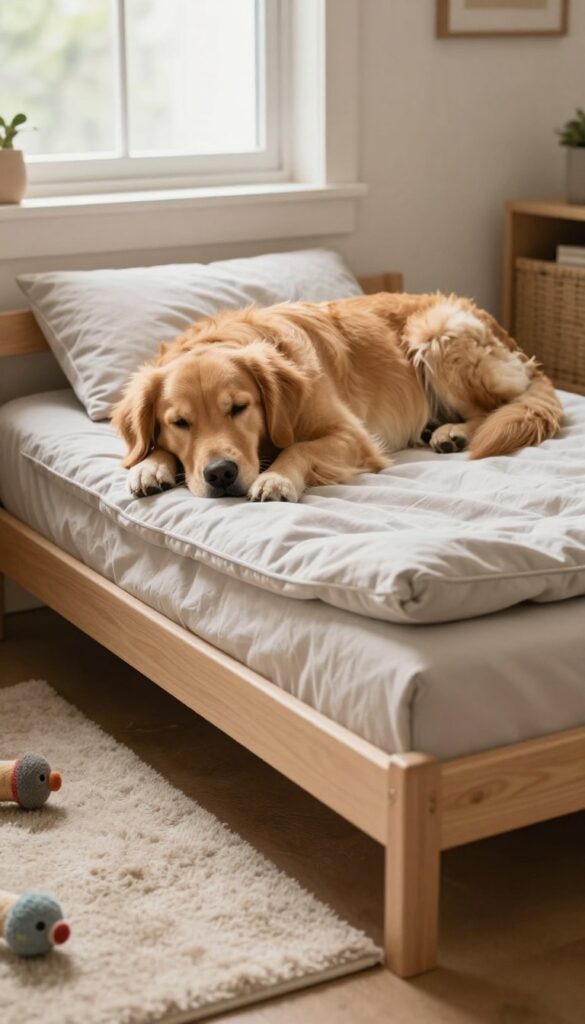
A cozy dog house starts with a solid foundation—literally. Swapping out a thin blanket or flat cushion for an orthopedic bed can make a world of difference in your dog's comfort and health. These beds are designed to relieve pressure points and support joints, helping your pup sleep more soundly and wake up feeling refreshed.
Why It Works
Orthopedic beds use high-density foam or memory foam that contours to your dog's body, distributing weight evenly and reducing stress on hips, elbows, and spine. This is especially important for dogs with arthritis, hip dysplasia, or those recovering from surgery. The extra support also helps prevent sores from developing on hard surfaces.
Best For
Senior dogs, large breeds prone to joint issues (like German Shepherds, Labradors, and Golden Retrievers), and any pup that spends long hours in their crate or dog house. It's also great for dogs who prefer sleeping on hard floors over soft blankets.
Practical Tip
Look for beds with removable, machine-washable covers to keep things fresh. Add a waterproof liner underneath to protect the foam from accidents or spills. For outdoor dog houses, choose a bed with a water-resistant outer layer and elevate it slightly off the floor to avoid dampness.
Budget-Friendly Option
If a full orthopedic bed is out of budget, try layering a thick memory foam mattress topper (cut to size) under a durable cover or old blanket. You can also repurpose an old human pillow top mattress pad for similar cushioning.
2. Insulated Walls for Temperature Control
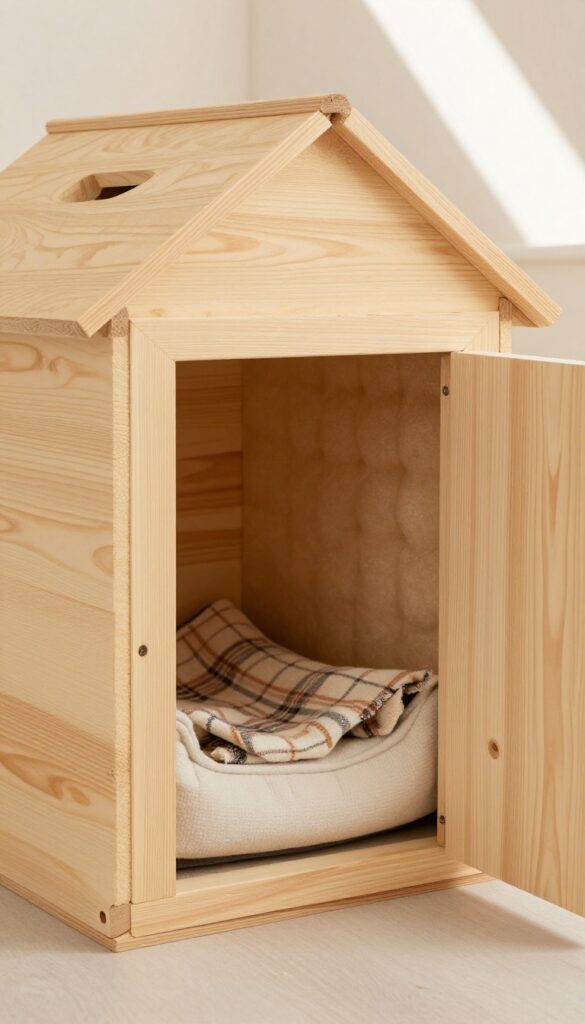
Your dog's comfort depends a lot on the temperature inside their house. Adding insulation to the walls and roof helps keep things cool when it's hot out and warm during chilly nights. It's a simple upgrade that makes a huge difference in how often your pup uses their space.
Why It Works
Dogs are sensitive to extreme temperatures, and a poorly insulated dog house can become an oven in summer or a freezer in winter. Foam board insulation or reflective barriers slow down heat transfer, so the interior stays closer to your dog's ideal comfort zone. Plus, proper ventilation prevents stuffiness and moisture buildup.
Best For
This works great for outdoor dog houses in climates with hot summers or cold winters. It's especially helpful for breeds with short coats, like Boxers or Chihuahuas, who struggle with temperature swings.
Practical Tip
Cut foam boards to fit snugly between the wall studs and roof rafters, then cover them with plywood for a clean look. Add reflective insulation on the roof to deflect summer heat. Don't forget small vents near the top and bottom to allow airflow without drafts.
Budget-Friendly Option
Instead of foam board, you can use rigid styrofoam sheets from craft stores or leftover packing materials. Even bubble wrap stapled to the walls provides some insulation for very tight budgets.
3. Raised Flooring to Prevent Dampness
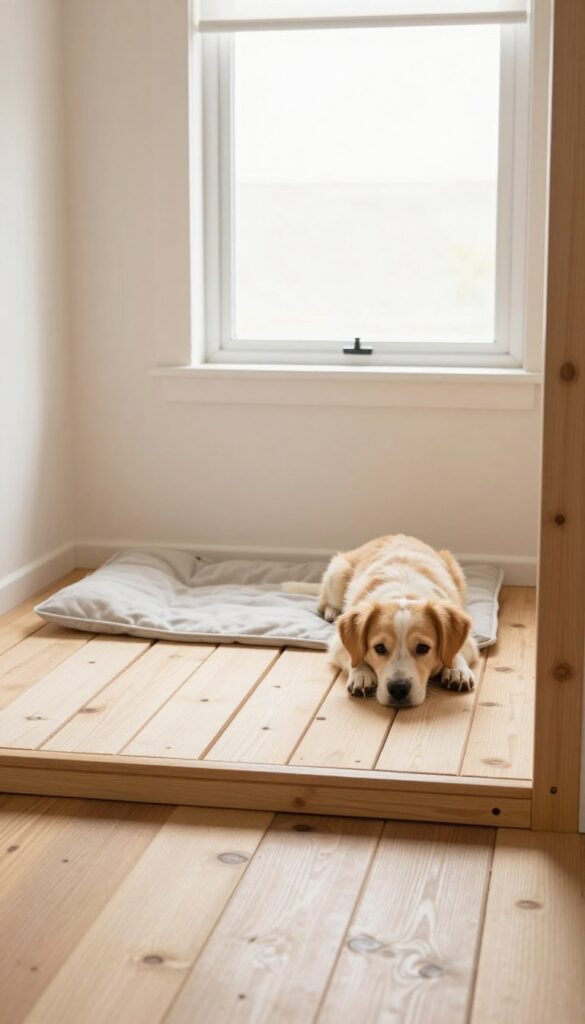
Moisture is a common problem in dog houses, especially when they sit directly on grass or concrete. A raised floor solves this by lifting your pup's sleeping area off the ground, keeping it dry and comfortable. It's a simple upgrade that makes a big difference in your dog's daily comfort.
Why It Works
Elevating the floor allows air to circulate underneath, which prevents dampness and mold from building up. This means bedding stays fresher longer, and your dog avoids lying on cold, wet surfaces that can lead to joint stiffness or skin issues.
Best For
This idea works great for outdoor dog houses in rainy climates or areas with heavy dew. It's also perfect for dogs who like to drag water inside after drinking—raised flooring helps water drain away instead of pooling.
Practical Tip
Use pressure-treated wood pallets or a DIY wooden platform with slats spaced about an inch apart. This allows air flow while still providing solid support. Add a removable, washable cushion on top for extra comfort and easy cleaning.
Budget-Friendly Option
If you're on a tight budget, repurpose an old wooden pallet by sanding it smooth and sealing it with pet-safe paint. You can also use plastic crate grids or even large ceramic tiles with spacers to create a raised surface.
4. Soft Lighting for Evening Comfort
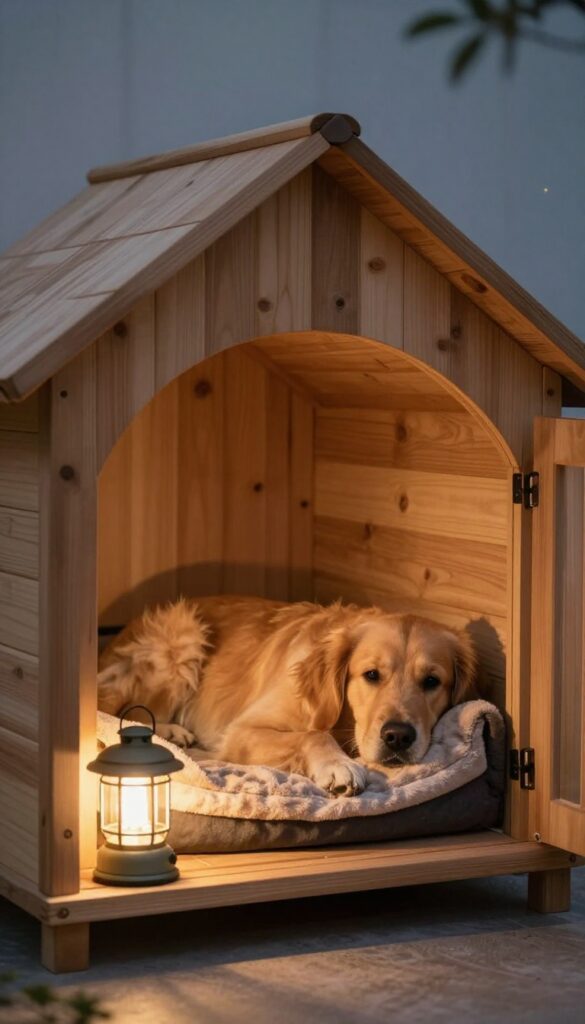
A gentle glow can make all the difference when your dog is settling in for the night. Soft lighting mimics the calming ambiance of a den, helping anxious pups feel secure during storms or after dark. It's a simple addition that turns a basic dog house into a cozy sanctuary.
Why It Works
Dogs are sensitive to sudden changes in light and darkness. A low-level light source reduces stress by providing a constant, soothing illumination that signals safety. This is especially helpful for dogs who get nervous during thunderstorms or fireworks.
Best For
This idea is ideal for dogs with anxiety, puppies adjusting to a new home, or any dog that spends time in an outdoor house or indoor crate during evening hours. It also works well for senior dogs who may have vision issues.
Practical Tip
Use a battery-operated LED lantern or a low-wattage bulb with a protective cover to prevent burns or chewing hazards. Place it on a shelf or in a corner where it can't be knocked over. Test the brightness first—your dog should find it comforting, not glaring.
5. Non-Slip Floor Mats for Safety
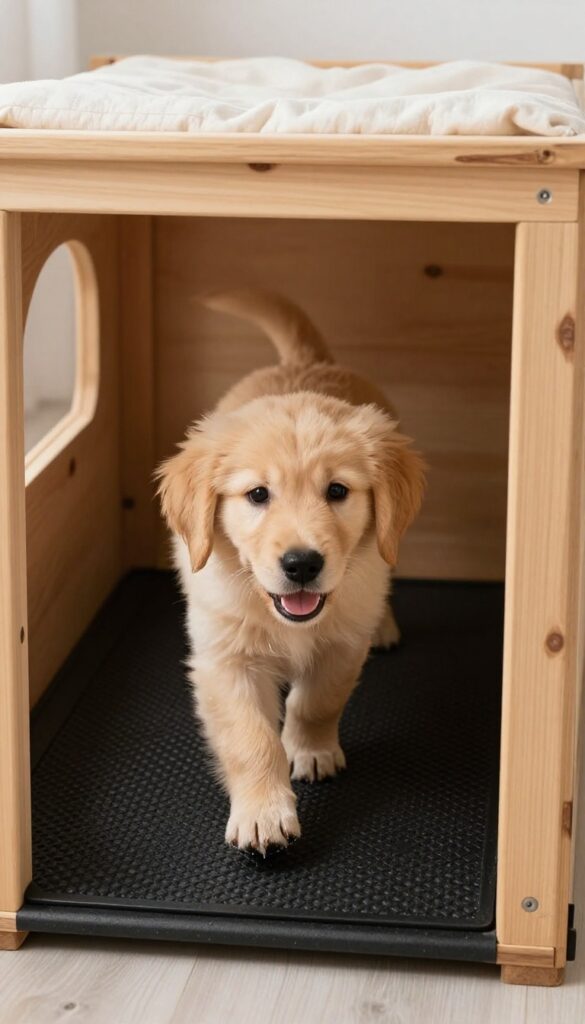
A dog house floor can get slippery, especially when your pup hops in and out with wet paws or during playtime. Adding non-slip mats at the entrance and inside creates a stable surface that helps prevent falls and injuries. Many dog owners find this simple upgrade gives them peace of mind, particularly for older dogs or those with joint issues.
Why It Works
Dogs, especially seniors or breeds prone to hip dysplasia, can struggle on slick surfaces like plastic or tile. Rubber or textured mats provide traction underfoot, reducing the risk of slips when entering or exiting the dog house. They also absorb some impact, making the space more comfortable for joints.
Best For
This idea is ideal for dogs with mobility challenges, such as older pups, large breeds prone to arthritis, or any dog recovering from surgery. It's also a great fit for outdoor dog houses where rain or mud can make floors slippery.
Practical Tip
Choose mats made from heavy-duty rubber that won't slide around on their own—look for ones with a textured bottom. Cut the mat to fit the entrance area snugly so there are no loose edges your dog could trip over. Clean weekly by hosing off dirt and letting it air dry.
Budget-Friendly Option
If you don't want to buy a specialty mat, repurpose an old yoga mat or a rubber drawer liner—just make sure it has good grip and isn't too thin. Secure it in place with double-sided tape if needed.
6. Washable Wall Liners for Easy Cleaning
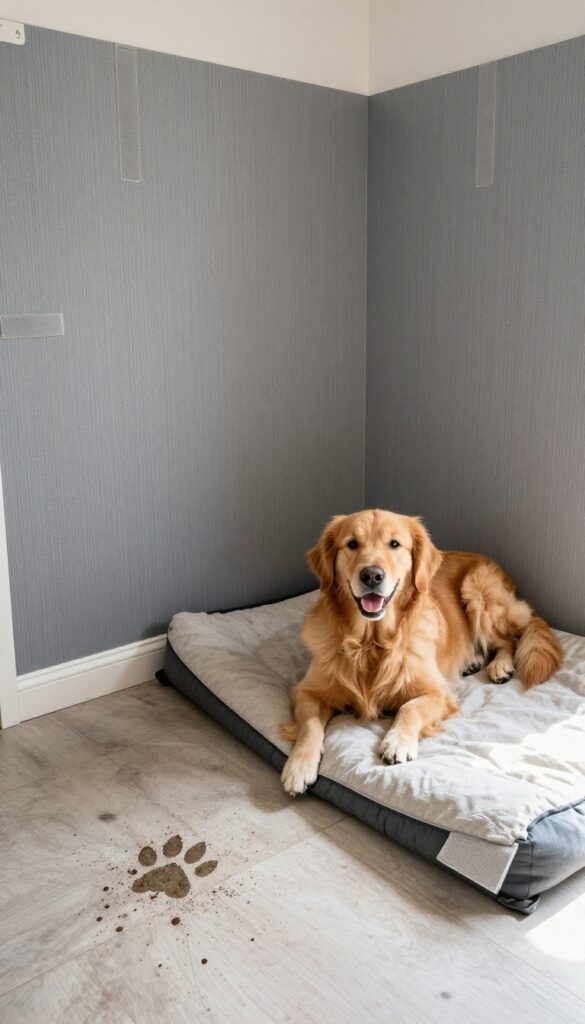
Dog houses take a beating—muddy paws, drool, and the occasional accident can leave walls stained and smelly. Washable wall liners solve that by creating a barrier you can wipe down or toss in the washing machine. Vinyl panels, removable fabric covers, or even peel-and-stick wallpaper make cleanup a breeze without sacrificing style.
Your dog gets a fresh-smelling space, and you spend less time scrubbing.
Why It Works
Liners protect the actual walls from moisture and odors, which can seep into wood or drywall over time. Being able to remove and wash them means you can keep the interior hygienic with minimal effort—especially important for dogs who drool heavily or track in dirt.
Best For
Dogs that are heavy droolers, messy eaters, or spend time outside in wet or muddy conditions. Also great for indoor kennels where smells can linger.
Practical Tip
Choose vinyl liners with a slight texture to prevent slipping, and secure them with Velcro strips or snap buttons so they stay put but are easy to remove. For machine-washable fabric panels, opt for a water-resistant coating to extend their life.
Budget-Friendly Option
Cut a cheap vinyl tablecloth to size and attach it with adhesive hook-and-loop tape. It’s waterproof, wipeable, and costs just a few dollars.
7. Built-In Storage for Toys and Treats
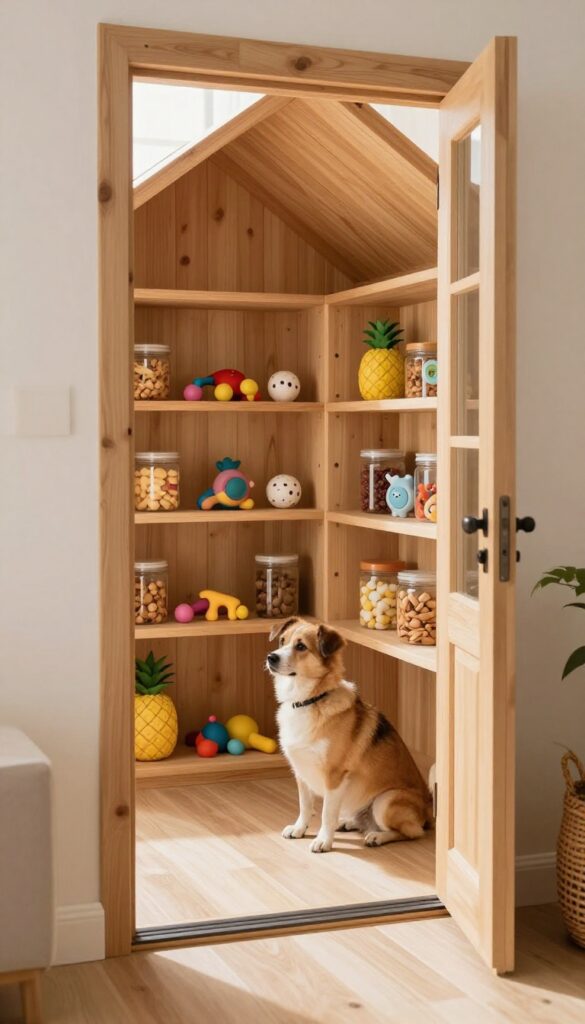
A dog house can quickly become cluttered with toys, treats, and grooming supplies scattered around. Adding a small shelf or compartment inside or just outside the door keeps everything tidy and within easy reach. It’s a simple upgrade that makes daily routines smoother for you and more fun for your pup.
Why It Works
Having designated storage means you never have to hunt for a chew toy or a bag of treats when it’s time to reward your dog. It also encourages you to keep the space organized, which reduces mess and makes the dog house feel more like a cozy den than a storage bin.
Best For
This idea is great for any dog owner who likes to keep treats, toys, and grooming tools close at hand. It works especially well for outdoor dog houses where carrying items back and forth can be a hassle, and for indoor crates that double as a command center for your pup’s gear.
Practical Tip
Install a waterproof shelf or bin that’s easy to wipe clean. Use clear containers or labeled bins so you can quickly find what you need. Keep heavier items on lower shelves to prevent tipping, and avoid storing anything that could be a choking hazard if your dog gets into it.
8. Personalized Touches Like Name Plaques or Paint
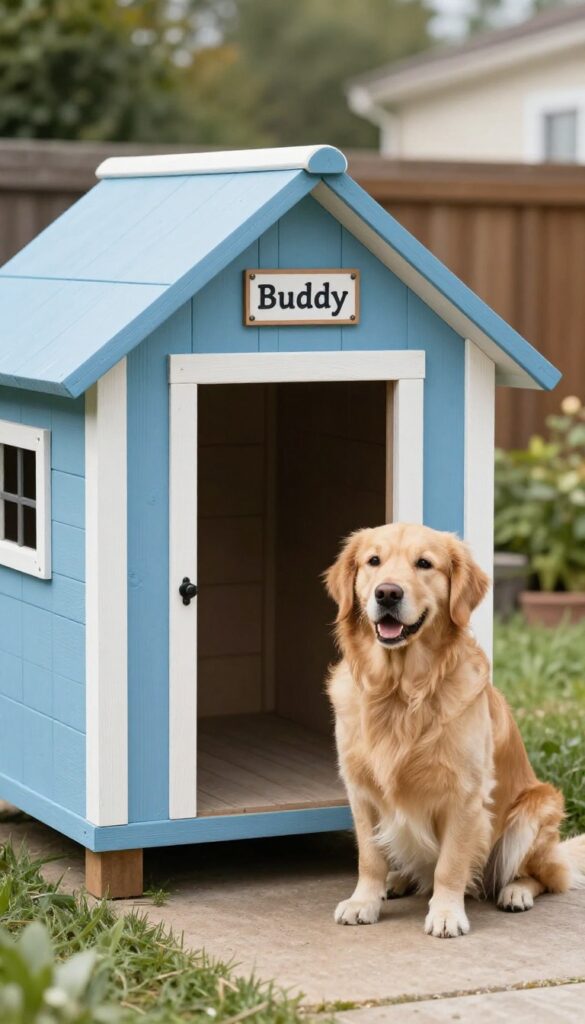
Adding personal details to your dog's house makes it feel like a real part of the family. A custom name plaque, paw print decals, or a splash of non-toxic paint in their favorite color turns a plain structure into a cozy, welcoming space.
These small touches do more than look cute—they help your dog feel like the space truly belongs to them. Dogs are sensitive to their environment, and familiar scents and sights can reduce anxiety.
Best of all, personalization is easy to swap out as your tastes or your dog's preferences change.
Why It Works
Dogs thrive on routine and familiarity. A personalized space with their name or favorite colors helps them recognize the house as their own safe zone. The scent of paint and new materials fades quickly when you use pet-safe products, leaving behind a cozy den that feels special.
Best For
This idea works for any dog owner who wants to add a fun, meaningful touch to their pet's space. It's especially great for outdoor dog houses that sit in visible areas of the yard, or for indoor crates that double as decor.
Practical Tip
Use only non-toxic, water-based paint labeled safe for pets. Apply two thin coats for even coverage, and let the paint cure fully (at least 48 hours) before letting your dog inside. For name plaques, choose weather-resistant materials like acrylic or sealed wood if placing outdoors.
Budget-Friendly Option
Skip custom plaques and use peel-and-stick vinyl letters from a craft store—they're cheap, easy to apply, and removable. You can also stencil your dog's name with leftover paint from another project.
FAQ
What is the best material for dog house bedding?
Orthopedic foam or memory foam beds are best for joint support, while cedar shavings can repel insects. Always choose washable covers for hygiene.
How do I keep my dog's house warm in winter?
Insulate walls with foam board, use a heated pet bed, and add a flap over the door to block drafts. Ensure ventilation to prevent condensation.
Should I put a light inside the dog house?
A soft, battery-operated LED light can help anxious dogs feel secure at night. Avoid high-wattage bulbs that could overheat the space.
How often should I clean the dog house interior?
Spot clean weekly and do a deep clean monthly. Remove bedding and wash it, wipe down walls, and disinfect with pet-safe cleaner.
Can I use regular house paint inside a dog house?
No, use non-toxic, pet-safe paint or sealant. Regular paint may contain harmful chemicals that dogs can ingest by chewing or licking.
Conclusion
Your dog's house should feel like a safe, comfortable retreat, not just a place to sleep. Small upgrades like soft bedding, proper ventilation, and personal touches can make a huge difference in how much your pup enjoys their space.
Pick a few ideas that fit your setup and budget. A cozy dog house means a happier, more relaxed pet—and that makes for a happier home too.

I’m Pallab Kishore, the owner of Little Pets Realm — an animal lover and pet care enthusiast sharing easy tips, healthy recipes, and honest advice to help every small pet live a happy, healthy, tail-wagging life.