
Last updated on April 26th, 2026 at 03:04 pm
Your garage can be more than a parking spot or storage space—it can be a fantastic dog house that gives your pup easy access to both the indoors and the backyard. With a little planning, you can create a cozy, functional area that works with your daily routine.
Garage dog houses are especially great for active dogs who love to come and go. They keep messes contained and give your dog a dedicated spot that feels like their own.
Ready to turn that underused space into a dog-friendly haven? These nine ideas will help you design a garage dog house that’s practical, comfortable, and easy to maintain.
1. The Mudroom-Style Entry with Dog Door
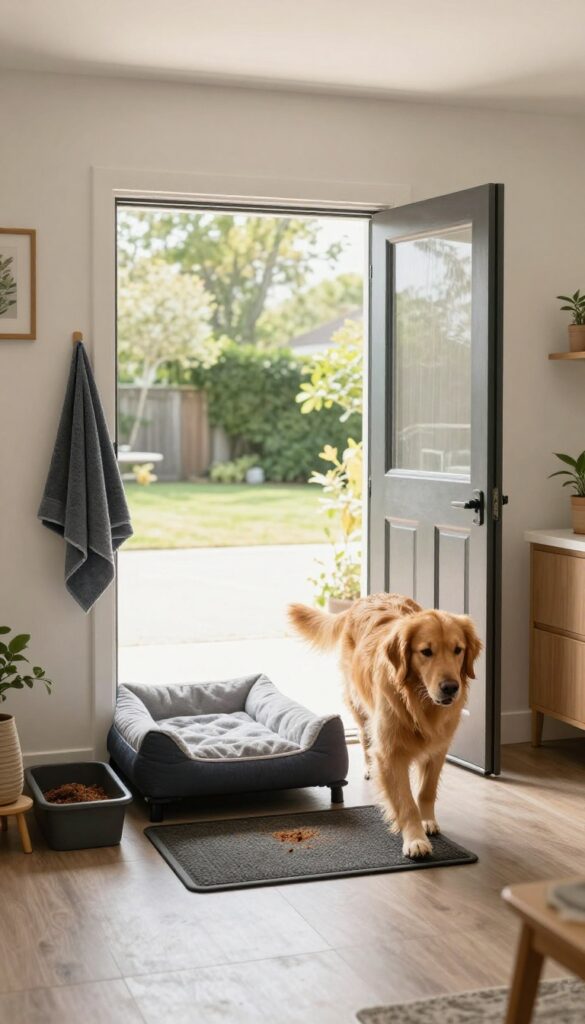
Think of this setup as a miniature mudroom for your dog, tucked right into the garage. By installing a dog door in the garage wall that leads to the backyard, you create a direct path for your pup to go in and out without tracking dirt through the house. Then, on the garage side, you arrange a raised dog bed, a few towel hooks, and a boot tray to catch any leftover mess.
This idea works because it keeps the chaos contained. Wet paws, muddy fur, and loose dirt stay in one small zone that’s easy to sweep or hose down. Plus, your dog gets the freedom to move between their cozy garage spot and the yard whenever they want.
Why It Works
The mudroom-style entry turns the garage into a transition space. Your dog can come and go freely, but all the mess stays in one place. You don’t have to worry about paw prints on your kitchen floor or wet dog smell drifting into your living room.
Best For
This setup is ideal for active dogs who love being outside but also enjoy lounging indoors. It’s especially handy for breeds that shed a lot or tend to get muddy—like Labradors, Golden Retrievers, or Australian Shepherds. If you have a fenced backyard and use your garage regularly, this is a perfect fit.
Practical Tip
Place the raised dog bed slightly off the floor to keep it dry and clean. Use easy-to-clean materials like rubber mats under the bed and a washable cover on top. Hang towels at dog height so you can quickly wipe paws before they step further into the garage.
2. Insulated Dog Crate with Ventilation
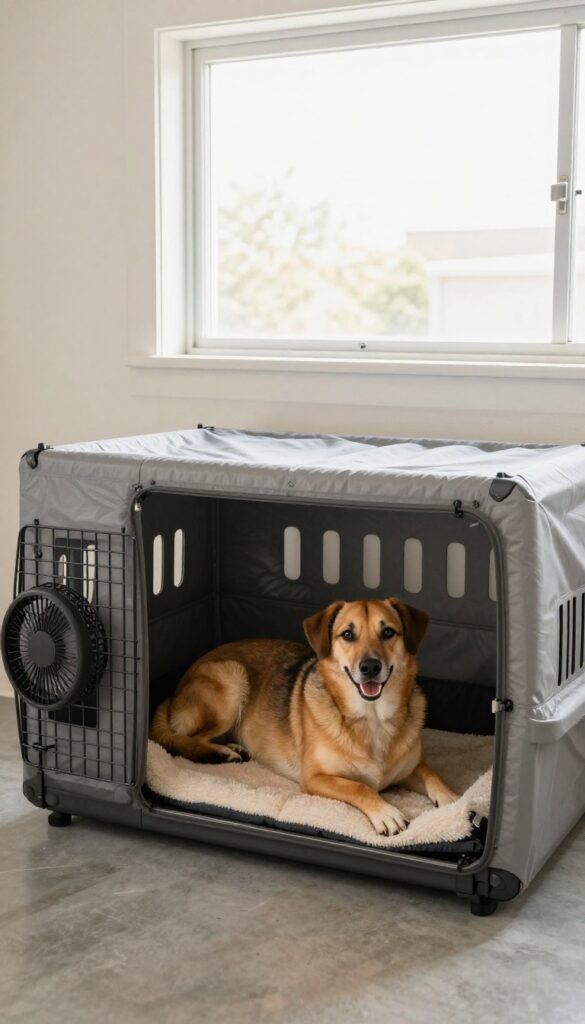
An insulated crate is a smart way to give your dog a comfortable, contained space inside the garage. It keeps the temperature more stable than the open garage, so your pup stays cozy in winter and cool in summer. Plus, it’s easy to clean and gives you peace of mind when you’re not around.
Why It Works
Garages can get hot or cold quickly, but an insulated crate acts like a mini climate-controlled room. Adding a small fan or heated pad lets you adjust for the seasons without much effort. The ventilation ensures fresh air flows through, preventing stuffiness and keeping your dog happy.
Best For
This setup works well for dogs who are already crate-trained or those who need a safe, quiet retreat away from household chaos. It’s ideal for owners who want a low-maintenance, contained area that still feels like a den.
Practical Tip
Place the crate against an interior wall away from direct sunlight and drafts. Use a washable, orthopedic bed inside and attach a clip-on fan for summer or a pet-safe heating pad for winter. Check the ventilation slots regularly to ensure they aren’t blocked by bedding or debris.
3. Built-In Dog Nook Under Workbench
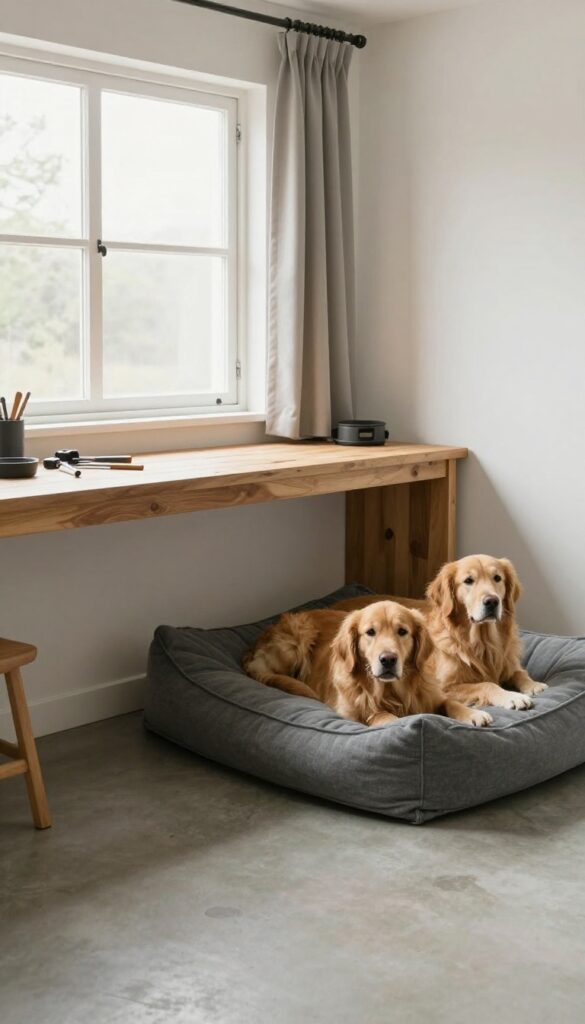
A workbench doesn’t have to be just for tools. By converting the space underneath into a built-in dog nook, you create a cozy den that keeps your pup close while you tackle projects. This setup turns an often-wasted area into a purposeful spot that feels like a natural part of the garage.
It’s practical, space-saving, and gives your dog a front-row seat to whatever you’re doing.
Why It Works
The under-bench nook uses vertical space that normally goes unused, making it ideal for smaller garages. It also provides a sense of security for dogs—the low ceiling and three-sided enclosure mimic a den-like environment that many dogs find comforting.
Best For
This idea is great for dogs that like to be near their owners but still want their own space. It works well for medium to large breeds that can fit comfortably under a standard workbench, and it’s especially useful for people who spend a lot of time working in the garage.
Practical Tip
Add a thick, washable cushion and a low-hanging curtain or fabric panel across the front for privacy and coziness. Make sure the workbench is sturdy enough to support tools and materials above without sagging. Use easy-clean materials like marine-grade vinyl or outdoor fabric for the cushion cover.
Budget-Friendly Option
Skip the custom build and use an existing heavy-duty shelving unit instead. Clear out the bottom shelf, add a cushion, and drape a blanket over the front for instant privacy—costs next to nothing if you already have the shelf.
4. Raised Platform Bed with Storage
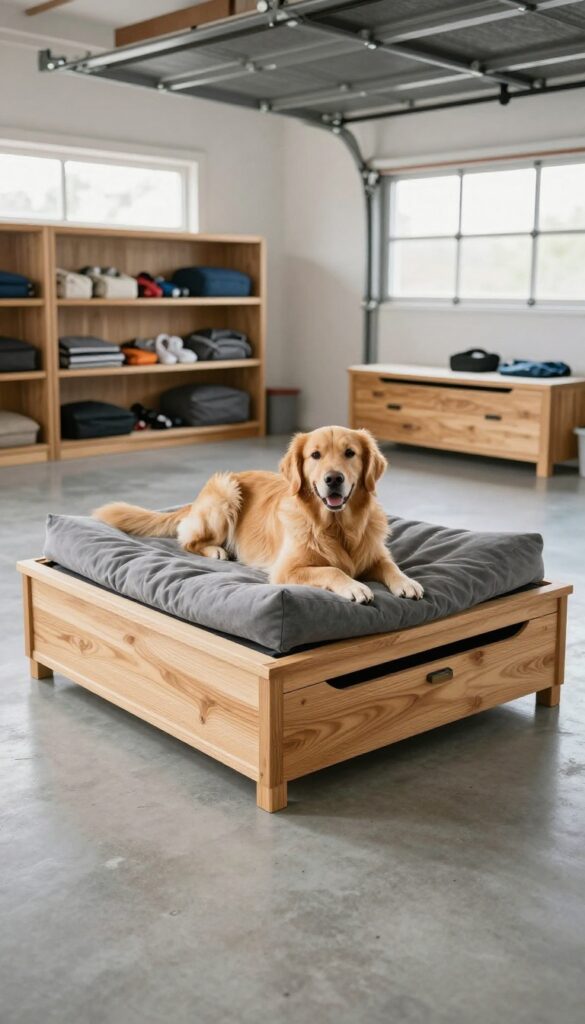
A raised platform bed does double duty in a garage dog house. It lifts your dog off the cold concrete while creating valuable storage space underneath. The built-in drawers keep leashes, toys, and cleanup supplies organized and out of sight.
This design works well in garages where floor space is tight but you want a dedicated spot for your dog. The platform gives your pup a clear, comfortable place to rest, and you get a clutter-free zone that’s easy to maintain.
Many dog owners love this setup because it combines comfort with practicality. The raised bed feels like furniture, not an afterthought, and the drawers make daily care simple.
Why It Works
Elevating the bed insulates your dog from chilly garage floors and improves air circulation, keeping them cooler in summer. The storage drawers let you grab a leash or toy without digging through piles, so your garage stays tidy and your routine stays smooth.
Best For
Medium to large breeds that need extra joint support, such as Labradors or Golden Retrievers. Also ideal for garages used as mudrooms where you want to keep dog gear organized but accessible.
Practical Tip
Use weather-resistant materials like kiln-dried pine or plywood sealed with pet-safe paint or polyurethane. Attach casters to the platform so you can move it for cleaning. For the bed cushion, choose a washable outdoor fabric cover that can handle dirt and paw prints.
Budget-Friendly Option
Skip the custom build and repurpose an old wooden pallet as a low platform. Sand it smooth, add a weatherproof sealant, then slide plastic bins underneath instead of built-in drawers. A cheap outdoor cushion on top completes the look.
5. Portable Dog House on Casters
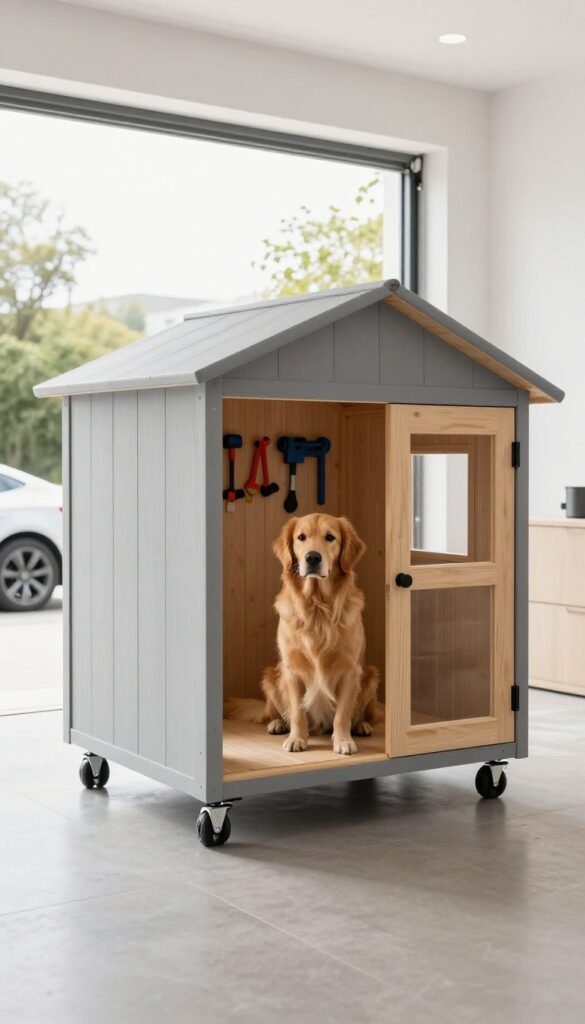
Mobility is a game-changer in a garage that doubles as a workshop, storage area, or hangout spot. A portable dog house on casters lets you shift your pup’s bed, crate, or kennel wherever it’s most convenient—whether that’s near the door for quick potty breaks or in a warmer corner during winter. Locking casters keep everything stable when parked, but unlock easily so you can roll the whole setup outside for deep cleaning or fresh air.
Why It Works
Garages have shifting temperatures and uses throughout the year. Rolling the dog house lets you chase the sun in winter, find shade in summer, or move it away from a drafty door. It also makes cleaning under and around the structure effortless—no more crawling on hands and knees to sweep up fur and dirt.
Best For
Dog owners who use their garage for multiple purposes (parking, tools, hobbies) and need flexibility. Great for medium to large breeds that have their own sturdy crate or kennel. Also ideal if your dog loves to sunbathe but needs shelter from rain or wind.
Practical Tip
Choose locking casters with a weight rating at least double your dog’s weight plus the house itself. Test the locks before letting your dog inside—accidental rolling can be scary. Add a thick outdoor mat underneath to catch debris and make rolling easier.
Budget-Friendly Option
Skip buying a pre-made rolling kennel. Instead, attach locking caster wheels to an existing heavy-duty plastic crate or wooden dog house using a plywood base. Most hardware stores sell casters for under $20, and you can install them in under an hour.
6. Dog-Proofed Corner with Rubber Mat Flooring
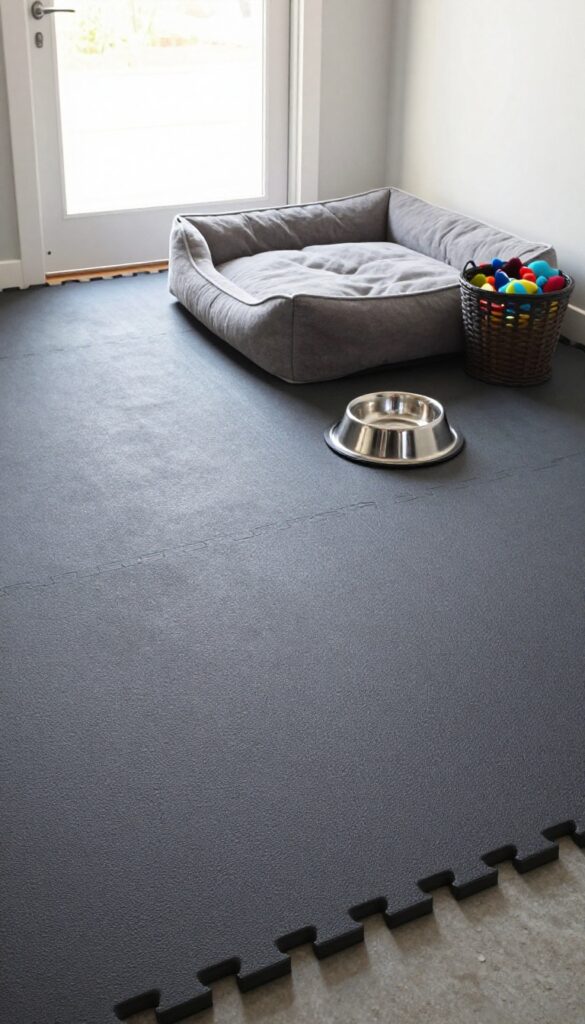
Designate a corner of the garage that’s all about durability and comfort. Interlocking rubber mats create a soft, non-slip surface that’s a breeze to clean—just hose it down. Add a sturdy dog bed, a water bowl station, and a toy bin for a complete setup.
This corner becomes a low-maintenance zone where your dog can relax without tracking dirt everywhere.
Why It Works
Rubber flooring is tough enough to handle claws, spills, and muddy paws while being gentle on joints. It’s also non-slip, so older dogs or those with mobility issues won’t slip on slick concrete. The interlocking tiles are easy to install yourself and can be replaced individually if damaged.
Best For
This idea is perfect for active dogs who come in from the yard muddy or wet, and for owners who want a quick-clean solution. It’s also great for senior dogs who need joint-friendly surfaces, or for puppies still learning house training.
Practical Tip
Lay the rubber mats over a tarp or waterproof underlayment to protect the garage floor from moisture. Use a raised dog bed to keep your pup off the cold floor in winter. Place the water bowl on a small tray to catch splashes, and choose toys that are easy to sanitize.
7. Indoor-Outdoor Kennel Run Setup
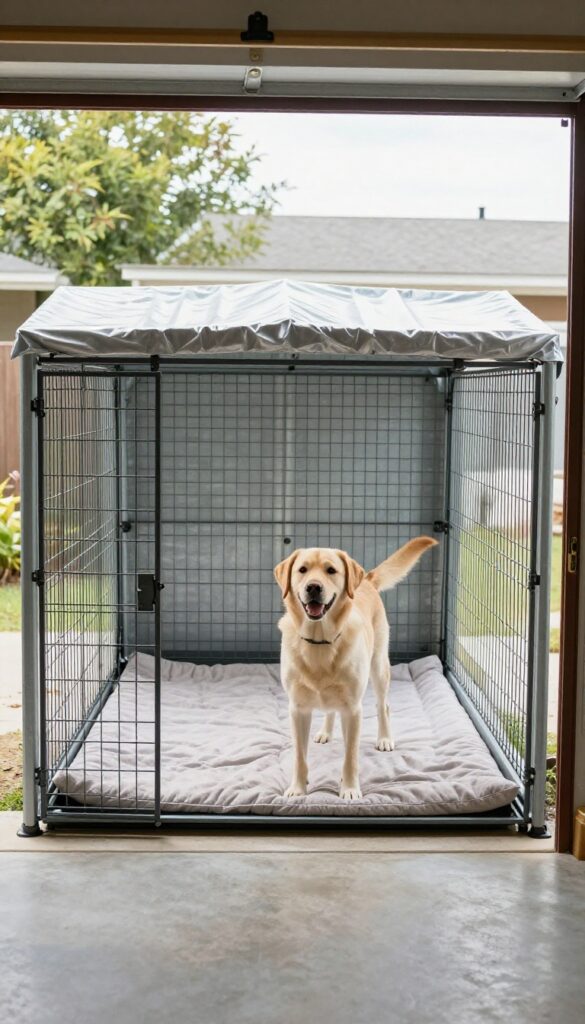
A kennel run that connects your garage to the backyard gives your dog the best of both worlds—shelter inside and fresh air outside. By installing a dog door in the garage wall, you can create a seamless path between a cozy indoor crate and a secure outdoor run. This setup is ideal for dogs that love to roam but need boundaries.
Why It Works
It offers freedom without sacrificing safety. Your dog can choose to lounge in the garage or explore the outdoor run, all while staying contained. The covered outdoor portion protects from rain and sun, making it usable year-round.
Best For
Active breeds like Labrador Retrievers, Australian Shepherds, or Beagles that enjoy spending time outside but still need supervision. Also great for owners with fenced backyards who want to give their dog more autonomy.
Practical Tip
Use a heavy-duty wire kennel with a solid roof inside the garage to prevent escape. For the outdoor run, choose galvanized steel panels with a waterproof cover. Make sure the dog door is flap-style and insulated to keep out drafts.
Budget-Friendly Option
Skip the prefab kennel and build your own using hardware cloth and wooden frames. You can also repurpose an old chain-link dog run by adding a roof panel made from corrugated plastic.
8. Converted Cabinet or Closet Dog House
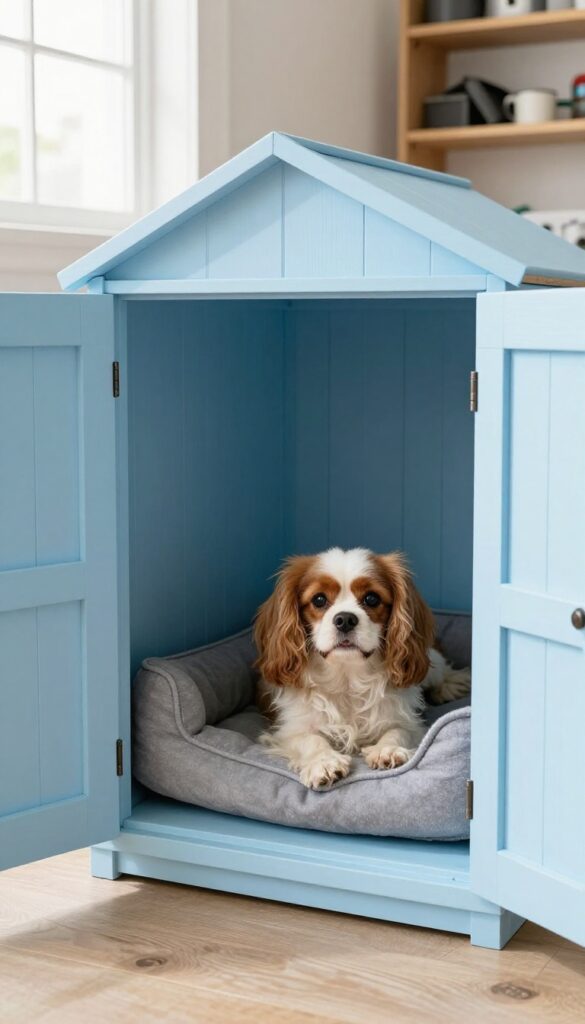
That old cabinet or closet in your garage can become a private den for your dog. By removing the doors, adding a soft bed, and giving it a fresh coat of paint, you create a cozy retreat that feels intentional. It’s a clever way to repurpose something you already own while keeping the garage organized.
Why It Works
This setup gives your dog a quiet, enclosed spot that feels safe and secure. The walls provide insulation from cold concrete floors, and because it’s elevated off the ground, you avoid drafts. Plus, it hides away when not in use—just close the doors to keep things tidy.
Best For
Perfect for small to medium dogs who like cozy spaces. Works great in garages with limited floor space or when you want a temporary setup that can vanish when guests come over.
Practical Tip
Sand and paint the cabinet with pet-safe paint to match your garage. Add a washable cushion or memory foam pad for comfort. If using a closet, install a baby gate or curtain instead of doors for airflow.
Budget-Friendly Option
Skip buying new paint—use leftover house paint or chalk paint. For bedding, repurpose an old pillow covered with a removable duvet cover for easy washing.
9. Heated Dog House with Thermostat Control
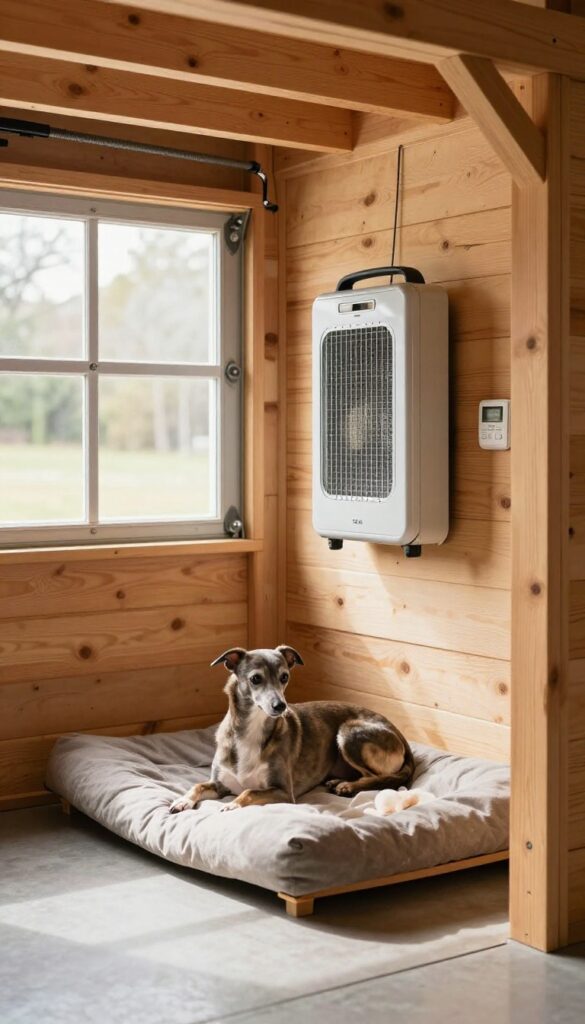
Short-haired dogs and seniors feel the cold more than others, especially in an unheated garage. A heated dog house with a thermostat gives them a warm retreat without running up your energy bill.
You don’t need a full HVAC setup. A small, energy-efficient heater paired with a simple thermostat keeps the temperature just right. The key is insulation—without it, heat escapes fast and the heater works too hard.
Dog owners love this setup because it’s like a personal climate zone for their pup. Your dog gets consistent warmth, and you get peace of mind knowing they’re comfortable even on freezing days.
Why It Works
A thermostat-controlled heater maintains a steady temperature, so your dog stays warm without overheating. Combined with proper insulation, this system uses minimal electricity and keeps the dog house cozy all winter long.
Best For
This idea is ideal for short-haired breeds like Greyhounds, Chihuahuas, or Boxers, as well as senior dogs with stiff joints. It also works well for dogs that spend several hours at a time in the garage.
Practical Tip
Choose a flat-panel radiator or oil-filled heater—they’re safer than fan heaters and don’t blow dust around. Mount it high on the wall so your dog can’t knock it over. Set the thermostat between 50°F and 60°F for comfort without wasting energy.
Budget-Friendly Option
If a dedicated heater isn’t in the budget, use a heated pet bed or a self-warming mat instead. These plug into any outlet and provide gentle warmth without the need for insulation or thermostat installation.
FAQ
Is it safe to keep my dog in the garage overnight?
Yes, if the garage is temperature-controlled, well-ventilated, and free of hazards like chemicals or sharp objects. Always provide a comfortable bed, fresh water, and ensure your dog has access to a potty area.
What type of flooring is best for a garage dog house?
Rubber mats or interlocking foam tiles are great because they’re non-slip, easy to clean, and provide insulation from cold concrete. Avoid carpet, which can trap odors and moisture.
How do I keep the garage cool in summer for my dog?
Use a fan, install a vent, or add a dog door for airflow. You can also use a cooling mat or a small air conditioner. Always provide plenty of fresh water and shade.
Can I use a regular dog house inside the garage?
Absolutely. A standard dog house works well inside the garage, especially if it’s raised off the floor for insulation. Just make sure it’s well-ventilated and placed away from drafts.
How do I prevent my dog from scratching the garage door?
Install a dog door so your dog can go in and out without needing to scratch. You can also place a durable mat or a piece of clear plastic over the bottom of the door to protect it.
Conclusion
A garage dog house can be a game-changer for both you and your pup. It gives your dog a comfortable, dedicated space while keeping the mess out of your main living areas.
Whether you go with a simple crate setup or a full kennel run, these ideas are designed to be practical and easy to implement. Pick the one that fits your garage and your dog’s personality, and enjoy the convenience of indoor-outdoor living together.

I’m Pallab Kishore, the owner of Little Pets Realm — an animal lover and pet care enthusiast sharing easy tips, healthy recipes, and honest advice to help every small pet live a happy, healthy, tail-wagging life.