
Your dog deserves a cozy outdoor retreat, but store-bought dog houses often come with a hefty price tag. The good news? With basic tools and a weekend of effort, you can build a sturdy, comfortable shelter that fits your budget and your pup's needs.
These eight DIY plans range from simple pallet builds to clever upcycled projects, each designed with real-world durability in mind. Safety and comfort are the top priorities here—every plan includes tips for proper ventilation, insulation, and weatherproofing.
Whether you're a seasoned builder or a first-timer, these designs break down into manageable steps that won't overwhelm you. You'll also find advice on sizing, materials, and placement to ensure your dog stays happy and protected.
1. The Classic Pallet Dog House
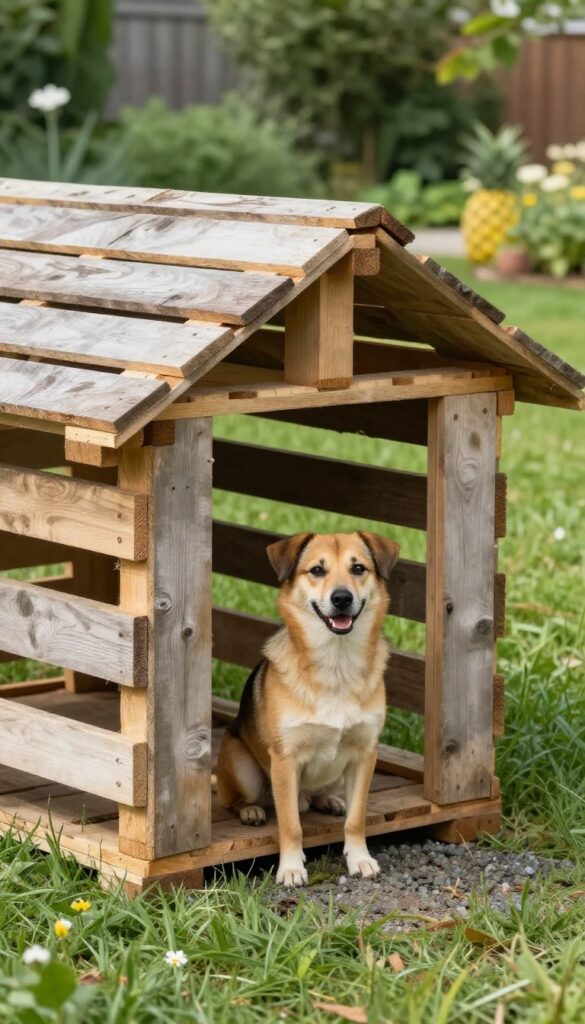
Pallet wood has a rugged charm that fits right into most backyards. This plan turns free or cheap shipping pallets into a ventilated, sturdy shelter that looks like it belongs. Dog owners love how the natural gaps between boards allow airflow without drafts, keeping the inside fresh.
Why It Works
Pallets are built tough, so they handle weather and dog scratches well. The slatted design lets air circulate naturally, which reduces moisture and odors. A sloped roof sheds rain, and a removable floor makes cleaning simple.
Best For
Medium to large dogs that spend time outdoors. Great for DIY beginners on a tight budget who want a rustic look that blends with a yard or garden.
Practical Tip
Sand down rough edges to prevent splinters. Seal the wood with pet-safe outdoor stain or paint for weather resistance. Add a hinged roof for easy access, and place the house on gravel or pavers to keep the base dry.
Budget-Friendly Option
If you can't find free pallets, check local hardware stores for culled lumber at a discount. You can also substitute plywood sheets for the roof and floor if pallet boards are too short.
2. The Insulated Plywood Box
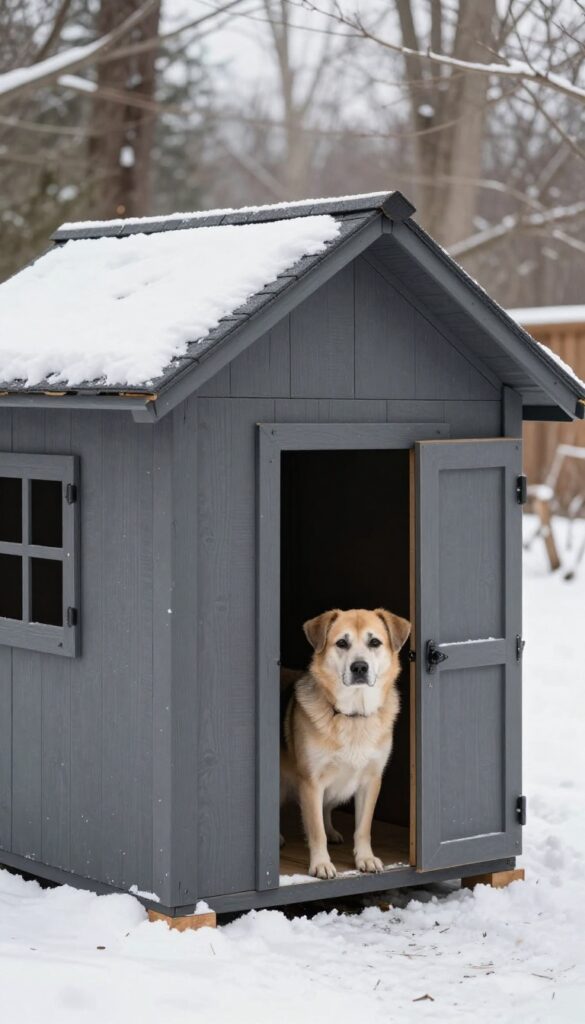
When temperatures drop, a basic dog house won't cut it. This insulated plywood box uses foam board between plywood layers to create a snug retreat that stays warmer in winter and cooler in summer. It's a straightforward build that gives you maximum comfort for your pup without complex framing or expensive materials.
Why It Works
The foam board insulation acts as a thermal barrier, reflecting your dog's body heat back inside while blocking outside temperature swings. Adding a flap door made from heavy vinyl or rubber further seals the entrance, keeping drafts out. This design is especially effective for short-haired breeds or senior dogs that feel the cold more quickly.
Best For
Best for cold-climate dogs like Huskies, Malamutes, or any breed that spends time outdoors in winter. Also great for owners in regions with extreme temperature swings who want a year-round solution.
Practical Tip
Paint the exterior with exterior-grade latex paint for weather protection. Use a sloped roof covered with asphalt shingles or metal roofing to shed rain and snow. Place the house on a slight rise or gravel bed to prevent ground moisture from seeping in.
3. The Upcycled Plastic Crate Shelter
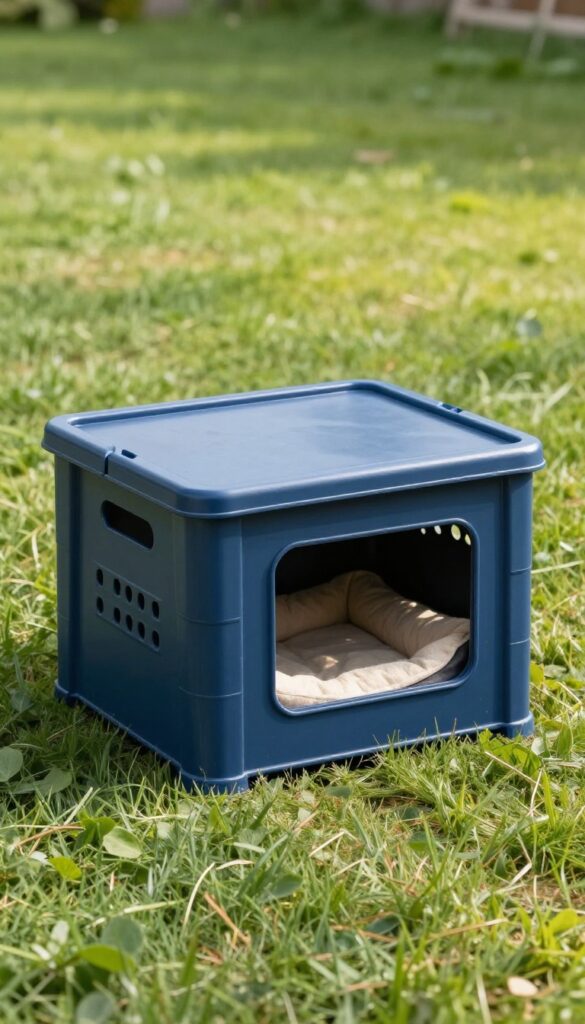
Plastic storage crates are surprisingly sturdy and completely weatherproof, making them a perfect quick-fix dog house. You can find them at garage sales or discount stores for pocket change, and the build requires nothing more than a jigsaw and a drill.
This shelter is lightweight enough to move around your yard as needed, and it won't rot, splinter, or absorb moisture. Plus, the smooth interior makes cleaning a breeze—just hose it out and let it dry.
Why It Works
The rigid plastic structure provides excellent protection from rain and wind while staying cool in summer and easy to insulate for winter. Ventilation holes on the sides prevent stuffiness, and the elevated base keeps your dog off damp ground.
Best For
This is ideal for small to medium dogs under 50 pounds, especially those who prefer a cozy den-like space. It works great for apartment balconies or small yards where a permanent wooden house feels too bulky.
Practical Tip
Cut the door opening about 4 inches taller than your dog's shoulder height so they can enter without ducking. Add adhesive foam strips around the door edge to prevent drafts, and place a washable pet bed inside for comfort.
Budget-Friendly Option
If you don't have a crate on hand, check Facebook Marketplace or local thrift stores for large storage totes with lids. Often you can snag one for under $10.
4. The A-Frame Cabin
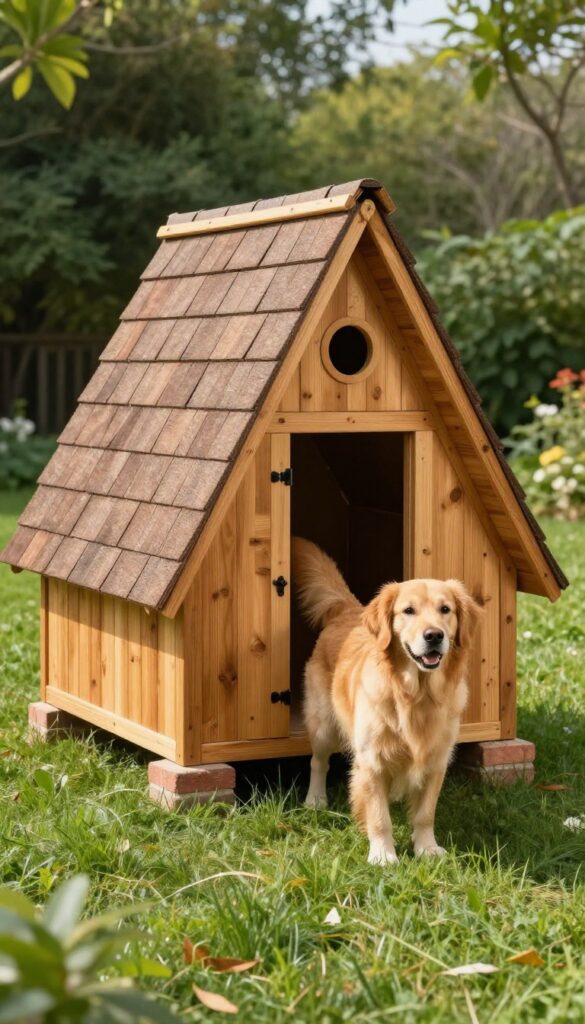
An A-frame dog house is a timeless choice that looks great in any yard. Its steep, triangular roof naturally sheds rain and snow, keeping the interior dry even during heavy storms. The compact footprint makes it easy to fit into tight spaces while still offering plenty of room for your dog.
Why It Works
The sloped roof prevents water from pooling and reduces wind resistance, so the house stays stable in harsh weather. Using pressure-treated lumber for the base resists rot, and cedar siding adds natural insulation and a pleasant scent. The design is simple enough for a weekend project but sturdy enough to last for years.
Best For
This plan works well for medium to large breeds like Labradors, Golden Retrievers, or Australian Shepherds. It's ideal for rainy or snowy climates where drainage and weather protection are top priorities. The classic look also blends nicely with rustic or cabin-style homes.
Practical Tip
Add a removable hinged roof for easy cleaning and access. Place the entrance away from prevailing winds and elevate the floor a few inches off the ground using bricks or concrete blocks to prevent moisture buildup. A flap door made of heavy vinyl can further block drafts.
Budget-Friendly Option
If cedar is too pricey, use exterior-grade plywood instead and paint it with non-toxic outdoor paint. You can also repurpose old wooden pallets for the base—just make sure they're heat-treated (stamped HT) and not chemically treated.
5. The Elevated Deck House
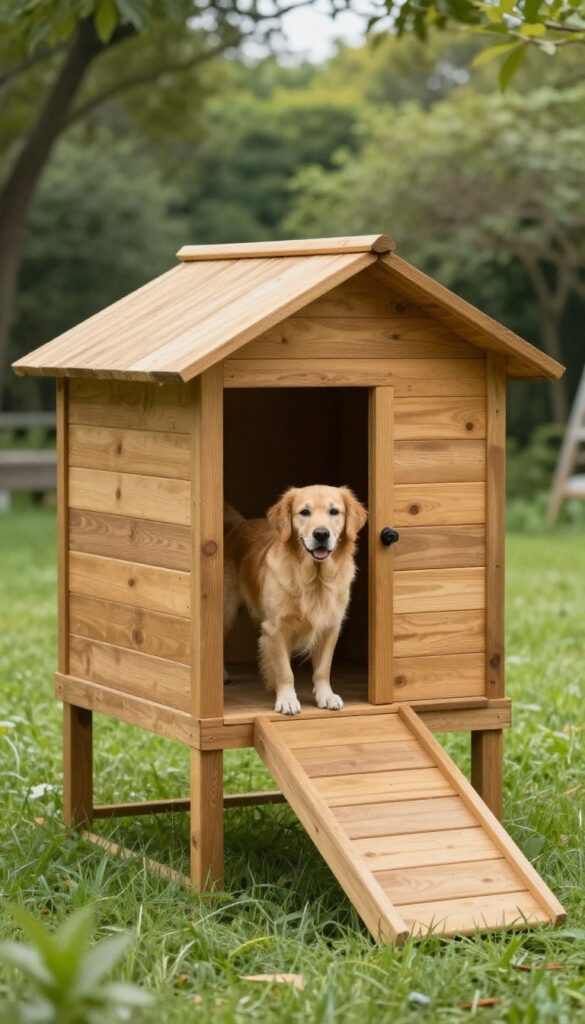
Keeping your dog's house off the ground solves two common problems at once: dampness and creepy crawlies. This plan adds a small porch and a ramp, making it especially welcoming for older dogs or those with joint issues. The raised design also improves airflow underneath, which helps regulate temperature in warmer months.
Why It Works
Elevating the structure prevents moisture from seeping in through the floor, which reduces mold and mildew risks. The porch gives your dog a dry spot to sit outside the door, and the ramp is easier on joints than steps. Air circulation underneath keeps the interior cooler in summer and drier in wet weather.
Best For
This house is ideal for dogs with arthritis, hip dysplasia, or other mobility challenges. It's also perfect for yards that stay damp or have poor drainage, as well as areas with lots of insects or rodents.
Practical Tip
Build the ramp with a gentle slope and add non-slip strips or outdoor carpet for traction. Make sure the porch is large enough for your dog to turn around comfortably. Place the house on level ground or slightly elevated pavers to keep it stable.
6. The Pallet and Tarp Quick Shelter
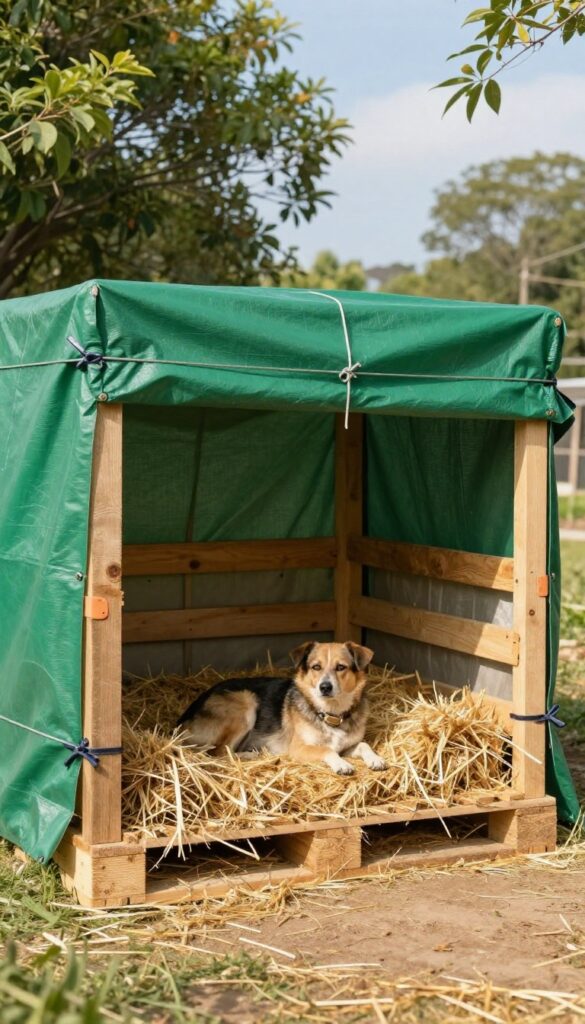
Sometimes you need a dog house in a hurry—or on a shoestring budget. The pallet and tarp shelter is exactly that: a fast, no-fuss build that costs next to nothing. You just assemble a simple frame from free pallets and wrap it in a heavy-duty tarp, securing everything with bungee cords.
It's not fancy, but it works.
Why It Works
Pallets are often free or cheap, and tarps are inexpensive and easy to replace. The bungee cord system lets you adjust the tension or take the whole thing apart in minutes. This design also provides decent wind and rain protection when properly staked down, making it a practical short-term solution.
Best For
This shelter is ideal for temporary use—camping trips, travel, or as an emergency backup. It also suits dogs who primarily stay indoors but need occasional outdoor cover. Smaller breeds or short-haired dogs may need extra bedding since tarps don't insulate well.
Practical Tip
Choose a UV-resistant tarp in a neutral color like green or brown so it blends into the yard. Elevate the pallet base on bricks or concrete blocks to prevent moisture seeping up from the ground. Add a thick dog bed or straw inside for comfort and warmth.
7. The Two-Room Dog House
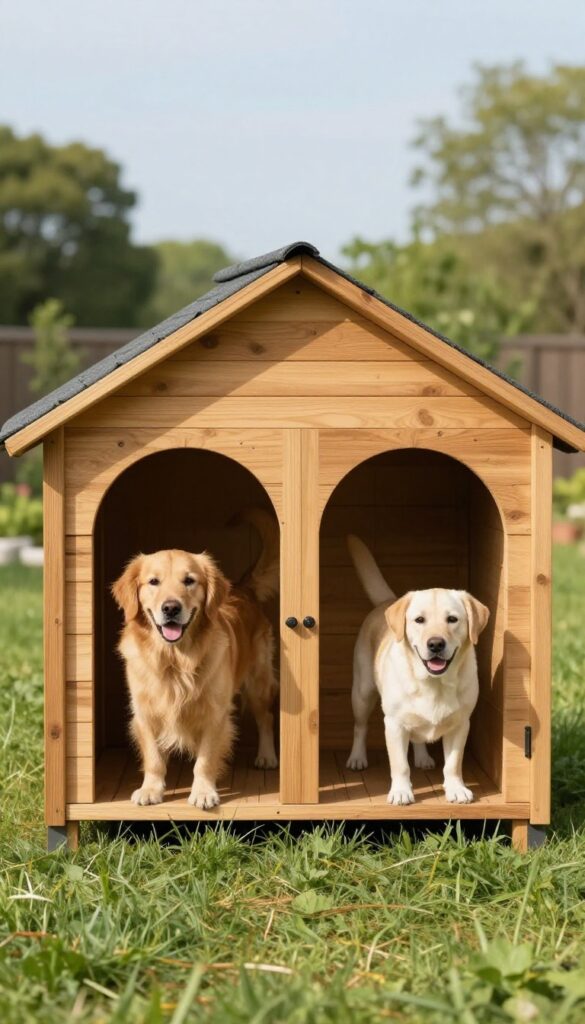
Multi-dog households know the struggle of sharing a single space. This two-room design gives each dog their own side, or lets one dog enjoy a sleeping area and a separate lounge. It’s surprisingly simple to build with basic framing and a partition wall down the middle.
The result is a versatile shelter that cuts down on squabbles and keeps everyone comfortable.
Why It Works
Dividing the interior into two rooms reduces resource guarding and gives shy dogs a retreat. Each side has its own entrance, so dogs can come and go without crowding. The shared wall adds structural strength, making the whole house sturdier than a single large box.
Best For
Homes with two medium-sized dogs that get along but appreciate personal space. Also great for a single dog that likes to sleep in one room and hang out in the other during the day.
Practical Tip
Add a small removable divider if you want flexibility—just hinge it so you can open up the whole space for cleaning or when you have one big dog. Use exterior-grade plywood or OSB for the walls, and cover the roof with asphalt shingles to match your house.
Budget-Friendly Option
Skip the shingles and use roll roofing or even heavy-duty tarps secured with batten strips. You can also substitute OSB with salvaged pallet wood (just sand it smooth) to cut costs further.
8. The Repurposed Nightstand Dog House
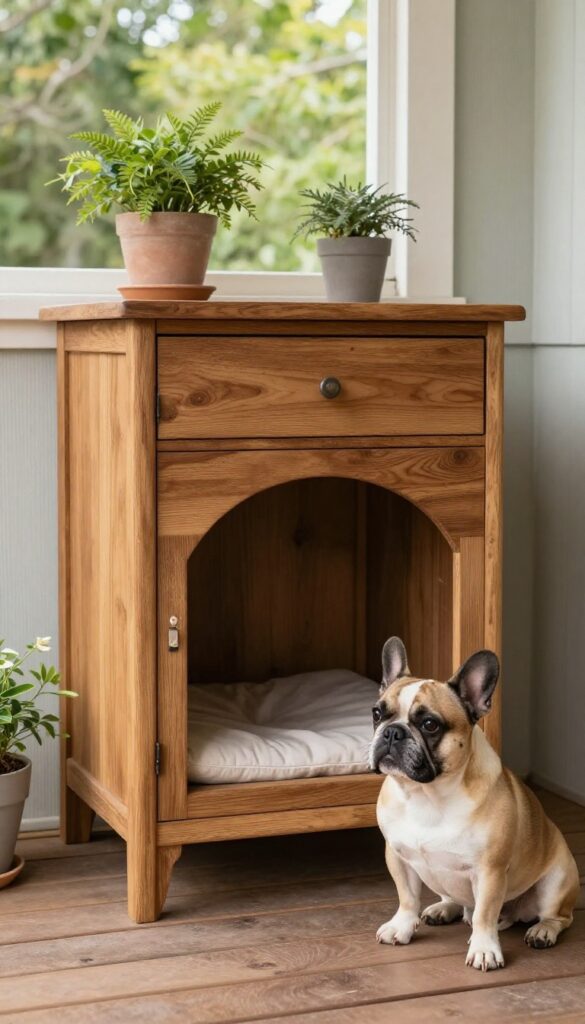
Look at that old nightstand or end table gathering dust in the garage. With a few modifications, it can become a charming little dog house that fits perfectly on a covered porch or in a corner of the living room. The best part?
This project is mostly about removing drawers and cutting a door—no complex framing required.
Why It Works
A wooden nightstand already has a solid structure, a flat roof, and often includes a small shelf or cubby inside. By removing the drawers and cutting an arched or rectangular opening, you instantly create a cozy den. The existing wood is usually smooth and splinter-free, so minimal sanding is needed.
Plus, the small footprint makes it ideal for tight spaces.
Best For
This design suits small to medium dogs like French Bulldogs, Pugs, or Beagles who enjoy a snug hideaway. It's also great for apartment dwellers who want an indoor dog house that doubles as furniture. Because it's raised off the floor, it stays warmer in winter and cooler in summer.
Practical Tip
Remove all drawer slides and hardware first to prevent sharp edges. Cut the door opening at least 6 inches wider than your dog's chest measurement. Add a washable cushion or folded blanket inside for comfort.
For outdoor use on a covered porch, apply two coats of exterior paint or sealant to protect the wood from moisture.
FAQ
What is the cheapest material to build a dog house?
Reclaimed wooden pallets are often free and work well for basic dog houses. You can also use scrap plywood or repurpose old furniture like nightstands or crates.
How do I make a DIY dog house waterproof?
Use exterior-grade paint or sealant on all wood surfaces. For the roof, apply roofing felt or shingles. Ensure the floor is elevated or use a waterproof liner inside.
What size should a DIY dog house be?
The house should be just big enough for your dog to stand up, turn around, and lie down comfortably. Measure your dog's height and length, then add a few inches for wiggle room.
Do I need insulation for a dog house?
Insulation is recommended if you live in extreme temperatures. Foam board or reflective insulation helps keep the interior comfortable. Always ensure proper ventilation to prevent moisture buildup.
Can I build a dog house without power tools?
Yes, many plans can be built with basic hand tools like a hammer, saw, and screwdriver. Look for plans that use pre-cut lumber or simple joinery like nails and screws.
Conclusion
Building a dog house on a budget doesn't mean sacrificing quality or comfort. With a little creativity and some basic materials, you can create a safe, cozy space your dog will love.
Each of these plans is designed to be practical and affordable, so you can pick the one that best fits your skills and your pup's needs. Start your project this weekend and give your furry friend a home of their own.

I’m Pallab Kishore, the owner of Little Pets Realm — an animal lover and pet care enthusiast sharing easy tips, healthy recipes, and honest advice to help every small pet live a happy, healthy, tail-wagging life.