
Last updated on April 26th, 2026 at 03:04 pm
Living with two dogs means double the love and double the need for a cozy retreat. A shared dog house can strengthen their bond and give them a private space to relax together. But not every design works for two pups—size, layout, and comfort matter.
You want a dog house that fits both dogs without feeling cramped. It should be easy to clean, safe, and durable enough for daily use.
Whether you’re building from scratch or buying a pre-made option, these ideas will help you find the perfect setup. From indoor nooks to outdoor shelters, these eight dog house ideas are designed for two dogs to share comfortably.
1. The Divided Duo: Separate Entrances, Shared Space
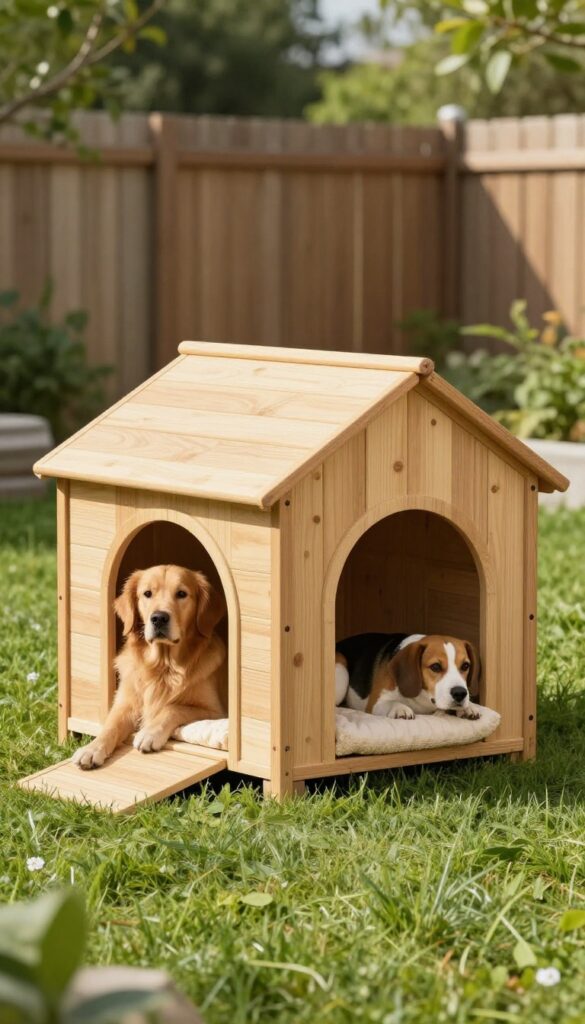
This design gives each dog their own door but a common sleeping area. It reduces resource guarding while still allowing them to snuggle. Great for dogs that like their own space but enjoy each other’s company.
The divided duo layout works well for pairs that sometimes squabble over entry points. Each pup has a clear path in and out, which cuts down on door-related drama. Inside, they can choose to curl up together or claim opposite corners.
Many owners find this style especially helpful during feeding time or when one dog wants alone time. The shared interior still promotes bonding, but the separate entries give each dog a sense of ownership.
Why It Works
Separate entrances prevent blocking and reduce competition at the door. Dogs can enter and exit without feeling trapped or rushed. The shared interior keeps them close enough to socialize but far enough to avoid conflict.
Best For
Pairs with mild resource guarding tendencies or dogs that are independent but friendly. Also ideal for multi-dog households where one dog is more dominant at entry points.
Practical Tip
Use durable materials like cedar or pressure-treated wood for the frame. Add a removable divider inside if you want the option to separate them completely later. Place the house on level ground with good drainage to keep it dry.
Budget-Friendly Option
Build your own using two large plastic storage bins turned on their sides, joined by a short tunnel or shared plywood floor. Cover with weatherproof paint or sealant.
2. The Bunk Bed Style: Vertical Sleeping for Small Breeds
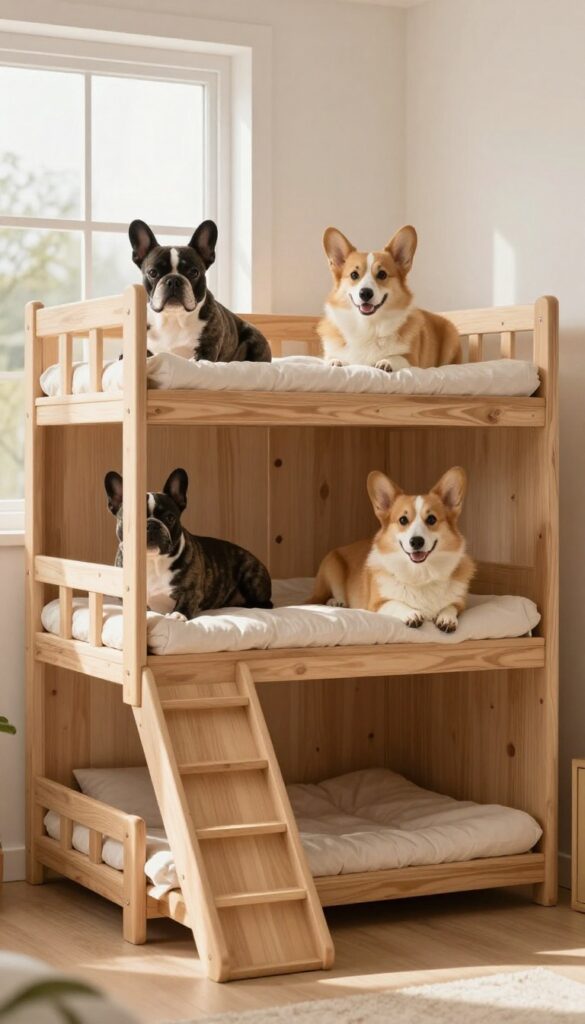
Imagine a dog house that stacks sleeping space, giving each pup their own level. That’s exactly what the bunk bed style offers—a two-story setup connected by a ramp or steps. It’s a clever way to save floor space while keeping both dogs comfortable.
Small and medium breeds take to this design naturally, and many dogs enjoy having their own elevated spot to curl up.
Why It Works
This design maximizes vertical space, so it fits neatly into tight corners, apartments, or small yards. Each dog has their own bunk, which can reduce squabbling over sleeping spots. The ramp or steps also provide gentle exercise and mental stimulation as dogs go up and down.
Best For
Ideal for small to medium breeds like French Bulldogs, Corgis, or Shih Tzus that are agile enough to use the ramp. Also great for owners with limited floor space who still want a dedicated two-dog house.
Practical Tip
Make sure the ramp has a non-slip surface (like grip tape or carpet) to prevent falls. Place soft bedding on each bunk—washable mats work best since they can be removed easily for cleaning. Check that the top bunk has a low ceiling so your dog can sit up without bumping their head.
3. The Extra-Wide Classic: One Big Room for Two
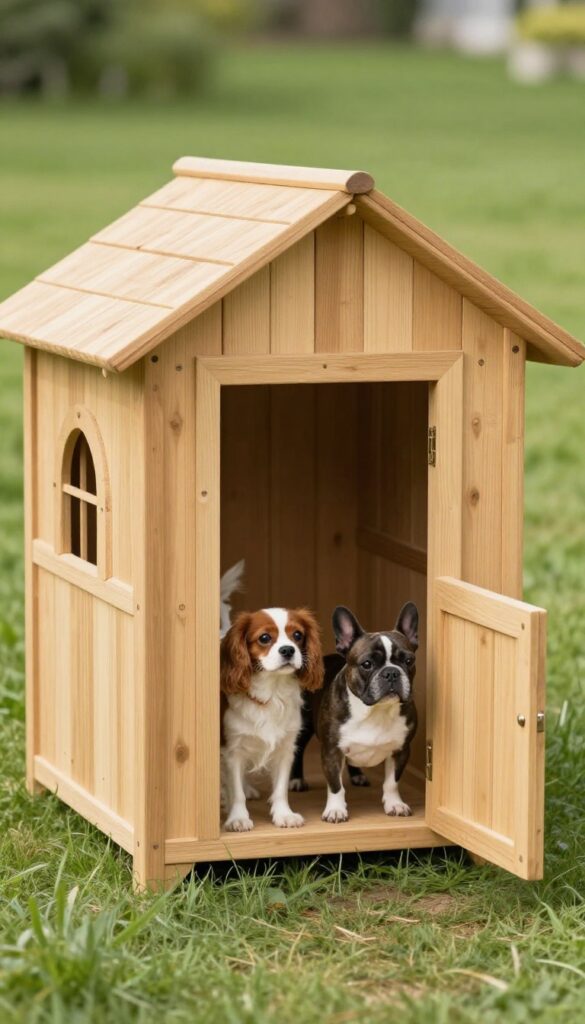
Sometimes the simplest solution is the best. An oversized single-room dog house gives both pups plenty of space to stretch out and snooze together. The key is going wide enough so they can enter side by side without jostling.
This style works great when your dogs already curl up together indoors. It keeps that cozy vibe but gives them a dedicated outdoor spot that feels familiar and safe.
Why It Works
A single large room eliminates territorial issues because there’s no separation to guard. Both dogs can move freely, share bedding, and adjust their sleeping positions without feeling trapped. It also makes cleaning faster—just one floor to sweep or hose out.
Best For
Best for bonded pairs that love to cuddle, especially small to medium breeds like Cavaliers, French Bulldogs, or Beagles. Also perfect for littermates or dogs that have grown up together and rarely want space apart.
Practical Tip
Make the entrance at least 1.5 times wider than a standard door so both dogs can come and go at once. Add a removable center divider if they sometimes need their own corner—you can slide it in when they’re grumpy and take it out when they’re snuggling again.
4. The Indoor Corner Nook: Built-In Dog House Under Stairs
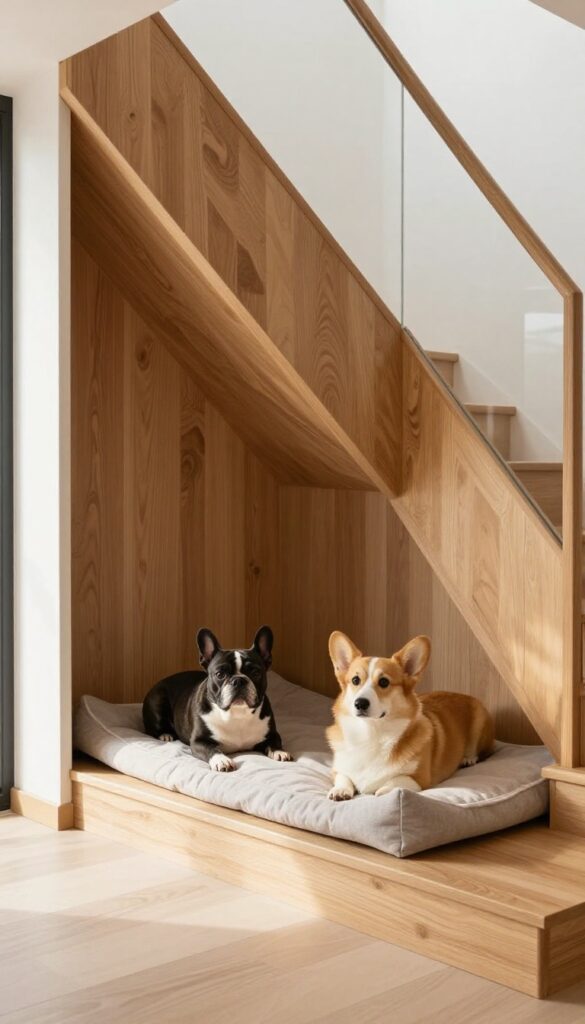
That awkward space under your stairs or a dead corner in the living room can become a cozy den for your two dogs. By building a custom nook, you give them a private retreat right in the middle of the action. It keeps them close to the family while offering a quiet spot to nap together.
This setup works especially well in homes where floor space is limited. Instead of taking up valuable square footage with a bulky kennel, you turn an unused area into something functional. Dogs feel secure in enclosed spaces, and having two share the same nook strengthens their bond.
Owners love how seamless it looks—it blends into the home rather than sticking out like an eyesore. Plus, it’s easy to clean and can be customized to fit your decor perfectly.
Why It Works
Dogs are den animals by nature, and an under-stair nook mimics that instinctual need for a safe, sheltered space. The low ceiling and small entrance make them feel protected, while the shared area encourages cuddling and reduces anxiety. Having their own built-in spot also means less furniture damage from dogs trying to squeeze under sofas or beds.
Best For
This idea is ideal for owners of small to medium breeds who live in houses or apartments with unused corners or staircases. It’s perfect if you want your dogs to stay near the family room or kitchen without being underfoot. Breeds like French Bulldogs, Corgis, or Beagles that enjoy burrowing will take to it quickly.
Practical Tip
Use washable, orthopedic dog beds that fit snugly inside so both dogs have cushioning. Add a small lip at the entrance to keep bedding from sliding out. Install a removable curtain or a lightweight door if you want to give them privacy or contain messes during shedding season.
Budget-Friendly Option
If building isn’t an option, repurpose a large wooden crate or an old entertainment center turned on its side. Cut an opening in one side and add cushions—it gives the same cozy vibe without carpentry skills.
5. The Insulated Outdoor Cabin: Weatherproof for All Seasons
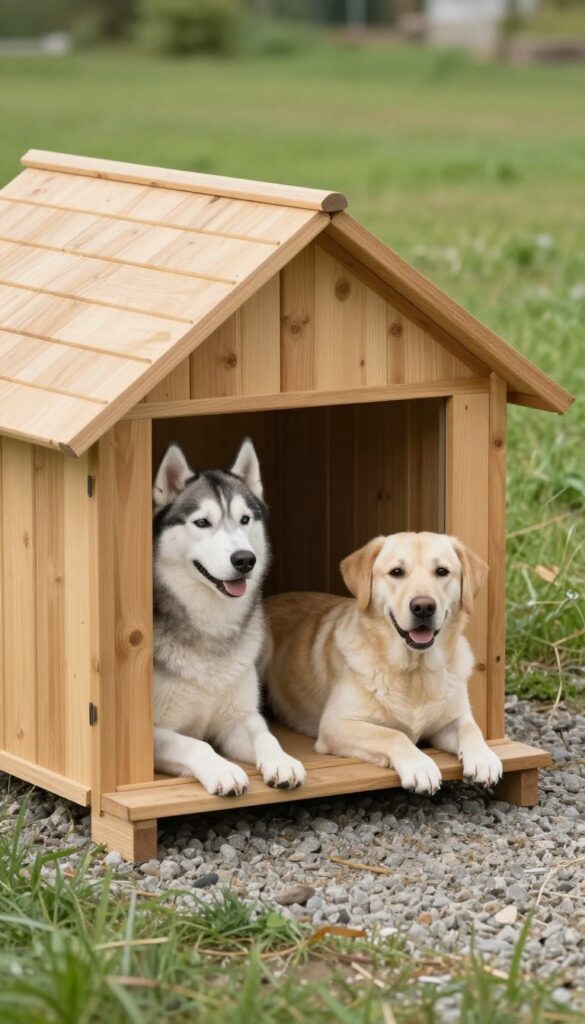
When your two dogs love being outside but the weather doesn’t always cooperate, an insulated outdoor cabin is the answer. This isn’t just a basic wooden box—it’s a well-engineered shelter with proper insulation, ventilation, and weatherproofing that keeps them comfortable in heat, cold, and rain. A raised floor prevents dampness, while a sloped roof sheds snow and rain.
Many owners add a heated pad in winter and ensure shade in summer, making it a true four-season retreat.
Why It Works
Insulation moderates temperature extremes, so your dogs stay cooler in summer and warmer in winter. Proper ventilation prevents moisture buildup and stale air, which is crucial when two dogs share the space. The raised floor keeps them dry and off cold ground, reducing the risk of joint issues or illness.
This setup gives outdoor-loving dogs a safe, cozy spot to nap or hang out together without you worrying about the elements.
Best For
Best for active breeds like Huskies, Labradors, or German Shepherds that spend significant time outdoors, especially in regions with harsh winters or hot summers. Also ideal for homes with large yards where dogs have outdoor access during the day but need a comfortable shelter to retreat to.
Practical Tip
Place the cabin on a slight gravel or concrete pad to prevent water pooling underneath. Use removable insulated panels for easy cleaning and seasonal adjustments. Add a wind-blocking flap over the doorway and consider a self-warming pet bed that reflects body heat—no electricity needed.
Budget-Friendly Option
If buying new is too pricey, look for used wooden playhouses or large dog crates and retrofit them with foam board insulation and waterproof paint. Seal any gaps with caulk and add a heavy-duty tarp roof as a temporary measure.
6. The Modular System: Expandable Dog House with Add-Ons
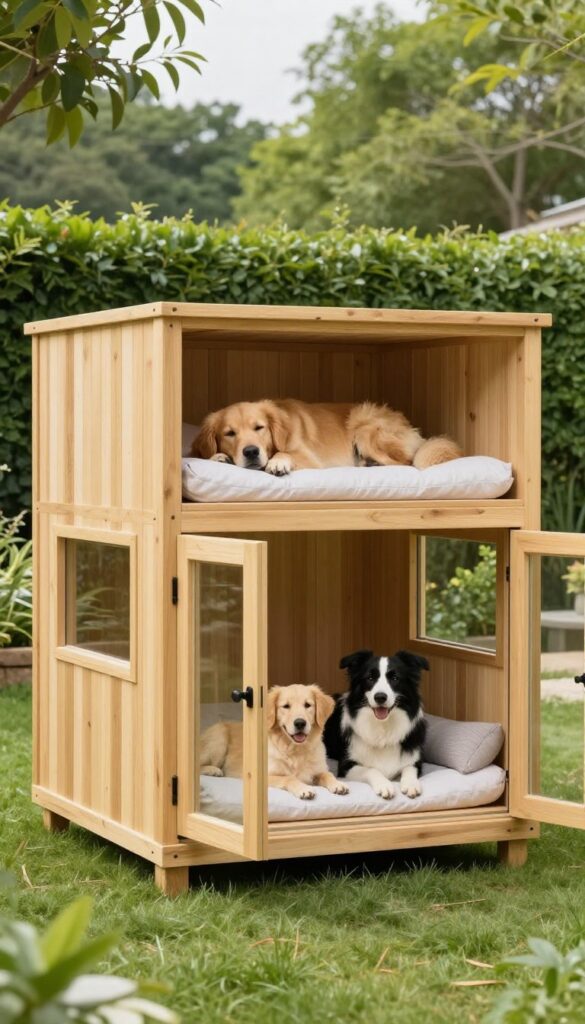
A modular dog house is like a starter home for your pups that you can expand over time. You begin with a basic unit—just enough space for two dogs to sleep side by side—and then add on extras as your needs change. Think sleeping lofts, a sunroom for lazy afternoons, or storage for toys and leashes.
This setup is perfect if you’re not sure what your dogs will need in a year or two. Maybe you adopt a third dog, or one of yours gets older and wants a quieter nook. The modular system lets you adapt without starting from scratch.
Dog owners love it because cleaning is a breeze—most modules detach or open up, letting you sweep out fur and dirt in minutes. Plus, it looks neat and modern, so it won’t clash with your backyard.
Why It Works
Dogs appreciate having options, even in their own house. With separate modules, one dog can nap in the loft while the other lounges in the sunroom. This flexibility reduces squabbles over space and keeps both pups content.
Best For
Owners who like to plan ahead but want room to change their minds. It’s also great for growing families—whether that means more dogs or simply different preferences as your current dogs age.
Practical Tip
Start with one base unit that’s at least 30% larger than recommended for two dogs—this gives you room to add modules later without making the original feel cramped. Use snap-on connectors (available at most hardware stores) to keep everything secure but easy to rearrange.
Budget-Friendly Option
If store-bought modular kits are too pricey, build your own using plywood and hinges. A basic cube shape is simple to construct, and you can add secondhand pet doors or salvaged windows for extra charm.
7. The Pallet Project: Budget-Friendly DIY Dog House
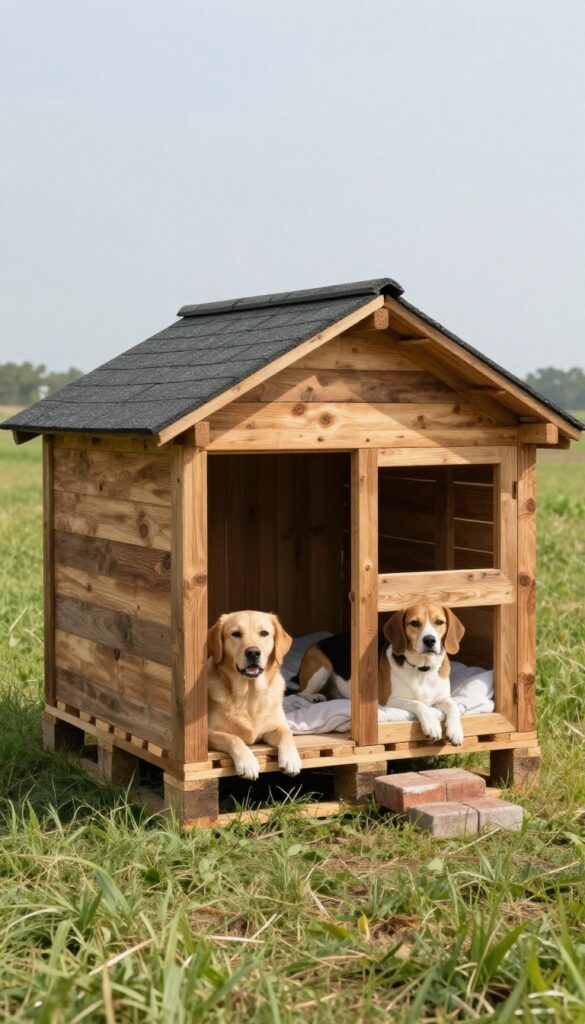
If you’re handy with basic tools and love a good weekend project, building a dog house from recycled pallets is both rewarding and easy on the wallet. Pallets are often free or cheap, and they provide sturdy wood that can be transformed into a cozy shared shelter. Sand everything smooth to prevent splinters, add a waterproof roof with shingles or metal sheeting, and line the inside with machine-washable bedding.
The result is a rustic, durable house that you can customize to your dogs’ size and style.
Why It Works
Pallets are thick and strong enough to withstand weather and daily wear, yet they’re light enough to move around your yard if needed. The open slats allow you to create ventilation gaps, while solid panels keep the interior dry and warm. Plus, you can easily adjust the dimensions to fit two dogs side by side.
Best For
This idea is perfect for budget-conscious owners who enjoy DIY projects and have access to pallets. It works well for medium to large breeds that need ample space, such as Labradors, Beagles, or mixed breeds. If you have a fenced yard and basic carpentry skills, this project can be completed in a weekend.
Practical Tip
Use non-toxic wood sealant or paint to protect the pallets from rain and sun. Add a hinged roof for easy cleaning access—just lift it up to swap out bedding or spray down the interior. Place the house on bricks or pavers to keep it off damp ground and improve airflow underneath.
8. The Luxury Suite: Heated Floors and Memory Foam Beds
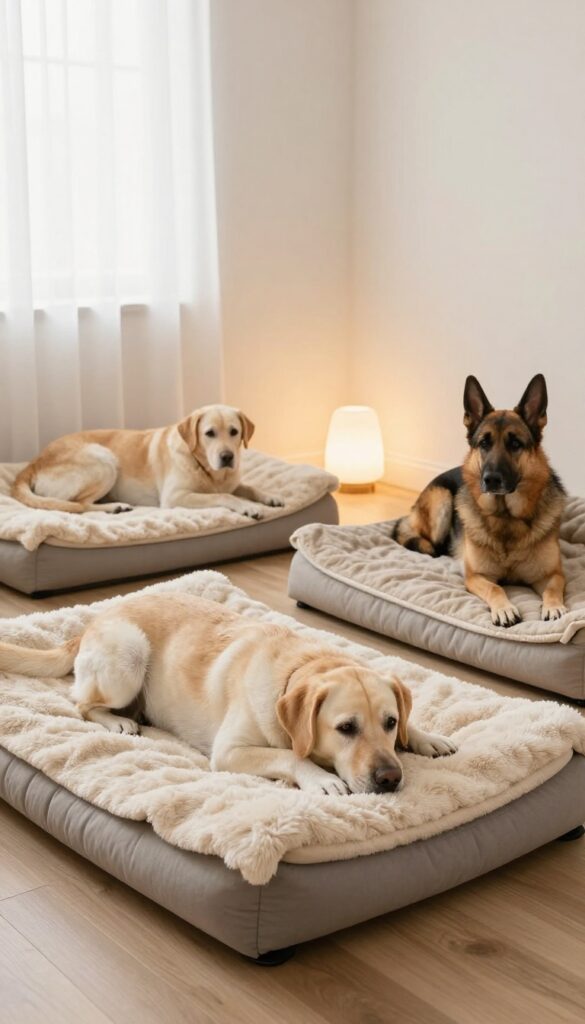
Some dogs deserve a little extra comfort, especially as they age or deal with joint issues. A luxury dog house with heated floors and orthopedic beds turns their shared space into a spa-like retreat. It’s not just about pampering—these features provide real health benefits, keeping your pups warm in winter and supported while they sleep.
Owners love how this setup gives older dogs a cozy, pain-free spot to rest together.
Why It Works
Heated floors maintain a consistent temperature that helps soothe achy joints, while memory foam beds reduce pressure points. The warmth encourages dogs to use the house even on cold days, and the orthopedic support can improve sleep quality. It’s especially beneficial for breeds prone to hip dysplasia or arthritis.
Best For
This is ideal for senior dogs, large breeds with joint problems (like Labradors or German Shepherds), or any pup living in colder climates. It also works well for pampered pooches whose owners want a premium indoor or outdoor den.
Practical Tip
Add a layer of fleece blankets on top of the memory foam beds for extra warmth and easy washing. Consider a model with removable floor panels so you can clean up accidents or mud without hassle. A small camera inside lets you check on them remotely—great for peace of mind when you’re away.
FAQ
How big should a dog house be for two dogs?
The dog house should be at least 1.5 times the length of your largest dog from nose to tail, and wide enough for both dogs to lie down comfortably without touching. A good rule is 6–8 square feet for small breeds and 10–12 square feet for medium to large breeds.
Can two dogs share a dog house if they don’t get along?
It’s not recommended. Dogs that don’t get along may fight over space. If they are generally friendly but need boundaries, consider a divided design with separate entrances.
Always supervise initial introductions to the shared space.
What materials are best for a two-dog house?
Cedar or pine are durable and naturally repel insects. For outdoor houses, use weatherproof materials like treated wood or plastic. Indoors, plywood with a non-toxic finish works well.
Ensure all materials are safe if chewed.
Should the dog house be insulated?
Yes, especially if the house is outdoors. Insulation helps regulate temperature, keeping dogs cool in summer and warm in winter. Use foam board or reflective insulation, and ensure proper ventilation to prevent moisture buildup.
How do I clean a shared dog house?
Choose a design with removable roof or panels for easy access. Use washable bedding and vacuum regularly. Disinfect with pet-safe cleaners monthly.
For outdoor houses, hose down and let dry completely before letting dogs back in.
Conclusion
Sharing a dog house doesn’t have to mean sacrificing comfort. Start with one design that fits your space and budget—your dogs will quickly show you if it’s a hit. A well-planned shared house strengthens their bond and keeps your yard organized.
Small upgrades like separate entrances or extra ventilation can make a big difference. Pick the idea that feels right for your dogs’ personalities, and enjoy watching them settle in together.

I’m Pallab Kishore, the owner of Little Pets Realm — an animal lover and pet care enthusiast sharing easy tips, healthy recipes, and honest advice to help every small pet live a happy, healthy, tail-wagging life.