
A sturdy wood dog house can last for years, but not every design holds up equally in the backyard. You need something that handles rain, sun, and enthusiastic digging without falling apart.
The right wood choice and construction make all the difference between a quick replacement and a long-term shelter. These nine wood dog house ideas focus on durability and practical features like ventilation, easy cleaning, and weatherproofing.
From budget-friendly builds to more elaborate two-story designs, each option helps you create a safe outdoor retreat your dog will actually use.
1. Classic A-Frame Dog House
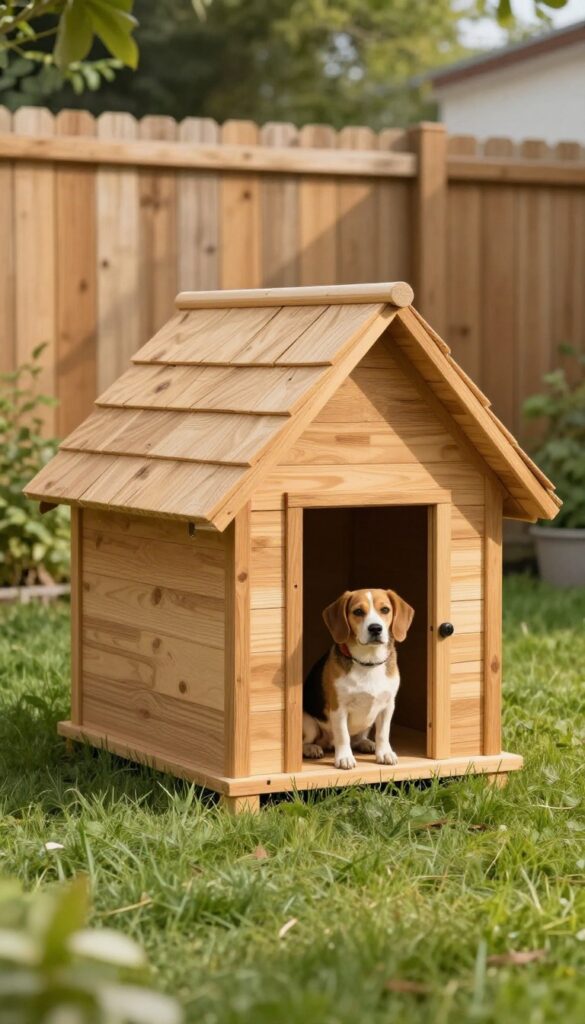
The A-frame is a timeless, budget-friendly design that sheds rain and snow easily. Its steep roof prevents water pooling, and the simple structure makes it a great DIY project. Add a hinged roof for easy cleaning.
Why It Works
The steep roof angle naturally channels water off the sides, keeping the interior dry. The triangular shape also minimizes wind resistance, making it stable in storms. Plus, the open floor plan gives dogs plenty of room to stretch.
Best For
This design works well for small to medium breeds like Beagles, Corgis, and Terriers. It's also ideal for DIYers on a budget who want a straightforward weekend project.
Practical Tip
Use exterior-grade plywood and cedar shingles for the roof to boost weather resistance. Add a removable floor panel for easy cleaning, and seal all edges with waterproof caulk.
Budget-Friendly Option
If you're on a tight budget, use pressure-treated lumber for the base and frame. Paint the exterior with leftover exterior house paint to save money.
2. Insulated Plywood Cabin
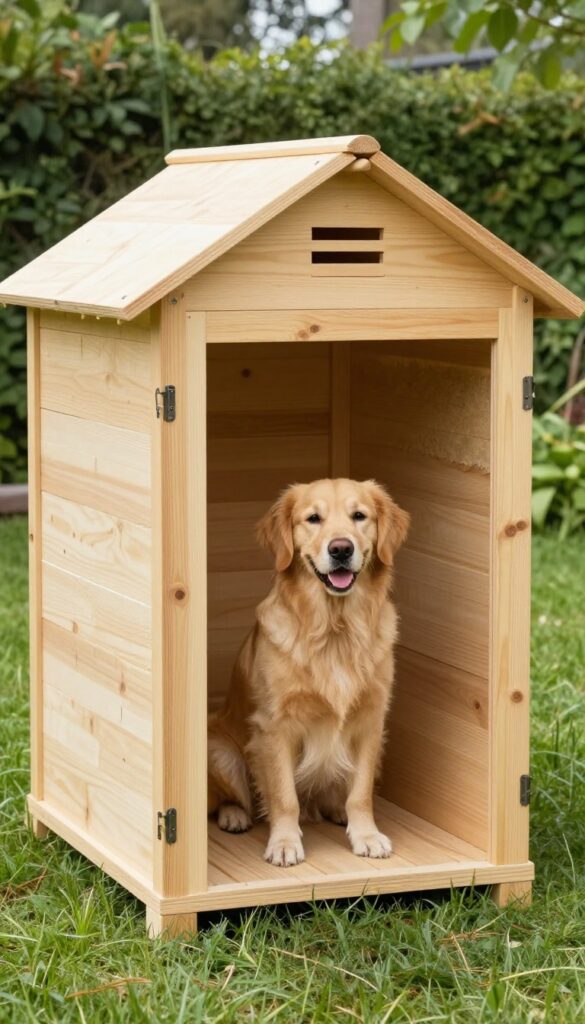
Plywood isn't just for construction sites—it makes a fantastic dog house when you add insulation between the layers. This design creates a cozy cabin that stays comfortable year-round, no matter the weather outside. The thick walls and raised floor keep moisture out and warmth in, so your pup has a solid retreat.
Why It Works
The secret is the foam insulation sandwiched between two layers of exterior-grade plywood. This barrier keeps the interior temperature stable, so your dog stays cooler in summer and warmer in winter. The raised floor also prevents dampness from ground moisture, which is a common problem with dog houses sitting directly on grass or dirt.
Best For
This cabin is perfect for dogs that spend a lot of time outdoors, especially in climates with hot summers or cold winters. It's also great for owners who want a low-maintenance, sturdy structure that doesn't need constant repairs.
Practical Tip
Make the roof panel removable with simple hinges or latches. That way you can easily clean inside or replace bedding without crawling in. Also add a small ventilation grate near the top to prevent stuffiness.
Budget-Friendly Option
If plywood is too pricey, use OSB (oriented strand board) for the inner layer and save the exterior plywood for the outer shell. Just seal all edges with exterior paint or sealant to prevent water damage.
3. Elevated Platform House
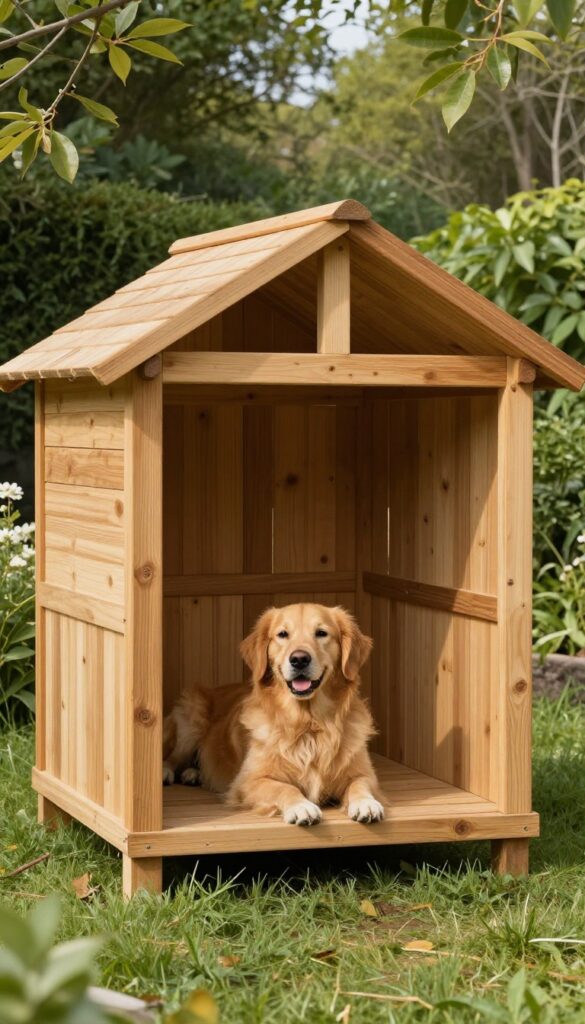
Moisture on the ground can turn a cozy dog house into a moldy mess. Elevating the structure on legs solves that problem by keeping the floor dry and allowing air to circulate underneath. This design is especially popular in warm, humid climates where airflow makes a huge difference in comfort.
Why It Works
The raised platform prevents rainwater and morning dew from seeping into the wood, while the open space beneath deters pests like ants and rodents. It also creates a shaded lounging area where your dog can cool off on hot days.
Best For
This style suits dogs that enjoy being outside for long stretches, especially breeds prone to overheating like Bulldogs, Pugs, or Huskies. It's also great for yards with poor drainage or areas that stay damp.
Practical Tip
Use pressure-treated lumber or cedar for the legs to resist rot, and add a non-slip ramp if your dog is older or has joint issues. Position the house on level ground so it doesn't wobble.
Budget-Friendly Option
Instead of buying a pre-built elevated house, you can modify a standard wooden dog house by adding 4×4 legs and a plywood platform. Just make sure the structure is stable and the floor is sealed.
4. Lean-To Style Dog House
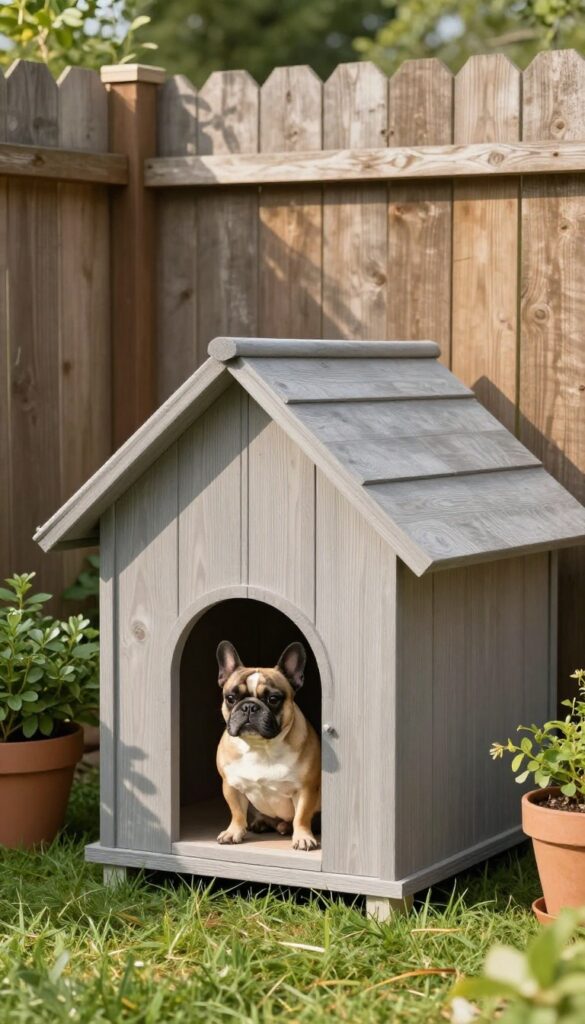
Attaching a dog house directly to your home or fence saves space and materials. The lean-to design uses a single sloped roof that channels rainwater away from the entrance, keeping the interior dry. Many dog owners love this style because it blends into the yard without taking up extra square footage.
Why It Works
The back wall of your house or fence provides natural insulation and wind protection. The single-slope roof is simple to build and requires less lumber than a peaked roof. This design also makes cleaning easier since you can access the house from the open front.
Best For
Small yards where a freestanding dog house would feel cramped. It's also great for dogs that like to lean against walls or sleep in corners. Breeds like French Bulldogs, Pugs, and other small-to-medium dogs will feel secure with the solid backing.
Practical Tip
Use pressure-treated lumber for the back wall attachment and a waterproof sealant on the roof. Add a slight overhang to keep rain from dripping inside. For extra comfort, place a removable floor panel that you can take out for cleaning.
Budget-Friendly Option
Skip the cedar and use exterior-grade plywood with a coat of outdoor paint. You can also repurpose an old wooden pallet for the base if you seal it properly.
5. Log Cabin Dog House
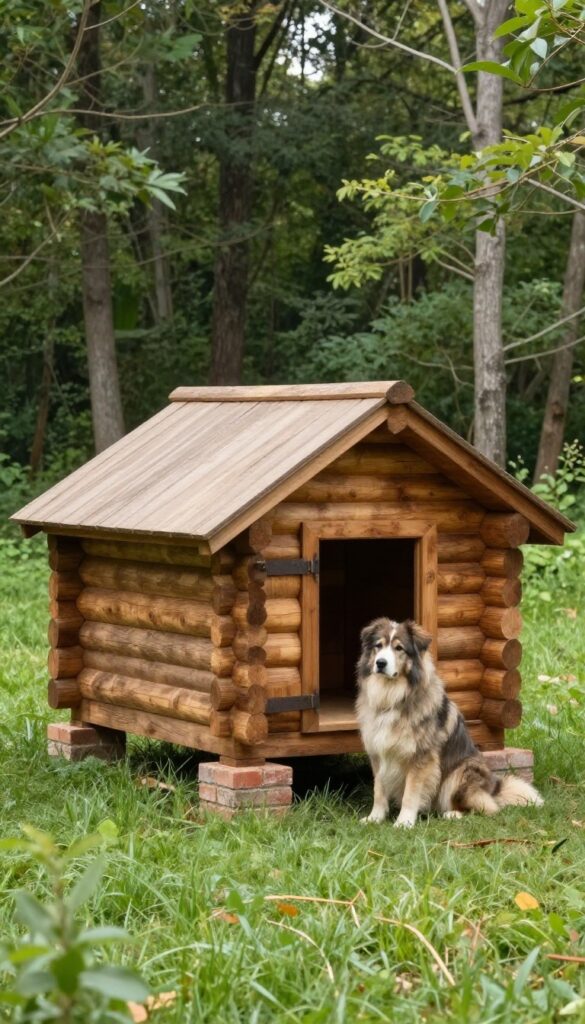
Nothing says cozy like a miniature log cabin for your pup. These thick-walled structures use interlocking planks that look rustic but offer serious insulation and weather resistance. They handle temperature swings better than thin plywood, keeping your dog warmer in winter and cooler in summer.
Many owners love the classic look that blends into wooded yards or cabin-style homes.
Why It Works
The interlocking design creates a solid, airtight seal that blocks drafts and moisture. The thick wood naturally insulates, so your dog stays comfortable in both hot and cold weather. Pre-cut kits make assembly straightforward, and the treated lumber resists rot and insect damage for years.
Best For
This style is ideal for owners who want a durable, long-lasting dog house with a timeless aesthetic. It works especially well for larger breeds that need extra space and insulation, and for yards with a rustic or natural theme.
Practical Tip
Elevate the house on pressure-treated skids or bricks to prevent ground moisture from seeping in. Add a weatherproof flap over the door to block wind and rain. Use a removable roof panel for easy cleaning and access.
Budget-Friendly Option
If pre-cut kits are too pricey, source rough-sawn lumber from a local mill and use a basic interlocking notch pattern. You can also repurpose old fence boards or pallet wood, but make sure they're untreated and safe for dogs.
6. Portable Wood Dog House with Wheels
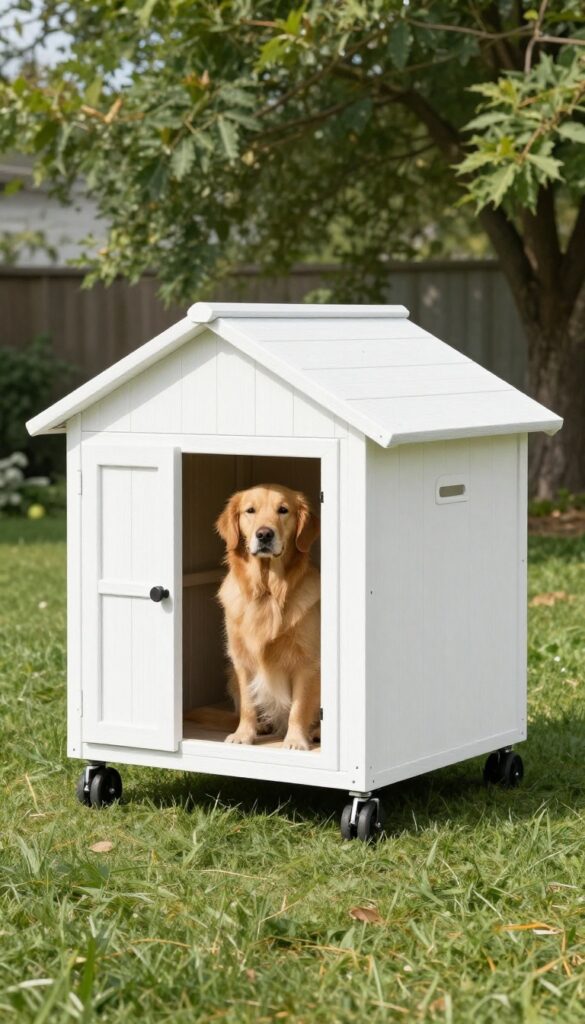
Sometimes your dog prefers sunbathing in the morning and shade in the afternoon. A portable dog house on wheels lets you roll it to the perfect spot without heavy lifting. It's also a lifesaver for renters who can't install permanent structures.
Why It Works
Adding heavy-duty casters to a lightweight plywood house makes it easy to reposition. The wheels lock securely, so the house stays put when your dog is inside or during windy weather. The design remains sturdy and weatherproof while offering unmatched flexibility.
Best For
Anyone who moves their yard setup often, especially renters or people with partially shaded yards. Great for dogs that like to follow the sun or need to be moved away from muddy areas after rain.
Practical Tip
Use locking casters rated for at least 100 lbs to handle the house plus your dog. Add a small handle on the back for easy pulling. Seal the bottom edges with waterproof paint to prevent moisture wicking up through the plywood.
Budget-Friendly Option
Skip the store-bought casters and repurpose old furniture wheels from a discarded dolly or office chair. Just make sure they lock and can handle the weight.
7. Two-Story Dog House
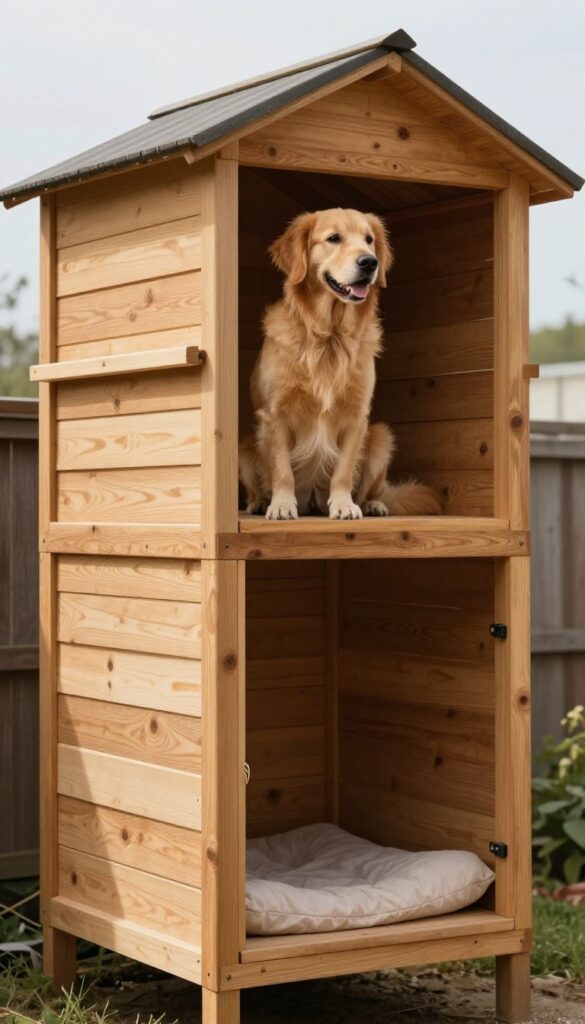
Elevate your dog's backyard experience with a two-story dog house that combines a lookout deck with a sheltered den below. This design gives your pup a sunny perch for scanning the yard and a cozy lower level for naps or rainy days. It's a fun way to add vertical space without taking up much more ground area.
Why It Works
The raised platform keeps your dog off damp ground and provides excellent airflow in summer. The enclosed lower section stays cooler in heat and warmer in cold, while the upper deck lets your dog enjoy the outdoors safely. Separating functions by level also reduces mess inside the sleeping area.
Best For
Active dogs that love to lounge outside and watch the neighborhood, especially breeds like Labradors, German Shepherds, or mixed breeds with moderate to high energy. Works well in medium to large yards where you have room for a slightly taller structure.
Practical Tip
Use weatherproof plywood and pressure-treated lumber for the frame. Add a slanted roof on the upper deck to shed rain, and install secure railings at least 18 inches high to prevent falls. A hinged roof on the lower section makes cleaning easy.
Budget-Friendly Option
Skip the pre-built kit and build your own using salvaged wood and leftover paint. You can often find free pallets or scrap lumber that, with some sanding and sealant, create a sturdy two-story house for under $50.
8. Dutch Gable Roof Dog House
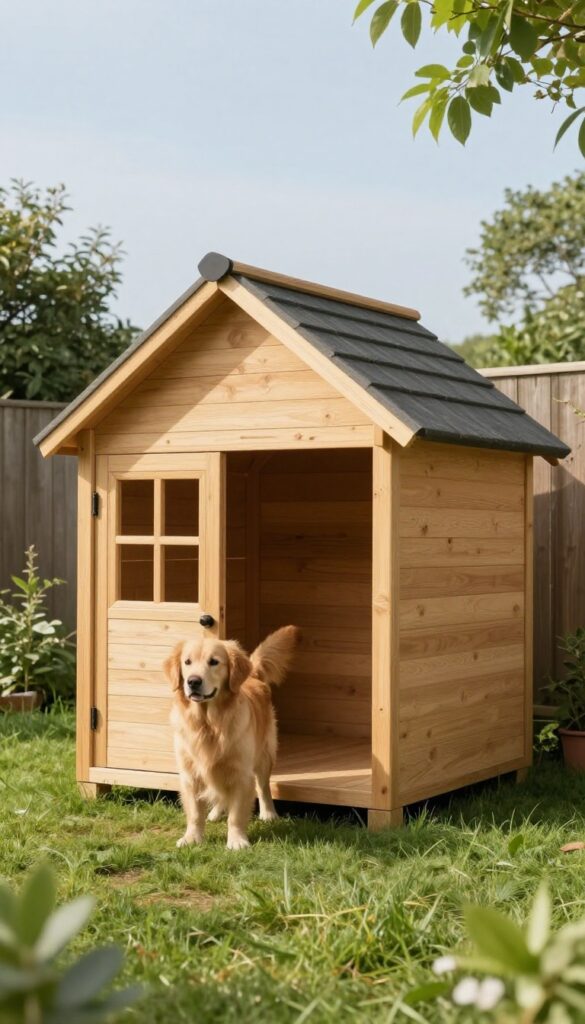
A Dutch gable roof combines the best of two worlds: the classic gable shape with a small hip at each end. This design adds extra headroom inside while improving airflow through the upper portion of the house. It’s a smart choice if you want a dog house that looks charming and keeps your pup cool in warmer months.
Why It Works
The mixed roof style creates a larger interior space without making the footprint bigger. The hip ends allow hot air to escape more easily, which is crucial for summer comfort. Plus, the angled surfaces shed rain and snow well, so the wood stays drier longer.
Best For
This idea works great for medium to large dogs that need a bit more vertical space to stand up or turn around. It’s also a good fit for owners who want a standout backyard feature that blends traditional and modern looks.
Practical Tip
Paint the Dutch gable roof in a light color to reflect sunlight and keep the interior cooler. Add a small vent near the peak for even better airflow. Use cedar or pressure-treated pine for the roof to resist moisture and insects.
Budget-Friendly Option
If the Dutch gable design feels too complex to build from scratch, look for a pre-made gable roof dog house kit and modify it by adding a small vent or raising the roof pitch slightly. You can also build a simple gable roof and add a decorative hip cap later.
9. Reclaimed Wood Dog House
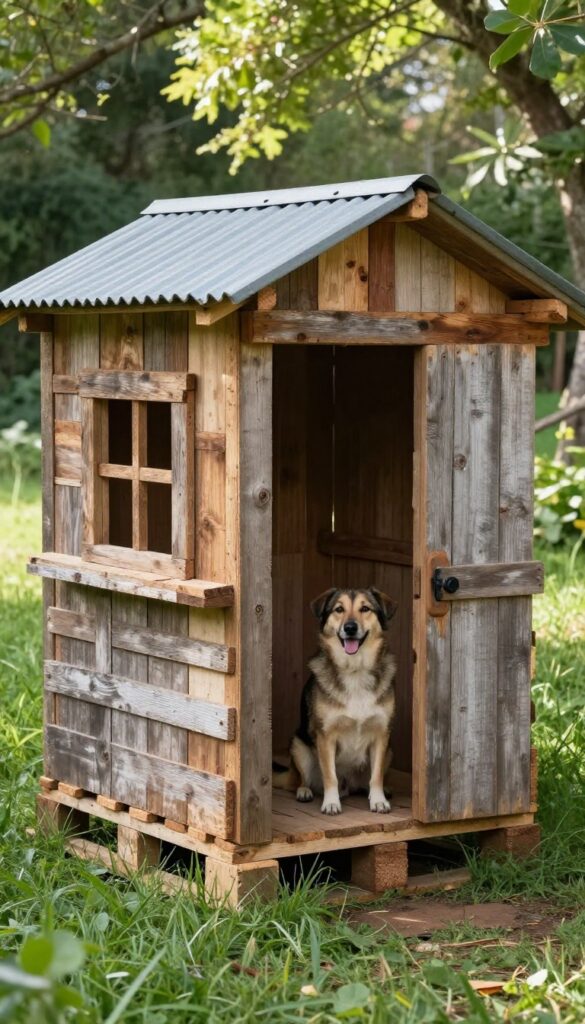
Scavenging pallets or leftover lumber from a renovation project can turn into a charming, one-of-a-kind dog house. This approach keeps costs near zero while giving your backyard a rustic, handmade feel. Plus, upcycling wood reduces waste and adds character that store-bought houses just can't match.
Why It Works
Reclaimed wood is often thicker and more weathered, which means it naturally resists rot and insects better than new softwood. With proper sanding and a non-toxic sealant, you get a sturdy shelter that blends into a natural landscape. The irregular textures also help dogs feel more secure, as the surfaces mimic outdoor environments.
Best For
This idea suits budget-conscious DIYers who enjoy crafting and have access to free materials. It's perfect for medium to large breeds that need a spacious, low-cost retreat, and it works great in rustic or farmhouse-style yards where a polished look isn't required.
Practical Tip
Always sand down splinter-prone edges and treat the wood with a pet-safe waterproofing oil or stain. For the roof, use corrugated metal or asphalt shingles to shed rain effectively. Add a slightly slanted floor with drainage gaps to keep the interior dry during wet weather.
Budget-Friendly Option
If pallets aren't available, check local construction sites for scrap lumber—they often give away offcuts for free. Alternatively, use untreated fence pickets from a hardware store, which cost about $2 each and require only basic cutting and assembly.
FAQ
What type of wood is best for a dog house?
Cedar and pine are popular choices. Cedar naturally resists rot and insects, while pine is affordable and easy to work with. Always use untreated wood to avoid harmful chemicals.
How do I waterproof a wood dog house?
Apply a non-toxic, water-based sealant or paint designed for outdoor use. Focus on the roof and seams. Ensure the house is slightly elevated to prevent ground moisture from seeping in.
Should I insulate my dog's wood house?
Yes, insulation helps regulate temperature. Use foam board or reflective insulation between walls. For extra warmth in winter, add a heated pad or straw bedding.
How big should a wood dog house be?
The house should be just big enough for your dog to stand, turn around, and lie down comfortably. A snug space retains body heat better. Measure your dog's length and height, then add a few inches.
Can I build a wood dog house if I'm not handy?
Absolutely. Many simple designs require only basic tools like a saw, drill, and hammer. Pre-cut kits are also available that come with instructions and all materials.
Conclusion
Choosing a wood dog house doesn't have to be complicated or expensive. With these nine ideas, you can find a design that fits your budget, skill level, and your dog's needs.
Whether you build a simple A-frame or a cozy cabin, the key is using durable materials and keeping your pup's comfort in mind. A well-made wood dog house will provide years of shelter and become a favorite backyard spot for your furry friend.

I’m Pallab Kishore, the owner of Little Pets Realm — an animal lover and pet care enthusiast sharing easy tips, healthy recipes, and honest advice to help every small pet live a happy, healthy, tail-wagging life.