
Living with multiple dogs is wonderful, but it can turn your home into a chaotic free-for-all without the right setup. From mealtime squabbles to tangled leashes, managing more than one pup requires smart spatial planning.
These nine multi-dog room ideas help you create a calm, organized home where each dog feels secure and has their own space. Whether you're working with a dedicated dog room or just a corner of your living area, these practical solutions address common multi-dog challenges.
You'll find ideas for feeding stations that prevent food guarding, cozy crate corners for personal dens, and clever storage systems that keep toys and treats accessible.
1. Designate Individual Feeding Stations to Prevent Food Guarding
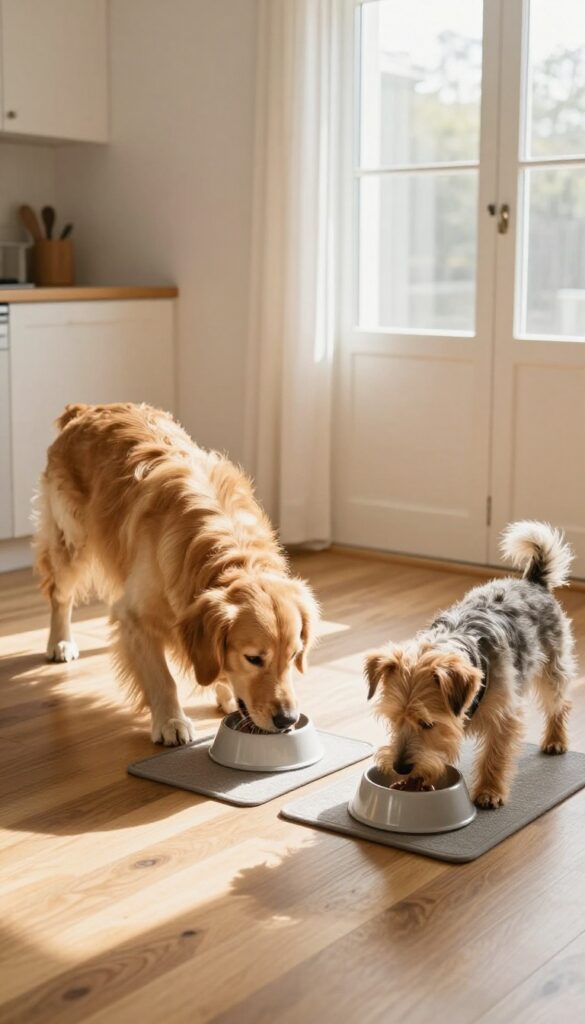
Mealtime with multiple dogs can feel like a high-stakes negotiation, especially if one pup tends to guard their bowl. Setting up separate feeding stations gives each dog their own designated spot to eat without feeling threatened by others. This simple change transforms a potentially stressful event into a calm, predictable routine that benefits everyone in the household.
Why It Works
Dogs are naturally protective of their resources, and food is a big one. By creating physical distance or using low dividers, you remove the trigger for guarding behavior. Each dog can focus on their meal instead of watching their neighbor's bowl, which reduces tension and prevents scuffles before they start.
Best For
Homes with two or more dogs, especially if you have a resource guarder, a shy eater, or a puppy learning boundaries. It's also ideal for households with dogs of different sizes or ages where one might intimidate the other during meals.
Practical Tip
Use placemats or non-slip mats to define each station, and space them at least three feet apart. If your dogs are still uneasy, add a low room divider or a piece of furniture between bowls. Keep water bowls separate from feeding stations to avoid crowding.
Budget-Friendly Option
Skip expensive divided bowls and use inexpensive placemats from a dollar store. You can even repurpose a cardboard box as a temporary divider. The key is separation, not fancy gear.
2. Create a Crate Corner for Personal Den Spaces
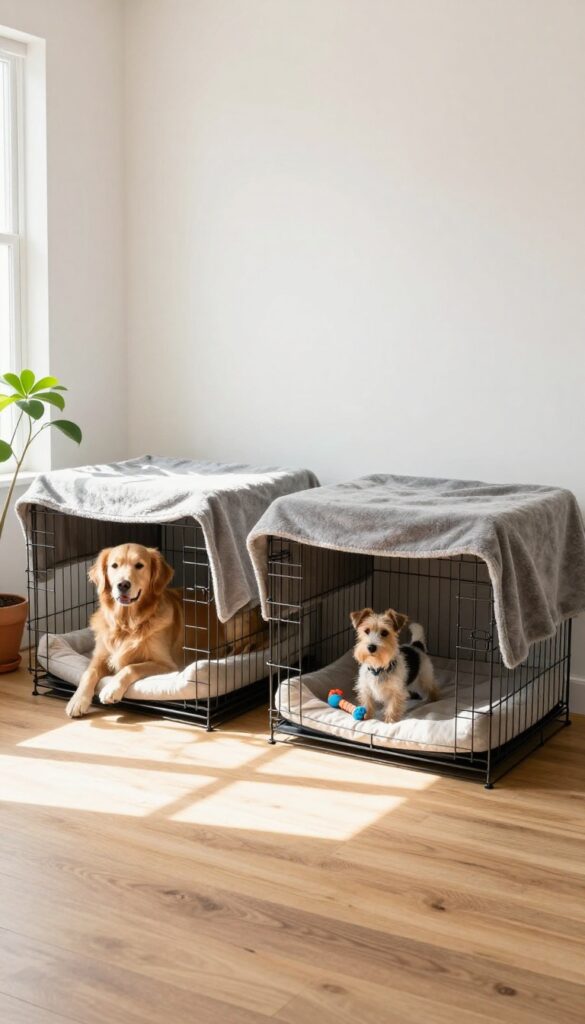
Dogs are den animals by nature, and having their own crate can be a game-changer in a multi-dog home. A designated crate corner gives each pup a private retreat where they can unwind without interruption.
By grouping crates together in a quiet spot, you create a dedicated zone that feels safe and consistent. Covering part of each crate with a blanket or crate cover adds extra coziness and helps signal to your dogs that this is their personal space.
This setup works especially well in homes where dogs have different energy levels or need occasional breaks from each other. It's a simple way to reduce tension and give everyone their own little slice of peace.
Why It Works
Crates mimic the natural den environment, helping dogs feel secure and reducing stress. When each dog has their own crate, they can choose to retreat without feeling trapped, which minimizes resource guarding and inter-dog conflicts.
Best For
This idea is perfect for homes with two or more dogs, especially if some are shy, elderly, or simply need a quiet escape. It's also great for puppies who are still crate training and need a consistent, safe spot.
Practical Tip
Place crates against a wall in a low-traffic area, like a corner of the living room or a spare bedroom. Add soft bedding inside and drape a breathable crate cover over the back and sides, leaving the front open. Make sure each crate is the right size—your dog should be able to stand, turn around, and lie down comfortably.
Budget-Friendly Option
If you don't want to buy multiple crates, use sturdy wire crates with homemade fabric covers from old sheets or towels. You can also repurpose large plastic storage bins with ventilation holes as budget-friendly den boxes for small dogs.
3. Build a Shared Toy and Treat Storage Wall
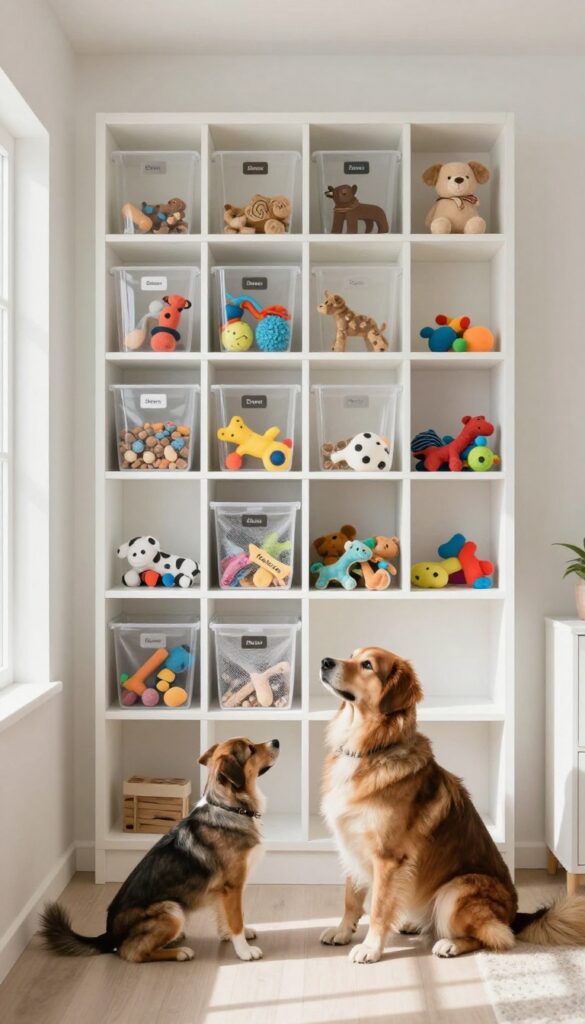
When you have multiple dogs, toys and treats can quickly take over every surface in your home. A dedicated storage wall keeps everything organized and accessible for both you and your pups. By using wall-mounted bins or a cubby system, you create a designated spot that reduces clutter and makes clean-up a breeze.
Why It Works
This setup works because it centralizes all the dog goodies in one place, making it easy for everyone—including your dogs—to know where things belong. Labeled bins by dog or type prevent mix-ups and teach your pups to wait their turn, cutting down on resource guarding and confusion.
Best For
This idea is perfect for multi-dog households where toys and treats are constantly getting lost or mixed up. It's especially useful for owners who want to teach their dogs to respect each other's belongings and for homes with limited floor space.
Practical Tip
Mount bins at different heights so small dogs can reach their own toys while larger dogs can't snatch them. Use clear bins for easy visibility or mesh bags that allow air circulation for chews. Add hooks on the side for hanging leashes or collars.
Budget-Friendly Option
If you're on a budget, repurpose an old shoe organizer or over-the-door hanging rack. Label each pocket with a marker or printable tags. You can also use tension rods with baskets in a hallway or closet.
4. Install a Multi-Dog Feeding Station with Raised Bowls
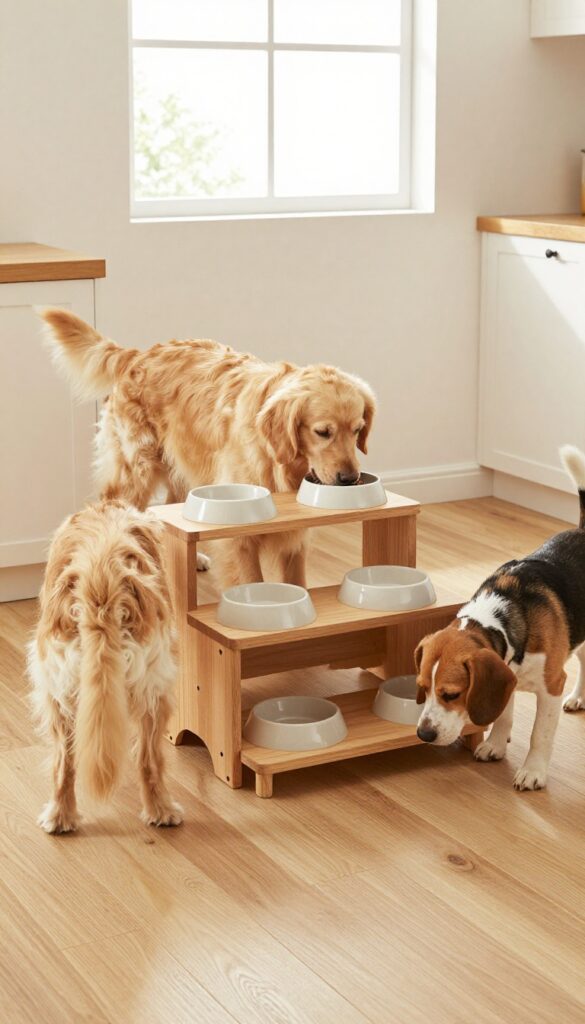
Feeding time with multiple dogs can get messy fast, especially when bowls slide across the floor or dogs crowd each other. A raised feeding station with separate bowls for each pup solves both issues by elevating meals to a comfortable height and keeping each dog focused on their own dish. It's a simple upgrade that makes mealtime calmer and cleaner for everyone.
Many owners find that raised bowls help with digestion, especially for larger breeds or senior dogs with joint issues. Plus, having a dedicated station prevents food from scattering and makes cleanup as easy as wiping down the stand.
The key is choosing a sturdy stand that fits your space and your dogs' sizes. Look for one with non-slip feet and bowls that are easy to remove for washing.
Why It Works
Raised bowls reduce strain on your dog's neck and joints during eating, which is especially helpful for deep-chested breeds prone to bloat. With separate bowls spaced apart, each dog has their own designated spot, minimizing food guarding and mealtime conflict. The stand also contains spills and keeps the floor cleaner.
Best For
This setup is ideal for multi-dog households with medium to large breeds, senior dogs, or any pups that tend to gulp their food. It's also great for homes with hard flooring where bowls tend to slide around during meals.
Practical Tip
Choose a stand with a non-slip surface or add a silicone mat underneath to keep it from shifting. Position the station in a low-traffic area away from doorways to give each dog a calm eating space. Clean the bowls daily and wipe down the stand weekly to prevent buildup.
Budget-Friendly Option
If you're on a tight budget, you can create a DIY raised station using a sturdy wooden crate or a low bookshelf. Simply place individual bowls in the compartments or on top, ensuring the height is appropriate for your dogs. Add a non-slip mat underneath for stability.
5. Add a Washable Dog Bed Zone for Lounging Together
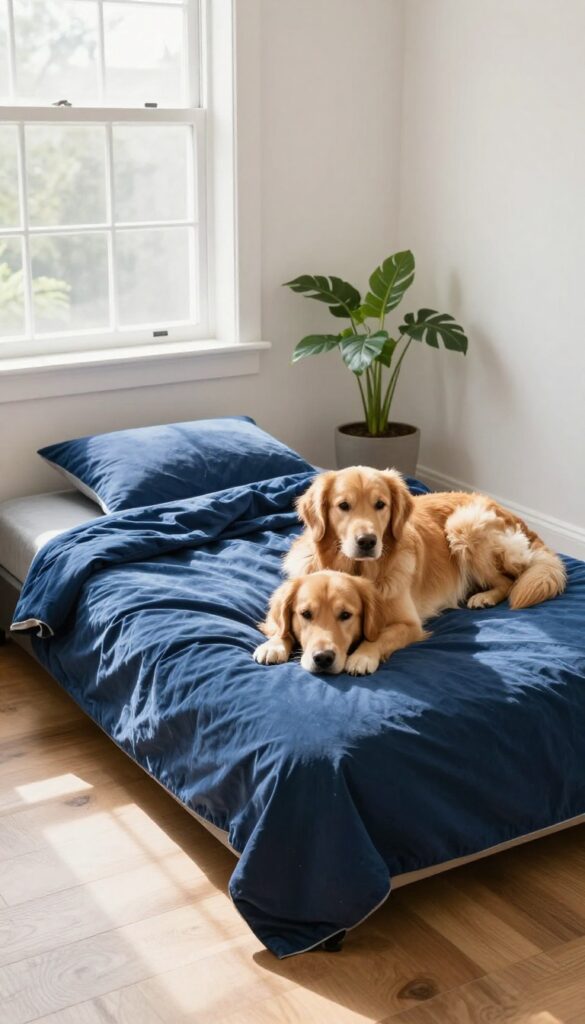
Dogs love to pile up together for naps, and having a dedicated lounging zone makes that cozy habit much easier on your furniture. A washable bed zone gives your pack a spot to cuddle without covering your couch in fur and mud.
This setup works because it gives dogs a clear place to relax together, reducing competition for prime napping spots. Plus, washable covers mean less stress when muddy paws or accidents happen.
Dog owners appreciate how this simple addition keeps mess contained and makes cleanup quick, so everyone can enjoy snuggle time without worry.
Why It Works
Dogs naturally seek out soft, sunny spots to rest, and a shared bed zone reinforces positive pack bonding. Having one large bed instead of several small ones prevents territorial behavior and gives all dogs a communal space to feel safe together.
Best For
This idea is ideal for homes with two to four dogs that already get along well and enjoy cuddling. It works great in living rooms, sunrooms, or any area with good natural light where dogs already like to nap.
Practical Tip
Place a large, rectangular orthopedic bed or a set of interlocking floor mats in a sunny corner. Choose waterproof, machine-washable covers in a dark color to hide stains, and add a few lightweight blankets that can be tossed in the wash easily.
Budget-Friendly Option
If a big orthopedic bed is out of budget, use washable outdoor rugs or crib mattresses covered with fitted sheets. They're durable, easy to clean, and provide plenty of room for multiple dogs.
6. Set Up a Grooming Station with Easy-Clean Surfaces
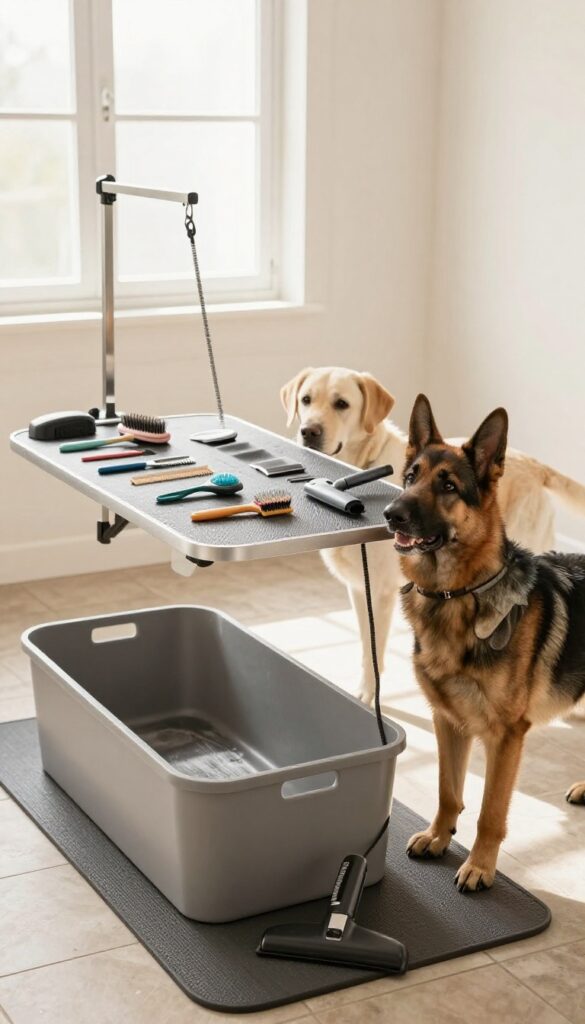
Grooming multiple dogs can feel like a full-time job, especially when fur ends up everywhere. A dedicated grooming station with easy-clean surfaces keeps mess contained and makes the process faster for both you and your pups.
Pick a corner with a non-slip mat, a low table or counter, and keep all your brushes, combs, and clippers within arm's reach. A handheld vacuum nearby lets you tackle loose hair right after each session, so it doesn't drift through the rest of the house.
Why It Works
Having a fixed grooming spot trains your dogs to associate that area with brushing and nail trims, which reduces anxiety over time. Easy-clean surfaces like tile, vinyl, or sealed wood mean you can wipe down or sweep up fur and dander in seconds, keeping the whole space hygienic.
Best For
This setup works great for households with shedding breeds like Labrador Retrievers, German Shepherds, or Huskies, where daily brushing is a must. It's also ideal for small spaces where you can't afford to have fur floating into every room.
Practical Tip
Use a rubber curry brush or grooming glove to loosen undercoat before brushing—it cuts down on flying fur. Place a small trash can or bin lined with a bag right next to the station so you can toss clumps immediately. A washable mat under the table catches stray hairs and makes cleanup even easier.
Budget-Friendly Option
If you don't have a low table, repurpose a sturdy plastic storage bin or an old coffee table. Cover it with a washable towel or a cheap yoga mat for a non-slip, easy-clean surface.
7. Use Room Dividers to Create Separate Play Zones
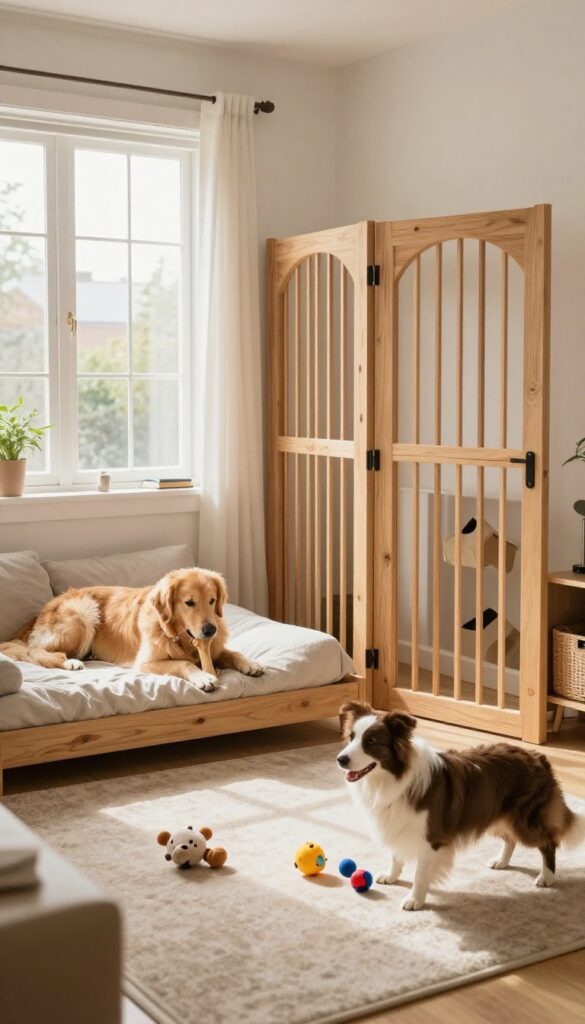
Not every dog wants to wrestle all day. Some need a quiet corner to chew a bone while their buddy tears around the living room. Freestanding pet gates or decorative room dividers let you section off areas for different activities without closing doors.
This simple setup helps manage energy levels and gives shy dogs a place to decompress.
Why It Works
Room dividers create visual boundaries that dogs understand. They reduce conflict by letting each dog choose their own zone, and they prevent overstimulation during playtime. You can adjust the layout as needed without any permanent changes to your home.
Best For
Homes with dogs of different ages, sizes, or energy levels. It's especially helpful if you have one high-energy pup who loves to play and another who prefers naps or gets overwhelmed easily.
Practical Tip
Use a sturdy, floor-mounted pet gate for high-traffic zones, or try a decorative folding screen for a more stylish look. Make sure the divider is tall enough that even your largest dog can't jump over it. Place a cozy bed on the quiet side and some toys on the active side to encourage use.
Budget-Friendly Option
A tension-mount baby gate works well and costs less than a decorative screen. You can also repurpose a large bookshelf laid on its side as a room divider—just secure it to the wall so it doesn't tip.
8. Install Wall Hooks for Leash and Collar Organization
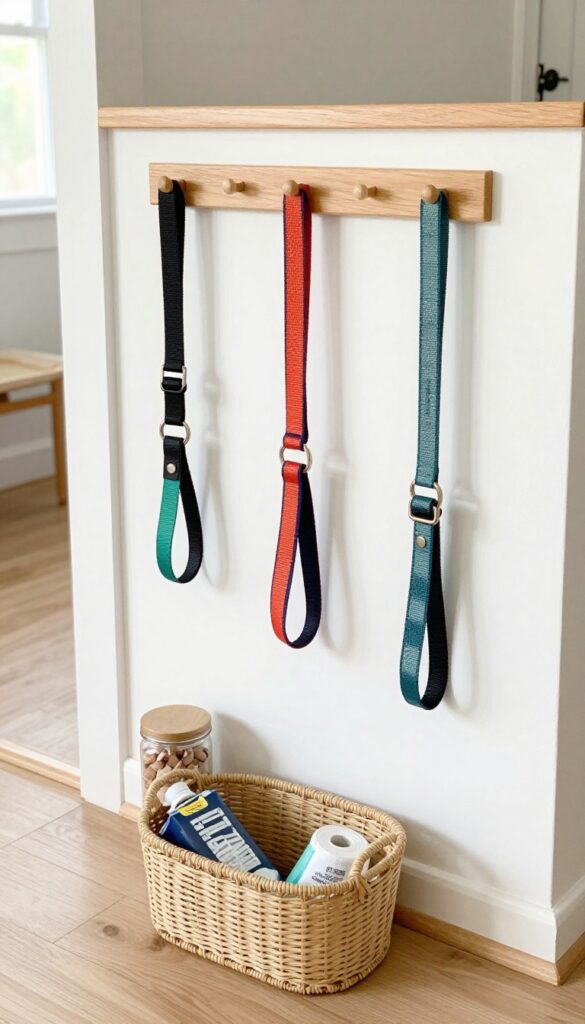
Mornings with multiple dogs can be a scramble of untangling leashes and hunting for missing collars. Wall hooks near the door solve this chaos by giving each dog a dedicated spot for their walking gear. A small basket underneath catches poop bags and treats, making grab-and-go walks effortless.
Why It Works
When every leash has its own hook, you can grab the right one in seconds without untangling a knot. This system also keeps collars and harnesses visible, so you can quickly check for wear and tear or swap them out seasonally.
Best For
Homes with two or more dogs where morning walks are a daily routine. It fits any entryway, mudroom, or garage door area and works especially well for families with multiple walkers who need to grab gear fast.
Practical Tip
Mount hooks at different heights if your dogs range from small to large—puppy leashes lower, big dog leashes higher. Use heavy-duty hooks that can support the weight of multiple leashes and collars without pulling out of the wall.
Budget-Friendly Option
Skip expensive branded hooks and use a simple wooden peg rail from a hardware store. Spray-paint it a fun color to match your decor. A dollar-store basket works fine for poop bags and treats.
9. Design a Cozy Window Perch for Multiple Dogs
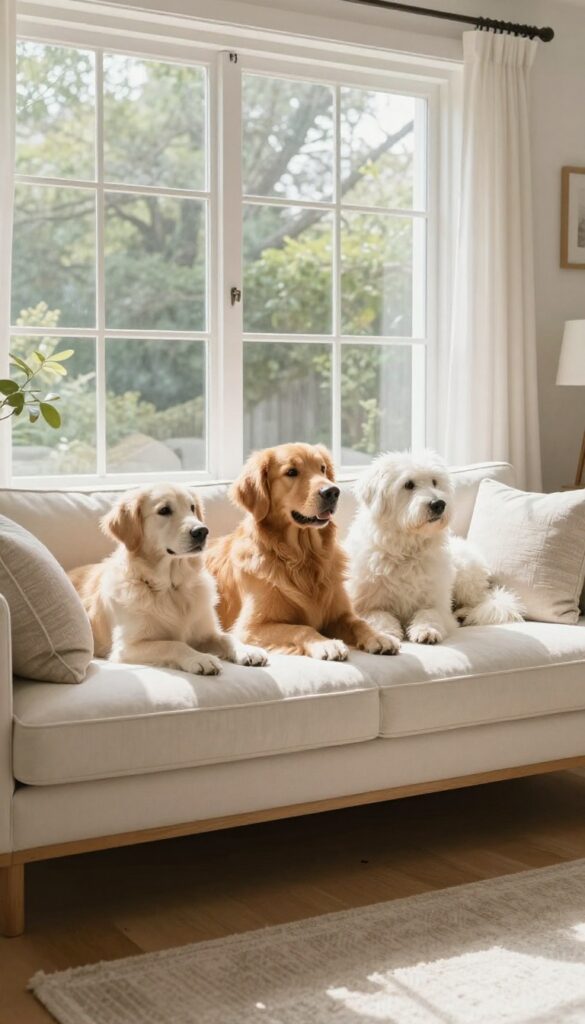
Dogs are natural-born window watchers. A wide, padded bench or a row of low beds placed under a window creates a shared lookout spot where your pups can relax, snooze, and keep an eye on the neighborhood together. It's a simple upgrade that turns an ordinary wall into a favorite gathering place.
This perch works especially well in living rooms or bedrooms where dogs already like to hang out. The key is making it long enough and cushy enough for all your dogs to sprawl out side by side.
Why It Works
Dogs love having a designated spot to observe their territory, and a shared window perch satisfies that instinct while keeping them off furniture. The elevated view also helps reduce barking at passersby because they feel more secure watching from a safe vantage point.
Best For
Homes with two to four small or medium dogs that enjoy each other's company. Also great for apartments or houses where windows face a busy street or a fenced yard with squirrel action.
Practical Tip
Use a sturdy, low-profile bench with a washable cushion or cover. Add a non-slip rug underneath to catch dirt and prevent sliding. If you have multiple dogs, consider individual bolsters or separate beds so each pup can claim their own spot without resource guarding.
Budget-Friendly Option
Skip the custom bench and use two large floor cushions or a folded duvet placed directly under the window. A repurposed coffee table with a thick mattress topper on top also works—just make sure it's stable and low enough for easy access.
FAQ
How much space do I need for a multi-dog room?
You don't need a whole room—a corner or alcove works. Aim for at least enough space for each dog to have their own bed and feeding area without crowding.
What's the best flooring for a multi-dog room?
Durable, easy-to-clean flooring like luxury vinyl plank or tile is ideal. Add washable rugs for comfort and traction.
How do I stop dogs from stealing each other's food?
Feed dogs in separate stations or use a slow feeder bowl. Supervise meals until everyone finishes, then pick up bowls promptly.
Can I use baby gates for dog zones?
Yes, but choose pet-specific gates that are tall enough and have a small pet door if needed. Pressure-mounted gates work for doorways, while hardware-mounted ones are sturdier.
How often should I wash dog beds in a multi-dog home?
Wash beds every one to two weeks, or more often if dogs are messy. Use removable, machine-washable covers for convenience.
Conclusion
Sharing your home with multiple dogs is a joy, but it does take a little planning. With these room ideas, you can create a space that keeps everyone comfortable and conflict-free.
Start with one or two changes that fit your home and your pups' personalities. Your dogs will appreciate having their own spots, and you'll enjoy a calmer, happier household.

I’m Pallab Kishore, the owner of Little Pets Realm — an animal lover and pet care enthusiast sharing easy tips, healthy recipes, and honest advice to help every small pet live a happy, healthy, tail-wagging life.