
Rainy days don't have to mean your dog misses out on fresh air. With the right outdoor kennel setup, your pup can enjoy the yard without getting soaked or muddy. A few smart adjustments turn a basic kennel into a dry, comfortable space that works in any weather.
Think about what makes a kennel truly rain-ready: a solid roof, good drainage, and a cozy spot to curl up. Whether you're building from scratch or upgrading an existing structure, these ideas focus on keeping your dog dry and happy.
From simple DIY covers to fully enclosed runs, there's a solution for every yard and budget. Let's explore ten practical ways to create a rain-friendly outdoor kennel your dog will love.
1. Covered Run with a Sloped Roof
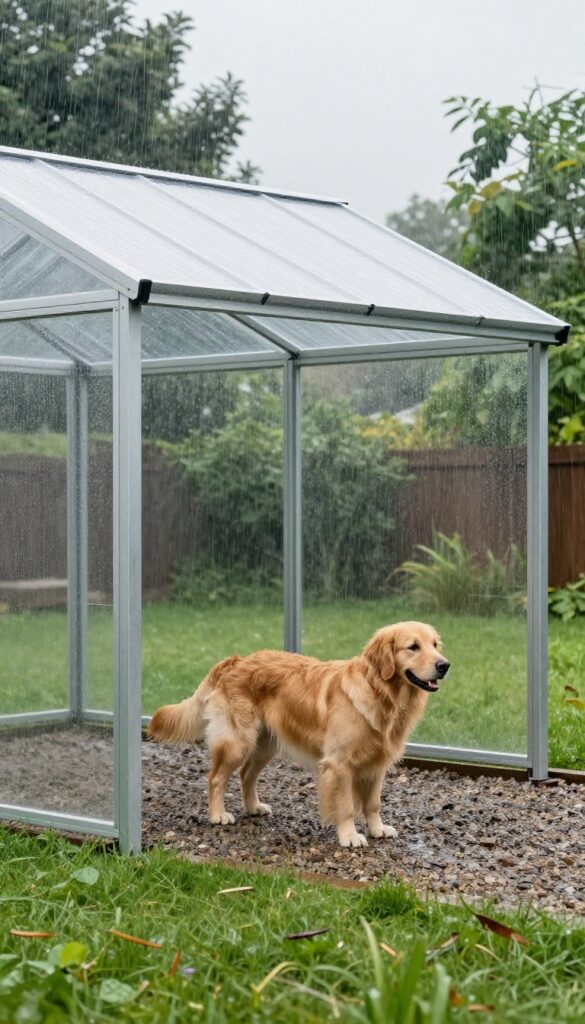
A covered run with a sloped roof is one of the most effective ways to keep your dog dry during rainy weather. The slope ensures water runs off instead of pooling, and the extended overhang keeps rain from blowing in. Dog owners love this design because it's simple, durable, and works with almost any kennel size.
Why It Works
The sloped roof directs rainwater away from the kennel, preventing leaks and puddles. Materials like corrugated metal or polycarbonate panels hold up well against rain and wind, and the overhang creates a dry entry zone so your dog can come and go without getting wet.
Best For
This setup is ideal for active dogs who love being outdoors even in light rain, and for owners with a permanent kennel structure. It's also great for multi-dog households where you need a spacious, covered area that stays dry for everyone.
Practical Tip
Extend the roof at least 12 inches past the kennel edges on all sides to block blowing rain. Use clear polycarbonate panels if you want natural light, or metal for a more solid cover. Make sure the slope is at least a 15-degree angle for good drainage.
Budget-Friendly Option
If you're on a tight budget, use a heavy-duty tarp stretched over a PVC frame, angled with a slight slope. Secure it with bungee cords and weigh down the edges with bricks or sandbags. It's not as permanent but works well for occasional rain.
2. Elevated Floor with Drainage Gaps
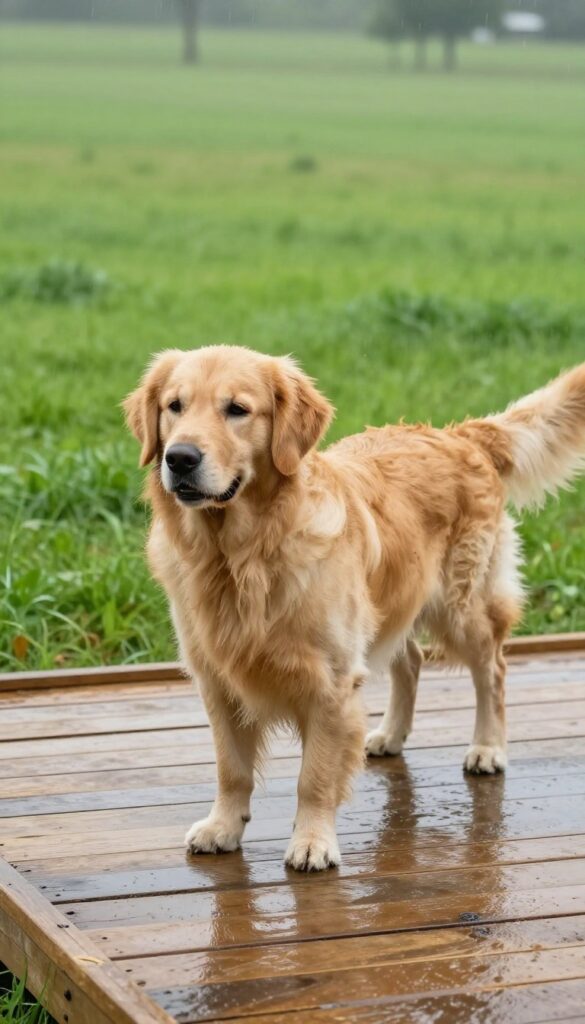
Standing water turns a kennel into a muddy mess fast. An elevated floor lifts your dog above puddles and wet ground, keeping them dry even during heavy rain. By leaving small gaps between boards, water drains away immediately instead of pooling.
This simple design also boosts airflow, which cuts down on odors and helps the floor dry faster after a storm.
Why It Works
Elevating the floor creates a barrier between your dog and the wet ground. Rainwater flows through the gaps instead of sitting on the surface, so your pup stays dry even when the yard is soaked. The open structure also allows air to circulate underneath, reducing moisture buildup and keeping the kennel fresher.
Best For
This setup works great for dogs that spend a lot of time outdoors, especially in areas with frequent rain or poor drainage. It's also ideal for active breeds that track in mud, as the gaps help keep the kennel cleaner overall.
Practical Tip
Use a wooden platform made from pressure-treated lumber or a heavy-duty plastic grid designed for kennels. Space the gaps about half an inch apart so small paws don't get caught. Add a removable tray underneath to catch debris for easier cleaning.
Budget-Friendly Option
On a tight budget? Repurpose an old wooden pallet by sanding it smooth and sealing it with pet-safe waterproof paint. Just make sure there are no protruding nails or splinters.
3. DIY Tarp Canopy System
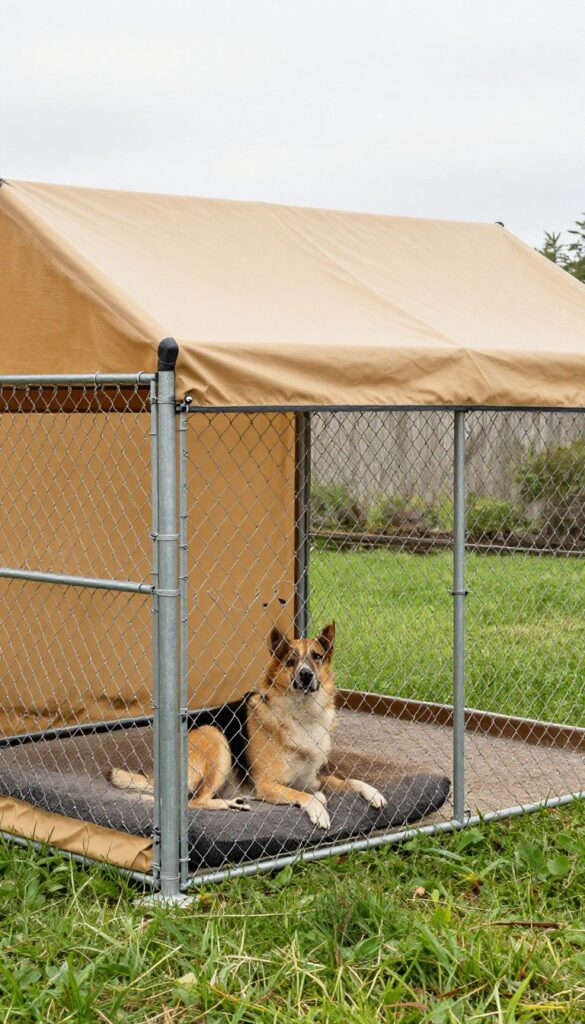
A simple tarp canopy can transform an open kennel into a dry retreat in minutes. By rigging a heavy-duty tarp over a PVC or metal frame, you create a sloped roof that sheds rain away from your dog's space. It's a budget-friendly fix that works especially well for temporary setups or renters who can't build a permanent structure.
The key is angling the tarp so water runs off to the side, not into the kennel. Secure it tightly with bungee cords or ropes, and check for sagging after heavy rain. This system is easy to take down for sunny days, making it a flexible solution for unpredictable weather.
Dog owners love how quick and customizable this idea is. You can adjust the height, angle, and coverage based on your kennel's size and your dog's needs. Plus, it's a great weekend project that doesn't require advanced DIY skills.
Why It Works
A properly angled tarp creates a waterproof barrier that keeps the kennel floor dry, even during steady rain. The sloped design prevents water from pooling, and the open sides allow for airflow, reducing humidity and stuffiness. Your dog stays dry without feeling trapped in a closed-in space.
Best For
This idea is perfect for dog owners with standard wire or chain-link kennels who need a quick, removable rain cover. It's ideal for renters, people with limited budgets, or those who want a temporary solution for seasonal rain. Works well for any dog size, but especially for breeds that enjoy being outside even in light drizzle.
Practical Tip
Use a heavy-duty, UV-resistant tarp in a neutral color like tan or green so it blends with the yard. Attach the tarp to a PVC frame using zip ties or clamps, then secure the edges with bungee balls for a tight fit. Angle the frame so the highest point is at the back of the kennel, directing water away from the entrance.
Budget-Friendly Option
Skip the PVC frame and use a sturdy rope or cable tied between two trees or posts. Drape the tarp over the rope and weigh down the edges with bricks or sandbags. This no-frills version costs under $30 and can be set up in ten minutes.
4. Insulated Dog House Inside the Kennel
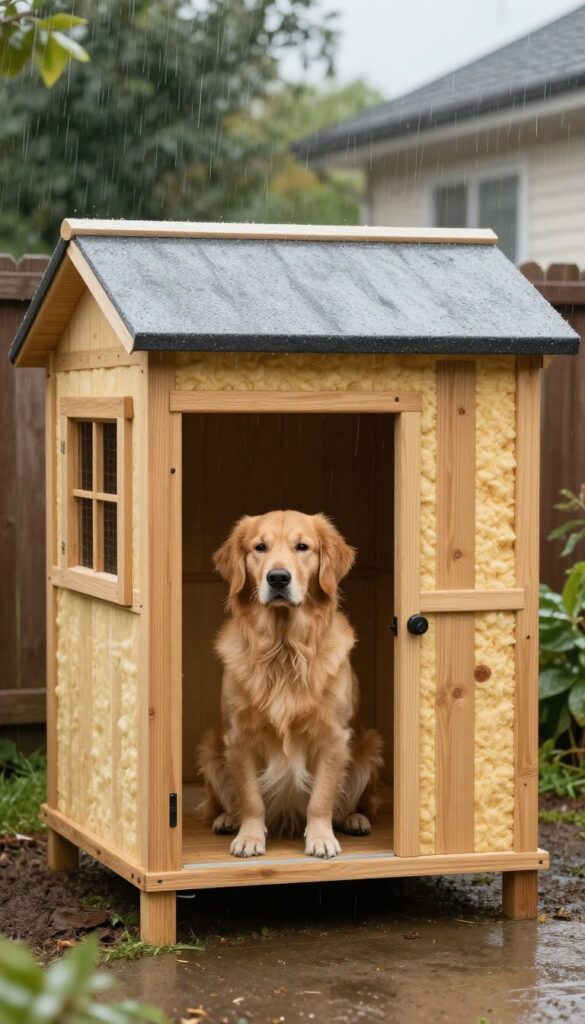
Adding a well-insulated dog house inside the kennel gives your pup a warm, dry sanctuary on rainy days. The dog house acts as a secondary shelter, trapping body heat and blocking drafts. It's a simple upgrade that makes a huge difference in comfort, especially during chilly downpours.
Why It Works
Insulation keeps the interior temperature stable, so your dog stays warm even when it's cold and wet outside. Elevating the dog house prevents ground moisture from seeping in, while the enclosed space blocks wind and rain. This setup creates a cozy den-like retreat that dogs naturally love.
Best For
This idea works great for dogs that spend several hours outdoors, especially short-haired breeds or senior dogs that get cold easily. It's also perfect for kennels in colder climates where rain often turns into sleet or snow.
Practical Tip
Use rigid foam insulation panels on the walls and roof of the dog house, or pack straw bales around the exterior for a natural option. Make sure the entrance has a flap or a small overhang to keep rain from blowing in. Elevate the house on bricks or a wooden platform to keep it off the wet ground.
Budget-Friendly Option
If you're on a tight budget, repurpose an old plastic storage bin as the dog house. Cut a door opening, line the inside with a thick blanket or straw, and place it on a pallet to keep it dry. It won't win any beauty contests, but it works.
5. Clear Vinyl Curtains for Wind and Rain
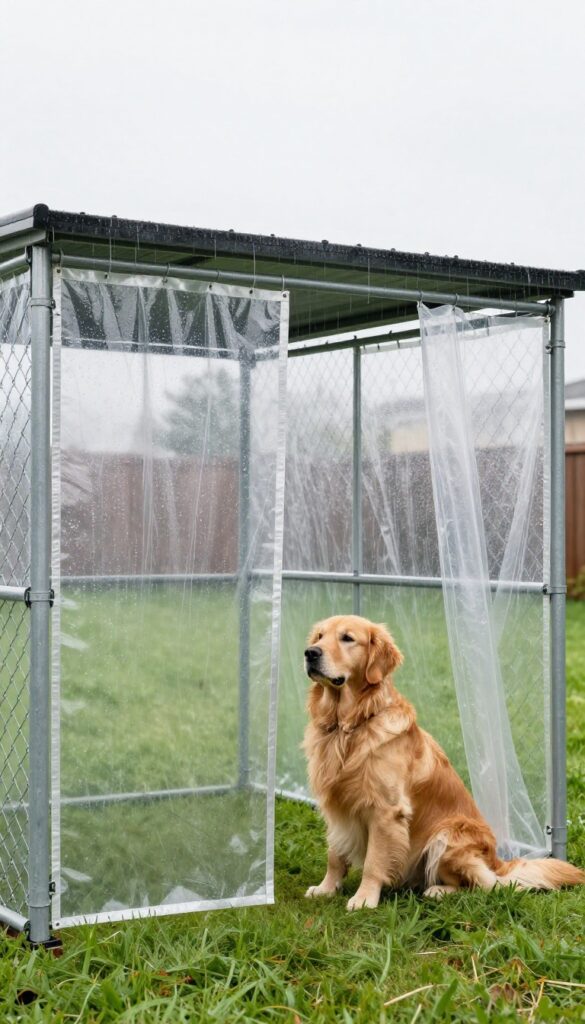
Sometimes a kennel needs more than just a roof to stay dry. Wind-driven rain can soak your dog even under a solid cover. Clear vinyl curtains create a weather barrier that blocks rain and gusts while keeping the space bright and open.
They're a flexible solution that lets you close off one side of the kennel without making it feel like a cave. Dogs can still see out, and you can easily step through to join them.
Why It Works
The overlapping vinyl strips or curtain panels form a nearly seamless shield against sideways rain and wind. Because the material is transparent, your dog can still watch the yard and enjoy natural light. The curtains are also easy to push aside for entry and exit, so your pup doesn't feel trapped.
Best For
This setup is ideal for kennels with one or two open sides that face prevailing winds. It works well for dogs that like to stay dry but also want to keep an eye on their surroundings. Great for covered runs and chain-link kennels where you need a flexible, semi-permanent weather solution.
Practical Tip
Use heavy-duty clear vinyl (at least 12 mil thick) for durability. Hang the curtains from a tension rod or a simple track system, and make sure the strips overlap by at least 2 inches to prevent gaps. For easy cleaning, wipe down with a mild soap solution and hose off.
Check for tears after storms and replace any damaged panels.
Budget-Friendly Option
If you're on a tight budget, buy a clear vinyl shower curtain liner from a discount store and cut it into strips. Attach them to a wooden or PVC frame with grommets and zip ties. It won't last as long as heavy-duty vinyl, but it works surprisingly well for a season or two.
6. Gravel Base for Mud-Free Zone
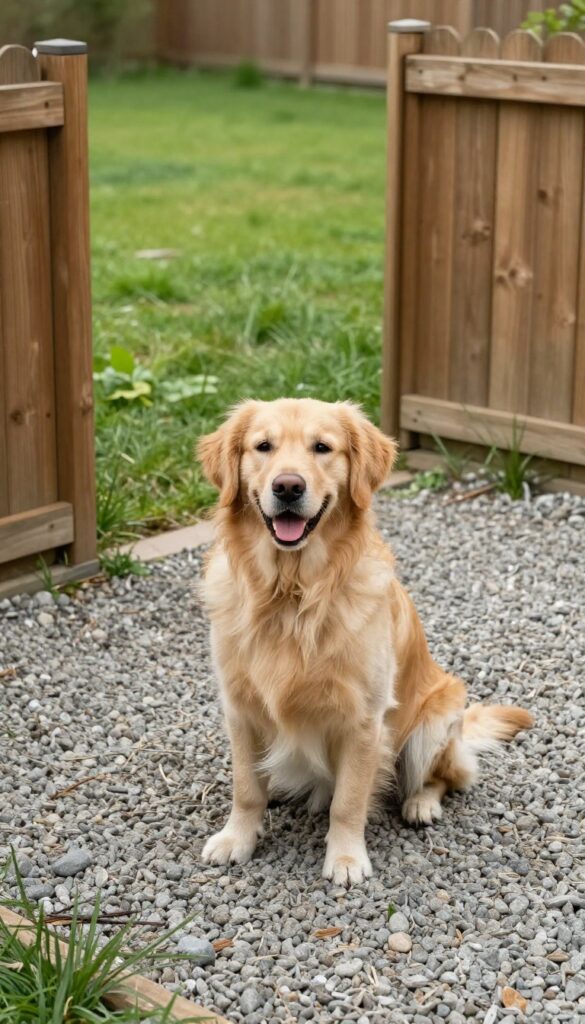
Nothing turns a rainy day kennel into a mess faster than mud. Swapping out grass or dirt for a gravel base solves that problem instantly. Gravel or pea stone creates a solid, well-draining surface that keeps your dog's paws clean and the kennel area tidy, even after a downpour.
Why It Works
Gravel allows rainwater to drain through quickly, so puddles and mud never have a chance to form. The stones stay in place and don't get slippery, giving your dog a stable, dry area to move around on.
Best For
This setup is ideal for dogs who spend a lot of time outdoors in rainy climates, especially medium to large breeds that can churn up mud easily. It also works great for kennels placed on flat ground where water tends to pool.
Practical Tip
Start by digging down about 4–6 inches and laying a weed barrier fabric to keep plants from pushing through. Then add a 4-inch layer of pea stone or crushed gravel, spreading it evenly. Rake occasionally to keep the surface level and remove any debris.
Budget-Friendly Option
If bagged gravel is too pricey, check with local landscaping companies for bulk delivery. You can also use coarse sand as a cheaper alternative, though it may need replacing more often.
7. Gutter System on the Kennel Roof
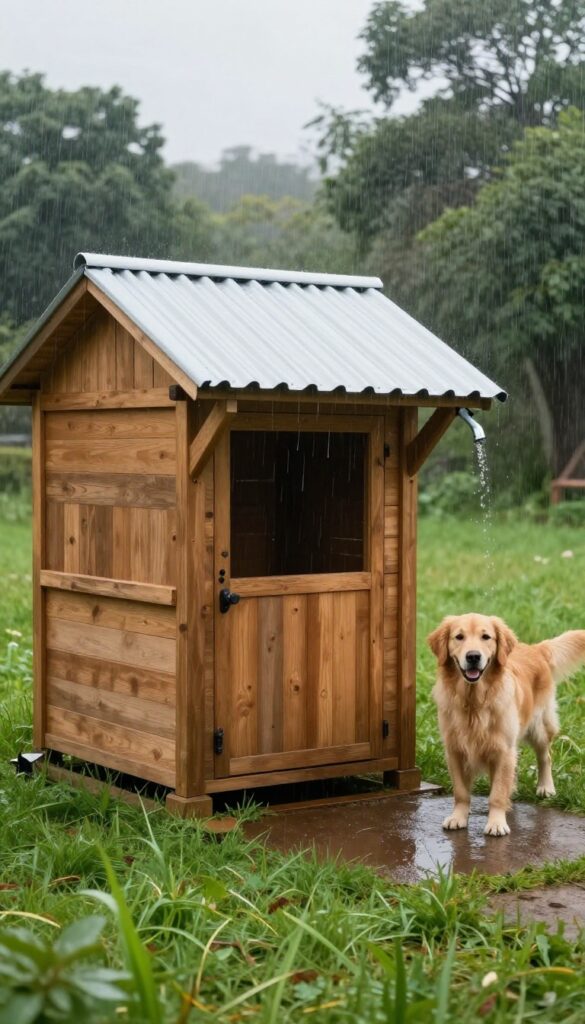
Rainwater running off the roof can create puddles right at the kennel entrance, turning the area into a muddy mess. Adding a simple gutter system channels that water away, keeping the ground around the kennel significantly drier. It's a low-cost upgrade that makes a big difference in comfort and cleanliness.
Why It Works
A gutter catches rainwater and directs it through a downspout to a drain, rain barrel, or simply a spot farther from the kennel. This prevents water from pooling near the door, which means less mud tracked inside and a drier path for your dog to walk on.
Best For
This works great for any outdoor kennel with a solid roof, especially in regions with frequent rain. It's ideal for dogs that spend a lot of time outside and for owners tired of dealing with a muddy kennel entrance.
Practical Tip
Use a lightweight vinyl or aluminum gutter kit designed for sheds or small structures. Attach it to the lowest edge of the roof with brackets, and make sure the downspout extends at least a few feet away from the kennel. Clean leaves from the gutter regularly to keep water flowing.
Budget-Friendly Option
If a full gutter kit feels too pricey, try a flexible downspout extender that connects directly to a corner of the roof. Or simply dig a small trench lined with gravel to redirect runoff.
8. Portable Pop-Up Canopy for Temporary Coverage
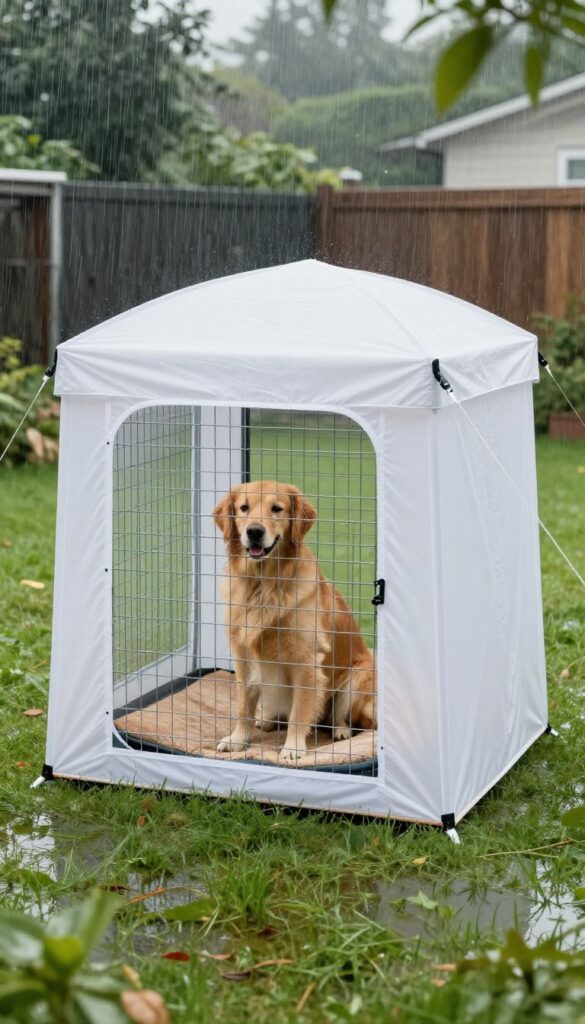
Sometimes you just need a rain solution that can go wherever you go. A pop-up canopy tent set over a wire kennel gives you instant overhead protection that packs flat when not in use. It's perfect for camping trips, dog shows, or renters who can't install permanent structures.
The key is anchoring it properly so a gust of wind doesn't turn it into a kite. With the legs weighed down, your dog stays dry and you keep the flexibility to move or store the whole setup in minutes.
Why It Works
Pop-up canopies create a large, open dry zone that fits over most standard wire kennels. They block rain while still letting air circulate, so your dog doesn't feel stuffy or trapped. The lightweight frame and fabric top are surprisingly sturdy when secured, making this a reliable temporary shelter.
Best For
This idea suits active dog owners who travel frequently with their pets. It's also great for people with small yards who want a rain cover they can take down when the sun comes out. Breeds that enjoy being outside but don't need full enclosure, like retrievers and shepherds, adapt well to this setup.
Practical Tip
Choose a canopy with at least a 10×10 foot footprint to give your dog room to move. Use sandbags on each leg and stake them into the ground if possible. Angle the canopy slightly so rain runs off one side instead of pooling on top.
Check the fabric periodically for tears that could leak.
Budget-Friendly Option
A basic pop-up canopy costs between $50 and $100. For a cheaper alternative, use a heavy-duty tarp stretched over PVC pipes bent into an arch frame. Secure the tarp with bungee cords and weigh down the base with cinder blocks.
9. Heated Mat or Bed in a Dry Corner
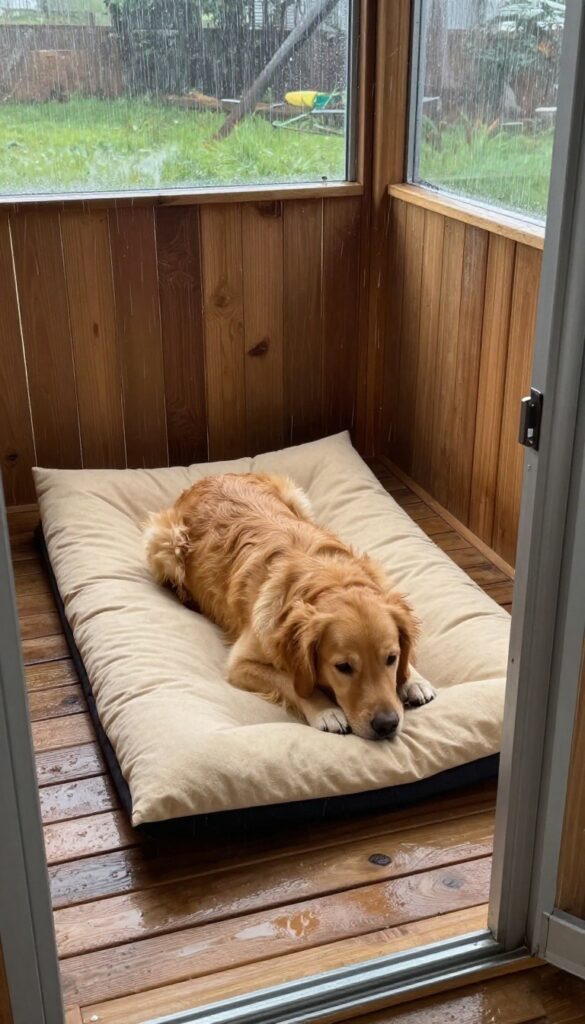
Even the best roof can't stop all the chill that comes with rainy weather. A heated mat or bed placed in the driest corner of your kennel gives your dog a warm spot to curl up without shivering. It's a simple upgrade that makes a huge difference in comfort, especially during long rainy stretches.
Look for outdoor-safe, low-voltage models with chew-resistant cords to keep things safe. Elevating the bed on a small platform also helps avoid moisture seeping up from the ground.
Why It Works
Heated beds provide consistent warmth that helps your dog regulate body temperature in damp conditions. By placing it in the driest corner and off the ground, you keep both the bed and your dog dry, which prevents chills and discomfort.
Best For
This is perfect for short-haired breeds, senior dogs, or puppies who feel the cold more acutely. It also works well for kennels in cooler climates where rain often brings a temperature drop.
Practical Tip
Place the heated mat on a raised platform or inside a small dog house within the kennel for extra protection from rain splash. Make sure the cord is secured and out of reach to prevent chewing. Use a waterproof cover over the mat for easy cleaning and added durability.
Budget-Friendly Option
If a heated mat isn't in the budget, try a self-warming pet pad that reflects your dog's body heat. It's a passive, no-electricity option that still offers some warmth.
10. Full Enclosure with a Dog Door
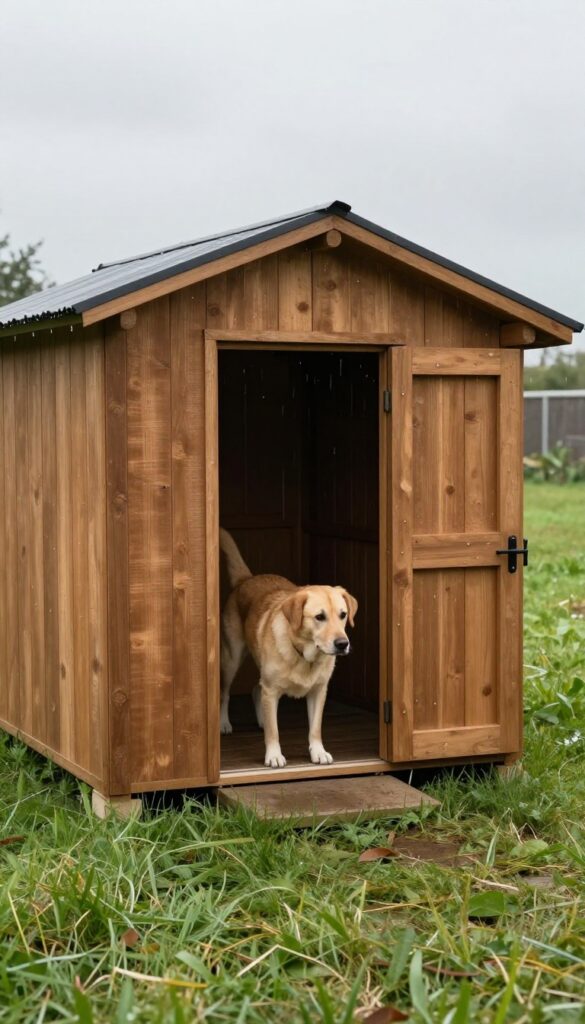
A fully enclosed kennel with a roof and a dog door gives your pup the best of both worlds: fresh air and a dry retreat. The dog door allows free access, so they can decide when to come inside without you having to open the gate. This setup is especially handy during unpredictable weather when rain comes and goes.
Why It Works
The enclosed design keeps rain out completely, while the dog door gives your dog independence. They can explore the yard when it's dry and duck back inside when a shower starts, reducing the chance of them getting soaked or tracking mud into the house.
Best For
This is ideal for dogs that spend a lot of time outdoors and need a reliable dry space. It works great for active breeds like Labradors or Australian Shepherds that enjoy being outside but dislike getting wet, as well as for homes with fenced yards where the kennel can be attached to a larger run.
Practical Tip
Install weatherstripping around the dog door flap to block drafts and water seepage. Choose a heavy-duty flap that swings easily but seals tightly. Place the kennel on a slightly elevated gravel or concrete base to prevent water from pooling underneath.
Budget-Friendly Option
If buying a pre-made enclosed kennel is too pricey, you can convert an existing chain-link kennel by adding a solid roof (like corrugated metal or polycarbonate panels) and installing a dog door through the side wall. This can cut costs by half while still delivering full rain protection.
FAQ
What is the best material for a rain-proof kennel roof?
Corrugated metal or polycarbonate panels are durable and shed water well. Asphalt shingles also work if you want a more traditional look.
How do I keep my dog's kennel from flooding?
Elevate the floor with a platform or gravel base, and ensure the ground slopes away from the kennel. Good drainage is key.
Can I use a tarp for a permanent rain cover?
Tarps work well as a temporary solution but may degrade in sun. For permanent use, choose a heavy-duty, UV-resistant tarp and replace it as needed.
Should I insulate my dog's outdoor kennel for rain?
Insulation helps keep your dog warm and dry in cold, wet weather. Use foam boards or straw in a dog house inside the kennel.
How often should I clean a rainy-weather kennel?
Check daily for wet bedding or mud. Remove soiled bedding and rinse the floor weekly to prevent mold and odors.
Conclusion
Rainy weather doesn't have to mean muddy paws and a bored pup cooped up inside. With the right outdoor kennel setup, your dog can enjoy fresh air while staying dry and comfortable.
Pick the idea that best fits your space and your dog's needs, and you'll both breathe easier on drizzly days. A little planning now means a happier, drier dog and a cleaner home for you.

I’m Pallab Kishore, the owner of Little Pets Realm — an animal lover and pet care enthusiast sharing easy tips, healthy recipes, and honest advice to help every small pet live a happy, healthy, tail-wagging life.