
Building a DIY outside dog kennel doesn't have to drain your wallet or your weekend. With a few basic materials and a little creativity, you can create a safe, comfortable space for your pup that also keeps your yard looking great.
These nine ideas range from repurposed pallets to portable PVC frames, so there's something for every skill level and budget. Each design focuses on practical details like shade, ventilation, and easy cleaning—because your dog's comfort matters just as much as durability.
Whether you have a sprawling backyard or a compact side yard, these builds are tailored to fit real spaces and real dog-owner needs. Ready to give your dog a dedicated outdoor retreat without overspending?
1. Repurposed Pallet Kennel
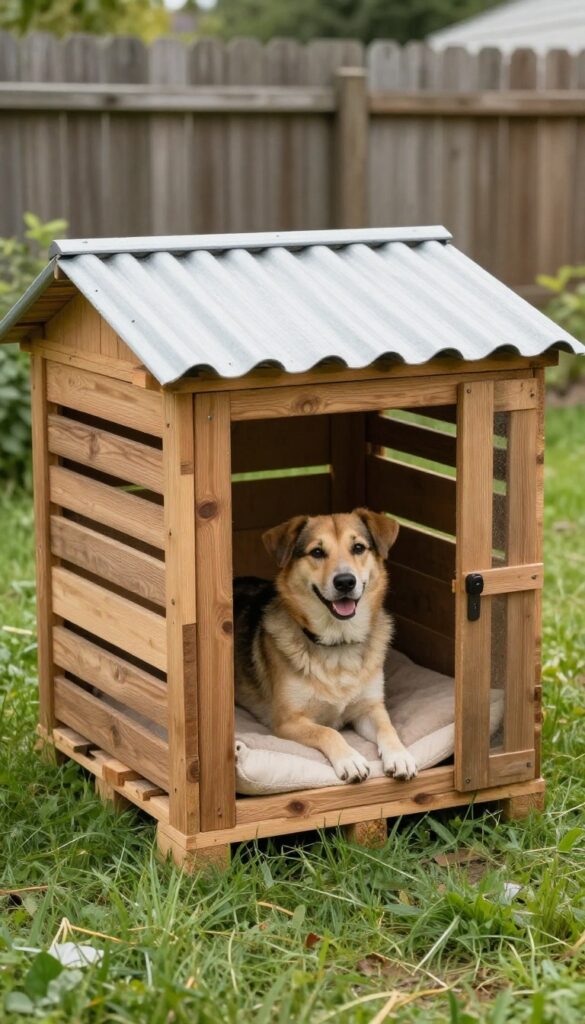
Wooden pallets are often free and surprisingly sturdy, making them a go-to material for budget-friendly dog kennels. With a bit of sanding and assembly, you can build a rustic but functional outdoor space your dog will love. The natural wood look blends nicely into most yards, and the slatted design provides great airflow.
Why It Works
Pallets are built to hold heavy loads, so they stand up well to weather and wear. The gaps between slats allow breezes to pass through, keeping your dog cool in summer, and you can easily add a roof or shade cloth for extra protection.
Best For
This kennel is perfect for owners on a tight budget who have basic DIY skills. It works well for medium to large dogs that enjoy being outdoors but need a secure, shaded spot to relax.
Practical Tip
Sand down all rough edges and splinters before assembly to protect your dog's paws. Use exterior-grade screws and hinges for the gate, and consider adding a waterproof roof panel or corrugated plastic to keep rain out.
Budget-Friendly Option
If pallets are scarce, check local hardware stores for damaged or discounted lumber. You can also substitute pallets with old fence pickets for a similar look at low cost.
2. Chain Link with Privacy Slats
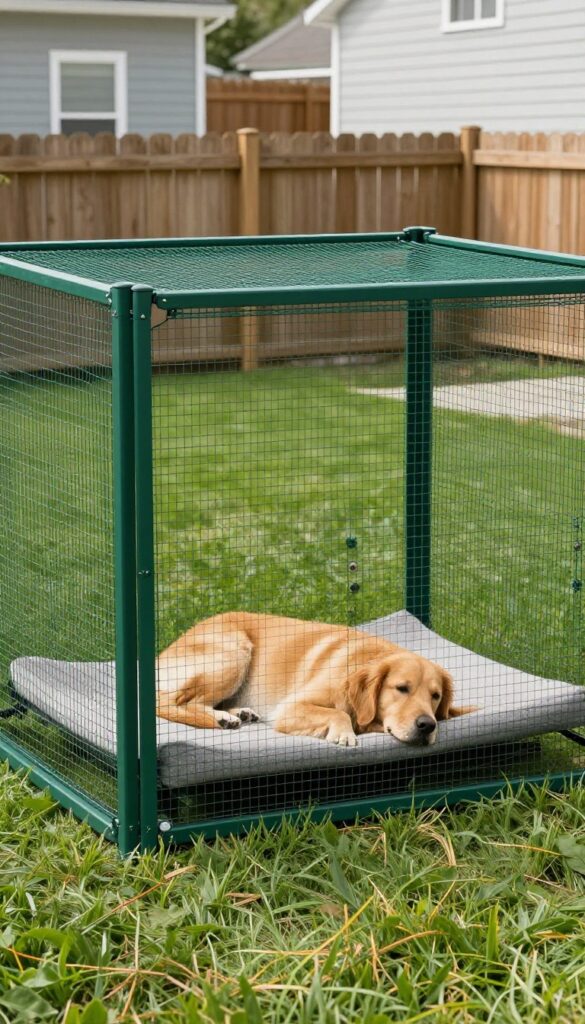
A standard chain link kennel gets a major upgrade when you weave in privacy slats. These slats block your dog's view of passing cars, neighbors, and other triggers, which helps reduce barking and anxiety. The result is a calmer dog and a kennel that looks more like a intentional part of your landscape.
Why It Works
Dogs who can see constant activity through chain link often stay on high alert. Privacy slats cut down visual stimulation, so your dog can relax instead of reacting to every movement. The slats also block wind, making the kennel more comfortable on breezy days.
Best For
This setup works great for dogs that are reactive to people, dogs, or traffic. It's also a solid choice if your yard sits close to a sidewalk or neighbor's property. Any breed that prefers a quiet, den-like space will appreciate the reduced visibility.
Practical Tip
Buy pre-cut privacy slats that match your chain link mesh size. Slide them in vertically from the top—they lock in place without tools. For extra shade, choose slats that are dark on one side and light on the other; face the dark side outward to absorb heat and keep the interior cooler.
Budget-Friendly Option
If store-bought slats are too pricey, cut strips of outdoor privacy fabric or heavy-duty tarp to the same width. Weave them through the chain link and secure at the top and bottom with zip ties. It won't look as clean, but it works just as well for blocking views.
3. Portable PVC Pipe Kennel
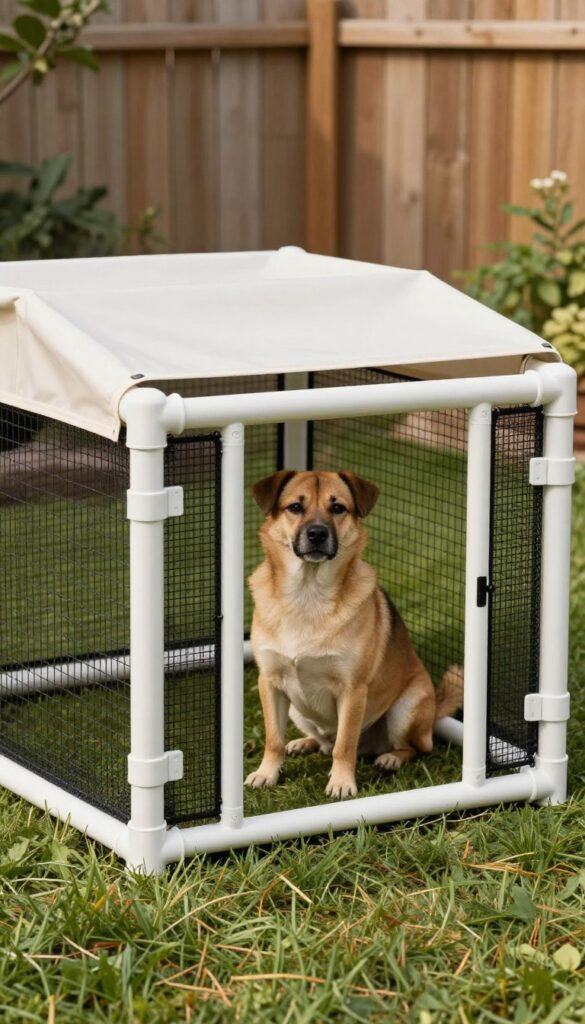
If you need a kennel that can move with you—or disappear into the garage when not in use—PVC pipe is your new best friend. This lightweight, modular design snaps together without tools and breaks down flat for storage or travel. It’s perfect for renters, campers, or anyone who wants flexibility without sacrificing safety.
Why It Works
PVC pipe is affordable, rot-proof, and easy to cut to any size. Paired with mesh fencing or shade cloth, you get a ventilated, weather-resistant enclosure that won’t rust or splinter. The modular joints let you add or remove sections, so the kennel grows with your dog or adapts to different yard layouts.
Best For
This is ideal for owners who travel with their dog, camp, or need a temporary yard setup. It also works great for puppies who will outgrow their first kennel—just add more pipe sections to expand. Small to medium breeds fit best, but you can scale up for larger dogs with thicker PVC.
Practical Tip
Use schedule 40 PVC for durability, and reinforce corners with extra cross-bracing to prevent wobbling. Attach the mesh with zip ties rather than glue so you can replace panels if they tear. For shade, drape a UV-resistant tarp over the top and secure it with bungee cords.
Budget-Friendly Option
Instead of buying new PVC, check Facebook Marketplace or construction sites for scrap lengths. You can also use old tent poles or metal conduit if you have them lying around—just make sure there are no sharp edges.
4. Shade Sail Canopy Kennel
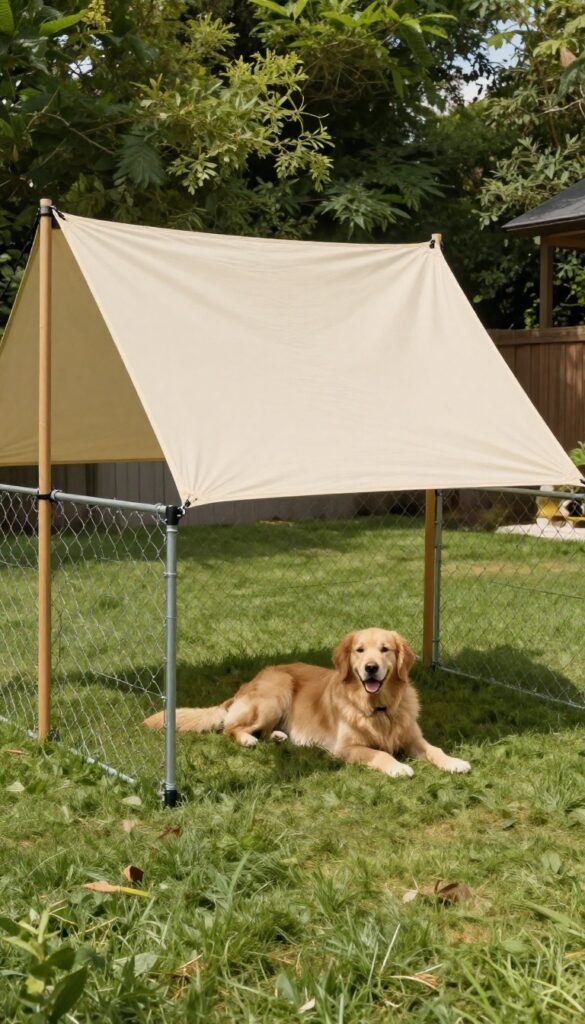
Hot sun can make an outdoor kennel unbearable, but a shade sail turns it into a cool retreat. This simple canopy attaches to fence posts or existing structures, filtering harsh UV rays while letting breezes flow through. Dog owners love it because it's quick to install, looks modern, and doesn't block the view of your yard.
Why It Works
Shade sails block up to 90% of UV rays, dropping the temperature underneath by 10–15 degrees. The open sides keep air moving, which helps your dog stay cool even on scorching days. Plus, the fabric is lightweight and easy to remove for cleaning or storage.
Best For
This setup is perfect for sunny climates where dogs need relief from direct sun. It works well for medium to large breeds that spend several hours outside, and for yards that already have a fence or posts to anchor the sail.
Practical Tip
Install the sail at a slight angle so rainwater runs off instead of pooling. Use turnbuckles on the corners for easy tension adjustments, and choose a breathable mesh fabric that won't trap heat. Check the fabric yearly for wear and replace it if it starts to fray.
Budget-Friendly Option
If a custom shade sail is out of budget, grab a heavy-duty tarp and grommet kit. Secure it with zip ties or rope—just make sure it's taut and angled for drainage. It won't look as sleek, but it will get the job done.
5. Elevated Platform Kennel
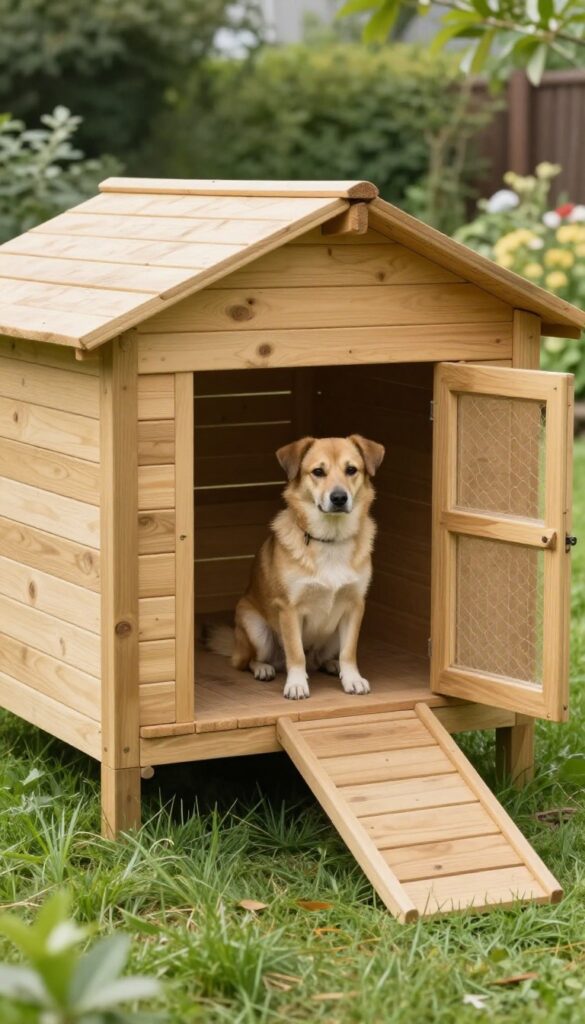
A raised wooden platform with a roof and partial walls keeps your dog off cold, damp ground while still enjoying fresh air. The elevation also improves airflow underneath, reducing moisture buildup and keeping the space drier. Many dog owners love this design because it's simple to build with basic tools and feels more like a cozy cabin than a standard kennel.
Why It Works
Elevating the kennel prevents your dog from lying on wet grass or mud, which can lead to skin irritation or joint stiffness. The open sides allow for good ventilation, while the roof provides essential shade. Adding a ramp makes it easy for older dogs or puppies to access without jumping.
Best For
This kennel works great for medium to large breeds that need a bit of elevation, especially in yards prone to dampness. It's also ideal for owners who want a permanent, sturdy structure that blends into a garden or patio area.
Practical Tip
Use outdoor carpet on the platform for traction and comfort—it also makes cleaning easier. Paint or stain the wood with a weatherproof sealant to extend its life. Attach a clear vinyl flap to the front opening for extra wind protection during colder months.
Budget-Friendly Option
Instead of buying new lumber, check for used pallets or scrap wood from construction sites. You can also use a repurposed wooden pallet as the base platform, then build the frame and roof around it.
6. Dog Run Alongside a Fence
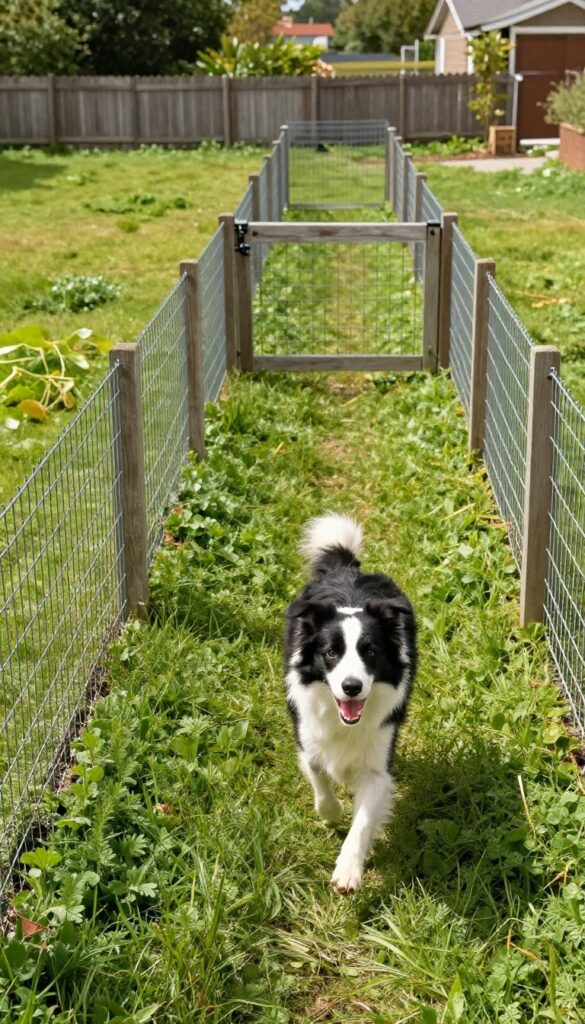
That narrow strip of grass between your house and the fence often ends up as a forgotten zone. Instead of letting it go to waste, turn it into a dedicated dog run. By attaching welded wire panels to the existing fence and adding a simple gate at one end, you create a long, secure corridor perfect for dogs that need to stretch their legs.
It keeps the main yard open for people while giving your pup a private sprint track.
Why It Works
Welded wire panels are affordable, easy to install, and extremely durable. They attach directly to your existing fence posts, so you only need to build one new wall. The narrow width prevents your dog from building up too much speed for a hard turn, reducing the risk of injury, while the length encourages healthy running.
Plus, the open wire design allows airflow and visibility so your dog doesn't feel trapped.
Best For
This setup is ideal for homes with a side yard that's at least 3 feet wide and 15 feet long. It works especially well for high-energy breeds like Border Collies, Australian Shepherds, and Jack Russell Terriers that need a safe space to run full out. It's also great for multi-dog households where one dog needs a break from the others.
Practical Tip
Use 6-foot-tall welded wire panels to prevent jumping, and bury the bottom edge 6 inches underground or secure it with landscape staples to stop digging. Attach the panels with heavy-duty zip ties or screw hooks for easy removal if you need to mow. Add a simple latch gate at one end for convenient access, and consider planting shade-tolerant ground cover like creeping thyme along the run to keep it from turning into a mud pit.
Budget-Friendly Option
Instead of buying new welded wire panels, check local classifieds or construction salvage yards for used chain link fencing sections. They often come in 6-foot lengths and can be attached to your fence with U-brackets. You can also use cattle panels from a farm supply store—they're cheaper and just as strong.
7. A-Frame Tent Kennel
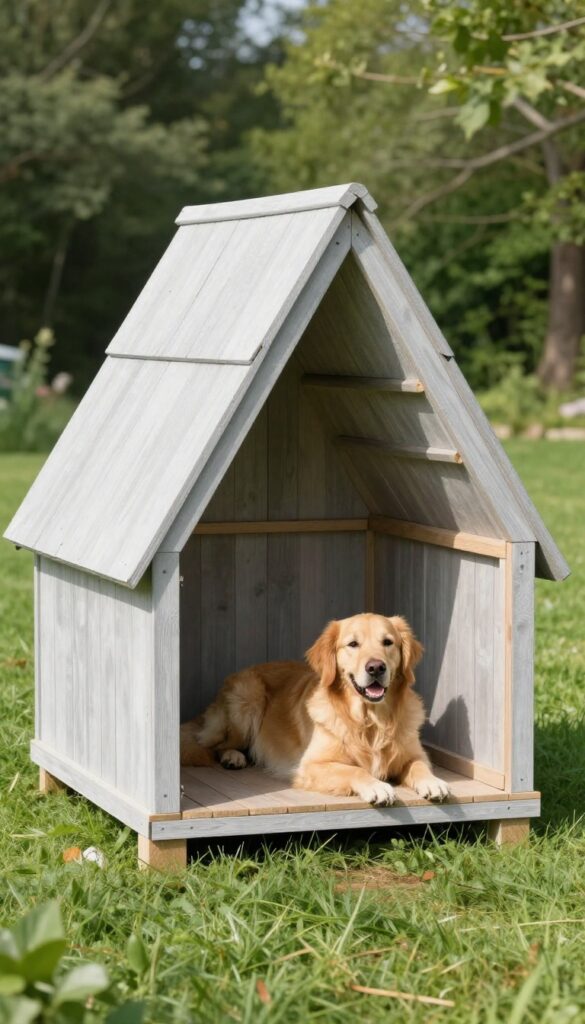
An A-frame kennel looks like a little tent for your dog, and it's just as cozy as it sounds. The slanted roof sheds rain and snow effortlessly, while the open ends allow plenty of airflow on hot days. Dog owners love this design because it's simple to build with just plywood and hinges, and it gives pups a shady, dry spot to lounge in any weather.
Why It Works
The steep roof angle prevents water from pooling, so your dog stays dry even during heavy downpours. The open front and back create a natural breeze tunnel, keeping the inside cool and well-ventilated. Plus, the triangular shape uses less material than a traditional box kennel, making it a budget-friendly option that still offers solid protection from the elements.
Best For
This kennel is perfect for hot or rainy climates where shade and airflow are priorities. It's also a great choice for dogs that like to feel enclosed but still want to see what's going on around them—think anxious pups or breeds that prefer a den-like space. Because of its lightweight design, it works well for renters or anyone who might need to move the kennel around the yard.
Practical Tip
Use exterior-grade plywood and galvanized hinges to prevent rust and warping. Paint the outside with a light-reflecting color like white or pale gray to keep the interior cooler. For extra comfort, add a raised platform inside to lift your dog off the ground and improve airflow underneath.
Budget-Friendly Option
Instead of plywood, you can use reclaimed pallet wood or even heavy-duty corrugated plastic sheets for a lighter, cheaper version. Just make sure any recycled materials are free of chemicals and splinters.
8. Repurposed Crate Kennel
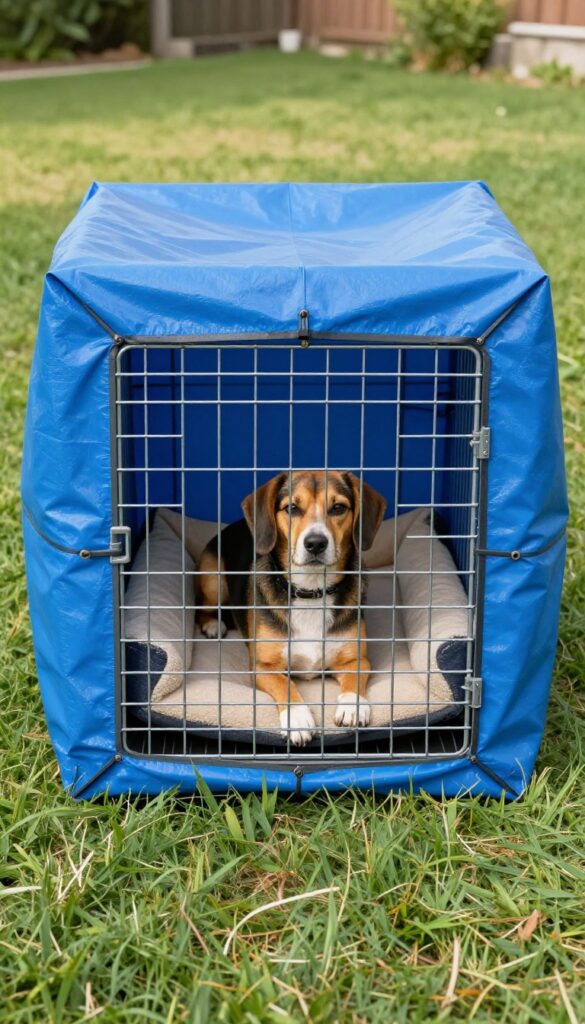
That old wire crate or heavy-duty plastic crate gathering dust in the garage? It can become a functional outdoor kennel with just a few tweaks. By adding a waterproof cover and securing it to the ground, you turn a familiar indoor tool into a safe outdoor space.
It’s a fast, low-commitment solution that works for temporary setups or as a permanent spot for dogs who already love their crate.
Why It Works
Dogs already see crates as a cozy den, so transitioning them to an outdoor version feels natural and stress-free. The solid structure provides good ventilation and visibility, while the cover keeps rain and direct sun off. Anchoring prevents tipping, making it as safe as any built kennel.
Best For
This is perfect for pet parents on a tight budget or those renting who need a non-permanent kennel. It suits small to medium dogs who are already crate-trained and comfortable in confined spaces. Also great for travel or camping when paired with a lightweight cover.
Practical Tip
Choose a heavy-duty waterproof tarp or a custom crate cover with tie-downs. Make sure the crate is placed on level ground and use landscape stakes or sandbags to anchor it. For extra comfort, add a raised bed inside to keep your dog off the ground.
Budget-Friendly Option
If you don’t have a spare crate, check thrift stores or online marketplaces for used ones. A large plastic storage tote with ventilation holes cut into the sides can work in a pinch—just reinforce the lid with hinges and a latch.
9. Greenhouse Frame Kennel
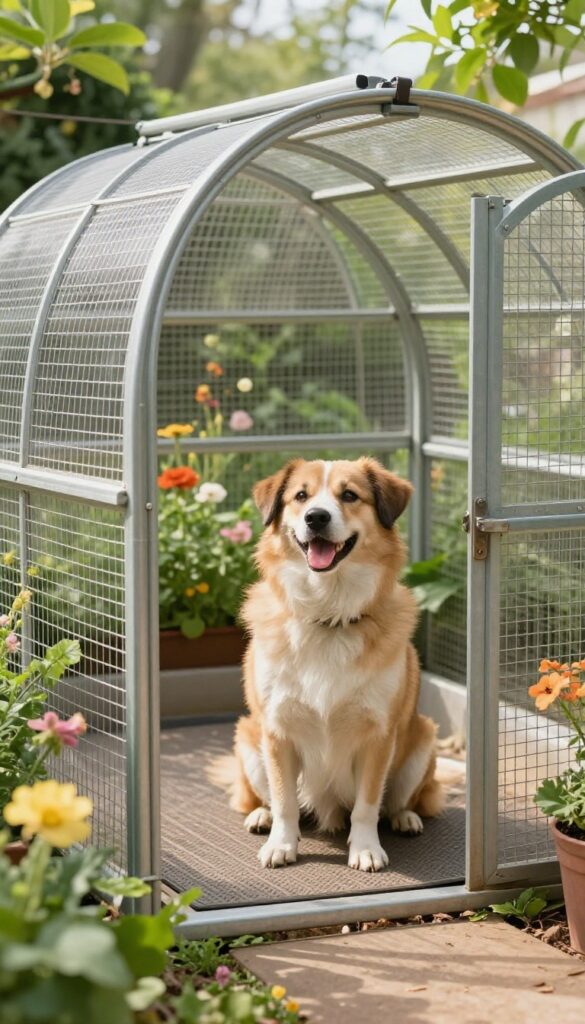
An old greenhouse frame or hoop house kit can become a surprisingly sturdy and stylish kennel. The curved metal or PVC ribs create a natural tunnel-like space that dogs love, and the open structure allows plenty of airflow. It's a clever way to repurpose something that might otherwise end up in a landfill, and it gives your yard a unique, garden-friendly look.
Why It Works
The frame provides a solid skeleton that's easy to cover with hardware cloth for ventilation and visibility. You can add a shade cloth during hot months to keep the interior cool, and the arched shape sheds rain and snow without extra effort. The open design also lets your dog see out, reducing feelings of confinement.
Best For
This kennel is ideal for dogs that enjoy being outdoors but need a defined space, like active breeds that like to watch the yard. It works well in gardens or backyard corners where you want something that blends with plants rather than looking like a traditional kennel.
Practical Tip
Secure the hardware cloth tightly to the frame using zip ties or wire to prevent gaps. For extra comfort, lay a rubber stall mat or outdoor rug on the floor—it's easy to hose down and provides cushioning. If your dog is a digger, bury the bottom edge of the hardware cloth a few inches into the ground.
FAQ
What is the cheapest material to build a dog kennel?
Repurposed wooden pallets are often the cheapest option, especially if you can find them for free. Just make sure to sand down splinters and use non-toxic sealant.
How big should a DIY outdoor dog kennel be?
A good rule of thumb is at least 4 times the length of your dog from nose to tail, and tall enough for them to stand on hind legs without touching the roof. For most medium dogs, 6×10 feet works well.
Do I need a roof on my outdoor kennel?
Yes, a roof or shade cover is essential to protect your dog from sun, rain, and snow. It also helps keep the kennel cooler in summer and drier in winter.
How do I make a dog kennel escape-proof?
Use sturdy materials like welded wire or chain link, bury the bottom edge at least 6 inches underground, and secure all gates with double latches. Check for gaps regularly.
Can I build a kennel without power tools?
Absolutely. Many designs use pre-cut lumber, PVC pipes, or repurposed items that only require a saw, screwdriver, and basic hand tools. The PVC pipe kennel is a great no-power-tool option.
Conclusion
Building a DIY dog kennel doesn't have to drain your wallet or overwhelm your weekend. Start with one budget-friendly idea that fits your yard and your pup's needs. Small upgrades like shade cloth or a simple wooden frame can make a big difference.
Your dog gets a safer, happier outdoor space, and you get peace of mind. Pick a design, gather some materials, and enjoy the process.

I’m Pallab Kishore, the owner of Little Pets Realm — an animal lover and pet care enthusiast sharing easy tips, healthy recipes, and honest advice to help every small pet live a happy, healthy, tail-wagging life.