
Building your own dog kennel can save money and give your pup a space that fits your home and yard perfectly. Whether you need an indoor crate or an outdoor run, these DIY ideas focus on what matters most: your dog's comfort and your peace of mind.
Comfort and durability should lead your planning, but don't overlook cleanup ease. A kennel that's simple to hose down or wipe out will save you time and keep your dog healthier.
From repurposed furniture to custom-built structures, these 10 ideas range from beginner-friendly to advanced. Each one is designed with real dog owners in mind, so you can pick the project that matches your skills and your dog's needs.
1. The Repurposed Crate End Table
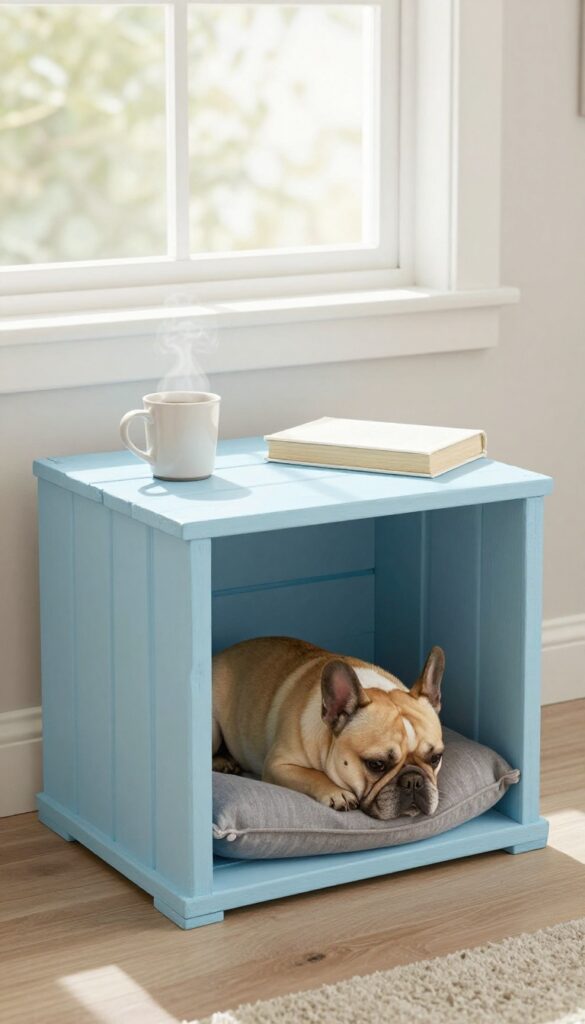
A wooden crate can become more than just storage. With a little sanding and a coat of paint, it transforms into a stylish end table that also serves as your dog's private den. The top doubles as a side table for your coffee or book, while the open front gives your pup easy access to their cozy hideaway.
Dog owners love this idea because it hides the kennel in plain sight, blending seamlessly with living room furniture.
Why It Works
Dogs instinctively seek out enclosed, den-like spaces where they feel safe. A crate end table provides that security without taking up extra floor space. The solid wood construction is durable, and the elevated design keeps your dog off cold floors.
Plus, the tabletop is useful for you, making it a win-win for both pet and owner.
Best For
This works best for small to medium dogs like French Bulldogs, Corgis, or Beagles. It's ideal for apartments or living rooms where you want to maximize function without sacrificing style. If your dog already likes curling up in tight spaces, they'll take to this setup quickly.
Practical Tip
Sand the crate well and use a pet-safe stain or paint. Add a washable cushion inside for comfort, and consider a removable fabric flap over the opening if your dog prefers extra privacy. For easy cleanup, line the bottom with a waterproof mat or vinyl flooring remnant.
Budget-Friendly Option
Skip buying a new crate. Check thrift stores, flea markets, or Facebook Marketplace for a solid wood crate. You can often find one for under $20.
Just make sure it's sturdy and free of splinters or loose nails.
2. The Under-Stairs Kennel Nook
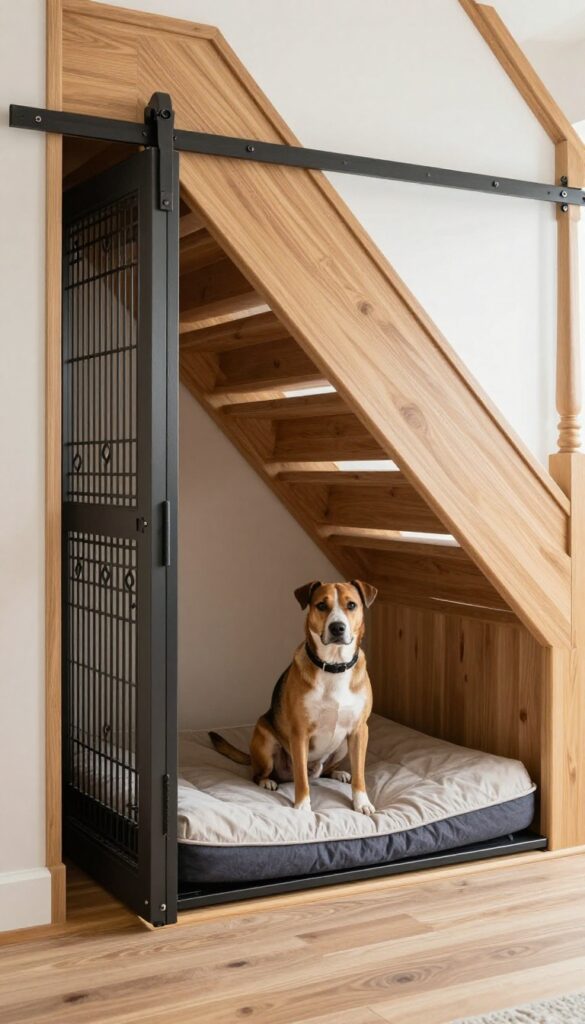
That awkward triangular space under the staircase often ends up as a dumping ground for shoes and vacuum cleaners. Instead, turn it into a cozy, custom kennel that uses every inch of wasted square footage. Dog owners love this idea because it hides the crate in plain sight, keeping your home looking clean while giving your pup a den-like retreat that feels secure and private.
Why It Works
Dogs naturally seek out small, enclosed spaces for safety, and the under-stairs area provides that den feeling without taking up extra floor space. You can build a door that matches your trim, add ventilation grilles for airflow, and install a pull-out bed for easy cleaning. It's a permanent fixture that blends into your home's architecture, so your dog gets a dedicated spot without sacrificing style.
Best For
This works best for medium to large dogs who need a crate but whose owners want to keep living areas uncluttered. It's also ideal for homes with open floor plans where a standalone crate might feel out of place. If you have a staircase with at least 3 feet of clearance underneath, you can likely make this work.
Practical Tip
Install a sliding barn door or a hinged door with a doggie door cutout so your pup can come and go freely. Add a washable, orthopedic bed that fits the exact dimensions, and paint or wood-stain the interior to match the rest of your home. For ventilation, place a small vent fan near the top or use a decorative metal grate on the door.
Budget-Friendly Option
Skip custom cabinetry and use simple plywood panels with a pre-hung door from a salvage yard. You can also repurpose an old bookshelf as the frame and add a curtain instead of a door for a low-cost, soft-sided entry.
3. The Pallet Dog House with Run
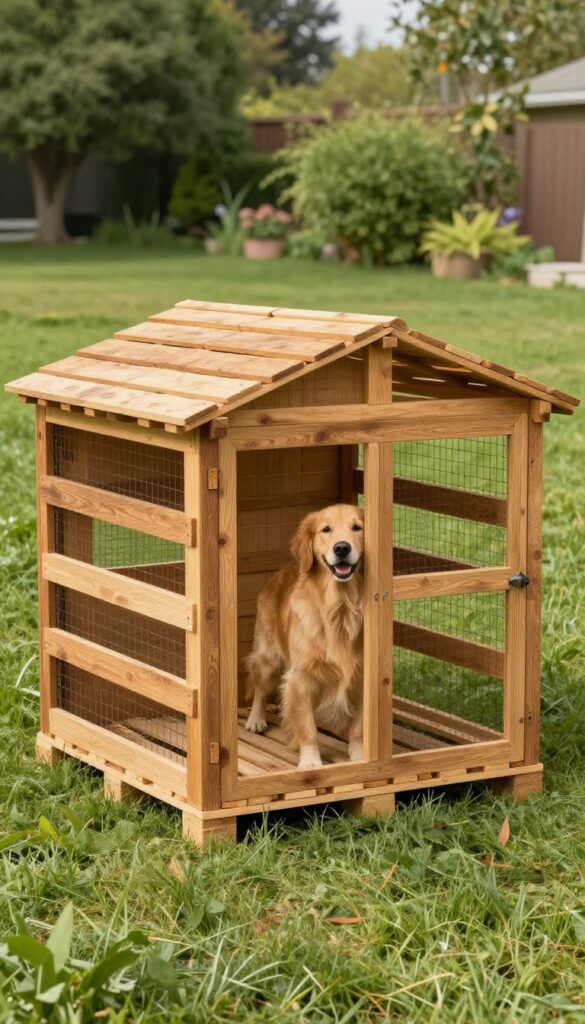
Turning shipping pallets into a dog kennel is about as thrifty as it gets. You get a covered house for naps and a fenced run for zoomies, all without spending much. It's a weekend project that feels good on the wallet and looks surprisingly polished with a little stain or paint.
Why It Works
Pallets are free or cheap, and they're built tough. The slatted design lets air flow through, keeping the run cool in summer, while the solid house blocks wind and rain. You can customize the size to fit your yard and dog, and the whole thing breaks down easily if you ever need to move it.
Best For
This setup is ideal for medium to large dogs that love being outside but need a secure space. It's perfect for renters or homeowners on a tight budget who want a sturdy kennel without the price tag of a pre-built one.
Practical Tip
Sand the pallets well to avoid splinters, then seal with a pet-safe outdoor wood sealer. Add a hinged roof on the house for easy cleaning, and use a heavy-duty latch on the run gate to prevent escapes. Line the house floor with a washable mat or cedar shavings for comfort.
Budget-Friendly Option
Skip buying new hardware cloth for the run sides. Instead, check salvage yards or online marketplace listings for used wire fencing. You can also use leftover pallet slats spaced an inch apart to save even more.
4. The Converted Nightstand Crate
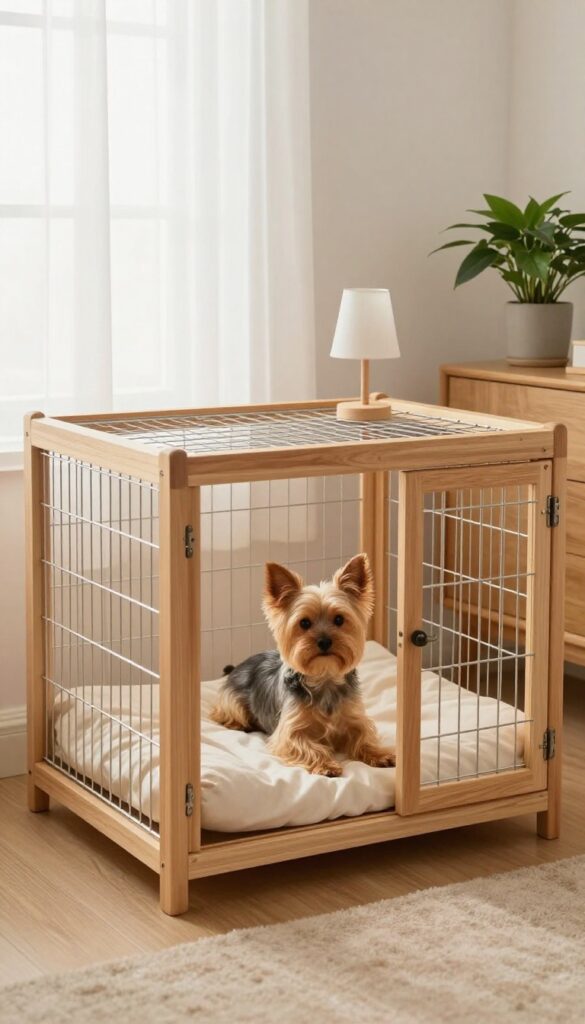
That old nightstand gathering dust in the garage can become a cozy den for your small dog. By removing the drawer fronts and adding a gate, you get a stylish crate that blends with your bedroom decor. It's a weekend project that turns forgotten furniture into something your pup will love.
Why It Works
Nightstands are already the perfect size for small breeds like Chihuahuas or Yorkies. The enclosed sides give dogs a sense of security, and the solid wood construction is durable and easy to clean. Plus, you're repurposing instead of buying new—good for your wallet and the planet.
Best For
This idea is ideal for small breed owners who want a crate that doesn't look like a crate. It fits well in bedrooms or living rooms where you want furniture that pulls double duty. If your dog is under 20 pounds and likes to burrow, this is a cozy match.
Practical Tip
Paint or stain the nightstand to match your existing furniture. Use a lightweight wire or wooden gate that swings open easily. Add a soft bed inside and make sure there's ventilation—drill a few discreet holes if needed.
Keep the top clear for a lamp or plant to maintain the furniture look.
Budget-Friendly Option
Skip buying a new gate by using a tension-mounted baby gate cut to size. Or repurpose an old cabinet door as a hinged front. If you don't have a nightstand, check thrift stores or curb alerts for solid wood pieces under $20.
5. The PVC Pipe Outdoor Kennel
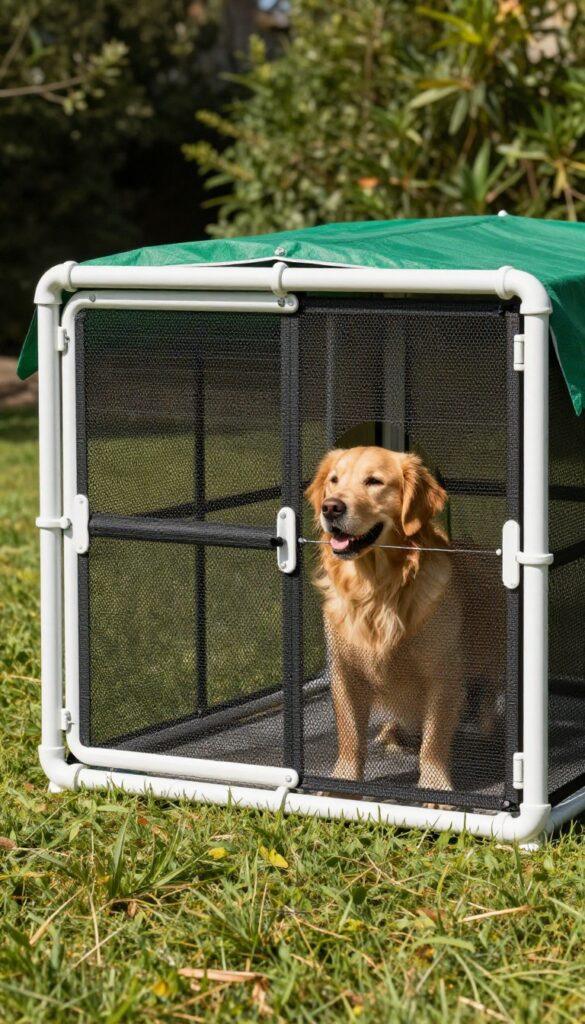
Sometimes you need a kennel that can move with you. Whether you're camping, visiting family, or just want the option to rearrange your yard, a PVC pipe frame covered in mesh offers a sturdy yet lightweight solution. This design is easy on the wallet and even easier to assemble—no power tools required.
Why It Works
PVC pipe is affordable, weather-resistant, and simple to cut and connect. The mesh panels allow airflow and visibility, keeping your dog cool and connected to their surroundings. When not in use, the whole structure breaks down flat for storage in a closet or car trunk.
Best For
This kennel is perfect for owners who travel frequently with their dog, camp, or need a temporary yard enclosure. It also works well for renters who can't install permanent fencing and want a setup they can take down in minutes.
Practical Tip
Use schedule 40 PVC for better durability and secure the mesh with zip ties at every joint for a tight fit. Add a shade cloth or tarp over part of the top for sun protection, and anchor the corners with stakes or sandbags so a strong dog doesn't push it around.
Budget-Friendly Option
Instead of buying pre-cut PVC kits, source your own pipes and connectors from a hardware store—you'll save up to 40%. Use chicken wire or hardware cloth instead of pet-specific mesh for an even lower cost.
6. The Built-In Mudroom Kennel
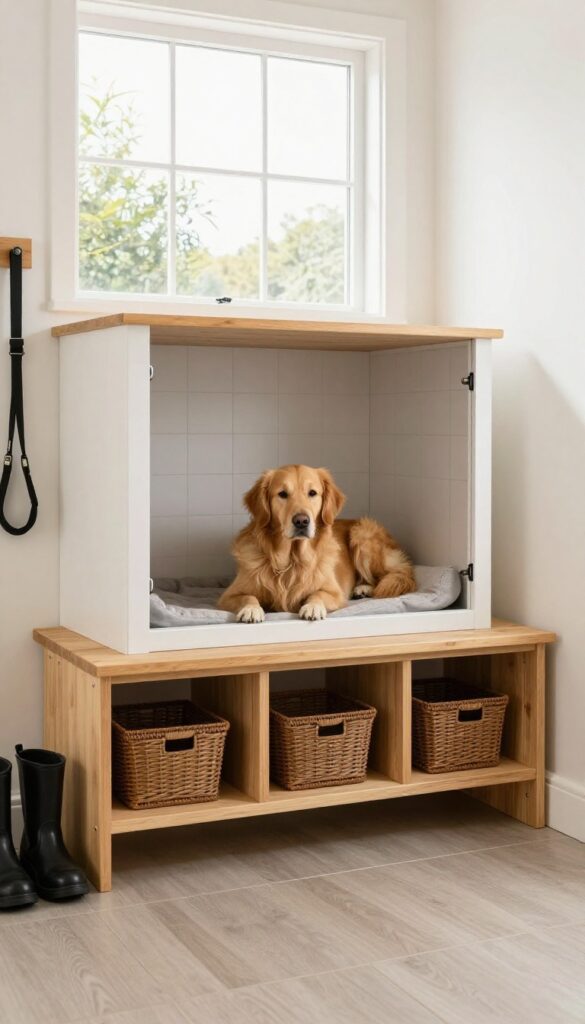
If you have a mudroom or laundry room, you already have the perfect spot for a kennel that doubles as a drop zone for wet dogs and dirty boots. By building the kennel into existing cabinetry or a bench, you keep the space looking intentional and clutter-free. It’s a favorite for homeowners who want their dog’s crate to blend in rather than stick out.
Why It Works
This setup gives your dog a quiet, den-like space while keeping mud, fur, and wet paw prints contained in an easy-to-clean area. The bench above provides seating for putting on shoes or storing leashes, and the washable floor means you can simply sweep or mop after rainy walks. It’s a smart way to use often-wasted square footage.
Best For
This idea is best for medium to large dogs who need a sturdy, permanent kennel. It works especially well in homes with an existing mudroom, laundry room, or entryway where you already manage outdoor messes. If you have a high-energy dog that comes in muddy from the yard, this kennel will become your favorite daily helper.
Practical Tip
Install a vinyl or tile floor inside the kennel so you can hose it down or wipe it clean. Add a removable cushion or bed that you can toss in the wash. Make sure the kennel door is easy to open with one hand when you’re carrying groceries or a wet leash.
Budget-Friendly Option
Skip custom cabinetry and use an existing bench or counter as the top. Build simple side panels from plywood and attach a prefab kennel door. You can also repurpose a large wire crate and build a wooden frame around it for a built-in look at a fraction of the cost.
7. The Raised Deck Kennel
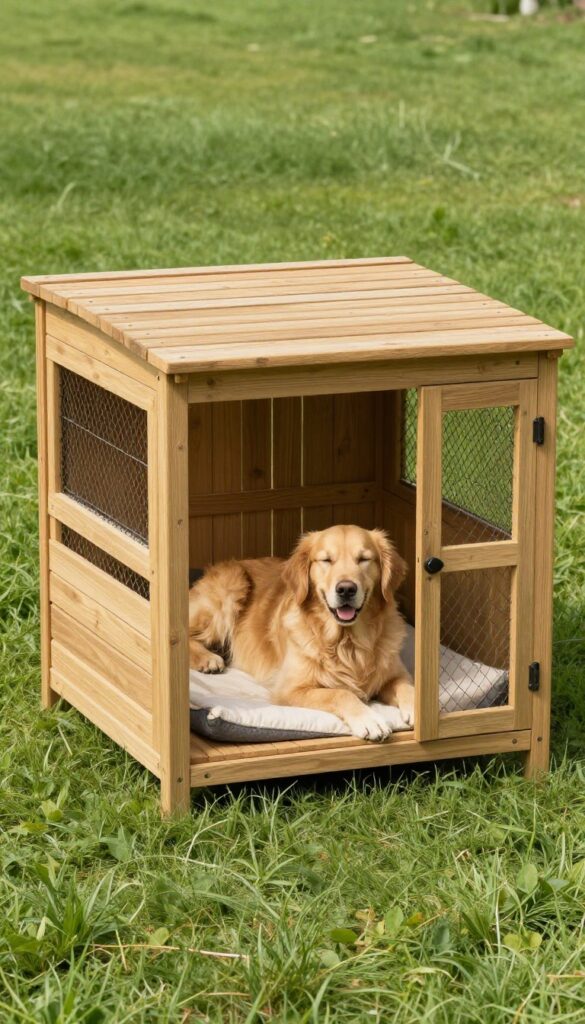
Elevating your dog's kennel off the ground does more than look good. A raised deck design gives your pup a dry, cool spot to relax, even after rain or morning dew. The open slatted floor lets air circulate underneath, cutting down on heat buildup in summer and keeping the bed from getting soggy.
Plus, it's a breeze to clean—just hose off the deck and let it dry.
Why It Works
The raised platform keeps your dog away from damp grass, mud, and pests. Airflow underneath prevents mold and odors, while the roof offers shade on hot days. This design is especially effective in humid climates or yards with poor drainage.
Best For
Perfect for outdoor dogs who love lounging in the yard but need protection from wet ground. Great for breeds prone to joint issues, like Labradors or German Shepherds, since the elevated surface is easier on their hips.
Practical Tip
Use pressure-treated lumber or cedar for durability against weather. Add a hinged roof for easy cleaning access, and attach a removable vinyl curtain on one side for extra wind protection. Stain or paint with pet-safe finishes.
Budget-Friendly Option
Skip the fancy roofing and use a heavy-duty tarp stretched over a simple wood frame. You can also repurpose an old wooden pallet as the base—just sand it smooth and add a weatherproof coat.
8. The Furniture-Style Wire Crate Cover
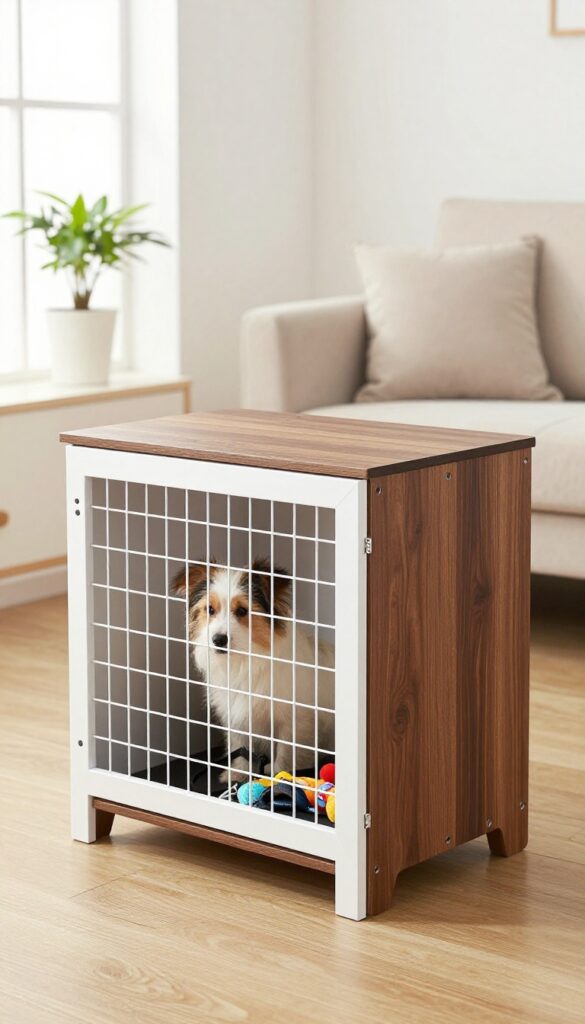
Wire crates are practical but rarely pretty. This project wraps a standard wire crate in a wooden frame so it blends into your living room or bedroom like a side table or cabinet.
A hinged lid on top gives you easy access to your dog, while a pull-out drawer underneath stores leashes, treats, and toys. It’s a clever way to hide the crate without hiding your dog.
Dog owners love this idea because it solves two problems at once: giving your pup a secure den and giving you a functional piece of furniture. Plus, it’s a weekend project that makes a big visual impact.
Why It Works
The wooden cover transforms an eyesore into an asset. Your dog still gets the ventilation and visibility of a wire crate, but the room stays stylish. The drawer keeps clutter contained, and the hinged top lets you reach in without moving furniture.
Best For
This is ideal for dog owners who keep their crate in a shared living space and want it to match their decor. It works well for small to medium breeds that are comfortable in a standard wire crate size.
Practical Tip
Paint or stain the frame to match your existing furniture. Add a cushion on top to make it a usable seat or plant stand. For safety, make sure the crate door is still accessible and the lid hinges are sturdy enough to hold weight.
Budget-Friendly Option
Skip the drawer and use a simple shelf or open cubby underneath. You can also build the frame from reclaimed wood or upcycle an old cabinet by cutting out the front and inserting the crate.
9. The Corner Kennel with Storage
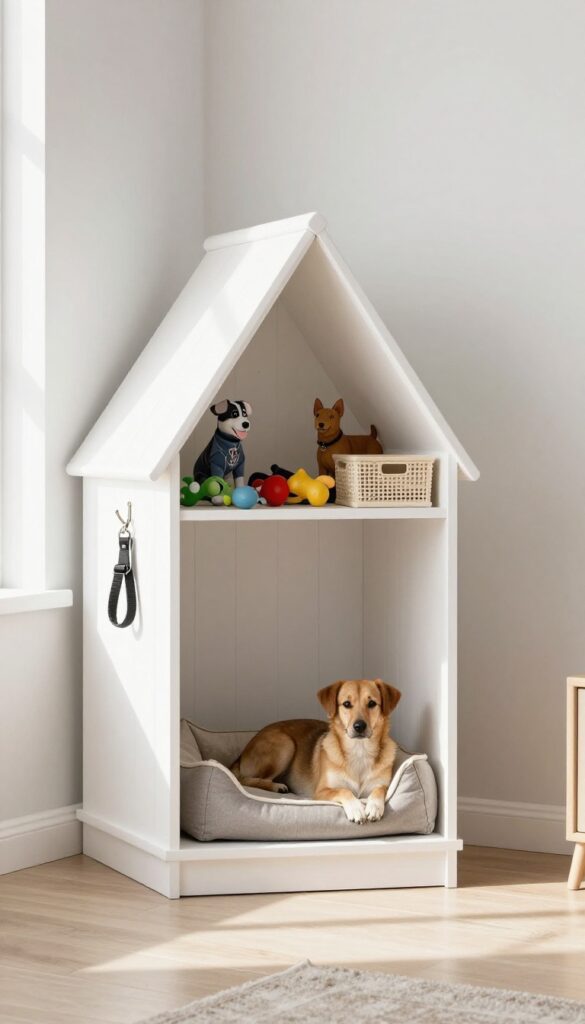
Corners often end up as dead space in a room, but they can become one of the most functional spots in your home with the right build. A triangular kennel tucks neatly into an unused corner, giving your dog a cozy den while adding built-in shelves above or beside it for leashes, toys, and supplies. It's a smart way to keep everything dog-related organized without taking up extra floor space.
Why It Works
The triangular shape fits where rectangular kennels can't, making use of awkward corners that would otherwise sit empty. The integrated storage keeps all your dog's gear within arm's reach, so you're not constantly hunting for a collar or bag of treats. Plus, the enclosed feel of a corner can help some dogs feel more secure and den-like.
Best For
This kennel is perfect for small to medium breeds that don't need a huge run, and for homes where floor space is at a premium—think apartments, condos, or rooms with an odd layout. It's also great for owners who want a dedicated dog zone that blends into the room rather than sticking out.
Practical Tip
Paint or stain the kennel to match your baseboards or trim so it blends into the corner. Use matching bins or baskets on the shelves for a clean look, and add a soft mat or bed inside that can be easily removed for washing. A small hook on the side is handy for hanging a leash or towel.
Budget-Friendly Option
If building from scratch feels too ambitious, look for a large triangular end table or corner cabinet at a thrift store. Remove the doors and add a dog bed inside—instant corner kennel with storage above.
10. The Heated Outdoor Kennel for Cold Climates
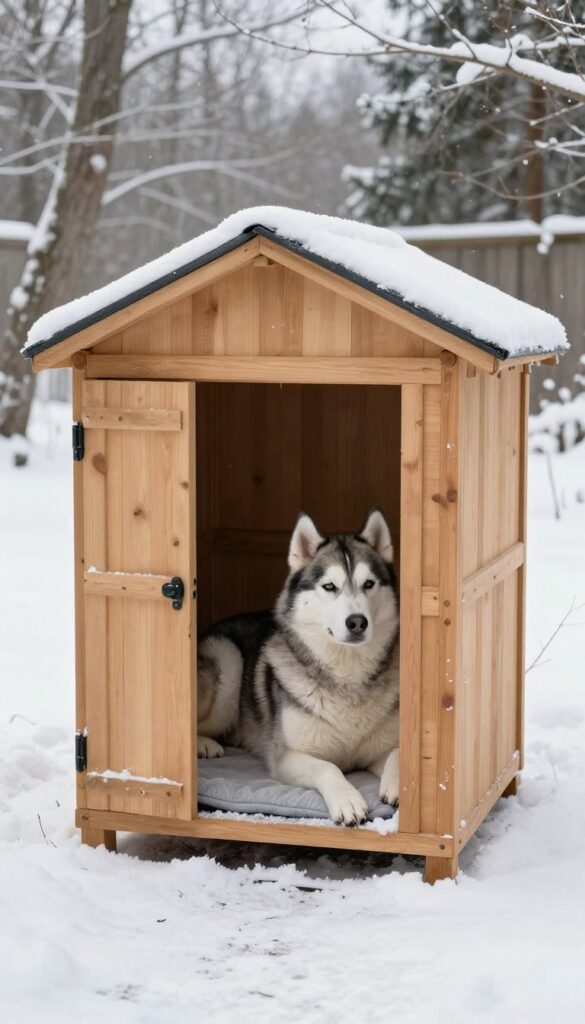
Winter can be tough on dogs that spend time outdoors, but a heated kennel makes all the difference. Insulating a small shed or building a weatherproof kennel with a heated pad creates a cozy retreat that keeps your pup warm and dry even in freezing temperatures. This setup is especially popular in northern regions where dogs still need fresh air without the risk of frostbite.
A heated outdoor kennel isn't just about warmth—it's about safety and comfort in extreme weather. With a flap door to block wind and a raised floor to avoid cold ground, your dog gets a dry, draft-free space that feels like a mini cabin. Many owners find their dogs actually prefer this spot over coming inside during snowy days.
The key is balancing insulation with ventilation to prevent moisture buildup. A well-built heated kennel can be a lifesaver for breeds that love the cold but still need a warm spot to rest.
Why It Works
Dogs lose body heat quickly in cold weather, especially when lying on frozen ground. A heated pad or safe space heater paired with insulation keeps the interior temperature above freezing, reducing the risk of hypothermia and joint stiffness. The raised floor and flap door add extra protection against snow and drafts, making the kennel a reliable refuge during winter storms.
Best For
This kennel is ideal for northern climates with harsh winters, particularly for medium to large dogs that spend several hours outdoors during the day. It's also great for working breeds like Huskies, Malamutes, or livestock guardians that prefer being outside. Owners who work long hours and want their dog to have a comfortable outdoor option will appreciate this build.
Practical Tip
Use rigid foam insulation between exterior and interior walls, and seal all seams with caulk to prevent drafts. Choose a heated pad with an automatic shut-off and a chew-resistant cord cover for safety. Place the kennel on a gravel or concrete base to keep it elevated and dry, and orient the door away from prevailing winds for maximum warmth.
Budget-Friendly Option
If a full heated kennel is too pricey, start by insulating an existing doghouse with foam panels and adding a thick straw bed. A self-warming pet pad (no electricity needed) can provide extra comfort for under $30. You can also use a small, outdoor-rated heat lamp mounted high and safely out of reach, but monitor it closely.
FAQ
What is the best material for a DIY dog kennel?
Plywood and pressure-treated lumber are durable and affordable for indoor kennels. For outdoor use, choose weather-resistant materials like cedar or PVC. Always ensure the finish is non-toxic and safe for chewing.
How big should a DIY dog kennel be?
The kennel should be large enough for your dog to stand, turn around, and lie down comfortably. For a crate, add a few inches to your dog's height and length. For an outdoor run, provide at least twice the length of your dog for exercise space.
Can I build a dog kennel without power tools?
Yes, but it's more challenging. You can use hand saws, hammers, and screwdrivers for simple designs like PVC pipe kennels or repurposed furniture projects. Pre-cut lumber from a hardware store can also reduce the need for power tools.
How do I make a DIY dog kennel easy to clean?
Use smooth, non-porous surfaces like sealed wood or plastic. Include a removable tray or a sloped floor that drains. For outdoor kennels, a hose-down area with a gravel base works well.
Is it safe to use a heated pad in a DIY kennel?
Yes, if you use a pet-safe heated pad with a chew-resistant cord and thermostat. Place it in a waterproof cover and ensure the kennel is well-ventilated. Always supervise the first few uses.
Conclusion
Building a DIY dog kennel lets you create a space that's perfectly tailored to your dog's size, habits, and your home's layout. Whether you choose a simple crate cover or a full outdoor run, each project adds comfort and safety for your pup.
Pick the idea that fits your skill level and your dog's needs. With a little effort, you'll have a kennel that looks great, lasts for years, and makes your dog feel right at home.

I’m Pallab Kishore, the owner of Little Pets Realm — an animal lover and pet care enthusiast sharing easy tips, healthy recipes, and honest advice to help every small pet live a happy, healthy, tail-wagging life.