
Built-in dog kennels can save floor space and add a polished look to your home without breaking the bank. By tucking a crate into an existing nook or repurposing unused areas, you create a cozy den your dog will love while keeping your home clutter-free.
These nine ideas prove that a custom kennel doesn't have to mean a major renovation or a huge budget. From under-stair hideaways to kitchen island cubbies, each design focuses on practical details like ventilation, easy cleaning, and your dog's comfort.
You'll find solutions that blend seamlessly with your home's style, whether you're working with a mudroom, closet, or even a window seat.
1. Under-Stair Kennel Nook
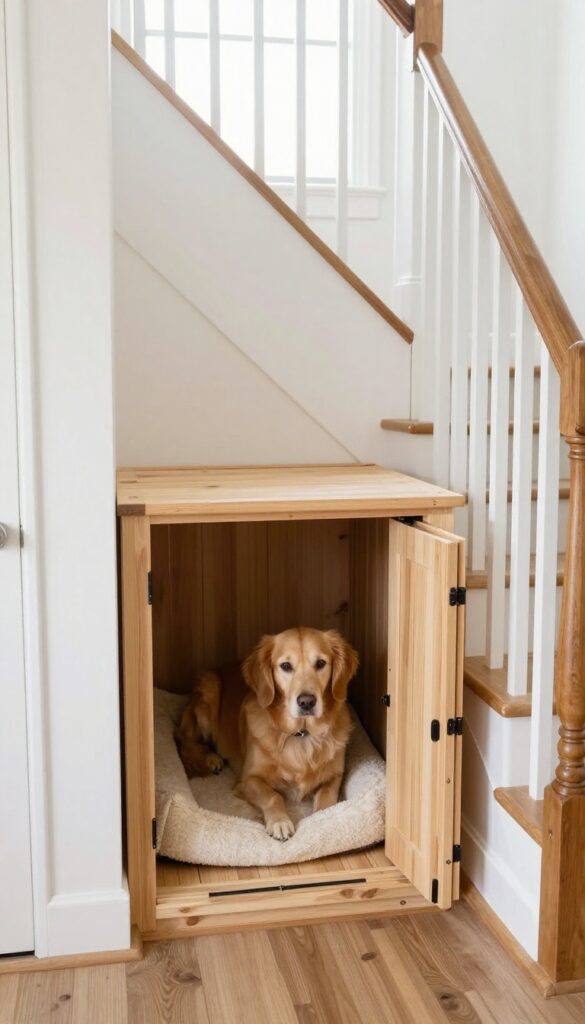
That awkward triangular void beneath your stairs? It's prime real estate for a custom kennel. By adding a door, proper ventilation, and a plush bed, you turn wasted space into a cozy den your dog will happily retreat to.
This built-in feels intentional and polished, not like an afterthought.
Why It Works
Under-stair areas are often unusable for storage because of their odd shape, but a kennel fits perfectly. The enclosed feel mimics a den, which many dogs find comforting. Plus, it frees up floor space elsewhere in your home.
Best For
Homes with a staircase that leaves an open nook underneath. Great for small to medium breeds that appreciate a cave-like sleeping spot. Works especially well in entryways or living rooms where you want a discreet kennel.
Practical Tip
Install a Dutch door so you can keep the top half open for visibility and airflow while still containing your pup. Add a slide-out tray or washable mat for easy cleanup. Ensure at least one side has ventilation holes or a small window.
Budget-Friendly Option
Skip the custom cabinetry and use a sturdy wire crate that fits the space. Build a simple frame around it with plywood and trim for a built-in look at a fraction of the cost.
2. Mudroom Crate Cubby
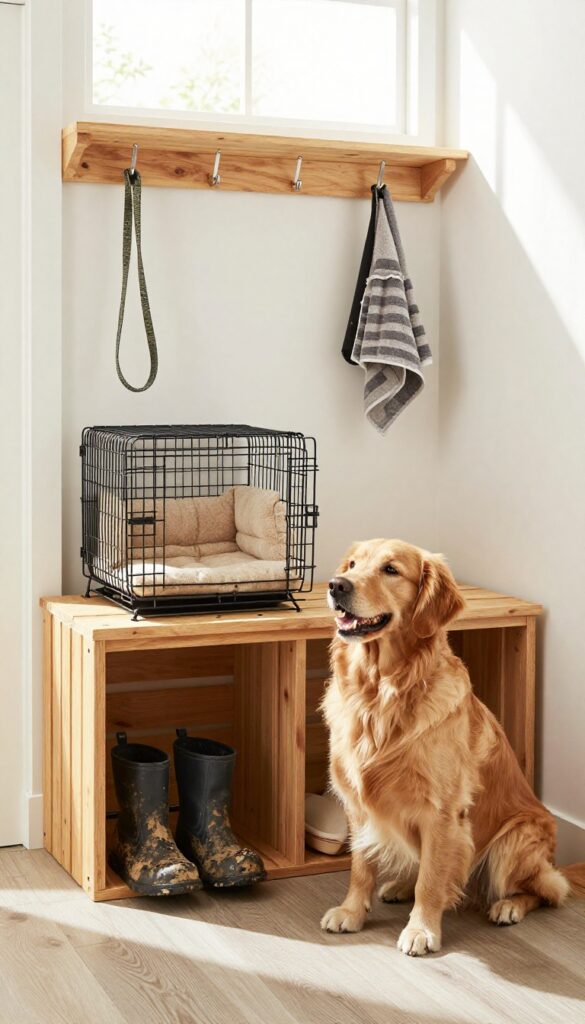
Your mudroom is the perfect spot for a built-in dog kennel. By tucking a crate under a bench or inside cabinetry, you keep the kennel out of sight while giving your dog a cozy den near the entryway. It’s a smart way to manage muddy paws and wet fur right where they happen.
This setup turns an often-cluttered space into a functional drop zone for both you and your pup. Plus, the bench above gives you a place to sit while pulling on boots or wiping down paws after walks.
Why It Works
The mudroom is naturally high-traffic and often messy, so having the crate integrated into cabinetry keeps dog supplies contained and easy to access. The bench provides a spot for gear storage above while the crate below stays ventilated and private. It also helps contain dirt and water in a room designed for it.
Best For
This idea works great for active dogs that come in muddy from walks or the backyard. It’s also ideal for homes with a dedicated mudroom or laundry room entry, especially if you have limited floor space and want a clean, built-in look.
Practical Tip
Use a wire crate inside the cubby for airflow, or build a custom wooden crate with ventilation holes. Add a washable cushion that’s easy to remove and toss in the laundry. Keep a towel hook and a paw-washing station nearby for quick cleanups.
Budget-Friendly Option
Skip the custom cabinetry and buy a ready-made bench with a cubby opening. Place a standard crate inside and add a curtain or a simple door to hide it. This gives you the same look for a fraction of the cost.
3. Kitchen Island Kennel
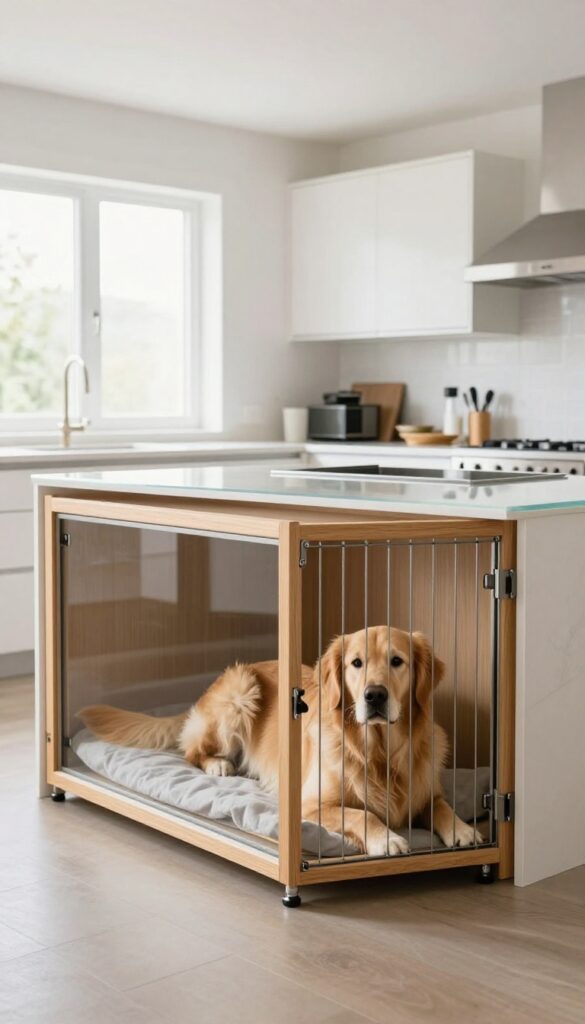
If your kitchen island is just counter space and cabinets, it's time to put that real estate to better use. A built-in kennel tucked into the base of the island gives your dog a front-row seat to family life while you cook, eat, or hang out. It keeps them close without underfoot, and the top of the island still works perfectly for meal prep or extra storage.
Why It Works
This setup puts your dog right in the heart of the home, so they never feel left out. The island's existing structure means you don't need to build a separate kennel frame, and the countertop above provides a natural roof that makes the space feel like a cozy den.
Best For
Medium to large breeds that like being near their humans, like Labradors, Golden Retrievers, or Boxers. Also ideal for homes with open-concept layouts where the kitchen is a central gathering spot.
Practical Tip
Make sure the kennel opening faces the main living area so your dog can see everyone. Add a soft bed and a washable mat for easy cleanup, and install a small fan nearby if the island tends to trap heat. For safety, keep cords and appliances well out of reach.
4. Closet Conversion Kennel
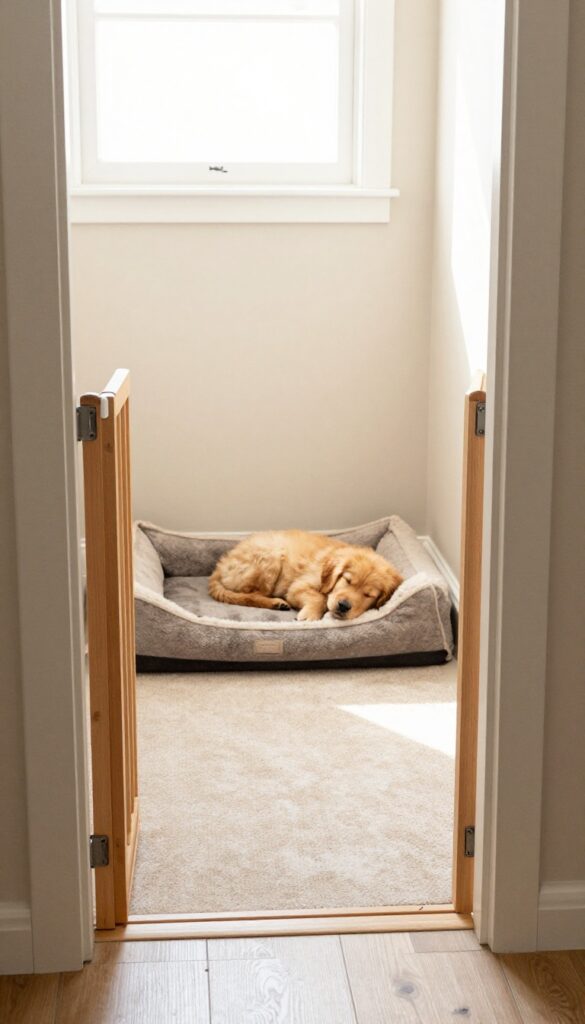
Got a spare closet or a corner of a walk-in that's collecting dust? Turn it into a cozy built-in kennel. Just add a gate or door, line the floor with washable mats, and you've got a private retreat your dog will love.
It's a clever way to repurpose unused space without any major construction.
Why It Works
Closets already have walls, flooring, and often a door or opening, so you're starting with a ready-made structure. With minimal effort—adding a gate or modifying the door—you create a den-like space that feels secure and quiet. Plus, it keeps the kennel out of sight when guests come over.
Best For
This works great for dogs that appreciate a cave-like hideaway, like anxious or easily startled pups. It's also perfect for small to medium breeds, though larger closets can accommodate bigger dogs. Ideal for homes with limited floor space or an underused closet.
Practical Tip
Remove the closet door and install a baby gate or custom pet door that matches your trim. Inside, add a washable mat or crate pad for easy cleanup. A low-wattage nightlight or a small fan can improve air circulation and comfort.
Keep the space clutter-free—no shoes or stored items—so it stays a dedicated dog zone.
Budget-Friendly Option
Skip a custom gate and use a tension-mounted baby gate instead. Repurpose an old blanket as a washable floor liner. If the closet has a sliding door, remove one panel and replace with a simple curtain for a low-cost, soft barrier.
5. Window Seat Kennel Combo
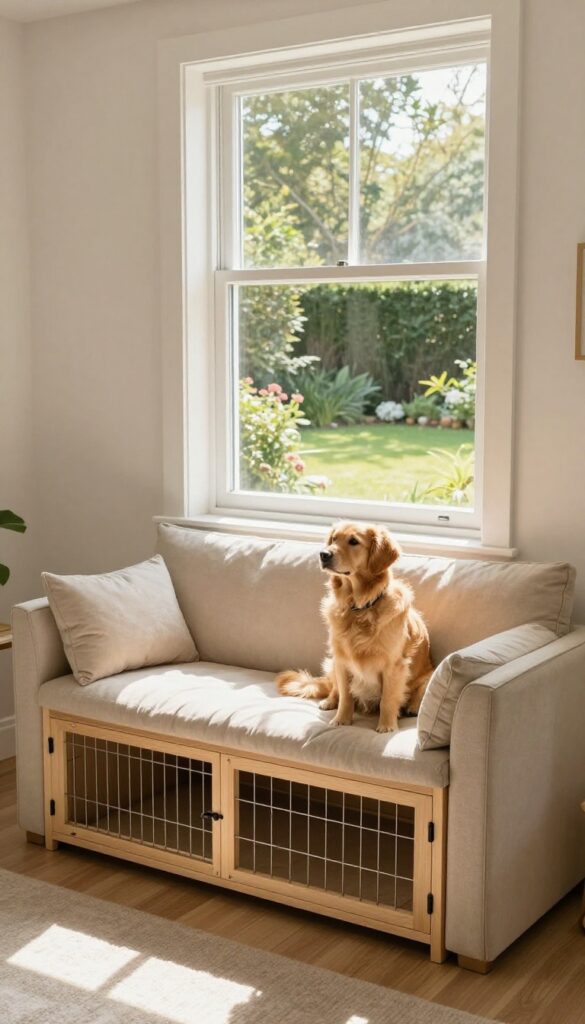
A window seat kennel combo turns a sunny spot into a dual-purpose feature. Your dog gets a cozy lookout perch, and you gain extra seating or hidden storage underneath. It's a smart way to make a small space feel bigger and more functional.
Why It Works
Dogs love natural light and watching the outdoors, so a window seat kennel taps into their instincts. The elevated design also keeps the crate off the cold floor and makes it feel like part of the room, not an eyesore.
Best For
This setup shines in living rooms, home offices, or reading nooks where you want your dog nearby but out of the way. It works well for small to medium breeds that enjoy perching and watching the world go by.
Practical Tip
Choose a crate with a flat top or build a custom platform so the seat sits flush. Add a washable cushion on top for humans and a soft bed inside for your dog. Ensure the crate has good ventilation and easy access for cleaning.
Budget-Friendly Option
If a full built-in isn't in the cards, place a freestanding crate under an existing window bench or a low console table. Add a thick cushion on top and a curtain or screen to hide the crate when needed.
6. Outdoor Patio Kennel Enclosure
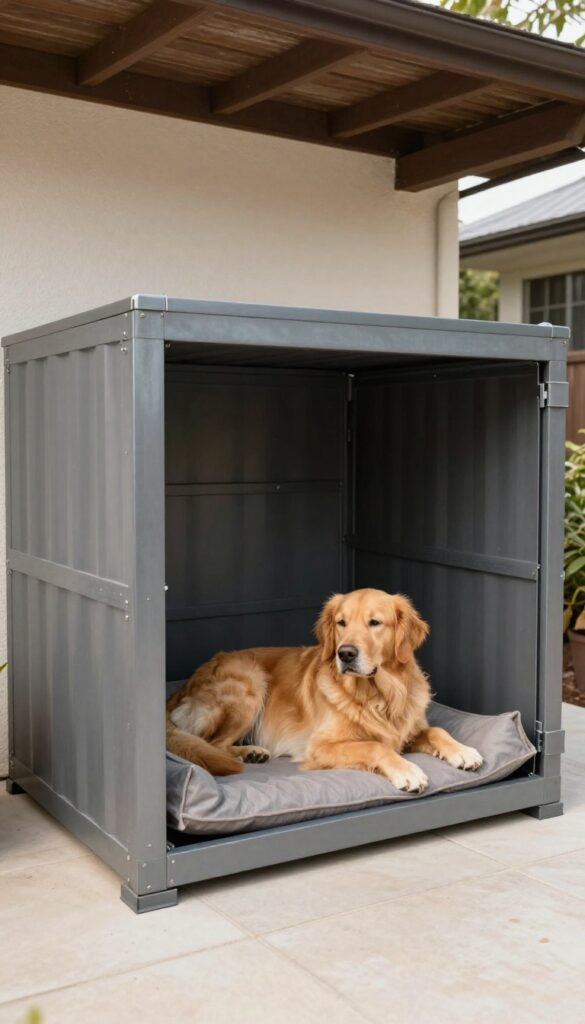
If your dog loves fresh air but you don't want them roaming the yard unsupervised, an outdoor patio kennel enclosure is a smart solution. By building a covered kennel against an exterior wall or under a patio overhang, you create a safe, weather-protected space where your pup can lounge outside without worry. It keeps them contained while still letting them enjoy the sights and sounds of the backyard.
Why It Works
Weather-resistant materials and built-in shade make this enclosure comfortable in most climates. Your dog gets outdoor time without exposure to direct sun or rain, and you get peace of mind knowing they're secure.
Best For
This is ideal for active dogs that like to be outside but need boundaries, and for owners with covered patios or exterior walls that can support a simple frame. Perfect for breeds that enjoy lounging outdoors, like Labradors, Golden Retrievers, or Boxers.
Practical Tip
Use coated wire or metal panels for durability and easy cleaning. Add a waterproof dog bed or cot to keep them off the ground, and attach a shade cloth or roof panel for extra sun protection. Include a water bowl that attaches to the kennel wall to prevent spills.
Budget-Friendly Option
Skip the custom build and buy a heavy-duty outdoor dog run panel kit. Attach it to your existing patio structure using zip ties or brackets for a low-cost version.
7. Garage Wall Kennel Niche
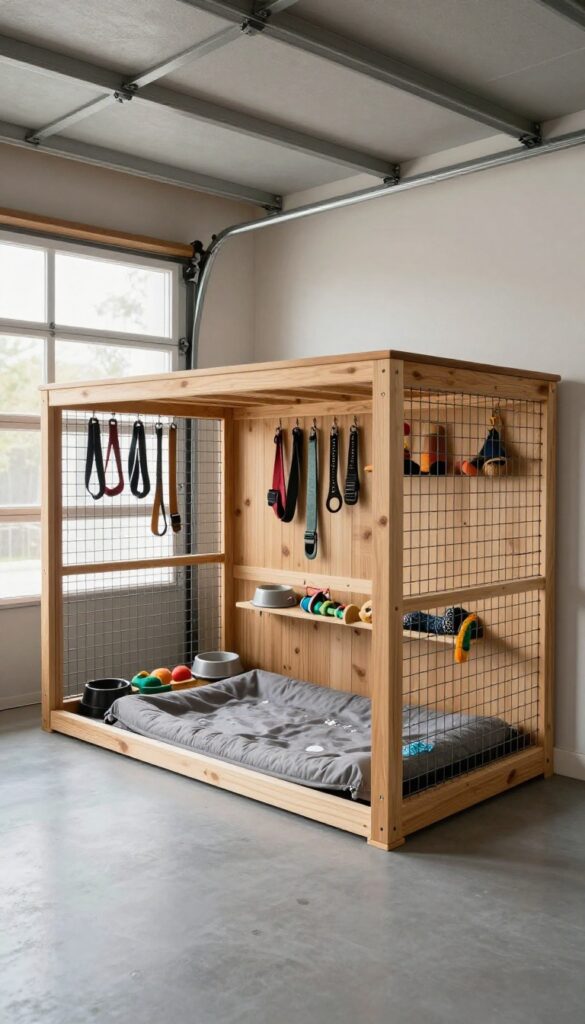
A garage wall might not seem like the coziest spot for a dog kennel, but with a little framing and creativity, it becomes a practical, out-of-the-way den. By building a niche along an unused wall section, you keep the crate contained and your garage organized. It's especially handy for storing leashes, bowls, and toys right where you need them.
Why It Works
Garages often have bare walls that are perfect for a custom build. This keeps the kennel off the floor, freeing up space for storage or parking. The enclosed niche also helps muffle noise and gives your dog a quiet retreat away from household bustle.
Best For
This setup works great for active dogs that spend time in the garage during the day, or for owners who want a dedicated mudroom-like zone. It's also ideal for large breeds that need a generously sized kennel without taking over a living area.
Practical Tip
Use a repurposed heavy-duty crate or build a plywood frame with a wire mesh front for ventilation. Add a washable bed and a small fan for airflow in warmer months. Keep the floor slightly raised to avoid drafts and make cleaning easier.
Budget-Friendly Option
Skip the custom build and mount a large wire crate on a low shelf or platform along the wall. Use tension rods to hang leashes and collars nearby. Total cost stays under $50.
8. Under-Desk Dog Den
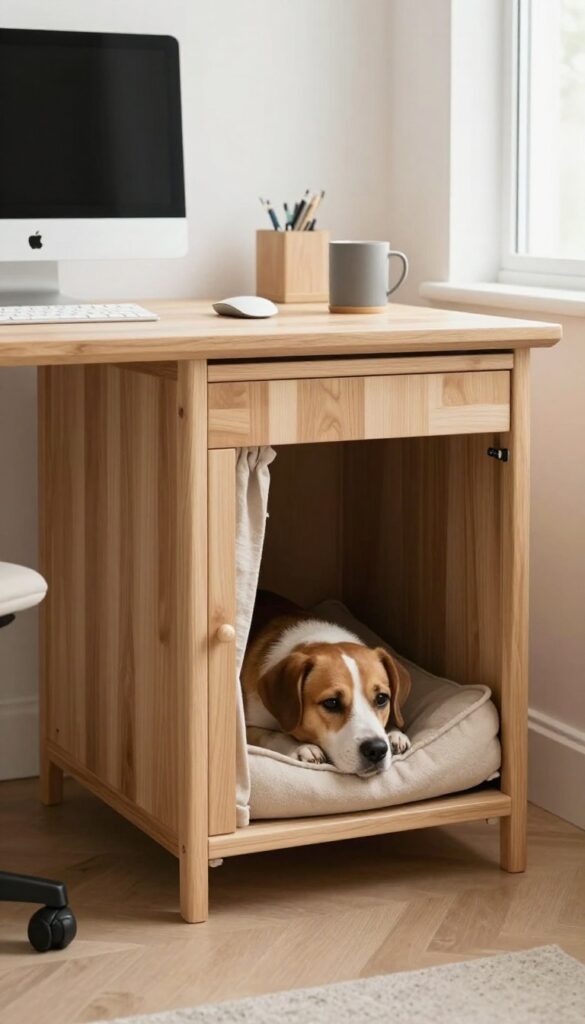
Working from home means your dog wants to be right there with you—preferably curled up at your feet. Instead of tripping over a crate in the middle of the room, turn the empty space under your desk into a built-in kennel. It keeps your pup close without taking up extra floor space, and a simple curtain or cabinet door gives them a quiet, den-like retreat.
This setup works especially well if you have a larger desk or a console table with an open base. You can use a standard wire crate or build a custom wooden frame that matches your furniture. Either way, your dog gets a cozy spot that feels like part of the room, not an afterthought.
Dog owners love this idea because it blends seamlessly into a home office or living area. No more bulky crates sticking out—just a clean, functional space where your dog can nap while you type away.
Why It Works
Dogs naturally seek out small, enclosed spaces for comfort and security. Placing their bed under your desk puts them at your eye level, which many dogs find reassuring. Plus, you save precious square footage by using otherwise dead space.
The desk also provides a natural roof and three sides, so you only need to add a front panel or door to complete the kennel.
Best For
This idea is perfect for remote workers, home office setups, or anyone who spends long hours at a desk. It suits small to medium breeds that like to be near their owner but won't outgrow the under-desk area. If you have a large desk with at least 24 inches of clearance, it can also work for bigger dogs like Labradors or Golden Retrievers.
Practical Tip
Choose a soft, washable dog bed that fits snugly under the desk. Add a tension rod and a curtain for privacy—fabric that matches your room's decor makes the kennel blend in. If you prefer a door, use a cabinet front with a pet gate or a sliding barn door.
Make sure there's good airflow; leaving the back or sides open prevents stuffiness.
Budget-Friendly Option
Skip the custom build and use a wire crate that slides under your desk. Attach a fabric cover or a simple curtain rod to the desk legs for instant privacy. You can also repurpose an old nightstand or small cabinet by removing the front and adding a cushion inside.
9. Stair Landing Mini Kennel
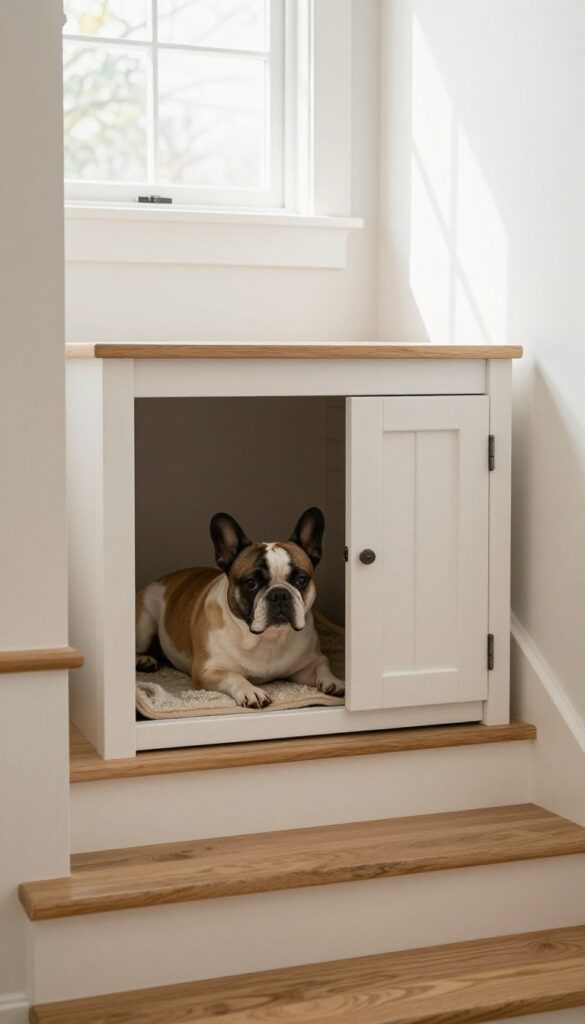
That awkward wide stair landing or hallway nook can finally earn its keep. Tuck a small built-in kennel into the space, and you give your pup a cozy den without sacrificing any floor area. It's especially handy in homes where every square foot counts, and it keeps your dog right in the middle of the action.
Why It Works
Stair landings are often dead space that's too small for furniture but perfect for a compact kennel. By building it into the wall or under the stairs, you create a quiet, den-like spot that feels secure for your dog. Plus, it stays out of walkways and doesn't disrupt traffic flow.
Best For
Small to medium breeds like French Bulldogs, Shih Tzus, or Cocker Spaniels who enjoy being near the family but don't need a huge crate. It's also ideal for narrow townhouses, split-level homes, or any house with an underused landing.
Practical Tip
Make sure the kennel has proper ventilation—add a small window or a vented door. Use a washable, fitted mat for easy cleanup, and consider a hinged or sliding door that doesn't swing into the stairwell. Paint or stain the exterior to match your trim so it blends right in.
Budget-Friendly Option
Skip custom cabinetry and repurpose a ready-made end table or bookshelf. Cut out a door opening, reinforce the interior, and add a crate insert. It's a weekend DIY that costs under $50.
FAQ
How much does a built-in dog kennel cost?
Costs vary widely, but DIY built-in kennels can range from $50 to $500 depending on materials and size. Using existing spaces like closets or under stairs keeps costs low.
Do built-in kennels need ventilation?
Yes, proper airflow is essential. Ensure your design includes vents, a mesh door, or an open side to keep your dog comfortable and prevent overheating.
Can I build a built-in kennel in a rental?
Absolutely. Use freestanding furniture like a console table or a closet with a tension rod gate. These are non-permanent and won't damage walls.
What size should a built-in kennel be?
The kennel should be large enough for your dog to stand, turn around, and lie down comfortably. Measure your dog's height and length, then add a few inches.
How do I clean a built-in kennel?
Use washable bedding and easy-to-clean surfaces like tile or sealed wood. A removable tray or liner makes spot-cleaning simple.
Conclusion
A built-in dog kennel can be a smart, stylish addition to your home without breaking the bank. Start with a simple corner nook or a repurposed cabinet to keep costs low and your pup cozy.
Focus on your dog's comfort and your space's flow. A little planning goes a long way toward a setup you'll both enjoy every day.

I’m Pallab Kishore, the owner of Little Pets Realm — an animal lover and pet care enthusiast sharing easy tips, healthy recipes, and honest advice to help every small pet live a happy, healthy, tail-wagging life.