
Your dog deserves a spot that's all their own, but store-bought dog houses can be pricey or just plain boring. Building one yourself lets you customize the size, style, and features to fit your pup and your yard perfectly. Plus, it's a satisfying weekend project that doesn't require expert carpentry skills.
These nine DIY dog house ideas range from super simple to slightly more advanced, so there's something for every skill level. Most use basic tools and materials you can find at any hardware store.
And the best part? Your dog will have a cozy retreat that's built with love.
1. The Classic A-Frame Dog House
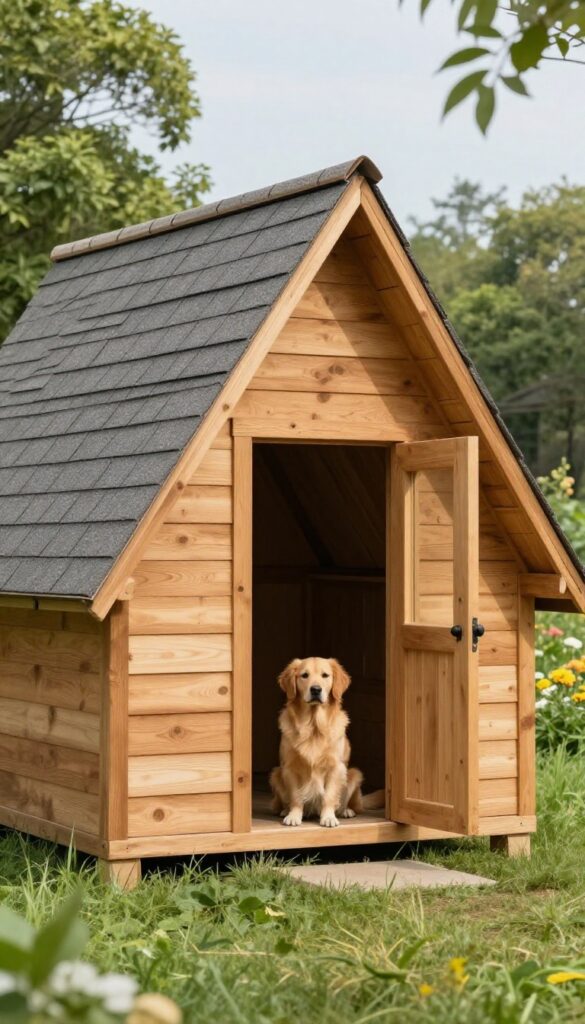
Some designs never go out of style, and the A-frame dog house is proof. Its steeply slanted roof sheds rain and snow like a champ, keeping the interior dry and cozy. Plus, the triangular shape is surprisingly sturdy and requires only basic cuts—great for beginners.
Why It Works
The angled roof directs water away from the entrance, so your dog stays dry even during a downpour. The open floor plan also allows good airflow, reducing stuffiness on warm days.
Best For
This design fits medium to large breeds that need a weather-resistant shelter in a backyard or garden. It's especially handy for rainy climates where drainage and dryness matter most.
Practical Tip
Add a hinged roof panel held by simple latch hooks—this makes cleaning out bedding and debris a breeze. Paint the exterior with exterior-grade stain or paint to protect against rot.
Budget-Friendly Option
Use exterior-grade plywood instead of cedar to cut costs. You can also substitute asphalt shingles with rolled roofing material for a budget-friendly waterproof top.
2. The Insulated Dog House for Cold Climates
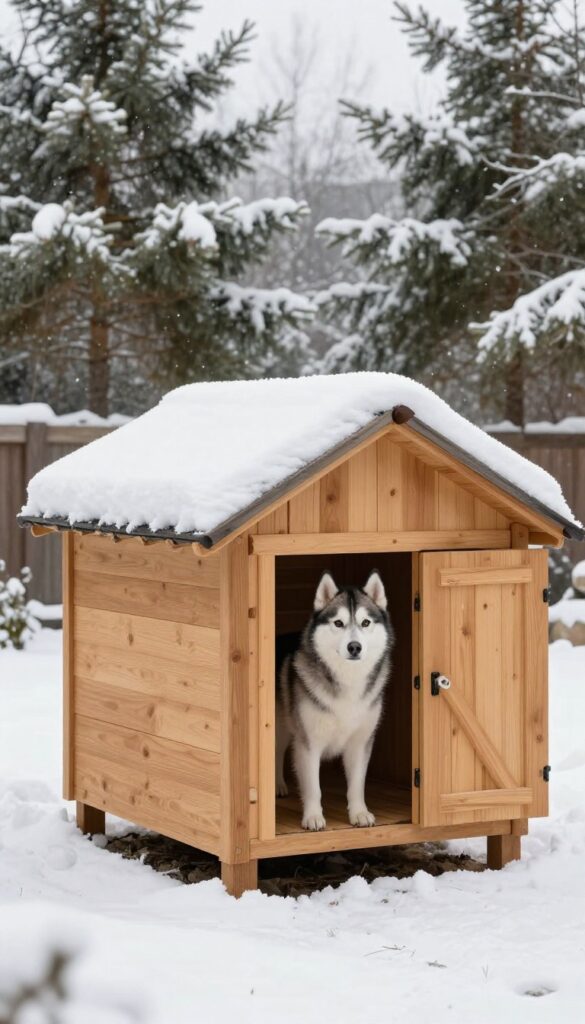
When winter hits, a standard dog house just doesn't cut it. This insulated version keeps your pup warm and dry even when temperatures drop. Foam board insulation sandwiched between plywood walls traps body heat while blocking drafts.
A flap door and raised floor add extra protection against snow and wind.
Why It Works
Dogs lose body heat quickly in cold weather, especially short-haired breeds or seniors. The foam insulation creates a thermal barrier, and the raised floor prevents cold from seeping through the ground. The flap door seals out wind and rain, making the interior cozy even on freezing days.
Best For
This is ideal for northern climates with harsh winters, or for dogs that spend time outdoors during colder months. It's also great for breeds prone to cold, like Greyhounds, Chihuahuas, or other thin-coated pups.
Practical Tip
Use rigid foam boards (R-5 or higher) cut to fit between studs. Seal all seams with foil tape to prevent air leaks. Paint the exterior with weatherproof paint, and add a sloped roof so snow slides off easily.
3. The Portable Dog House on Wheels
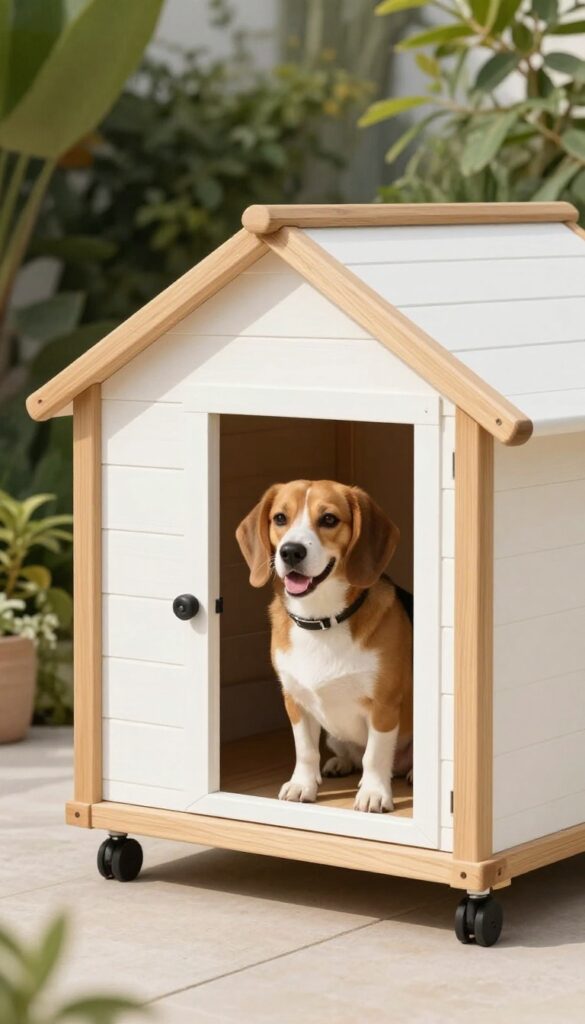
Mobility meets comfort with this clever wheeled dog house. Build a lightweight structure on a sturdy base with locking casters, so you can roll your pup's retreat from sun to shade or tuck it into the garage during storms. It's a practical solution for renters or anyone who likes to rearrange their outdoor space without heavy lifting.
Why It Works
Casters make it effortless to move the dog house wherever your dog wants to lounge—follow the shade, avoid wind, or bring it inside for winter storage. The design stays weatherproof with treated wood and a sloped roof, so your dog stays dry and comfy no matter where you park it.
Best For
Renters, apartment dwellers with patios, or owners who want flexibility in their yard layout. Great for dogs under 50 pounds since the house needs to stay light enough to roll easily.
Practical Tip
Add a soft, washable cushion inside for extra comfort. Use exterior-grade plywood and seal all edges with waterproof paint or stain. Locking casters are essential to keep the house from rolling when your dog jumps in or out.
Budget-Friendly Option
Skip expensive caster sets by salvaging wheels from an old office chair or dolly. You can also use heavy-duty furniture sliders for temporary mobility on smooth surfaces like patios or garage floors.
4. The Upcycled Pallet Dog House
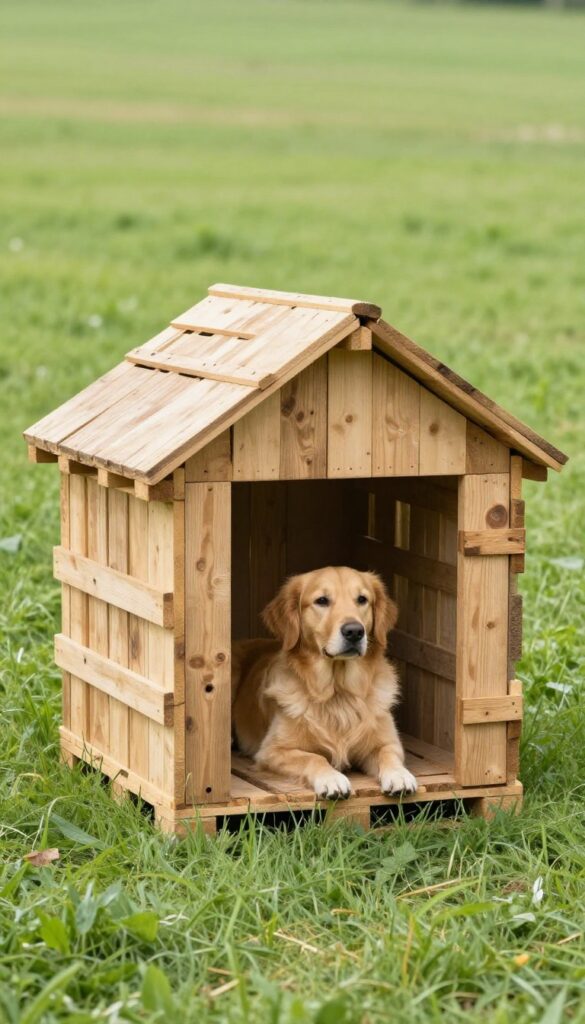
Free pallets are practically everywhere, and they're perfect for a weekend dog house build. This project turns discarded wood into a charming, rustic shelter that your dog will love. It's budget-friendly, eco-conscious, and surprisingly simple to put together—even if you're new to DIY.
Why It Works
Pallets are sturdy and easy to work with. By disassembling them, you get quality wood at no cost. The natural gaps in pallet slats also provide ventilation, keeping the inside fresh and dry.
Plus, the weathered look blends right into most backyards.
Best For
This is ideal for medium to large dogs who need a solid, weather-resistant house. It's especially great for owners who want a low-cost project and enjoy repurposing materials. If you have access to free pallets and a few basic tools, this one's for you.
Practical Tip
Sand all wood thoroughly to prevent splinters—your dog's nose will thank you. Add a sloped roof with a slight overhang to keep rain out, and seal the exterior with pet-safe paint or stain for durability. Line the floor with a removable cushion for easy cleaning.
5. The Elevated Dog House with Porch
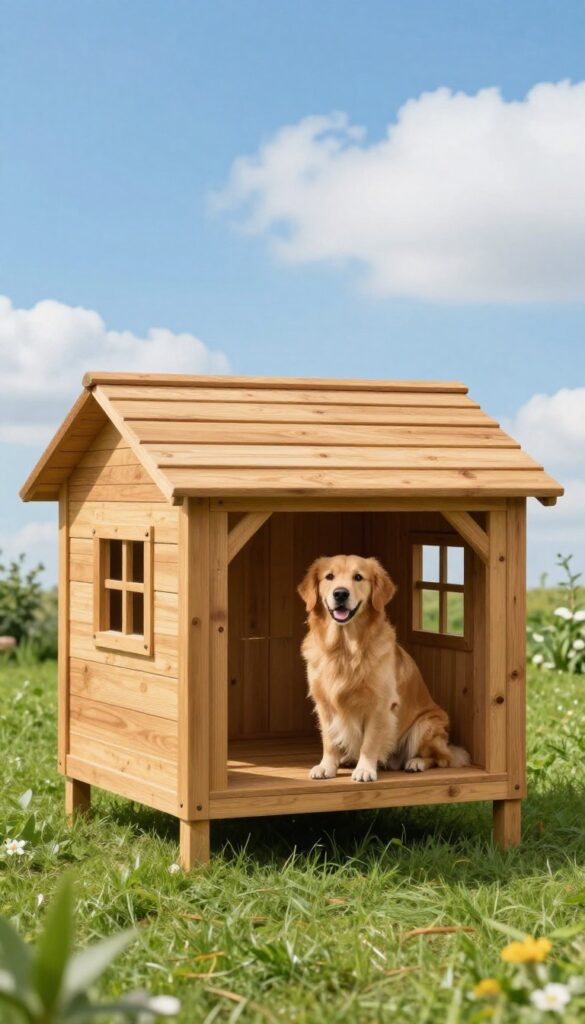
Hot climates call for clever cooling solutions, and an elevated dog house with a porch delivers exactly that. By raising the floor off the ground, you create airflow underneath that keeps the interior significantly cooler during summer months. The porch overhang gives your pup a shaded spot to lounge and survey their kingdom without baking in direct sun.
This design is a favorite among DIYers because it's straightforward to build and uses materials you likely already have. You can customize the porch size to fit your dog's lounging style—some prefer a wide deck, others just a small step-out area.
Plus, the raised platform helps prevent moisture buildup and keeps pests away, making it a smart choice for humid regions.
Why It Works
The elevated floor promotes air circulation, which naturally cools the house in hot weather and keeps it dry during rain. The porch roof extends shade, giving your dog a comfortable outdoor spot that stays cooler than standard ground-level houses.
Best For
This design is ideal for warm climates and dogs who love spending time outdoors but need relief from heat. Breeds prone to overheating, like Bulldogs or Huskies, benefit greatly from the airflow and shade.
Practical Tip
Paint or stain the exterior with weather-resistant finishes in light colors to reflect sunlight. Add a soft outdoor cushion on the porch for extra lounging comfort—just make sure it's waterproof or easily removable for cleaning.
6. The Modern Minimalist Dog House
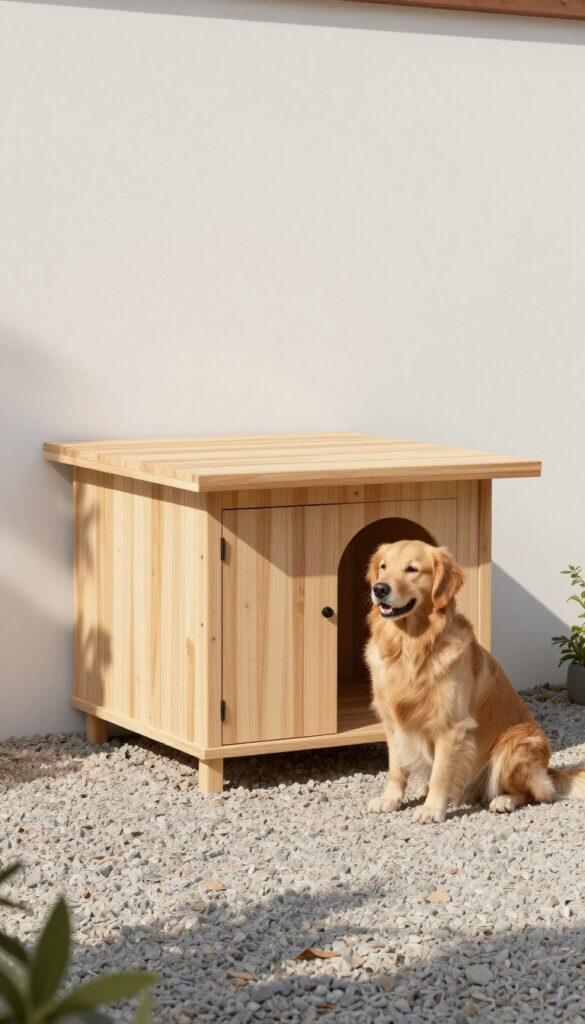
Clean lines and a flat roof give this dog house a sleek, contemporary look that blends right into modern landscapes. It's a straightforward build using cedar or pressure-treated wood, so it holds up well outdoors without looking bulky or clunky. The simple shape makes it easy to customize with your choice of stain or paint.
Why It Works
The flat roof offers a clean surface that doesn't collect debris, and the removable roof panel lets you clean inside or check on your pup in seconds. Cedar naturally resists rot and insects, so this house stays sturdy season after season with minimal upkeep.
Best For
This design is perfect for design-conscious owners who want their dog's house to complement a modern yard or patio. It suits medium to large breeds that need a bit of headroom, and it's great for warmer climates since the flat roof can be painted white to reflect heat.
Practical Tip
Use a semi-transparent stain in a natural cedar tone or go bold with a charcoal gray exterior. Add a weatherproof outdoor cushion inside for extra comfort, and place the house on a slight gravel bed to prevent moisture wicking from the ground.
Budget-Friendly Option
If cedar is out of your budget, pressure-treated pine is a solid alternative. Just seal it with a pet-safe exterior paint or stain to extend its life.
7. The Two-Story Dog House for Multiple Dogs
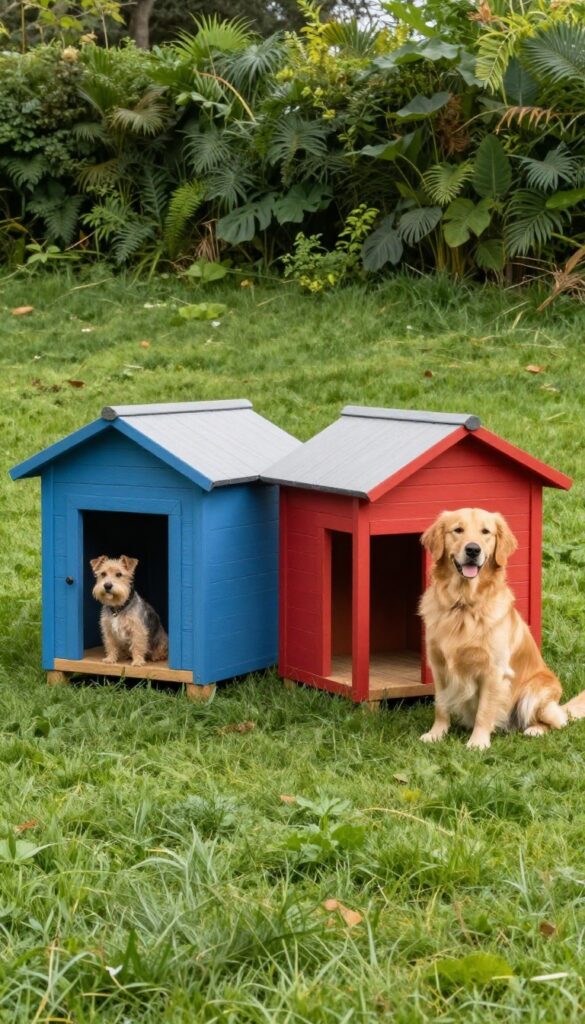
Got two dogs that need their own space? A duplex-style dog house with separate entrances and a shared wall gives each pup privacy while keeping them close. This design is perfect for households with multiple dogs, and you can size each side to fit different breeds.
It's a sturdy weekend build that keeps peace in the pack.
Why It Works
Each dog gets their own cozy den, reducing competition and stress. The shared wall adds stability and saves materials compared to two separate houses. You can customize the interior dimensions so a large breed isn't cramped next to a small one.
Best For
Homes with two dogs, especially if they prefer separate sleeping spots or have different size needs. Also great for multi-dog households where one dog is older or more anxious and needs alone time.
Practical Tip
Use exterior-grade plywood and pressure-treated lumber for durability. Add a small vent near the top of each side to improve airflow, and make sure the roof overhangs slightly to keep rain out of both entrances.
Budget-Friendly Option
Skip the fancy roofing shingles and use asphalt roll roofing instead—it's cheaper, easier to install, and just as waterproof. You can also use leftover paint from other projects to color-code each side.
8. The Dog House with Built-In Storage
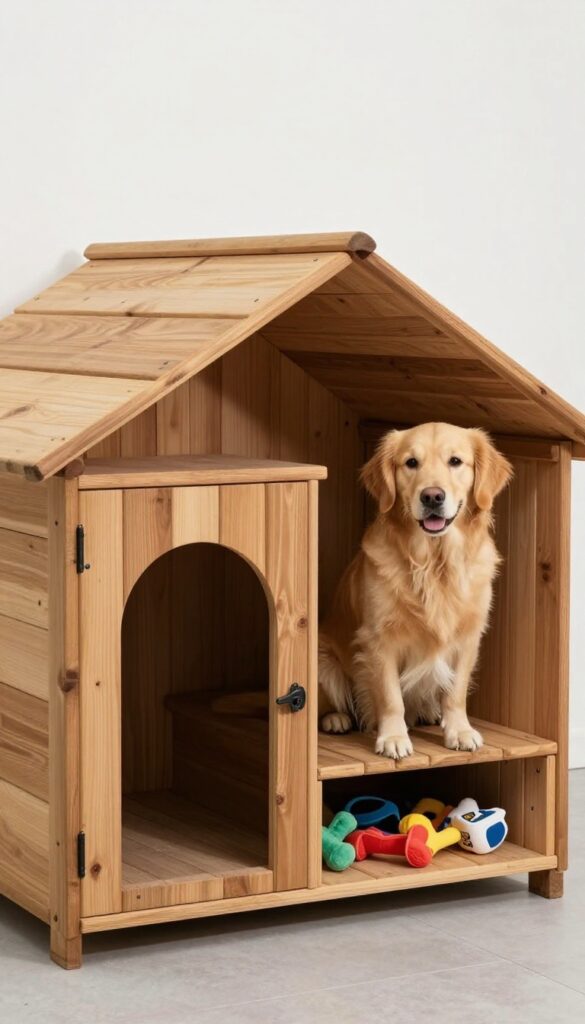
If your yard is on the smaller side, every square foot counts. A dog house with a built-in storage bench gives you a cozy spot for your pup plus a place to stash leashes, toys, and treats. The bench sits on one side, the dog house on the other, creating a symmetrical look that's both functional and space-saving.
This design works especially well along a fence line or against a wall where you can anchor it for stability. The storage compartment keeps outdoor dog gear organized and dry, so you're not tripping over toys every time you step outside.
It's a smart way to make one structure do double duty—your dog gets a private retreat, and you get a clutter-free yard.
Why It Works
Combining storage with the dog house makes the most of limited space. The bench can hold everything from extra poop bags to seasonal gear like cooling mats or winter blankets. Plus, having a designated spot for dog supplies means less time hunting for lost items.
Best For
This idea is ideal for small yards or patios where you want to maximize function without sacrificing style. It's also great for owners who like everything organized and hate seeing dog stuff scattered around the yard.
Practical Tip
Use weatherproof materials like pressure-treated wood or cedar for both the dog house and storage bench. Add a hinged lid to the bench with a soft-close mechanism to prevent slammed fingers (or startled dogs). Paint or stain everything in coordinating colors so it looks like intentional outdoor furniture.
Budget-Friendly Option
Skip expensive hardware by using wooden crates or pallets as modular storage cubes inside the bench. You can pull them out for easy cleaning or reorganizing without spending extra on custom drawers.
9. The DIY Dog House from a Plastic Storage Bin
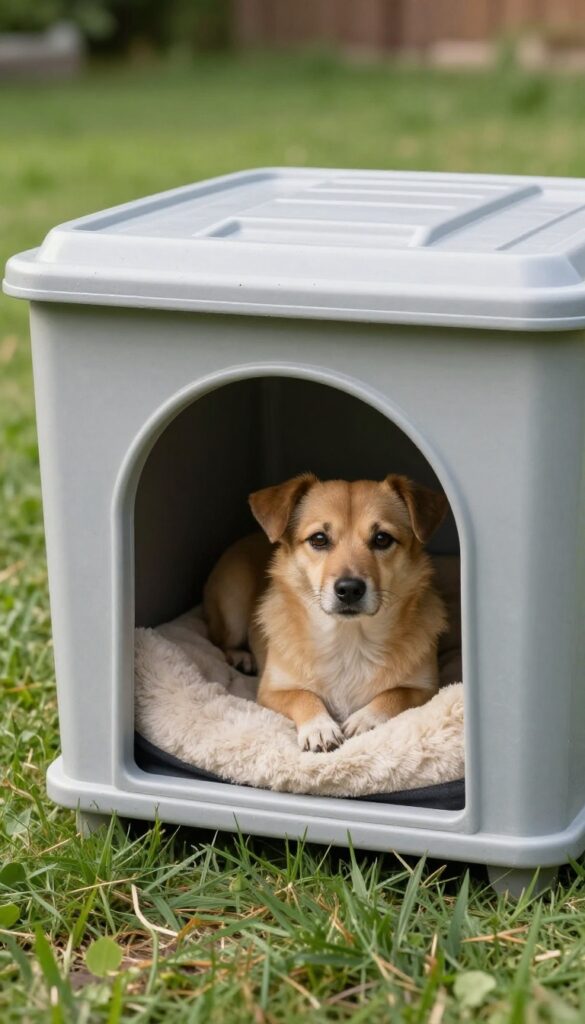
Sometimes the simplest ideas are the best. A plastic storage bin can become a lightweight, portable dog house in under an hour. Just cut a door opening, add a comfy cushion, and your pup has an instant hideaway.
It's perfect for travel, temporary setups, or as a backup house when the main one needs cleaning.
Why It Works
Plastic bins are waterproof, easy to clean with a hose, and durable enough to withstand weather. The lid keeps the interior dry, and you can stack them when not in use. Plus, the smooth surface won't splinter or absorb odors.
Best For
Small to medium dogs who like cozy, den-like spaces. Great for apartments with limited yard space, RV camping trips, or as a budget-friendly starter house for puppies.
Practical Tip
Use a utility knife or jigsaw to cut a rounded doorway—smooth edges with sandpaper or cover them with duct tape for safety. Add a thick, washable pet bed inside and place the bin on a slightly elevated spot to prevent moisture from seeping in through the bottom.
Budget-Friendly Option
Instead of buying a new storage bin, check thrift stores or garage sales for used ones. You can often find them for a few dollars. Even a cracked bin works if you patch it with waterproof tape.
FAQ
What is the best material for a DIY dog house?
Plywood is a popular choice because it's affordable, easy to work with, and durable when sealed. Cedar is naturally rot-resistant and smells nice, but costs more. Avoid pressure-treated wood for interior surfaces since the chemicals can be harmful if chewed.
How big should a dog house be for my dog?
The dog house should be just big enough for your dog to stand up, turn around, and lie down comfortably. Measure your dog's height and length, then add a few inches. Too large and it won't retain body heat; too small and it's cramped.
Do I need to insulate a dog house?
If you live in a climate with extreme temperatures, insulation helps keep your dog comfortable. In cold weather, insulation retains body heat; in hot weather, it keeps the interior cooler. Use foam board or reflective insulation, and ensure proper ventilation.
How do I waterproof a DIY dog house?
Use exterior-grade paint or stain on all exterior surfaces. Seal seams with caulk, and ensure the roof overhangs the walls to shed water. A raised floor also prevents moisture from seeping in from the ground.
Can I build a dog house without power tools?
Yes, but it will take more time and effort. You can use a hand saw, hammer, and screwdriver. Many simple designs like the plastic bin or pallet house require minimal cutting.
For more complex builds, a circular saw and drill make the job much easier.
Conclusion
Building a dog house yourself is a rewarding project that saves money and lets you create something tailored to your pup. Whether you go for a simple A-frame or a modern masterpiece, your dog will appreciate having a cozy spot to call their own.
Pick a design that matches your skill level and your dog's needs, and enjoy a weekend of building. Your furry friend will thank you with plenty of happy tail wags and peaceful naps in their new home.

I’m Pallab Kishore, the owner of Little Pets Realm — an animal lover and pet care enthusiast sharing easy tips, healthy recipes, and honest advice to help every small pet live a happy, healthy, tail-wagging life.