
A sturdy outdoor dog house is more than just a shelter—it's your pup's personal fortress against the elements. Building one yourself lets you tailor the size, insulation, and durability to your dog's needs and your yard's layout.
These 11 DIY plans range from classic A-frames to modern minimalist designs, all built to withstand rain, sun, and rough play. Each project uses weather-resistant materials like pressure-treated lumber, cedar, or metal roofing to ensure longevity.
You'll find options with elevated floors for airflow, insulated walls for temperature control, and removable roofs for easy cleaning. Whether you have a small yard or sprawling property, there's a plan here that fits your space and skill level.
1. The Classic A-Frame with Pressure-Treated Base
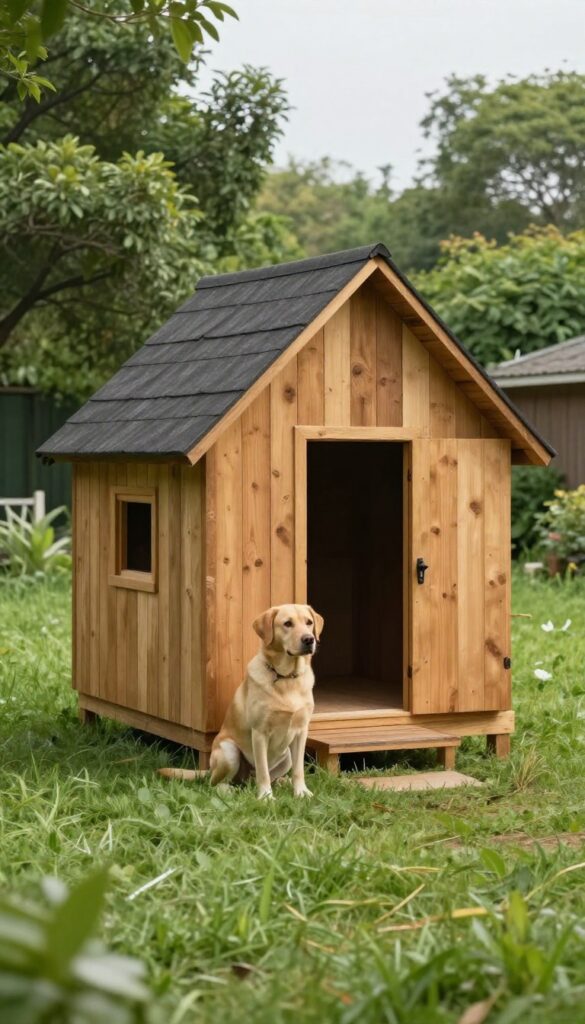
There's a reason the A-frame is a go-to for outdoor dog houses—it sheds water and snow like a champ. This version adds a pressure-treated base that stands up to ground moisture and rot, giving you a solid foundation that lasts. The steep roof angles let rain run right off, while the elevated floor keeps your pup dry and comfortable.
Why It Works
The pressure-treated lumber resists decay from wet ground, so the floor won't rot out after a few seasons. The A-frame shape naturally deflects wind and precipitation, making it one of the most weatherproof designs you can build. Plus, the peaked interior gives taller dogs headroom without wasting materials.
Best For
Medium to large breeds like Labradors, Golden Retrievers, or German Shepherds who need sturdy shelter in rainy or snowy climates. It's also great for yards that don't have natural cover from the elements.
Practical Tip
Paint or stain the exterior with a non-toxic, weather-resistant finish to match your home's look. Make sure all fasteners are galvanized or stainless steel to prevent rust. Add a flap door made from heavy-duty vinyl to block drafts while letting your dog come and go.
Budget-Friendly Option
Use exterior-grade plywood instead of cedar for the walls to save money—just seal it well with two coats of outdoor paint or primer. You can also repurpose old pallets for the base if you're careful to choose heat-treated ones (look for HT stamped on them).
2. Insulated Plywood Cabin with Removable Roof
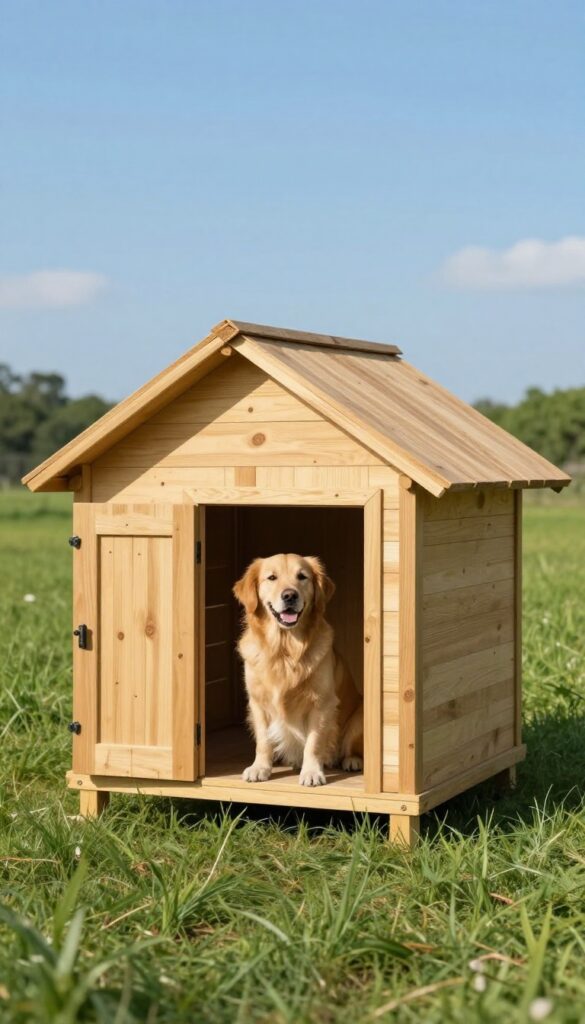
Cold weather calls for a dog house that holds in heat without trapping moisture. This insulated plywood cabin uses foam board between double walls to keep your pup warm and dry, while the removable roof makes deep cleaning a breeze. The offset door placement cuts down on drafts, so your dog stays comfortable even on windy days.
Why It Works
The foam insulation creates a thermal barrier that maintains a stable interior temperature, and the plywood exterior stands up to rain and snow. An elevated floor adds extra protection from ground moisture, and the removable roof lets you scrub out bedding or disinfect after accidents without hassle.
Best For
This plan is ideal for medium to large breeds like Labradors, Huskies, or Golden Retrievers that spend time outdoors in cooler climates. It also works well for families who want a low-maintenance shelter that can handle seasonal weather changes.
Practical Tip
Paint the exterior with outdoor-grade stain or paint in a light color to reflect sunlight in summer. Add a heavy-duty rubber mat inside for easy cleanup and extra insulation under the bedding.
Budget-Friendly Option
Replace pressure-treated plywood with exterior-grade OSB to save money, but seal all edges well to prevent water damage. Use rigid foam scraps from construction sites instead of buying full sheets.
3. Pallet Wood Dog House with Metal Roofing
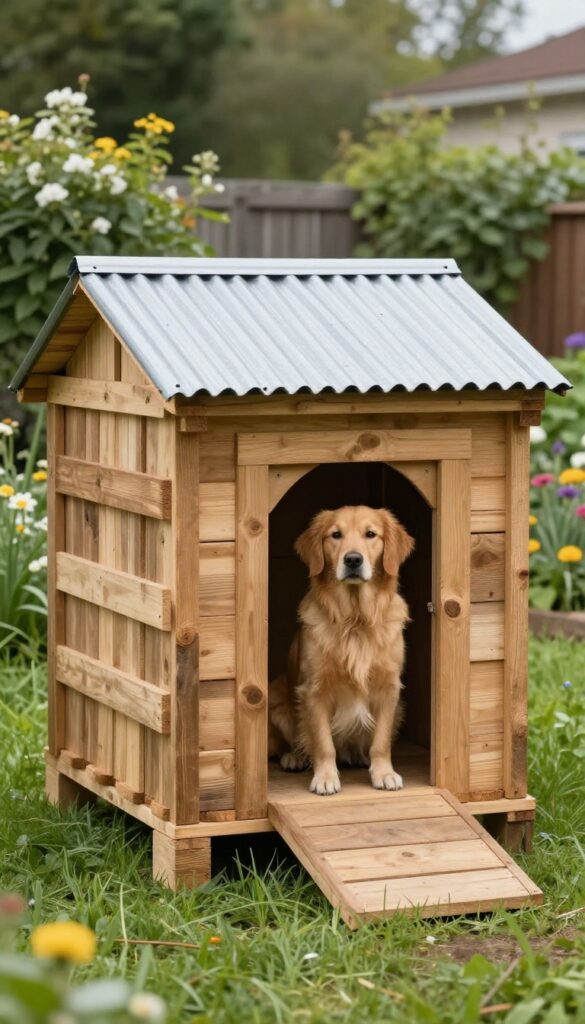
Upcycling pallets into a dog house is a smart way to save money and reduce waste. This rustic design pairs reclaimed wood with a durable metal roof, giving your pup a cozy shelter that stands up to rain and snow. The natural weathered look blends right into backyard gardens or rural settings.
Why It Works
Pallets are free or cheap, and the wood is surprisingly sturdy when you reinforce the corners with 2x4s. Adding corrugated metal roofing sheds water instantly and protects against UV rays, keeping the interior dry and cooler in summer. The elevated floor design also promotes airflow underneath, preventing rot and moisture buildup.
Best For
This plan is ideal for eco-conscious DIYers on a budget who enjoy hands-on projects. It's perfect for medium to large breeds like Labs, German Shepherds, or mixed breeds that need a roomy but affordable outdoor house. Also great for rural properties where a rugged look fits the landscape.
Practical Tip
Sand down any rough edges or splinters on the pallet wood before assembly to protect your dog's paws. Use exterior-grade screws and seal all seams with silicone caulk to keep drafts out. Paint or stain the exterior if you want a more polished finish—opt for non-toxic, pet-safe products only.
Budget-Friendly Option
If you can't find pallets, check local hardware stores for culled lumber—often sold at a discount. For the metal roof, scrap pieces from construction sites or roofing suppliers can be picked up for next to nothing.
4. Elevated Platform House with Sun Deck
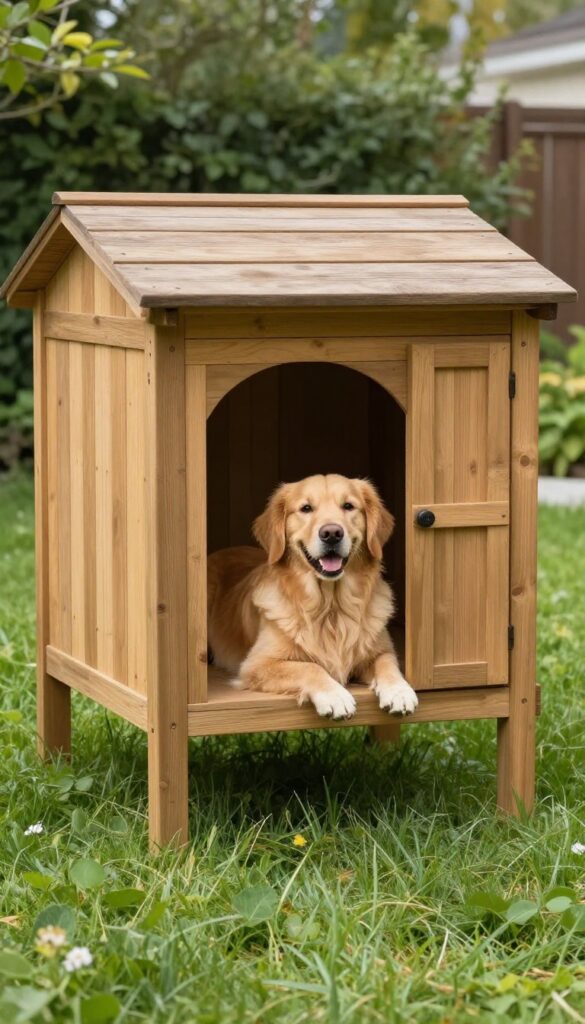
Imagine your dog lounging on a private deck while staying cool underneath. This elevated house lifts the sleeping area off the ground, creating a shady spot for hot days. The attached sun deck gives your pup a perfect perch for surveying the yard, making it a favorite hangout.
Why It Works
Raising the house prevents moisture from seeping in and allows air to circulate freely underneath. In warm climates, this keeps the interior significantly cooler than a ground-level box. The open design also discourages pests and makes cleaning underneath a breeze.
Best For
Best for dogs who love spending time outdoors in warm weather, especially breeds prone to overheating like Huskies or Bulldogs. It's also great for yards with damp soil or poor drainage.
Practical Tip
Use cedar or pressure-treated wood for the platform to resist rot. Add a ramp with traction strips so small or senior dogs can easily reach the deck. Paint the roof with light-reflecting white or pale gray to reduce heat absorption.
Budget-Friendly Option
Skip the sun deck and build just the elevated platform with a simple overhang. You'll save on materials while still getting the airflow benefits.
5. Heavy-Duty Cedar House with Hinged Door
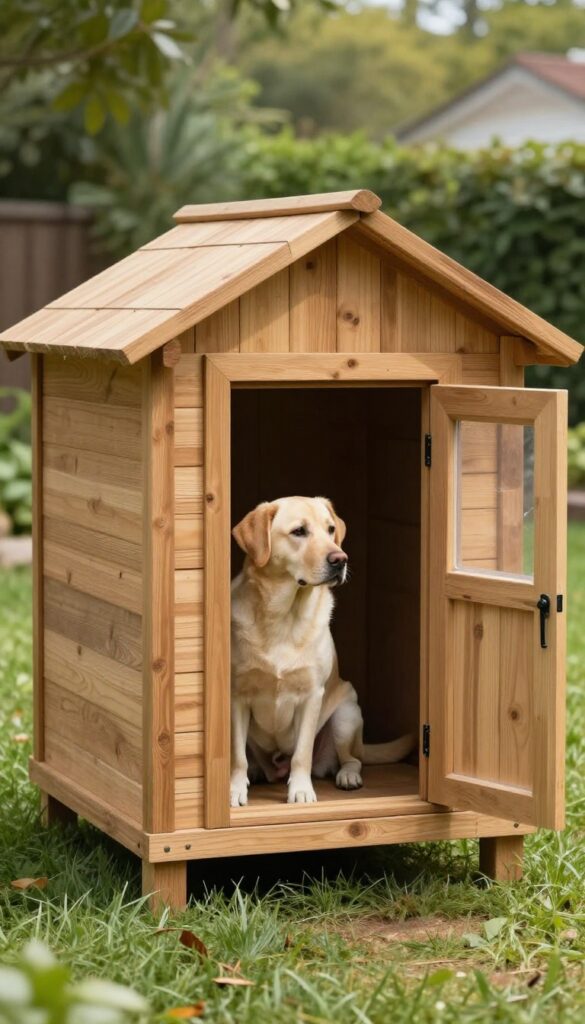
Cedar brings natural charm and serious durability to any outdoor project. This plan leans into cedar's insect-repelling and rot-resistant properties, using thick planks that stand up to weather and wear. The hinged door features a clear plastic flap so your dog can see out while staying protected from wind and rain.
Why It Works
Cedar is a top choice for outdoor builds because it resists moisture, decay, and bugs without chemical treatments. The thick walls provide good insulation, and the hinged door lets you lock it open on mild days for extra airflow. The clear flap keeps the interior bright while blocking drafts.
Best For
This house suits medium to large breeds like Labs, Golden Retrievers, or German Shepherds who spend several hours outside. It works well in humid or rainy climates where rot is a concern, and for owners who want a long-lasting structure that looks natural in the yard.
Practical Tip
Use exterior-grade hinges and a rust-proof latch so the door operates smoothly year-round. For cleaning, remove the door by pulling the hinge pins—this makes it easy to sweep out fur and dirt. Add a cedar ramp if your dog has joint issues or is small.
6. Two-Story Dog House with Ramp
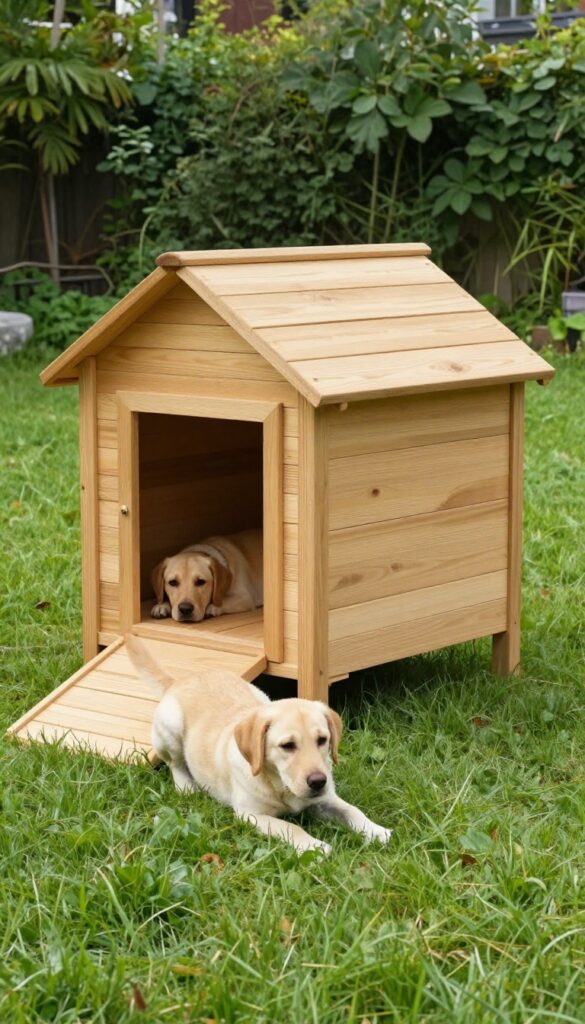
Does your dog love to climb and explore? This two-story dog house gives them a shaded hangout downstairs and a cozy sleeping loft upstairs, connected by a gentle ramp. It's perfect for active pups who appreciate having options, plus the elevated design keeps the sleeping area cooler in summer.
Why It Works
The ramp is easy for dogs of all ages to navigate, and the separated levels encourage natural denning behavior—dogs can retreat to the loft for quiet naps or lounge in the open lower area to keep an eye on the yard. Sturdy construction supports up to 80 lbs, making it suitable for medium to large breeds.
Best For
Best for energetic dogs like Labradors, Australian Shepherds, or Boxers who enjoy vertical space and a clear view of their surroundings. Also great for multi-dog households where one pup wants peace while the other stays on guard.
Practical Tip
Use slip-resistant paint or grip tape on the ramp to prevent slips when wet. Position the house against a fence or under a tree for shade, and add a weatherproof flap at the loft entrance to block wind and rain.
7. Portable Dog House on Wheels
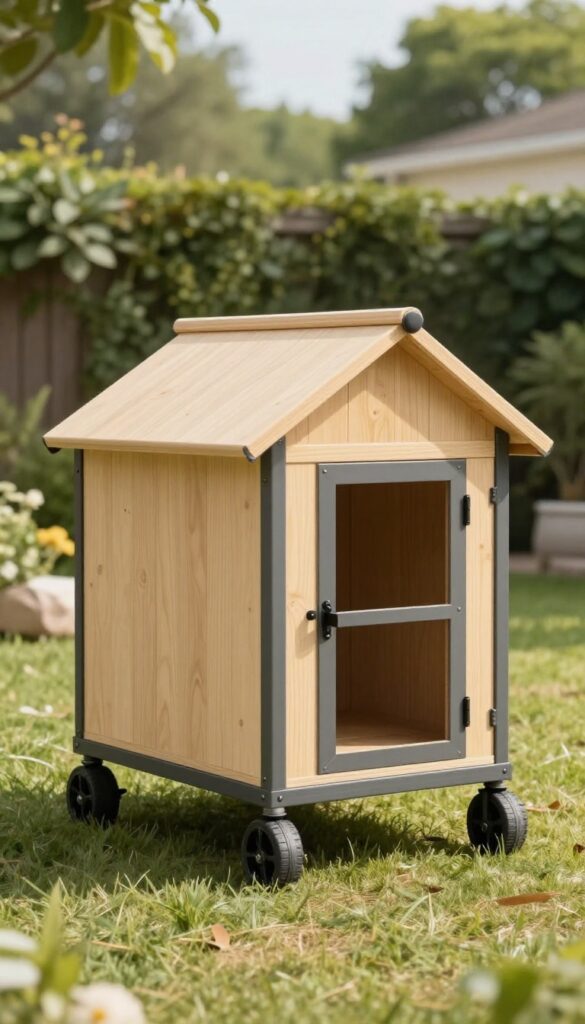
Sometimes your dog wants to follow the sun across the yard, and sometimes they need a quick escape to the shade. A portable dog house on wheels makes it easy to shift their shelter wherever the day takes them. Built on a sturdy wheeled platform with reinforced steel framing and marine-grade plywood walls, this design is both rugged and easy to roll.
It's perfect for renters or anyone who likes to rearrange their outdoor space without committing to a permanent structure.
Why It Works
The wheeled base lets you move the house effortlessly over grass, gravel, or pavement. The steel frame provides stability even in windy conditions, while marine-grade plywood resists moisture and rot. Your dog gets a solid, weatherproof home that can chase the perfect spot all season long.
Best For
This portable house is ideal for dogs who love to sunbathe but also need quick access to shade. It's also great for households that frequently rearrange their yard layout or want a dog house they can take along when moving.
Practical Tip
Attach a handle or rope to the front of the house for easier pulling. Consider adding locking casters so the house stays put once you find the right location. For extra comfort, add a removable cushion that's easy to shake out when it gets dirty.
8. Log Cabin Style Dog House
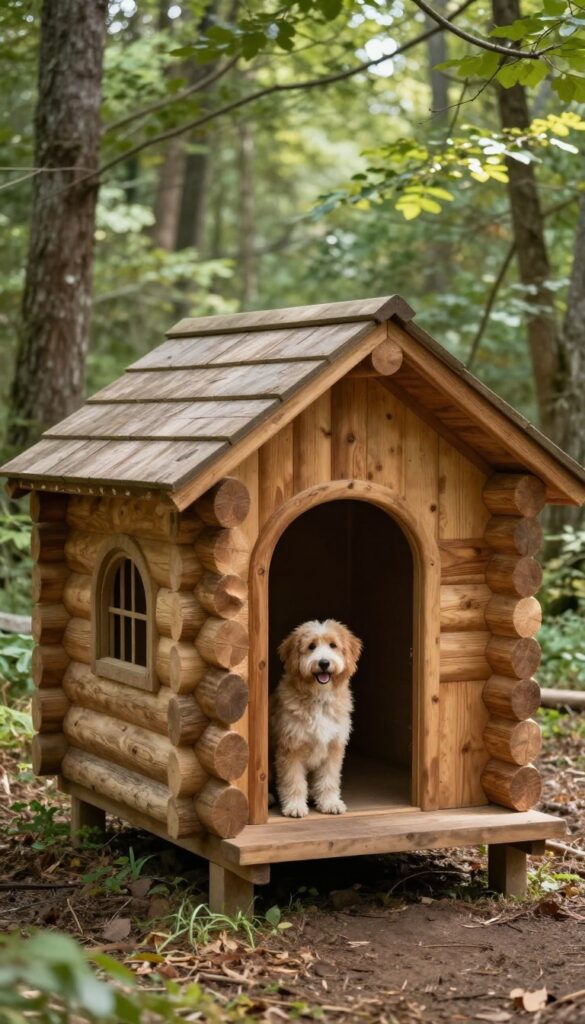
Half-round logs or faux log siding give this dog house a rustic, cabin-like feel that blends beautifully into wooded or country yards. The interlocking corners add structural strength, and the sloped roof prevents water from pooling, keeping the interior dry. It's a charming yet tough option that feels like a tiny home for your pup.
Why It Works
The log construction naturally insulates better than flat panels, helping regulate temperature inside. The interlocking corners resist wind and roughhousing, making it stable even in storms. Plus, the raised floor and sloped roof promote airflow and quick drainage, reducing moisture and odor.
Best For
This style suits medium to large dogs who love spending time outdoors, especially in cooler climates. It's ideal for owners with rustic or woodland-themed yards who want a durable shelter that looks good and lasts.
Practical Tip
Seal the logs with a pet-safe water repellent to protect against rot and insects. Add a weatherproof flap over the entrance to block drafts and rain. For extra comfort, place a washable outdoor bed inside that can be easily removed for cleaning.
9. Minimalist Modern Dog House with Sliding Door
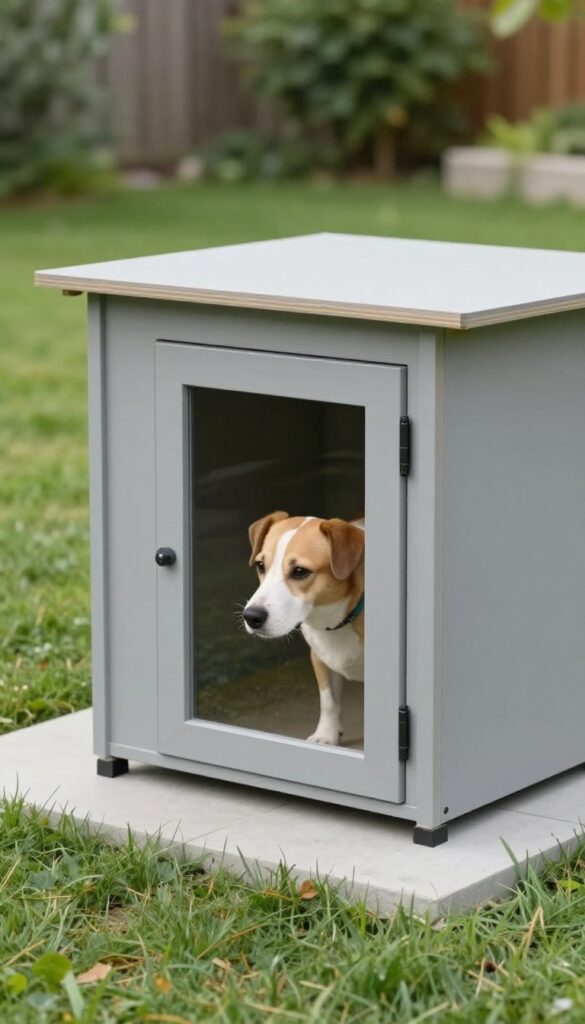
Not every dog house needs to look like a log cabin or a cartoon bone. A clean, flat-roof design with a sliding door gives your yard a contemporary edge while keeping things super functional for your pup. The sliding acrylic door is easy for dogs to push open, and it lets in natural light without leaving them exposed to wind or rain.
This build uses exterior-grade MDO plywood—tough stuff that resists moisture and looks sharp with a coat of non-toxic sealant. The smooth surfaces also make cleaning a breeze, which is a huge win for any dog owner.
Why It Works
The sliding door is the standout feature here—dogs learn to nudge it open in no time, and it stays shut on its own thanks to gravity or a simple track stop. No swinging doors to slam in the wind or get stuck open. The flat roof sheds water if you add a slight pitch, and the elevated base keeps the interior dry and ventilated.
Best For
This dog house suits modern homes with clean architectural lines, especially in yards where you want the structure to blend rather than stick out. It's great for medium to large dogs that are comfortable pushing a lightweight door, and for owners who prefer low-maintenance materials over rustic wood.
Practical Tip
Paint the exterior in a matte charcoal or warm gray to match contemporary decking or fence stains. Use a removable roof panel for easy access when cleaning—just add weatherstripping around the edges to keep rain out. Place it on concrete pavers or a gravel bed to prevent moisture wicking from the ground.
Budget-Friendly Option
If MDO plywood isn't in your budget, use exterior-grade sanded plywood and seal it with two coats of outdoor-rated primer and paint. Skip the acrylic door initially and use a heavy-duty clear vinyl curtain instead—it's cheaper and still lets light through.
10. Extra-Large Dog House for Giant Breeds
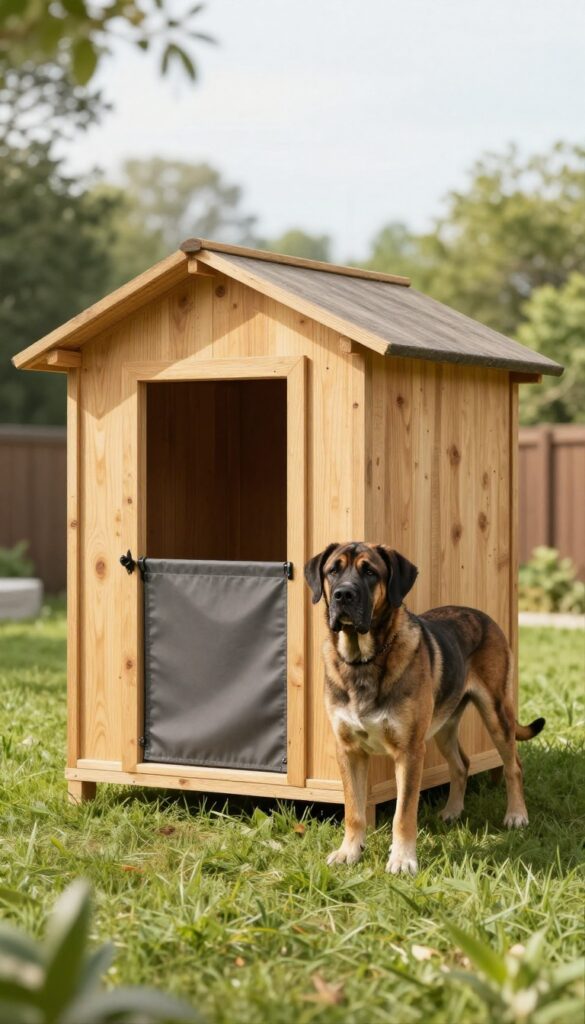
Big dogs need big shelters, and standard store-bought dog houses often fall short. This DIY plan is built from the ground up to accommodate breeds like Great Danes, Mastiffs, or Saint Bernards—dogs that easily top 100 pounds. The structure uses 2×4 framing and 3/4-inch plywood for a rock-solid frame that won't wobble or sag.
Why It Works
The oversized door and spacious interior give your giant breed room to stand, turn around, and stretch out comfortably. Reinforced floor joists prevent any give under heavy weight, and the elevated base keeps the house dry and well-ventilated. This isn't just a shelter; it's a proper retreat for a large dog.
Best For
Ideal for owners of giant breeds who want a custom-sized house that fits their dog perfectly. Also great for multi-dog households where two large dogs might share the space. Works well in spacious backyards or rural properties where a big structure won't feel cramped.
Practical Tip
Add a weatherproof flap over the door to keep out drafts and rain—use heavy-duty vinyl or rubber sheeting cut to size. Place the house on a level spot with good drainage, and consider adding a ramp if your dog has joint issues. Use exterior-grade paint or stain to protect the wood from moisture.
11. DIY Dog House with Built-In Storage
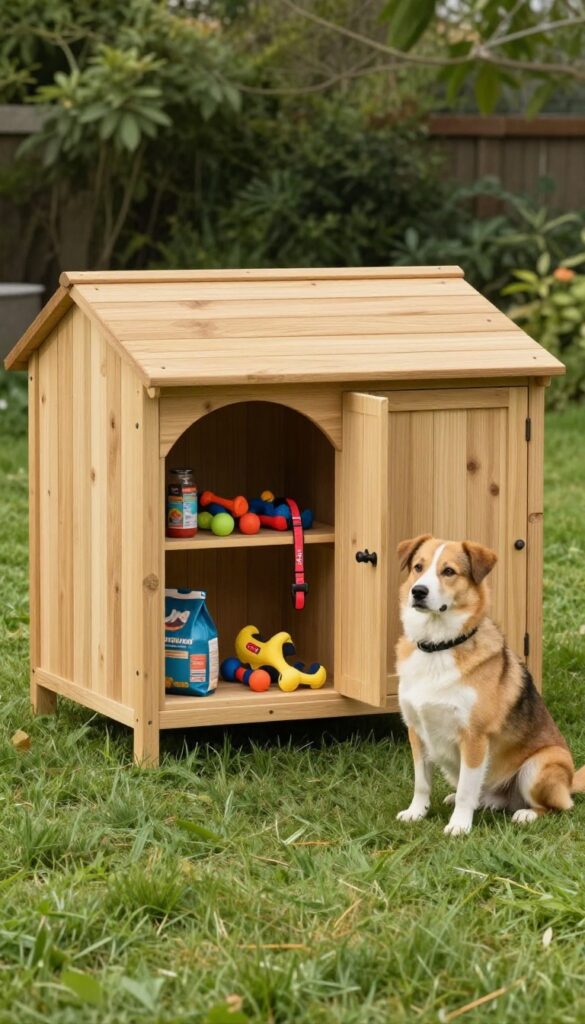
A dog house with a built-in storage compartment keeps your pup's gear organized and within easy reach. This clever design uses the space on one side for toys, leashes, and food bags, while the main house stays cozy and dry. The treated lumber construction and hinged roof make it durable and easy to clean.
Why It Works
The integrated storage solves a common problem: where to keep dog supplies near the house. You'll never have to run inside for a leash or toy again. The hinged roof allows quick access for cleaning out bedding or checking on your dog, and the treated lumber resists rot and weather damage.
Best For
This plan is perfect for owners who want a tidy yard and a functional outdoor setup. It works well for medium to large breeds that need a spacious house, especially in yards where you spend a lot of time playing or training.
Practical Tip
Paint or stain the storage compartment to match your home's exterior for a cohesive look. Add a small hook inside the storage door to hang leashes and collars, making them easy to grab when heading out for a walk.
Budget-Friendly Option
If treated lumber is too pricey, use exterior-grade plywood with a thick coat of waterproof sealant. You can also repurpose an old plastic storage bin as the storage compartment by cutting an opening into the side of the dog house.
FAQ
What type of wood is best for an outdoor dog house?
Cedar and pressure-treated pine are top choices. Cedar naturally resists rot and insects, while pressure-treated pine is budget-friendly and durable. Avoid using treated wood for interior surfaces if your dog chews.
How do I insulate a dog house for winter?
Use rigid foam board insulation between walls and under the floor. Seal gaps with caulk, and add a weatherproof flap over the door. Ensure ventilation to prevent condensation.
What size should a dog house be for my dog?
The house should be about 25% larger than your dog's length and height. Your dog should be able to stand up, turn around, and lie down comfortably. Too much space can make it harder to retain heat.
How do I waterproof a DIY dog house?
Use exterior-grade paint or stain, and apply a waterproof sealant. Elevate the floor off the ground, and ensure the roof overhangs the walls. Caulk all seams and joints.
Can I build a dog house without power tools?
Yes, but it will take more effort. Use hand saws, a hammer, and screws with a manual screwdriver. Pre-cut lumber from a hardware store can simplify the process.
Consider a simple A-frame design.
Conclusion
Building your own dog house is a rewarding project that gives your pup a durable, comfortable outdoor retreat. Each of these plans prioritizes strength and weather resistance, so you can feel good about the shelter you create.
Pick the design that matches your skill level and your dog's needs, then enjoy watching them settle into their new favorite spot. A little effort now means years of happy lounging for your four-legged friend.

I’m Pallab Kishore, the owner of Little Pets Realm — an animal lover and pet care enthusiast sharing easy tips, healthy recipes, and honest advice to help every small pet live a happy, healthy, tail-wagging life.