
A Christmas dog photoshoot doesn't need a rented studio or a professional camera to turn out well. Most of the magic comes from good light, a couple of simple props, and a dog who's happy enough to stick around for a few frames.
That's the angle here: ideas you can pull off with what you already own, plus a few cheap add-ons if you want to step it up. Some take ten minutes, and some are worth a whole afternoon.
Pick two or three that fit your dog's energy and your patience level. The rest can wait until next December.
1. The Classic Tree-and-Treat Setup
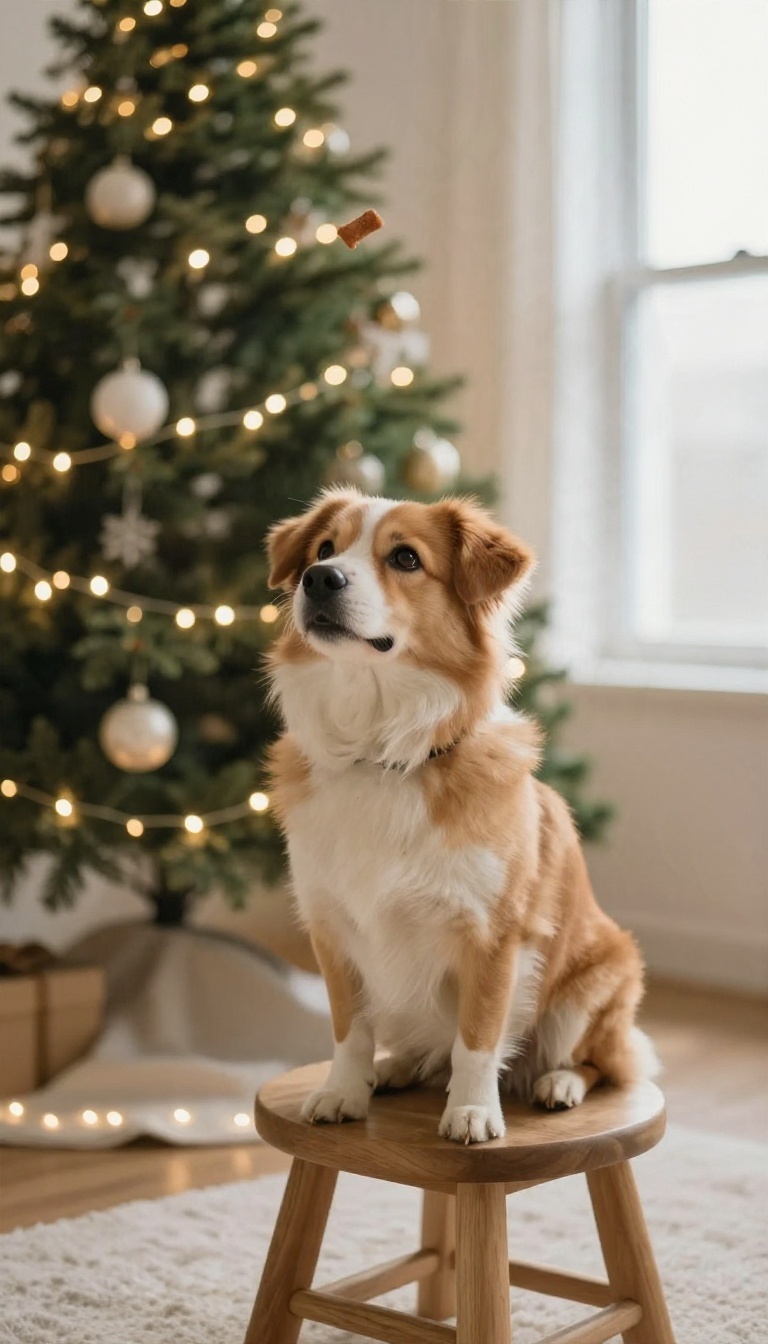
The tree is already standing there doing nothing, so put it to work. This setup leans on the most festive backdrop in your house and one very small bribe held just above your phone. It works because the tree gives you depth and color for free, and the treat does the hard part of getting your dog to look alert with ears up.
No fancy gear, no wrangling a reindeer antler onto a wiggly head. Keep it quick. The whole window for a great shot here is usually under a minute before your dog decides the tree skirt is more interesting than you.
Start by scouting your tree from your dog's eye level, not yours. Crouch down and see what's actually behind them: a bare patch of wall, a tangle of lights, or a nice full stretch of branches. You want the second one.
Position your dog a couple of feet in front of the tree so the branches blur slightly behind them. That little bit of softness makes your dog pop instead of getting lost in the ornaments. Light matters more than anything else here.
Turn off the overhead lamp and let the tree lights and a nearby window do the work. If it's dark outside, angle a floor lamp toward your dog from the side and you'll get a warm glow without harsh shadows.
Placement That Actually Works
Sit your dog at a slight angle to the camera rather than dead-on. A three-quarter turn slims the body and looks more natural than a stiff, straight-on stare. Keep the tree behind and slightly to one side.
That way you get festive context without branches poking out of your dog's head like antlers. If your dog is small, put them on a low stool or a firm cushion so the tree fills the frame behind them. For big dogs, get lower with your camera and shoot slightly upward.
Clear a small zone around your dog before you start. Move gifts, cords, and that one ornament they've been eyeing out of the shot so you're not editing around clutter later.
The Treat Above The Lens Trick
Hold a small, smelly treat right above your phone or camera lens, just out of frame. Your dog's eyes will lock on and their ears will perk forward, which is exactly the look you want. Use something soft and quick to eat so they don't hold it in their mouth and drool through the shot.
Tiny bits of cheese or freeze-dried liver work well. Take the photo the second their ears go up. Don't wait for a better moment, because there usually isn't one.
Reward after every few frames even if you didn't get the shot. Your dog is working for you, and a steady stream of tiny treats keeps them in the game longer.
Avoiding The Cord-and-tangle Mess
Tree lights mean cords, and cords mean a dog who suddenly wants to chew or trip. Tape down any loose wire along the floor before your dog walks in. Keep your dog at least a foot from the outlet strip.
One curious nose near a plug is all it takes to end the shoot early. If your dog is a chewer, unplug the lights for the actual photos and rely on window light instead. You'll still get the glow from the bulbs, just without the risk.
Tuck the tree skirt edges under so nobody drags it across the floor mid-shot.
Keeping It Short
Set a timer in your head: five minutes, max. Dogs lose interest fast, and a bored dog looks bored in every frame. Do a quick test shot with no treat first to check your framing and light.
Then bring out the treats and go for the real ones. If your dog walks off, let them. Call them back in a minute with a fresh treat and try again.
Forcing it never works. Stop while it's still fun. Ending on a good shot and a happy dog means they'll be willing to do it again next year.
2. Wrapped Gift Pile Portrait
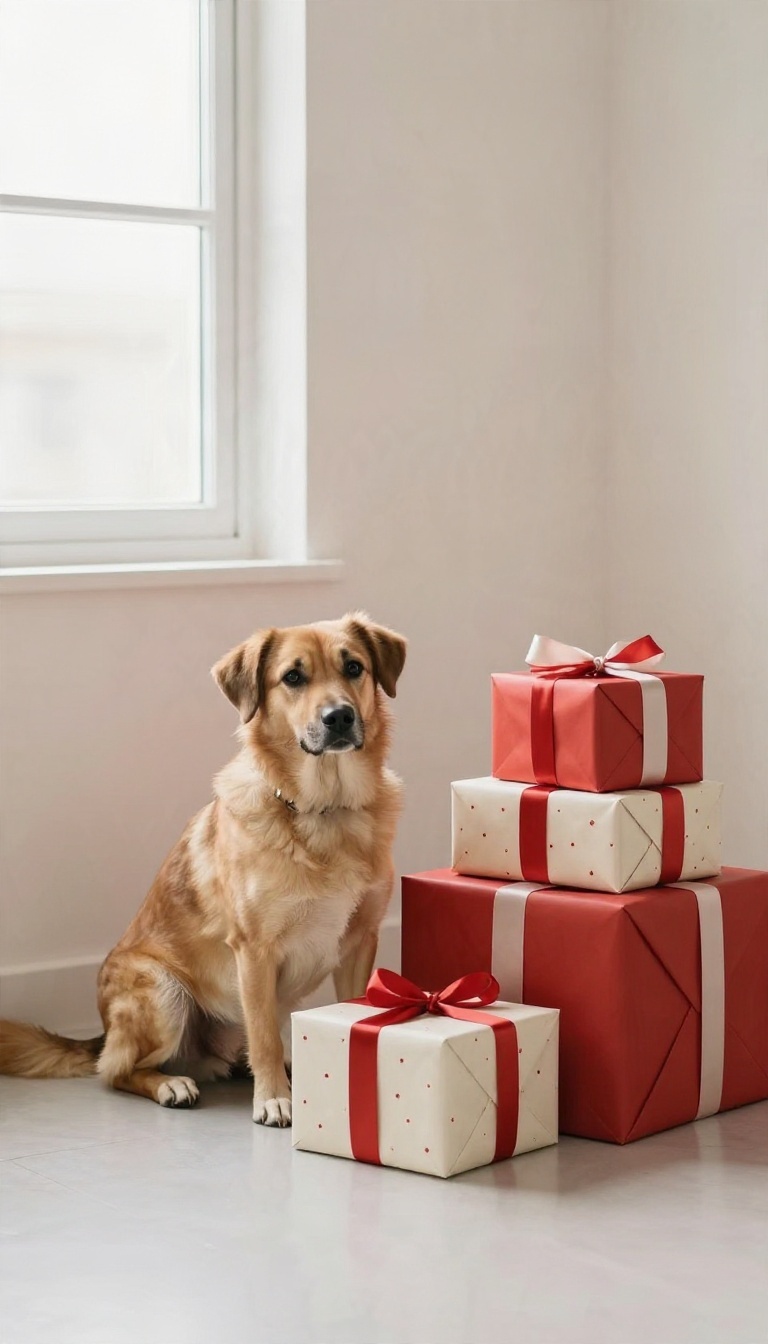
A small stack of wrapped boxes gives your dog something to sit beside, lean against, or sniff, and it instantly reads as Christmas without a single ornament in frame. The setup is about as simple as it gets: a plain wall, a few gifts, and a dog who's willing to hold still for a minute. What makes this one work is restraint.
You want the presents to frame your dog, not compete with them. Get the balance right and you've got a clean, warm portrait that looks like you planned it for weeks.
Start by picking a wall with soft, even light. A blank wall near a window works well, and a solid color keeps the focus on your dog instead of the background. Avoid busy wallpaper or a cluttered corner, since the gifts already add visual noise.
Stack two or three boxes at different heights so the arrangement has some shape to it. A taller box behind and a shorter one in front gives your dog a natural spot to settle. Keep the whole pile low enough that your dog can sit or lie beside it without the boxes looming over them.
Wrap Smart, Not Fancy
Matte paper and simple patterns photograph better than glossy foil, which throws glare and picks up every reflection. Stick to two or three coordinating colors so the pile looks intentional rather than random. Skip anything your dog might chew or swallow.
Ribbons, tinsel, and small bows are the usual culprits, so keep them off the boxes or well out of reach. If your dog is a determined chewer, plain wrapped boxes with no trim at all are the safer call.
Keep Ribbons Out Of Reach
Even a well-behaved dog gets curious when something new appears at nose level. Set the gifts up right before you shoot, and don't leave your dog alone with them. If you want ribbon in the shot, tie it high on a box your dog can't easily grab, and keep a hand nearby.
A loose curl of ribbon on the floor looks festive but invites a tug-of-war. Better to add that detail in editing or skip it entirely.
Frame The Dog, Not The Gifts
Put your dog slightly in front of the pile so they're the closest thing to the camera. Shoot at their eye level, which usually means crouching or sitting on the floor. That angle makes your dog the subject and turns the gifts into a backdrop.
Leave a little breathing room above your dog's head, and avoid centering the tallest box right behind them, since it can look like it's growing out of their ears. A slight offset keeps the composition relaxed and natural.
3. Santa Hat Test Run
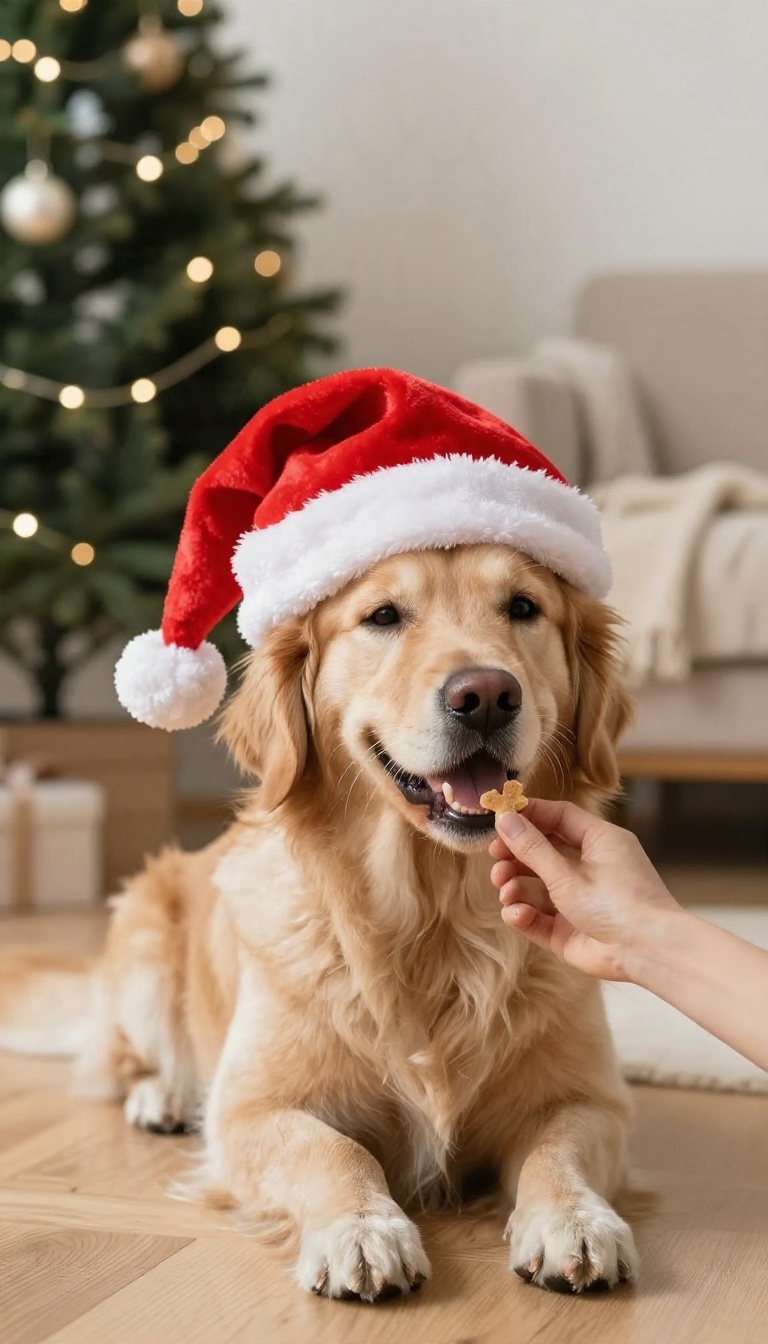
A Santa hat is the cheapest Christmas prop you'll ever buy, and also the one most likely to end up on the floor. Some dogs wear it like they were born in it. Others act like you've placed a small curse on their head.
The trick is finding out which dog you have before the actual photoshoot, not five frames in. A quick test run takes a few minutes and saves you a lot of blurry, hat-flinging chaos. Here's how to introduce the hat, read your dog's reaction, and grab the shot while it lasts.
Introduce It Slowly
Don't walk up and drop the hat on your dog's head. Let them sniff it first, then set it on the floor near their bed for a few minutes so it stops being a strange object. Next, touch it to their head for a second and pull it right back off.
Pair that with a treat. Repeat a couple of times and watch their body language. If they lean away, freeze, or start licking their lips, they're telling you they're not into it.
Slow down or try again later. If they stay loose and take the treat happily, you're in good shape.
Know When To Ditch It
Some dogs will never tolerate a hat, and that's fine. Forcing it just gives you a stressed dog and a photo that looks exactly like what it was: a stressed dog. Watch for stiff posture, ears pinned back, or a sudden refusal to look at you.
Those are your cues to stop. If the hat is a no-go, swap it for a festive bandana or a collar with a little bow. You still get the holiday look without the battle.
A happy dog in a bandana beats a miserable dog in a Santa hat every time.
Get The Shot Fast
Once your dog accepts the hat, you've got a short window before they decide they're done. Have your camera ready and your settings locked in before the hat goes on. Put the hat on, toss a treat just behind the camera, and shoot the moment they look up.
Two or three frames is usually all you get, so make them count. Shoot in bursts if your phone or camera allows it. You'll catch the split second where the hat sits right and your dog looks alert instead of annoyed.
Make The Hat Fit Better
A hat that's too loose slides over their eyes, and one that's too tight gets pawed off in seconds. Check the fit before you shoot. For small dogs, a kid-size hat works better than an adult one.
For bigger dogs, look for hats with an adjustable strap or a slightly stretchy band. You can also fold the brim back a little so it sits higher on the head and stays out of their eyes. Small tweaks like that buy you a few extra seconds of hat time.
4. Snow Day Action Shots
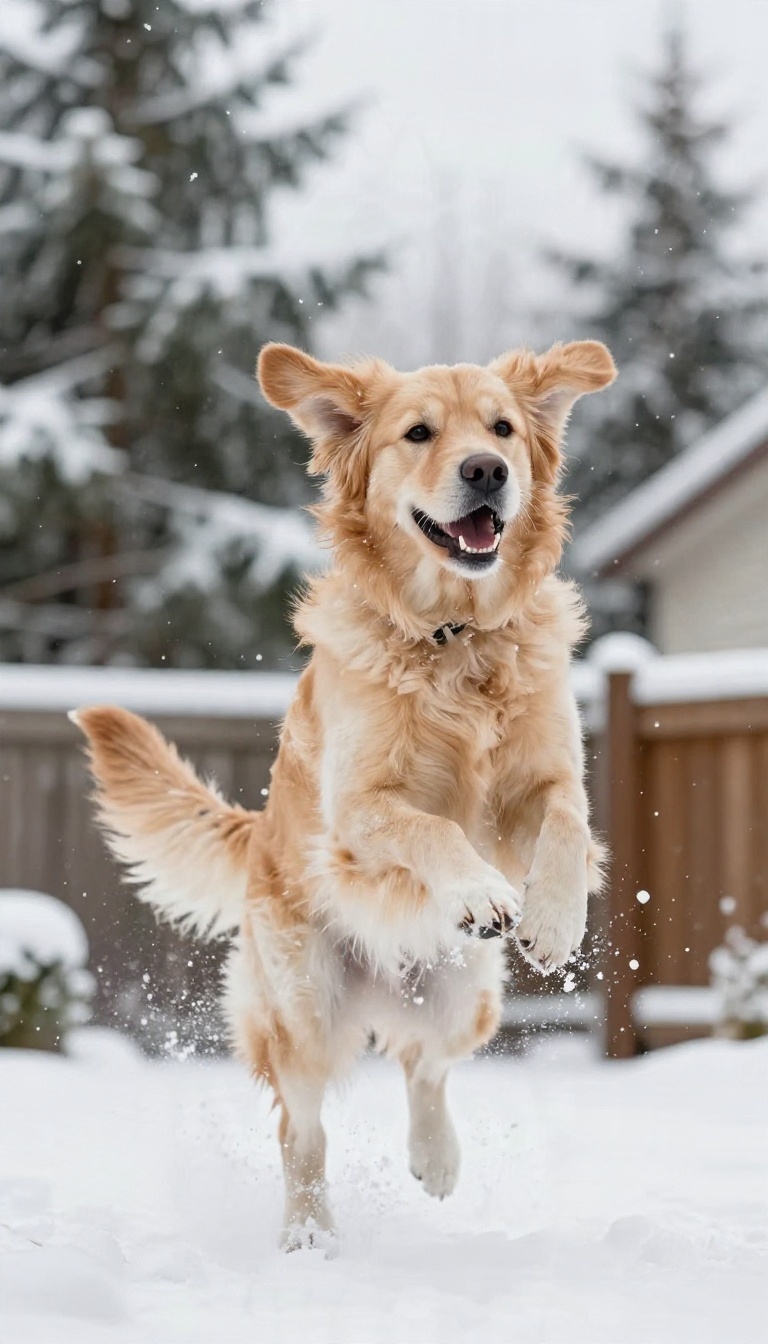
Fresh snow turns an ordinary backyard into a bright, bouncy backdrop, and a dog let loose in it is pure comedy. The zoomies that follow a first snowfall are hard to fake and even harder to pose, which is exactly why they make great photos. You're not chasing a perfect sit here, just catching the energy while it lasts.
The trick is to plan for chaos instead of fighting it. Set your camera up before you open the door, because once your dog hits the snow, you've got about ninety seconds of prime action. Shoot in short bursts and expect a lot of throwaway frames.
A handful of keepers is a win.
Freeze The Zoom
Fast shutter speed is your best friend. Aim for 1/1000 or faster if your camera allows it, and don't be afraid to bump the ISO to get there, since snow scenes handle a little grain just fine. Bright overcast days are ideal because the light is even and your dog won't squint.
If your phone is all you've got, use burst mode and hold still while your dog does the moving.
Keep The Gear Warm
Cold batteries drain fast, so tuck a spare in an inside pocket. Going from warm house to cold air and back can fog your lens, so let the camera adjust in its bag for a few minutes before you shoot. A ziplock bag over the camera helps when you come back inside.
Dry Off Before The Door
Keep a towel by the door and catch your dog before they track slush through the house. Wipe paws, belly, and any snow clumped in the fur, and check between the toes for ice balls. A quick rub-down also keeps them from getting chilled after all that running.
5. Cozy Blanket and Firelight Scene
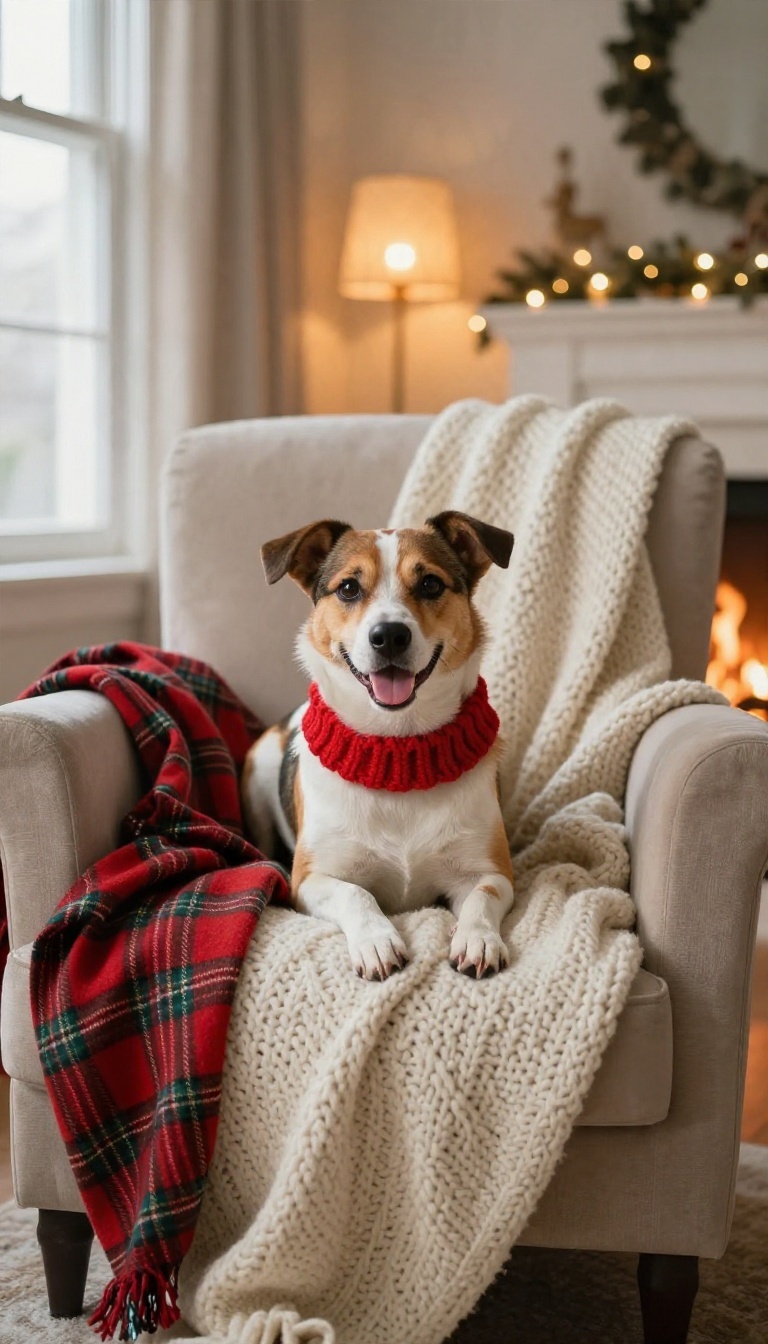
Cold weather gives you one big advantage: everyone, dog included, wants to be warm. A plaid blanket and a soft glow turn a corner of your living room into a scene that looks like it took way more planning than it did. No studio, no backdrop, no fuss.
The setup is simple. Pick a spot near a window or a fireplace, spread a plaid or chunky knit blanket on the floor or over a chair, and let your dog claim it. The blanket does double duty as a prop and a comfort object, which helps a lot when you want your dog to actually stay put.
You don't need real flames to get the look. A warm-toned lamp placed off to the side gives you that soft amber glow without the safety worry or the flicker that messes with your camera settings. If you do have a fireplace, keep your dog at a safe distance and let the fire stay in the background, not right next to the blanket.
Set The Scene Without The Risk
Real flames look great in photos but they're a hazard with a curious dog nearby. Keep at least a few feet between your dog and any open fire, and never let a dog settle on a blanket directly in front of a hearth. A floor lamp with a warm bulb is the safer swap.
Point it toward the blanket from the side so the light wraps around your dog instead of hitting them straight on. Add a string of battery-powered fairy lights if you want a little extra sparkle in the background.
Get Your Dog To Settle
Tired dogs hold still. A long walk or a solid play session before you start makes the whole shoot easier, because a worn-out dog is happy to lie down. Lay the blanket somewhere your dog already likes to nap, then give them a chew or a favorite toy to focus on.
Shoot the calm, sleepy shots first, and let them drift off if they want. A sleeping dog on a plaid blanket is honestly one of the sweetest frames you'll get all season.
Light For Softness
Window light is your best friend here. Put your dog near a window but out of direct sun, and turn off any harsh overhead lights that flatten the scene. Shoot from a low angle so you're closer to your dog's eye level, and let the blanket fill the bottom of the frame.
If the room feels dark, bump your phone's exposure up slightly rather than adding more lamps. Soft and a little moody beats bright and flat every time.
6. Matching Family Pajamas (Dogs Included)
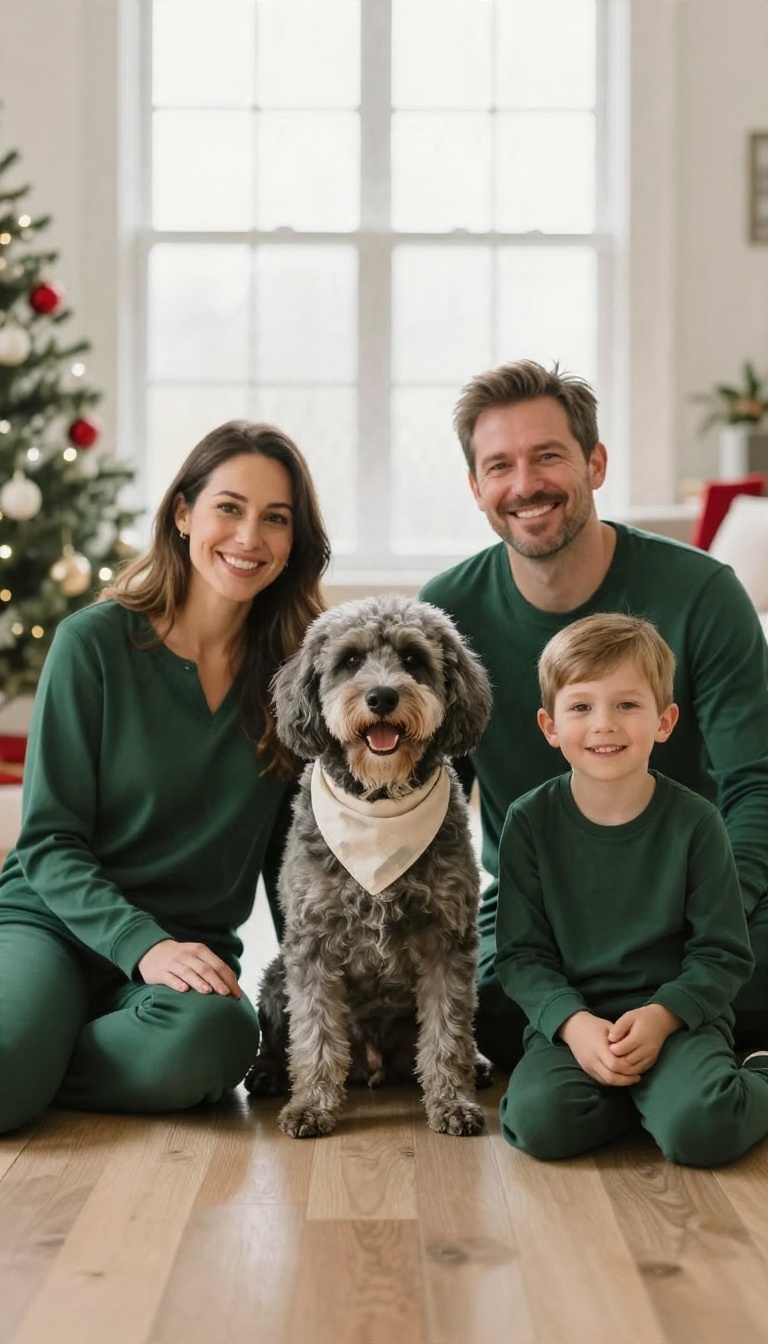
Getting everyone in the same pajamas is a holiday photo tradition for a reason. It looks warm, a little goofy, and instantly says Christmas without any elaborate setup. The trick is making your dog part of the group without forcing a full outfit on them.
A simple bandana or a small pajama piece in the same palette does the job, and your dog stays comfortable enough to sit still for the shot.
The best version of this idea keeps things simple. You want a coordinated look, not a costume contest, and you want your dog to feel like part of the family rather than a prop. Pick a color scheme, gather everyone in one spot, and let the matching do the heavy lifting.
Pick Colors That Hold Up On Camera
Solid, medium-tone colors photograph best in a group. Deep reds, forest greens, navy, and cream all read cleanly and keep everyone looking like they belong in the same frame. Loud plaids and busy novelty prints can turn into visual noise when five people and a dog are packed together.
Avoid all-white if you're shooting near a bright window, since it tends to blow out and lose detail. If your dog is dark, a lighter bandana pops against their coat; if they're light, go with a deeper shade so they don't blend into the background.
Dress The Dog Without The Drama
Most dogs tolerate a bandana far better than a full pajama set, and it still ties them into the theme. Slip it on a few minutes before the shoot so they get used to it, and keep the knot loose and off their throat. If your dog genuinely likes wearing clothes, a small pajama top in the same fabric as the family works great.
Skip anything with dangling pieces, buttons, or a hood that flops over their eyes. Comfortable dog equals a dog who stays in the shot.
Set Up The Group Pose
Arrange people in a loose cluster rather than a stiff line, and put your dog where they're easiest to manage. Having someone kneel beside them keeps them anchored, and it looks natural in the photo. Stagger heights so faces aren't hidden.
Taller folks in back, kids and the dog up front. Leave a little breathing room between bodies so the frame doesn't feel cramped, and keep the dog slightly toward the center so they don't get cropped out.
Use A Timer Or A Helper
A tripod and a ten-second timer cover most group shots, but a helper makes life easier. Hand your phone to someone who can call your dog's name and make a little noise right as the shutter clicks. Take a burst of frames instead of one.
Dogs blink, kids wiggle, and someone always looks away on the first try. Ten shots usually gets you one where everyone, dog included, is looking somewhere near the lens.
7. Christmas Lights Bokeh Background
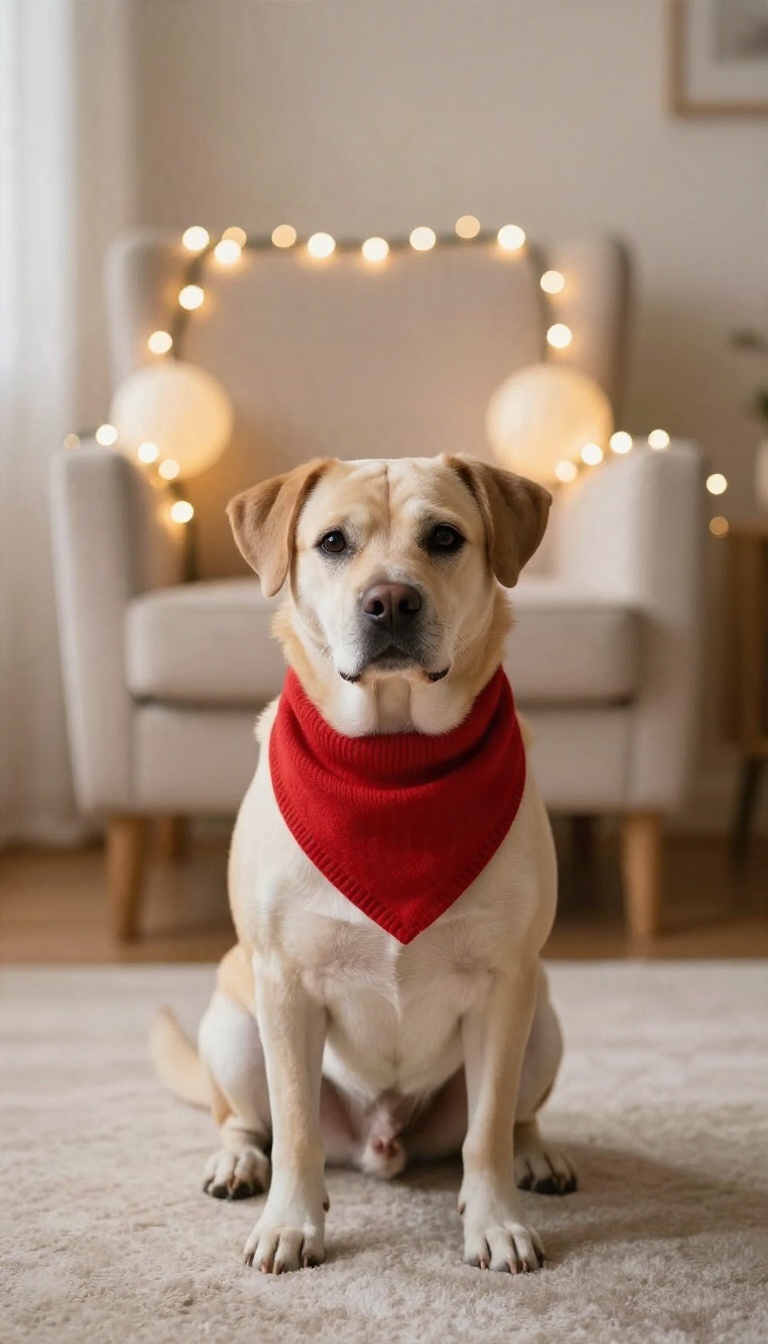
Those soft glowing circles behind a subject usually come from an expensive lens pointed at a city skyline at night. You can fake the whole look in your living room with a strand of holiday lights and a dog who's willing to sit still for thirty seconds. The trick is distance.
Get it right and the bulbs blur into creamy orbs instead of showing up as sharp, distracting dots. Get it wrong and you've just photographed a dog in front of a string of lights. It also costs nothing if you already own a strand, and it works after the sun goes down, which is when most December evenings leave you anyway.
The setup is simple: your dog in front, the lights well behind, and enough space between them that the camera can't keep both in focus. You focus on the dog, and the lights melt into that soft bokeh glow. ### Space Out the Lights Put at least six to ten feet between your dog and the strand. The farther back the lights sit, the bigger and softer those circles get.
If your room is small, push the lights into a doorway or hallway behind your dog and shoot toward them. A little distance goes a long way. ### Keep It Safe Holiday lights and curious mouths don't mix. Keep the strand unplugged while you set up, or better yet, plug it in only once your dog is in position and you're behind the camera.
Tape the cord down or run it along a wall out of reach. If your dog is a chewer, use battery-powered lights and set them on a shelf or drape them over a chair back where they can't be grabbed. ### Shoot After Dark This look works best once the room is dark and the lights are the main source of glow. Turn off the overheads and close the blinds so the bulbs do all the work.
Your dog will be lit mostly by the strand behind them, which can leave the face a little dark. A soft lamp off to the side or a phone flashlight bounced off the ceiling fills in just enough without killing the mood. ### Get the Focus Right Tap on your dog's face on your phone screen to lock focus, then take the shot. If your camera keeps hunting, switch to portrait mode, which blurs the background for you.
Crouch down to your dog's eye level and fill the frame with their face and shoulders. The bokeh reads best when there's plenty of it around them. Take a few frames with the lights slightly off to one side, then a few with them centered.
One of them will click.
Space Out The Lights
Put at least six to ten feet between your dog and the strand. The farther back the lights sit, the bigger and softer those circles get. If your room is small, push the lights into a doorway or hallway behind your dog and shoot toward them.
A little distance goes a long way.
Keep It Safe
Holiday lights and curious mouths don't mix. Keep the strand unplugged while you set up, or better yet, plug it in only once your dog is in position and you're behind the camera. Tape the cord down or run it along a wall out of reach.
If your dog is a chewer, use battery-powered lights and set them on a shelf or drape them over a chair back where they can't be grabbed.
Shoot After Dark
This look works best once the room is dark and the lights are the main source of glow. Turn off the overheads and close the blinds so the bulbs do all the work. Your dog will be lit mostly by the strand behind them, which can leave the face a little dark.
A soft lamp off to the side or a phone flashlight bounced off the ceiling fills in just enough without killing the mood.
Get The Focus Right
Tap on your dog's face on your phone screen to lock focus, then take the shot. If your camera keeps hunting, switch to portrait mode, which blurs the background for you. Crouch down to your dog's eye level and fill the frame with their face and shoulders.
The bokeh reads best when there's plenty of it around them. Take a few frames with the lights slightly off to one side, then a few with them centered. One of them will click.
8. Letterboard or Chalkboard Name Sign
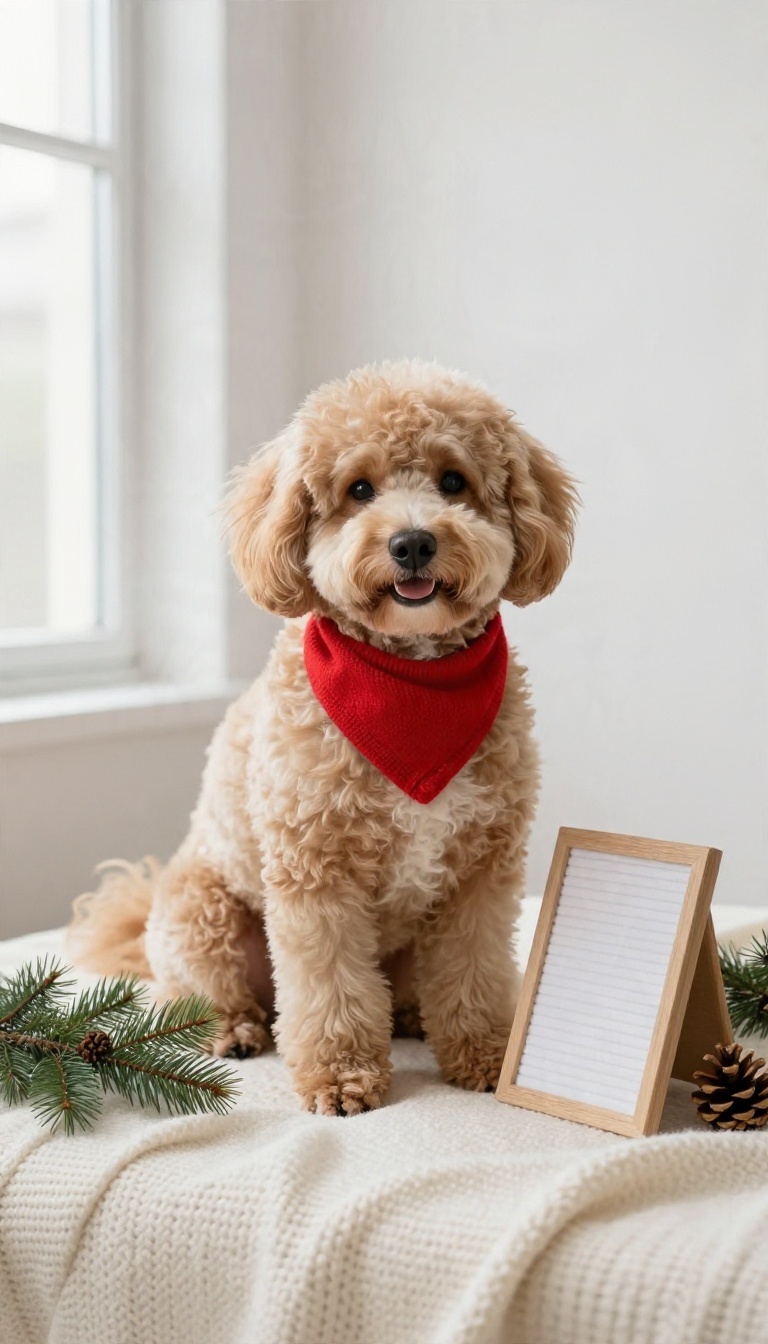
A tiny sign with your dog's name on it does a lot of quiet work in a photo. It gives the eye somewhere to land, adds a personal touch, and makes even a plain wall or blanket backdrop feel intentional. The good news is you probably already own something that works, or can grab one for a few dollars.
The tricky part is getting it into the frame without turning the shoot into a wrestling match.
Keep the message short, the sign stable, and the dog comfortable, and this one takes about five minutes to set up.
Pick A Sign That Fits Your Setup
A small felt letterboard, a mini chalkboard, or even a wooden plaque with painted letters all work here. Size matters more than style: something roughly the size of your dog's head reads well without crowding the shot. If you're shooting on a phone, go a little bigger than you think you need.
Tiny lettering turns into a blur once the photo gets compressed for social media. Bold, chunky letters hold up much better than thin script. Chalkboards give you a handmade look and let you fix mistakes with a damp cloth.
Letterboards are cleaner and faster if you already have one, and the little plastic letters stay put once they're pressed in.
Write Something People Can Read At A Glance
Your dog's name is the safest choice, and it never gets old. If you want a holiday line instead, keep it to three or four words: "Merry Christmas, " "Santa Paws, " "Naughty List. " Anything longer gets squinty on a phone screen.
Skip the inside jokes and long captions. A photo should land in a second, and a sign that needs deciphering pulls attention away from your dog's face. One nice trick: match the sign's message to the dog's expression.
A droopy-eared, sleepy shot pairs perfectly with "Naughty List. " A bright, alert pose suits "Good Boy" or "Nice. "
Prop It Safely And Keep It In Frame
Never balance the sign against your dog or lean it where it could topple onto them. Set it on the floor beside a paw, rest it against a wall behind them, or have a helper hold it just outside the frame with an arm reaching in. If your dog is a chewer, keep the sign out of reach until the second you're ready to shoot.
Chalk dust and small plastic letters are not a great snack. For framing, place the sign low and slightly off-center so it doesn't block your dog's chest or face. Get down to your dog's eye level, check that the whole sign is visible in your screen, then shoot a few frames before your dog loses interest.
9. Stocking Unboxing Moment

A stocking on the floor with a dog's nose buried inside it tells a whole story in one frame. You get curiosity, then a reveal, then whatever face your dog makes when the toy finally comes out. It's candid, it's seasonal, and it takes about as long as it takes your dog to shred a piece of tissue paper.
The trick is staging the setup so the camera is ready before the good stuff happens. You don't want to be fumbling with settings while your dog is mid-pull on a squeaky Santa. Get everything in place first, then let the chaos run.
Start with a stocking that's actually reachable. Hang it low, lay it on the floor, or prop it against a chair leg so your dog can investigate without you holding it up. A stocking stuffed with a couple of new toys and some crinkle paper gives your dog something to dig for, which is where the candid shots live.
Keep the scene simple. A plain wall, a tree in soft focus behind it, or a bit of garland on the floor is plenty. Too many props and the eye doesn't know where to land.
The stocking and the dog are the story.
Set The Stage Before The Dog Arrives
Place the stocking, check your light, and take a test shot of the empty scene. Set your camera to burst mode now, not later. If you're on a phone, hold the shutter or use the burst gesture so you're not tapping one frame at a time.
Put a treat just inside the stocking opening to kick things off. Your dog will go in nose-first, and that first curious sniff is often the best frame of the whole set.
Shoot The Reveal In Bursts
Once your dog starts pulling, keep shooting. The in-between frames are the ones that look like a story: ears forward, paw on the fabric, toy halfway out. Don't stop to check the screen mid-action.
You can sort through fifty shots later, but you can't get back a moment you missed. Get low, roughly at your dog's eye level, so the stocking and the face sit in the same frame. A slightly wider shot beats a tight crop here because it shows the whole little scene.
Have The Payoff Treat Ready
The toy coming out is the climax, but the treat after keeps your dog engaged for one more round. Keep a handful in your pocket or a bowl just out of frame. When your dog looks up after the reveal, that's your money shot.
If your dog loses interest fast, reset with a fresh toy and try again. Two or three short rounds beat one long session every time.
10. Outdoor Evergreen and Red Accent Walk
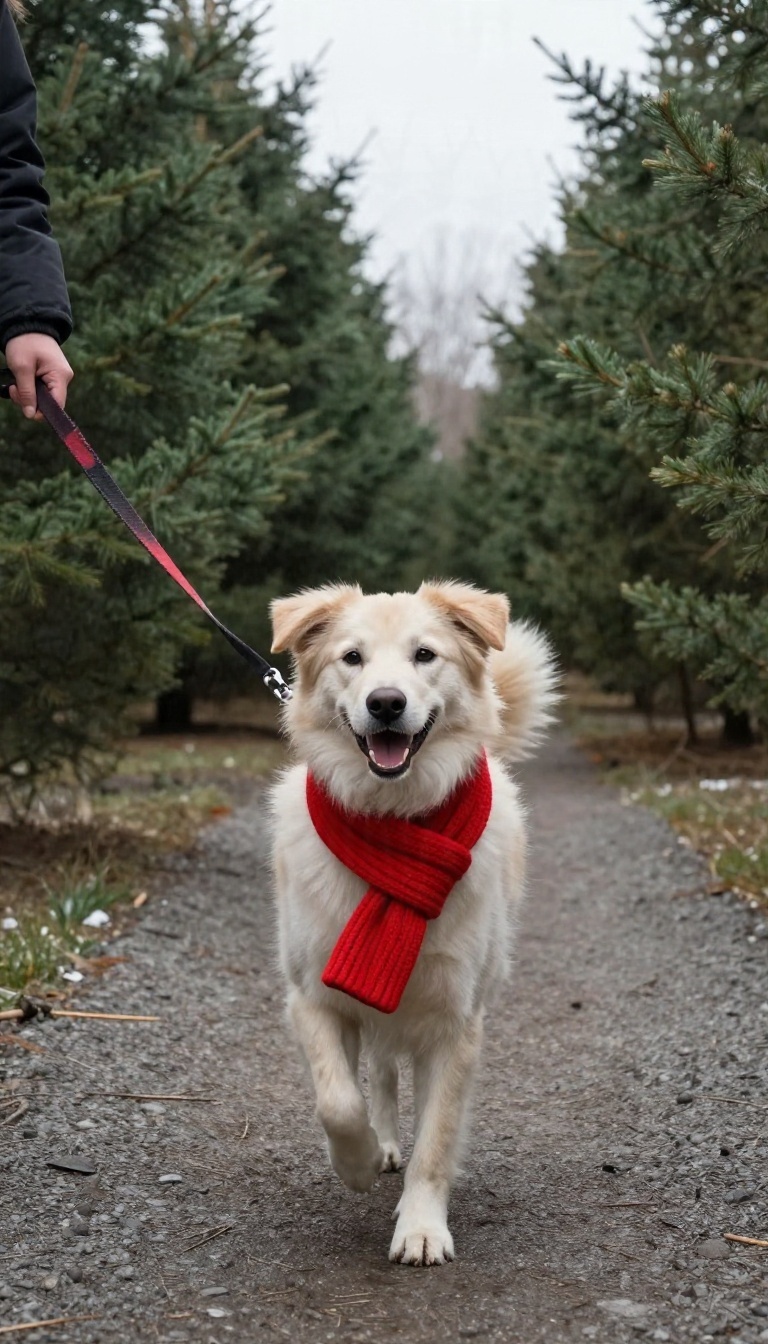
Pine trees and a pop of red do most of the holiday styling for you, and you don't have to buy a thing. Take the dog for a normal walk somewhere with evergreens, toss on one red scarf or bow, and start shooting. It's the least fussy idea on this list, and often the one that looks most like a real Christmas card.
The whole setup leans on contrast. Deep green needles, a gray sky, and a single red accent give you that classic holiday palette without a single string of lights. Your dog just has to be a dog in the middle of it.
Keep the prop count at one. A red scarf, a bow clipped to the collar, or even a red leash reads clearly in photos and won't distract your dog.
Working With Overcast Light
Cloudy December days are secretly great for portraits. The sky acts like one giant softbox, so you get even light with no harsh shadows across your dog's face. Look for a spot where the trees open up a little, like the edge of a trail or a clearing.
That gives you enough brightness to keep the shot from going flat and gray. If the light feels dull, angle yourself so the brightest part of the sky sits behind you, not behind the dog. And skip the flash, since it tends to bounce off wet noses and eyes in weird ways.
Getting Walking Shots, Not Just Poses
Posed shots with a dog in the woods usually last about four seconds. Walking shots last as long as the walk does, and they tend to look more natural anyway. Have someone walk the dog toward you on a leash while you shoot from a few steps ahead.
Fire off a burst and you'll catch ears flopping, paws mid-step, and that happy forward lean. Mix in a few frames from behind, with the dog trotting away down the trail between the pines. Those make great wide shots for the back of a card or a social post.
Small Details That Sell It
Tuck the red accent where it shows up in profile, like a scarf end or a bow on the side of the collar. Straight-on it can disappear against the dog's chest. Brush off any snow or mud before you shoot, and keep a towel in the car for after.
A clean dog against green branches looks intentional; a muddy one looks like a walk that got interrupted. Grab one close-up of the red fabric against fur, then call it done. You'll have plenty of frames to choose from.
11. Baking Day Kitchen Candids
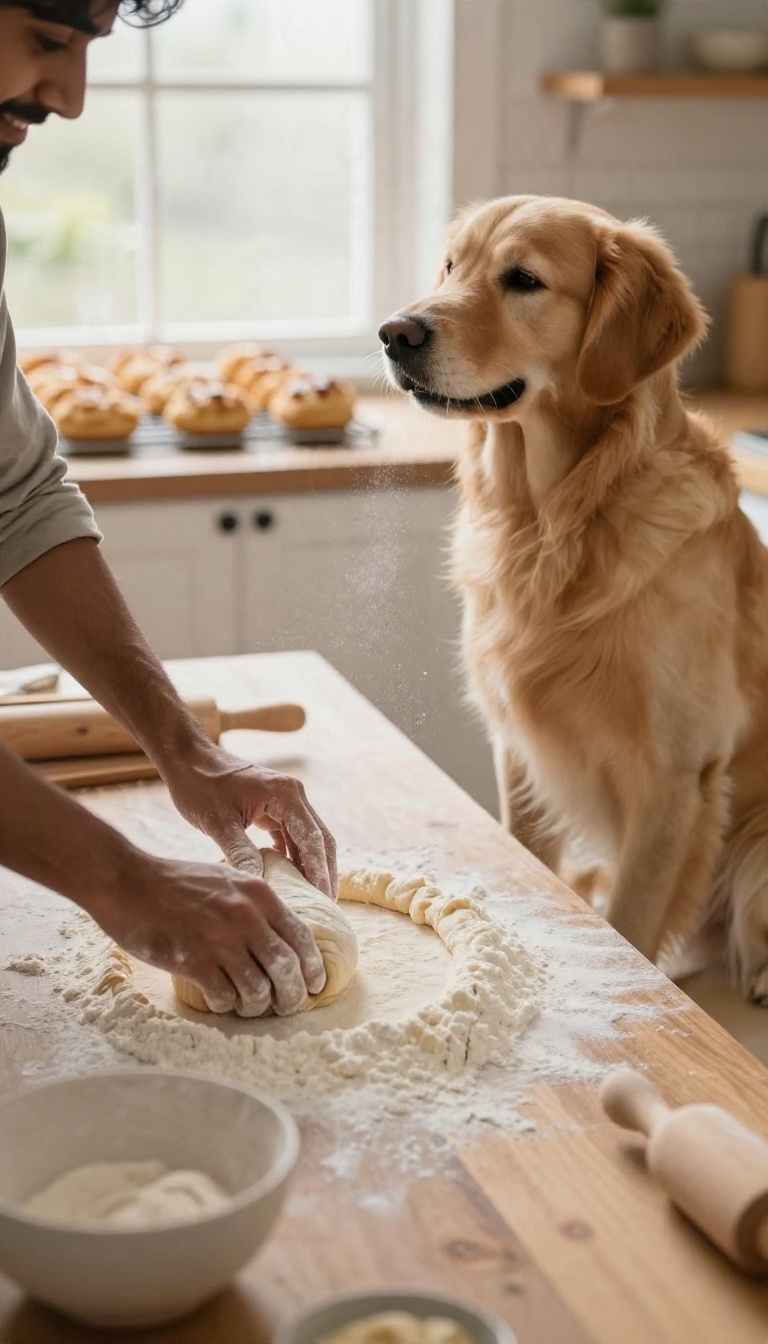
Baking day already fills the kitchen with warmth, flour dust, and the smell of vanilla, so why not let your dog join the scene? These candid shots capture the real, slightly messy joy of holiday baking with your pup hovering nearby, hoping for a taste. The goal is a funny, genuine frame that feels like your holiday, not a staged set.
With a few safety tweaks and some smart use of light, you'll get photos that make you smile every December.
The kitchen is the heart of holiday preparations, and your dog knows it. All those tempting smells and the bustle of activity make for natural, unposed moments. The key is to stay relaxed and keep the camera ready between mixing and rolling.
You're not directing a scene; you're just documenting the one already happening.
Keep The Counter Safe
Before you start shooting, move anything dangerous out of reach. Chocolate, raisins, and raw dough are all no-gos for dogs, so keep them on a high shelf or in a closed bin. Flour is messy but generally safe in small amounts, though you might want to wipe down surfaces after.
A safe dog is a relaxed dog, and that shows in the photos.
Use The Window Light
Kitchen windows often provide soft, even light that flatters both dog and baker. Position your dog so the window is to their side or slightly behind you, and turn off overhead lights to avoid harsh shadows. If it's cloudy, even better—the diffused light is perfect for candid shots.
Just watch for backlighting that could make your dog a silhouette.
Get Low For The Best Angle
Shooting from a lower angle puts you at your dog's eye level and makes the kitchen feel bigger and more immersive. Kneel or sit on the floor, and frame the shot so you see your dog's hopeful expression with the counter and baking chaos in the background. This angle also captures those little details like paws on the floor and the edge of a mixing bowl.
12. DIY Photo Booth With a Backdrop
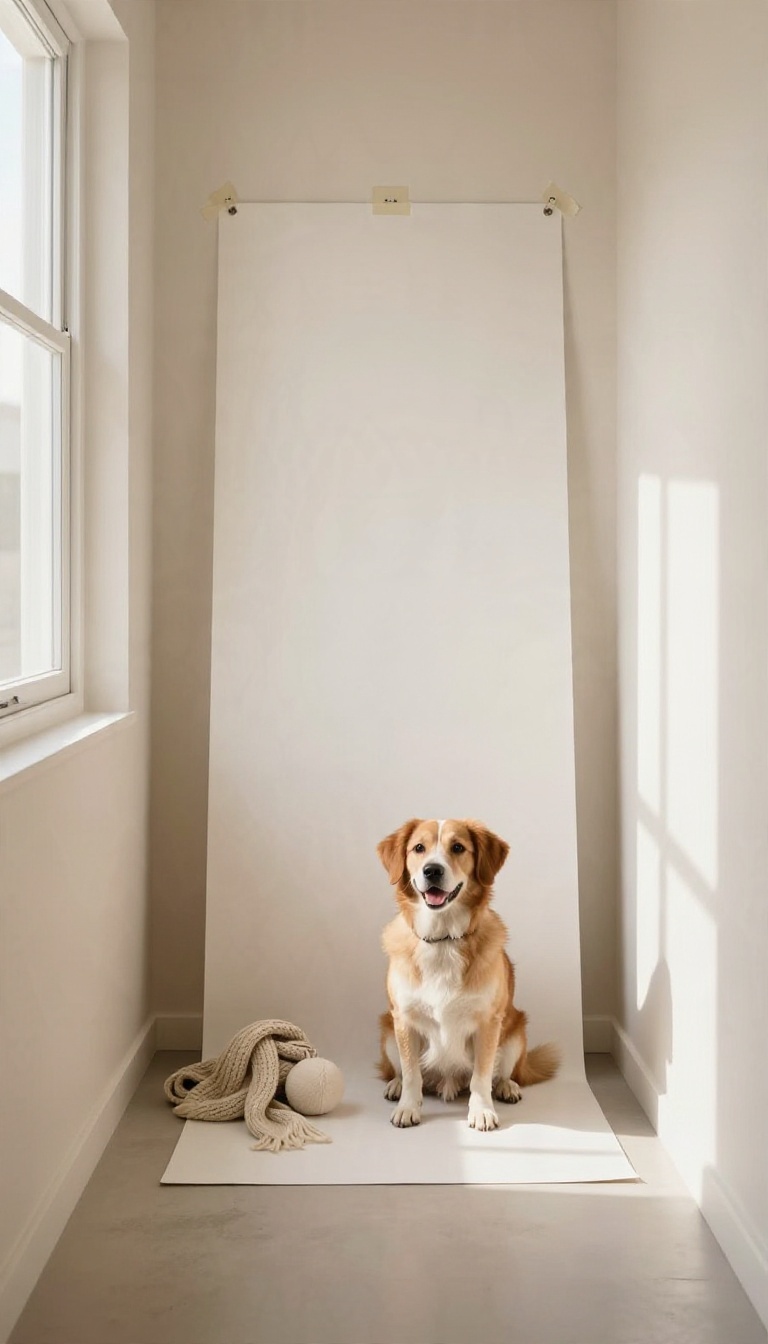
A plain sheet and a roll of tape can turn a hallway corner into a mini photo booth, and your dog doesn't have to go anywhere to be the star. The setup takes about five minutes, which matters when you're working with a subject who won't hold a pose for long. The trick is keeping it simple: one clean backdrop, a small pile of props, and a camera you can reach without stepping over anything.
Swap props between shots instead of moving the dog, and you'll walk away with a handful of different-looking photos from one short session.
Pick a spot with soft, even light — near a window but not in direct sun — and clear enough floor space for your dog to sit or stand comfortably. A wall works best, but a doorway or the side of a couch can hold a backdrop too. Once the sheet is up, let your dog sniff around before you start shooting.
A few treats near the backdrop help build a positive association, and you'll get better expressions if they're relaxed rather than suspicious of the new wall decoration.
Hanging The Backdrop So It Stays Put
A flat sheet or a roll of solid wrapping paper both work well, but height matters more than material. Aim for the bottom edge to sit just below your dog's paws so the floor doesn't show through, and pull the top up high enough that it fills the frame behind their head. Tape the top edge in several spots rather than one long strip, and press the tape down firmly against the wall.
Wrapping paper can curl at the edges, so a small piece of tape on each corner keeps it flat. If you're using a sheet, drape it over a tension rod or a couple of command hooks for a cleaner look.
Props That Rotate Without A Fuss
Keep three or four props within arm's reach and swap them one at a time. A Santa hat, a string of battery-powered lights, a small wrapped gift, and a candy cane cover most of the holiday bases without overwhelming your dog. Rotate slowly — one prop per handful of shots — so you get variety without a long session.
If your dog starts losing interest, take a break and come back. A tired dog in a photo booth looks like a tired dog, and the shots show it.
Getting The Framing Right
Stand close enough that the backdrop fills the frame behind your dog, with a little space above their head. Shoot at their eye level rather than looking down, which flatters every dog and keeps the backdrop looking like a real set instead of a wall. Take a few wide shots to show the whole setup, then move in for close-ups of faces and paws.
Between prop swaps, snap a couple of candid frames while your dog shakes off the hat or sniffs the gift — those often end up being the keepers.
13. Phone-Only Mini Session
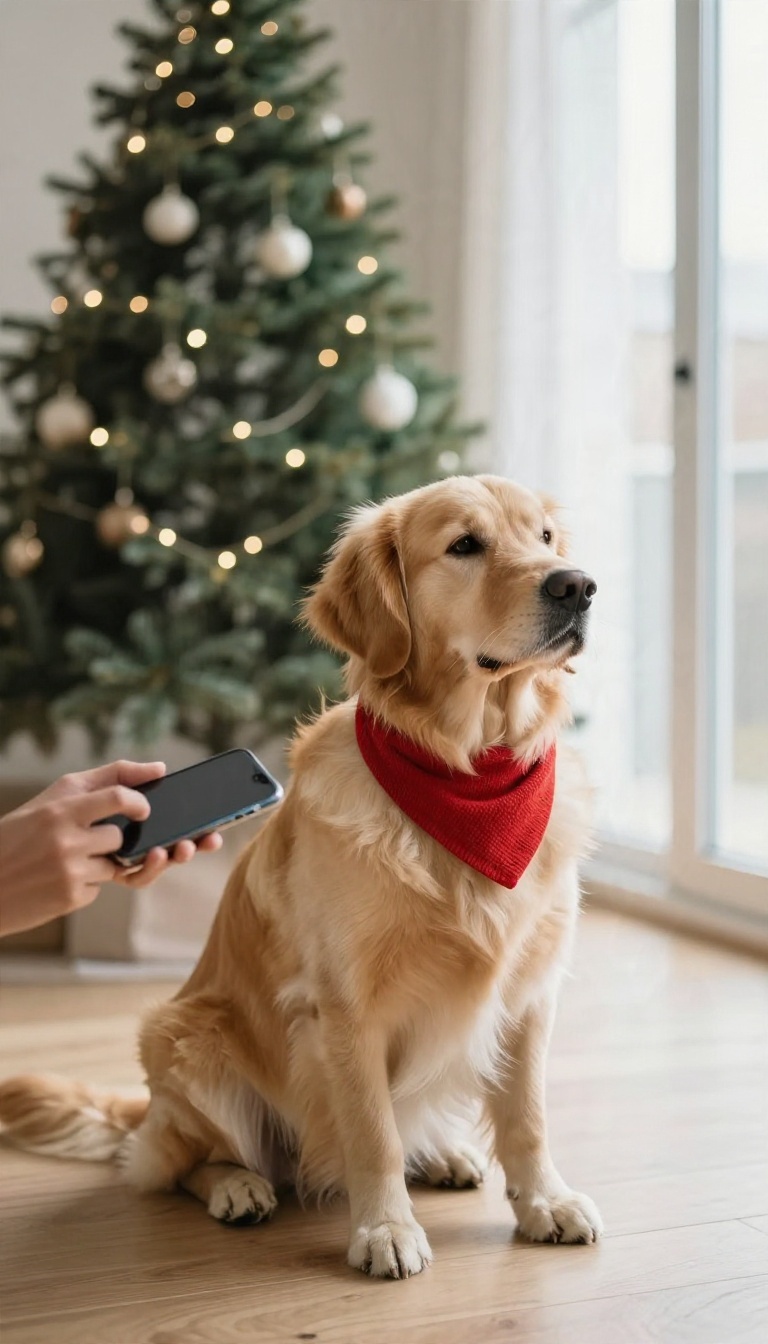
Your phone is already the best camera you own, mostly because you know how to use it and it's always within reach. A phone-only mini session keeps the whole shoot light: no tripod, no lens decisions, no packing a bag. Ten focused minutes with a few smart settings will get you photos that look like you tried a lot harder than you did.
The trick is to stop treating your phone like a point-and-shoot and start steering it. Set up near a window, keep your dog's face toward the light, and shoot more frames than you think you need. Dogs don't hold poses, so your job is to catch the good split second.
Use Portrait Mode (carefully)
Portrait mode gives you that soft, blurry background that makes a dog pop, and it works great for holiday shots. The catch is edges: fur, ears, and antlers can get chewed up by the blur. Give your dog a little space from the background and tap on their face so the phone locks focus there.
Take a few shots in normal mode too, then pick whichever looks cleaner.
Tap To Focus And Lock Exposure
Tap your dog's eye on the screen before every few shots, because phones love to refocus on the wrong thing. If the phone keeps hunting, press and hold on your dog's face to lock focus and exposure. Then drag the little sun slider up or down until their face looks bright but not washed out.
A dark dog against a bright tree needs a small nudge up; a white dog near a window usually needs a nudge down.
Burst Shots For Wiggly Dogs
For movement, hold down the shutter button or swipe left on it to fire a burst. This is how you catch the head tilt, the shake-off, or the moment your dog lunges for a treat. You'll end up with dozens of frames, so delete fast and keep the two or three where the eyes are sharp.
Burst mode is also your best friend for action shots like unwrapping a gift or jumping at a dangling ornament.
Polish With Free Editing Apps
Free apps like Snapseed, Lightroom Mobile, or your phone's built-in editor can warm up the shot and fix a dull exposure in under a minute. Nudge warmth and contrast up slightly, pull highlights down if the window blew out, and add a touch of vignette to draw the eye to your dog. Skip heavy filters, since they tend to turn fur orange.
A small crop to straighten the frame often does more than any preset.
FAQ
Do I need a professional camera for a Christmas dog photoshoot?
No. A modern phone in good natural light handles most of these ideas well. A real camera helps with fast action shots and low light, but it isn't required to get something worth framing.
How do I get my dog to sit still for photos?
Keep sessions short, use high-value treats, and shoot in bursts so you catch the good frame before your dog moves. Tired dogs photograph better too, so a walk beforehand can help.
Are Christmas lights and props safe around dogs?
Keep cords and small decorations out of reach, unplug lights your dog can touch, and skip anything with loose tinsel or tiny pieces. Supervise the whole time and end the session if your dog seems stressed.
What's the best time of day for indoor holiday photos?
Mid-morning light near a window is usually the easiest to work with. If you're shooting with Christmas lights, wait until dusk so the glow shows up against a darker room.
How many ideas should I actually try?
Two or three is plenty for one session. Pick ideas that match your dog's energy, and save the rest for next year or spread them across a few short shoots.
Conclusion
You don't need a studio, a fancy camera, or a dog who sits perfectly on command to pull off a holiday shoot. Pick one idea that fits your dog's energy and your patience level that day, keep treats handy, and let the messy shots happen—those often turn out to be the ones you actually frame. Start small, snap a few, and see what your pup gives you.
A quick setup by the tree or a snowy backyard run can be plenty. The photos are nice, but the goofy outtakes and the time spent together are the real keepsake.