
A wooden dog house can last for years, but only if you choose the right materials and construction. The wrong wood or finish will rot, warp, or splinter within a season—leaving you with a sad, sagging shelter.
These ten designs use treated lumber, weatherproof coatings, and smart joinery to stand up to rain, snow, and sun. Each one balances durability with your dog's comfort, so you get a long-lasting home without cutting corners.
Whether you're building from scratch or buying pre-made, these ideas will help you pick a dog house that truly holds up.
1. Cedar Dog House with Overhanging Roof
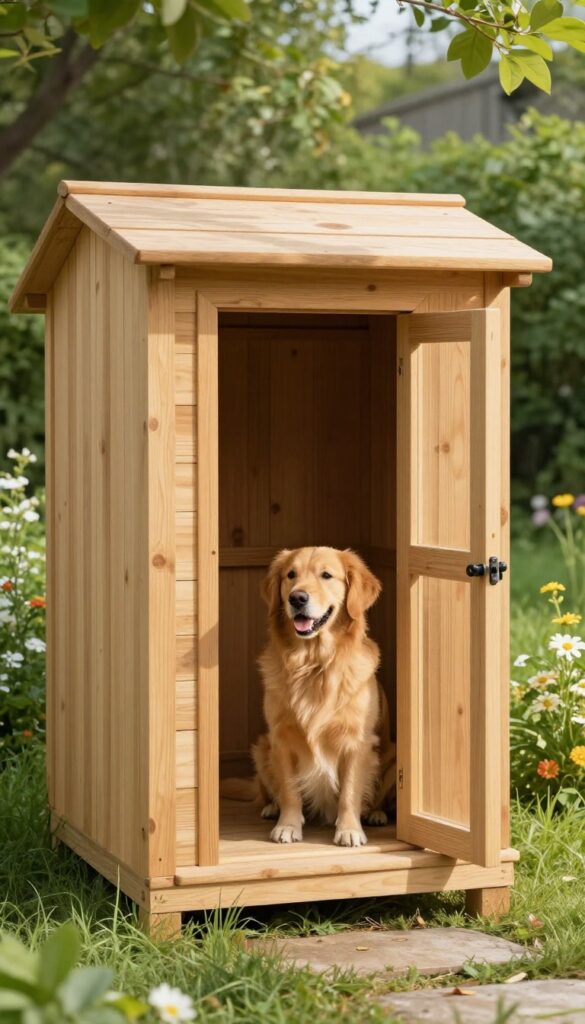
Cedar is a go-to wood for outdoor projects because it naturally resists rot and insects without chemical treatments. An overhanging roof takes that durability a step further by shielding the entrance and walls from direct rain and harsh sun. This combo means less maintenance and a cooler, drier interior for your pup.
Why It Works
Cedar contains natural oils that repel moisture and bugs, so the structure stays solid season after season. The overhang creates a shaded porch area and keeps rainwater from dripping down the front, preventing mud splashes and wood decay near the door.
Best For
This design suits outdoor dogs in rainy or humid climates where moisture is a constant threat. It's also great for owners who want a low-maintenance house that doesn't need frequent staining or sealing.
Practical Tip
Place the dog house on a slightly raised platform or pavers to keep the bottom off damp ground. Add a flap over the door for extra weather protection, and use cedar shavings inside for natural odor control.
Budget-Friendly Option
If cedar is out of budget, use pressure-treated plywood for the main structure and apply a cedar-toned stain. You'll get similar rot resistance at a lower cost, though you'll need to re-stain every couple of years.
2. Pressure-Treated Pine A-Frame
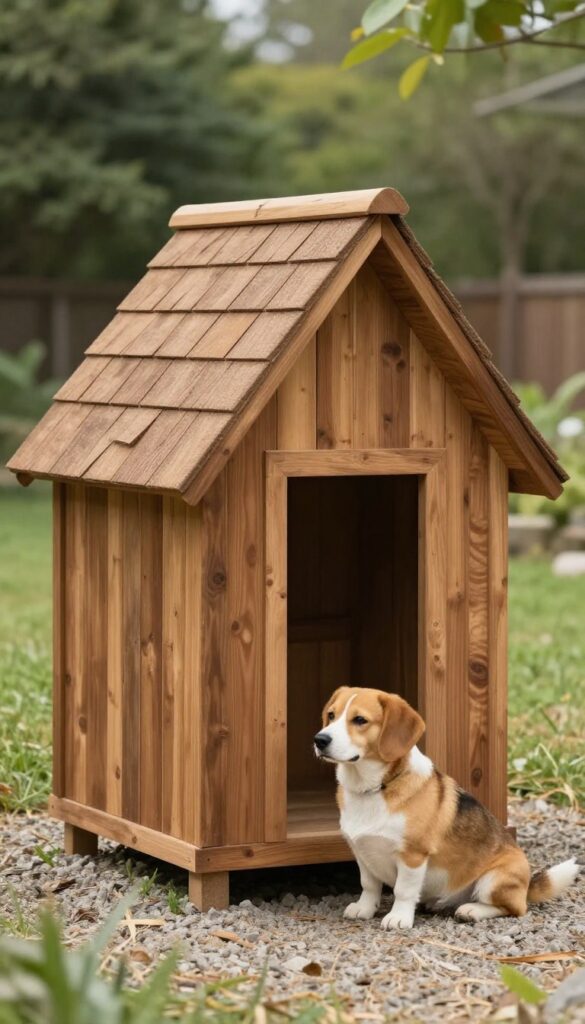
An A-frame dog house made from pressure-treated pine is a classic for good reason. The steep roof sheds rain and snow instantly, while the treated wood resists moisture and insects. Many dogs love the cozy, den-like interior that feels safe and secure.
Why It Works
Pressure-treated pine is affordable and built to handle wet weather without rotting. The A-frame design channels water off the roof, so the interior stays dry even during heavy storms. Plus, the angled walls give dogs that snug, tucked-in feeling they naturally seek.
Best For
This style is ideal for outdoor dogs who need a durable shelter that lasts through rain, snow, and humidity. It works well for small to medium breeds like Beagles, Corgis, or Terriers that enjoy a compact, enclosed space.
Practical Tip
Add a removable floor panel for easy cleaning—just lift it out to hose off mud or bedding. Also install rubber feet or a small gravel base to keep the wood off damp ground, preventing rot from below.
3. Insulated Plywood Dog House with Vinyl Flooring
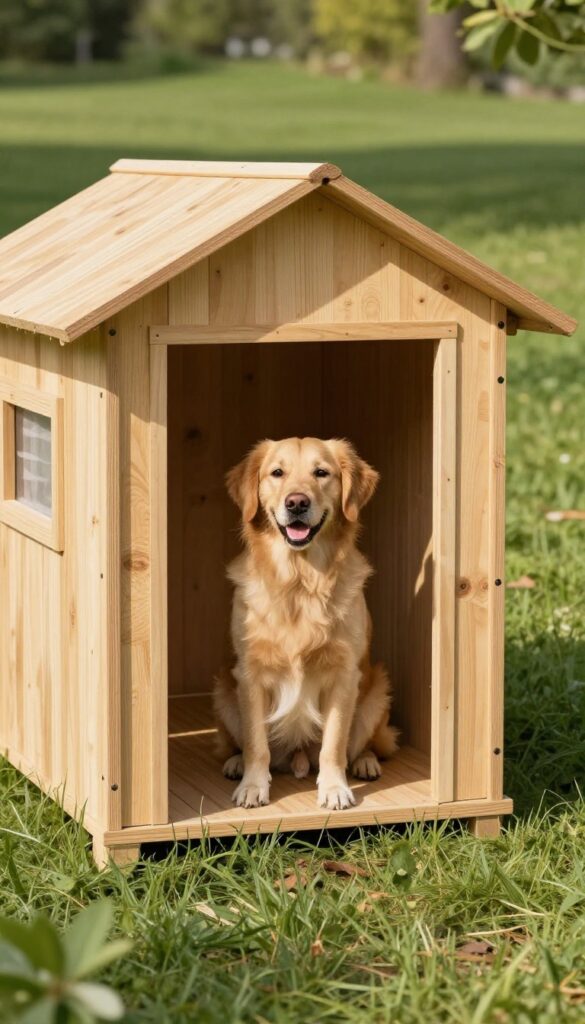
Plywood is a budget-friendly material that's easy to cut and assemble, making it a favorite for DIY dog house builders. By adding foam insulation between the walls and finishing with a vinyl floor, you create a cozy retreat that works in hot summers and cold winters. This design is simple to customize and keeps your dog comfortable year-round.
Why It Works
The foam insulation regulates temperature inside the house, keeping it cooler in summer and warmer in winter. The vinyl flooring is non-porous and easy to wipe down, so mud, drool, and accidents don't soak in. Plywood holds up well when sealed properly, giving you a sturdy structure that lasts.
Best For
This idea suits owners who want an affordable, four-season dog house without complicated construction. It's great for medium to large breeds that need extra insulation, and it works well in climates with distinct seasons.
Practical Tip
Seal all plywood edges with exterior-grade primer and paint to prevent moisture from seeping into the layers. Use a removable roof or hinged top for easy access when cleaning or checking on your dog. Add a small vent near the peak for airflow without drafts.
4. Reclaimed Wood Dog House with Metal Roof
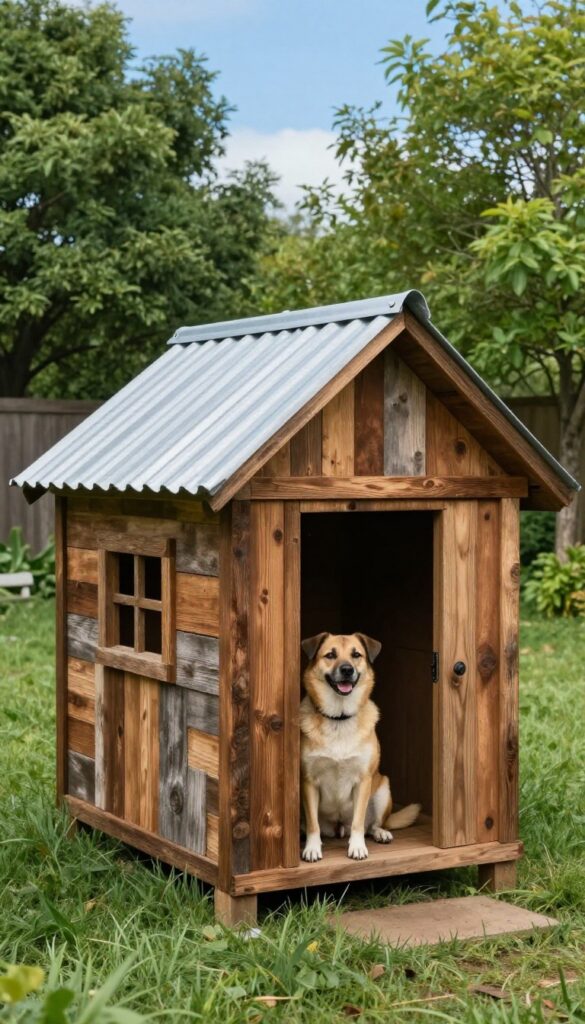
Reclaimed wood brings character and sustainability to your dog's outdoor shelter. By repurposing old barn wood or pallets, you get a one-of-a-kind look that also saves money. Pairing it with a metal roof adds serious weather protection, keeping rain and snow at bay for years.
Why It Works
Reclaimed wood is typically dense and well-seasoned, so it resists warping better than fresh lumber. The metal roof sheds water quickly and won't rot like shingles or felt. Together, they create a durable combo that stands up to harsh weather without constant upkeep.
Best For
This setup is ideal for owners who love a rustic or farmhouse aesthetic and want an eco-friendly option. It works great for medium to large dogs that spend plenty of time outside, especially in rainy or snowy climates.
Practical Tip
Seal the reclaimed wood with a clear outdoor sealant to preserve its natural patina while protecting against moisture. For the metal roof, choose galvanized steel or aluminum with a baked-on finish—they stay cool in summer and resist rust.
Budget-Friendly Option
If sourcing reclaimed wood is tricky, look for untreated cedar fence pickets at big-box stores—they're affordable and naturally rot-resistant. Use corrugated polycarbonate panels instead of metal for a lighter, cheaper roof option.
5. Treated Lumber Dog House with Removable Panels
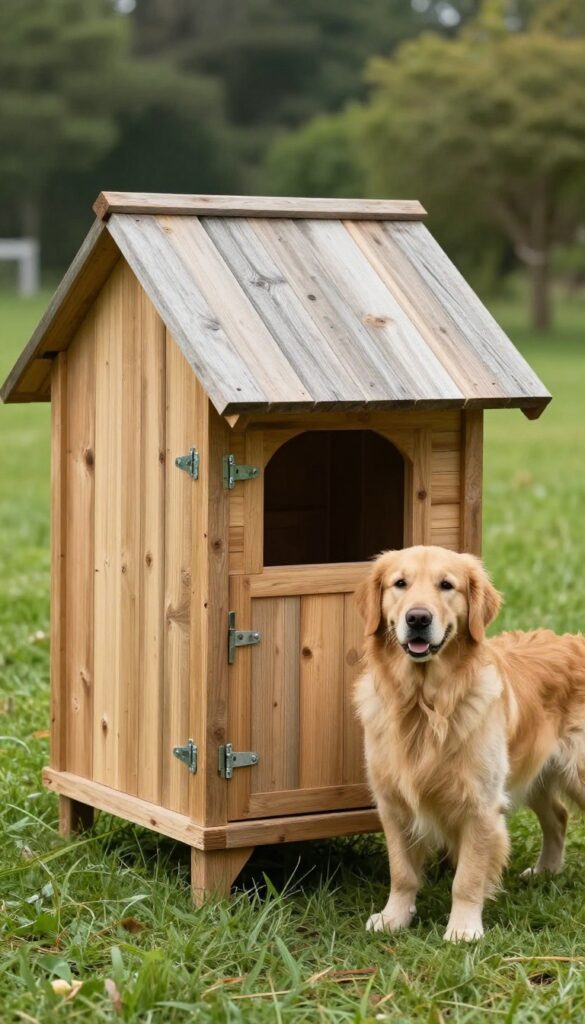
Treated lumber stands up to moisture and insects far better than untreated wood, making it a smart choice for a long-lasting dog house. Adding removable roof or side panels takes convenience to the next level—you can hose out the interior or replace worn sections without rebuilding the whole structure.
This design gives you both durability and easy maintenance. It's especially appealing if you live in a rainy climate or have a dog who tracks in mud and debris.
Why It Works
Pressure-treated lumber resists rot and decay even when exposed to rain and ground moisture. Removable panels let you access every corner for thorough cleaning, which reduces odors and bacteria buildup that can shorten the life of a dog house.
Best For
Best for owners of large or active dogs who spend a lot of time outdoors, especially in wet or humid climates. Also great for multi-dog households where frequent cleaning is a must.
Practical Tip
Use galvanized hinges and latches on removable panels so they stay secure in wind but are easy to detach. Add a rubber gasket around panel edges to keep out drafts and rain when closed.
Budget-Friendly Option
If treated lumber is too pricey, use exterior-grade plywood with a thick coat of water-resistant paint or sealant. It won't last as long, but it's much cheaper upfront.
6. Hardwood Dog House with Elevated Base
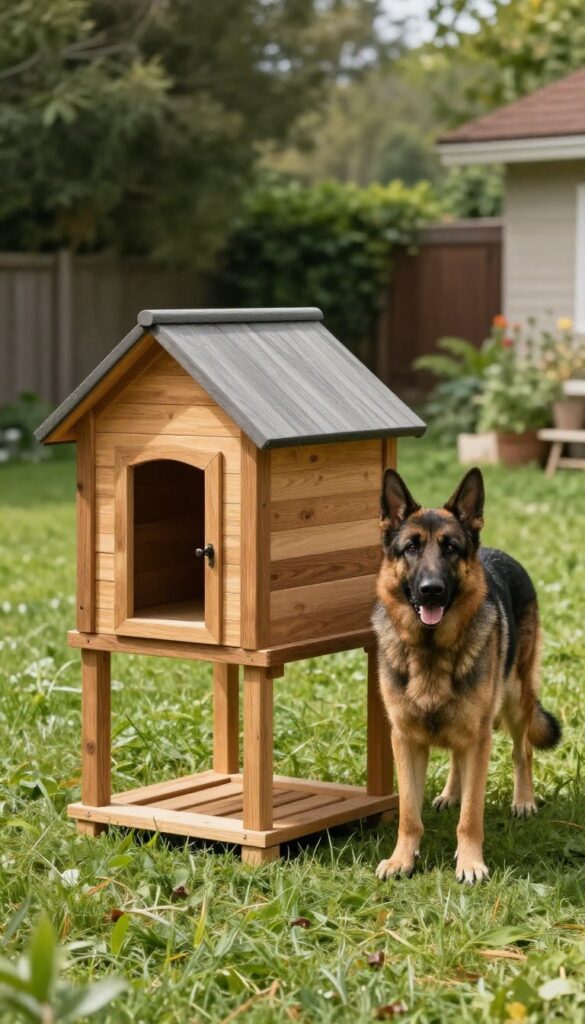
Hardwoods like oak or teak bring serious durability to a dog house. They resist dents, scratches, and weather far better than softwoods. An elevated base lifts the structure off the ground, keeping moisture from seeping in and allowing air to circulate underneath.
This combo means your dog stays dry and comfortable, and the house holds up for years.
Why It Works
Hardwood is naturally dense and resistant to rot, so it won't warp or splinter easily. The raised base prevents ground moisture from soaking into the floor, which cuts down on mold and mildew. Good airflow underneath also keeps the interior cooler in summer and drier in wet weather.
Best For
This setup is ideal for large breeds that are tough on structures—think Labrador Retrievers, German Shepherds, or Boxers. It also works well in damp climates or yards with poor drainage where ground contact would ruin a standard dog house quickly.
Practical Tip
Seal the hardwood with a pet-safe outdoor finish to protect against rain and sun. Add a removable floor panel for easy cleaning—just lift it out to sweep or hose off dirt. Place the house on concrete pavers or gravel to keep the base stable and prevent sinking into mud.
Budget-Friendly Option
If solid hardwood is too pricey, use pressure-treated plywood for the base and frame, then cover it with a hardwood veneer or exterior-grade siding. You'll get a similar look and durability at a fraction of the cost.
7. DIY Pallet Dog House with Weatherproof Sealant
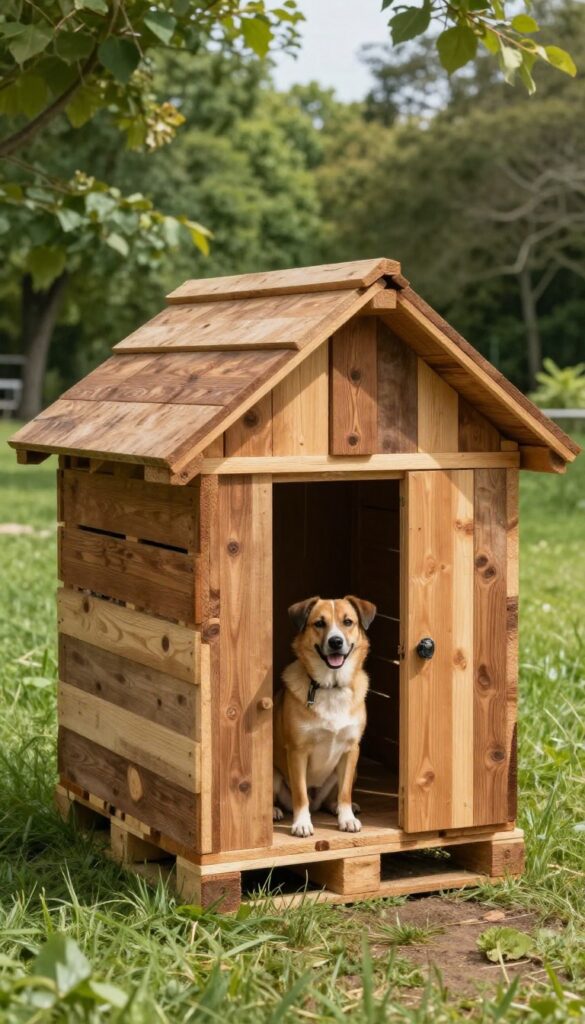
Pallets are one of the cheapest sources of wood, and with a bit of effort, they can become a charming, long-lasting dog house. The key is proper preparation—sanding down rough edges and applying a high-quality weatherproof sealant. This approach turns free or low-cost materials into a sturdy shelter that stands up to the elements.
Why It Works
Pallet wood is typically hardwood like oak or pine, which is naturally dense and durable. When you sand it smooth and seal it with a waterproof coating, it resists rain, snow, and humidity just as well as store-bought lumber. The result is a budget-friendly build that can last for years without rotting or warping.
Best For
This idea is perfect for DIYers on a tight budget who enjoy repurposing materials. It works well for medium to large dogs that need a spacious house, and it fits nicely in backyards where you want a rustic, handmade look.
Practical Tip
Before sealing, make sure all nails are removed or hammered flat, and sand every surface to prevent splinters. Use a non-toxic, exterior-grade sealant or paint—let it cure fully for at least 48 hours before letting your dog inside. Adding a slightly sloped roof will help water run off easily.
8. Redwood Dog House with Slanted Roof
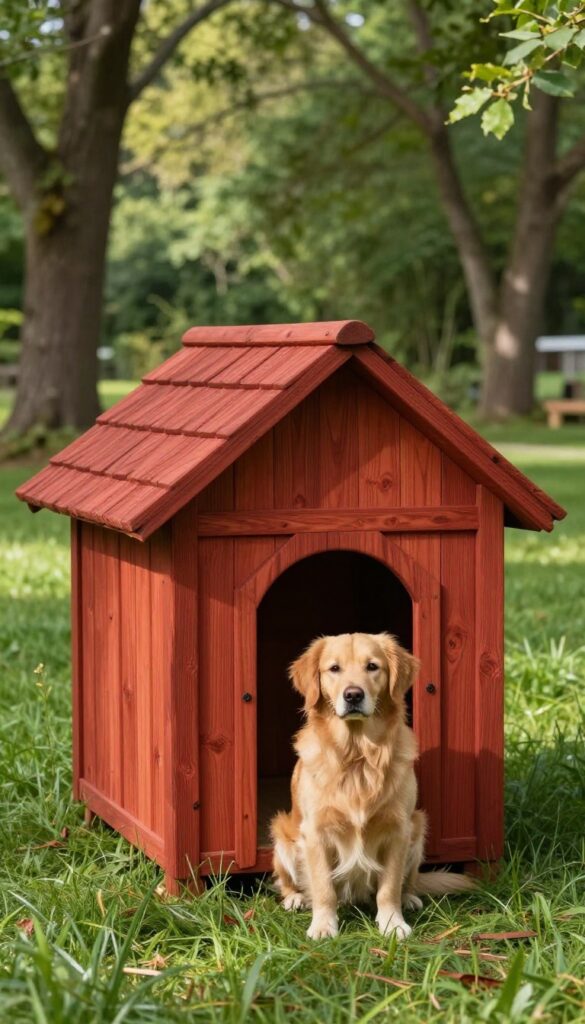
Redwood naturally resists decay and insects, making it a top pick for outdoor structures that need to hold up season after season. A slanted roof adds function by channeling rainwater away from the entrance, so the interior stays dry even during heavy storms. The wood's warm reddish tones and straight grain give it a polished look without any paint or stain—just let it weather naturally.
Why It Works
Redwood contains natural tannins that repel termites and fungus, so you won't need chemical treatments. The slanted roof design prevents water pooling and extends the life of the wood, while the thick walls provide excellent insulation against heat and cold.
Best For
This dog house is ideal for medium to large breeds like Labradors, Golden Retrievers, or Border Collies that spend time outdoors in rainy or humid climates. It also suits owners who want a low-maintenance, attractive structure that blends into a natural yard setting.
Practical Tip
Seal the wood with a clear water-repellent finish every two years to maintain its color and protect against UV rays. Add a removable hinged roof for easy cleaning inside, and place the dog house on concrete blocks or gravel to keep the bottom off damp soil.
Budget-Friendly Option
If redwood is out of budget, use pressure-treated pine and apply a cedar-toned exterior stain. It won't last as long but will give you similar rot resistance at half the cost.
9. Marine-Grade Plywood Dog House with Fiberglass Coating
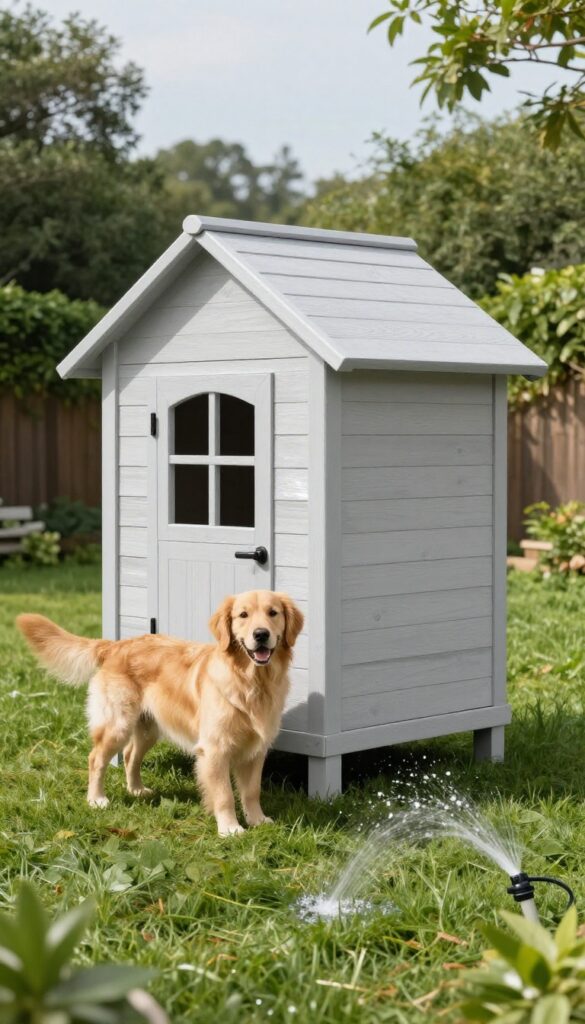
If you're building a dog house that needs to survive constant rain, humidity, or even splashes from a kiddie pool, marine-grade plywood is your secret weapon. This material is originally designed for boat construction, meaning it's engineered to resist water damage far better than standard plywood. Add a fiberglass coating on top, and you get a shell that's practically waterproof—perfect for dogs who love the outdoors no matter the weather.
Why It Works
Marine-grade plywood uses waterproof glue and fewer voids in the core, so it won't delaminate or rot when exposed to moisture. The fiberglass coating seals every seam and surface, creating a hard, slick finish that sheds rain and dries quickly. This combination gives you a dog house that can sit outside year-round without warping or developing mold.
Best For
This setup is ideal for owners in rainy climates, coastal areas, or homes with sprinklers that hit the dog house. It's also great for large breeds that need a spacious shelter—since marine plywood comes in big sheets, you can build a sturdy house without extra joints.
Practical Tip
Sand all edges smooth before applying fiberglass resin to avoid sharp spots. Paint the exterior with a marine-grade paint or gel coat for UV protection—white or light gray keeps the interior cooler in summer. Add a removable roof panel for easy cleaning inside.
Budget-Friendly Option
If marine-grade plywood is too pricey, use exterior-grade plywood (CDX) and seal it with two coats of epoxy resin instead of fiberglass. It won't be as durable but will still resist moisture much longer than untreated wood.
10. Custom-Built Dog House with Composite Decking
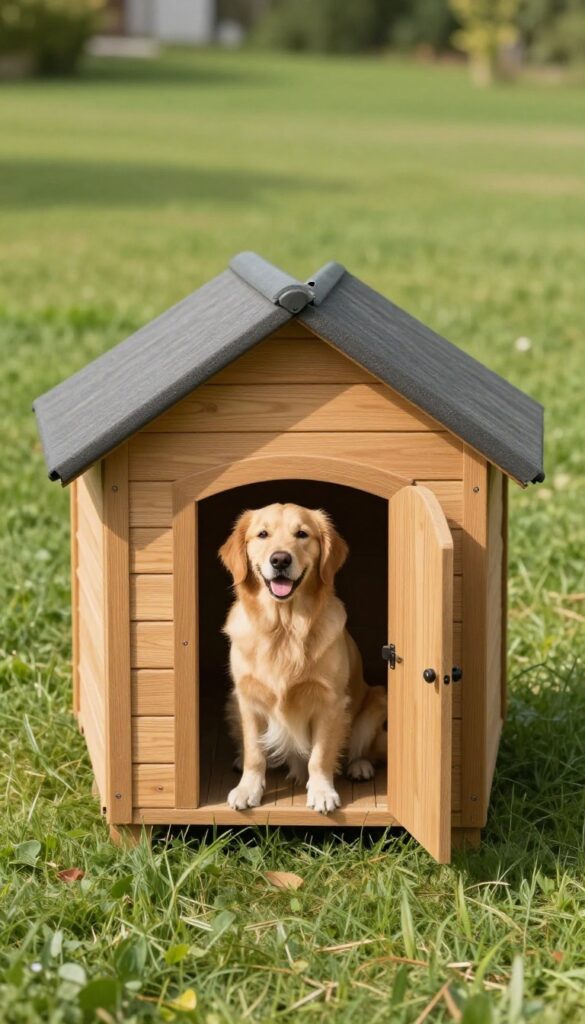
Composite decking isn't just for patios—it makes an incredibly durable dog house too. This wood-plastic blend resists rot, splinters, and fading, so your dog's shelter stays solid through every season. While it costs more upfront, you'll never have to stain or seal it again.
Why It Works
Composite materials are engineered to handle moisture and temperature swings without warping or cracking. They won't absorb water, so mold and mildew don't stand a chance. Plus, the smooth surface means no splinters for sensitive paws or noses.
Best For
Perfect for dogs that spend a lot of time outdoors, especially heavy chewers or breeds prone to allergies from mold or dust. Also ideal for owners who want a set-it-and-forget-it solution in rainy or humid climates.
Practical Tip
Use composite boards with a wood-grain texture for a natural look without the upkeep. Add a slightly sloped roof made from the same material so rain runs off easily. Leave a small gap under the floor for airflow to prevent moisture buildup underneath.
FAQ
What type of wood is best for an outdoor dog house?
Cedar, redwood, and pressure-treated pine are excellent choices because they naturally resist rot and insects. Avoid softwoods like untreated pine that can decay quickly.
How can I make my wooden dog house last longer?
Use weather-resistant wood, apply a non-toxic sealant or paint, elevate the house off the ground, and ensure proper ventilation. Regular cleaning and inspections also help.
Is it cheaper to build or buy a wooden dog house?
Building your own is usually cheaper, especially if you use reclaimed or pallet wood. However, buying a pre-built one saves time and ensures professional construction.
What size should a wooden dog house be?
The house should be just big enough for your dog to stand, turn around, and lie down comfortably. Too large can make it harder to retain body heat in cold weather.
Do I need to insulate a wooden dog house?
Insulation is recommended if you live in extreme temperatures. It helps keep the house cooler in summer and warmer in winter, making it comfortable year-round.
Conclusion
Choosing a wooden dog house that lasts doesn't have to be complicated or expensive. Start with one design that matches your budget and your pup's needs—whether it's a simple A-frame or a more elaborate cabin style.
A well-built wooden shelter keeps your dog comfortable and safe for years. Pick the idea that feels right for your space, gather your materials, and enjoy watching your furry friend settle into their new favorite spot.

I’m Pallab Kishore, the owner of Little Pets Realm — an animal lover and pet care enthusiast sharing easy tips, healthy recipes, and honest advice to help every small pet live a happy, healthy, tail-wagging life.