
Last updated on August 19th, 2026 at 04:22 pm
You know the drill: your dog bolts through the front door, snatches food off the counter, or drags you down the sidewalk. The wait command is the cure—a simple cue that turns chaos into calm in everyday moments.
These 10 exercises target the exact spots where impulse control matters most, from the front door to the food bowl. Each one is quick, practical, and builds a habit your dog will actually enjoy.
Pick a few to start, and you'll notice a calmer pup in no time.
1. The Doorway Pause
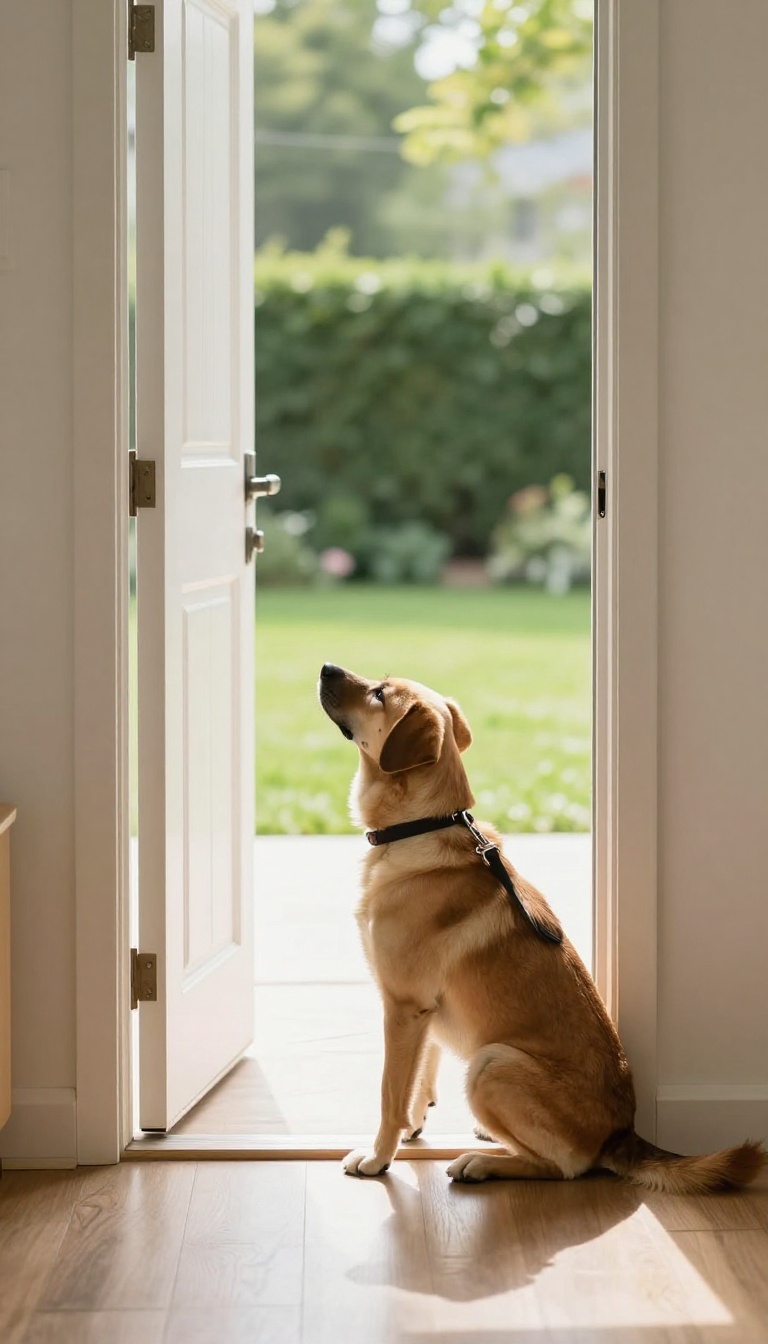
The front door is a magic portal for most dogs—it leads to smells, squirrels, and adventures. That excitement often turns into a mad dash the second the handle turns. The doorway pause teaches your dog that patience is the ticket to outdoor fun.
Start with your dog on a leash and the door closed. Ask for a sit or a down, then say “wait” in a calm, clear voice. Open the door just a few inches.
If your dog stays put, reward with a treat and praise. If they move, close the door and try again. Repeat until they hold still with the door fully open, then release with a cue like “okay” before stepping out.
This builds a strong default behavior that transfers to real-world exits.
Start Small, Reward Big
Begin with the door barely cracked. The moment your dog makes eye contact or stays in place, mark and treat. Keep sessions short—five minutes max—so your dog stays engaged.
Gradually increase the door opening and the duration of the wait before releasing.
Add Distractions Gradually
Once your dog waits reliably with the door open, add distractions like knocking, ringing the doorbell, or having a friend walk by outside. Practice in different locations—front door, back door, car door—to generalize the behavior. Always reward calm, patient behavior, and never punish a mistake; just reset and try again.
Make It A Daily Habit
Use every real departure as a training opportunity. Before walks, ask for a wait at the door. If your dog rushes, close the door and wait a few seconds, then try again.
Consistency turns this exercise into a lifelong habit that keeps your dog safe and your sanity intact.
2. The Food Bowl Hold
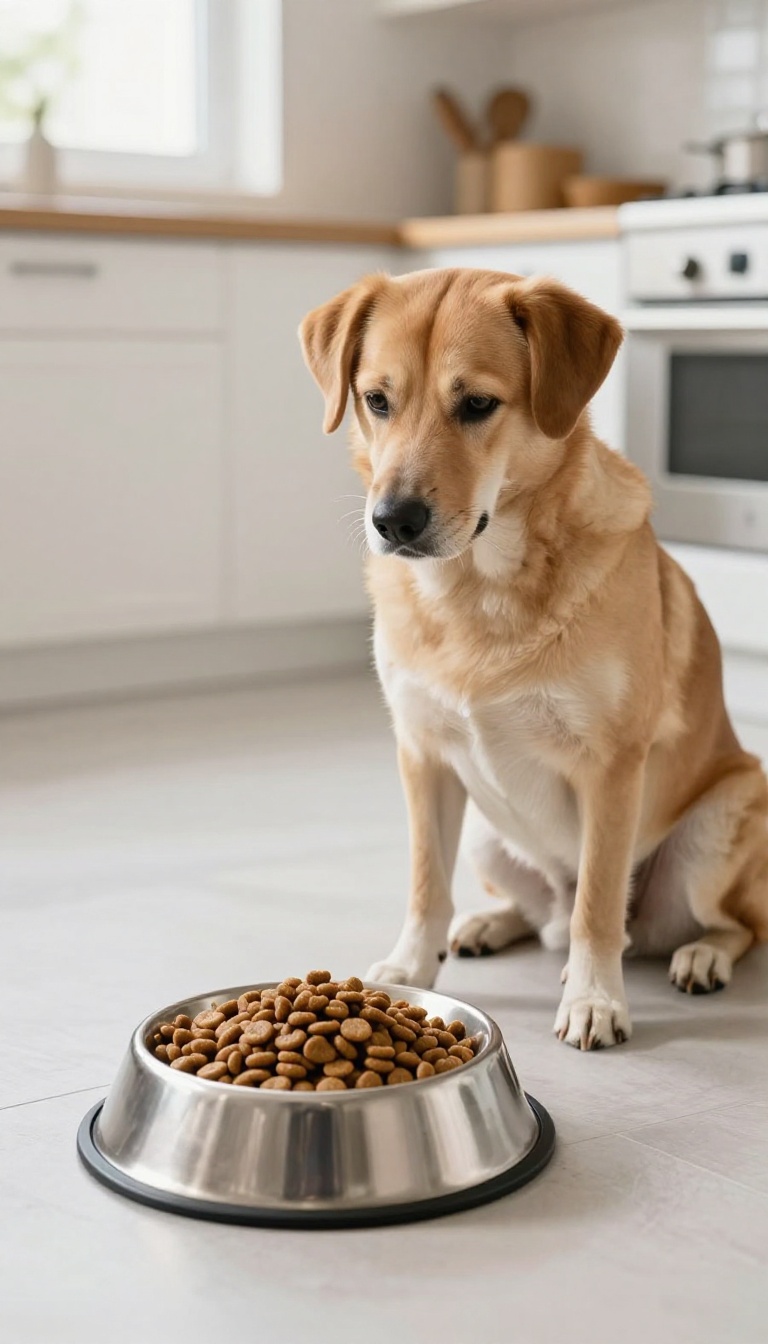
Mealtime is a golden opportunity to practice patience. Most dogs get so excited about food that they forget their manners. This exercise turns that excitement into a calm, controlled moment—and it's surprisingly easy to start.
Start by having your dog sit or lie down a few feet away from their bowl. Hold the bowl in your hands and say "wait" in a calm, firm voice. Then slowly lower the bowl toward the floor.
If your dog moves toward the bowl, simply stand up and take a step back. Wait a few seconds, then try again. The goal is for your dog to stay put until you give the release cue, like "okay" or "free.
" Once they hold still, place the bowl down and let them eat. Repeat this every meal, and you'll see impulse control improve fast.
Start With A Simple Setup
Keep it easy at first. Have your dog on a leash or in a sit-stay a few feet away. Hold the bowl at chest level, say "wait, " and then place it on the floor.
If they break, pick the bowl back up and reset. Practice this a few times before letting them eat.
Add Distance And Duration
Once your dog gets the hang of it, increase the challenge. Move a little farther away, or make them hold the wait for a few extra seconds before you release. You can also practice with different types of food—dry kibble, wet food, or treats—to keep their focus sharp.
Make It A Game
Turn the wait into a fun ritual. After placing the bowl down, take a step back, then return and release. You can even add a little spin or a high-five before they eat.
This keeps the exercise engaging and reinforces that waiting leads to something great.
3. The Treat Toss
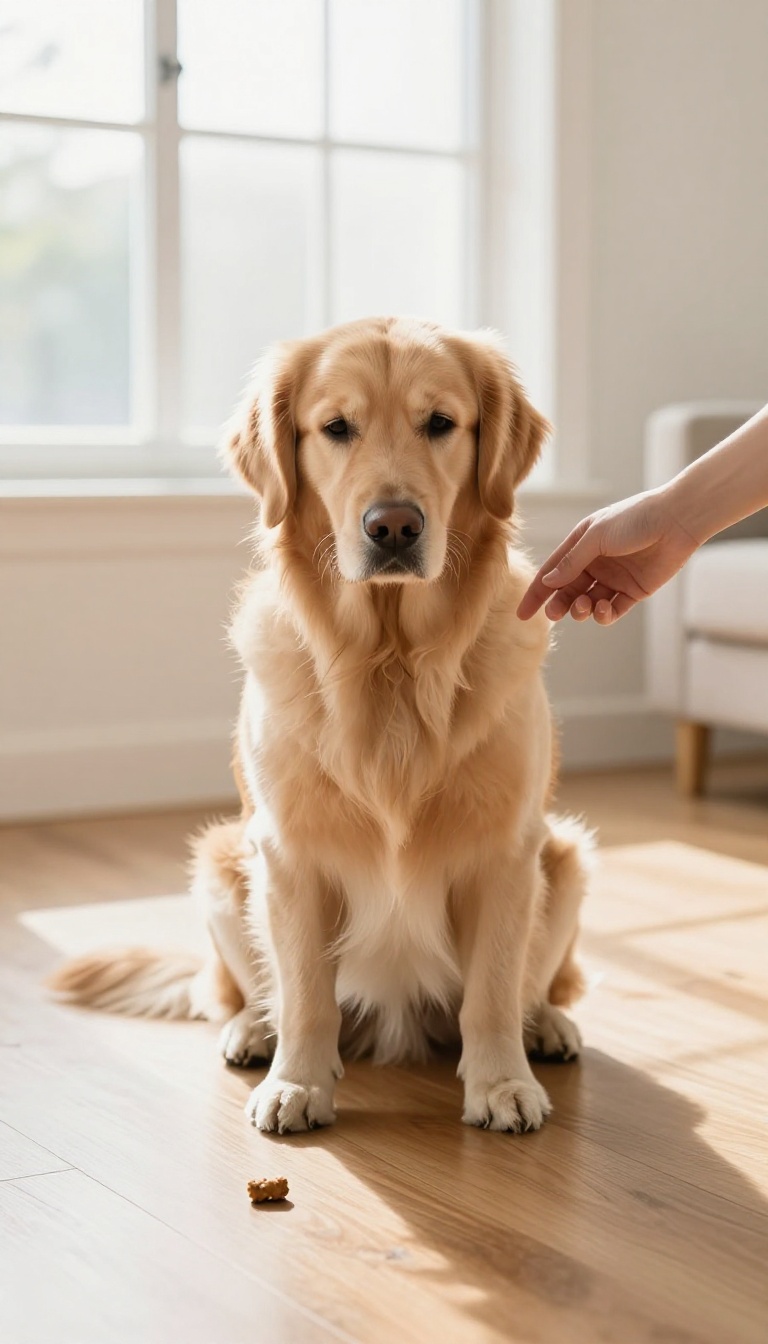
This one feels like a game, but it's secretly building serious self-control. You toss a treat a few feet away and ask your dog to wait until you give the release word. It's a simple way to teach them that good things come when they listen, not when they lunge.
Start with your dog in a sit or down position. Show them a treat, then toss it just a few feet away—close enough that they can see it, but not so far that they're tempted to break. Say your wait cue (like "wait" or "stay") in a calm voice.
If they stay put, give your release word (like "okay" or "free") and let them go get it. If they break early, calmly reset and try again with a shorter distance or a less exciting treat. The goal is to build up to tossing treats across the room or even out of sight.
Why It Works
This exercise teaches your dog that waiting leads to a reward, while rushing gets them nothing. It's a mini lesson in impulse control that carries over to real-life situations, like ignoring food on the floor or waiting at the door. Plus, it's fun—your dog gets to chase a treat, which makes the training feel like play.
How To Start
Begin with your dog on a leash or in a quiet room with few distractions. Use high-value treats they love, but start with just one toss. Keep sessions short—five minutes max—and always end on a success.
If your dog struggles, go back to a simpler exercise like waiting for a treat in your hand before moving to the toss.
Common Mistakes To Avoid
Don't toss the treat too far at first—that sets your dog up to fail. Also, avoid using the release word too early, or your dog will learn they can break whenever they want. And don't get frustrated if it takes time; patience is key.
If your dog keeps breaking, try using a lower-value treat or shortening the distance until they get the hang of it.
Leveling Up
Once your dog masters the basics, increase the challenge. Toss the treat behind them, or toss two treats in different directions. You can also practice this on walks, tossing a treat a few feet ahead and having them wait before going to get it.
This builds a rock-solid wait that works in real-world settings.
4. The Leash Gate
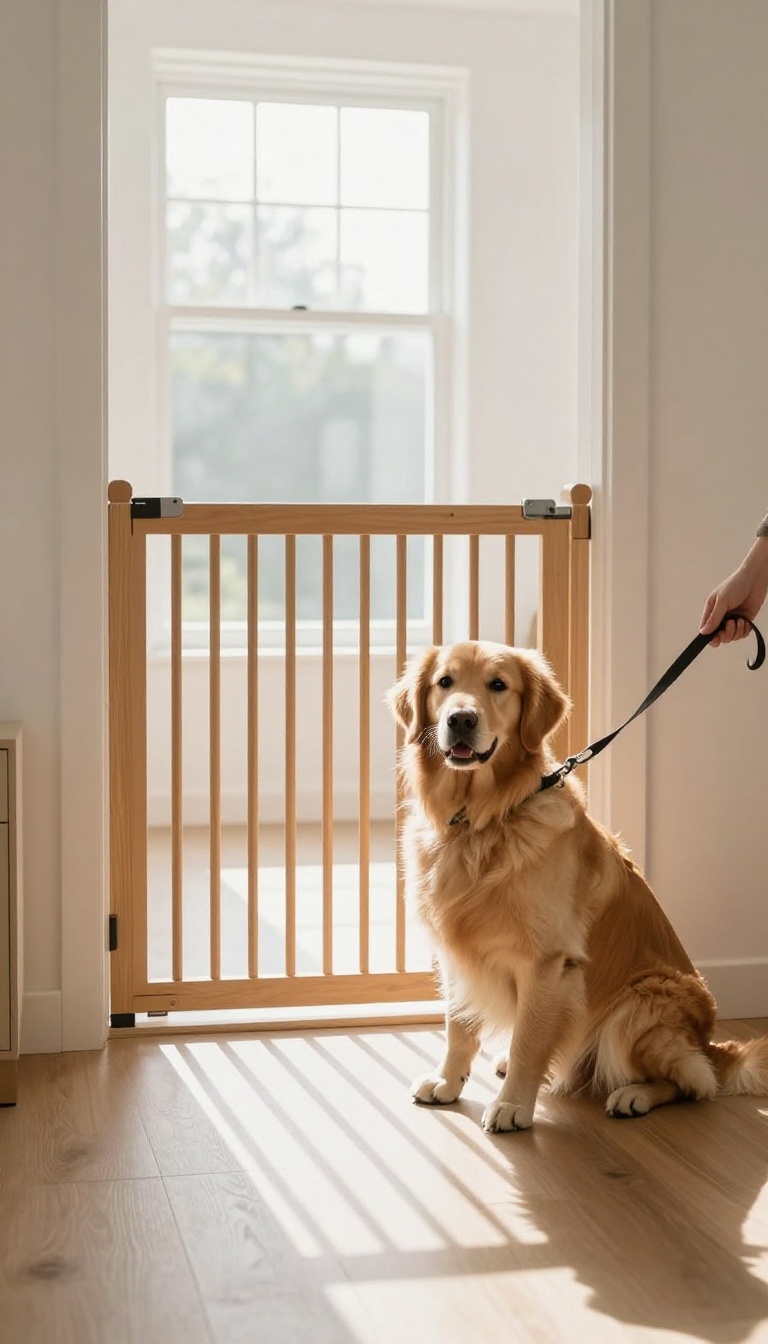
A baby gate or a doorway can become a powerful training tool. This exercise teaches your dog to pause before crossing a threshold, reinforcing the wait command in a fresh context. It's perfect for building impulse control and setting clear boundaries at home.
Set up a baby gate across a doorway or use a closed door that you'll open. With your dog on a leash, approach the gate and give the wait command. Open the gate just a crack, then close it if your dog tries to move.
Reward calm behavior and gradually increase the distance and time your dog waits before you allow them through. This builds a strong foundation for door manners and helps your dog understand that patience pays off.
Why Thresholds Matter
Thresholds are natural boundaries that dogs often rush through without thinking. By practicing at a gate, you're teaching your dog that not every opening is an invitation to bolt. This skill transfers directly to front doors, car doors, and even the door to the backyard, making everyday transitions safer and more relaxed.
Step-by-step Setup
Start with your dog on a leash and positioned a few feet from the gate. Say 'wait' in a calm, clear voice. Open the gate a few inches, then immediately close it if your dog moves.
Repeat this until your dog holds still, then reward with a treat and praise. Gradually increase the time the gate stays open and the distance your dog must stay from it.
Adding Distractions
Once your dog masters the basics, add distractions like tossing a toy or having someone call their name. The goal is to strengthen their focus and self-control in real-world scenarios. If your dog breaks the wait, simply close the gate and start again.
Consistency is key, and soon your dog will wait automatically, even when exciting things are happening on the other side.
5. The Curb Check
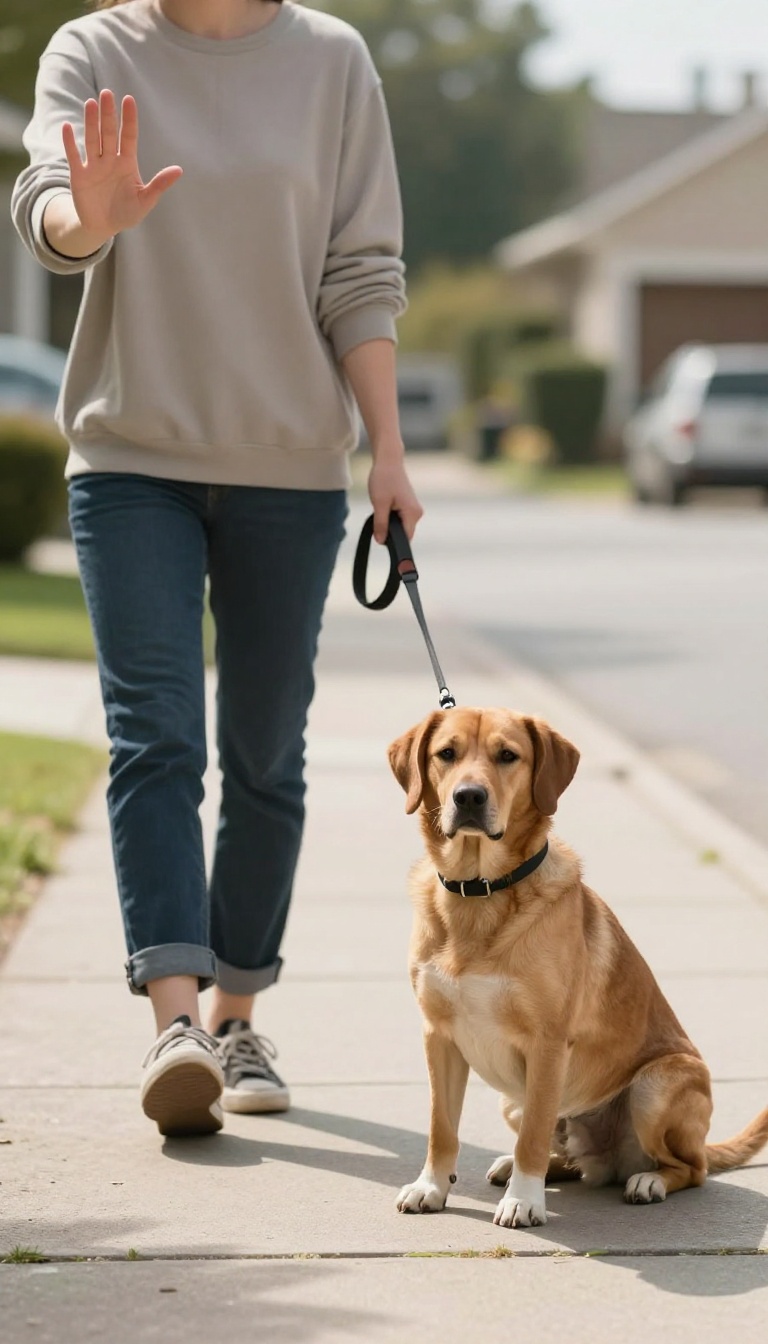
Every walk is packed with potential distractions, but curbs are where safety really matters. A dog that bolts across the street is a dog at risk. The Curb Check turns each intersection into a quick training moment that could save your pup's life.
This exercise is simple: pause at every curb, ask for a sit, and wait until you give the release word before stepping off. It's not about being rigid—it's about building a habit that keeps both of you safe. And once your dog gets the hang of it, you'll both enjoy walks with a lot less yanking and a lot more trust.
The Curb Check is more than just a safety drill—it's a way to teach your dog that intersections are places to stop and check in with you. By consistently requiring a sit and wait at every curb, you're reinforcing impulse control in a real-world setting. This exercise also strengthens your bond because your dog learns to look to you for guidance before moving forward.
Start in a quiet area with few distractions. Approach the curb, stop, and give a clear "sit" cue. Once your dog is sitting, say "wait" in a calm, firm voice.
Hold your hand up like a stop sign. After a few seconds, release with "okay" and step forward. Practice this at every curb, even if it's just a driveway or a small step.
Consistency is key. As your dog gets better, you can increase the challenge by practicing at busier intersections or with more distractions around. The goal is to make the pause automatic, so your dog doesn't even think about moving until you give the go-ahead.
This habit can be a literal lifesaver if your dog ever slips out of the collar or gets spooked.
Why The Curb Check Matters
Curbs are where many dogs get into trouble. They see something exciting on the other side—another dog, a squirrel, a car—and their instinct is to chase. Without a pause, that can lead to running into traffic or pulling you off balance.
The Curb Check teaches your dog that the edge of the sidewalk is a boundary that requires your permission to cross. This exercise also builds general impulse control. When your dog learns to wait at a curb, they're learning to pause and think before acting.
That mental muscle carries over to other situations, like waiting for food or staying calm when the doorbell rings. It's a small investment of time that pays off in big ways.
Step-by-step Setup
Start with your dog on a loose leash. Approach the curb at a normal pace. As you reach the edge, stop and give a gentle upward tug on the leash if needed to signal a halt.
Say "sit" and wait for your dog to comply. If your dog is too excited, you can use a treat to lure them into position. Once they're sitting, hold your palm out and say "wait" in a steady voice.
Keep eye contact and be ready to block with your body if they try to move. After a few seconds, say "okay" and step off the curb together. Reward with a treat or praise as you walk.
Repeat at every curb, even if it's just a driveway. Consistency is what makes this stick.
Troubleshooting Common Issues
If your dog pops up as soon as you start to move, go back to the curb and try again. You might need to shorten the wait time at first, then gradually build up. If your dog is too distracted, practice in a quieter spot before tackling busy streets.
Another common issue is your dog anticipating the release and breaking early. Mix up the duration of the wait—sometimes release after 2 seconds, sometimes after 10—so your dog stays focused on you rather than guessing. If your dog is especially stubborn, use a higher-value treat like chicken or cheese to keep their attention.
Remember to stay patient and keep sessions short and positive.
6. The Greeting Calm
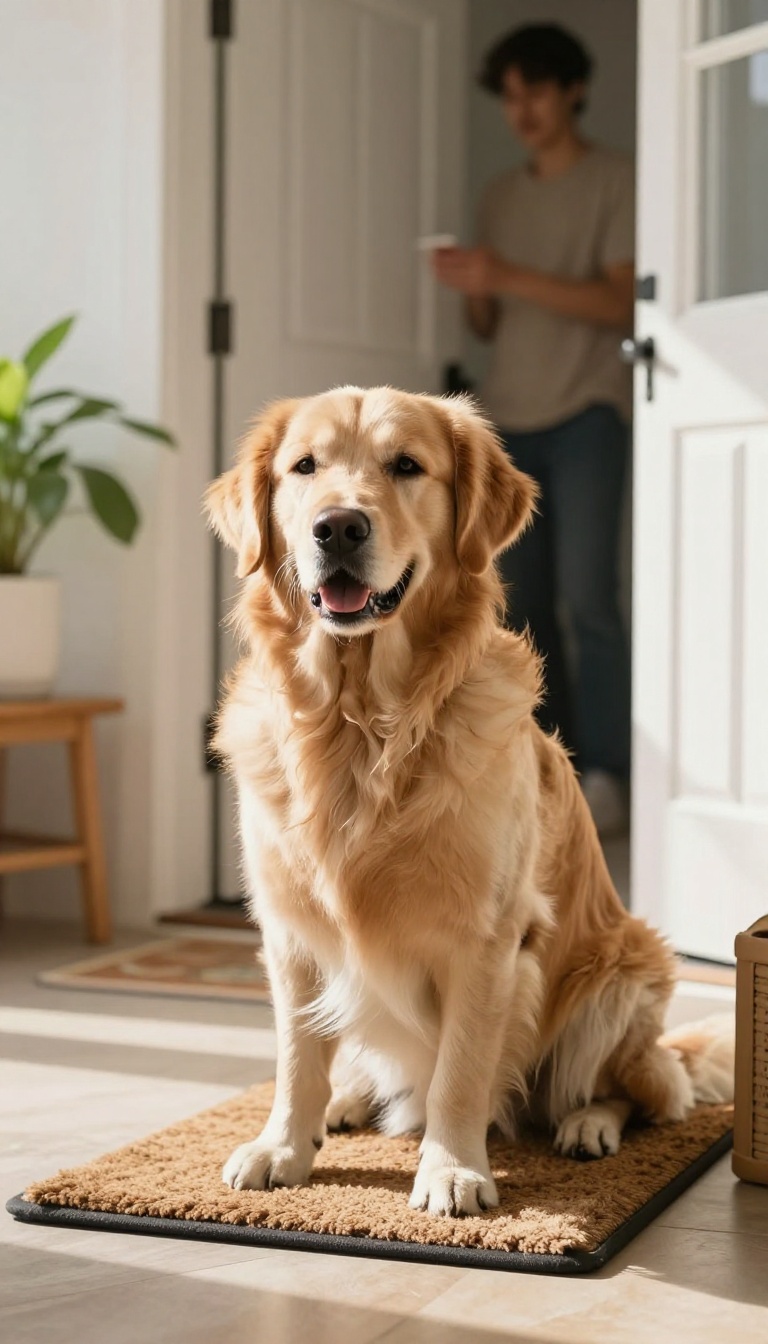
Guests at the door can turn your dog into a bouncing, barking tornado. But with a little practice, that same moment can become a calm, controlled greeting. The key is teaching your dog to wait on a mat or bed before saying hello—so they learn that patience earns them the reward of meeting new people.
This exercise is about replacing excited jumping with a calm, stationary position. It's not just about manners; it's about safety too. A dog that rushes the door could accidentally knock over a child or an elderly visitor.
By practicing the wait command at the door, you're setting your dog up for success in one of the most chaotic moments of the day.
Why The Mat Matters
A mat or bed gives your dog a clear, designated spot to go to when guests arrive. It's easier for them to understand what you want than just 'don't jump. ' Start by teaching your dog to go to their mat on cue, then practice with the doorbell or a knock. Reward them for staying put, and gradually increase the distraction level.
Step-by-step Practice
Begin with low-key practice: have a friend ring the doorbell while you're not expecting anyone. Ask your dog to go to their mat and wait. If they stay, reward them.
If they break, calmly guide them back. Repeat until your dog consistently waits. Then, add the real thing—a guest actually entering—and keep rewarding the calm behavior.
Handling The Excited Greeter
Some dogs get so excited that they can't think straight. For these pups, you might need to use a leash or a baby gate to manage the situation. Keep your dog on a leash and have them wait on their mat.
If they lunge or jump, calmly walk them back. Over time, they'll learn that calm behavior is what gets them the attention they crave.
7. The Toy Temptation
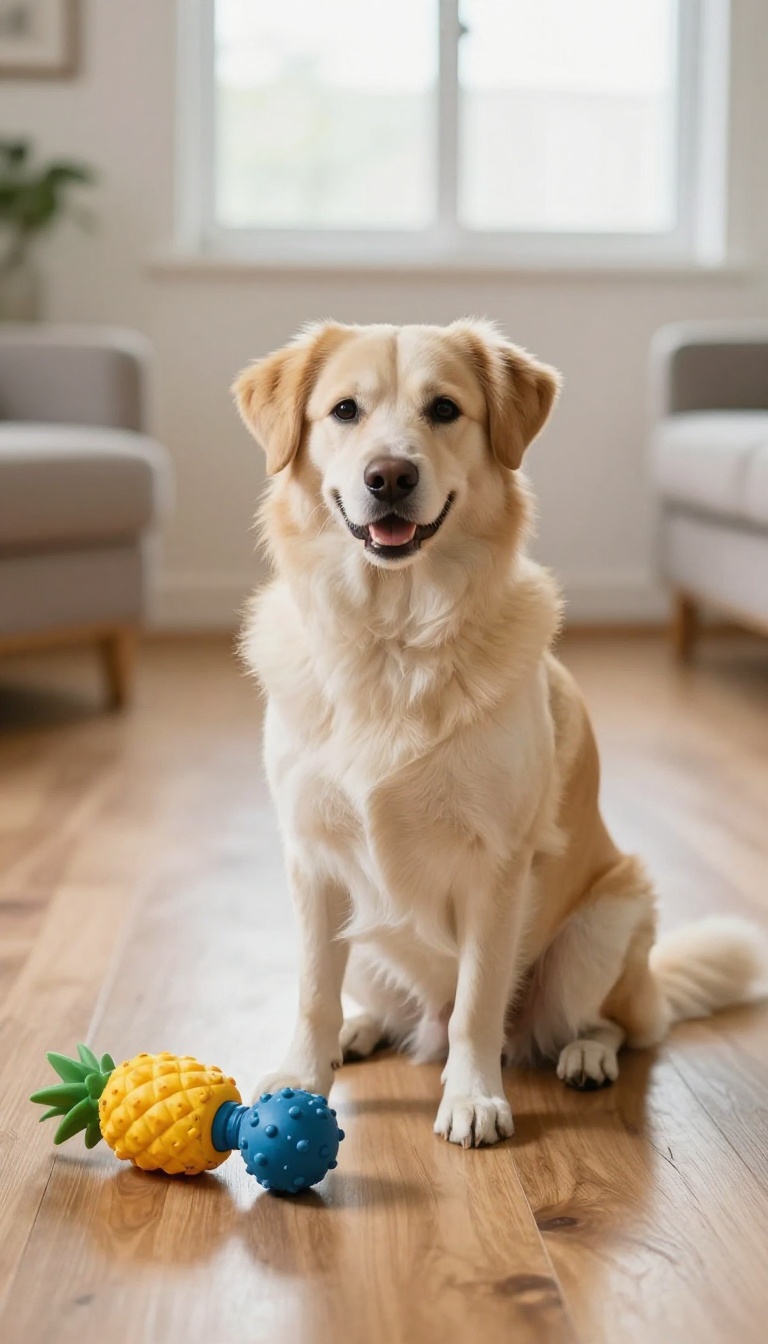
Playtime is prime time for impulse control. When your dog sees a favorite toy, their brain goes into overdrive, and waiting feels impossible. This exercise turns that excitement into a training win.
By asking for a wait before the toy flies, you teach your dog that patience leads to the best rewards. It's a fun way to build self-control that carries over to doors, food, and walks.
Start with your dog on a leash or in a sit. Hold a toy they love, show it briefly, then hide it behind your back. Say "wait" in a calm, firm voice.
If they stay put, praise and release with a "take it" or "okay" cue, then toss the toy. If they break the wait, calmly reset them and try again. As they improve, increase the challenge: hold the toy longer, move it around, or toss it a short distance while they wait.
The goal is to build a solid pause before the chase.
Start With A Still Toy
Begin with the toy resting on the floor a few feet away. Ask your dog to wait, then release them to grab it. This is easier than a moving toy and helps them understand the concept.
Add Motion Gradually
Once they've mastered the still toy, try holding it and making small movements. Then progress to gentle bounces or short tosses. Always reward the wait before the release.
Use A Release Word
Pick a consistent word like "take it" or "go" to signal they can move. This makes the wait clearer and prevents them from guessing when it's okay to break.
Make It A Game
Turn this into a fun routine: wait, release, play, then pause. This teaches your dog that self-control is part of the fun, not a punishment. Keep sessions short and upbeat.
8. The Stair Stop
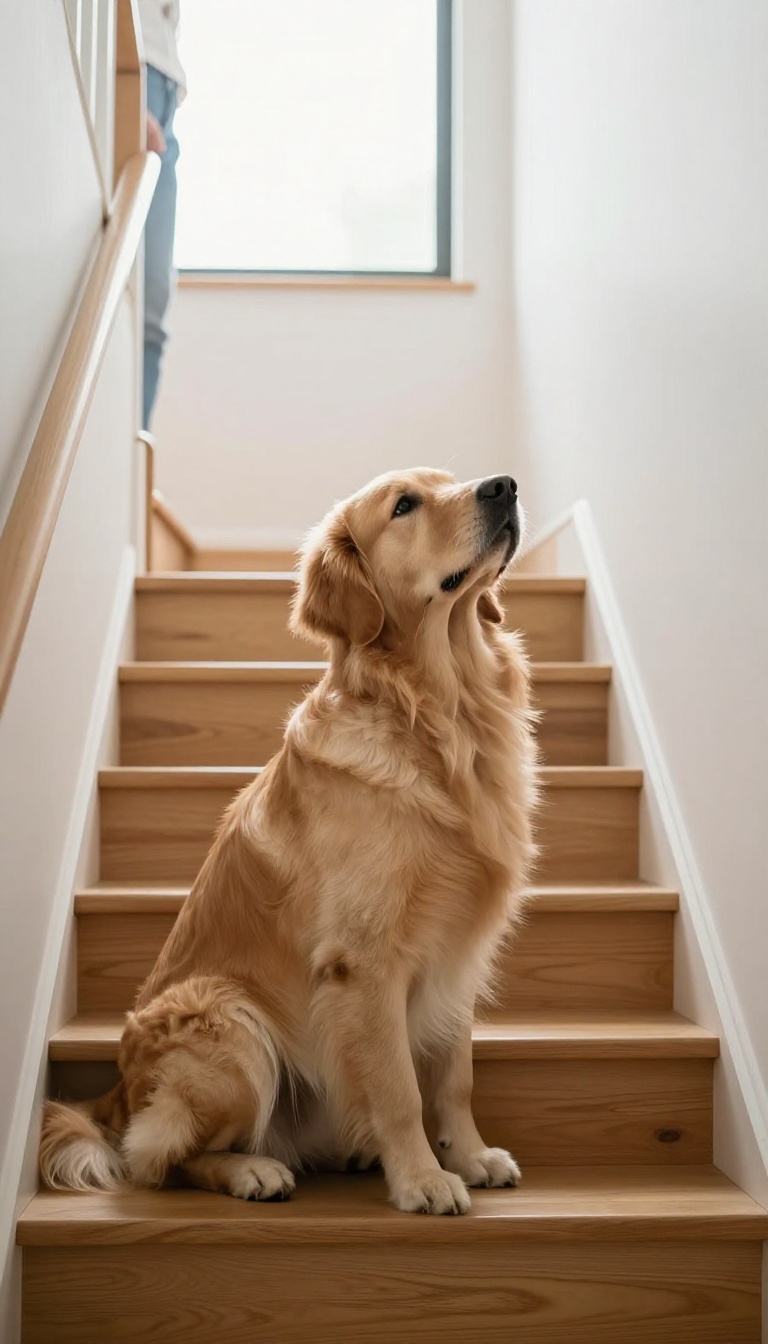
Stairs are a magnet for excited dogs—they zoom up and down without a second thought, which can be risky on narrow steps or when you're carrying groceries. Practicing wait on stairs teaches your dog to pause in a vertical space, adding a new dimension to their impulse control. It's a simple setup that pays off in safety and calmness.
Start at the bottom of a staircase with your dog on a leash. Ask for a sit, then say 'wait' and take one step up. If your dog stays, return and reward.
Gradually increase the number of steps you take before coming back. The goal is to have your dog remain at the bottom until you release them. This builds patience and reinforces that the stairs aren't a free-for-all.
Why Stairs Are Different
Stairs change your dog's perspective and balance, making the wait command feel new. The incline adds a physical challenge, and the visual difference from a flat floor helps your dog generalize the cue. Practicing here ensures they listen in any environment, not just the living room.
Starting At The Bottom
Begin with your dog at the bottom of the stairs. Use a treat to lure them into a sit, then say 'wait' and take one step up. If they move, calmly return to the starting position and try again.
Keep sessions short—five minutes max—and always reward success with a treat and praise.
Moving To The Top
Once your dog masters the bottom, switch to the top of the stairs. Have them sit, say 'wait, ' and take one step down. This is trickier because they might want to follow you.
Use a release word like 'okay' to let them come down, and practice until they wait reliably before descending.
Adding Distractions
To make it more challenging, toss a favorite toy down the stairs or have a family member walk past. The key is to keep your dog's focus on you, not the distraction. If they break the wait, gently reset and try again.
This builds rock-solid self-control in a high-energy setting.
9. The Car Door Hold
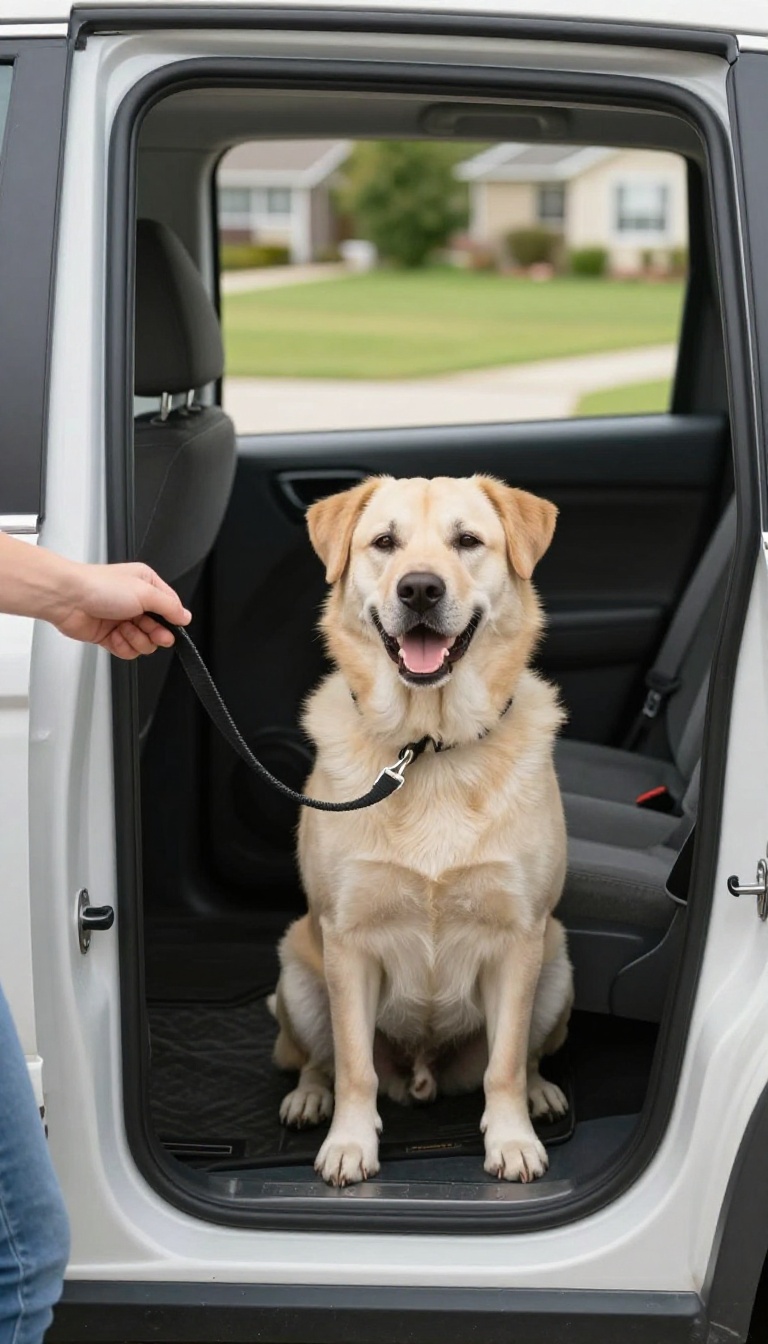
Car rides are exciting for most dogs, but that excitement can turn dangerous the second the door swings open. A dog that bolts out of the car into a parking lot or street is a recipe for disaster. Teaching a solid wait at the car door gives you a moment to assess the surroundings and keep your pup safe.
Start by practicing when the car is parked in a safe, quiet spot, like your driveway. With your dog on a leash, open the door just a crack. If they try to push through, close it and say 'wait' in a calm but firm tone.
Repeat until they hold still with the door fully open. Then, release with a cue like 'okay' and let them hop out. Gradually add distractions, like a busy street or a friend waving from a distance, to proof the behavior.
Why It Matters
Cars are often parked near roads, and a sudden dash can lead to a collision or getting lost. The wait command gives you control before your dog's paws hit the pavement. It also sets a calm tone for the rest of the walk or adventure.
Step-by-step Training
Begin with the engine off and your dog on a leash. Open the door a few inches and say 'wait. ' If your dog stays put, reward with a treat. Gradually open the door wider and extend the duration.
Once they're solid, practice with the engine running and in different locations. Always use a release word so your dog knows when it's safe to move.
Troubleshooting Common Issues
If your dog is too excited to focus, try tiring them out with a quick walk before car training. If they keep pushing forward, go back to a smaller opening and reward more frequently. Consistency is key—never let them out without the release, even if you're in a hurry.
10. The Distraction Drill
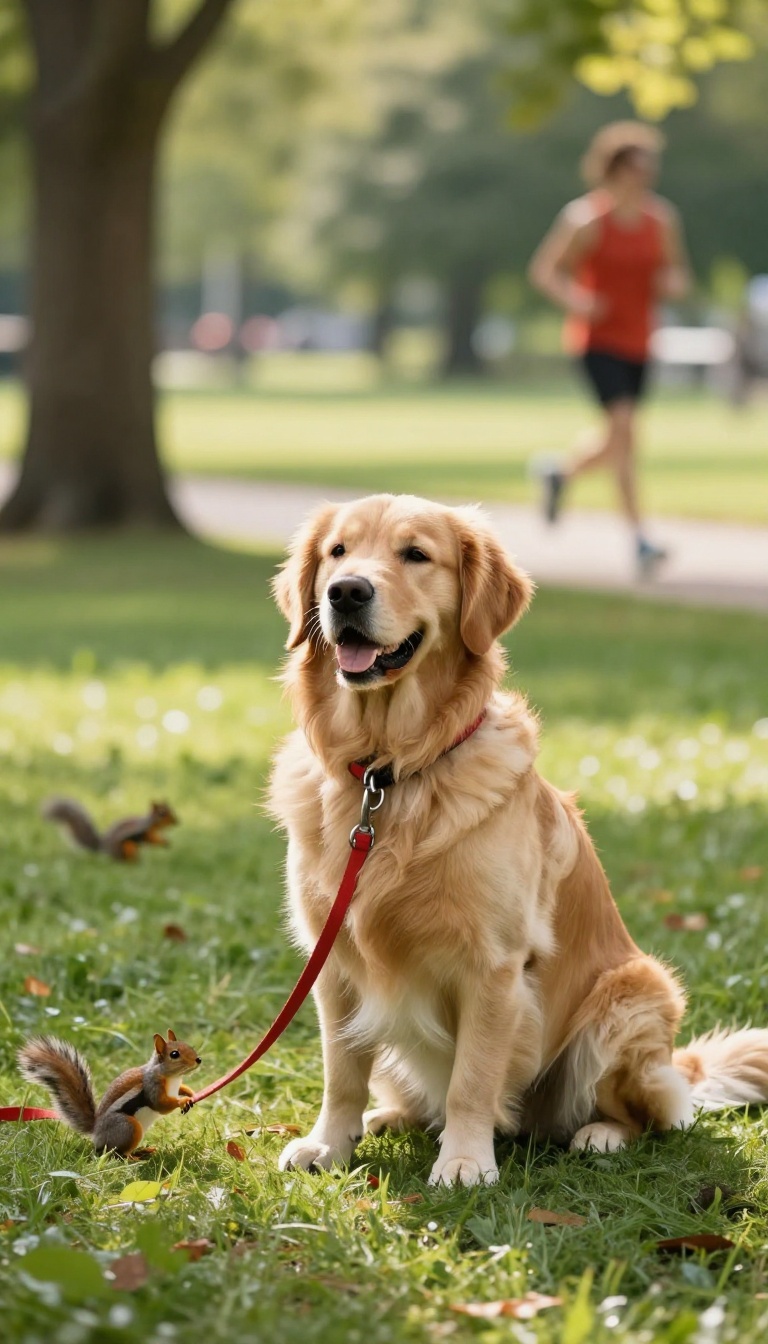
By now, your dog has mastered the wait command in quiet spaces—the kitchen, the living room, maybe even the backyard. But real life isn't quiet. Squirrels, skateboards, and the smell of someone else's lunch can all break that perfect stay.
The Distraction Drill is where training meets the real world, and it's the difference between a dog who waits at home and a dog who waits anywhere.
The Distraction Drill is all about taking the wait command on the road. You'll start with mild distractions and build up to the chaos of a busy park or a street corner. The goal is to make waiting so automatic that your dog barely notices the world buzzing by.
This isn't about perfection on the first try—it's about showing your dog that good things come when they stay put, no matter what's happening around them.
Start Small, Then Build
Begin in a familiar spot with a low-level distraction, like a neighbor chatting nearby or a leaf blowing across the path. Give your wait command, then reward after a few seconds. Gradually increase the intensity: a jogger passing, a dog barking in the distance, a bicycle rolling by.
Keep sessions short—five minutes max—and always end on a success. The key is to set your dog up to win, not to set them up to fail.
Use High-value Rewards
When distractions spike, your usual treats might not cut it. Break out the big guns: tiny pieces of chicken, cheese, or hot dogs. These high-value rewards tell your dog that holding that wait is totally worth it.
You'll also want to vary the reward—sometimes it's a treat, sometimes it's a toy, and sometimes it's just a happy 'yes! ' and a quick release. That unpredictability keeps your dog guessing and engaged.
Practice At Real-world Hotspots
Pick spots where distractions are naturally high but safe: a park bench near a walking path, a quiet corner of a farmer's market, or a busy sidewalk (but not too close to traffic). Have your dog wait while people pass, while another dog walks by, or while a kid rides a scooter. Keep the leash loose and your body language calm.
If your dog breaks the wait, just reset and try again—no scolding, just a fresh start.
Add Duration And Distance
Once your dog can hold a wait with distractions nearby, start increasing the time and your distance. Ask for a wait, then take one step away, then two, then three. Return and reward.
Over time, you can work up to waiting while you walk a few feet away or even turn your back. This builds real-world reliability, because in life, you often need your dog to wait while you're not right next to them.
FAQ
How long does it take to teach a dog the wait command?
It varies, but with consistent practice, most dogs learn the basics within a week. Full reliability in distracting situations may take a few weeks.
What's the difference between 'wait' and 'stay'?
Wait is usually a temporary pause, like waiting at a door, while stay means remain in place until you return. Wait is often shorter and less formal.
Can I teach an older dog to wait?
Absolutely. Older dogs can learn new commands, though it may take a bit more patience. Use high-value treats and keep sessions short.
What if my dog breaks the wait?
Simply start over. Don't scold—just reset and try again. Consistency and positive reinforcement are key.
Should I use a clicker for wait training?
A clicker can be helpful to mark the exact moment your dog waits, but it's not required. You can use a verbal marker like 'yes' instead.
Conclusion
The wait command is a small skill that pays off in big ways, whether you're holding the door, setting down a bowl, or pausing at a curb. Pick two or three exercises that fit your daily routine and practice them in short, relaxed sessions. You'll notice calmer moments and fewer split-second decisions that go sideways.
Keep rewards generous, stay consistent, and let each success build on the last. Before long, that pause will feel like second nature—for both of you.

I’m Pallab Kishore, the owner of Little Pets Realm — an animal lover and pet care enthusiast sharing easy tips, healthy recipes, and honest advice to help every small pet live a happy, healthy, tail-wagging life.