
Your backyard should be a sanctuary, not a mud pit. But without a smart kennel setup, you're constantly battling dirt, odors, and wear on your lawn. The right outdoor dog kennel keeps your pup happy and your yard cleaner with minimal effort.
These nine ideas focus on real-world solutions—drainage, durable surfaces, and easy maintenance. From elevated platforms to artificial turf, each option tackles a specific challenge like mud, waste, or constant hosing down.
Whether you have a sprawling yard or a compact side strip, there's a practical design here that works for your space and your dog's needs. Let's explore kennel ideas that make life easier for both of you.
1. Elevated Platform Kennel with Drainage
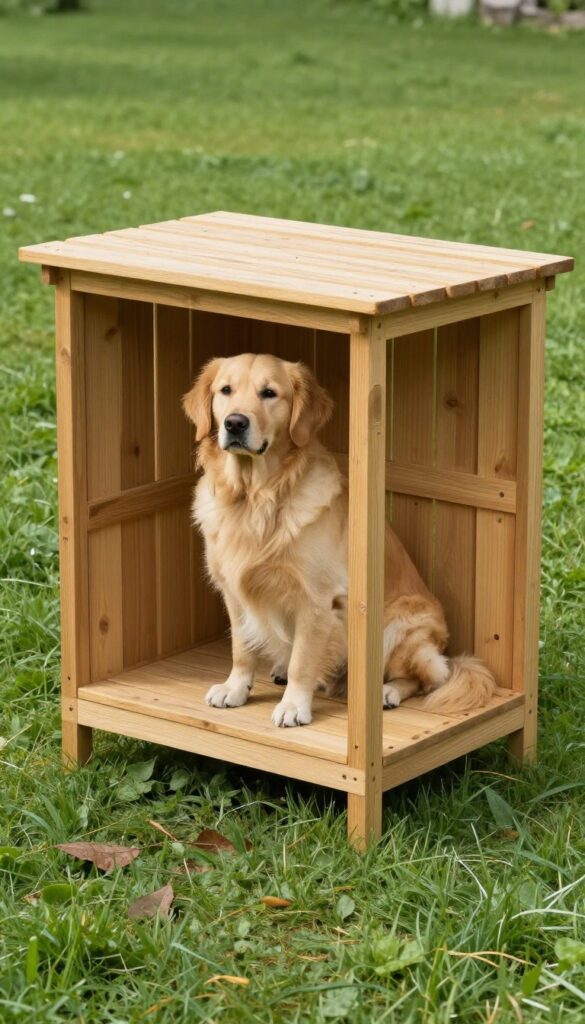
Rainy days don't have to mean muddy paws and a messy yard. An elevated platform kennel lifts your dog off the ground, so water flows right through instead of pooling around their bed. The open design keeps air moving underneath, which helps everything dry faster and cuts down on odors.
Dog owners love how this simple setup transforms a wet, grimy kennel into a clean, comfortable space that stays fresher between cleanings.
Why It Works
Raising the kennel floor eliminates direct contact with wet soil or grass, preventing mud from being tracked into your home. The drainage gaps or slats allow rainwater and urine to pass through, so your dog stays dry and the kennel doesn't turn into a swamp. This design also discourages pests like ants and flies that are attracted to damp, dirty areas.
Best For
This kennel style is ideal for dog owners in rainy or humid climates where the ground stays wet for days. It's also great for large breeds that produce a lot of mud and mess, or for dogs who love to dig and create holes in their enclosure. If you have a sloped yard, an elevated platform can level out the space and improve drainage naturally.
Practical Tip
Build the platform with pressure-treated lumber or cedar and use galvanized hardware to prevent rust. Space the slats about half an inch apart for good drainage without catching your dog's nails. Add a removable tray underneath to catch solids during potty training—it makes cleanup as simple as pulling out a drawer and rinsing it off with a hose.
Budget-Friendly Option
Skip the custom build and repurpose a wooden pallet instead. Sand it smooth, seal it with pet-safe outdoor paint, and place it on concrete blocks for elevation. It's a low-cost way to test if your dog likes the elevated setup before investing in a permanent structure.
2. Concrete Pad with Slope and Hose Access
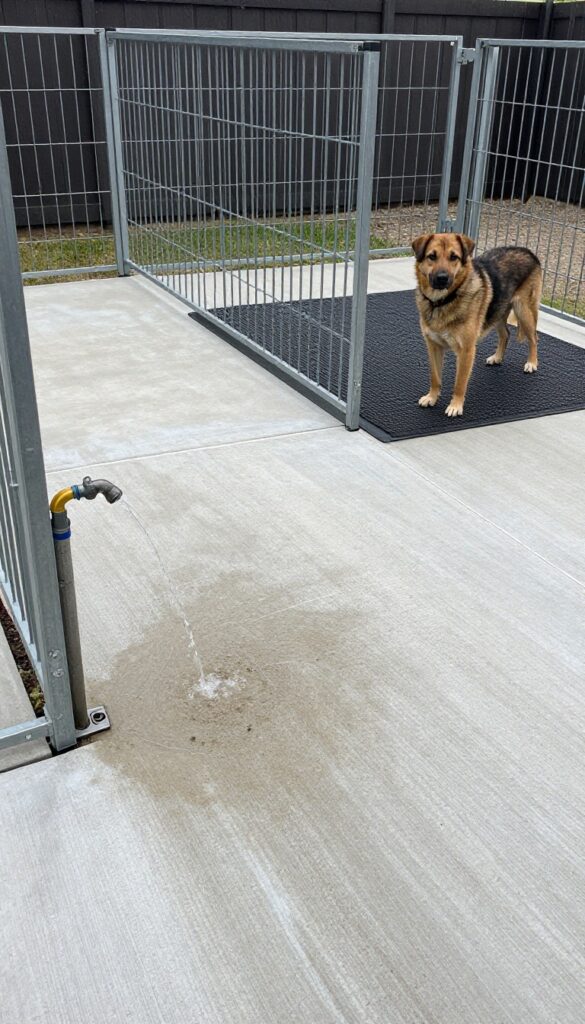
A concrete pad might sound basic, but adding a gentle slope turns it into a self-cleaning kennel floor. Water runs off naturally, carrying messes away from your dog’s living area. You just aim a hose and watch the dirt disappear—no scrubbing required.
Why It Works
The slope directs waste and rainwater toward a drain or garden bed, preventing puddles and mud. Concrete is non-porous, so odors don’t soak in, and a quick hose-down keeps the surface sanitary. It’s one of the lowest-maintenance options for outdoor kennels.
Best For
This setup is ideal for medium to large dogs that spend several hours outside daily, especially in rainy climates. It’s also great for owners who want a durable, long-lasting kennel floor without constant upkeep.
Practical Tip
Pour the concrete with a 2% slope (about ¼ inch per foot) away from the kennel’s shelter. Add a hose bib nearby and consider a textured broom finish for traction. For extra comfort, place a rubber mat or elevated bed in the dry area.
Budget-Friendly Option
If pouring concrete is out of budget, use large concrete pavers laid on a gravel base with a slight slope. They’re easier to install and still offer good drainage with a hose-down surface.
3. Gravel-Filled Kennel with Weed Barrier
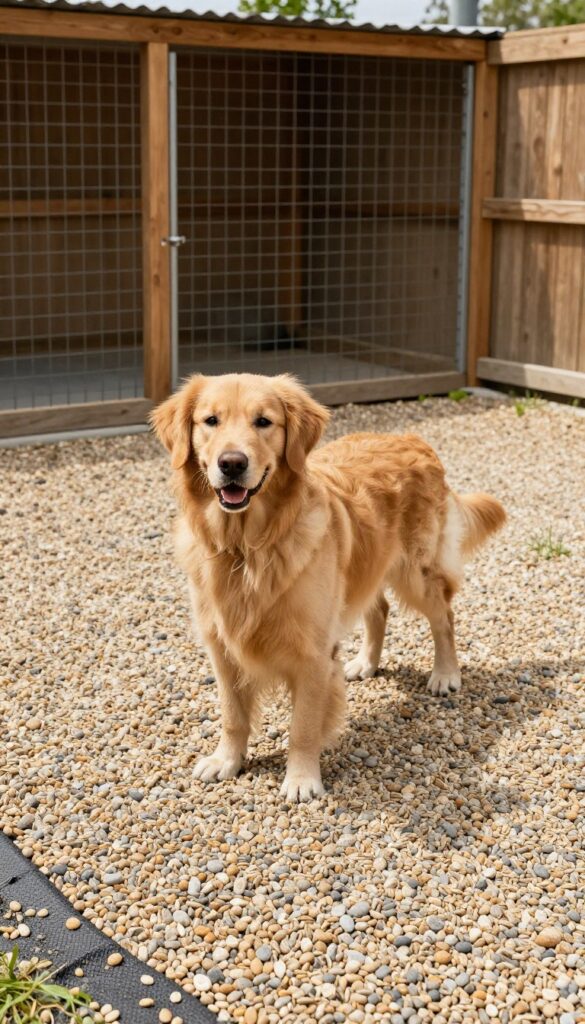
If you're tired of muddy paw prints tracking through the house, a gravel-filled kennel might be your best bet. The pebbles create a stable, well-draining surface that dries quickly after rain or hose-downs. Plus, unlike grass or dirt, gravel won't turn into a swamp, so your yard stays cleaner and your dog stays drier.
Why It Works
Gravel drains water almost instantly, so puddles and mud are essentially eliminated. The weed barrier underneath prevents unwanted growth, keeping the area looking neat without constant weeding. It's a low-maintenance surface that's also comfortable enough for dogs to walk and lie on.
Best For
This setup is ideal for active dogs who love water or for rainy climates where mud is a constant problem. It's also great for owners who want a durable, long-lasting kennel floor that requires almost no daily upkeep.
Practical Tip
Use pea gravel or washed river rock—about 3/4 inch diameter—for the best balance of drainage and comfort. Spread it at least 3 inches deep over the weed barrier. Smooth the gravel periodically to prevent uneven spots, and hose it down as needed to keep it fresh.
Budget-Friendly Option
If you're on a tight budget, you can use crushed stone or decomposed granite instead of gravel. Just make sure to compact it well and add a drainage layer underneath to avoid sinking.
4. Portable Fence Panels on Grass
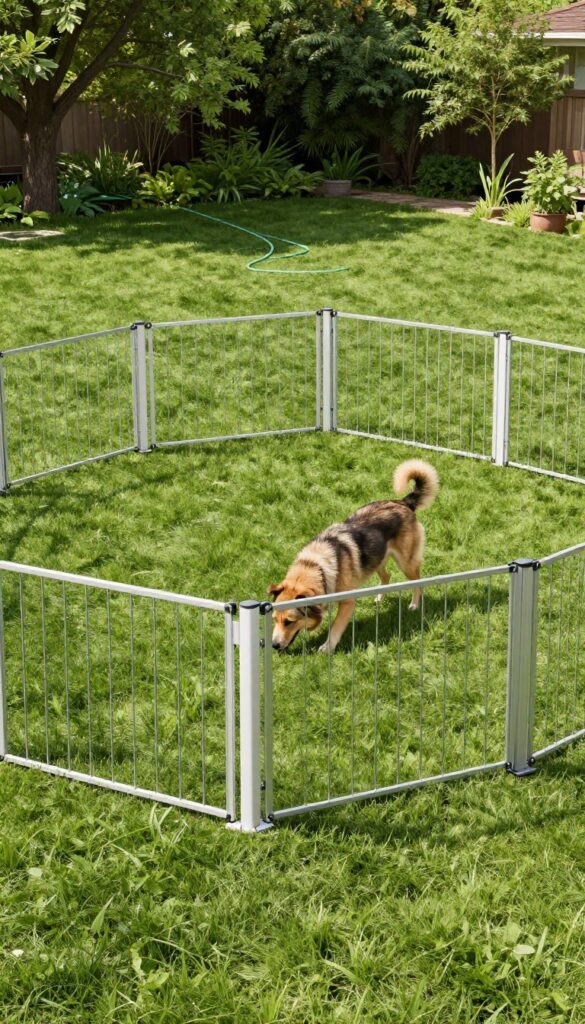
Tired of your dog turning one patch of grass into a muddy mess? Portable fence panels let you easily move the potty zone around your yard. This simple rotation keeps your lawn healthy and your dog happy with a fresh spot each week.
Why It Works
By shifting the enclosure every few days, you give the grass time to recover before it gets trampled again. It also spreads out the waste and urine, reducing burn spots and soil compaction. Your yard stays greener with less effort.
Best For
Best for dogs who do their business on grass and owners with medium to large yards. Great for active dogs that need a dedicated potty area but don't have a permanent kennel. Works well for single-dog households or small multi-dog homes.
Practical Tip
Use lightweight, 2-foot-high metal or plastic panels that are easy to carry and connect. Place them in a sunny area to help grass regrow faster. Move the fence every 3–4 days, and consider a simple gate panel for easy access.
Budget-Friendly Option
DIY with inexpensive garden stakes and chicken wire to create a temporary pen. Just hammer stakes into the ground and attach wire with zip ties. It's cheap, fast to set up, and easy to reposition.
5. Artificial Turf Over Drainage Base
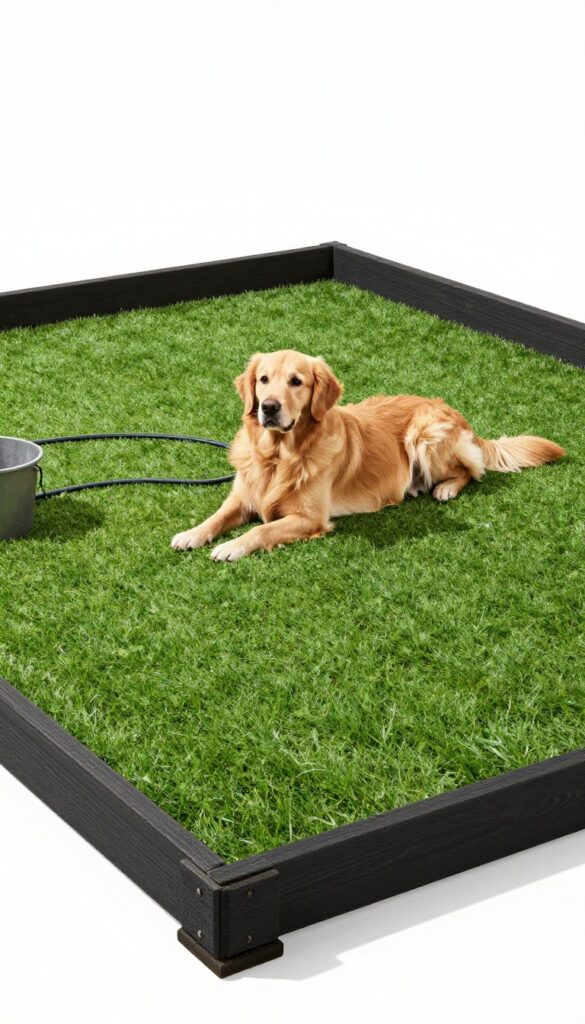
Grass that stays green without the mud? Yes, it's possible. Artificial turf over a crushed stone base gives your dog a soft, clean surface that drains instantly.
Owners love it because it looks great year-round and eliminates the constant battle with bare dirt patches and wet paws.
Why It Works
The crushed stone layer creates a drainage gap underneath the turf, so urine and rainwater flow away instead of pooling. This prevents odors from building up and makes scooping a breeze—just pick up solids and hose down the turf occasionally.
Best For
This setup is ideal for dogs who love to run and play without tearing up real grass. It's also a lifesaver for owners with small yards where natural grass struggles to survive heavy traffic.
Practical Tip
Install a perimeter border of landscape timbers or pavers to keep the crushed stone contained. Use infill like silica sand or rubber granules to help the turf stand upright and add extra cushioning for your dog's joints.
Budget-Friendly Option
If full artificial turf is out of budget, try large interlocking rubber mats over a gravel base. They drain well, are easier to clean than concrete, and still reduce mud tracking.
6. Covered Kennel with Rubber Mat Flooring
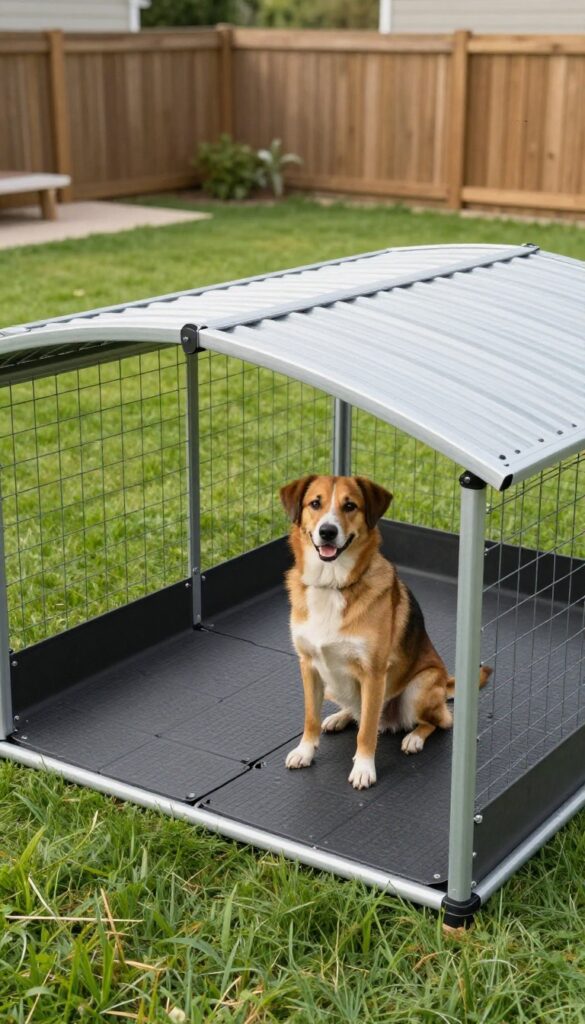
A covered kennel with rubber mat flooring is a game-changer for keeping your yard tidy. The roof shields your dog from rain and sun, while the rubber mats create a surface that's easy to clean and gentle on paws. This setup minimizes mud and mess, giving your pup a comfortable, dry spot to hang out.
Why It Works
The roof prevents rain from turning the kennel into a muddy mess, and rubber mats drain quickly while being easy to hose off. Unlike grass or dirt, rubber doesn't hold odors or stains, so your yard stays cleaner and your dog stays drier.
Best For
This idea is perfect for dogs who spend a lot of time outdoors, especially in rainy climates. It's also great for owners with small yards where mud buildup is a constant issue, or for high-energy breeds that need a clean, dry space to relax after playtime.
Practical Tip
Choose interlocking rubber mats with drainage holes to prevent water pooling. Install the roof with a slight slope so rain runs off, and consider using a durable metal or polycarbonate roofing material. Clean the mats weekly with a mild soap and water mix to keep them fresh.
Budget-Friendly Option
If you're on a tight budget, use a heavy-duty tarp stretched over a simple PVC frame for the roof, and buy rubber stall mats from a farm supply store—they're thicker and cheaper than pet-specific mats.
7. Dog Run Along Fence Line with Mulch
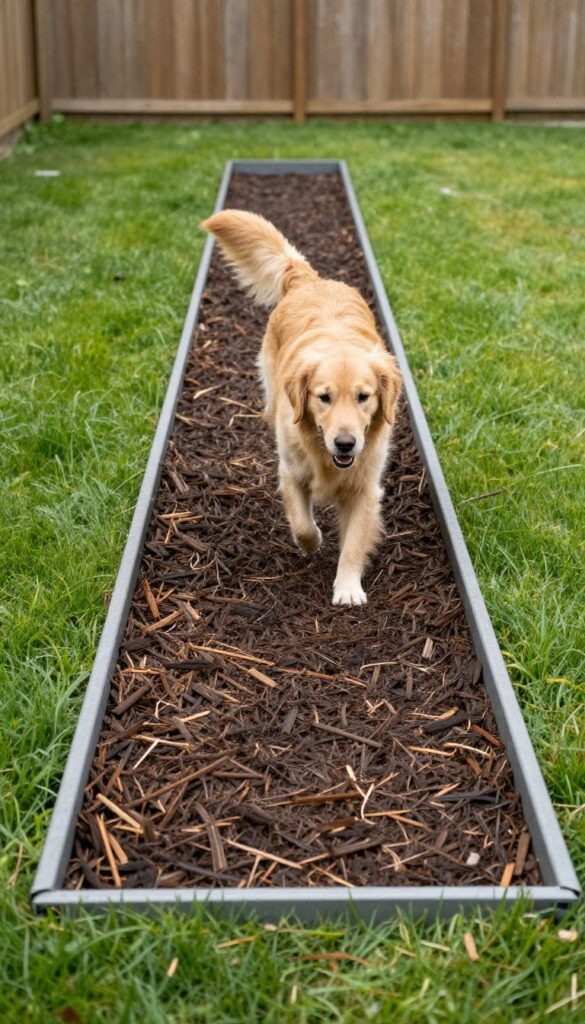
A narrow mulch run hugging your fence line is a smart way to give your dog a dedicated potty and play zone without sacrificing your whole yard. The mulch absorbs moisture and traps odors, keeping the rest of your lawn fresh. It's a low-cost, easy-to-install solution that works especially well for dogs that like to patrol the perimeter.
Why It Works
Mulch is naturally absorbent, so it soaks up urine and helps control smell better than grass or dirt. It also breaks down over time, adding organic matter to the soil, and it's soft on paws. Seasonal replacement is simple and keeps the area clean and odor-free.
Best For
This setup is ideal for medium to large dogs that love to walk or run along the fence. It's also perfect for narrow side yards or tight spaces where a full kennel won't fit. If your dog tends to dig or wear down a single path, mulch is a forgiving surface that's easy to refresh.
Practical Tip
Use a thick layer (at least 4-6 inches) of shredded hardwood or cedar mulch—avoid cocoa mulch, which is toxic to dogs. Edge the run with landscape timbers or metal edging to keep the mulch contained. Rake the area weekly to break up clumps and spot-clean waste promptly.
Budget-Friendly Option
Instead of bagged mulch, check with local tree services for free wood chips. They're often happy to drop a load, and the coarser texture works just as well. Just let the chips age for a few weeks before letting your dog use the area.
8. Kennel with Built-in Waste Station
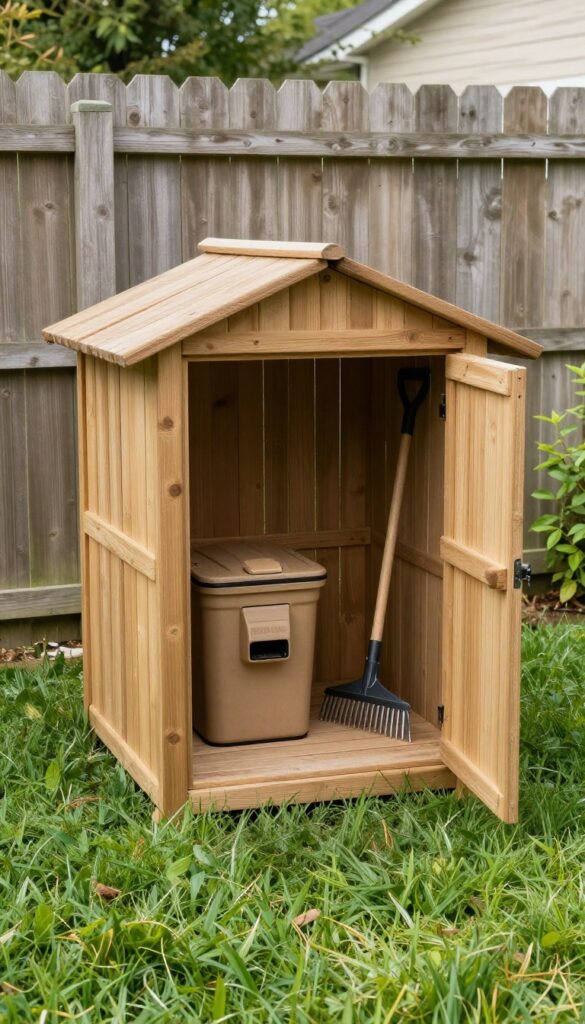
Nothing kills the vibe of a clean yard like having to hunt down a poop bag while your dog dances impatiently. By building a waste station right into your kennel, you keep cleanup supplies exactly where you need them. It's a small addition that makes daily maintenance feel effortless and keeps your yard looking tidy.
Why It Works
When your waste bin, bag dispenser, and rake are all within arm's reach, you're far more likely to scoop immediately instead of putting it off. This prevents odors from building up and stops flies or pests from being attracted to the area. Plus, having a dedicated spot for waste gear means you never have to search for supplies or leave them lying around.
Best For
This setup is perfect for dog owners who are diligent about yard maintenance but want to make scooping as quick and convenient as possible. It's especially useful for owners of large breed dogs that produce more waste, or for multi-dog households where cleanup frequency is higher.
Practical Tip
Mount a small weatherproof cabinet or shelf on the kennel fence or post. Inside, store a lidded waste bin, bag rolls, and a short-handled rake or scoop. Choose a bin with a tight-sealing lid to contain smells, and consider a bag dispenser that attaches to the outside for one-handed access.
Budget-Friendly Option
If you're on a tight budget, repurpose a small plastic storage bin with a lid as your waste station. Attach a bag holder clip to the side, and use a child's garden rake from the dollar store. It's not fancy but it works just as well.
9. Shade Sail Over Sand or Pea Gravel
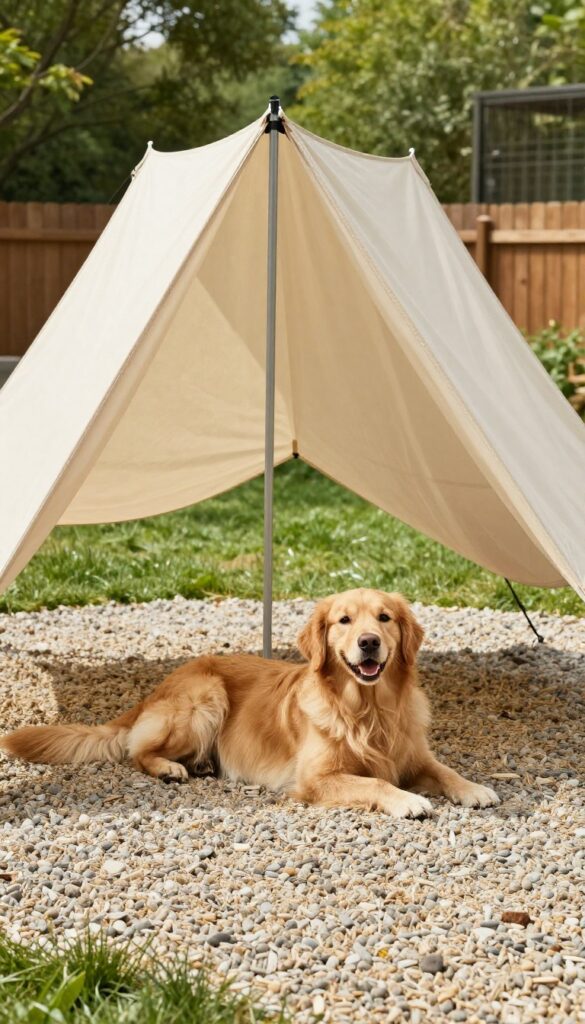
A shade sail isn't just for patios—it's a brilliant canopy for your dog's kennel. By suspending it over a base of sand or pea gravel, you create a cool, dry zone that stays comfortable even on hot days. The fabric blocks harsh sun while allowing airflow, and the loose material underneath drains quickly after rain or a hose-down.
Why It Works
Sand and pea gravel are excellent for drainage, so puddles don't form and odors are minimized. The shade sail reduces heat buildup, making the kennel a more pleasant spot for your dog to relax. Plus, solid waste sits on top of the gravel for easy scooping, and you can rinse the area without creating mud.
Best For
This setup is ideal for dogs that spend several hours outside during warm weather, especially breeds prone to overheating like Bulldogs or Huskies. It also works well in yards with poor drainage or where grass just won't survive.
Practical Tip
Install the shade sail at a slight angle to let rain run off and prevent sagging. Use a gravel depth of 2–3 inches for good drainage and paw comfort. Rake the surface weekly to keep it level and remove debris.
Budget-Friendly Option
If a shade sail is out of budget, use a large patio umbrella anchored securely beside the kennel. For the base, crushed granite or decomposed granite are cheaper alternatives to pea gravel.
FAQ
What is the best flooring for an outdoor dog kennel?
Concrete, gravel, or artificial turf over a drainage base are top choices. They are easy to clean and prevent mud buildup.
How can I keep my dog's kennel from smelling?
Regular scooping, hosing down surfaces, and using odor-neutralizing sprays help. Choose materials that drain well and dry quickly.
Do outdoor kennels need shade?
Yes, especially in hot climates. Provide a covered area or shade sail to protect your dog from direct sun and heat.
Can I put a dog kennel on grass?
You can, but grass may turn muddy quickly. Consider portable panels to rotate the area or use a gravel or concrete base instead.
How big should an outdoor dog kennel be?
At least 3 times your dog's length in one direction, with enough room to stand, turn, and lie down comfortably. Larger is better for exercise.
Conclusion
Picking the right outdoor kennel doesn't have to be a headache. Focus on what works for your yard, your climate, and your dog's habits. A little thought upfront saves you cleanup time and keeps your pup happy.
Start with one idea that feels doable, then tweak it as you go. Your yard will stay cleaner, and your dog will have a comfortable spot to enjoy the fresh air.

I’m Pallab Kishore, the owner of Little Pets Realm — an animal lover and pet care enthusiast sharing easy tips, healthy recipes, and honest advice to help every small pet live a happy, healthy, tail-wagging life.