
Living in a small home doesn't mean your dog has to give up their own space. A dedicated kennel area can actually help your pup feel more secure and give you peace of mind. The trick is choosing a design that fits your square footage and your dog's needs.
These nine DIY ideas prove you don't need a spare room to create a comfortable indoor kennel. From repurposed furniture to clever built-ins, each option is practical for tight spaces.
You'll find solutions that blend into your home while giving your dog a cozy den. Whether you're handy with tools or prefer no-build projects, there's something here for every skill level.
1. Under-Stair Kennel Nook
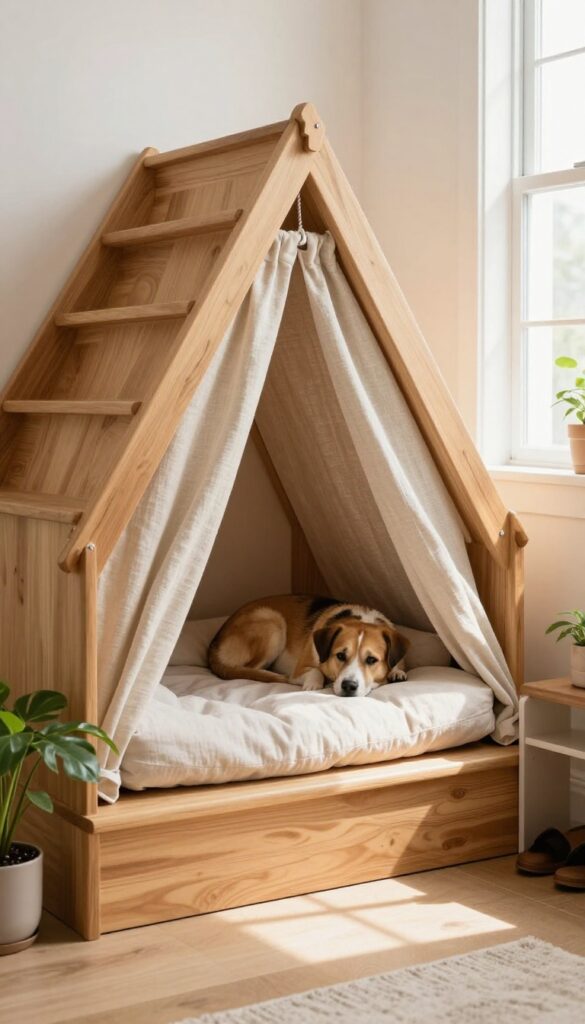
That awkward triangular space under your stairs often ends up as a dumping ground for shoes and boxes. Instead, turn it into a cozy den your dog will love. The angled ceiling actually works in your favor—dogs naturally feel safe in cave-like spaces, and the tucked-away location keeps the kennel out of your main living areas.
By adding a simple door, curtain, or even a tension rod with fabric, you can give your pup privacy while hiding the kennel from view. It's a smart way to reclaim unused square footage without sacrificing style.
Why It Works
Dogs are den animals, and the low, enclosed feel of an under-stair space mimics a natural burrow. The confined area helps anxious dogs feel secure, and because it's tucked away, your home stays clutter-free. Plus, you're converting dead space into something functional—a win-win for small homes.
Best For
This idea suits small homes with a staircase that opens into a living room or hallway. It works well for small to medium breeds who don't need a towering kennel. If your dog loves curling up in tight spots, they'll take to this nook right away.
Practical Tip
Measure the height at the lowest point of the stairs to ensure your dog can stand comfortably. Add a soft bed or mat that fits the wedge shape, and consider a tension rod with a curtain for easy access. If you want a door, a bi-fold or sliding option saves space.
Keep the floor easy to clean—vinyl or tile works better than carpet.
Budget-Friendly Option
Skip custom carpentry and use a large wire crate or a pre-made wooden crate that fits under the stairs. You can disguise it with a fabric cover or a tension curtain. Alternatively, repurpose an old bookshelf on its side to create a budget-friendly enclosed nook.
2. Repurposed Console Table Kennel
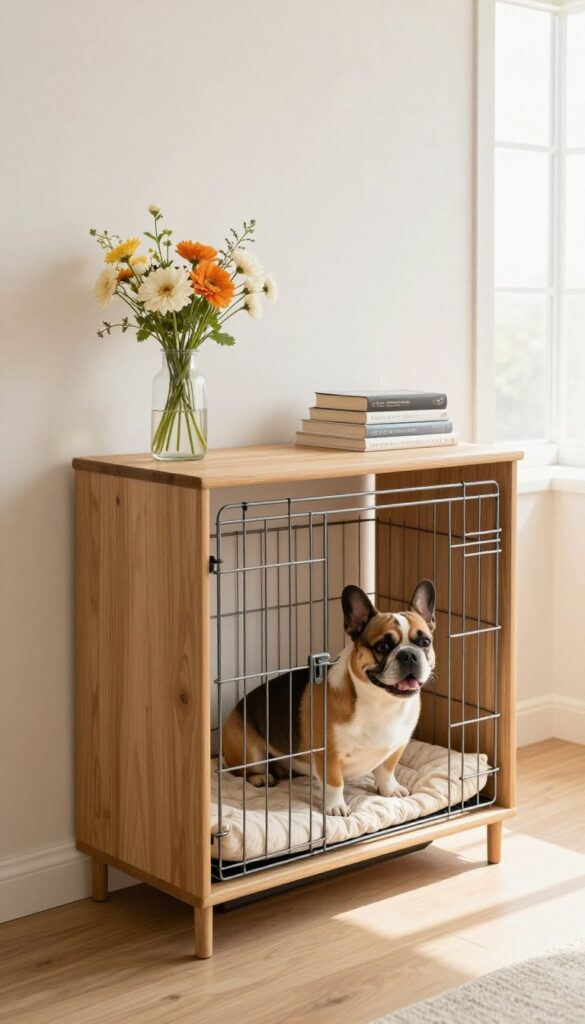
A console table is often just a place for keys and mail, but with a simple crate insert or a custom frame underneath, it becomes a hidden kennel. The tabletop stays functional for decor or storage, while the open front lets your dog watch the room. This setup gives your pup a den without sacrificing style or floor space.
Why It Works
Console tables are narrow and tall, making them perfect for tight spots like hallways or behind a sofa. The elevated design keeps the crate off the floor, which can feel cozier for smaller dogs. Plus, the tabletop hides the crate visually, so your home looks tidy.
Best For
This works great for small to medium breeds like French Bulldogs, Corgis, or Shih Tzus. It's also ideal for renters who can't build permanent structures, or for anyone who wants their dog's crate to double as a furniture piece.
Practical Tip
Choose a console table with a sturdy lower shelf or enough clearance for a standard wire crate. Add a cushion or mat inside for comfort, and use a tension rod with a curtain to create a cozy, den-like feel. Make sure the crate is secure so it doesn't slide out when your dog moves.
Budget-Friendly Option
No console table? A long, low bookshelf turned on its side works just as well. Remove a shelf to create the opening, then slide in a crate.
Paint it to match your room for a polished look.
3. Closet Conversion Kennel
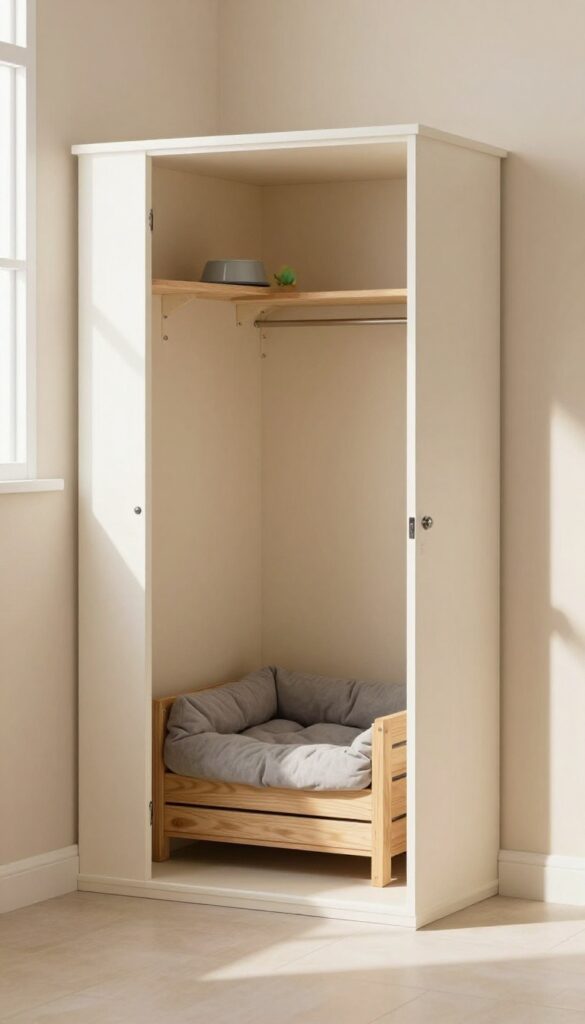
That closet you barely use could become your dog's favorite spot. By clearing out the shelves and adding a crate or building a simple enclosure, you turn dead storage into a dedicated kennel. It stays hidden behind closed doors when not in use, keeping your main living areas clutter-free.
Why It Works
Closets already have walls, a door, and often electrical access, so you skip most of the framing work. The enclosed space feels naturally den-like for dogs, which can reduce anxiety. Plus, it frees up floor space in other rooms.
Best For
Anyone with a rarely used closet, especially in apartments or small homes where every square foot counts. Works great for small to medium dogs who don't need a huge run. Also ideal if you want the kennel completely out of sight when guests visit.
Practical Tip
Add a small vent near the top or bottom of the door for airflow. Use a washable mat or bed that fits snugly. Leave a little room for a water bowl if your dog stays in longer than a few hours.
A hook on the wall inside is handy for leashes or toys.
Budget-Friendly Option
Instead of buying a new crate, repurpose an old wire crate or even a sturdy plastic airline crate. You can paint the closet walls with leftover paint to match your decor.
4. Built-In Bench Kennel
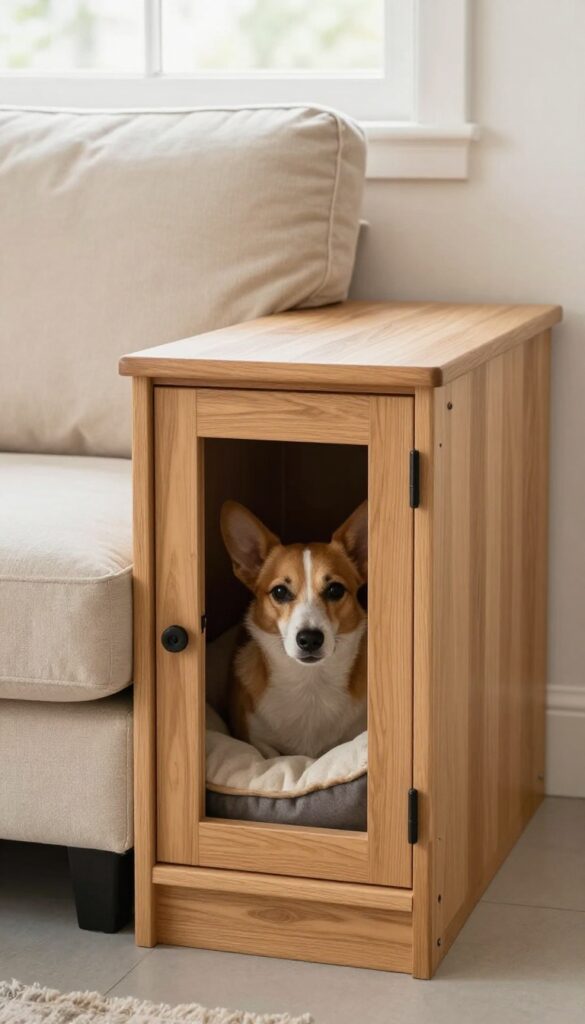
A bench with a hidden kennel underneath is a double-duty winner for small homes. You get extra seating, and your dog gets a private den that feels safe and cozy. It's one of those ideas that makes you wonder why you didn't think of it sooner.
The key is making the kennel area feel inviting, not like a cage. Add a soft bed inside and a door that matches your decor. Your pup will love having their own spot that's still part of the family room.
Why It Works
This design saves space by combining two functions into one piece of furniture. The bench hides the kennel completely, so your home looks tidy and uncluttered. Dogs naturally like enclosed spaces, so the kennel feels like a den, not a punishment.
Best For
Great for small living rooms or entryways where you need both seating and a dog zone. Works well for small to medium breeds that like to curl up. Also ideal if you want the kennel to blend into your existing furniture rather than stand out.
Practical Tip
Use a sturdy bench with a front panel that can be hinged or slid open. Add a thick cushion on top for comfort and a washable cover for easy cleaning. Inside, place a non-slip mat and a bed that can be removed for washing.
Budget-Friendly Option
Skip the custom build and repurpose an old wooden bench or a low cabinet. Remove the front panels and add a door. You can also use a large storage ottoman with the lid removed and a crate insert.
5. Corner Kennel with Storage
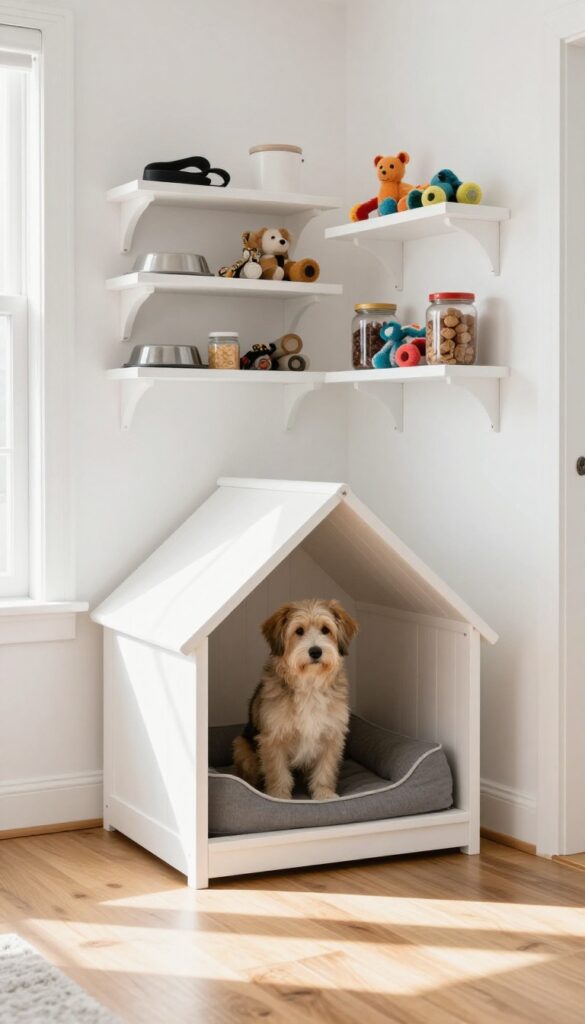
Corners often go wasted in small homes, but they're perfect for a cozy dog nook. By building a triangular kennel that fits snugly into an unused corner, you reclaim that space and give your pup a dedicated den. Adding shelves above turns the whole setup into a storage hub for leashes, treats, toys, and food.
This design works because it uses vertical space that would otherwise sit empty. The kennel itself stays low and out of the way, while the shelves keep all dog essentials organized and within reach. It's a smart way to consolidate your dog's gear in one tidy spot without sacrificing floor space.
People love this idea because it turns a dead zone into a functional, attractive feature. The built-in look feels intentional and can match your existing decor. Plus, it gives your dog a quiet, secure corner that's all their own.
Why It Works
A corner kennel maximizes unused square footage and keeps the kennel area compact. The overhead shelves provide storage without taking up additional floor space, so you can store dog supplies right where you need them. This setup keeps everything dog-related contained in one spot, reducing clutter elsewhere in your home.
Best For
This idea is ideal for small apartments or homes with awkward corner spaces that are hard to furnish. It works well for small to medium dogs who don't need a huge kennel. Owners who like a clean, built-in look and want to keep dog supplies organized will appreciate this design.
Practical Tip
Paint the kennel and shelves the same color as your wall to make the unit blend in. Use a washable, pet-safe paint for easy cleaning. Add a soft bed inside and a curtain or door to give your dog privacy.
Keep the shelves tidy with baskets or bins to store toys, leashes, and food.
Budget-Friendly Option
If you're not handy with tools, use a pre-made corner shelf unit and place a wire crate underneath. Secure the crate to the shelf legs with zip ties or brackets for stability. This gives you the same look without building from scratch.
6. End Table Kennel for Small Breeds
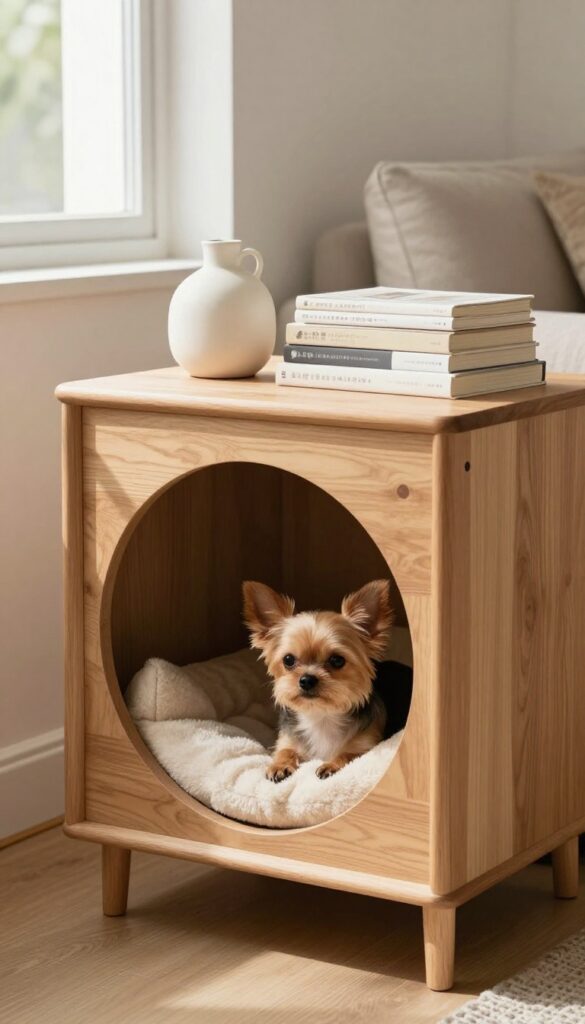
Your end table or nightstand can pull double duty as a cozy dog den. By cutting an opening in the side or front and adding a latch, you turn an ordinary piece of furniture into a hidden kennel. The table still holds lamps, books, or drinks, while your small dog gets a private hideaway that feels safe and secure.
Why It Works
This setup makes use of furniture you already own, saving floor space and blending into your decor. The enclosed feel mimics a den, which many dogs find comforting. Plus, the latch keeps your pup safely inside when needed.
Best For
Small breeds like Chihuahuas, Yorkies, or Dachshunds that don't need a full-size crate. It's also great for apartments or homes where every inch counts and you want a kennel that doesn't look like one.
Practical Tip
Sand the cut edges smooth and add a pet-safe paint or stain to match your table. Line the inside with a washable bed or mat for easy cleanup. Make sure the opening is large enough for your dog to enter comfortably but not so big that the table feels flimsy.
Budget-Friendly Option
If you don't have an end table to modify, check thrift stores or garage sales for a solid wood nightstand. You can often find one for under $20. Just avoid particleboard, as it's harder to cut neatly and less durable.
7. Wall-Mounted Fold-Down Kennel
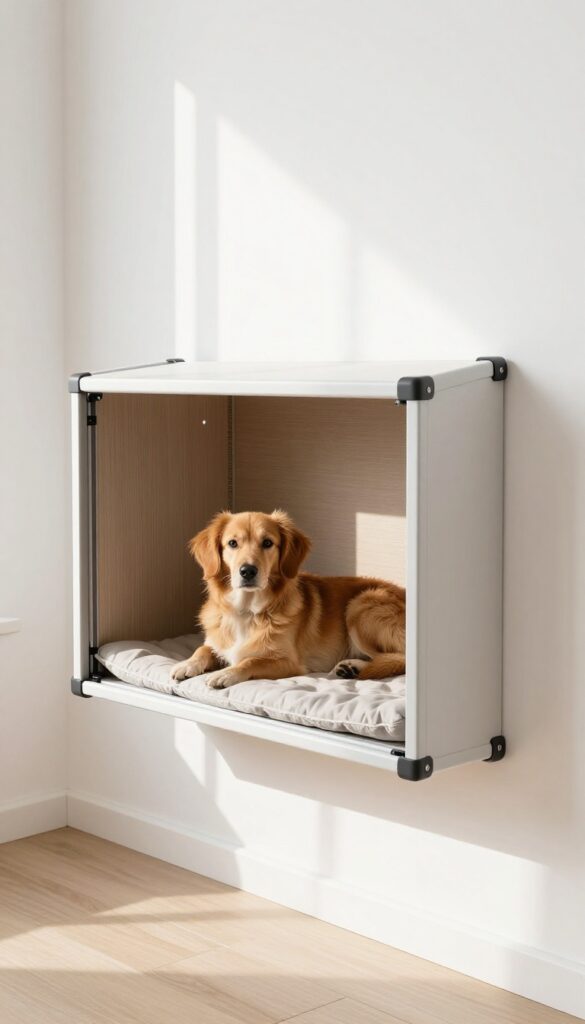
Imagine a kennel that disappears when you don't need it. That's exactly what a wall-mounted fold-down kennel does—it attaches to the wall like a Murphy bed and folds flat when not in use. This design is a game-changer for tiny apartments where floor space is precious.
Your dog gets a cozy den, and you get your room back in seconds.
Why It Works
By using vertical space, this kennel frees up valuable floor area. When folded down, it creates a secure, enclosed space your dog will love. When folded up, it's just a slim panel against the wall, letting you reclaim the room for other activities.
Best For
This is ideal for small apartment dwellers who need to maximize every square foot. It works especially well for small to medium breeds that are comfortable in a crate-like space. If you often have guests or need to quickly clear the floor, this kennel is a perfect fit.
Practical Tip
Mount the kennel at a height that's easy for your dog to enter and exit. Add a soft, washable mat or bed inside for comfort. Use a fold-down mechanism with a secure latch so it stays firmly in place when down and locks flush when up.
Paint or stain the exterior to match your wall for a seamless look.
Budget-Friendly Option
If you're handy, build your own using a plywood panel, hinges, and a simple frame. For a no-build option, repurpose a wall-mounted drop-leaf table by adding sides and a front gate. Both cost under $50.
8. Under-Desk Dog Den
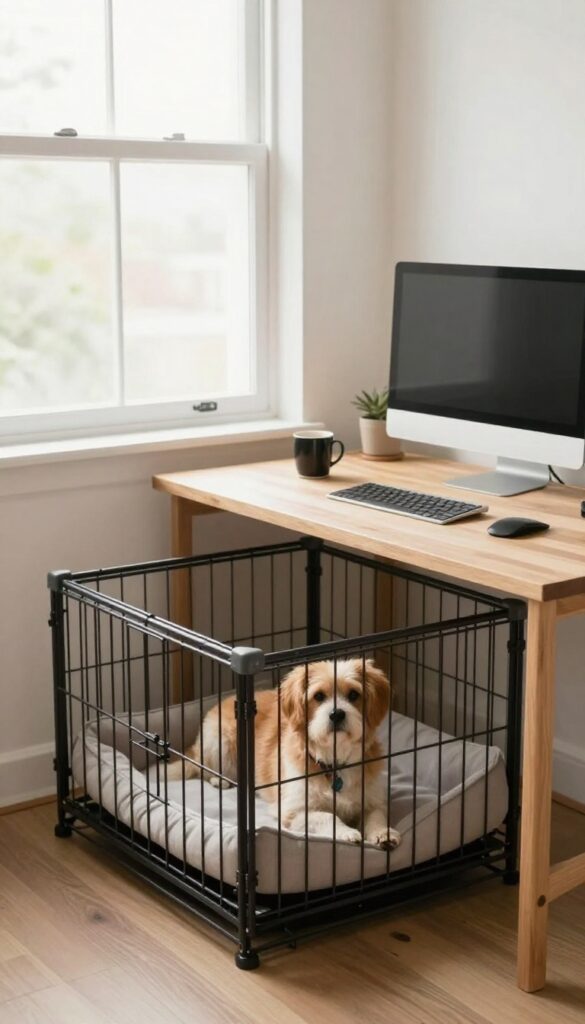
Turn the empty space under your desk into a cozy hideaway for your pup. A crate or custom kennel tucked beneath your work surface keeps your dog close while you're busy at the computer. It's a smart way to reclaim unused square footage and give your dog a dedicated spot in your home office.
This setup works especially well if you have a desk with solid sides or a table that sits high enough for a medium crate. Your dog gets to be part of the action without being underfoot. Plus, the desk top stays clear for your monitor, keyboard, and coffee mug.
Many dog owners love this idea because it strengthens the bond during work hours. Your pup can nap, chew a toy, or just watch you type, all from their own little office buddy zone. It's a simple, no-fuss solution that fits seamlessly into your daily routine.
Why It Works
The under-desk den makes clever use of vertical space that would otherwise go to waste. It turns a forgotten corner into a functional, comforting area for your dog. Your pup feels secure being near you, and you avoid tripping over a crate in the middle of the room.
Best For
This idea is perfect for remote workers or anyone who spends long hours at a desk. It suits small breeds or medium dogs that can fit comfortably under a standard desk. Also great for apartment dwellers who want to maximize every inch of their home.
Practical Tip
Measure the height and width under your desk before buying a crate. Leave a few inches of clearance so your dog can stand and turn around. Add a soft bed or mat, and consider a washable cover for easy cleanup.
Use a crate with a door that opens to the side for quick access.
Budget-Friendly Option
Instead of buying a new crate, repurpose an old end table or nightstand by removing the door and adding a cushion. Or use a fabric pop-up crate that you can easily slide out when not in use.
9. Rolling Cart Kennel
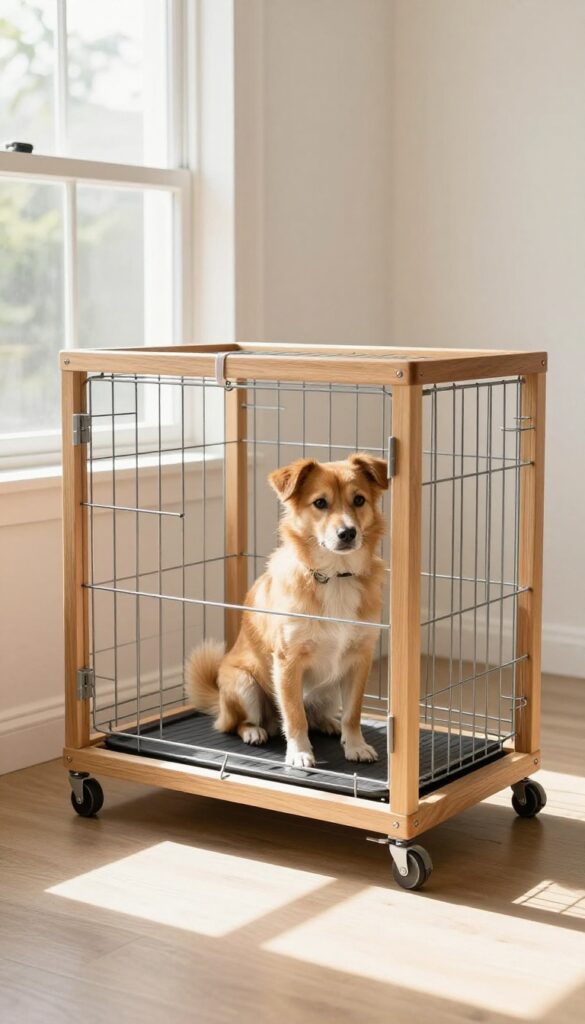
A kennel on wheels lets your dog follow you from room to room without taking up permanent floor space. By mounting a wire crate or building a wooden frame on a sturdy cart base with locking casters, you get a portable den that moves as you do. This flexibility is a game-changer for small homes where every square foot counts.
Why It Works
Locking casters keep the kennel secure when parked, but you can easily roll it into the living room during the day and into the bedroom at night. Your dog stays close to the family, reducing anxiety, while you reclaim floor space when the kennel isn't needed.
Best For
Ideal for dog owners who work from home and want their pup nearby, or for multi-room apartments where a stationary kennel would feel intrusive. Works well for small to medium dogs up to 50 pounds.
Practical Tip
Choose casters rated for at least twice the combined weight of the cart and your dog. Add a rubber mat inside for grip and cushioning, and use a bungee cord to secure the crate to the cart base so it doesn't shift during movement.
Budget-Friendly Option
Skip the wooden frame and simply place a wire crate on a heavy-duty utility cart from a hardware store. Spray-paint the cart to match your decor for a fraction of the cost.
FAQ
What is the best material for a DIY dog kennel?
Plywood or MDF with a non-toxic finish works well for walls and floors. For the door, use a metal or heavy-duty wire panel for ventilation. Avoid pressure-treated wood or paints that could be harmful if chewed.
How big should an indoor dog kennel be?
The kennel should be large enough for your dog to stand up, turn around, and lie down comfortably. Measure your dog's height and length, then add a few inches. For small homes, go with the minimum comfortable size to save space.
Can I use a regular crate inside a DIY kennel?
Yes, many DIY kennels are designed to house a standard wire or plastic crate. This makes cleaning easier and gives your dog a familiar space. Just ensure the crate fits snugly and has good airflow.
How do I make a DIY kennel safe for my dog?
Sand all edges to prevent splinters, use pet-safe paint or stain, and secure all joints. Ensure there are no small parts that could be swallowed. Add a comfortable bed and proper ventilation.
What if my dog doesn't like being in a kennel?
Introduce the kennel gradually with positive reinforcement. Place treats and toys inside, and leave the door open at first. Make it a cozy space with bedding and familiar items.
Never use the kennel as punishment.
Conclusion
Creating a DIY indoor dog kennel for your small home is all about working with what you have. These nine ideas prove that limited square footage doesn't mean limited options. Your dog gets a safe, cozy space, and you keep your home functional and stylish.
Pick the idea that fits your space and skill level, then customize it for your pup. A little effort goes a long way toward making both you and your dog happy in your small home.

I’m Pallab Kishore, the owner of Little Pets Realm — an animal lover and pet care enthusiast sharing easy tips, healthy recipes, and honest advice to help every small pet live a happy, healthy, tail-wagging life.