Staring at a messy room can feel like a mountain you’re not ready to climb. The trick is to break it down into tiny, manageable steps that don’t require a full day of effort. These 15 steps are designed to help you clean your room without the overwhelm, one small action at a time.
Start with just a 10-minute timer and a trash bag, and you’ll be surprised how much you can accomplish. Each step builds on the last, so you never feel stuck or lost.
From clearing surfaces to making your bed, the focus is on progress, not perfection. No need for elaborate systems or expensive tools—just simple, practical moves that turn chaos into calm.
1. Set a Timer for 10 Minutes
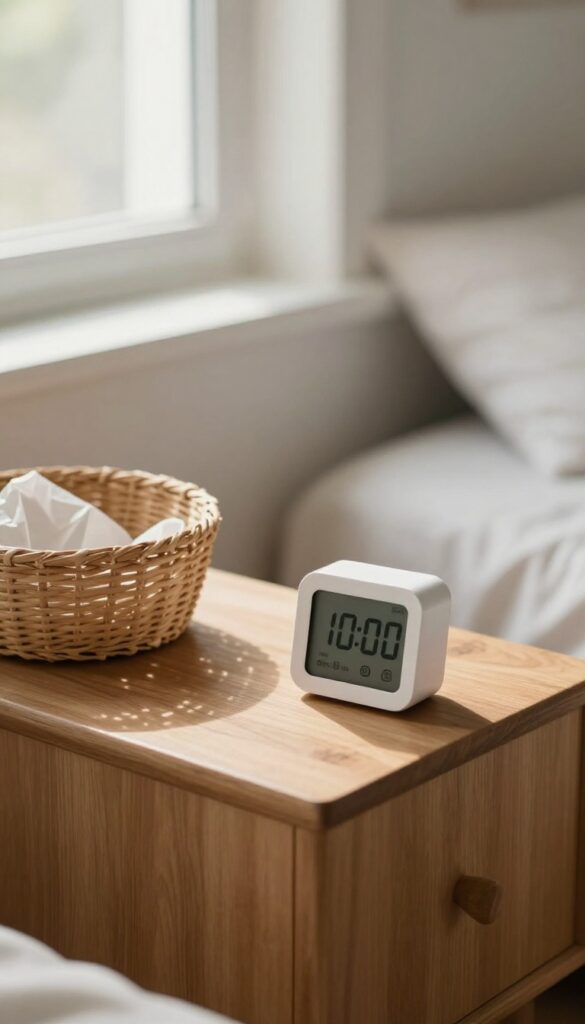
Ten minutes feels doable. It’s short enough that you can’t talk yourself out of it, but long enough to make a visible dent. The key is to commit fully to just ten minutes—no more, no less.
When you set a timer, you give yourself permission to stop when it rings. That makes starting much easier. And once you’re moving, you’ll often find you want to keep going.
Many people end up cleaning for twenty or thirty minutes because the hardest part was just beginning.
Why 10 Minutes Works
The biggest obstacle to cleaning is the feeling that you have to do it all. A 10-minute timer removes that pressure. It’s a small, concrete goal that your brain can handle without resistance.
What To Do In Those 10 Minutes
Pick one small area—a corner of your desk, a nightstand, or just the floor around your bed. Grab a trash bag and a basket for things that belong elsewhere. Focus only on that spot.
When the timer goes off, stop or keep going if you have energy.
The Momentum Trick
Starting is the hardest part. Once you’ve done ten minutes, you’ve already broken the inertia. Even if you stop, you’ve made progress.
And more often than not, you’ll find yourself thinking, “I can do another ten. ”
2. Grab a Trash Bag and Do a First Pass
Before you start sorting or organizing, take a quick lap around your room with a trash bag. The goal is simple: remove anything that's clearly garbage. No decisions, no second-guessing—just toss the obvious waste.
This small action instantly reduces visual clutter and gives you a sense of momentum.
Walk through your room and pick up wrappers, receipts, empty bottles, used tissues, and any other trash you see. Don't stop to organize or put things away yet. Just focus on clearing out the waste.
This first pass is about making the space feel cleaner with minimal effort. You'll be surprised how much lighter the room looks after just a few minutes.
What Counts As Obvious Trash?
Stick to items that have no value or purpose: crumpled papers, expired coupons, broken pens, empty containers, and packaging. If you have to think about it for more than a second, leave it for later. The goal here is speed, not perfection.
Keep Moving, Don't Get Distracted
It's easy to spot an old receipt and start wondering where it came from. Don't. Just toss it and keep going.
You're not making decisions—you're clearing debris. Stay on your feet, bag in hand, and move from one area to the next.
Use A Timer To Stay Focused
Set a timer for 10 minutes and challenge yourself to fill the bag before it goes off. This turns the task into a game and prevents you from overthinking. When the timer rings, tie up the bag and take it to the bin.
You've just completed the first real step.
3. Collect All Dishes and Take Them to the Kitchen
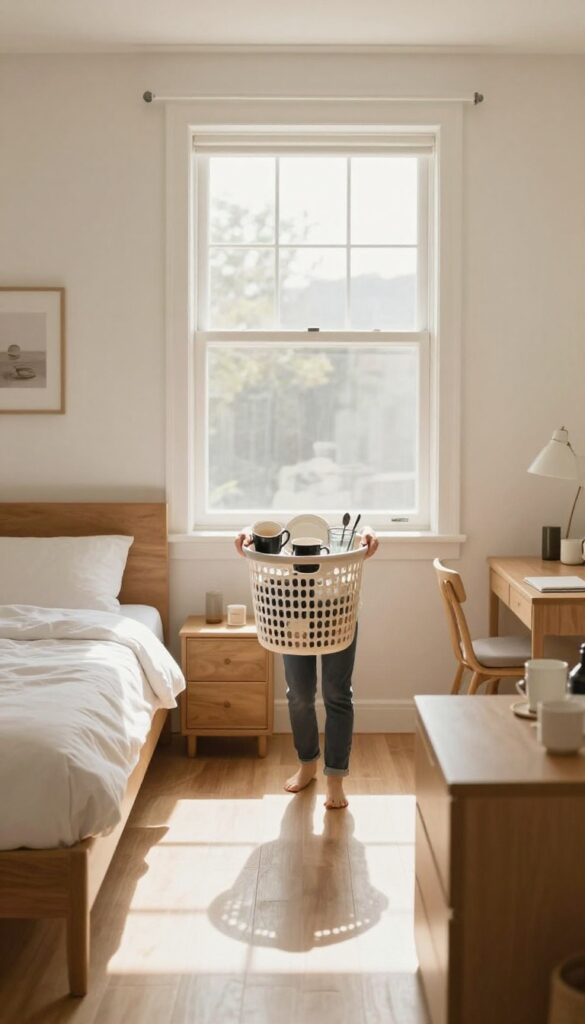
Dishes scattered around your room are visual noise that makes the space feel messier than it is. Cups on nightstands, plates under the bed, and spoons on desks all add to the clutter. By gathering every dish in one trip, you instantly clear multiple surfaces and create a sense of progress.
This step is quick, requires no decision-making, and sets a clean foundation for the rest of your room.
Walking around your room with a small bin or laundry basket makes collecting dishes fast and efficient. Start at the farthest corner and work your way around, scanning every surface—desks, shelves, nightstands, and even the floor. Don’t sort or rinse anything yet; just pile it all in.
Once you’ve gathered everything, take the bin straight to the kitchen. Put dishes in the sink or dishwasher, and rinse any cups if you have time. That single trip removes a major source of mess and gives you a clear surface to work with next.
Why Dishes Make A Room Feel Messier
Dishes are one of the most noticeable clutter items because they’re out of place. A single coffee mug on your desk can make the whole area feel dirty. Removing them instantly lifts that heavy feeling and makes the room look cleaner, even before you do anything else.
The One-bin Rule
Use a laundry basket or a cardboard box as your dish collection bin. This keeps your hands free and prevents multiple trips. It also forces you to gather everything in one go, which is faster than picking up items one by one.
What To Do If You Find Sticky Or Smelly Items
If you come across a cup with old coffee or a plate with food residue, don’t stop to clean it. Just place it in the bin and move on. You can handle the washing once everything is in the kitchen.
The goal here is removal, not deep cleaning.
4. Strip the Bed and Start a Laundry Load
Your bed is probably the biggest thing in the room, so when it's messy, the whole space feels chaotic. Pulling off all the sheets, pillowcases, and blankets instantly changes the look and feel of the room. Plus, starting a load of laundry gives you a productive win within the first few minutes.
Once the bedding is off, toss it in the washer with detergent and hit start. That load will be ready by the time you finish other steps. A bare mattress makes the room look cleaner and less cluttered, which is surprisingly motivating.
You'll also free up floor space if you had extra blankets or pillows lying around.
Why This Step Works
Removing bedding is a visual shortcut to a cleaner room. It also forces you to make your bed later, which is a classic finishing touch. The laundry itself is a passive task—it runs while you work, so you're multitasking without extra effort.
What About Pillows And Comforters?
Pillowcases go in the wash too. If your comforter or duvet cover is machine washable, add it. If not, set it aside to air out or spot clean.
Even just stripping the bed and leaving the mattress bare for a few hours can freshen up the room.
5. Clear Surfaces One at a Time
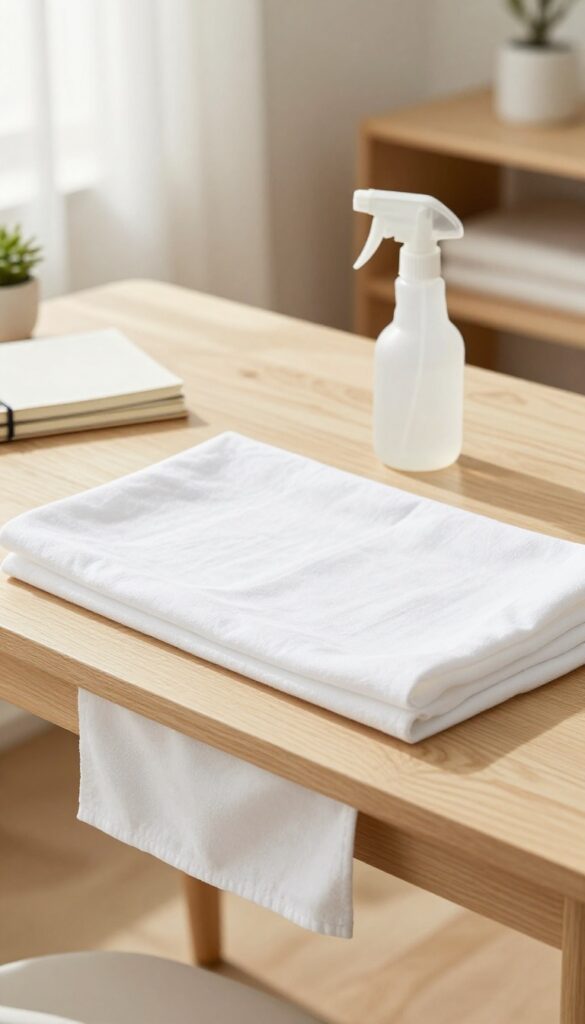
Surfaces like your desk, nightstand, or dresser are the first things you see when you walk into the room. When they're cluttered, the whole space feels messy, even if the floor is clean. The good news is that clearing a single surface is a quick win that instantly makes the room look better.
Pick One Surface And Commit
Don't try to do all surfaces at once. Choose just one—maybe the desk where you work or the nightstand next to your bed. Move everything off it completely.
Yes, everything. Pile it on the floor or on your bed temporarily. Then wipe the surface down with a damp cloth or a disinfecting wipe.
That clean spot alone will give you a boost.
Sort And Decide
Now look at the pile you removed. Ask yourself: Does this belong here? If yes, put it back in an organized way.
If no, find its proper home—a drawer, a shelf, or the trash. Be honest about what you actually use. That stack of old receipts?
Toss them. The pen that doesn't work? Recycle it.
Only return items that serve a purpose.
Keep It Simple Going Forward
Once a surface is clear, make a habit of resetting it at the end of each day. Spend two minutes putting things back where they go. That way, tomorrow you start fresh without having to redo the whole process.
A clean nightstand or desk makes your room feel more peaceful every time you see it.
6. Make a 'Maybe' Pile for Unclear Items
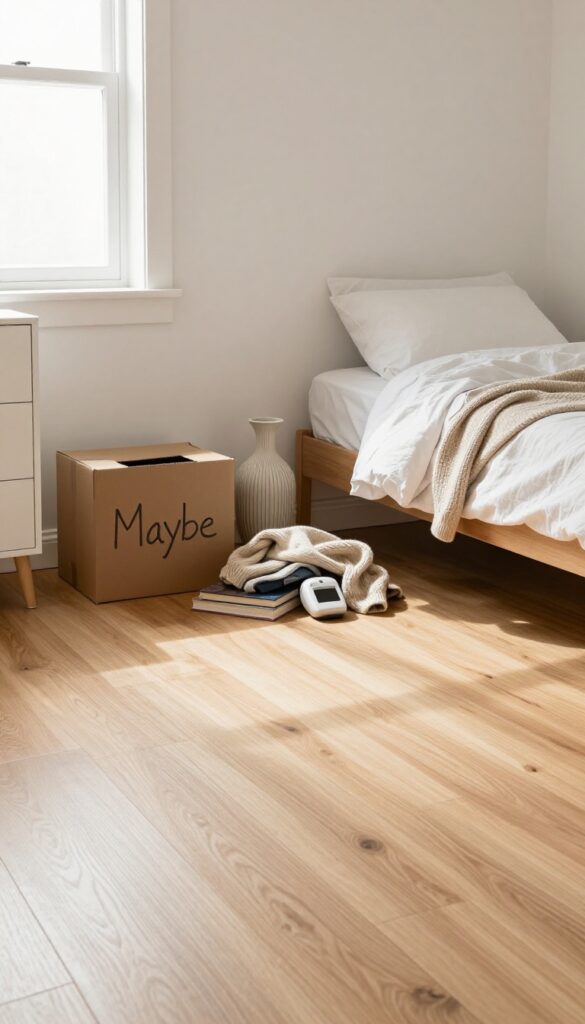
You're sorting through your stuff and suddenly you freeze. That old sweater from a friend, the gadget you never use but might need someday—what do you do with them? Instead of getting stuck, grab a small box or designate a corner of the room as your 'maybe' pile.
This simple trick keeps you moving forward without forcing a decision you're not ready to make.
Decision fatigue is real, especially when you're trying to declutter. The 'maybe' pile gives you permission to postpone the hard calls. You can always come back to it later with a fresh mind.
For now, just focus on clearing the space in front of you.
Why A 'maybe' Pile Works
When you're unsure about an item, your brain goes into overdrive weighing pros and cons. That mental energy drains you fast. By setting it aside, you acknowledge the uncertainty without letting it stall your entire cleaning session.
You'll make better decisions later when you're not already tired.
How To Set Up Your Maybe Pile
Grab a small cardboard box, a laundry basket, or just clear a spot on your floor. Label it clearly so you don't forget what it is. As you go through your room, toss in anything that gives you pause.
Limit the pile to one container—if it overflows, you're probably keeping too many maybes.
When To Revisit The Pile
Once you've finished the main cleaning steps, come back to your maybe pile. Go through each item one more time. Ask yourself: Have I used this in the last year?
Does it have real sentimental value? If the answer is still unclear, consider a third option: donate or give it away. Sometimes letting go is the best decision.
7. Use the 'One Touch' Rule for Clothes
Clothes often pile up because we pick them up, think about them, and then drop them back down. The 'one touch' rule eliminates that cycle. When you grab a piece of clothing, you make a decision on the spot: hang it, fold it, or bag it for donation.
No putting it down for later.
This rule is a game-changer because it stops the endless shuffling of clothes from chair to bed to floor. You handle each item once, and that's it. It's simple, fast, and keeps your room from turning into a laundry limbo.
Set Up Your Stations First
Before you start, have three designated spots: a hanger rack or closet rod for hanging clothes, a flat surface or basket for folded items, and a donation bag or box. This way, when you pick up a shirt, you know exactly where it goes. No second-guessing.
Make Quick Decisions
Don't overthink it. If you haven't worn it in a year, it's probably donation material. If it's wrinkled but wearable, hang it.
If it's clean and casual, fold it. The goal is to decide in under five seconds per item. Trust your gut.
Handle Exceptions Gracefully
What about clothes that need washing or mending? Put them directly in a laundry basket or a small repair pile. The key is still one touch—you don't set them down on a chair to deal with later.
Later is now.
8. Group Like Items Together
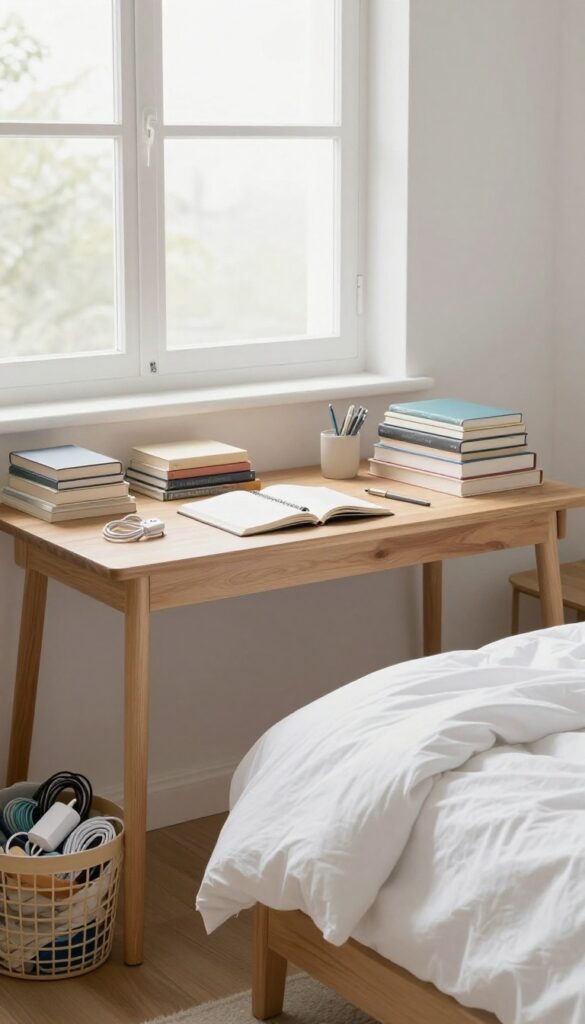
Once you've cleared the obvious trash and put away the easy stuff, it's time to think about organization. Grouping similar items together is one of the fastest ways to make a room look tidy without spending hours on details. It's a simple principle: books go with books, chargers go with chargers, and everything finds its tribe.
Start by scanning the room for categories that naturally emerge. Maybe you see a pile of notebooks on the floor, a few on the desk, and one on the bed. Collect them all into one stack.
Do the same for cables, makeup, or any other category that keeps popping up in different spots. The goal isn't to put them away perfectly yet—just to bring them together.
Why Grouping Works So Well
When items are scattered, your brain registers them as separate messes. But when you gather them, the clutter shrinks into a single manageable pile. It also reveals duplicates you forgot you had, so you can declutter as you go.
How To Group Without Getting Stuck
Don't overthink where each group should live at this stage. Just make piles on the floor, bed, or a clear surface. Use laundry baskets, boxes, or even trash bags to hold each category.
The key is speed: spend no more than 10–15 minutes on the initial grouping.
Common Groups To Look For
Think about what's typical for your room: books and magazines, electronics and cords, toiletries and cosmetics, clothes and accessories, papers and mail, hobby supplies. If something doesn't fit a group, it might be trash or something that belongs elsewhere in the house.
9. Wipe Down All Surfaces
Now that the clutter is gone, it's time to make the room feel clean. Dust and grime can make even a tidy space look messy. A quick wipe-down of every flat surface adds a visual freshness that feels instantly rewarding.
Choose The Right Cloth
Microfiber cloths are great for trapping dust without spreading it around. If you don't have one, a slightly damp rag works too. Avoid dry paper towels—they just push dust into the air.
Work Top To Bottom
Start with higher surfaces like shelves and the top of your dresser, then move down to nightstands and desks. This way, any dust that falls will land on surfaces you haven't cleaned yet. Finish with the floor.
Don't Forget The Hidden Spots
Wipe down lamp shades, picture frames, and electronics (use a dry cloth for screens). These small touches make the whole room look polished. A quick pass over baseboards and window sills adds extra shine.
10. Vacuum or Sweep the Floor
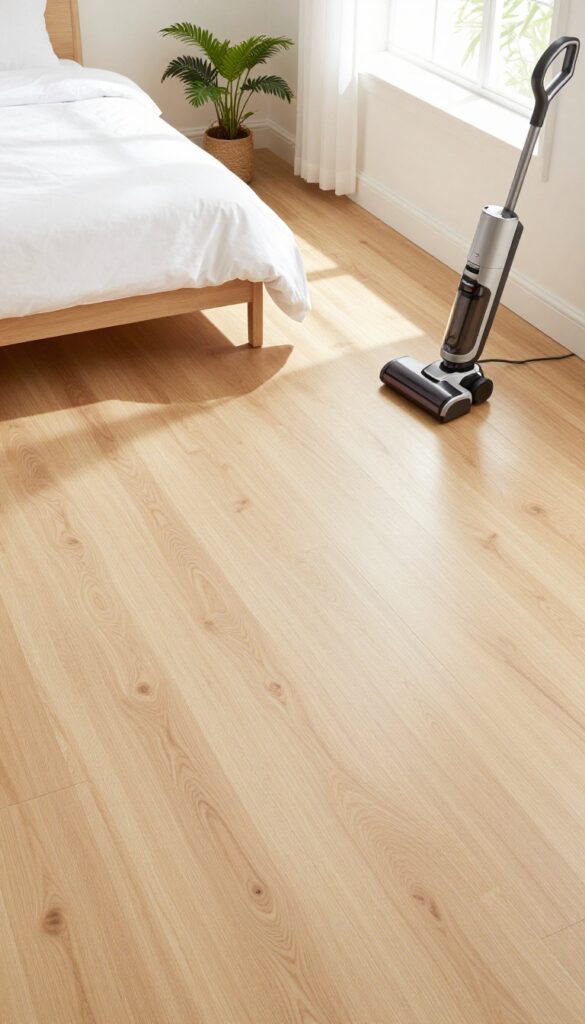
Once the floor is clear of clutter, a quick vacuum or sweep works wonders. Even a speedy pass makes the whole room feel significantly cleaner and more put together. This step is all about that instant visual payoff.
This step is straightforward but powerful. Removing dust, crumbs, and pet hair from the floor eliminates the last traces of mess. You don't need to deep clean every corner—just hit the main traffic areas and visible spots.
The difference is immediate.
Choose Your Tool
If you have a vacuum, use it—especially on carpets. For hard floors, a broom or a microfiber mop works great. Pick whatever is easiest to grab; the goal is to start quickly.
Focus On High-traffic Zones
Don't worry about moving furniture or reaching under the bed right now. Concentrate on the center of the room and the paths you walk most. That's where dirt builds up and where cleaning makes the biggest impact.
Finish With A Quick Spot-clean
After vacuuming or sweeping, check for any sticky spots or stains. A damp paper towel or a quick wipe with a cleaning cloth handles those. Then step back and enjoy your cleaner floor.
11. Make the Bed
There's something about a neatly made bed that instantly calms a chaotic room. It's a small, visible win that signals to your brain that progress is happening. Plus, it gives you a clean surface to work around as you tackle the rest of the space.
Making the bed might seem trivial, but it's actually a powerful anchor for the entire room. When the bed is tidy, everything else looks a little less overwhelming. It also prevents you from dumping stuff on it later, keeping your main workspace clear.
Fresh Sheets, Fresh Start
If your sheets are old or stained, swap them out. Clean, crisp bedding makes the bed look inviting and adds a sense of freshness to the room. It's a simple upgrade that costs little but changes the whole vibe.
The 30-second Rule
Don't overthink it. Pull up the fitted sheet, straighten the top sheet, fluff the pillows, and smooth the comforter. That's it.
You don't need hospital corners or decorative pillows—just a neat, flat surface.
Keep It Made All Day
Once it's done, resist the urge to sit on it or toss clothes onto it. Use a chair or a hook for items you're not ready to put away. A made bed stays made if you treat it like a finished zone.
12. Create a 'Home' for Every Item
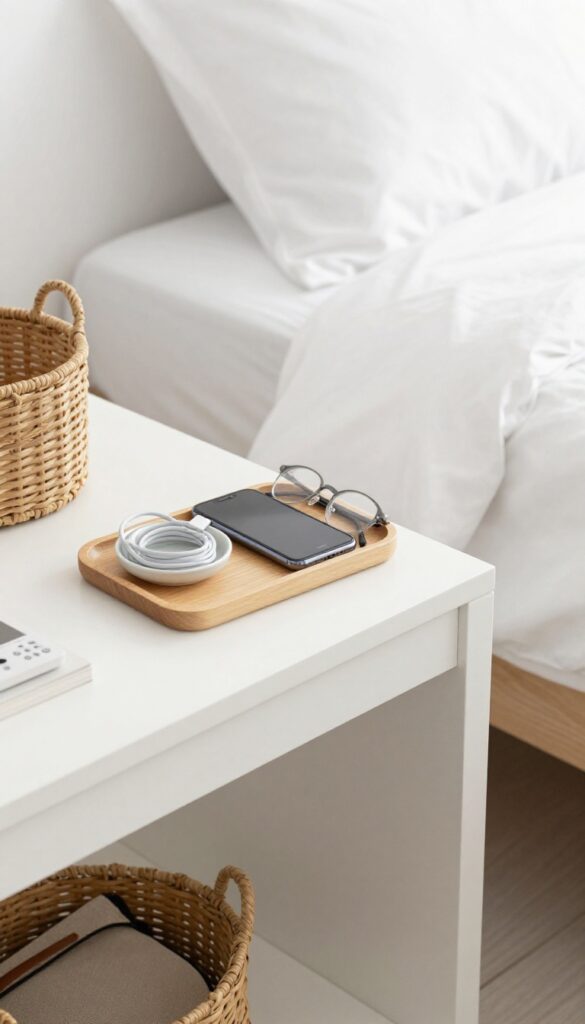
You know that pile of stuff that always ends up on your nightstand or desk? It happens because those items don't have a designated spot. When everything has a home, putting things away becomes automatic.
No more decision fatigue, no more clutter.
Start with the items you use daily: phone charger, keys, wallet, glasses, remote, headphones. Think about where you naturally reach for them and assign a specific spot. A small tray by the door for keys, a charging station on your desk, a hook for your bag.
The goal is to make it easier to put things back than to leave them out.
The One-minute Rule
If it takes less than a minute to put something in its home, do it immediately. That charger you just unplugged? Wrap it and place it in its designated spot.
Your mail? Straight into the tray. This tiny habit prevents piles from ever forming.
Containers Are Your Friends
Use small bins, trays, or baskets to corral loose items. A bowl for change, a dish for your watch, a small caddy for skincare products. When everything has a container, it looks tidy even if you haven't organized the whole room.
Label If You Share The Space
If you share your room with a partner or sibling, labeling homes can prevent confusion. A simple label on a drawer or shelf tells everyone where things belong. It also makes it easier to hold each other accountable.
13. Do a Five-Minute Tidy Before Bed
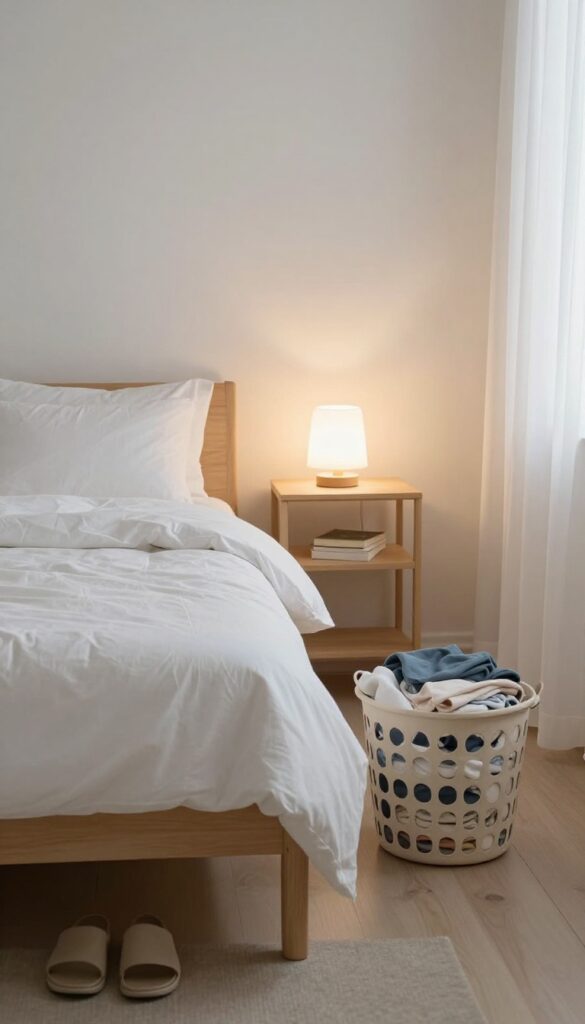
You've made it through the day, and your room is looking good. But before you crash, spend just five minutes doing a quick reset. This tiny habit keeps mess from piling up and makes tomorrow's cleaning a breeze.
It's not about deep cleaning—it's about putting things back where they belong.
A five-minute tidy before bed is like brushing your teeth for your room. It prevents small messes from turning into big ones. Grab a laundry basket for stray items, make a quick pass over surfaces, and return things to their homes.
You'll wake up to a calm space, and the habit takes almost no willpower once it's routine.
The Power Of A Quick Reset
Think of this as a nightly reset button. Walk around your room with a basket and pick up anything out of place—clothes, books, water bottles. Then spend a minute putting them away.
That's it. No scrubbing or organizing, just a gentle sweep that keeps chaos at bay.
Make It Automatic
Tie the tidy to an existing habit, like after you brush your teeth or before you plug in your phone. Set a timer if you need to. After a week, it'll feel weird to skip it.
The key is consistency, not perfection—even a half-hearted tidy helps.
What To Focus On
Prioritize the spots that bother you most: a cluttered nightstand, a pile of clothes on a chair, or shoes by the door. Don't try to do everything. Just hit the hot spots, and your room will look and feel much better in the morning.
14. Reward Yourself After Each Step
Cleaning doesn't have to be a punishment. In fact, if you treat yourself along the way, you'll actually want to keep going. Rewards make the process feel less like a chore and more like a game, where each completed step earns you a little win.
Positive reinforcement is a powerful motivator. By giving yourself small, quick rewards after each step, you train your brain to associate cleaning with pleasure rather than dread. This prevents burnout and keeps your energy up, so you can finish the whole list without feeling drained.
Keep Rewards Short And Simple
Your reward should be something you can enjoy in under two minutes. Stretch your arms, take a sip of cold water, or step outside for a breath of fresh air. Avoid scrolling through your phone or starting a TV show, as that can derail your momentum.
Match Rewards To Effort
For bigger tasks like vacuuming or organizing a closet, give yourself a slightly bigger reward, like a piece of chocolate or a quick dance to your favorite song. For smaller steps like making the bed, a simple deep breath or a pat on the back works fine.
Build A Reward Ritual
Create a consistent ritual so your brain knows what's coming. For example, after each step, stand up, take three deep breaths, and say out loud, "Nice work. " Over time, this habit will make cleaning feel automatic and even satisfying.
15. Reflect on How It Feels

You've put in the work, and now your room looks completely different. Before you rush off to enjoy the rest of your day, take a moment to pause and really notice the change. This final step is about locking in the positive feeling so it sticks with you.
Stand back and look at your clean room. Notice the calmness. Remember this feeling—it's your motivation for next time.
Take A Mental Snapshot
Close your eyes for a second and picture the room as it is right now. Notice how the light hits the surfaces, how the air feels fresher, and how your mind feels clearer. This mental image is a powerful anchor you can call on when motivation dips.
Acknowledge Your Effort
Give yourself credit for what you've accomplished. You didn't just clean a room—you built a habit of starting small and following through. That's worth celebrating, even if it's just a quiet nod to yourself.
Plan Your Next Reset
Now that you know how good this feels, think about when you'll do it again. Maybe set a recurring reminder for a weekly 10-minute tidy. The memory of this calm will make it easier to begin next time.
FAQ
How long should I spend cleaning my room each day?
Start with just 10 minutes. That's enough to make a visible difference without feeling like a chore. You can always do more if you're on a roll.
What if I don't have time to clean everything at once?
That's fine. Focus on one step at a time, like clearing surfaces or making the bed. Even partial progress counts.
How do I stay motivated to keep my room clean?
Build a nightly five-minute tidy habit. Also, remind yourself how good it feels to wake up in a clean space. Small daily efforts prevent big messes.
What should I do with items I don't use but feel guilty throwing away?
Put them in a 'maybe' box and store it out of sight. If you don't need them in three months, donate or toss without guilt.
How can I clean my room if I feel too tired or overwhelmed?
Start with the easiest step: set a timer for five minutes and just pick up trash. Often, starting is the hardest part, and you'll gain energy as you go.
Conclusion
Cleaning your room doesn't require a full day or a perfect system. Start with just one step from this list—maybe the 5-minute tidy or the single-surface rule—and see how it feels. That small win often sparks enough momentum to keep going.
Over time, these bite-sized actions add up to a space that feels calmer and more under control. You don't have to do it all at once. Pick one idea, try it today, and let the process unfold naturally.