You know that feeling when you walk into your bedroom and the clutter just drains your energy? The unmade bed, the pile of clothes on the chair, the dust bunnies lurking under the dresser. It’s not that you don’t want a clean room—it’s that starting feels impossible.
That’s where these 17 cleaning motivation ideas come in. They’re designed to help you push past the slump and make progress, even on low-energy days. No guilt trips, no perfectionism—just real strategies that work.
Whether you have five minutes or an hour, there’s an idea here that can get you moving. Let’s turn that chore slump into a clean, calming space you actually enjoy walking into.
1. The Five-Minute Frenzy

Sometimes the hardest part is just getting started. The Five-Minute Frenzy removes that barrier by making the commitment tiny. Set a timer for five minutes and race around your bedroom, grabbing anything out of place.
Books, socks, water glasses—toss them where they belong or into a basket. When the timer dings, you can stop guilt-free. More often than not, you'll keep going because you're already in motion.
This technique works because it bypasses the decision fatigue that makes cleaning feel overwhelming. You're not deciding to clean the whole room; you're just playing a quick game. The urgency of the timer creates a sense of fun, and the visible progress in just five minutes builds momentum.
Even if you stop, you've made a dent. And if you keep going, you've tricked yourself into a longer session without the dread.
Why Five Minutes Works
Five minutes is short enough to feel doable even on your lowest energy days. It's also long enough to make a noticeable difference—picking up a few items, fluffing pillows, or clearing a surface. The key is to move fast and not overthink.
Don't organize, just relocate. Speed creates a sense of accomplishment that fuels further action.
How To Make It A Habit
Pair the Five-Minute Frenzy with an existing routine, like right after you brush your teeth at night or before you leave for work. Set a recurring timer on your phone. Over time, those five minutes become automatic, and your bedroom stays tidier without you even trying.
You'll be surprised how much cleaner your space looks with just a daily five-minute burst.
2. One-Touch Tidy
Clutter multiplies when you keep picking things up and putting them down without deciding. The one-touch rule stops that cycle. Every item you touch gets a final destination—trash, donation box, or its proper home.
No more shuffling piles from the bed to the dresser to the floor.
The one-touch tidy is a decision-making shortcut. When you pick up a sock, you don't toss it on the chair to sort later. You either put it in the laundry basket or decide it's clean and fold it.
This eliminates the intermediate piles that drain your motivation. Over time, your brain learns that touching something means acting on it, which builds momentum.
Start With One Surface
Don't try to one-touch your whole room at once. Pick one flat surface—your nightstand, dresser top, or desk. Commit to touching every item there exactly once.
You'll be surprised how fast that small area clears up, and the visual win will push you to the next spot.
Set Up Landing Zones
Make the one-touch rule easier by creating clear homes for common items. A dedicated tray for keys and wallet, a small bin for mail, a hook for jackets. When every item has a logical spot, deciding takes zero effort.
You just place it and move on.
The 10-second Decision Rule
If you hesitate longer than ten seconds on an item, it probably doesn't have a clear place. That's a sign to either create a home or let it go. Keep a donation bag nearby for those indecisive items.
One-touch doesn't mean overthinking—it means acting fast.
3. Laundry as a Reward
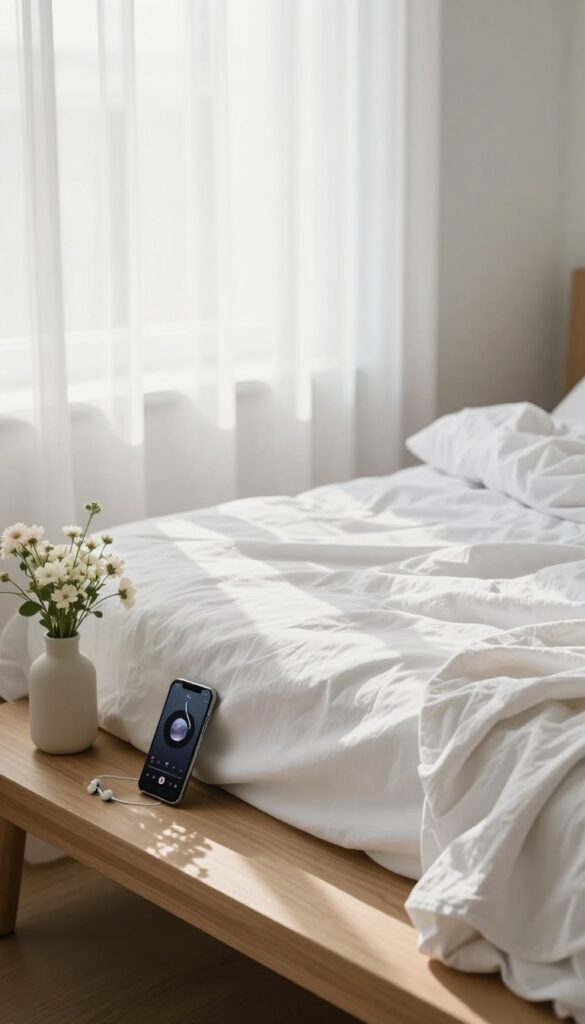
Folding laundry is one of those chores that feels endless—until you pair it with something you actually look forward to. The trick is to treat the task as a side activity while you enjoy a reward. Suddenly, folding isn't the main event; it's just something your hands do while your brain gets a treat.
This method works because it reframes the chore. Instead of seeing laundry as a boring obligation, you start associating it with pleasure. The key is to pick a reward that matches the time it takes to fold one load—usually 15 to 20 minutes.
A podcast episode, a sitcom, or even a few songs can turn the task into a mini break.
Choose Your Reward Wisely
Not all rewards are equal. A 45-minute drama will make you rush through folding, which defeats the purpose. Stick to content that fits the task length.
Podcast episodes around 20 minutes, a playlist of your favorite songs, or a single episode of a comedy show work perfectly. You can even save a special podcast just for laundry day.
Set Up Your Space
Create a folding station in your bedroom where you can prop up your phone or tablet. A clear surface, good lighting, and a comfortable spot to sit make the experience feel intentional. If you use headphones, the reward feels even more immersive.
Before you know it, the laundry is done and you've enjoyed your treat.
Stack The Rewards For Bigger Loads
If you have multiple loads, stack your rewards. For example, listen to one podcast episode per load. This creates a natural timer and keeps you moving.
You'll find yourself looking forward to the next load just to hear what happens next in the episode.
4. The Trash Bag Challenge
Nothing beats the mental block of a messy room like a concrete, time-limited task. The Trash Bag Challenge is exactly that: grab a trash bag, set a timer for 15 minutes, and fill it with anything you haven't touched in six months. Clothes that don't fit, gadgets you never use, random papers—if it's been gathering dust, it goes.
The physical act of removing items creates instant visual progress, and that progress fuels momentum.
Why Six Months?
Six months is long enough to know if something is truly useful. If you haven't worn that sweater since last winter, you probably never will. This rule cuts through indecision fast.
It's not about being ruthless—it's about being honest about what you actually need.
The Momentum Effect
Once you start tossing, it gets easier. The first few items are hard, but soon you're on a roll. Each item that leaves the room lightens the visual load and gives you a dopamine hit of accomplishment.
That's the secret: action beats motivation every time.
What To Do With The Bag
Don't just let the bag sit. After the challenge, immediately take it to your car for donation or straight to the trash. If you leave it by the door, it becomes clutter again.
The goal is to remove it from your space entirely, so you can see and feel the difference.
5. Make the Bed First
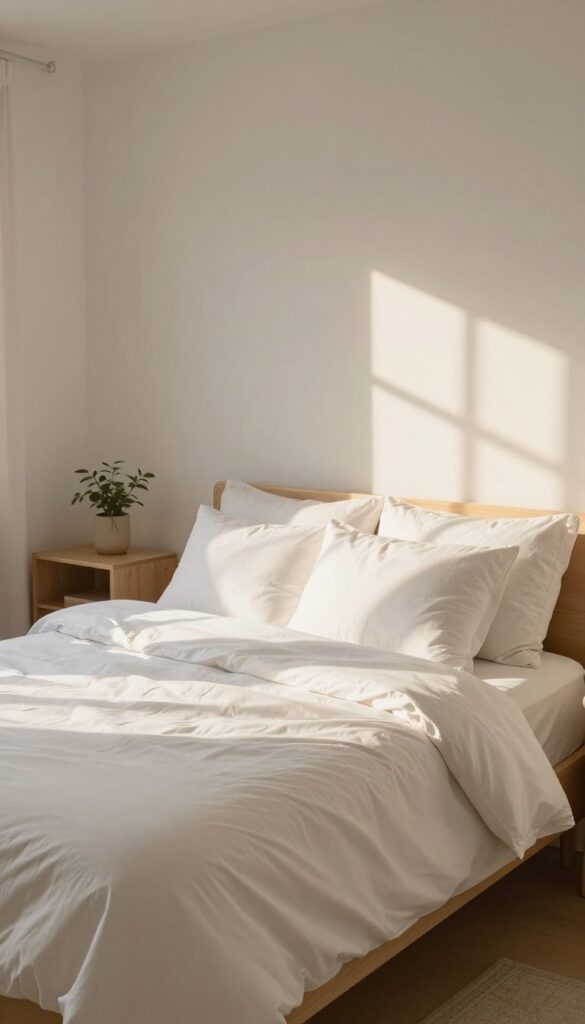
It sounds almost too simple, but making your bed is the quickest way to trick your brain into seeing a cleaner room. That single, tidy rectangle instantly makes the space feel more put together—like you've already won a small victory. And once that's done, the rest of the room suddenly feels more manageable.
Making the bed first thing in the morning (or whenever you start cleaning) creates a visual anchor of order in a sea of chaos. It's a low-effort task that delivers high-impact results, setting a positive tone for the rest of your cleaning session. Plus, it's one less thing to do later.
The 50% Rule
A made bed makes the whole room look significantly cleaner, even if other surfaces are still cluttered. It's a simple optical illusion: the largest flat surface in the room is neat, so your eye registers order first. This can be just the motivation boost you need to tackle the next task.
A Ritual, Not A Chore
Instead of seeing it as a chore, treat making your bed as a ritual that signals the start of your cleaning mode. Pull up the sheets, fluff the pillows, and smooth the comforter. It takes less than two minutes, but it builds momentum.
You're not just making the bed—you're telling yourself, "I'm ready to get things done. "
Pair It With A Timer
If you're really struggling, set a timer for two minutes and race to finish. The pressure of the clock can make it feel like a game. Once the bed is made, the timer's ding is both a reward and a cue to move on to the next small task.
It's a tiny win that compounds.
6. Surface Sweep
Flat surfaces are visual magnets for clutter. Nightstands, dressers, and shelves collect mail, trinkets, and dust without you even noticing. Clearing them off takes just a few minutes but instantly makes the whole room feel tidier.
Grab a basket or a tray and move everything off every flat surface in your bedroom. Wipe them down with a damp cloth or a dusting spray. Then only put back the items that truly belong there—maybe a lamp, a book you're reading, or a small plant.
Everything else goes into the basket to be sorted later. This quick reset creates a sense of order without any deep cleaning.
The Five-minute Surface Reset
Set a timer for five minutes. Start with the most visible surface—usually your nightstand. Clear it completely, dust it, and put back only two or three essentials.
Move to the dresser, then shelves. When the timer goes off, stop. You'll be surprised how much better the room looks.
The Tray Method For Daily Maintenance
Place a decorative tray on your dresser or nightstand. Use it as a designated spot for items you use daily, like your phone, glasses, or keys. This keeps surfaces from becoming dumping grounds.
Once the tray is full, it's a visual cue to declutter.
Don't Forget The Hidden Surfaces
Window sills, the top of your headboard, and the top of your wardrobe are easy to overlook. Give them a quick wipe while you're in surface-cleaning mode. These hidden spots accumulate dust and make the room feel less clean even if you can't see them.
7. The Power of a Playlist
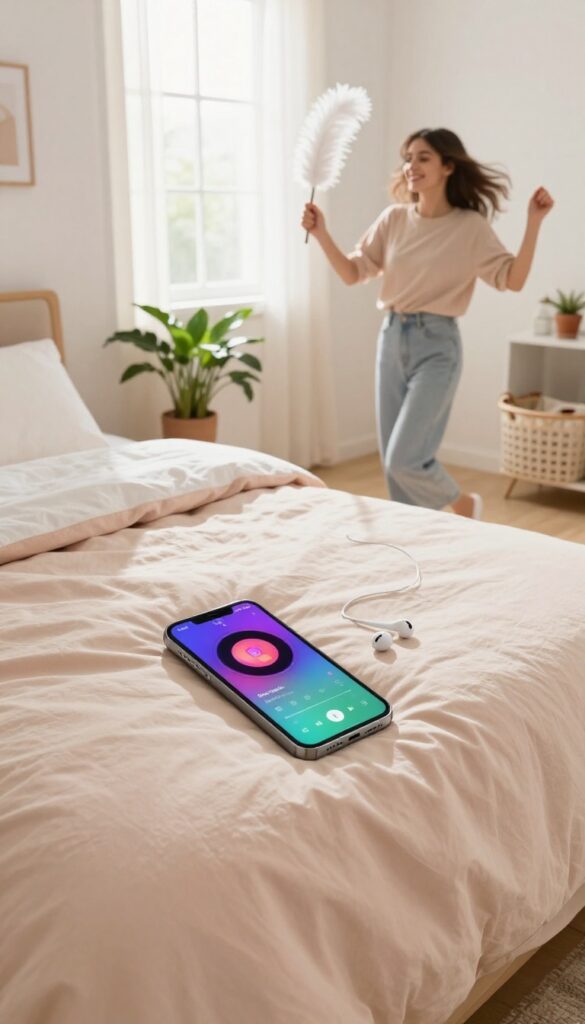
Music can be the secret weapon that transforms cleaning from a drag into a dance party. When you pair a high-energy playlist with your chores, you’re not just cleaning—you’re moving to a beat that keeps you motivated and on track. The trick is to use the playlist as both a timer and a mood booster, so you know exactly when to start and when to stop.
A well-curated playlist of 10–15 songs (roughly 30–45 minutes) can turn a daunting cleaning session into a fun, focused sprint. The music gives you a clear endpoint: when the playlist ends, you’re done. No more wondering if you’ve cleaned enough or dragging on forever.
Plus, upbeat songs naturally make you move faster, so you’ll get more done in less time.
Curate For Energy
Choose songs that make you want to move—think fast tempos, strong beats, and lyrics that pump you up. Avoid slow ballads or anything that might make you want to sit down. Create a dedicated “Cleaning Vibes” playlist on your music app so it’s ready to go whenever you need a boost.
Use It As A Timer
Commit to cleaning only while the playlist plays. No pausing, no skipping. This creates a natural time block that keeps you focused.
If you finish a task early, move to the next one. If the playlist ends and you still have energy, you can always start another round.
Match The Pace To The Task
For heavy-duty tasks like vacuuming or scrubbing, start with your highest-energy tracks. For lighter tasks like dusting or folding, you can let the playlist flow naturally. The key is to let the music set the rhythm so you don’t have to think about pacing.
8. Before-and-After Photos
A messy room can feel overwhelming, but seeing progress in real time is a powerful motivator. Grab your phone and snap a photo of the chaos before you start. Then set a timer for 15 minutes and clean as fast as you can.
When the timer goes off, take another photo from the same angle. The difference might surprise you.
The visual proof of your effort is hard to ignore. It turns abstract progress into something concrete and satisfying. Plus, you can look back at the before shot later and appreciate how far you've come.
Why It Works
Our brains respond strongly to visual contrast. Seeing the mess transform into order triggers a sense of accomplishment that fuels further action. It's like a mini victory every time.
How To Do It
Pick one area—your nightstand, a corner of the floor, or the top of your dresser. Take a before photo, clean for 15 minutes, then take an after photo. Use the same lighting and angle for the best comparison.
Share Or Save For Later
Posting your before-and-after on social media can add accountability and encouragement. Or keep it in a private album to remind yourself that you're capable of transforming your space, even in short bursts.
9. Declutter by Category
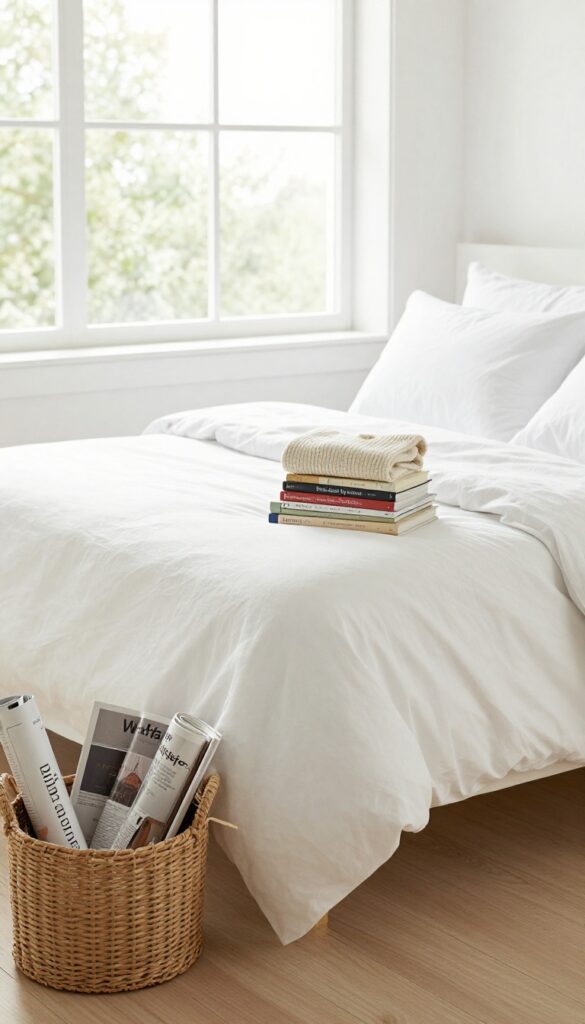
When a messy bedroom feels like a mountain, the problem is often trying to do everything at once. Decluttering by category breaks that mountain into small, manageable rocks. Pick one type of item—books, clothes, papers, or accessories—and focus only on that.
Narrowing your scope prevents decision fatigue and helps you move faster because every item gets compared against the same criteria.
This method works because your brain doesn’t have to switch contexts. You’re not deciding whether a shirt should go in the laundry, a book on the shelf, or a receipt in the trash all at once. Instead, you build momentum by making a series of similar decisions quickly.
Start with the category that bothers you most or the one that will give you the biggest visual win.
Start With The Easiest Category
If you’re low on energy, begin with something simple like magazines, empty hangers, or beauty products. The goal is to get a quick win that builds confidence. Once you see a cleared surface or a full trash bag, you’ll feel motivated to tackle a harder category like clothes or sentimental items.
Set A Timer For Each Category
Give yourself 10 to 15 minutes per category. This keeps you from getting bogged down in perfectionism. When the timer rings, stop and move on—or take a break.
You can always come back to another category later. The key is progress, not perfection.
Use The “one In, One Out” Rule
After you declutter a category, make a rule to keep it that way. For every new item you bring into that category, remove one old one. This prevents future piles and keeps your bedroom from sliding back into chaos.
It’s a simple habit that pays off long-term.
10. The 12-12-12 Challenge
Sometimes you need a game to get you going. The 12-12-12 Challenge turns decluttering into a fun, low-stakes competition with yourself. The rules are simple: find 12 items to throw away, 12 to donate, and 12 to put back in their proper place.
It’s quick, measurable, and surprisingly satisfying.
This challenge works because it gives you a clear finish line. Instead of staring at the whole room, you’re just hunting for 36 specific items. The variety keeps it interesting—you’re not just tossing trash or just organizing; you’re doing a little of everything.
Plus, the countdown effect makes you want to reach each goal.
Start With The Easy Wins
Begin with the trash category. Grab a bag and scan surfaces, drawers, and nightstands for obvious junk: old receipts, empty pens, broken chargers. Once you hit 12, you’ll already feel a lift.
Then move to donate—clothes that don’t fit, duplicate gadgets, books you’ll never reread. Finally, tackle the return pile: that sweater that belongs in the closet, the phone charger that lives in the living room.
Make It A Race Against The Clock
Set a timer for 15 or 20 minutes and see if you can complete all three sets. The time pressure keeps you from overthinking. You’ll be amazed how much you can accomplish when you’re not allowed to second-guess.
If you finish early, reward yourself with a five-minute break.
Turn It Into A Habit
Do the 12-12-12 Challenge once a week, and your bedroom will stay consistently tidy. It’s especially effective on Sundays as a reset before the workweek. Over time, you’ll notice you have fewer items to deal with, making each round quicker and easier.
11. Nightly Reset Routine
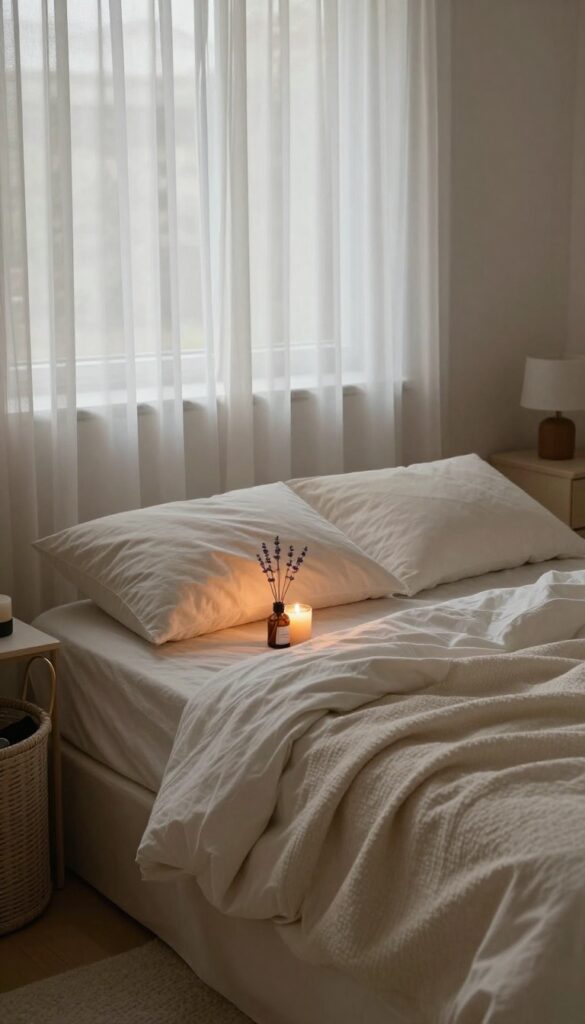
A clean bedroom doesn’t happen by accident—it’s built on small, consistent habits. The nightly reset routine is your secret weapon against the slow creep of clutter. By spending just ten minutes each evening tidying up, you stop messes from growing into overwhelming projects.
Think of this as closing the loop on your day. You’re not deep-cleaning; you’re resetting the room to a neutral state. That means making the bed, putting clothes in the hamper, returning items to their homes, and clearing surfaces.
In the morning, you wake up to a space that feels calm and ready for whatever comes next.
The 10-minute Timer Trick
Set a timer for exactly ten minutes. No more, no less. This keeps the task from feeling endless.
You’ll be amazed how much you can accomplish when you move with purpose. If the timer goes off and you’re still going, stop anyway—consistency matters more than perfection.
Create A Reset Checklist
Write down the five or six tasks that make the biggest difference in your room. Maybe it’s fluffing pillows, folding a throw blanket, or putting away stray items. Keep the list on your nightstand or mirror so you don’t have to think about what to do next.
Over time, it becomes automatic.
Make It A Wind-down Ritual
Pair your reset with something calming—like lighting a candle, playing soft music, or diffusing lavender oil. The cleaning becomes part of your transition to sleep. You’re not just tidying; you’re signaling to your brain that the day is over and it’s time to relax.
12. Zone Cleaning
Dividing your bedroom into four zones—bed, closet, desk, floor—makes the task feel manageable. Instead of trying to clean everything at once, you focus on one zone per day. Each session takes only 10–15 minutes, so it’s easy to fit into a busy schedule.
Zone cleaning works because it breaks a big job into small, daily wins. You never feel overwhelmed because you’re only responsible for one area at a time. Over four days, your entire bedroom gets a thorough clean without the burnout.
Pick Your Zones
Start by identifying the four main areas in your bedroom. Common zones include the bed area (make the bed, fluff pillows, clear nightstands), the closet (organize shoes, fold clothes, remove trash), the desk or vanity (wipe surfaces, sort papers, tidy drawers), and the floor (vacuum, pick up items, spot-clean stains). Adjust zones to match your room’s layout.
Set A Timer For Each Zone
Commit to just 10–15 minutes per zone. Set a timer on your phone and work until it rings. When time’s up, stop—even if the zone isn’t perfect.
The goal is progress, not perfection. This keeps the task from feeling like a chore marathon.
Rotate Zones Daily
Tackle one zone each day, Monday through Thursday. For example, Monday is bed day, Tuesday is closet, Wednesday is desk, and Thursday is floor. By Friday, your whole room is clean.
If you miss a day, just pick up where you left off—no guilt.
13. The Sock Method
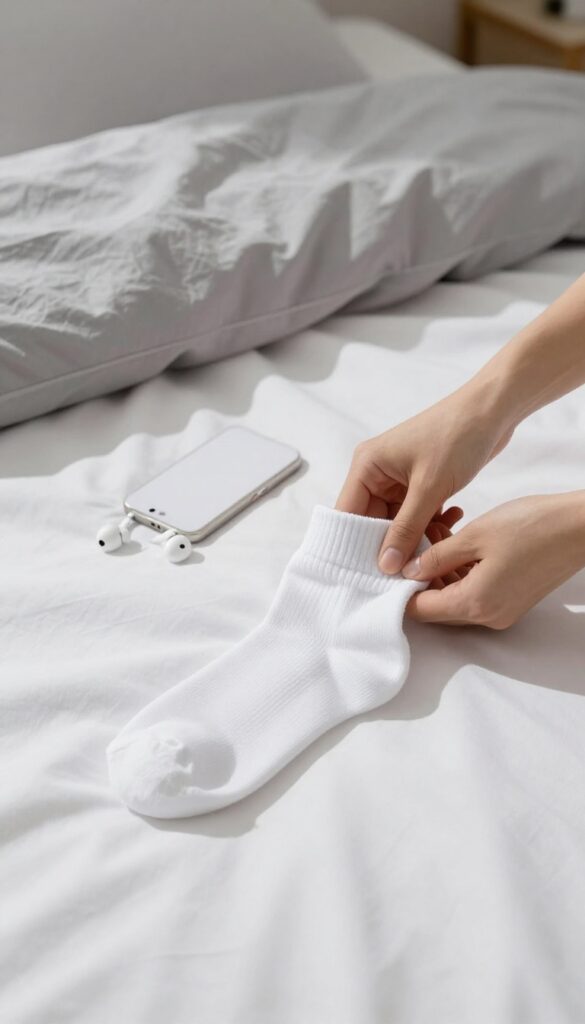
Sometimes the hardest part is just getting started. The Sock Method is a low-stakes trick that makes beginning almost effortless. Put on a podcast or audiobook and commit to cleaning only for as long as it takes to fold one sock.
That's it. Once you're already in motion, you'll likely keep going.
The Sock Method works because it removes the pressure to finish. You're not cleaning the whole room—you're just folding one sock. By the time that sock is folded, you've already broken the inertia.
Most people find themselves grabbing another sock, then a shirt, then before they know it, the bed is made.
Why One Sock Works
The brain hates starting big tasks but loves finishing small ones. Folding one sock is a micro-win that triggers a sense of accomplishment. That tiny dopamine hit makes you want to keep going.
It's the same reason why making your bed in the morning can lead to a more productive day.
Pair It With A Podcast Or Audiobook
Choose something engaging but not too distracting—a true crime podcast, a light novel, or a comedy special. The audio keeps your mind occupied while your hands work automatically. You'll start associating cleaning with entertainment, which makes it something to look forward to.
Set A Timer If You Need To Stop
If you're genuinely short on time, set a timer for five minutes after that first sock. When the timer goes off, you can stop guilt-free. But chances are, you'll be in a rhythm and want to keep going.
Either way, you've made progress without the dread.
14. Invite a Friend Over
Sometimes the best cleaning motivation isn't a playlist or a timer—it's the thought of someone walking through your door. Telling a friend you're cleaning and asking them to check in later creates a gentle but powerful push to get moving. You're not cleaning for them; you're cleaning with the knowledge that they'll ask how it went.
Social accountability works because it taps into our natural desire to follow through on commitments. When you know someone will ask, "How's the bedroom coming along? " that question alone can get you off the couch.
It's low-pressure—no one expects a spotless room—but it's enough to break the inertia.
How To Set It Up
Text a friend or family member and say, "I'm tackling my bedroom today. Can you check in with me in an hour? " That's it.
No need for them to come over or see the mess. Just a simple check-in can keep you accountable. You can even make it a mutual thing—ask them what they're working on and agree to text each other updates.
Make It A Virtual Cleaning Date
If you want more direct accountability, set up a video call while you both clean. You don't have to talk much—just having the other person there, even on a screen, can make the task feel less lonely. You can race to see who finishes a zone first or just enjoy the company while you work.
The Follow-up Matters
After the check-in, share a quick photo or a sentence about what you accomplished. That small act of reporting back reinforces the habit and makes it more likely you'll do it again. Plus, celebrating progress with someone else feels good and builds momentum for next time.
15. Reward After Cleaning
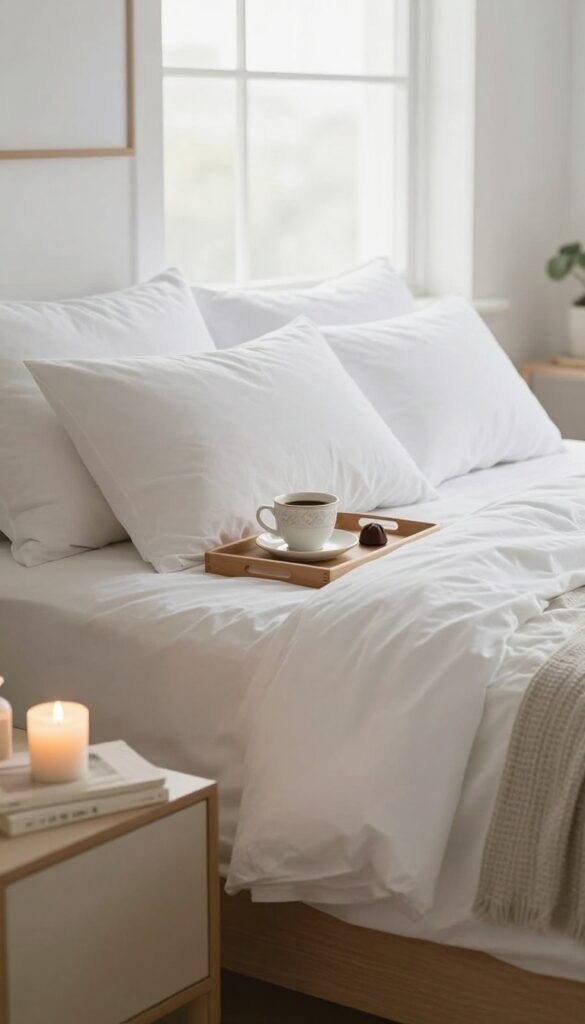
Bribery works, even when you're the one making the deal. The promise of a reward can turn a dreaded chore into a simple transaction: finish the task, collect the prize. It’s not childish—it’s psychology.
You’re creating a positive association with cleaning, which makes it easier to start next time.
Choose a reward that you genuinely look forward to, something you wouldn’t normally give yourself. It could be a fancy coffee, a 20-minute guilt-free nap, or watching one episode of your favorite show. The key is to make the reward contingent on completing a specific cleaning task—no shortcuts.
The anticipation itself can be surprisingly motivating.
Pick Your Prize Wisely
Your reward should feel like a treat, not a baseline activity. If you already scroll social media every night, that won’t work. Instead, choose something you usually deny yourself: a bath bomb, a new candle, or even just 15 minutes of uninterrupted reading.
The more special the reward, the stronger the pull.
Make It Immediate
The reward has to come right after the cleaning is done. If you delay it, the motivational link weakens. Set a timer if needed: clean for 30 minutes, then immediately enjoy your treat.
No waiting until later—that’s how rewards slip away.
Stack Small Rewards For Big Tasks
For a deep clean, break it into stages and reward each one. For example, after decluttering the nightstand, have a square of dark chocolate. After vacuuming, sip your fancy coffee.
This keeps momentum high and makes the whole process feel like a game.
16. Clean with a Theme
Sometimes the sheer number of decisions involved in cleaning paralyzes you. Should you start with the nightstand or the dresser? What about that random stack of books?
When your brain is overwhelmed, a theme cuts through the noise. By picking one color or category—like 'white items only' or 'everything that belongs on the floor'—you narrow your focus and make the task feel simple. It turns cleaning into a game, not a chore.
Themed cleaning works because it removes the pressure to tackle everything at once. Instead of thinking 'I need to clean this whole room, ' you think 'I just need to find all the white things. ' It's a small mental shift that makes a big difference. Plus, it's surprisingly satisfying to see a single color or category come together.
Pick A Color Or Category
Choose something that's easy to spot. 'White items only' is great because white stands out against most backgrounds. You'll quickly gather laundry, papers, and trinkets that are white. Another fun one is 'everything that belongs on the floor'—shoes, bags, yoga mats.
By focusing on floor items, you clear the main walking path and instantly make the room feel tidier.
Set A Timer And Hunt
Give yourself 10 minutes to find and deal with only items that match your theme. For 'white items, ' grab a laundry basket and toss in white clothes, white books, or white packaging. Then put them where they belong (or in a donation pile).
The timer adds urgency and keeps you from getting sidetracked.
Repeat With A New Theme
Once you've cleared one theme, pick another. Maybe 'black items' next, or 'things with cords. ' Each round takes just a few minutes, and before you know it, the room looks completely different. Themed cleaning is especially good for low-energy days because it feels like a scavenger hunt rather than a chore.
17. The 10-Minute Tidy
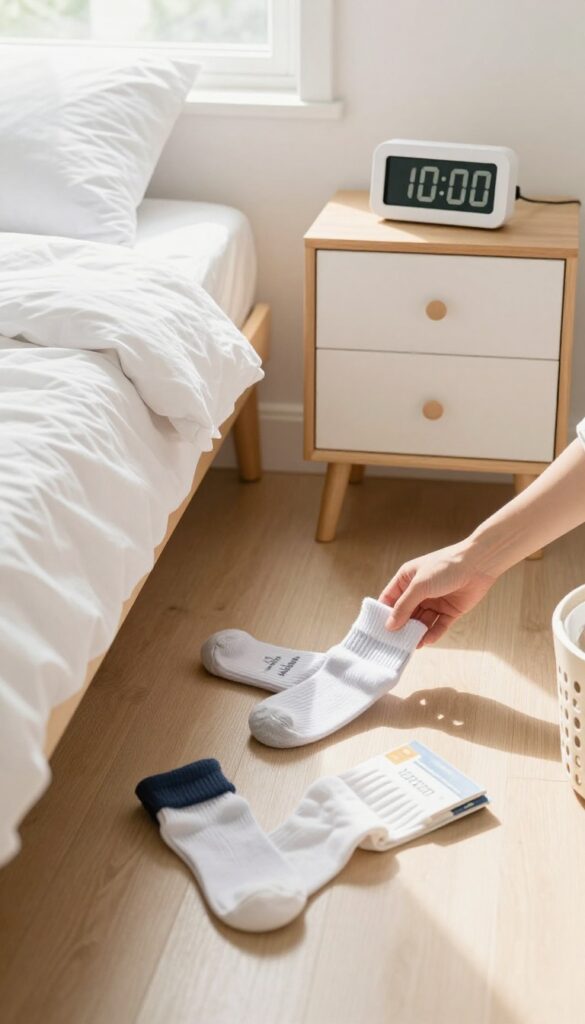
When your bedroom feels like a disaster zone, the thought of spending an hour cleaning can make you want to crawl back under the covers. But what if you only had to clean for 10 minutes? That's the idea behind the 10-Minute Tidy—a quick, high-energy burst that gets results without draining your motivation.
Set a timer, go all out, and when it dings, you're done. No guilt, no extensions.
The 10-Minute Tidy works because it removes the mental barrier of a big task. You can do almost anything for 10 minutes, even if you're tired or unmotivated. The key is to move fast and focus on one area—like the nightstand, the floor, or the bed.
When the timer stops, stop cleaning. This builds a habit of consistency, not perfection.
Why 10 Minutes Works
Short bursts prevent burnout. Your brain knows it's a sprint, not a marathon, so you're less likely to procrastinate. Over time, these mini-sessions add up to a noticeably cleaner room without the overwhelm.
How To Do It Right
Pick one hotspot before you start. Gather all trash, put away stray items, and make the bed if you have time. Don't reorganize drawers or deep-clean—just tackle the visible mess.
Speed matters more than perfection.
When To Use This Trick
This is perfect for low-energy days or when you're short on time. Use it as a warm-up for longer cleaning sessions, or as a standalone routine to maintain a tidy space. Even once a day can make a difference.
FAQ
How do I stay motivated to clean my bedroom every day?
Start with a tiny habit like making your bed or doing a 5-minute tidy. Consistency beats intensity. Use a playlist or reward to make it enjoyable.
What’s the best way to clean a messy bedroom fast?
Focus on high-impact areas: make the bed, clear surfaces, and pick up trash. Use a timer to stay focused and avoid getting sidetracked.
How can I motivate myself to clean when I’m tired?
Lower the bar—aim for just 5 minutes. Often, starting is the hardest part. Once you begin, you may find the energy to do more.
What should I do if I feel overwhelmed by bedroom clutter?
Break the room into small zones and tackle one at a time. Use the 12-12-12 challenge or a trash bag to remove items quickly.
How often should I deep clean my bedroom?
Aim for a deep clean every 1-2 months, but maintain with weekly surface cleaning and a nightly 10-minute reset.
Conclusion
Cleaning your bedroom doesn’t have to be a monumental task. By using these 17 ideas, you can find small ways to start, stay consistent, and actually enjoy the process. The key is to pick one idea that feels doable right now and give it a try.
Remember, a clean bedroom isn’t about perfection—it’s about creating a space that helps you rest and recharge. Even a little progress can make a big difference in how you feel. So go ahead, pick an idea, and take that first step.