Dusty blinds can make a whole room feel grimy, but scrubbing each slat by hand is a drag. The right tricks cut the chore time in half and keep those slats dust-free longer.
From dryer sheets to bathtub soaks, these ten methods tackle dust without the fuss. You'll find a solution for every blind type and cleaning style, whether you want a quick touch-up or a deep reset.
No special tools required—just smarter moves for a cleaner, brighter window.
1. Use a Dryer Sheet to Repel Dust
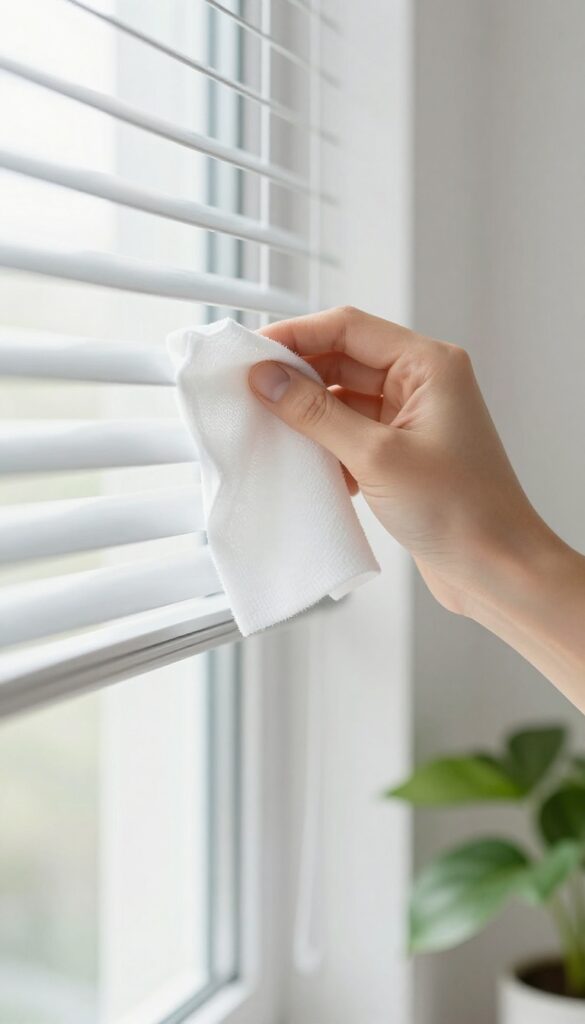
Dryer sheets aren't just for laundry. A used one can be your secret weapon against dust on blinds. The anti-static coating helps repel dust, so your blinds stay cleaner longer.
It's a simple swap that saves you from frequent wipe-downs.
Grab a used dryer sheet—one that's been through the dryer once is perfect. Wrap it around your fingers or a pair of tongs, then gently wipe each slat from top to bottom. The sheet picks up dust while leaving a thin anti-static layer.
This layer acts like a shield, making it harder for new dust to settle. You'll notice your blinds stay fresh for weeks instead of days. It's especially effective on horizontal blinds, but works on vertical ones too.
Just replace the sheet when it gets too dirty or loses its softness.
Why Dryer Sheets Work
Dryer sheets contain fabric softeners and anti-static agents. These ingredients neutralize static electricity, which is what attracts dust to plastic and metal surfaces. By removing the static charge, you reduce the magnetic pull on dust particles.
The result: a cleaner surface that resists resoiling.
Best Blinds For This Method
This trick shines on vinyl, aluminum, and faux wood blinds. The smooth, non-porous surface lets the anti-static coating adhere well. Avoid using dryer sheets on real wood blinds, as the chemicals can damage the finish over time.
For wood, stick to a microfiber cloth or a gentle wood cleaner.
Pro Tips For Best Results
Use a fresh dryer sheet for each blind to avoid spreading dirt. If your blinds are very dusty, start with a quick vacuum using a brush attachment to remove loose debris. Then follow up with the dryer sheet for a deeper clean and static protection.
Store used sheets in a sealed bag until you're ready to use them—they can be reused a couple of times.
2. Vacuum with a Brush Attachment First
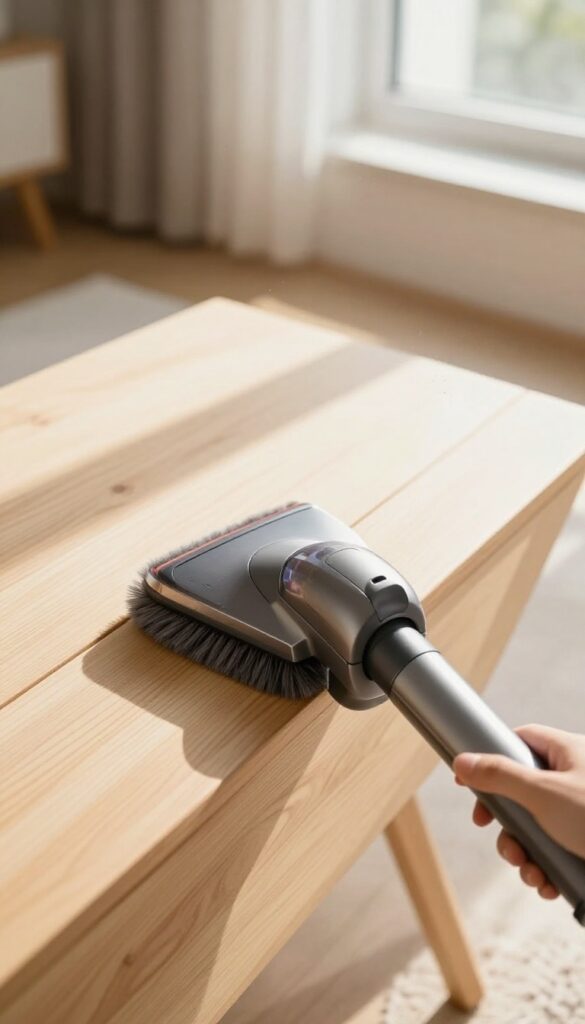
Before you break out the sprays or wipes, grab your vacuum. A quick pass with the brush attachment lifts loose dust without smearing it into a paste. It's the single fastest way to clean blinds when you're short on time.
Vacuuming first prevents the dust from turning into mud when you add moisture. It also keeps particles from floating back onto your freshly cleaned surfaces. This step works on all blind types—wood, faux wood, aluminum, or fabric.
Choose The Right Brush
Use the soft brush attachment meant for upholstery or dusting. The bristles are gentle enough not to scratch finishes but firm enough to dislodge trapped dust. Avoid the hard plastic crevice tool—it can leave marks on painted or wooden slats.
Work Top To Bottom
Start at the top rail and work your way down. Angle the brush so the bristles catch both sides of each slat. For horizontal blinds, close them flat and vacuum the entire surface, then tilt them the other way and repeat.
This catches dust on both sides in one pass.
Use Low Suction
High suction can bend thin slats or suck fabric blinds into the nozzle. Set your vacuum to low or medium power. If your vacuum doesn't have adjustable suction, hold the brush slightly away from the slats to reduce pull.
3. Try the Sock Method for Speed
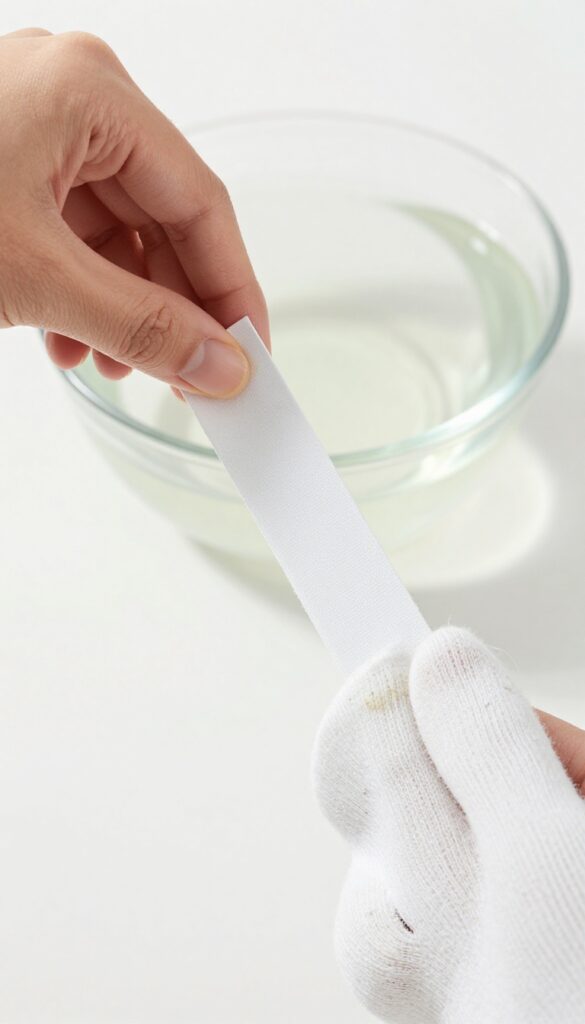
If you're tired of flipping each slat to clean both sides, the sock method is a game-changer. It’s cheap, fast, and requires zero special equipment. All you need is an old sock and a simple cleaning solution.
What You’ll Need
Grab a clean cotton sock (an orphaned one works perfectly) and mix equal parts white vinegar and warm water in a bowl. That’s it—no fancy sprays or microfiber cloths required.
How To Do It
Slip the sock over your hand like a glove, dip it into the vinegar-water mix, and wring out the excess. Then grip each slat with your sock-covered hand and slide from one end to the other. The sock cleans the top and bottom in one pass because it wraps around the slat.
Why It Works So Well
The cotton sock creates gentle friction that lifts dust and grime without scratching the blind’s surface. The vinegar cuts through grease and disinfects, while the one-swipe motion cuts your cleaning time in half. Plus, you can toss the sock in the wash when you’re done—no waste.
4. Use a Microfiber Cloth with Rubbing Alcohol
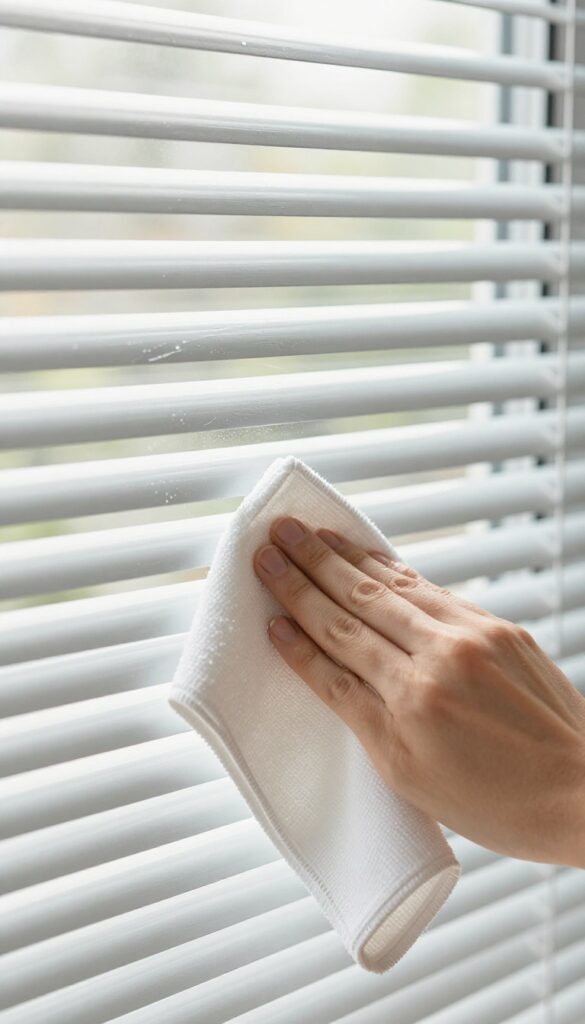
Rubbing alcohol isn't just for first aid—it's a secret weapon for greasy blinds. When you dampen a microfiber cloth with it, the alcohol evaporates fast, leaving no streaks behind. It cuts through the sticky film that builds up in kitchens, making blinds look like new without heavy scrubbing.
This method is especially effective for horizontal blinds in kitchens or near cooking areas. The alcohol dissolves grease on contact, and the microfiber traps dust instead of pushing it around. It's also safe for most blind materials, including wood, faux wood, and aluminum.
Just test on a small area first if you're unsure.
How To Prep The Cloth
Grab a clean microfiber cloth—lint-free is key. Pour a small amount of rubbing alcohol (70% or higher) into a bowl, then dip the cloth and wring it out well. You want it damp, not dripping.
Too much liquid can damage the blind cords or leave residue.
Wiping Technique For Best Results
Close the blinds so the slats form a flat surface. Wipe each slat from the center outward, using one side of the cloth for the top and the other for the bottom. Flip the cloth as it gets dirty.
For vertical blinds, wipe from top to bottom in one smooth motion.
Why It Works So Well
Rubbing alcohol is a solvent that breaks down oils and grime without leaving water spots. It evaporates quickly, so you don't have to worry about moisture seeping into wood blinds. Plus, it disinfects the surface, which is a nice bonus for high-touch areas like kitchen windows.
5. Clean with a Lint Roller for Quick Touch-Ups
Sometimes you just need a fast fix—like when you notice dust on your blinds right before guests arrive. A lint roller is your best friend for those moments. It picks up dust, pet hair, and lint in seconds, no setup or cleanup needed.
Keep one near your windows or in a drawer for easy access. It's perfect for a quick refresh between deep cleans, especially on horizontal blinds where dust settles on top of each slat.
A lint roller works because its sticky surface grabs particles without spreading them around. Unlike a duster that might flick dust into the air, the roller traps it. This makes it ideal for a fast spruce-up when you don't have time for a full cleaning session.
For best results, use a fresh sheet each time. Roll it firmly over each slat from one end to the other. You'll see the dust collect on the sheet—satisfying and effective.
On vertical blinds, roll downward to catch dust before it falls.
Why A Lint Roller Works So Well
The adhesive on a lint roller grabs dust and hair that static might otherwise hold in place. It's also gentle on blind materials, so you won't risk scratching or bending slats. Plus, it's disposable—just peel off the dirty sheet and you're done.
Best Blind Types For This Trick
Lint rollers work great on plastic, aluminum, and faux wood blinds. They're also safe for fabric blinds, but test a small area first to make sure the adhesive doesn't leave residue. Avoid using them on real wood blinds with a delicate finish, as the glue might strip the sealant.
Pro Tips For Maximum Efficiency
Use a wide lint roller to cover more surface area per swipe. For extra-stubborn dust, press firmly but avoid dragging too slowly—that can cause the adhesive to lose grip. If you're tackling pet hair, go over each slat twice in opposite directions to catch every strand.
6. Soak Mini Blinds in the Bathtub
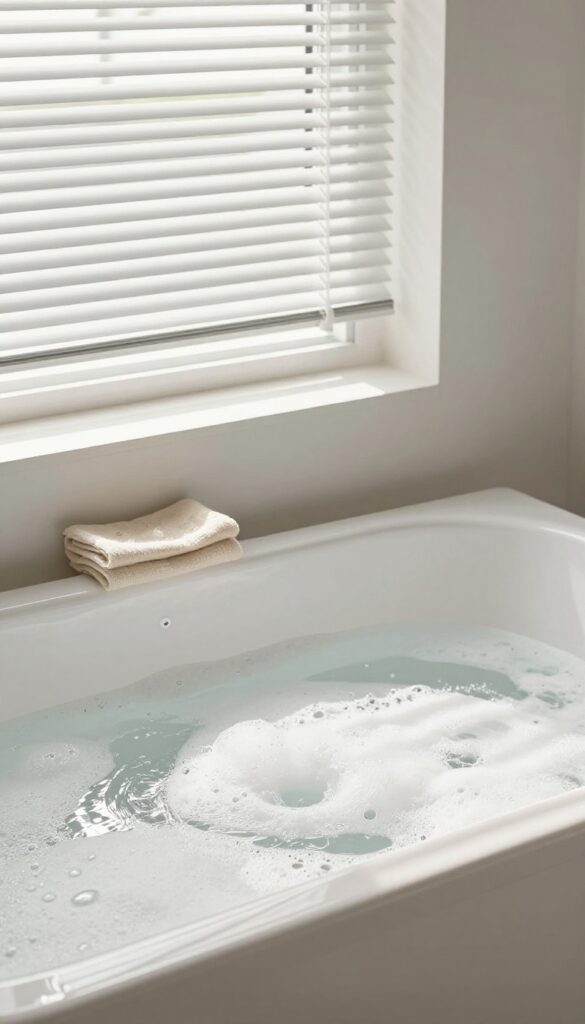
When mini blinds are coated in stubborn dust and grime, spot cleaning just doesn't cut it. A full bath in the tub gives them a deep clean without you having to scrub each slat. It's surprisingly easy and leaves your blinds looking like new.
This method works best for aluminum or vinyl mini blinds that can handle water. Check the manufacturer's instructions if you're unsure. You'll need a bathtub (or a large plastic bin), warm water, a mild detergent like dish soap, and a soft cloth or sponge.
Remove the blinds from the window and lower them into the tub filled with a few inches of warm, soapy water. Let them soak for 15–20 minutes to loosen dust and grime. Gently wipe each slat with a cloth or sponge, then rinse thoroughly with clean water.
Shake off excess water and rehang the blinds while they're still slightly damp—they'll dry quickly and look spotless.
Why A Soak Works Best
Soaking loosens dirt trapped in the cords and between slats that dry wiping can't reach. The detergent breaks down oils and dust, so a simple rinse washes it all away. It's the most thorough clean for heavily soiled blinds.
What To Avoid
Avoid hot water, which can warp some blinds, and skip harsh chemicals like bleach that might damage the finish. Don't soak wooden or fabric blinds—these require dry cleaning methods. Also, be gentle with the cords to prevent tangling or fraying.
Drying And Rehanging Tips
After rinsing, tilt the blinds to let water run off, then pat them dry with a towel. Rehang them immediately and open them fully so air circulates between slats. Avoid direct sunlight while drying to prevent water spots.
7. Use a Paintbrush or Makeup Brush for Delicate Slats
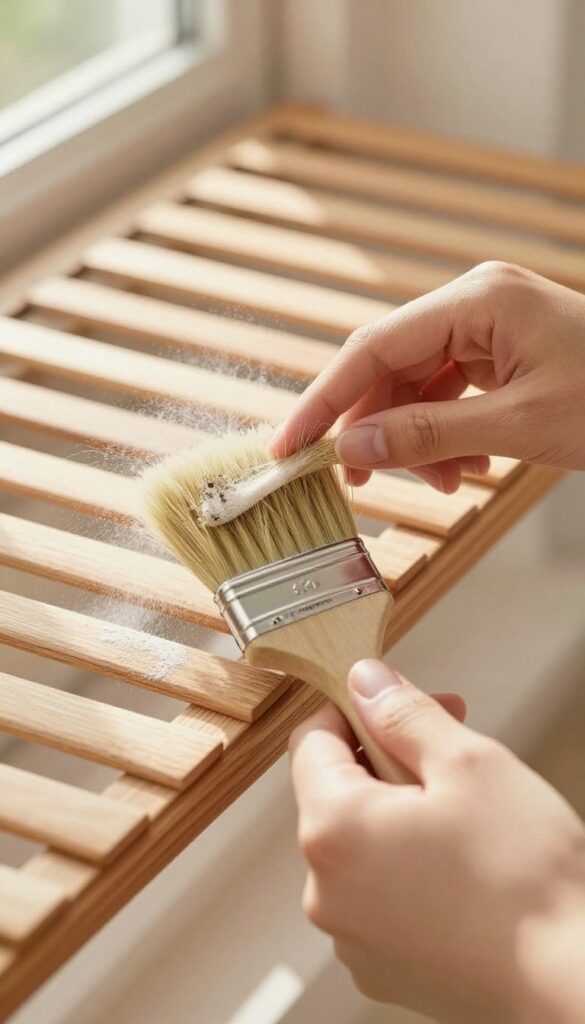
Not all blinds are built the same. If you have wooden, faux wood, or textured blinds, you know how easily they can scratch or get damaged with rough cleaning. That's where a soft paintbrush or a large makeup brush comes in handy.
These gentle tools are perfect for sweeping away dust without harming the surface.
A soft, wide paintbrush or a fluffy makeup brush can reach into crevices and gently lift dust. The bristles are soft enough for delicate finishes, yet effective at dislodging particles. This method is especially great for vertical blinds or blinds with intricate textures where a cloth might snag.
Why Paintbrushes Work So Well
A 2- to 3-inch soft paintbrush has dense bristles that can hold dust as you sweep. Unlike a duster that just pushes dust around, the brush traps it, so you can then tap it out over a trash can. Plus, the angled tip of many paintbrushes fits perfectly between slats.
Best Brushes For The Job
Look for brushes labeled "soft" or "synthetic"—they're gentle yet sturdy. A flat brush works for wide slats, while a round blush brush is great for narrow gaps. Avoid stiff bristles, which can scratch painted or varnished surfaces.
Step-by-step Quick Clean
Start from the top slat and work down. Hold the brush at a slight angle and sweep in one direction. After each slat, tap the brush handle against your palm to release dust.
For extra stubborn spots, lightly dampen the bristles with water or a wood-safe cleaner.
8. Wipe with a Mixture of Vinegar and Water
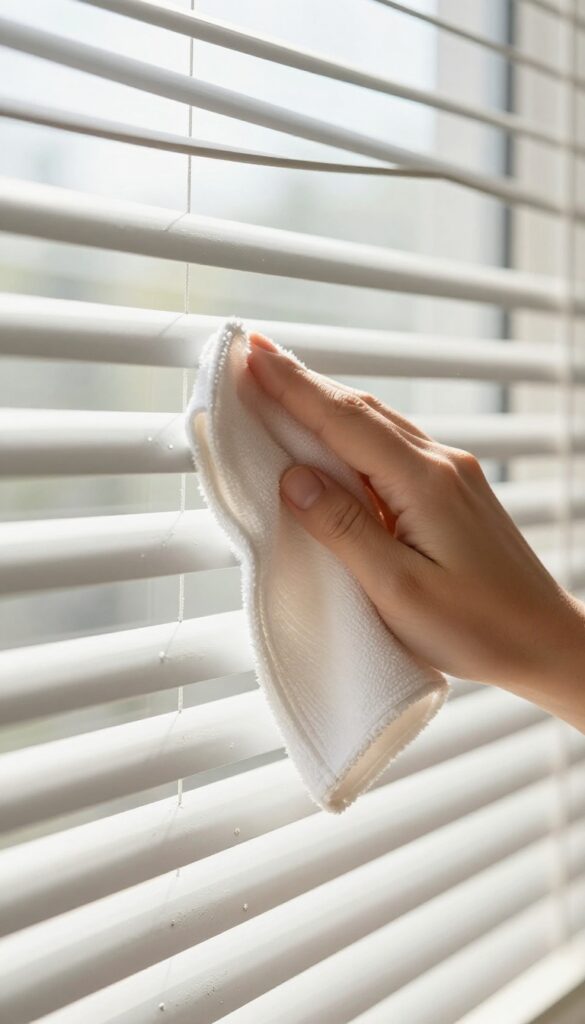
Vinegar is a powerhouse when it comes to cutting through grime without harsh chemicals. Mixing it with water creates a gentle but effective cleaner that lifts dust and sticky residue from blinds. This method works especially well on vinyl or aluminum blinds that have seen better days.
The Perfect Ratio
Combine equal parts white vinegar and water in a spray bottle. Shake gently to mix. Avoid using full-strength vinegar, as it can be too acidic for some finishes.
Application Technique
Never spray directly onto the blinds—this can cause drips and streaks. Instead, spray the mixture onto a soft microfiber cloth until damp, then wipe each slat from top to bottom. For horizontal blinds, close them flat and wipe in one direction.
Drying And Finishing
After wiping, go over the slats with a dry cloth to remove any remaining moisture. This prevents water spots and ensures a streak-free shine. The vinegar smell fades quickly once dry.
9. Use a Hairdryer on Cool Setting to Blow Dust Away
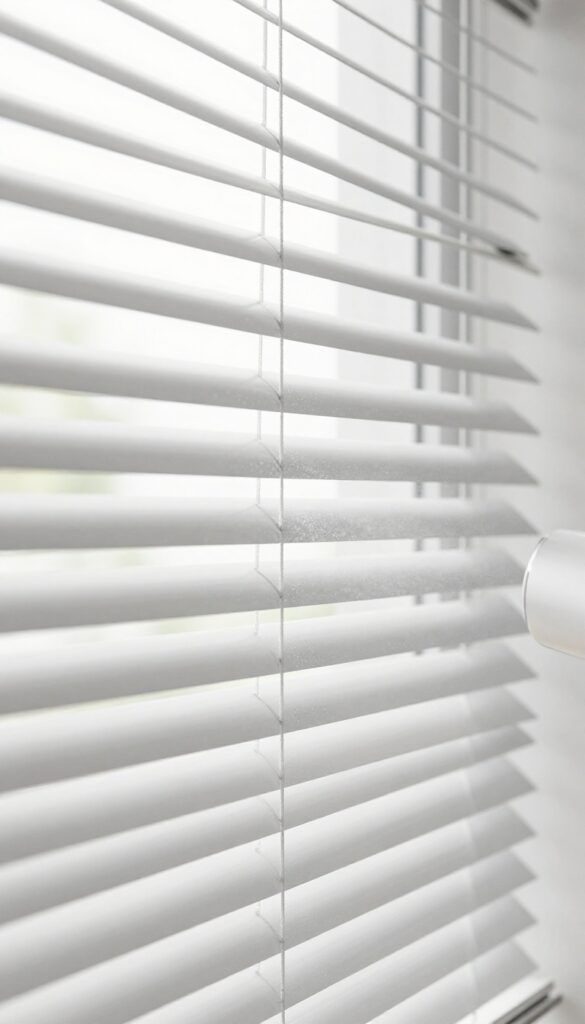
If you have a hairdryer, you already own a surprisingly effective blind-cleaning tool. The cool setting blows dust off without spreading it around the room, and you never have to touch a single slat. It's perfect for a quick weekly maintenance pass or for reaching blinds that are awkwardly positioned above furniture.
This method is all about using air movement to dislodge dust, then letting gravity and your vacuum do the rest. It works best on horizontal blinds like mini blinds or Venetian blinds, but can also be used on vertical blinds if you're careful. The key is to use the cool setting—hot air can warp plastic blinds or cause dust to stick.
Start at the top of the window and work your way down, angling the dryer so the dust blows downward. After you've gone over all the slats, simply vacuum the floor or windowsill to collect the fallen dust. No wiping, no scrubbing, no bending over each slat.
Why Cool Air Works Best
Heat from a hairdryer can soften or warp plastic blinds over time, and it can also bake dust onto surfaces, making it harder to remove. Cool air, on the other hand, gently lifts dust without any risk of damage. Plus, it's more comfortable to use—no hot air blowing back in your face.
If your hairdryer has a concentrator nozzle, attach it to direct the airflow precisely where you want it.
Step-by-step: Blow Dust Away In Minutes
Start by closing the blinds fully so the slats are flat and overlapping. Set your hairdryer to cool and low speed. Hold it about 6 inches from the top of the blinds and blow across the slats from left to right, working your way down.
For stubborn dust, you can tilt the blinds open and blow from the side. Once you've covered the entire blind, vacuum the floor and windowsill. That's it—your blinds are dust-free without any elbow grease.
When To Use This Trick
This method is ideal for light to moderate dust buildup, especially between deep cleans. It's also a lifesaver for blinds in hard-to-reach places like above a sink, behind furniture, or in a bay window. If your blinds are greasy or have sticky residue, the hairdryer method won't cut it—you'll need a wet cleaning approach.
But for routine dusting, it's fast, easy, and surprisingly satisfying.
10. Apply a Fabric Softener Solution for Longer-Lasting Clean
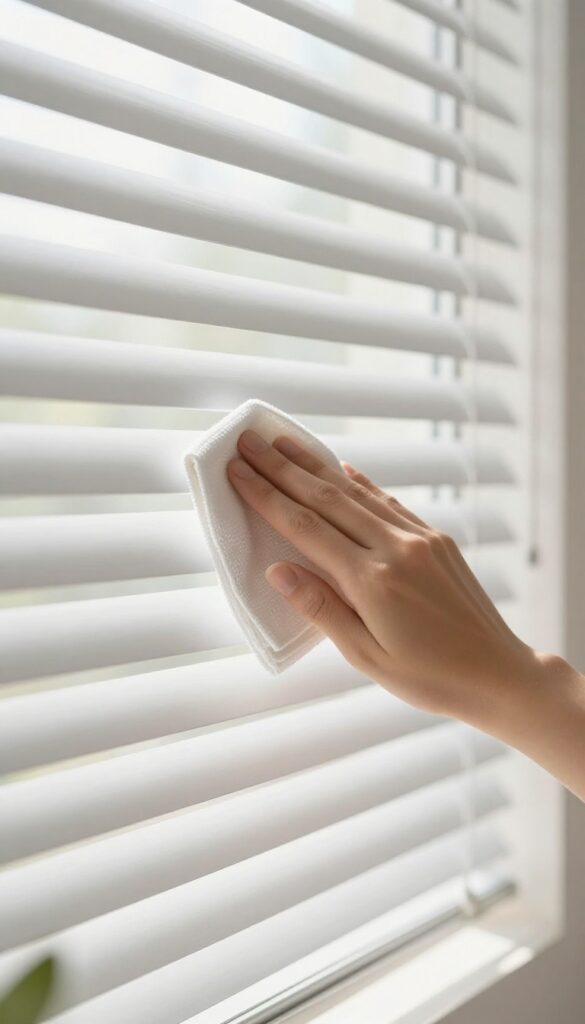
There's a reason fabric softener is a laundry hero—it reduces static cling. That same anti-static power works wonders on blinds. A simple homemade spray creates a barrier that repels dust for weeks, so you can clean less often.
Mix one capful of liquid fabric softener with a quart of water in a spray bottle. Lightly mist a microfiber cloth (don't soak the blinds) and wipe each slat. The softener leaves a microscopic film that neutralizes static charge, so dust doesn't stick.
Bonus: your blinds will smell fresh. Avoid using too much, or you'll get a sticky residue. Test on a hidden slat first, especially on wooden or faux-wood blinds.
Why It Works
Static electricity attracts dust like a magnet. Fabric softener contains cationic surfactants that reduce static cling. When you wipe blinds with this solution, it coats the surface with a thin, positively charged layer that repels negatively charged dust particles.
The effect lasts for weeks, meaning fewer cleaning sessions.
Best Blinds For This Trick
This method works best on vinyl, aluminum, and plastic blinds. For wooden blinds, use a very diluted mix (one teaspoon per quart) and wipe almost dry to avoid warping. Avoid fabric or rope blinds—softener can leave a residue that attracts more dirt.
Pro Tips For Application
Use a clean, lint-free microfiber cloth. Spray the cloth, not the blinds, to prevent drips. Work from top to bottom, closing the blinds one way, then flipping them to get both sides.
For vertical blinds, wipe in long, downward strokes. Let them air dry completely before reopening.
FAQ
How often should I clean my blinds?
Dust blinds every 2-4 weeks, and deep clean every 3-6 months depending on location and allergies.
Can I clean blinds without removing them?
Yes, most methods like the sock, microfiber cloth, or vacuum attachment work without removal. Only soak if they're heavily soiled.
What's the best way to clean vertical blinds?
Use a vacuum with a brush attachment or wipe with a damp microfiber cloth. Avoid soaking vertical blinds as they can warp.
Will vinegar damage my blinds?
Vinegar is safe for most blinds, but avoid on unsealed wood. Always test a small area first and use a diluted solution.
How do I prevent dust from settling on blinds so quickly?
Use anti-static treatments like dryer sheets or fabric softener solution. Also, keep windows closed on windy days and use air purifiers.
Conclusion
Cleaning blinds doesn't have to be a dreaded chore. With these tricks, you can cut through dust quickly and keep your windows looking crisp without the hassle. Pick the method that fits your blinds best—whether it's a quick sock swipe or a deep soak—and make it part of your routine.
Your reward is brighter rooms and a cleaner home with minimal effort. Start with one tip today and see how easy it can be.