Your couch sees it all—spilled coffee, pet hair, mystery stains, and daily wear. But before you resign it to a lifetime of covers, know that most fabric issues have a simple fix.
These 11 methods target specific problems, from grease marks to lingering odors, using gentle ingredients you likely already own. No harsh chemicals, no expensive steamers—just practical, fabric-friendly solutions that restore your sofa without damaging the material.
Pick the technique that matches your stain or fabric type, and give your couch a fresh start.
1. Vacuum Thoroughly Before Anything Else
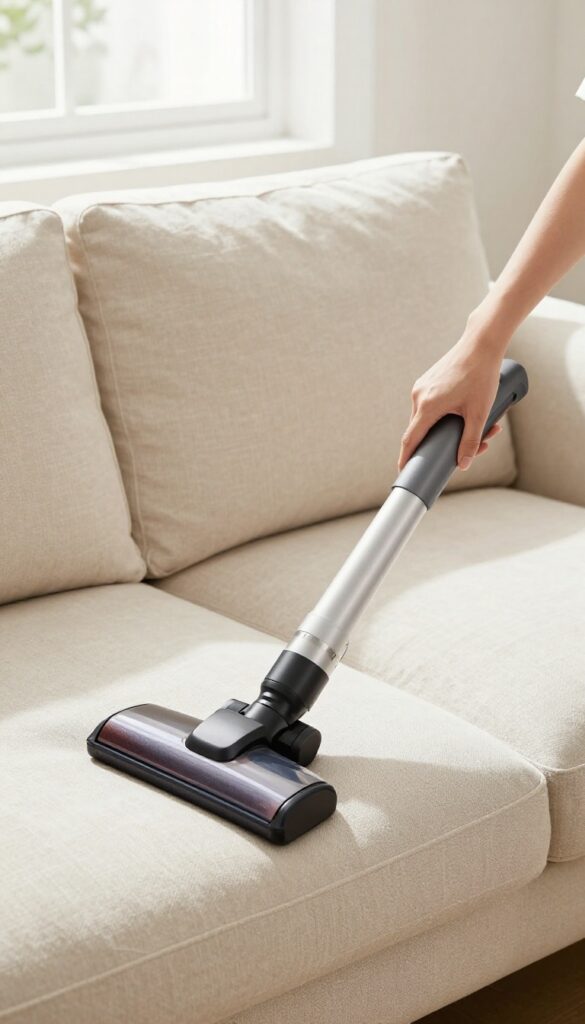
Before you reach for any cleaner or scrub brush, grab your vacuum. Loose dirt, crumbs, and pet hair act like sandpaper when you start wiping or spraying—they grind into the fabric and cause premature wear. A good vacuuming session removes that surface grit and preps the fibers for deeper cleaning.
It’s the single most important step, and skipping it can make every following method less effective.
Use your vacuum’s upholstery attachment to cover the entire couch, including the backrest, arms, and seat cushions. Don’t forget the crevices where coins, popcorn, and dust bunnies hide. Run the crevice tool along seams and between cushions.
For pet owners, a rubber brush or a lint roller can help lift stubborn hair before vacuuming. If your vacuum has adjustable suction, use a lower setting on delicate fabrics like velvet or linen to avoid pulling threads. This five-minute step prevents dirt from embedding deeper during wet cleaning and keeps your couch looking newer longer.
Why Vacuuming First Matters
When you apply any liquid cleaner to a dirty couch, the moisture mixes with loose debris and can push grime deeper into the fibers. Vacuuming first removes that loose layer, so your cleaning solution actually lifts stains instead of spreading dirt around. It also reduces the amount of cleaner you need, saving product and effort.
Tools And Tips For Best Results
A standard vacuum with an upholstery brush works fine, but a handheld vacuum or a canister vac with a soft brush attachment gives you more control. For tight spaces, use the crevice tool. If your couch has removable cushions, vacuum both sides and the frame underneath.
Work in overlapping strokes, going against the grain of the fabric to dislodge trapped particles.
How Often To Vacuum
For high-traffic couches or homes with pets, vacuum once a week. For less-used sofas, every two weeks is enough. Regular vacuuming not only keeps your couch cleaner between deep cleans but also extends the life of the fabric by reducing abrasive wear.
2. Spot Clean with a Mild Dish Soap Solution
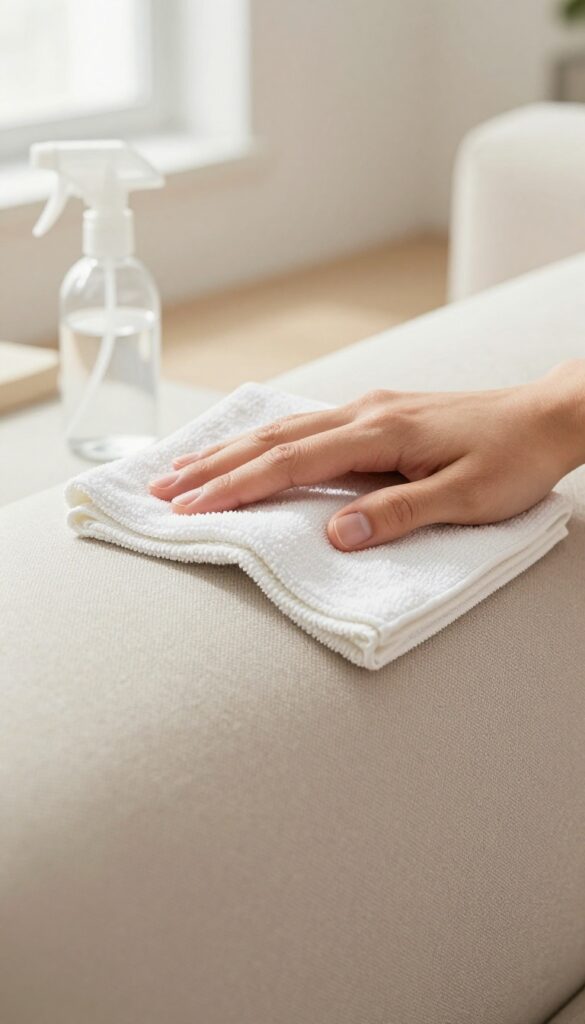
Dish soap is a gentle but effective cleaner for most couch fabrics. It cuts through grease and lifts stains without the harshness of chemical cleaners. The trick is using it sparingly and blotting—never rubbing—to avoid pushing the stain deeper.
Mix The Right Ratio
Combine just a few drops of mild dish soap with a cup of warm water. Too much soap can leave a sticky residue that attracts dirt. Stir gently to avoid creating too many suds.
Blot, Don’t Rub
Dip a clean microfiber cloth into the solution and wring it out so it’s damp, not wet. Blot the stain from the outside in to prevent spreading. Rubbing can damage fibers and set the stain.
Rinse And Dry
After blotting, use a cloth dampened with plain water to remove any soap residue. Then blot with a dry towel and let the area air dry completely. Avoid heat or direct sunlight.
3. Use Baking Soda to Absorb Odors and Light Stains
Baking soda is a powerhouse for freshening up your couch without any harsh chemicals. It works by neutralizing odors and gently absorbing light stains. This method is especially great for fabric sofas that have absorbed smells from pets, smoke, or everyday use.
Sprinkle a generous layer of baking soda over the entire couch, focusing on areas that smell or have light stains. Let it sit for 15-20 minutes—longer if the odors are strong. Then, vacuum thoroughly using an upholstery attachment to remove all the powder.
You’ll notice a fresher smell and lighter marks. For tougher spots, you can make a paste with water and apply it directly, letting it dry before vacuuming.
Why Baking Soda Works
Baking soda is alkaline, so it reacts with acidic odors and stains, breaking them down. Its fine powder also acts like a gentle abrasive, lifting dirt without scratching fabric fibers. Plus, it’s safe for most upholstery materials.
Step-by-step Application
Start by vacuuming the couch to remove loose dirt. Then, sprinkle baking soda evenly from a shaker or your hand. Let it sit for at least 15 minutes—up to an hour for strong smells.
Finally, vacuum again, making sure to get into crevices. Repeat monthly to keep your couch fresh.
When To Skip This Method
Avoid baking soda on velvet or suede, as it can leave residue or dull the texture. Also, don’t use it on wet stains—it can cake up. For liquid spills, blot first, then treat with a different method.
4. Tackle Grease Stains with Cornstarch or Talcum Powder
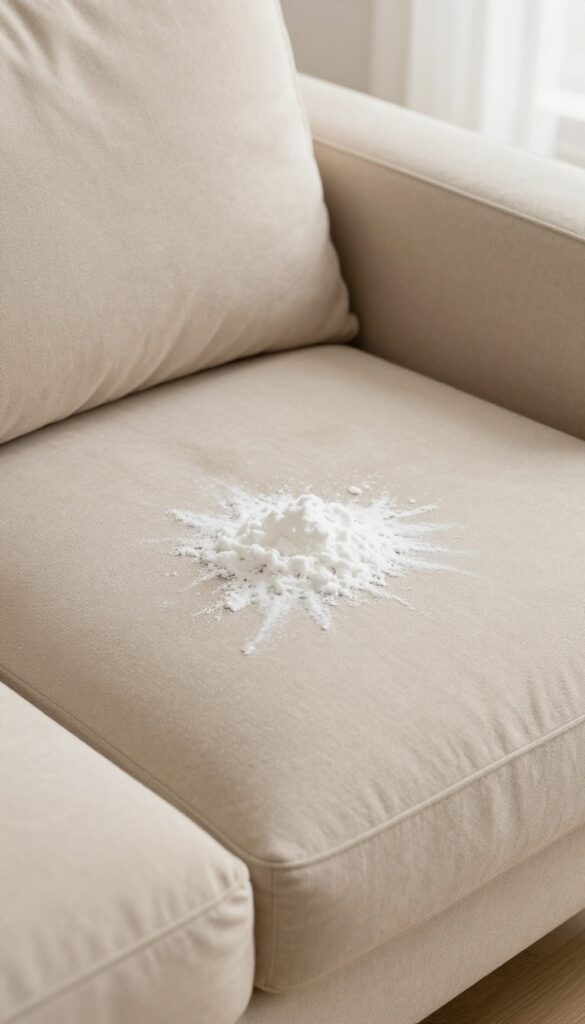
Grease stains from food, lotions, or even hair products can be stubborn, but you don't need a chemical cleaner. Cornstarch and talcum powder work by absorbing the oil before it sets deeper into the fabric. This method is safe for most upholstery and requires almost no elbow grease.
When you spot a fresh grease mark, act quickly. Sprinkle a generous layer of cornstarch or talcum powder directly over the stain. Let it sit for at least 30 minutes—longer for older or heavier stains.
The powder will pull the oil out of the fibers. After the wait, brush off the powder with a soft-bristled brush or a dry cloth, then vacuum the area to remove any residue. Repeat if needed.
This technique works wonders on microfiber, cotton, and synthetic blends, but always test on a hidden spot first.
Why Powder Works
Both cornstarch and talcum powder are fine, absorbent particles that cling to oil molecules. As they sit, they draw grease away from the fabric fibers, making it easy to remove without rubbing the stain deeper. This is especially useful for delicate fabrics that can't handle scrubbing.
Step-by-step Application
First, blot any excess grease with a paper towel. Then, heap the powder over the stain—don't skimp. Let it rest for 30 minutes to an hour.
Use a clean, dry brush to sweep away the powder, working from the edges inward. Finish with a vacuum using the upholstery attachment to pick up every last grain.
When To Repeat
Some grease stains need more than one treatment. If you still see a shadow after the first go, reapply powder and let it sit longer—overnight if possible. For set-in stains, you can lightly press the powder into the fabric with your fingers to help it penetrate.
5. Refresh with a Fabric-Safe Upholstery Shampoo
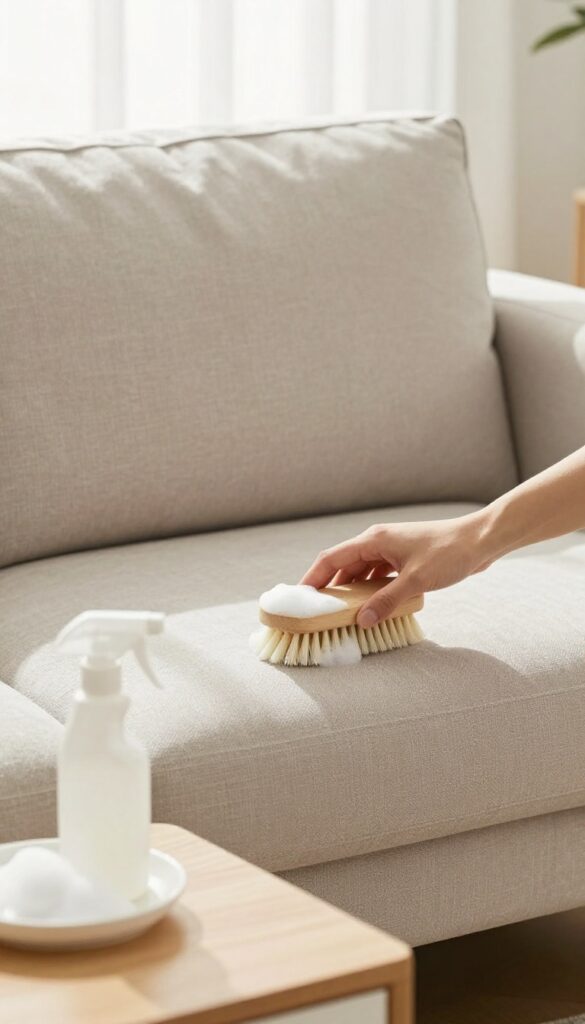
When your couch needs more than a spot clean, a dedicated upholstery shampoo can work wonders. These products are formulated to lift embedded dirt and grime without damaging the fabric. The key is choosing one that's safe for your specific upholstery type—check the label or your couch's care tag before buying.
Pick The Right Shampoo For Your Fabric
Not all upholstery shampoos are created equal. For delicate fabrics like silk or rayon, look for a gentle, water-free cleaner. For cotton or polyester blends, a standard foam shampoo works well.
Avoid anything with bleach or harsh solvents unless your fabric is labeled as safe for them.
Always Test First
Before you go all in, test the shampoo on a hidden spot—under a cushion or behind the couch. Apply a small amount, let it dry, and check for discoloration or damage. This simple step can save you from a costly mistake.
Shampoo Like A Pro
Follow the product instructions to the letter. Usually, you'll apply a small amount of foam to a soft brush or sponge, then work it into the fabric in circular motions. Avoid soaking the couch—too much moisture can lead to mold or mildew.
After shampooing, blot with a clean, dry cloth to absorb excess liquid, then let the couch air dry completely before using it.
6. Steam Clean for a Deep, Chemical-Free Sanitize
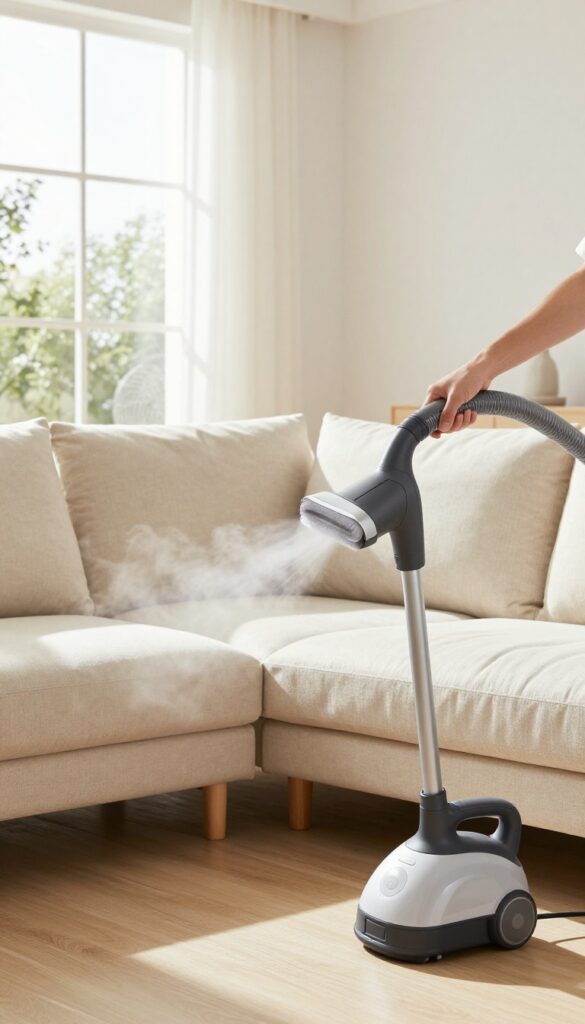
If your couch is due for a deep refresh but you want to avoid harsh chemicals, steam cleaning is a game-changer. A handheld steamer or steam cleaner uses high-temperature vapor to kill bacteria, dust mites, and loosen embedded dirt—all without a single drop of soap. It's especially effective for synthetic fabrics and performance upholstery that can handle moisture and heat.
Steam cleaning works by applying hot vapor that penetrates fabric fibers, breaking down grime and neutralizing odors. The key is to use distilled water to prevent mineral buildup in your steamer, and to avoid oversaturating the cushion. Work in small sections, moving the steamer slowly and evenly.
After steaming, let the couch dry completely—open windows, turn on fans, or use a dehumidifier to speed up the process. Drying thoroughly prevents mold and mildew, so don't rush this step.
Choose The Right Steamer
Not all steamers are created equal. A handheld garment steamer works for light freshening and spot treatments, but for a full-couch clean, a dedicated upholstery steamer with a brush attachment is better. Look for one with adjustable steam settings so you can tailor the intensity to your fabric type.
Always test on an inconspicuous area first.
Pre-treat Stubborn Spots
For set-in stains, give them a quick pre-treatment before steaming. A dab of mild dish soap on a damp cloth can help lift the stain, but keep it minimal. Then, steam over the area to activate the cleaner and flush out residue.
The heat helps break down oils and proteins that soap alone might miss.
Dry Thoroughly To Avoid Damage
After steaming, moisture is trapped in the cushion foam and fabric. To prevent musty smells or mildew, prop up cushions to allow airflow, place fans nearby, and avoid sitting on the couch until it's completely dry. Depending on humidity, this can take 6–12 hours.
Patience here pays off with a fresh, sanitized couch.
7. Remove Pet Hair with a Lint Roller or Rubber Glove
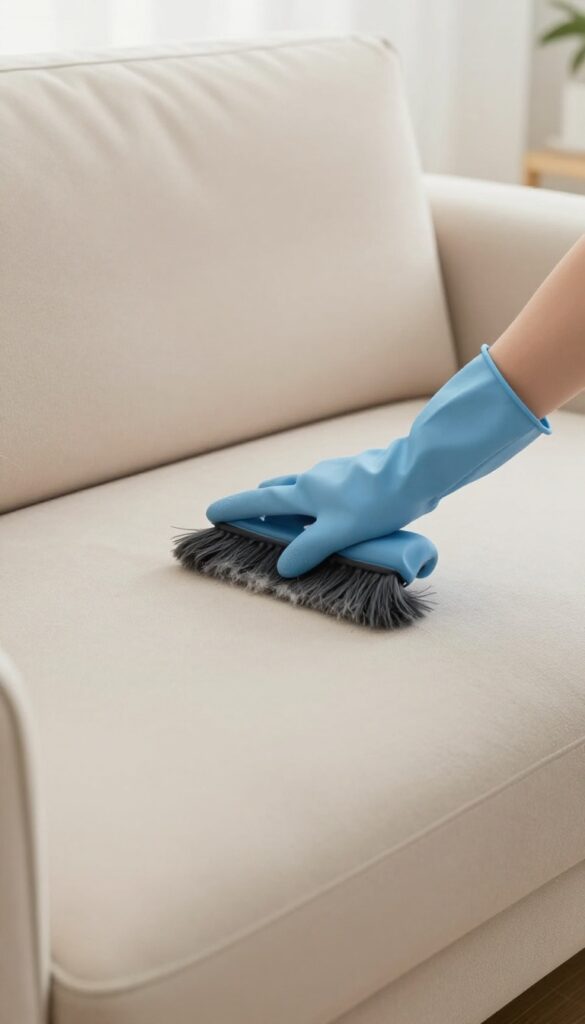
Pet hair can cling to couch fabric like it's part of the design. Before you break out the vacuum, try a simpler trick: a lint roller or a slightly damp rubber glove. Both grab hair and lint without damaging the fabric, and they work in seconds.
Run a lint roller over the surface in long, overlapping strokes. For larger areas, a rubber glove works even better—just dampen it slightly, then run your hand across the fabric. The hair balls up and can be easily picked off.
This method is gentle on all fabric types and requires no setup or cleanup.
Why A Rubber Glove Works So Well
The rubber creates static electricity that attracts hair and lint. A damp glove increases the grip, making it easier to lift embedded fur. It's also reusable—just rinse off the glove and you're ready to go again.
Best Fabrics For This Method
This technique works on most upholstery, including microfiber, cotton, linen, and polyester blends. Avoid using a damp glove on delicate fabrics like velvet or silk, as moisture can leave marks. Stick to a dry lint roller for those.
When To Vacuum Instead
For heavy pet hair buildup, vacuum first with a brush attachment to loosen deep hair. Then finish with the lint roller or glove for a polished, hair-free surface. Combining both methods saves time and ensures a thorough clean.
8. Treat Ink Stains with Rubbing Alcohol
Ink stains from a runaway pen or a leaked marker can feel like a permanent mark on your couch. But rubbing alcohol, a common household item, can dissolve most inks without damaging the fabric. The key is to act quickly and blot—never rub—to avoid spreading the stain.
Before you start, grab a bottle of 70% or 90% isopropyl rubbing alcohol, a few clean white cloths or cotton balls, and a small bowl. Always test the alcohol on a hidden spot of your couch, like the back or under a cushion, to make sure it doesn't cause discoloration. If the fabric is delicate or vintage, consider diluting the alcohol with equal parts water.
Blot, Don't Rub
Place a clean cloth under the stained area to catch any ink that bleeds through. Dip a cotton ball into rubbing alcohol and gently blot the ink stain, starting from the outer edge and working inward. Replace the cotton ball as it picks up ink to avoid redepositing it.
Continue blotting until no more ink transfers.
Rinse And Dry
Once the stain is gone, dampen a clean cloth with plain water and blot the area to remove any alcohol residue. Then, use a dry cloth to absorb excess moisture. Let the spot air-dry completely before using the couch.
If a faint shadow remains, repeat the process.
When To Call It Quits
Some inks, especially permanent markers or old stains, may not come out completely. If the stain persists after two attempts, it's best to accept a faded mark rather than risk damaging the fabric by over-treating. For stubborn stains, consult a professional upholstery cleaner.
9. Clean Leather Couches with a Gentle Soap and Conditioner
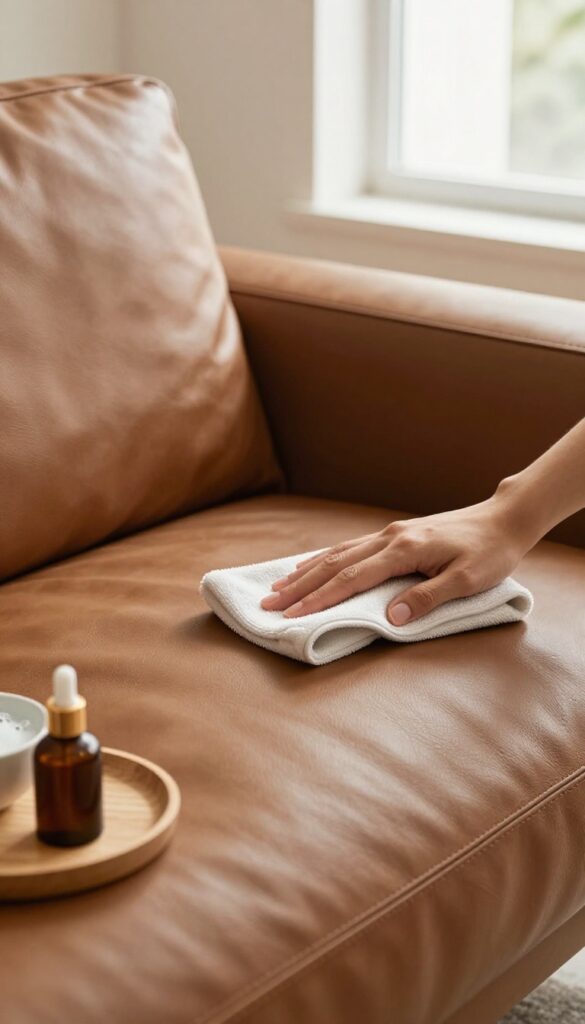
Leather couches bring a touch of class, but they need a different kind of care. Unlike fabric, leather can dry out, crack, or lose its softness if you use the wrong cleaner. The good news is that a simple soap-and-water routine, followed by a good conditioner, keeps your leather sofa looking rich and feeling smooth for years.
You don't need fancy products—just a mild soap, a soft cloth, and a dedicated leather conditioner.
Start by vacuuming the couch with a soft brush attachment to remove dust and crumbs from crevices. Mix a few drops of mild liquid soap (like castile or saddle soap) with distilled water. Dampen a microfiber cloth with the solution—never soak the leather—and wipe down the entire surface, working in small sections.
Rinse the cloth with plain water and go over the same areas to remove soap residue. Let the leather air dry completely, away from direct heat or sunlight. Once dry, apply a small amount of leather conditioner to a clean cloth and rub it into the leather in circular motions.
Let it absorb for 10–15 minutes, then buff with a dry cloth. This restores moisture and protects against future stains.
Why Leather Needs Special Care
Leather is porous and can absorb oils, dirt, and moisture, leading to stains or stiffness. Harsh chemicals strip natural oils, causing cracks. A gentle soap cleans without damage, and conditioner replenishes oils, keeping the leather flexible and resilient.
Choosing The Right Soap And Conditioner
Opt for a pH-neutral soap like castile soap or a dedicated leather cleaner. Avoid dish soap or laundry detergent—they're too harsh. For conditioner, use a product specifically for furniture leather, not shoe polish or general oils.
Test on a hidden area first to ensure no discoloration.
Step-by-step Cleaning Process
- Vacuum with a soft brush. 2.
Mix mild soap with distilled water. 3. Wipe with damp microfiber cloth, then rinse with plain water.
- Air dry completely. 5.
Apply conditioner with circular motions. 6. Let it absorb, then buff.
Repeat conditioning every 6–12 months to maintain suppleness.
What To Avoid On Leather
Never use ammonia, bleach, or alcohol-based cleaners. Avoid soaking the leather—excess water can cause staining or warping. Don't use wax-based polishes; they clog pores.
Keep the couch away from direct sunlight and heat sources to prevent drying.
10. Use a Vinegar and Water Solution for Tough Stains
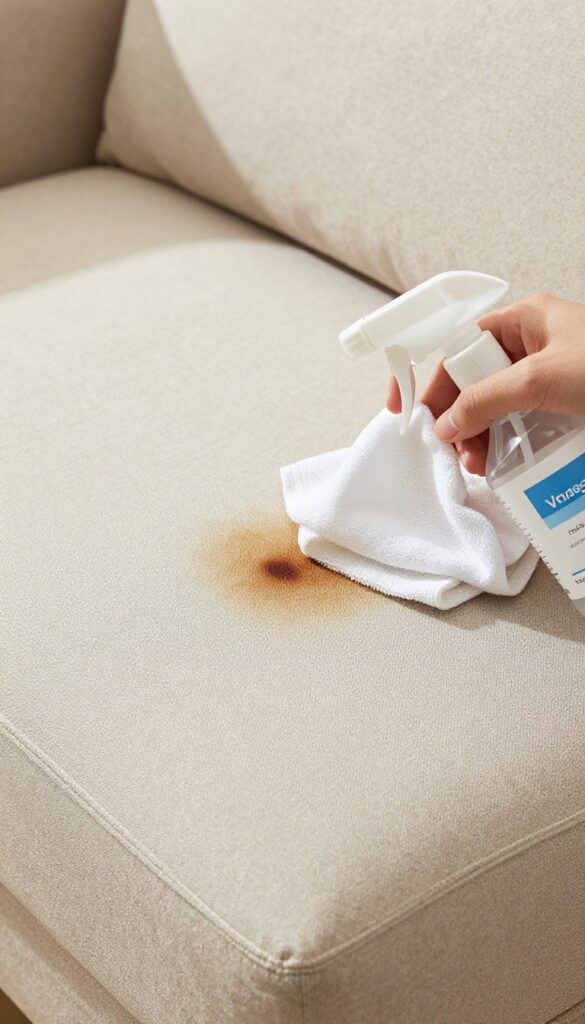
When a stain refuses to budge, it's time to bring out the vinegar. White vinegar is a mild acid that breaks down many types of stains, from wine to coffee, without harming most fabrics. Mixed with water, it becomes a gentle but effective cleaner that's safe for routine use.
To make the solution, combine equal parts white vinegar and water in a spray bottle. Shake well, then lightly mist the stained area—don't soak it. Let it sit for a minute, then blot with a clean cloth.
The vinegar smell will fade as it dries, leaving no residue. Always test on a hidden spot first, especially on delicate fabrics like velvet or silk.
Why Vinegar Works
Vinegar's acetic acid cuts through grime and neutralizes odors. It's especially good for organic stains like food, sweat, or pet accidents. Unlike bleach, it won't discolor most fabrics, making it a versatile go-to.
How To Apply It Right
Spray the solution from about six inches away. Blot—don't rub—to avoid spreading the stain. Repeat if needed, then let the area air dry.
For stubborn spots, add a drop of dish soap to the mix.
When To Skip This Method
Avoid vinegar on natural stone or unsealed wood couch frames, as the acid can etch surfaces. Also steer clear of fabrics labeled 'water only' or those prone to water rings, like some microfiber finishes.
11. Protect Your Couch with a Fabric Guard Spray
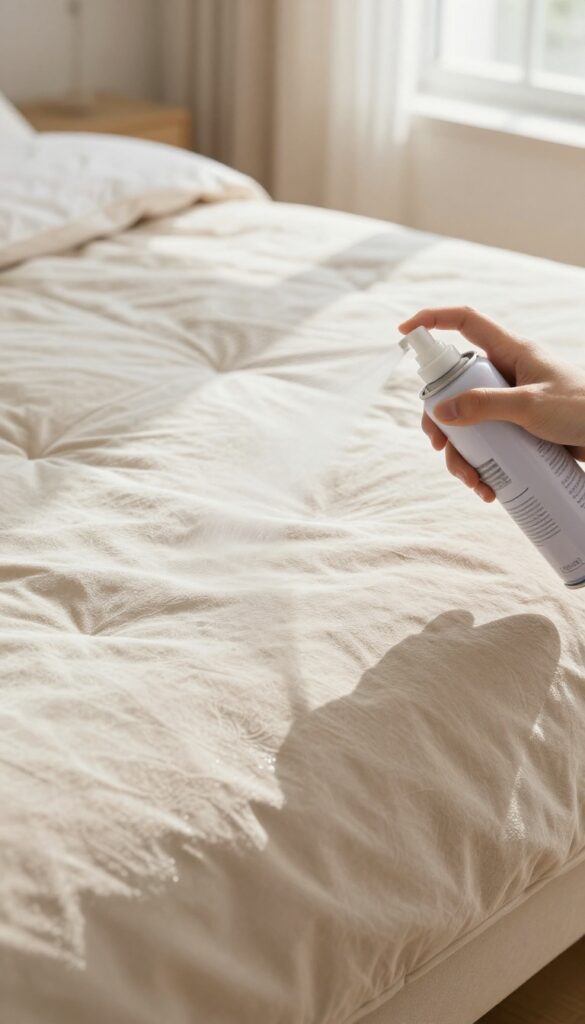
You've put in the work to get your couch clean—now keep it that way. A fabric protector spray adds an invisible shield that repels liquids and prevents stains from setting in. It's like giving your sofa a raincoat against future spills.
After cleaning, apply a fabric protector spray to repel future stains and spills. Reapply every few months for best results. This simple step can dramatically extend the time between deep cleans and keep your couch looking fresh.
Why Fabric Protector Works
Most fabric protectors use a fluoropolymer or silicone-based formula that bonds to the fibers. When a liquid spills, it beads up instead of soaking in, giving you time to blot it away. This works on a wide range of fabrics, from microfiber to cotton blends.
How To Apply It Right
Start with a completely clean, dry couch. Hold the can about 6 inches away and spray in a steady, even motion. Don't oversaturate—a light, even coat is enough.
Let it dry completely (usually a few hours) before using the couch. Test on an inconspicuous spot first to check for discoloration.
When To Reapply
Fabric protection isn't permanent. High-traffic areas may need reapplication every 3 to 6 months. If you notice liquids starting to absorb rather than bead up, it's time for another coat.
Regular reapplication keeps the protection effective.
FAQ
Can I use bleach on my couch fabric?
Bleach is too harsh for most upholstery and can cause discoloration or damage. Stick to mild detergents or specialized cleaners.
How often should I clean my couch?
Vacuum weekly and spot clean as needed. Deep clean every 6-12 months, depending on usage and pets.
What if my couch has a 'W' or 'S' code on the tag?
W means water-based cleaners are safe; S means solvent-based only. Always check the manufacturer's tag before cleaning.
Can I put couch cushions in the washing machine?
Only if the tag says machine washable. Remove covers and wash on gentle cycle, then air dry.
How do I get rid of cigarette smoke smell from my couch?
Sprinkle baking soda liberally, let it sit overnight, then vacuum. You can also place bowls of white vinegar nearby to absorb odors.
Conclusion
Your couch doesn't have to be a magnet for stains and odors. With these 11 fabric-friendly methods, you can tackle messes without damaging the material. Start with the gentlest approach for your upholstery type, and work your way up if needed.
Regular maintenance makes a big difference—spot clean spills quickly and vacuum weekly to keep dirt from settling in. Pick one or two techniques to try this weekend, and you'll enjoy a fresher, cleaner living room without the stress.