
A dog house isn't just a shelter—it's your pup's personal hangout spot in the yard. The right one keeps them cool in summer, warm in winter, and safe from the elements.
But with so many styles out there, picking the best fit for your space and your dog's needs can feel overwhelming. Whether you have a tiny Chihuahua or a giant Great Dane, the perfect dog house exists.
We've rounded up 11 ideas that balance comfort, durability, and easy cleanup. Each one is designed to make your yard setup better for both you and your furry friend.
1. Insulated Dog House for Year-Round Comfort
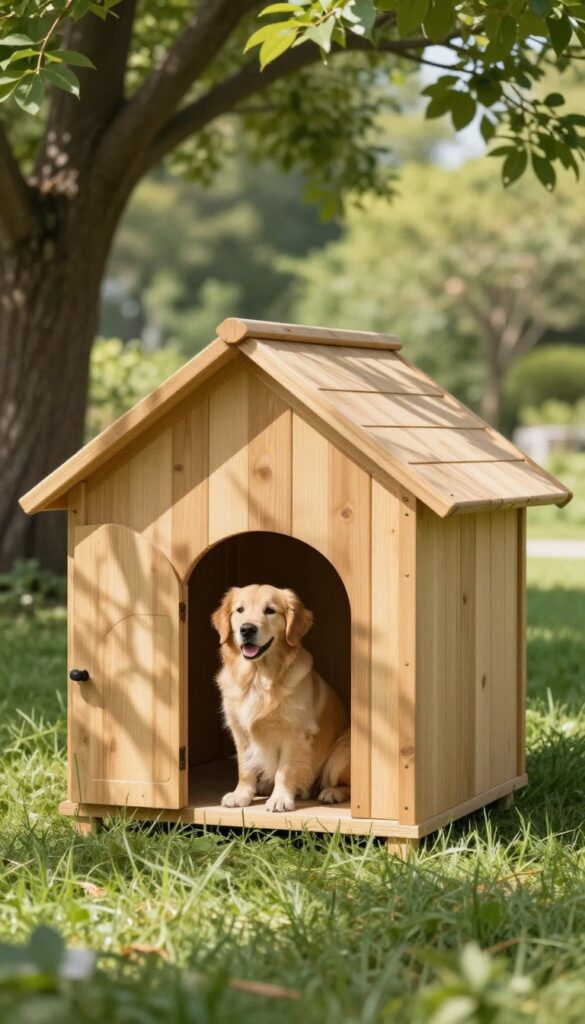
An insulated dog house is a game-changer if you live somewhere with hot summers or freezing winters. These houses use foam panels or double-wall construction to keep the temperature inside stable, so your pup stays comfortable no matter what the weather throws at them. Think of it like a tiny, cozy cave that buffers against extreme heat and cold.
Why It Works
The insulation acts as a barrier, slowing down heat transfer. In summer, it keeps the interior cooler by reflecting sunlight and reducing heat absorption. In winter, it traps your dog's body heat inside, keeping them warm without needing extra bedding.
This means less stress on your dog's body and lower energy bills for you.
Best For
This is ideal for owners in regions with extreme climates—think snowy winters or scorching summers. It's also perfect for breeds that are sensitive to temperature swings, like Huskies who overheat easily or short-haired dogs like Chihuahuas who get cold fast.
Practical Tip
Place the dog house in a shaded area during summer to reduce cooling load, and face the door away from prevailing winds in winter. Add a weatherproof flap over the entrance to block drafts. Check the insulation material—rigid foam boards are durable and moisture-resistant, while spray foam offers better sealing but can be pricier.
Budget-Friendly Option
If a fully insulated house is out of budget, buy a standard wooden dog house and add your own insulation. Line the walls with rigid foam boards cut to size, then cover them with plywood or plastic sheeting to protect from chewing. You can also use reflective bubble wrap insulation as a cheaper alternative.
2. Elevated Dog House with Airflow
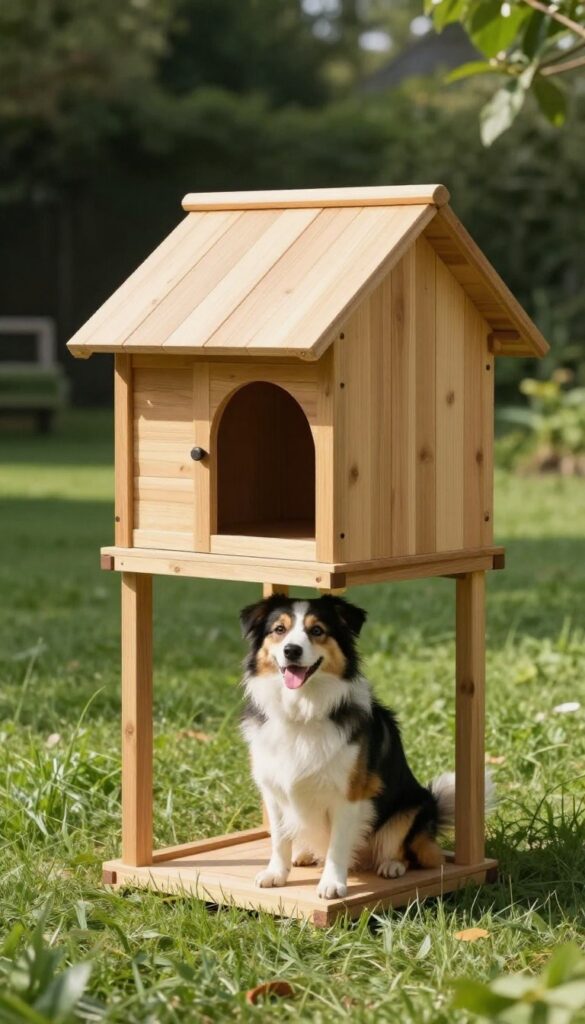
Elevating your dog's house off the ground does more than just look sleek—it creates a healthier, more comfortable space. The open gap underneath allows air to circulate freely, which helps regulate temperature and keeps the interior from getting stuffy. It's a simple upgrade that makes a big difference in how your pup experiences their outdoor retreat.
Why It Works
Moisture is one of the biggest enemies of a dog house. An elevated floor prevents ground moisture from seeping in, reducing mold and mildew risks. Plus, airflow underneath keeps the house cooler in summer and drier during rainy seasons, making it a smart choice for humid climates or dogs that love to dig around their shelter.
Best For
This style is ideal for areas with high humidity or frequent rain, and for dogs who tend to dig or track mud inside. It also works great for breeds that overheat easily, like Bulldogs or Pugs, since the airflow helps keep them cool.
Practical Tip
Place the house on concrete pavers or a wooden platform to keep it stable and prevent sinking into soft ground. Add a removable ramp or steps if your dog has short legs or joint issues—this makes entry easier and protects their joints over time.
Budget-Friendly Option
If you're handy, build your own elevated base using pressure-treated lumber and heavy-duty casters. This DIY approach gives you the same benefits at a fraction of the cost, and you can customize the height to suit your dog's needs.
3. DIY Pallet Dog House on a Budget
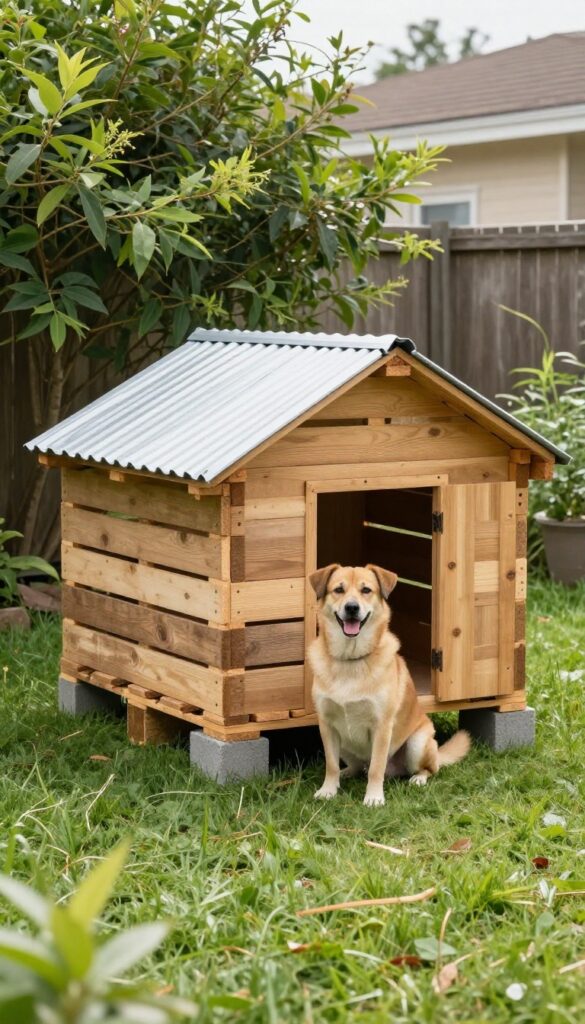
If you're handy and want to save some cash, a pallet dog house is a fantastic weekend project. Using recycled pallets keeps costs low and gives the house a charming rustic look that fits right into a backyard. You can customize the size to match your dog perfectly, and with a little effort, it'll be just as sturdy as anything from the store.
Why It Works
Pallets are free or cheap, so this build can cost under $50. The wood is naturally thick and durable, and you can stain or paint it to match your yard. Adding a slanted roof with waterproofing ensures rain runs off, and elevating it slightly on blocks prevents moisture from seeping up.
Best For
This is perfect for medium to large dogs who need a roomy shelter. It's also great for owners who enjoy DIY projects and want an eco-friendly option that doesn't sacrifice durability.
Practical Tip
Sand down any rough edges to prevent splinters, and seal the wood with a non-toxic water-based stain or paint. Use corrugated plastic or metal for the roof instead of shingles—it's lighter and easier to install. Add a small door flap for extra warmth in cooler months.
Budget-Friendly Option
If you can't find pallets, check local construction sites or hardware stores for scrap wood—they often give away offcuts for free.
4. Dog House with Porch for Lounging
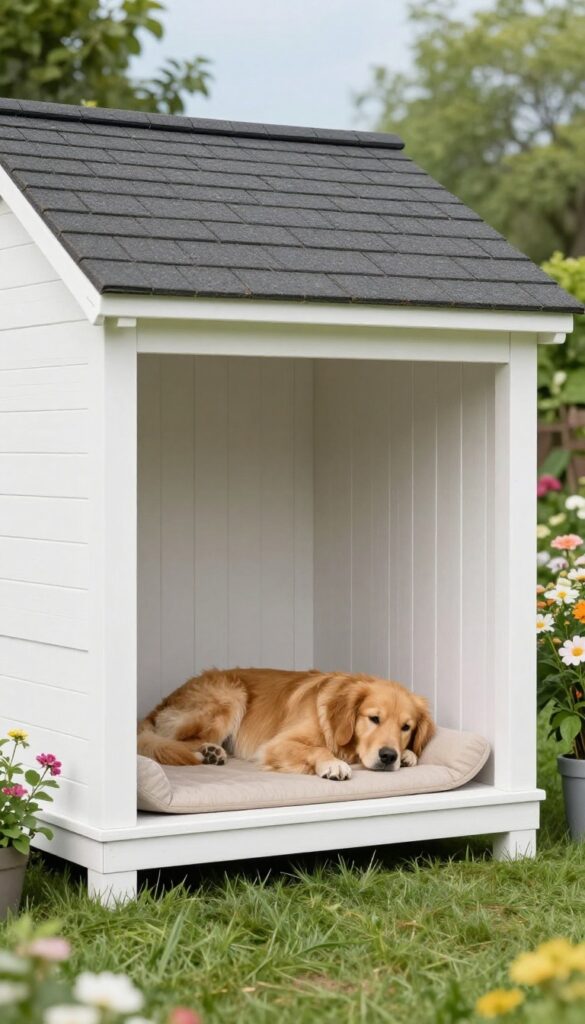
A dog house with a porch gives your pup the best of both worlds—a cozy indoor spot and a shaded outdoor lounge. The covered porch area lets them enjoy fresh air without being fully exposed to the sun or rain.
This design is especially popular for dogs that like to keep an eye on the yard while staying comfortable. It blends right into a backyard setup and gives your dog a little front porch of their own.
Why It Works
The porch provides a cool, shaded spot for your dog to relax outside the main house, which helps prevent overheating on warm days. It also gives them a dry place to sit after rain, so they can still enjoy being outdoors without getting muddy.
Best For
Dogs that love being outside but need a break from direct sunlight—think breeds like Golden Retrievers, Labs, or any dog with a thick coat. Great for yards where you want your pup to have a visible hangout spot near the action.
Practical Tip
Position the dog house so the porch faces north or east to minimize afternoon sun exposure. Add a soft outdoor mat or a cot on the porch for extra comfort, and make sure the roof overhang is large enough to keep rain off the lounging area.
Budget-Friendly Option
If you're handy, build a simple porch extension onto an existing wooden dog house using scrap lumber and basic roofing material. You can also find affordable plastic dog houses with attached porches from brands like Petsfit.
5. Portable Dog House for Travel
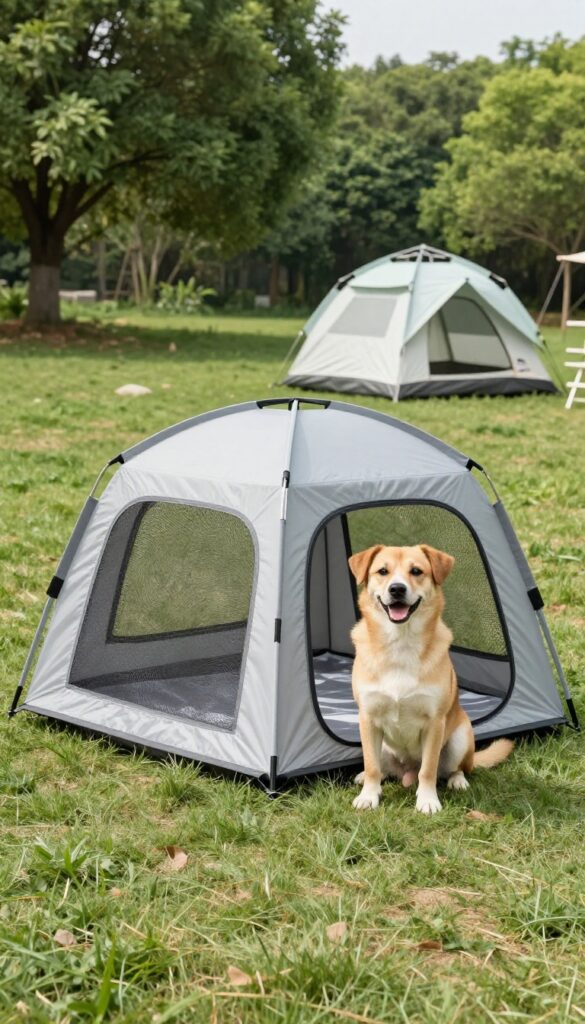
Not every dog house needs to be a permanent fixture in the backyard. A portable dog house is perfect for adventures, giving your pup a familiar spot no matter where you go. These lightweight shelters fold flat for storage and pop up in seconds.
They're ideal for camping trips, beach days, or even just moving around the yard to follow the shade.
Why It Works
Portable dog houses are designed with travel in mind—breathable mesh panels keep air flowing on warm days, while a water-resistant floor keeps things dry. The sturdy frame holds up to wind and rough handling, so your dog stays safe and comfortable. Plus, the easy setup means you spend less time wrestling with poles and more time enjoying the outdoors.
Best For
This option is a great fit for active families who take their dog on road trips, hikes, or camping excursions. It also works well for dogs that prefer spending time outside but need a shaded spot that can move with the sun. Smaller to medium breeds tend to feel most at home, though larger portable models exist for bigger pups.
Practical Tip
Set up the portable house on level ground away from direct wind and rain. Use stakes or sandbags (if included) to anchor it firmly. When packing away, make sure it's completely dry to prevent mold.
Some models come with a carrying case—use it to keep everything together and ready for your next trip.
Budget-Friendly Option
If you want to save money, look for a basic pop-up pet tent instead of a dedicated portable dog house. They offer similar protection at a lower price point and are just as easy to pack.
6. Two-Story Dog House for Multiple Dogs
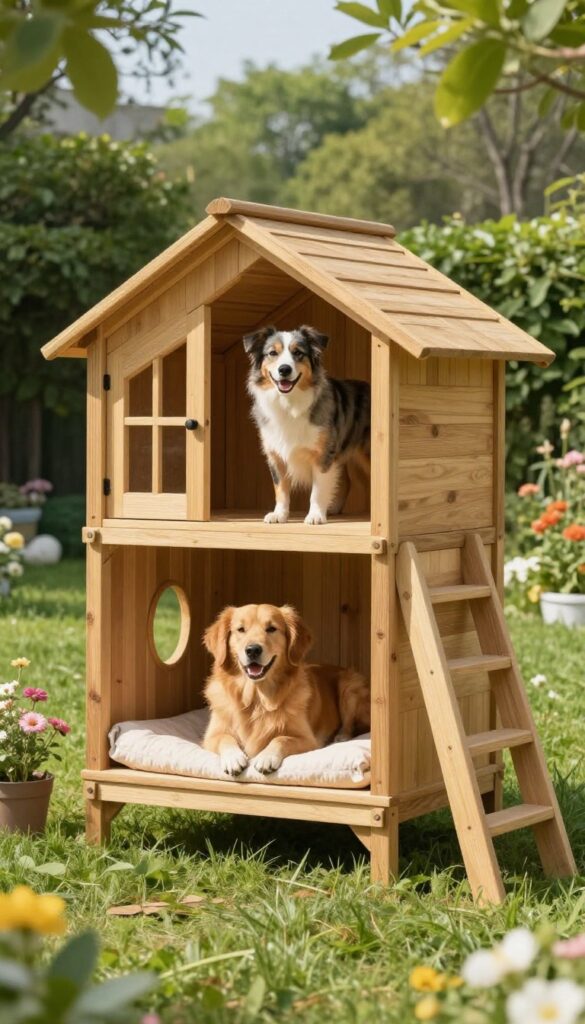
When you have more than one dog, finding a dog house that gives each pup their own space can be tricky. A two-story design solves that by offering separate sleeping and lounging areas, all in one compact footprint. Dogs that enjoy climbing or perching up high will love having an upper deck to survey the yard.
Why It Works
By stacking the living spaces vertically, you double the usable area without taking up extra yard space. The separate levels reduce squabbles over territory—each dog can claim a floor. Plus, the upper level stays cooler in summer and offers a cozy lookout spot.
Best For
This style is ideal for homes with two dogs that get along but appreciate personal space. It also suits active, agile breeds like Jack Russell Terriers or Australian Shepherds who enjoy climbing. Great for smaller yards where a wide single-story house won't fit.
Practical Tip
Place the dog house on level ground and secure it with stakes if your area gets windy. Add a soft bed on each level and consider a ramp or textured steps to help senior dogs or puppies reach the top safely.
Budget-Friendly Option
You can build your own two-story dog house using plywood and basic tools—many free plans are available online. Alternatively, look for used outdoor cat condos or large rabbit hutches that can be repurposed with some modifications.
7. Dog House with Built-In Storage
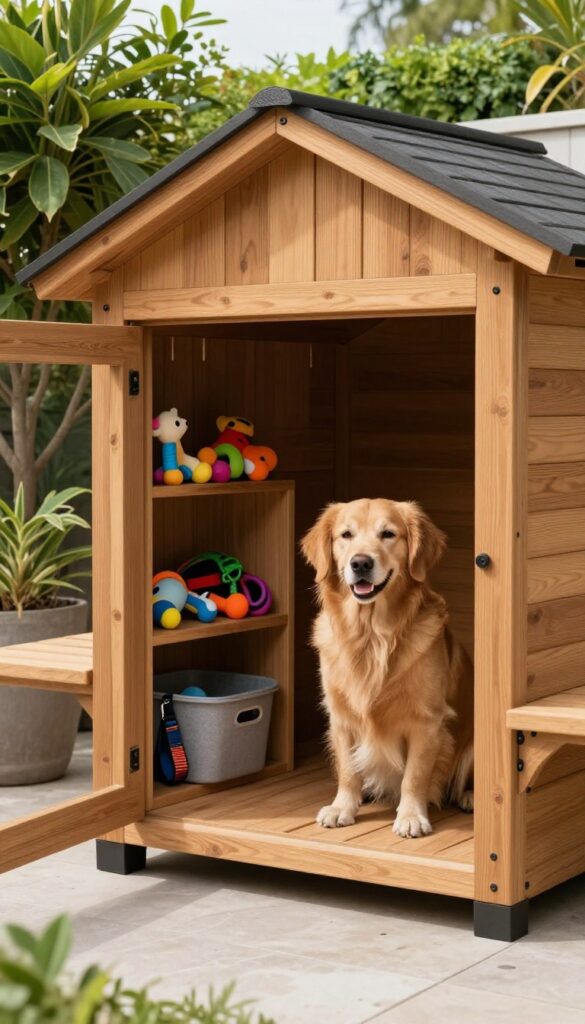
For dog owners who value an organized yard, a dog house with built-in storage is a game-changer. These clever designs tuck away toys, leashes, and food bins right into the structure itself. No more tripping over stuff or running inside for a forgotten treat.
This idea is especially popular with people who have small yards or just love multipurpose furniture. It keeps everything your dog needs in one spot while making your outdoor space look neat and intentional.
Why It Works
Built-in storage eliminates clutter by giving every item a designated home. You'll spend less time hunting for supplies and more time enjoying the yard with your pup. Plus, it encourages regular cleanup since everything has a place.
Best For
Perfect for organized owners and small to medium-sized yards where every square foot counts. Works well for any dog breed that uses the house regularly—especially if you store food or treats nearby to reinforce positive associations.
Practical Tip
Choose weatherproof materials like cedar or treated wood for the storage compartments, and add clear labels or see-through bins so you can grab what you need fast. Make sure the storage area is elevated off the ground to avoid moisture damage.
8. Weatherproof Dog House with Heavy-Duty Materials
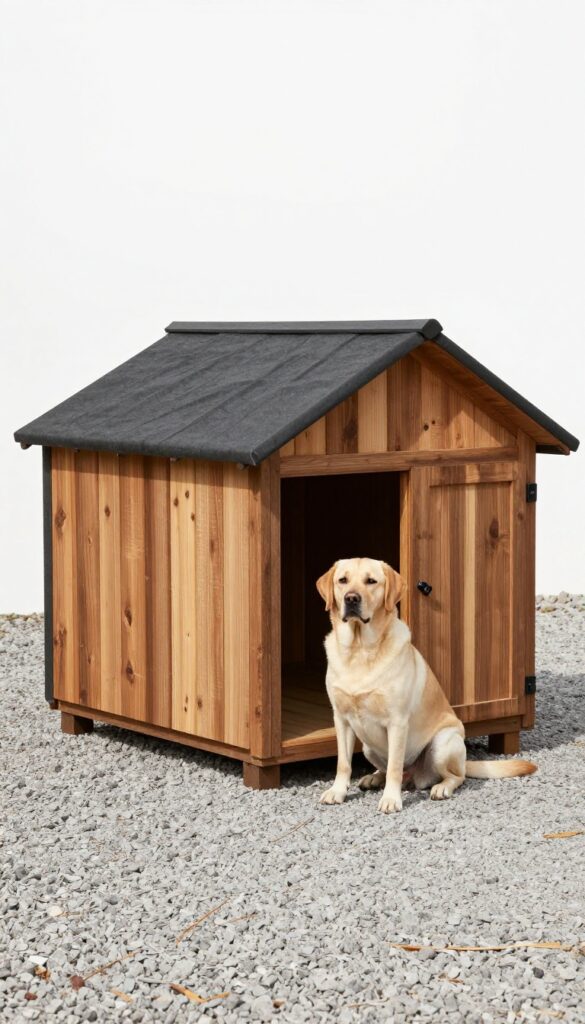
Rain, snow, or scorching sun—your dog's house needs to handle it all. A weatherproof dog house built with heavy-duty materials like rot-resistant cedar or high-density plastic keeps your pup dry and comfortable no matter the forecast. These houses are designed to last, with features like sloped roofs that shed water and sealed seams that prevent drafts.
Why It Works
Durable materials resist warping, cracking, and mold, so the house stays sturdy through seasons of use. A sloped roof directs rain away, while raised floors keep moisture at bay. That means less maintenance for you and a safer, cozier space for your dog.
Best For
This is ideal for dog owners in regions with harsh weather—heavy rain, snow, or intense sun. It's also great for large breeds that need a roomier, sturdier structure that won't tip over or degrade quickly.
Practical Tip
Place the dog house on a gravel or concrete pad to prevent moisture from seeping up from the ground. Add a weatherproof flap over the doorway to block wind and rain even more. Check seals annually and reapply waterproofing as needed to extend its life.
Budget-Friendly Option
If you're handy, build your own using pressure-treated lumber and exterior-grade plywood. Seal all seams with caulk and add a rubber roof membrane for under $150—much cheaper than many prefab options.
9. Modern Minimalist Dog House for Style
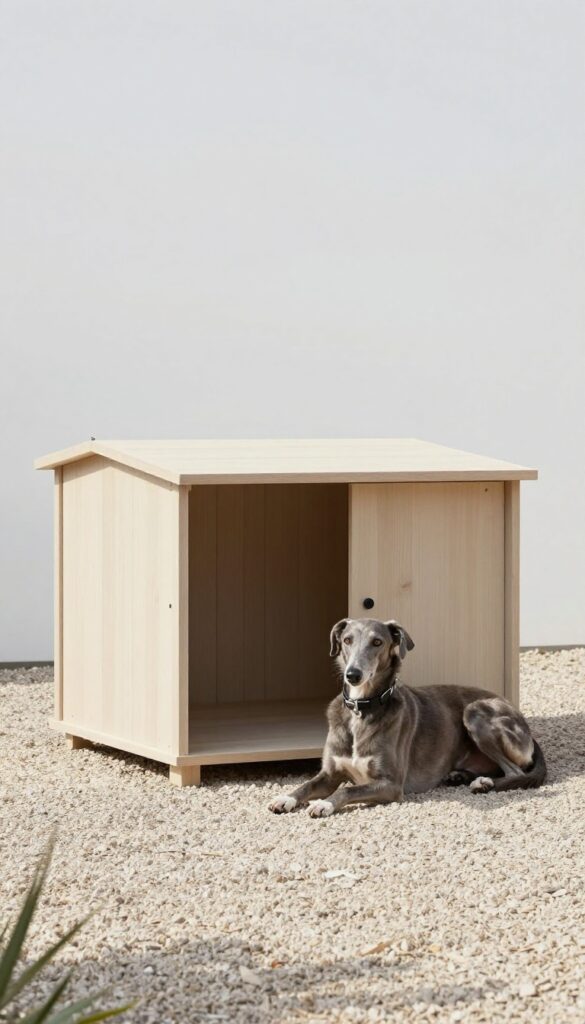
Clean lines and a neutral palette make this dog house a natural fit for contemporary yards. It's all about blending in rather than sticking out, so your outdoor space stays sleek and uncluttered. Think simple geometry, flat roofs, and materials like cedar or composite that age gracefully.
Dogs get a sturdy, well-insulated retreat that doesn't scream 'dog house' from across the lawn.
Why It Works
The minimalist design isn't just for looks—it also means fewer nooks and crannies for dirt to hide. Smooth surfaces are easy to wipe down, and the raised floor keeps your pup dry during wet weather. The open interior lets air circulate, which helps regulate temperature naturally.
Best For
This style is perfect for modern homes with clean architectural lines, especially in urban or suburban settings where yard space is tight. It suits dogs that are calm indoors and don't need extra frills—think greyhounds, Labs, or any medium-to-large breed that appreciates a simple, cozy spot.
Practical Tip
Place it on a patch of gravel or decking to keep the bottom off damp soil. Add a neutral outdoor cushion inside for extra comfort—just choose one with a removable, washable cover. For a pop of personality, set a modern planter or a small water bowl nearby in a matching tone.
10. Dog House with Removable Roof for Easy Cleaning
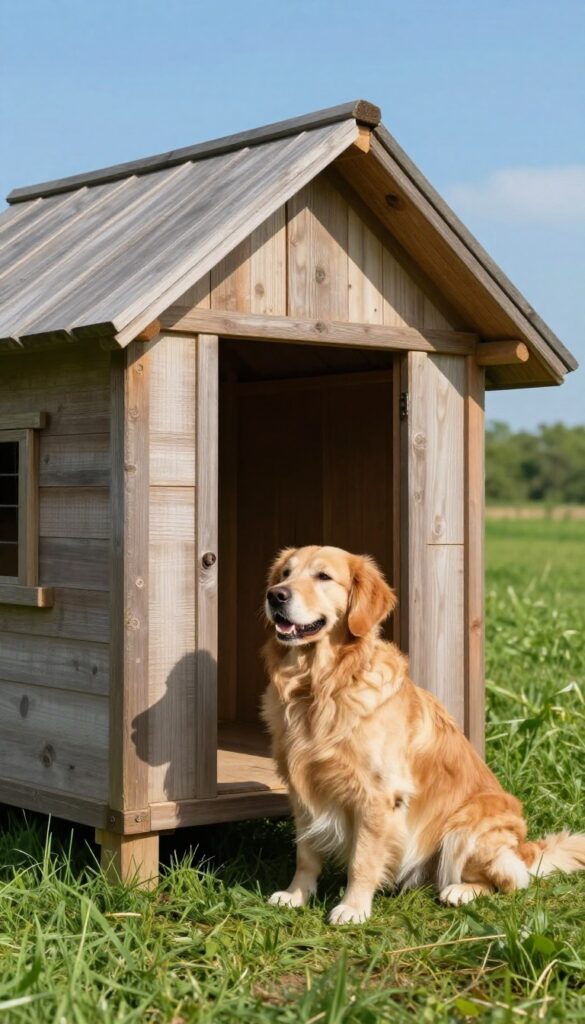
No one enjoys scrubbing out a dog house on hands and knees. A roof that flips open or lifts off entirely changes the game. It turns a dreaded chore into a quick, simple task you can handle in minutes.
Why It Works
A removable roof gives you full access to the interior without contorting your body. You can sweep, scrub, and disinfect every corner easily. Regular cleaning keeps bacteria, mold, and odors under control, which is better for your dog's health.
Best For
This design is ideal for owners who prioritize hygiene or have dogs that track mud and moisture inside. It's also great for large breeds whose houses are too big to move or tilt.
Practical Tip
Choose a roof with secure latches or hinges so it stays put during storms. Add a rubber seal along the edge to keep rain out when closed. Lift the roof weekly for a quick sweep and monthly for a deep scrub with pet-safe cleaner.
Budget-Friendly Option
If you're handy, build your own dog house with a hinged plywood roof using basic tools. Use galvanized hinges and a simple hook latch to keep costs low while getting the same easy-clean benefit.
11. Heated Dog House for Cold Climates
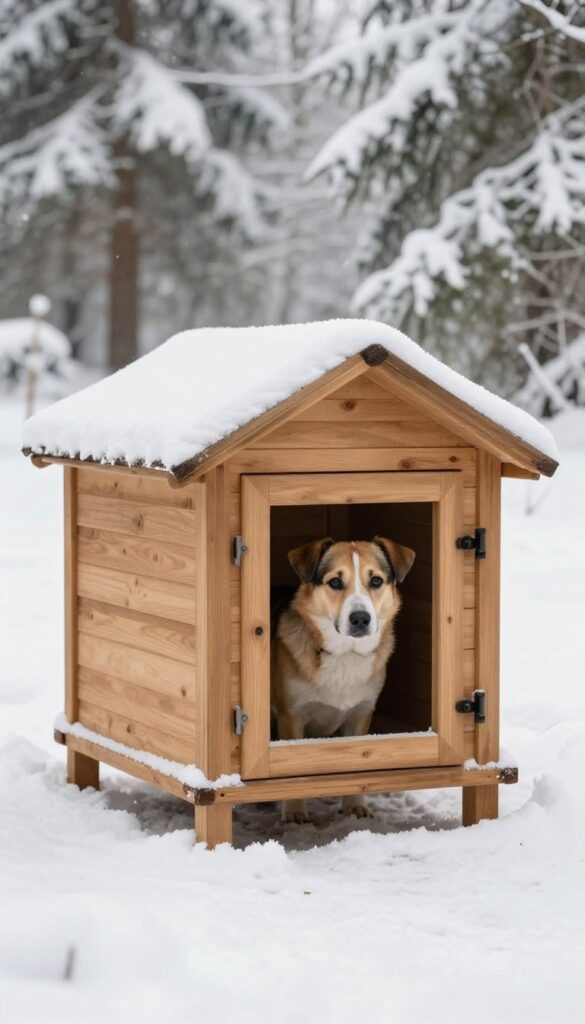
Freezing temperatures can be tough on dogs, especially those with short coats or joint issues. A heated dog house provides a cozy retreat that stays warm even when the mercury drops. Built-in heating pads or safe space heaters keep the interior comfortable without posing a fire risk.
Why It Works
Heated dog houses use low-wattage heating elements designed for pets, maintaining a consistent temperature without overheating. Many models have thermostatic controls that activate only when needed, saving energy while ensuring your dog stays warm. Chew-proof wiring and sealed components add an extra layer of safety.
Best For
This setup is ideal for short-haired breeds like Greyhounds, Chihuahuas, or Boxers, as well as senior dogs with arthritis who benefit from warmth. It's also great for owners in regions with harsh winters who want their outdoor dogs to have a comfortable shelter.
Practical Tip
Place the heated dog house in a sheltered area away from wind and snow drifts. Elevate it slightly off the ground to prevent cold from seeping through the floor. Use a flap door to retain heat while keeping out drafts.
FAQ
What size dog house does my dog need?
Your dog should be able to stand up, turn around, and lie down comfortably. Measure from nose to tail and add a few inches for the length and width.
Should I insulate my dog house?
Yes, if you live in extreme temperatures. Insulation helps regulate temperature and keeps your dog comfortable year-round.
How often should I clean the dog house?
At least once a month, or more if your dog is messy. Remove bedding, scrub surfaces, and disinfect with pet-safe cleaners.
Can I use a dog house for multiple dogs?
Yes, but choose a larger size or a two-story design. Ensure each dog has enough space to avoid crowding.
What material is best for a dog house?
Cedar and plastic are popular. Cedar resists rot and insects, while plastic is lightweight and easy to clean. Avoid treated wood that may be toxic.
Conclusion
Choosing the right dog house can transform your yard into a haven for your pup. Whether you prioritize insulation, style, or easy cleaning, there's an option that fits your needs and budget. Your dog will thank you with endless tail wags and cozy naps.
Remember to measure your dog, consider your climate, and pick a house that's built to last. A little planning now means years of happy outdoor time for your furry friend.

I’m Pallab Kishore, the owner of Little Pets Realm — an animal lover and pet care enthusiast sharing easy tips, healthy recipes, and honest advice to help every small pet live a happy, healthy, tail-wagging life.