
Rainy days and busy schedules don't have to mean a bored pup. Mental stimulation tires dogs out faster than a long walk, but you don't need a closet full of fancy toys to make it happen. Everyday items like towels, cardboard boxes, and muffin tins can turn into engaging brain games that keep your dog happy and calm.
These nine enrichment ideas rely on things you already have at home, so you can set up a new challenge in minutes. From scent work to simple puzzles, each activity targets your dog's natural instincts without costing a dime.
The best part? They're easy to rotate, store, and adapt to your dog's skill level.
1. The Towel Toss Treat Hunt
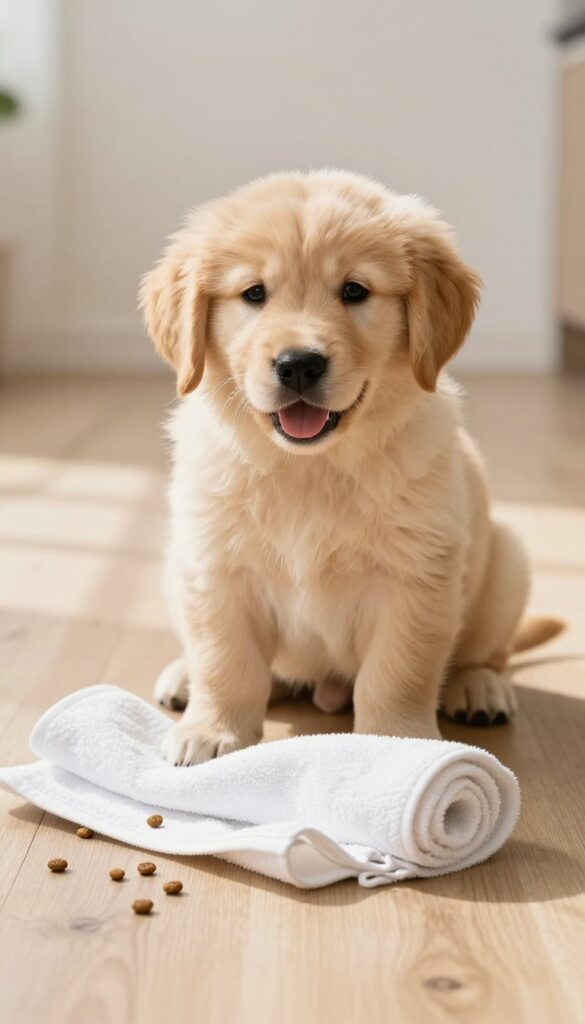
Sometimes the simplest games are the most rewarding. The towel toss treat hunt turns an ordinary kitchen towel into a nose-work puzzle that engages your dog's natural foraging instincts. Just scatter a few kibble or tiny treats on a flat towel, then roll or twist it loosely before letting your dog unravel the treasure.
It's quick to set up, easy to clean, and works for dogs of all ages and sizes.
Why It Works
This activity taps into your dog's innate desire to sniff, search, and manipulate objects to find food. The act of unrolling the towel with their nose or paws provides mental stimulation that can tire them out faster than a walk. It also builds confidence as they learn to problem-solve and succeed.
Best For
Perfect for any breed or energy level, from a lazy senior dog who needs gentle mental exercise to a high-energy puppy who loves to dig and shred. It's also great for apartment dogs or rainy days when outdoor time is limited.
Practical Tip
Use a flat, absorbent towel that's easy to wash. Start with a loose roll so your dog can succeed quickly, then gradually make it tighter or add more twists for a challenge. Supervise the first few times to ensure they don't ingest the towel fibers.
Budget-Friendly Option
No towel? Try an old t-shirt, a hand towel, or even a clean dishrag. You can also use a fleece blanket or a piece of fabric from an old sheet.
The key is just a flat, pliable cloth that can hold treats.
2. Cardboard Box Destruction Derby
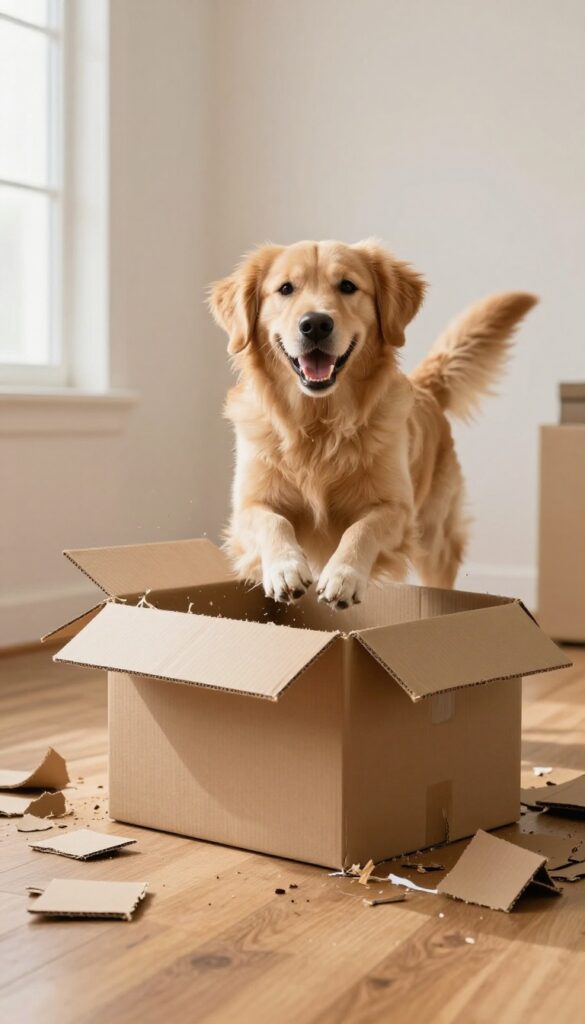
There’s something deeply satisfying about watching a dog tear into a cardboard box. It taps into their natural shredding instincts and provides a fantastic mental workout. Plus, the box is free, recyclable, and easy to set up in any room.
Why It Works
Shredding and pawing at the box activates your dog’s foraging drive and problem-solving skills. They have to figure out how to get to the treats, which keeps them focused and engaged. It’s a great way to burn off energy without needing a lot of space.
Best For
This activity suits dogs who love to dig, shred, or use their paws—think terriers, huskies, or any enthusiastic chewer. It works well in apartments or houses with a hard floor that’s easy to sweep afterward.
Practical Tip
Use a plain cardboard box without tape, staples, or labels. Close the flaps loosely and scatter a few small, low-calorie treats inside. Supervise closely to ensure your dog doesn’t eat large pieces of cardboard, and clean up the mess promptly.
Budget-Friendly Option
If you don’t have a box, a paper grocery bag works just as well. Just crumple the top and toss in a few treats.
3. Snuffle Mat Made from a Fleece Blanket
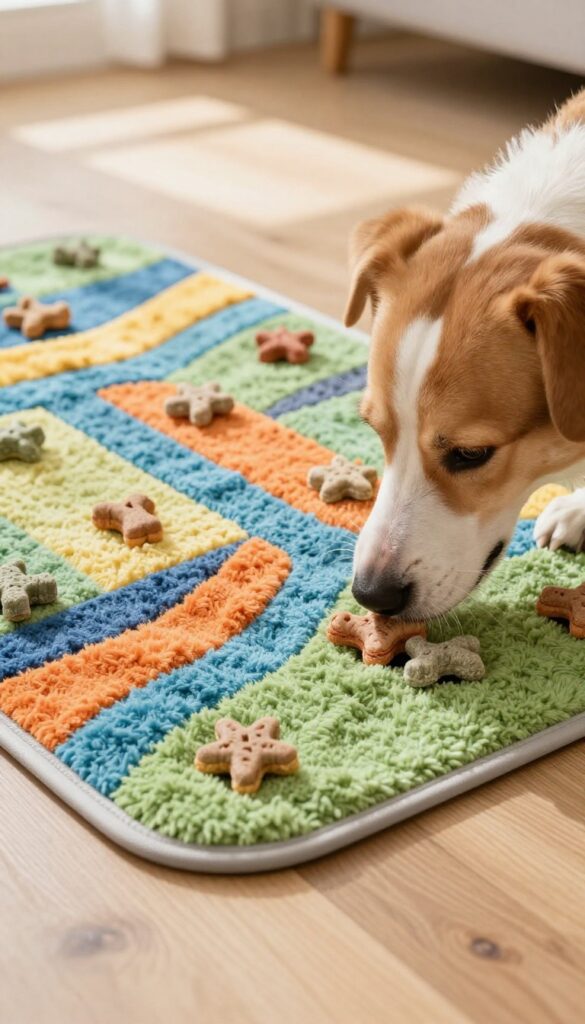
Dogs are natural foragers, and a snuffle mat lets them use their nose to find hidden treats. Instead of buying one, you can make your own with a rubber sink mat and an old fleece blanket. It's a simple afternoon project that pays off in calm, focused sniffing sessions.
Why It Works
Snuffle mats mimic the experience of hunting for food in grass or leaves. The act of sniffing and rooting releases feel-good hormones in your dog's brain, which helps reduce anxiety and boredom. Plus, it slows down fast eaters who might otherwise inhale their meals.
Best For
This activity is great for dogs who love to sniff or need a calming outlet—especially shy dogs, seniors, or high-energy pups who need a mental break. It works well in apartments, small spaces, or during bad weather when outdoor time is limited.
Practical Tip
Use a rubber sink mat with small holes so the fleece strips stay secure. Cut strips about 1 inch wide and 8 inches long, then tie each strip through a hole with a double knot. Wash the mat by shaking it out outdoors and spot cleaning with mild soap—avoid machine washing to prevent untying.
Budget-Friendly Option
If you don't have a fleece blanket, cut strips from an old T-shirt or towel. For the base, a plastic cooling rack or a piece of rubber shelf liner works just as well as a sink mat.
4. Muffin Tin Memory Game
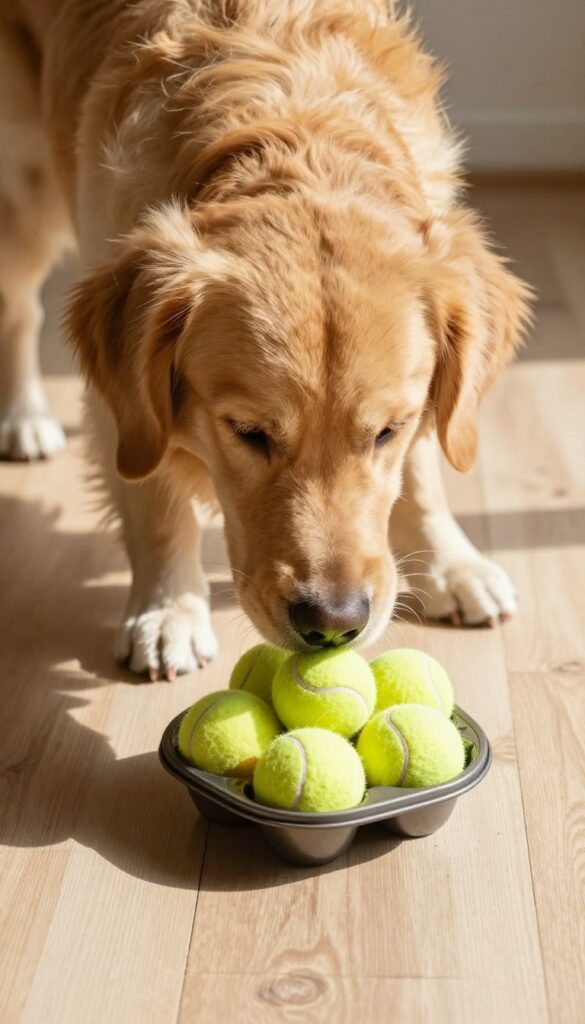
Turn snack time into a fun puzzle with a simple muffin tin and a few tennis balls. This low-prep activity challenges your dog to use their nose and paws to uncover hidden treats, building confidence and focus.
It's a great way to slow down fast eaters and give their brain a workout. Plus, it takes just seconds to set up and even less time to clean up.
Dogs love the excitement of hunting for rewards, and you'll love how calm they become after a few rounds.
Why It Works
The muffin tin game taps into your dog's natural foraging instincts. They have to sniff out which cups contain treats and then figure out how to remove the ball to get the reward. This problem-solving exercise provides mental stimulation that tires them out more effectively than physical exercise alone.
Best For
This activity works well for dogs of all ages, especially those who are food-motivated and enjoy a challenge. It's ideal for apartment dwellers or rainy days when outdoor play isn't possible, and it can be adapted for puppies or senior dogs by using larger treats or leaving some cups uncovered.
Practical Tip
Use a standard 12-cup muffin tin and tennis balls that fit snugly over the cups. Start by placing treats in just a few cups and leaving the balls off so your dog understands the game. Gradually add more balls as they get the hang of it.
Rotate which cups have treats each time to keep the game unpredictable and engaging.
Budget-Friendly Option
No muffin tin? Use a cardboard egg carton or a shallow box with crumpled paper balls instead. The same concept applies—hide treats under the compartments and let your dog sniff them out.
5. Frozen Kong Without the Kong
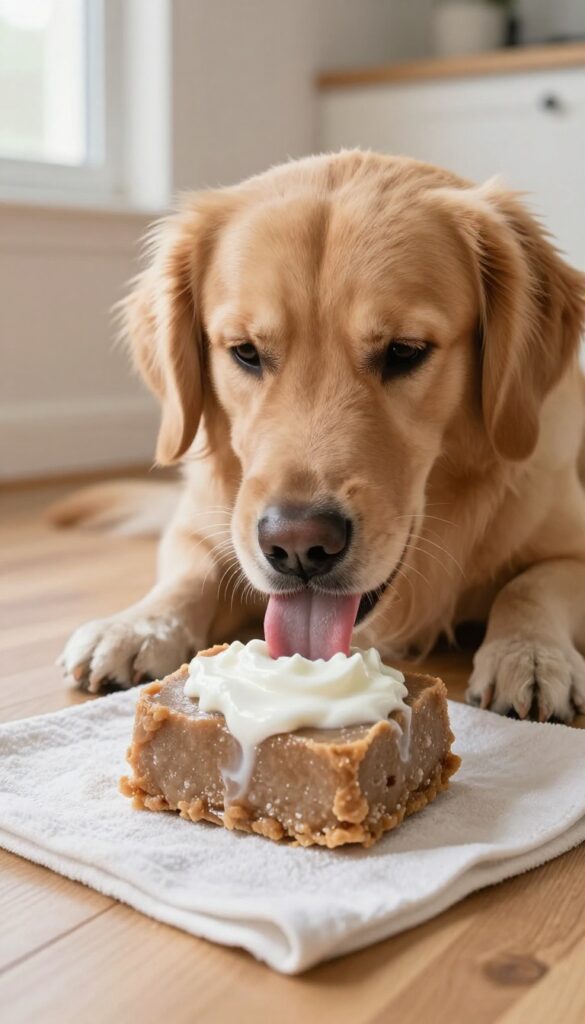
If your dog loves a frozen treat but you don't have a Kong handy, try making a DIY frozen block using everyday kitchen items. Simply fill a small plastic container or silicone mold with wet dog food, plain yogurt, or low-sodium broth, then freeze overnight. Pop out the frozen block and let your dog lick and work for their meal—perfect for crate time or quiet moments.
Why It Works
Licking and chewing release calming endorphins, and the frozen texture extends the activity, keeping your dog occupied for 20–30 minutes. It's also a great way to slow down fast eaters or add hydration to their diet.
Best For
Dogs who need calm-down time, especially during crate training, after exercise, or when you need a distraction during phone calls or meals. Works for all breeds and ages, from puppies to seniors.
Practical Tip
Use silicone muffin cups or small yogurt containers for easy removal. Place the frozen block on a towel or in a shallow dish to protect floors. Supervise the first few times to ensure your dog doesn't try to swallow large chunks.
Budget-Friendly Option
No silicone mold? Ice cube trays work for smaller treats, or freeze the mixture in a paper cup and peel it away. You can also smear the mixture inside a plastic bottle (with cap removed) for a similar licking challenge.
6. The Cup Shuffle Game
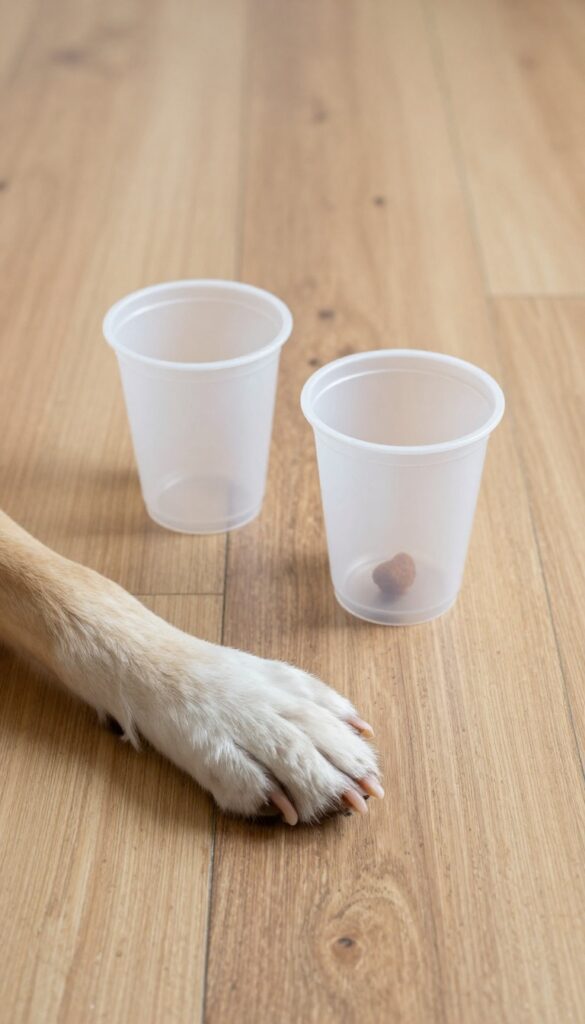
This classic shell game gets a dog-friendly twist. Hide a treat under one of three upside-down cups, then shuffle them around. Your dog uses their nose or paw to pick the right cup.
It is simple, fast, and surprisingly challenging for most dogs.
Why It Works
The cup shuffle game builds focus and impulse control. Dogs must watch closely and problem-solve to find the treat, which gives their brain a real workout. Plus, the movement and choice keep them engaged.
Best For
Dogs who love to use their nose or paws, especially herding breeds, terriers, and smart mixed breeds. It works well in small apartments or any room with a clear floor space.
Practical Tip
Use plastic or paper cups that are lightweight and easy to slide. Start with just one cup and a visible treat, then gradually add the other cups. Keep sessions short—five rounds is plenty—and always end on a success.
Budget-Friendly Option
No cups? Use small bowls, empty yogurt containers, or even cardboard tubes cut in half. Anything that can cover a treat and slide easily works.
7. Scent Work with Spices
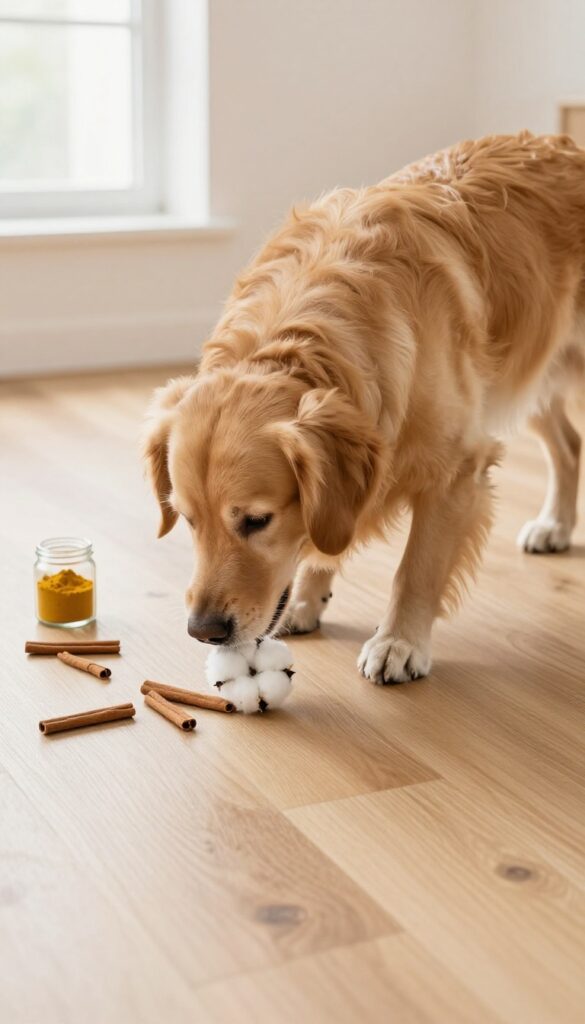
Dogs experience the world through their noses, and a simple scent game can provide a huge mental workout. Instead of relying on store-bought puzzles, you can use safe essential oils or common spices to create a fun sniffing challenge. This activity taps into your dog's natural hunting instincts and can be set up in minutes.
Why It Works
Scent work engages a dog's brain in a way that physical exercise alone can't. Following a scent trail or finding a hidden source requires focus, patience, and problem-solving. It's deeply satisfying for dogs and often leaves them more tired than a long run.
Best For
This game is perfect for dogs of all ages and breeds, especially those with high energy or anxiety. It's also great for apartment living or rainy days when outdoor time is limited. Even senior dogs or those with mobility issues can participate at their own pace.
Practical Tip
Use pet-safe essential oils like lavender or chamomile diluted with water, or try spices like turmeric or cinnamon (in tiny amounts). Place a few drops on cotton balls and hide them around a room. Start easy—let your dog see you hide one—then increase difficulty.
Always supervise to prevent ingestion, and remove the cotton balls after play.
Budget-Friendly Option
If you don't have essential oils, use a small amount of vanilla extract or a pinch of dried herbs like basil or oregano. You can also use a smelly treat like a piece of cheese or a bit of liverwurst hidden in a folded towel. The goal is a strong, safe scent that your dog can track.
8. DIY Obstacle Course with Furniture
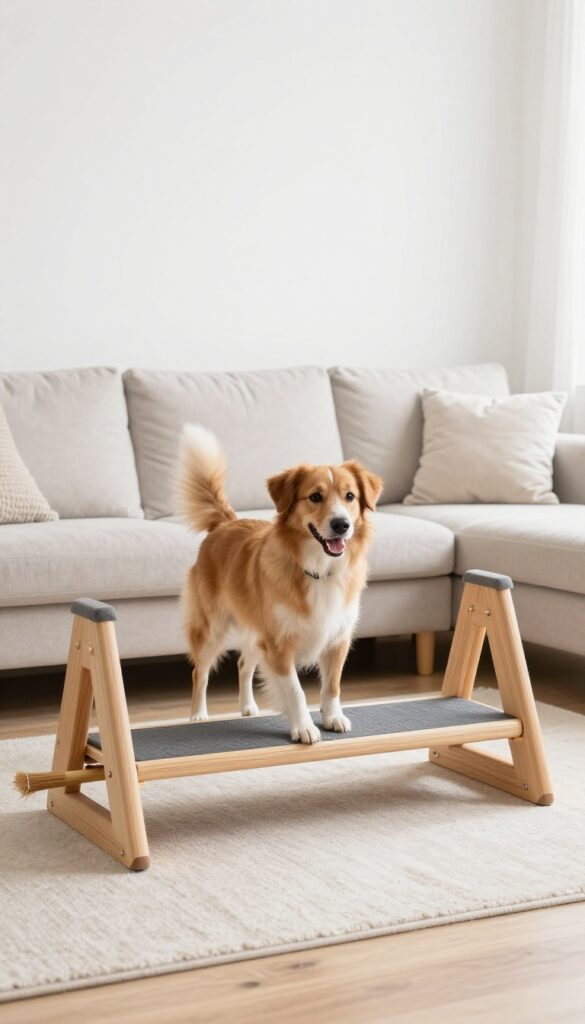
Channel your dog's inner athlete by turning your living room into a mini agility course. Using pillows, blankets, and chairs, you can create a fun and engaging obstacle course that challenges both body and mind. It's a great way to burn off energy without leaving home, and your dog will love the novelty of navigating furniture in a new way.
Why It Works
Obstacle courses combine physical exercise with mental problem-solving. Your dog has to figure out how to crawl under a table, weave between chair legs, or jump over a cushion, which keeps their brain engaged. It also strengthens your bond as you guide and encourage them through each challenge.
Best For
This idea is perfect for active dogs who need more than just a walk, especially during bad weather. It works well for medium to large breeds that enjoy jumping and weaving, but can be adapted for small dogs by lowering obstacles. Owners with a bit of floor space and a few minutes to set up will find this a fun, repeatable activity.
Practical Tip
Safety first: keep jumps low (under knee height) and use stable furniture that won't tip. Clear the area of sharp objects and ensure flooring isn't slippery. Supervise your dog at all times, and let them set the pace—some dogs may need encouragement to try new movements.
Budget-Friendly Option
No need for expensive agility equipment. Use couch cushions for jumps, dining chairs for weaving, and a coffee table for crawling under. A broomstick laid across two low stools makes a great jump bar.
Get creative with what you already own.
9. The Name Game with Household Objects
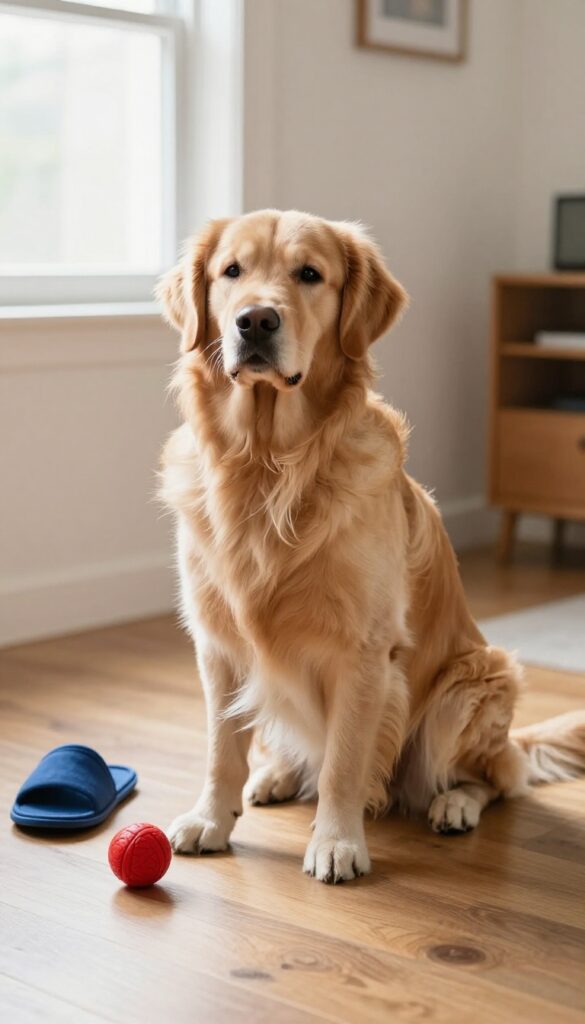
Teaching your dog the names of everyday items turns a quiet afternoon into a vocabulary-building challenge. Start with two or three objects your dog already knows, like a ball or a shoe, and gradually add new ones. Dogs who learn object names tend to focus better and pick up new cues more quickly.
Why It Works
This game strengthens your dog's listening skills and mental focus. Associating a word with a specific object requires concentration and memory, which provides a solid mental workout. It also deepens your bond because you're communicating on a more precise level.
Best For
Best for dogs who already know basic commands like 'sit' or 'stay' and enjoy interactive training. It works well in any home size, from apartments to houses, as long as you have a quiet floor space to scatter a few items.
Practical Tip
Start with objects that are distinct in texture or size, like a rubber ball versus a soft slipper. Keep sessions short—five minutes is plenty—and always end on a success. Use a clear, happy voice when naming the object, and reward with a small treat immediately after a correct retrieval.
Budget-Friendly Option
No need to buy anything. Use items you already have: a shoe, a book, a water bottle, or a toy. Rotate objects to keep the game fresh.
If your dog seems bored, swap in a new object or increase the number of items to choose from.
FAQ
Are these enrichment ideas safe for all dog breeds?
Yes, but always supervise your dog during any activity. Adjust difficulty based on your dog's size, age, and chewing habits. Remove any small parts that could be swallowed.
How long should each enrichment session last?
Start with 5–10 minutes and watch your dog's engagement. Some dogs may lose interest quickly, while others might want to keep going. End on a positive note before they get bored.
Can I use these ideas for puppies?
Absolutely. Just make sure the materials are puppy-safe and not too challenging. Puppies have shorter attention spans, so keep sessions brief and rewarding.
What if my dog destroys the DIY toys too quickly?
That's okay! The goal is mental stimulation, not durability. Just clean up any mess and try a different activity next time.
Rotate ideas to keep things fresh.
Do I need to buy anything for these ideas?
No. All nine ideas use common household items like towels, cardboard boxes, muffin tins, and blankets. You likely already have everything you need.
How often should I do enrichment activities with my dog?
Aim for a few times a week, or daily if your dog has high energy. Even 10 minutes of mental work can tire them out as much as a walk.
Conclusion
Keeping your dog entertained indoors doesn't require a closet full of toys. Simple household items and a bit of creativity can provide hours of mental stimulation and fun. Try a few of these ideas this week and see which ones get your pup's tail wagging fastest.
Your dog will appreciate the extra attention, and you'll enjoy watching them problem-solve and play. The best part? You probably already have everything you need at home.

I’m Pallab Kishore, the owner of Little Pets Realm — an animal lover and pet care enthusiast sharing easy tips, healthy recipes, and honest advice to help every small pet live a happy, healthy, tail-wagging life.