
A bored dog can quickly become a destructive dog, but you don't need expensive toys to keep them entertained. Everyday items like old towels, cardboard boxes, and muffin tins can become engaging enrichment activities that tire out your pup mentally and physically.
These 11 creative ideas are budget-friendly, easy to set up, and perfect for rainy days or busy schedules. From DIY snuffle mats to scent work games, each activity taps into your dog's natural instincts and provides much-needed mental stimulation.
Most use items you already have at home, so you can rotate them regularly to keep things fresh and exciting. Your dog will thank you for the variety, and you'll enjoy watching them problem-solve and play.
1. DIY Snuffle Mat from an Old Towel
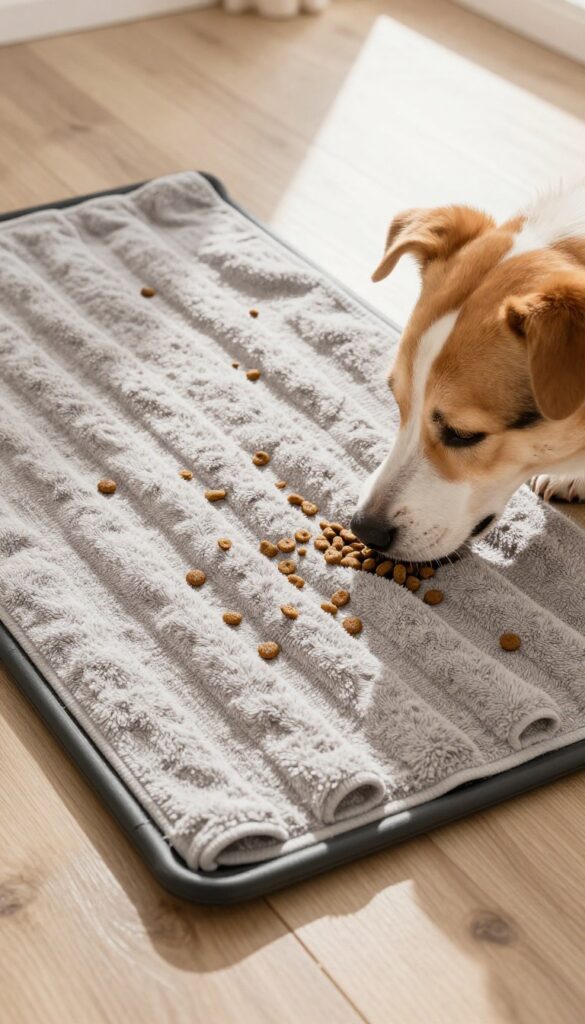
Turn a worn-out towel into a fun foraging game that taps into your dog's natural sniffing instincts. A snuffle mat mimics the experience of searching for food in grass or leaves, which is deeply satisfying for most dogs. It's also a fantastic way to slow down pups who wolf down their meals too quickly.
Why It Works
Dogs rely heavily on their sense of smell, and snuffle mats provide a low-impact mental workout that can tire them out faster than a long walk. The act of sniffing and rooting around releases dopamine, helping to reduce anxiety and boredom.
Best For
This idea works great for all breeds, but it's especially helpful for high-energy dogs, anxious dogs, or those who need to slow down at mealtime. It's also perfect for apartment dwellers who want to provide enrichment without needing a lot of space.
Practical Tip
Use a rubber mat with drainage holes (like a sink mat or drawer liner) as the base so the fabric strips stay secure. Wash the mat and strips separately in a laundry bag on a gentle cycle, then air dry. Rotate between two mats to keep things fresh.
Budget-Friendly Option
No old towel? Cut up an old fleece blanket or use strips of old t-shirts. You can also buy a plastic grid canvas from a craft store as the base for a few dollars.
2. Frozen Kong or Treat Toy
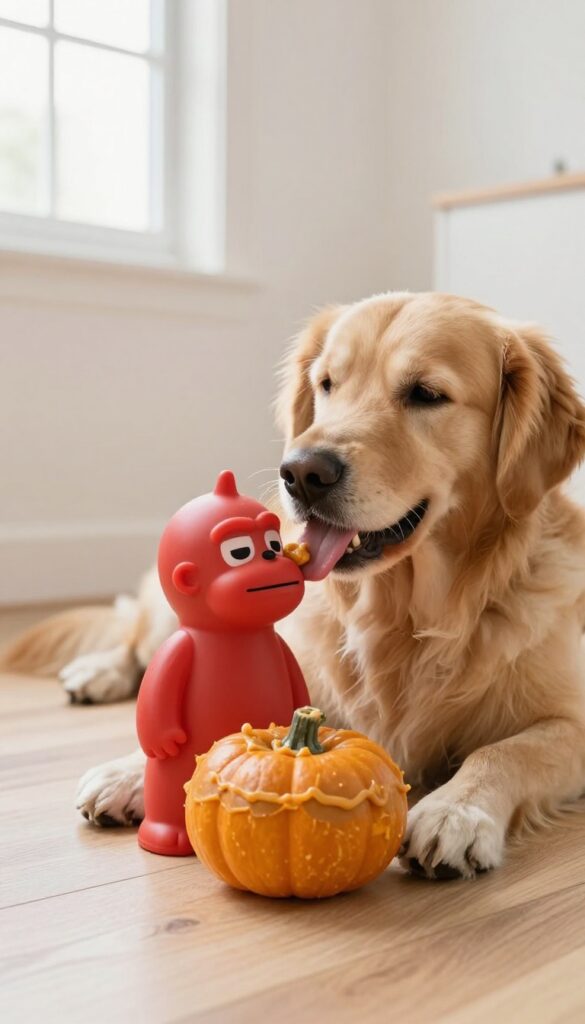
Freezing a stuffed Kong turns snack time into a brain game that keeps dogs busy for much longer. The cold makes it last and adds a soothing element for teething pups. It's a simple trick that works wonders on rainy days or when you need a quiet moment.
Why It Works
The combination of freezing and the Kong's irregular shape forces your dog to work for every bite. Licking and chewing release feel-good endorphins, and the extended effort provides solid mental stimulation that tires them out faster than a regular treat.
Best For
Perfect for medium to high-energy dogs who need a calm activity, teething puppies who love to gnaw, and any dog that tends to inhale treats too quickly. Also great for apartment dwellers because it keeps dogs occupied without barking.
Practical Tip
Use a mix of wet food, plain yogurt, or pumpkin puree, then seal the small end with a dab of peanut butter to make it last. Freeze upright in a cup to avoid leaks. Always supervise the first few times to ensure your dog doesn't chew off pieces of the toy.
Budget-Friendly Option
No Kong? Fill a silicone muffin cup or ice cube tray with the same ingredients and freeze. Pop out the frozen treats and let your dog lick away on a towel or in a slow feeder bowl.
3. Cardboard Box Puzzle
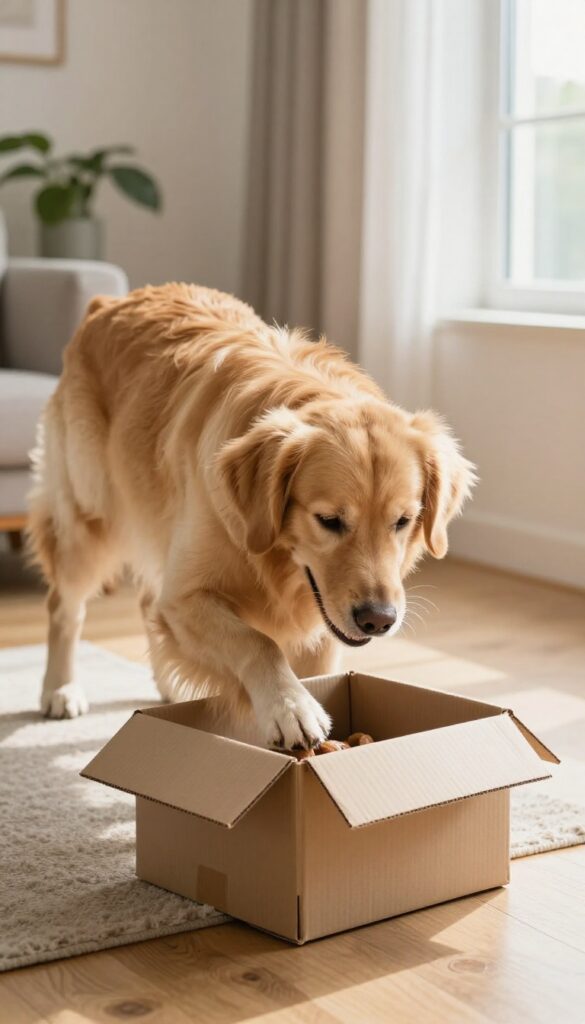
Got a cardboard box lying around? Turn it into a puzzle that engages your dog's brain and satisfies their natural curiosity. This simple activity uses something you'd normally recycle, making it a zero-cost enrichment option.
Dogs love to investigate new objects, and a box with hidden treasures taps right into that instinct. The crinkling sounds and the challenge of figuring out how to get to the good stuff keep them focused and entertained.
It's also incredibly versatile—you can adjust the difficulty level to match your dog's problem-solving skills, and cleanup is as easy as tossing the box in the recycling bin.
Why It Works
The act of tearing, pushing, and manipulating the box mimics natural foraging behaviors and provides both mental and physical stimulation. The unpredictable placement of treats encourages persistence and nose work, which tires dogs out faster than a walk.
Best For
This puzzle is great for curious dogs of all sizes, especially those who love to shred or dig. It works well in apartments or homes with limited space since it's contained and can be done indoors on a washable floor.
Practical Tip
Use a box that's clean and free of tape, staples, or labels. Start with a single box and a few treats, then progress to nesting smaller boxes inside larger ones. Always supervise to ensure your dog doesn't swallow cardboard pieces, and remove any torn bits promptly.
Budget-Friendly Option
If you don't have a cardboard box, use a paper bag or an empty tissue box instead. Even a plastic container with a lid (like a yogurt tub) works—just punch a few holes in the lid for a different challenge.
4. Muffin Tin Game
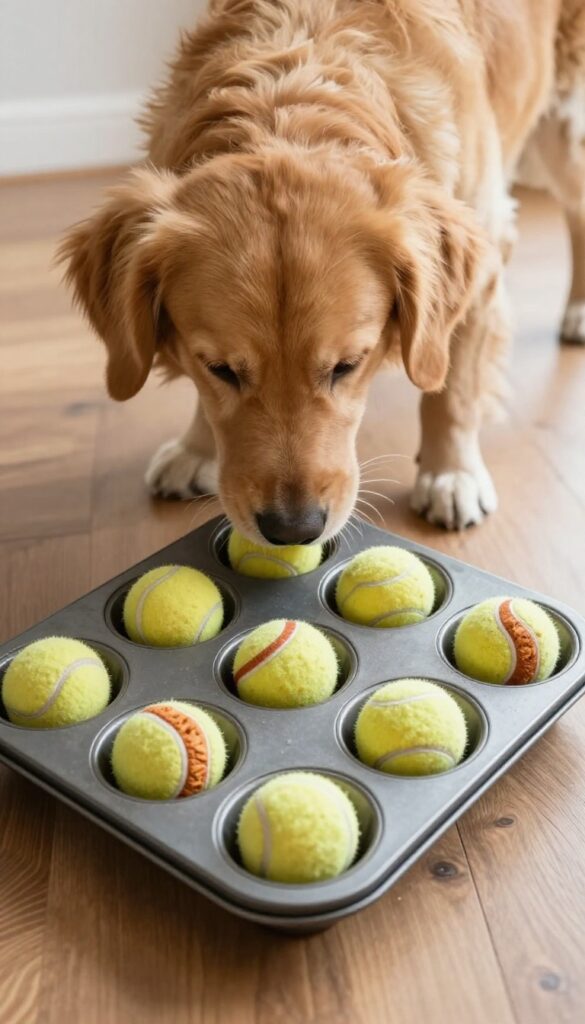
A muffin tin isn't just for baking—it's a ready-made puzzle for your pup. By hiding treats under tennis balls, you turn snack time into a fun challenge that engages their nose and brain. Dogs love the thrill of uncovering each hidden reward, and you'll love how easy it is to set up and clean up.
Why It Works
This game taps into your dog's natural foraging instincts and problem-solving abilities. The need to nudge or paw the balls away to reach the treats provides mental exercise that can be just as tiring as a long walk. It also builds confidence as your dog figures out the puzzle.
Best For
Perfect for dogs of all sizes and energy levels, especially those who enjoy using their noses or paws. It's great for apartment dwellers or rainy days when outdoor play isn't an option, and works well for both puppies and adult dogs.
Practical Tip
Use a standard 12-cup muffin tin and tennis balls that fit snugly but aren't too tight. Start with just a few cups covered to keep it easy, then increase difficulty as your dog gets the hang of it. Always supervise to prevent chewing on the tin or balls.
Budget-Friendly Option
No tennis balls? Use crumpled paper balls, ping-pong balls, or even small plastic cups turned upside down. You can also swap the muffin tin for an ice cube tray or a cardboard egg carton for a similar challenge.
5. Scent Work with Household Items
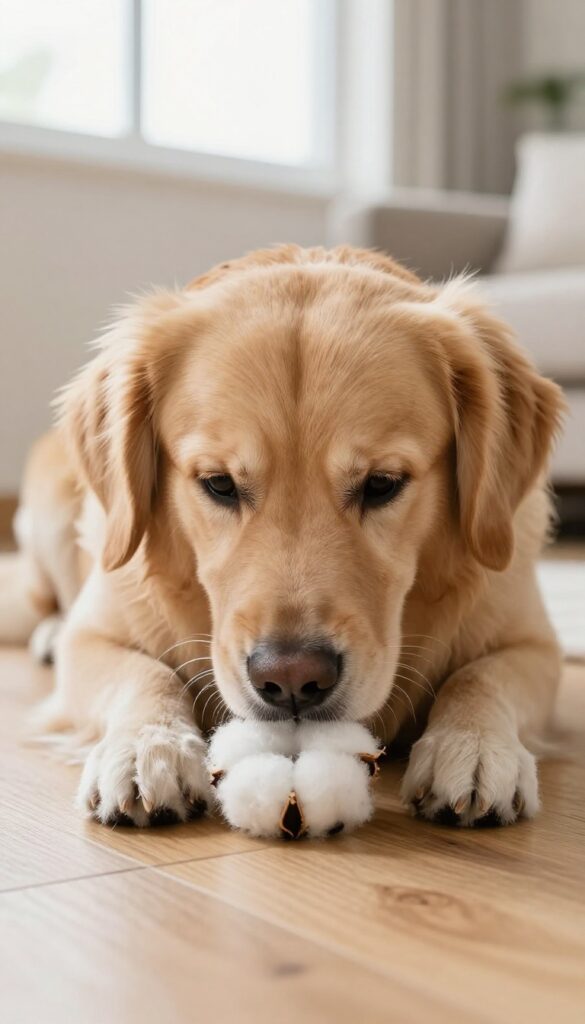
Your dog's nose is a superpower, and scent work games let them use it in a fun, structured way. Hide a scented item like a cotton ball with a drop of vanilla or a small treat in a room and encourage your pup to find it. Start with easy spots, then gradually make it harder.
This game taps into their natural hunting instincts and provides serious mental workout. Owners love it because it's simple, requires almost no setup, and can be played indoors on rainy days or small spaces.
Why It Works
Scent work engages your dog's olfactory system, which is their primary way of exploring the world. Following a scent trail requires focus, problem-solving, and patience, tiring them out faster than physical exercise alone. It also builds confidence as they successfully locate the hidden item.
Best For
This activity is great for all breeds, especially scent hounds like Beagles, Bloodhounds, or Basset Hounds. It's also perfect for senior dogs or those with limited mobility, since it's low-impact but mentally demanding. Apartment dwellers will appreciate that it needs minimal space.
Practical Tip
Use a consistent cue like "Find it!" to start the game. Begin by letting your dog see you hide the item, then gradually hide it out of sight. Rotate scents (vanilla, anise, or even a drop of bacon grease on a cotton ball) to keep it interesting.
Always supervise to prevent swallowing non-food items.
Budget-Friendly Option
Skip expensive scent kits. Use a cotton ball with a drop of essential oil (safe for dogs, like lavender or peppermint) or a small treat. You can also repurpose an old towel by tying treats inside it for a similar hide-and-seek game.
6. Flirt Pole Play
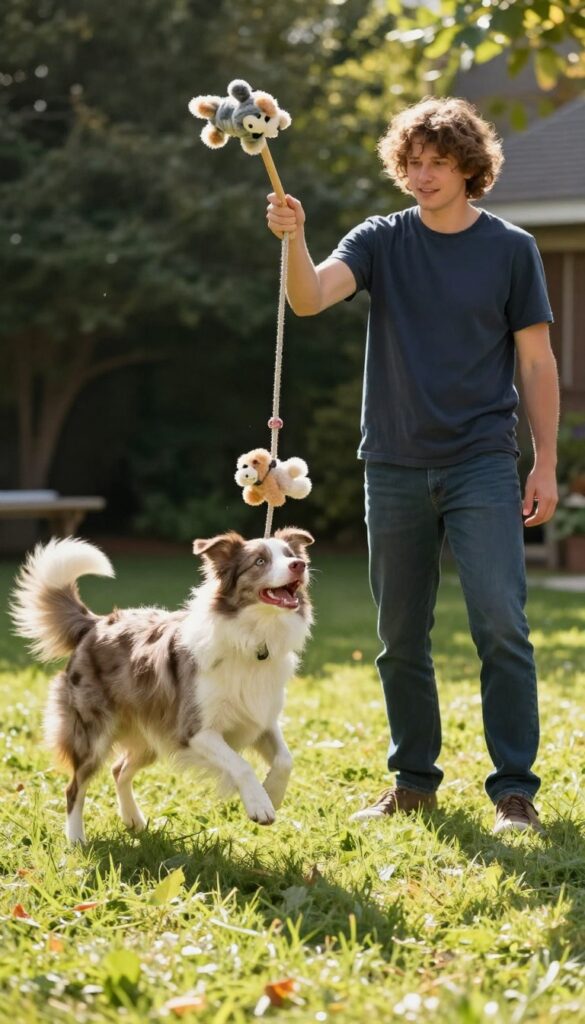
A flirt pole is essentially a giant cat toy for dogs—a long pole with a rope and a toy attached to the end. You move it around to mimic the erratic movements of prey, triggering your dog's chase instinct in a controlled way. It's a fantastic outlet for dogs that love to run, pounce, and grab.
Many owners love how quickly it wears out even the most energetic pups, turning a hyper dog into a calm, happy one in just a few minutes.
Why It Works
Flirt poles tap into your dog's natural prey drive, providing intense physical and mental exercise in a short time. The stop-and-go action works on impulse control, and the chasing burns off pent-up energy fast. It's also low impact on your body—you just stand and move the pole while your dog does all the running.
Best For
Best for high-energy breeds like border collies, terriers, and shepherds, or any dog that loves to chase. It's great for apartments with limited space since you can use it in a hallway or a small yard. Also excellent for rainy days when a long walk isn't possible.
Practical Tip
Always play on a non-slip surface to prevent injuries when your dog makes sharp turns. Use a sturdy flirt pole with a comfortable grip, and let the toy drag on the ground rather than lifting it high to avoid encouraging jumps that could strain joints. End the session before your dog gets overtired—about 10-15 minutes is plenty for most dogs.
Budget-Friendly Option
You can easily make a DIY flirt pole using a sturdy stick or PVC pipe, a rope, and an old stuffed toy or tug toy. Just tie the rope to the stick and attach the toy securely. It works just as well as store-bought versions and costs next to nothing.
7. DIY Tug Toy from Old T-Shirts
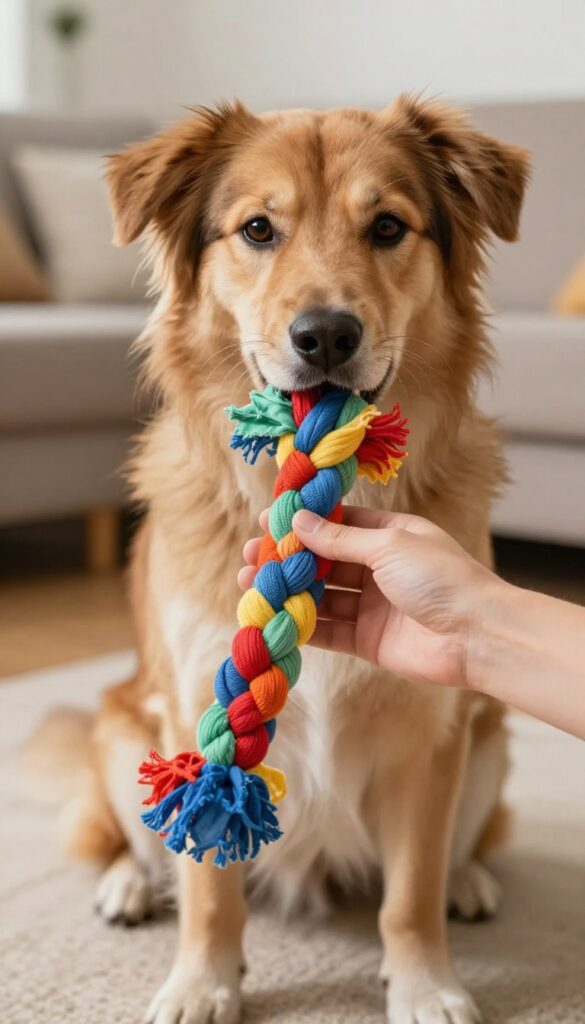
Braided strips of old t-shirts make durable tug toys that are gentle on your dog's teeth and gums. You can customize the length and thickness, and add knots for extra texture. Tug-of-war is a fantastic bonding activity that provides both mental and physical exercise while reinforcing your connection with your pup.
Why It Works
Tug toys satisfy your dog's natural instinct to pull and wrestle, which is mentally stimulating and physically tiring. The braided fabric is soft yet strong, reducing the risk of injury compared to rope toys. Plus, the interactive play builds impulse control and strengthens your bond.
Best For
This toy is great for medium to large dogs who love to play tug, especially breeds like Labs, Pit Bulls, and Shepherds. It's also perfect for owners who want a free, easy-to-make toy that can be replaced quickly if it gets worn out.
Practical Tip
Use three or four strips of fabric for a thicker braid, and tie off the ends securely with a tight knot. You can also add a knot in the middle for a different grip. Always supervise play and replace the toy if it becomes frayed or torn to prevent ingestion of fabric pieces.
Budget-Friendly Option
If you don't have old t-shirts, use old jeans or flannel shirts. For a sturdier toy, braid strips of fleece or cotton fabric. You can also buy cheap fabric remnants at a craft store for under a dollar.
8. Treat-Dispensing Water Bottle
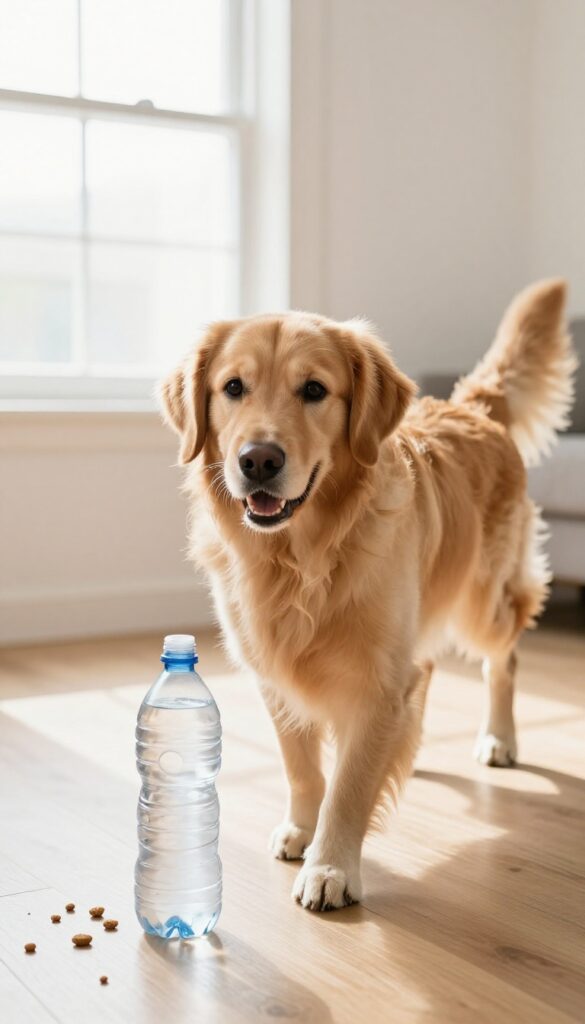
Turn an empty plastic water bottle into a noisy, rolling puzzle that rewards your dog with kibble. By poking holes in the sides, you create a DIY treat dispenser that challenges your pup to figure out how to make the food fall out. The crinkling sounds and unpredictable movement keep dogs engaged far longer than a standard bowl.
Why It Works
Dogs love combining physical activity with problem-solving. Rolling the bottle around makes them use their nose, paws, and coordination to release treats. The noise and motion tap into their natural prey drive, making the task more exciting than a stationary puzzle.
Best For
This is great for medium to large dogs who enjoy pushing and pawing at objects. It works well in apartments or backyards with enough space to roll. Supervise the first few attempts to ensure your dog doesn't try to chew the plastic.
Practical Tip
Always remove the plastic cap and the label to prevent choking hazards. Use a knife or scissors to poke 5–10 small holes—start with fewer holes to make it harder. Fill with dry kibble only, and replace the bottle once it gets dented or chewed.
Budget-Friendly Option
Instead of buying a commercial treat-rolling toy, any empty water bottle works. Just make sure it's clean and dry before adding treats. You can also use a larger soda bottle for bigger dogs.
9. Obstacle Course in the Living Room
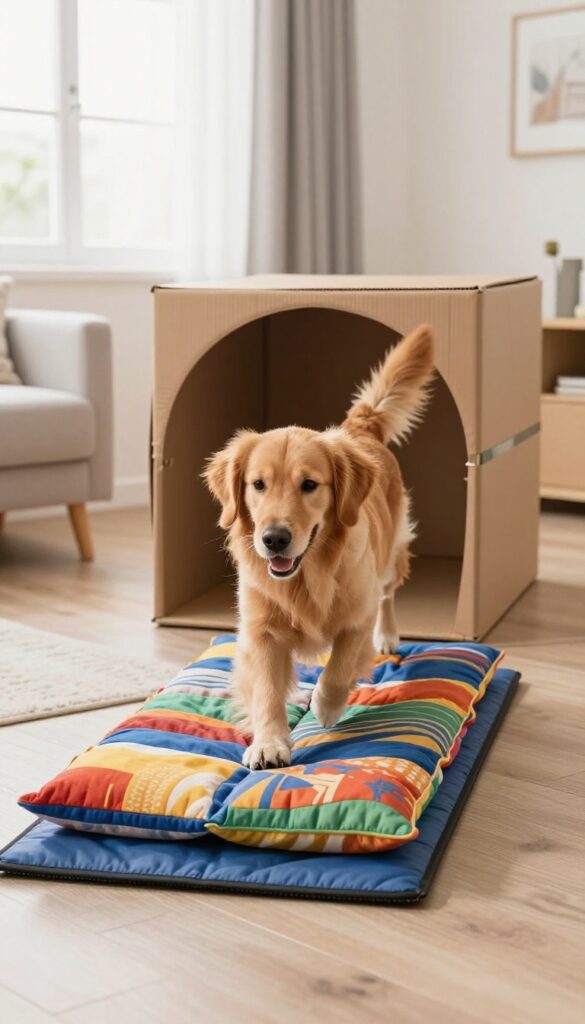
Transform your living room into a mini agility course using everyday furniture and household items. Pillows become stepping stones, chairs become tunnels, and blankets create hurdles. This activity not only burns physical energy but also boosts your dog's confidence as they navigate each new challenge.
The best part? You can change the layout every time, so it never gets old.
Why It Works
Dogs thrive on problem-solving and physical activity. An obstacle course combines both, requiring them to think about where to place their paws and how to maneuver their bodies. It's a full-body and mental workout that leaves them happily tired.
Best For
This idea is perfect for active, energetic dogs who love to move, especially herding breeds, retrievers, and terriers. It also works well for dogs that need a confidence boost, as successfully completing obstacles builds self-assurance.
Practical Tip
Start with simple obstacles like a low pillow jump or a chair tunnel. Use non-slip mats under pillows to prevent sliding, and always supervise to ensure your dog doesn't knock over furniture or get stuck. Keep sessions short—5 to 10 minutes—to avoid frustration.
Budget-Friendly Option
No need for fancy agility equipment. Use couch cushions for jumps, a cardboard box for a tunnel, and plastic cones or water bottles for weave poles. Old broomsticks balanced on stacks of books make great jumps.
10. Bubble Chasing (with Dog-Safe Bubbles)
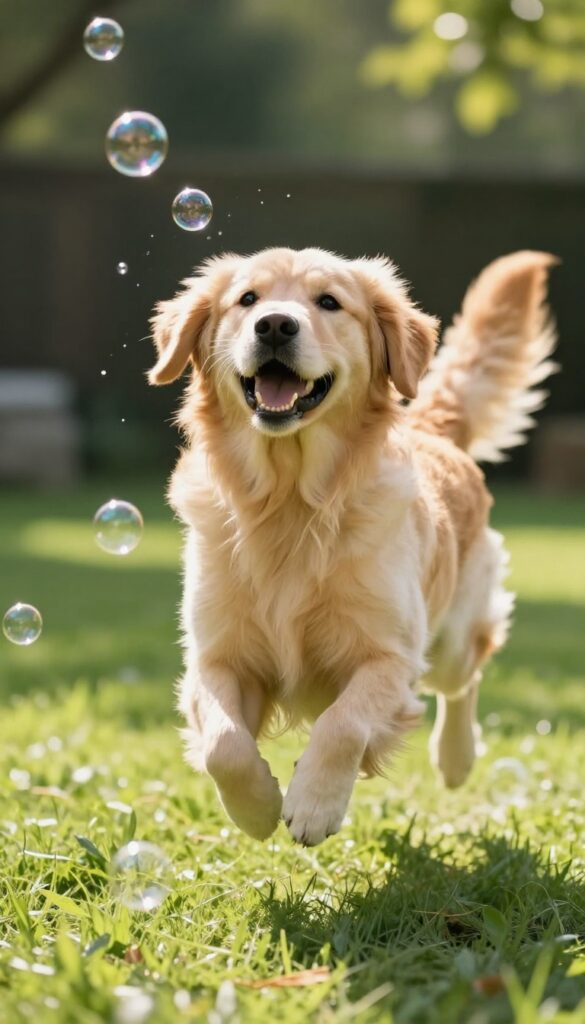
Blow dog-safe, peanut butter-flavored bubbles for your pup to chase and pop. It's a low-impact activity that works well indoors or outdoors. Many dogs find bubble popping irresistible.
This simple game taps into your dog's natural prey drive as they stalk, chase, and pop the floating targets. It's a fantastic way to burn off energy without needing much space or equipment.
Bubble chasing is especially great for days when you're short on time or energy, yet your dog still needs some fun. Plus, the slower-moving bubbles designed for dogs are easier on their eyes and safer if ingested.
Why It Works
Dogs are hardwired to chase moving objects, and bubbles mimic the erratic flight of prey. The act of popping bubbles also provides instant gratification, reinforcing the behavior. It's a light cardiovascular workout that engages their mind and body simultaneously.
Best For
This activity suits most dogs, especially high-energy breeds like herding dogs, terriers, and retrievers who love to chase. It's also perfect for apartment dwellers with limited yard space, as you can do it in a hallway or on a balcony.
Practical Tip
Use a bubble machine for hands-free fun, or blow bubbles by hand to vary the direction and speed. Always supervise to prevent your dog from ingesting too much bubble solution, and stick to brands made with natural, non-toxic ingredients. Wipe your dog's face with a damp cloth afterward to remove any residue.
Budget-Friendly Option
If you don't want to buy specialty bubbles, make your own by mixing 1 cup of water with 2 tablespoons of glycerin (or corn syrup) and a few drops of bacon or peanut butter flavoring. Avoid dish soap as it can be irritating.
11. Hide and Seek with Family Members
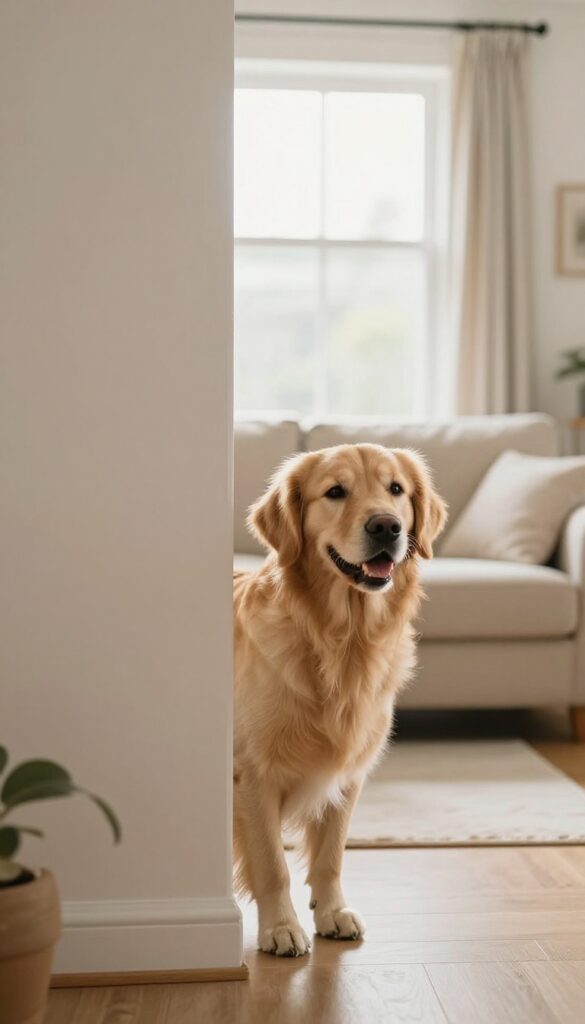
Remember playing hide and seek as a kid? Turns out dogs love it too. This classic game turns your home into a giant puzzle where your dog uses their nose and ears to track down a hidden family member.
It's simple, requires zero equipment, and gets everyone involved in your dog's enrichment.
Why It Works
Hide and seek taps into your dog's natural hunting instincts and reinforces their recall cue in a fun, low-pressure setting. The mental effort of searching and the excitement of finding someone releases dopamine, which helps satisfy their need for stimulation. Plus, the physical movement of running from room to room provides light exercise.
Best For
This game works well for families with multiple people who can take turns hiding. It's great for dogs that already know basic recall but need practice in distracting environments. Shy or anxious dogs can start with easy hiding spots (behind a door or chair) to build confidence before moving to more challenging locations.
Practical Tip
Start with your dog in a stay or have one person hold them while another hides. Call your dog's name excitedly once you're hidden. When they find you, reward with high-value treats and lots of praise.
Keep sessions short (3-5 rounds) so your dog stays engaged and doesn't get frustrated.
FAQ
How often should I do enrichment activities with my dog?
Aim for at least one enrichment activity per day, but even a few minutes of mental stimulation can make a difference. Adjust based on your dog's energy and interest.
Can enrichment help with separation anxiety?
Enrichment can reduce anxiety by keeping your dog occupied, but it's not a cure. For severe cases, consult a professional trainer or veterinarian.
What if my dog loses interest quickly?
Try varying the difficulty or switching to a different activity. Some dogs prefer scent work over puzzles, so experiment to find what excites them.
Do I need to buy special equipment?
No, most ideas use household items. You can start with a simple cardboard box or towel and gradually add more complex toys if you like.
Conclusion
You don't need to spend a fortune to keep your dog happy and engaged. These enrichment ideas prove that everyday items and a little creativity can make a big difference in your pup's day. Pick one or two to try this week, and watch your dog's boredom melt away.
The best part? You'll both have fun discovering new ways to play and bond together.

I’m Pallab Kishore, the owner of Little Pets Realm — an animal lover and pet care enthusiast sharing easy tips, healthy recipes, and honest advice to help every small pet live a happy, healthy, tail-wagging life.