Opening your closet should feel inspiring, not overwhelming. But when every shelf is stuffed and hangers are tangled, getting dressed becomes a chore.
These 11 wardrobe reset tactics are designed to cut through the chaos with practical, no-nonsense steps. From the Reverse Hanger Trick to a Digital Inventory, each method tackles a specific pain point—whether it's deciding what to keep or organizing what stays.
You don't need a full weekend or a Marie Kondo mindset. Just pick a tactic, start small, and watch your closet transform into a space that actually works for you.
1. The Reverse Hanger Trick
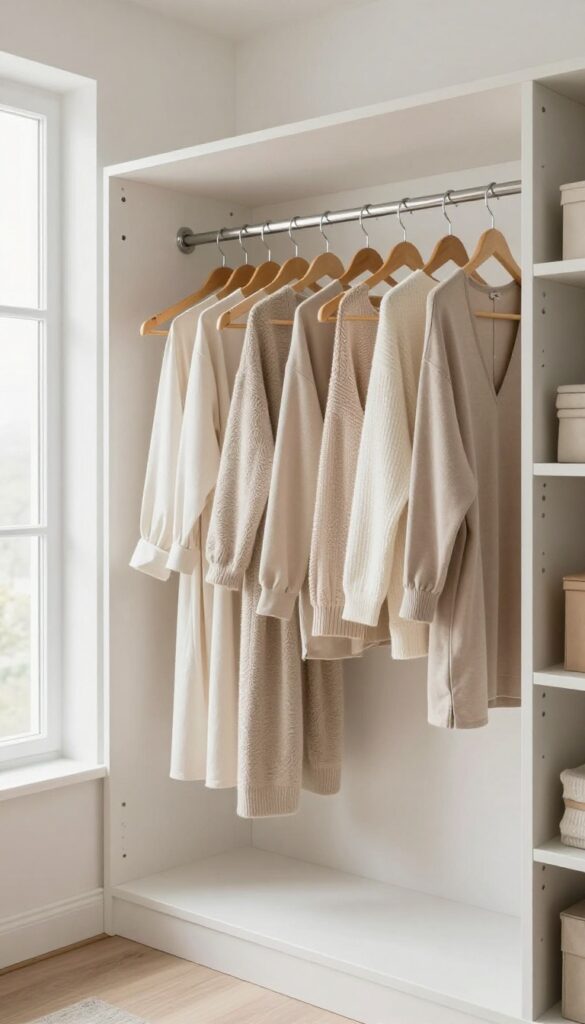
This trick is almost too simple to believe, but it works like a charm. The idea is to make your wardrobe tell you what you actually wear—without any guesswork or emotional debates. All you need is a few seconds per hanger and a bit of patience over the next few months.
Start by taking every single hanger in your closet and turning it backward, so the hook faces you. As you wear an item and put it back, hang it the normal way—hook facing the wall. After three to six months, take a look.
Any hanger still backward means that item hasn't been worn. It's a clear, objective signal that it's time to let it go.
Why It Works So Well
The reverse hanger trick removes emotion from the decluttering process. Instead of asking yourself "Do I love this? " or "Will I wear it someday?
", you let your actions speak. It's a visual, data-driven approach that reveals your true habits. Plus, it's completely passive—you just flip hangers as you go about your normal routine.
How To Make It Stick
Set a reminder on your phone for three months from today. When that day comes, pull out everything on backward hangers. Try on each piece if you're unsure, but be honest.
If it didn't make the cut in three months, it probably won't next season either. Donate, sell, or repurpose those items immediately—don't let them creep back in.
When To Skip This Method
This trick works best for everyday clothing, not special occasion pieces or seasonal gear. If you have a winter coat in summer, it'll be backward for months even though you'll wear it come December. Use common sense: exclude out-of-season items, formal wear, and sentimental pieces from the test.
2. The Four-Box Sorting Method
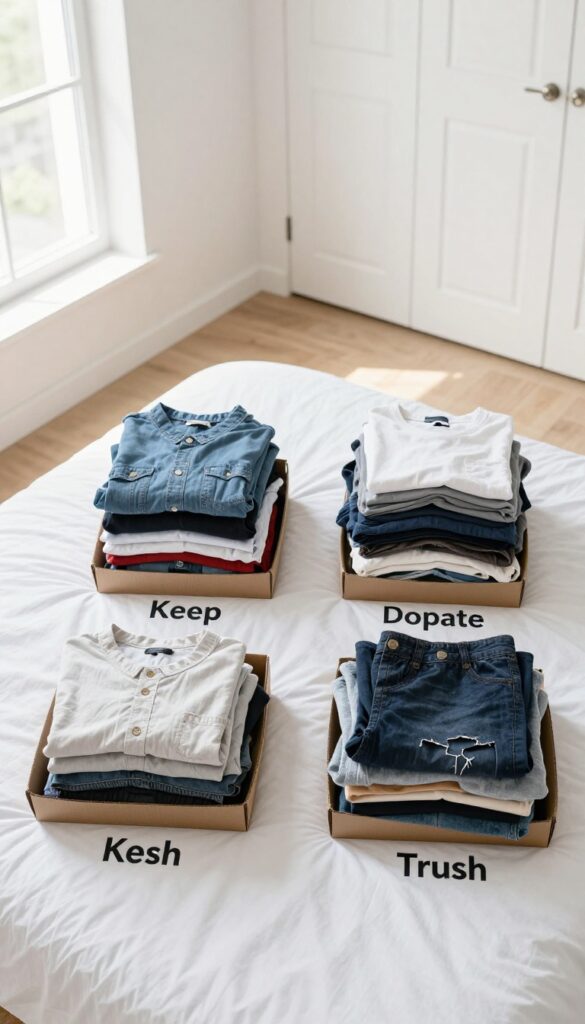
Label four boxes: Keep, Donate, Repair, and Trash. Pull everything out and sort each item into one box. This forces decisions and prevents second-guessing.
Pull everything out of your closet and pile it on your bed or floor. Then, with your four boxes ready, pick up each item and immediately assign it to a box. No lingering.
No “maybe” pile. This method works because it creates clear categories and eliminates the temptation to hold onto things out of guilt or indecision.
Why Four Boxes Beat Three
Most decluttering systems use three boxes: keep, donate, trash. But adding a Repair box changes the game. That shirt with a missing button?
Instead of tossing it or leaving it in your closet unworn, it goes into Repair. Later, you can either fix it or finally let it go. The Repair box gives you a designated holding zone for items that need a little love but aren't ready for the trash.
How To Sort Without Overthinking
Set a timer for 10 minutes per category (tops, bottoms, dresses, outerwear). This keeps you moving fast. For each item, ask yourself: Have I worn this in the last year?
Does it fit? Do I feel good in it? If the answer is no, it goes to Donate or Trash.
Trust your gut—if you hesitate, it's probably a no.
What To Do With Each Box After Sorting
Once everything is sorted, act quickly. Take the Trash bag out immediately. Schedule a donation drop-off within the week.
Put the Repair box by your front door with a reminder to visit a tailor. And for the Keep box, only return items that you truly love and wear. Consider organizing them by category or color so your closet feels fresh and functional.
3. The One-Year Rule
It sounds harsh, but here's the truth: if a piece of clothing hasn't left your closet in the past 365 days, it's probably not going to. We all have those items we're "saving for a special occasion" that never comes. The one-year rule cuts through the excuses and forces an honest look at what you actually wear.
The one-year rule is a simple, effective way to declutter your closet. The idea is straightforward: if you haven't worn something in the past year, it's time to let it go. This rule helps you break free from the "just in case" mentality that keeps your closet stuffed with unworn clothes.
The Exceptions That Prove The Rule
Of course, there are exceptions. Formal wear like tuxedos, gowns, or bridesmaid dresses might only see the light of day once every few years. Sentimental pieces, like a beloved leather jacket from college, also get a pass.
But be honest: is that dress you wore to a wedding five years ago really going to be worn again? If it doesn't fit or you don't love it, it's just taking up space.
How To Apply It Without Guilt
Start by pulling out anything you haven't worn in the last year. Try it on. If it doesn't fit, is stained, or just doesn't feel like "you" anymore, thank it for its service and let it go.
For items that are in good condition, donate or sell them. For worn-out pieces, recycle or repurpose them. The goal is to create a closet filled only with clothes you actually wear and love.
The Psychological Benefit
This rule isn't just about space—it's about mindset. When you let go of clothes that no longer serve you, you free up mental energy and make room for a wardrobe that reflects your current style. You'll also save time getting dressed because you're only choosing from items you genuinely want to wear.
4. The Capsule Wardrobe Edit

Limiting your closet to 30–40 versatile pieces sounds extreme, but it's actually freeing. By temporarily storing the rest, you force yourself to rely on items that truly work together. This edit reveals your real needs and makes mornings effortless.
A capsule wardrobe isn't about deprivation—it's about clarity. When you pare down to core pieces that mix and match, you eliminate decision fatigue. You'll notice which gaps exist and which items you never reach for, making future shopping smarter.
Choose Your Foundation
Start with neutral basics: solid tees, classic jeans, a blazer, and a little black dress. Add a few statement pieces that spark joy. Aim for a cohesive color palette so everything coordinates.
Store The Overflow
Box up seasonal or sentimental items you're not ready to part with. Label the boxes and stash them out of sight. After a few months, you'll know what to keep and what to donate.
Test Drive Your Capsule
Live with your capsule for two weeks. Notice how often you wear each piece. If something sits unworn, swap it out.
This iterative process fine-tunes your wardrobe until it's perfectly functional.
5. The Vertical Fold for Drawers
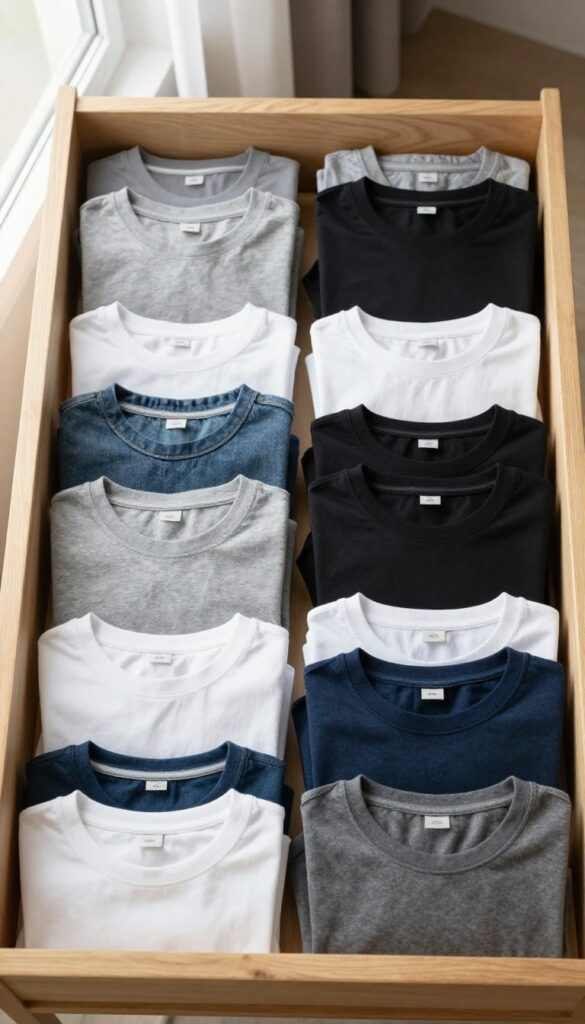
Drawers can become black holes of clothing chaos. The vertical fold method changes that by letting you store items like jeans and tees on their edges, so every piece is visible at a glance. No more digging through piles or unfolding stacks to find what you need.
This technique is a game-changer for anyone tired of messy drawers. By folding clothes into compact rectangles and standing them upright, you create a filing system that makes selection quick and easy. It also helps you see exactly how much you own, preventing overbuying.
How To Master The Vertical Fold
Start with a flat surface. For a T-shirt, fold one side inward, then the other, creating a long strip. Fold the bottom up to meet the top, then fold in half or thirds until you have a neat rectangle that can stand on its own.
Jeans require a similar approach: fold them in half lengthwise, then fold the legs up to the waistband, and finally fold into a standing rectangle. The key is consistency—aim for uniform sizes so they stack neatly.
Why It Works So Well
Vertical folding maximizes drawer space and visibility. You can see every item at once, so you never forget what you own. It also reduces wrinkles since clothes aren't piled on top of each other.
Plus, grabbing one item doesn't disturb the rest, keeping your drawer organized for longer.
Which Items Benefit Most
This method works best for casual items like T-shirts, jeans, sweatpants, and pajamas. Bulkier sweaters or delicate fabrics may not stand upright as easily. For those, consider rolling or using drawer dividers.
Experiment with different folds to see what holds its shape.
6. The Seasonal Swap System

Your closet doesn't have to hold every piece you own all year long. The Seasonal Swap System is about giving your off-season clothes a temporary vacation, so your daily wardrobe feels spacious and intentional. By rotating your clothes twice a year, you'll always have the right options at your fingertips without digging through bulky sweaters in July.
Store off-season clothes in labeled bins under the bed or on high shelves. Rotate twice a year to keep your closet current and clutter-free.
Pick Your Swap Days
Choose two anchor dates—like the first weekend of April and October—to swap your wardrobe. Mark them on your calendar so you don't forget. Consistency is key; after one or two cycles, it'll become a habit.
Sort And Store Smart
Use clear, labeled bins so you can see what's inside. Group by category: sweaters, shorts, swimwear, etc. Vacuum-seal bags for bulky items like puffer jackets to save space.
Store bins in out-of-the-way spots like under the bed or top closet shelves.
Prep For Next Season
Before storing, wash or dry-clean everything. Check for stains or damage and repair what you can. This way, when you pull out your winter coats next fall, they're ready to wear.
7. The Hanger Uniformity Upgrade
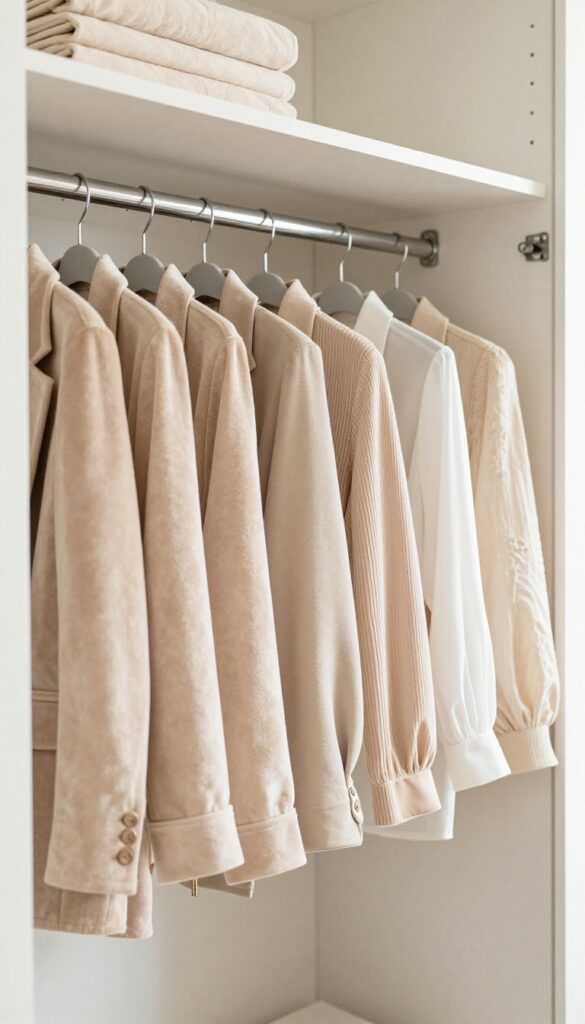
You might not think about hangers much, but they set the visual tone for your entire closet. A jumble of wire, plastic, and wooden hangers creates visual noise that makes even a tidy wardrobe look messy. Swapping them out for slim, matching hangers is one of the fastest ways to give your closet a clean, cohesive look—and it frees up surprising amounts of space.
Why Uniformity Matters
When every hanger is the same shape and color, your eye glides smoothly from one garment to the next. That visual calm instantly makes your closet feel more organized. Plus, uniform hangers prevent clothes from slipping off or getting stretched out—no more wire hanger shoulder bumps on your favorite sweaters.
Space Savings You Can Actually See
Slim velvet or felt hangers are about half the thickness of standard plastic ones. That means you can fit roughly twice as many items on the same rod. For a typical closet, that's like gaining an extra foot of hanging space without moving a single shelf.
Choosing The Right Hanger
Go for slim, non-slip hangers in a single color—black or beige work with most wardrobes. Velvet hangers grip delicate fabrics, while wooden ones add a touch of luxury. Avoid bulky plastic or tubular metal; they waste space and can damage clothes over time.
8. The Five-Second Decision Rule
Indecision is the enemy of a clean closet. You hold up a shirt, stare at it, and start a mental debate that ends with you shoving it back in. The Five-Second Decision Rule eliminates that paralysis.
When you pick up an item, give yourself exactly five seconds to decide keep or toss. If you hesitate, it goes. This forces your gut to lead, not your overthinking brain.
The rule is simple: grab an item, start a mental countdown from five, and make a snap judgment. No second-guessing. No 'but I might wear it someday. ' If you can't instantly picture yourself wearing it in the next month, it's a no.
This tactic works because it bypasses the emotional loops that keep clutter alive. You'll be surprised how many pieces you're only holding onto out of habit, not love.
Why Five Seconds?
Research shows that snap decisions often align with our true preferences, while longer deliberation leads to rationalization. Five seconds is enough time to register your first instinct—the one that knows whether you actually like the item or not. Any longer, and you start making excuses.
This rule respects your time and your closet space.
How To Apply It Without Stress
Set a timer or just count in your head. Work in batches: grab ten items, run the rule on each, and sort into keep, toss, or donate piles immediately. Don't stop to try things on or imagine outfits.
If you hesitate, it's a toss. The goal is momentum, not perfection. You can always revisit the keep pile later if you need to.
When To Break The Rule
Some items deserve a second look—like sentimental pieces or expensive investments. For those, give yourself a longer pause, but only after the initial five-second test. If you hesitated but feel a strong emotional pull, set it aside in a 'maybe' box.
Revisit it in a week. If you haven't thought about it, donate it.
9. The Accessory Audit
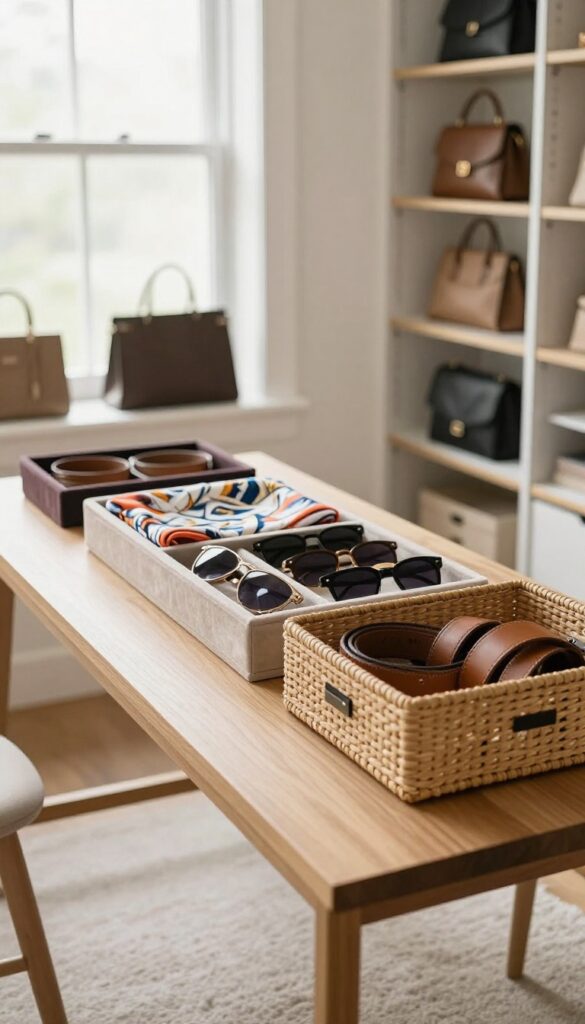
Accessories have a way of multiplying when you're not looking. Scarves, belts, hats, and bags can quietly take over your shelves and hooks until you can't find anything. That's why a dedicated accessory audit is essential.
It's not about getting rid of everything—it's about keeping only what you actually use and giving those pieces a proper home.
Start by gathering every single accessory you own and dumping them onto a bed or a large table. This includes jewelry, sunglasses, scarves, belts, hats, bags, and any other odds and ends. Sort through each piece and ask yourself: Have I worn this in the last six months?
If the answer is no, set it aside for donation, selling, or storage. Be honest—that statement necklace from 2018 probably isn't making a comeback. Once you've trimmed down, organize what's left with drawer dividers, small bins, or hanging organizers.
Group similar items together: all belts in one bin, all scarves in another. This makes getting ready faster and keeps your closet looking tidy.
The Six-month Rule
The six-month rule is your best friend here. If you haven't worn an accessory in half a year, you're unlikely to miss it. Exceptions might include seasonal items like winter scarves or holiday-themed pieces, but for everyday accessories, six months is plenty of time.
This rule forces you to confront what you actually reach for versus what you're just holding onto out of guilt or habit.
Storage Solutions That Work
Once you've pared down, storage matters. Drawer dividers keep small items like sunglasses and watches from tangling. Clear bins let you see what's inside without digging.
For belts and scarves, consider hanging organizers or hooks on the back of your closet door. The goal is to make every accessory visible and accessible. When everything has a designated spot, you'll grab what you need and put it back without a second thought.
Maintaining The System
An audit isn't a one-and-done task. Set a reminder every six months to repeat the process. As you acquire new accessories, practice the one-in-one-out rule: for every new piece you bring in, let go of an old one.
This keeps your collection manageable and your closet from reverting to chaos. Over time, you'll develop a curated accessory wardrobe that actually complements your style.
10. The Weekly Reset Ritual

A clean closet isn't a one-time event—it's a habit. The Weekly Reset Ritual is a 10-minute maintenance session that stops clutter from building up in the first place. Think of it as a mini tune-up that keeps your wardrobe running smoothly, so you never have to face another overwhelming deep clean.
Set a recurring 10-minute appointment on your calendar, same day each week. During this time, quickly scan your closet for anything that's out of place—stray hangers, clothes draped over the rod, shoes kicked off. Put everything back where it belongs.
Then check your donation bag or box: add any items you noticed you didn't wear this week. Finally, take a moment to rearrange a shelf or rotate a section if needed. That's it.
Consistency is the secret sauce here. After a few weeks, the ritual becomes automatic, and your closet stays in a state of ready calm.
The 10-minute Checklist
Break it down into three quick passes. Pass one: return all hangers and clothes to their proper spots. Pass two: scan for donation candidates—if you didn't wear it this week and it's not seasonal, consider letting it go.
Pass three: do one small organizational tweak, like folding a messy stack or straightening a shoe row.
When To Do It
Sunday evening is a popular choice because it sets you up for the week ahead. But any consistent day works—just pick a time when you're not rushed. Pair it with another routine, like folding laundry or planning outfits, so it becomes part of a natural flow.
Why It Works
Small, frequent actions prevent the avalanche effect. A 10-minute reset is far less daunting than a Saturday overhaul. Over time, you train your brain to notice disorder early, and you build a habit that keeps your closet—and your mindset—clear.
11. The Digital Inventory
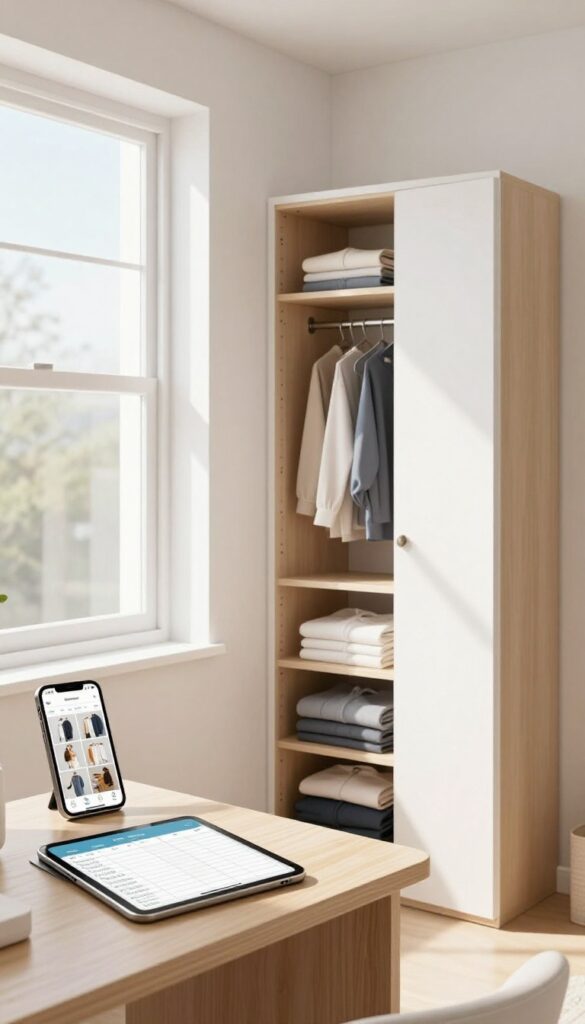
You might think you know your wardrobe inside out, but memory is surprisingly unreliable. That black turtleneck you swear you own? It’s actually a charcoal crewneck—or it went missing months ago.
A digital inventory eliminates the guesswork and gives you a clear, searchable record of everything you own.
Setting up a digital wardrobe inventory is easier than you think. Start by choosing a simple tool: a spreadsheet, a notes app, or a dedicated wardrobe app like Stylebook or Cladwell. Then, go through your closet one item at a time, logging each piece with key details: color, type, fabric, and the last time you wore it.
Snap a quick photo if you want a visual reference. Once it’s all entered, you’ll have a bird’s-eye view of your collection—no more buying a third pair of black jeans because you forgot about the two you already have.
Spot Gaps & Avoid Duplicates
With your inventory in hand, you can instantly see what you actually need. Notice you have five striped shirts but zero solid white tees? That’s a gap.
See three nearly identical navy blazers? That’s a duplicate you didn’t need. The inventory turns impulse shopping into informed decisions.
Track Wear & Rotation
Logging the last worn date helps you identify neglected items. If a dress hasn’t seen daylight in a year, it’s a candidate for donation. It also encourages you to rotate your wardrobe—so that favorite sweater doesn’t get worn three days in a row while others collect dust.
Streamline Seasonal Swaps
When the seasons change, your digital list makes swapping a breeze. You can quickly filter by category or season, pack away off-season items, and pull out what’s next. No more digging through bins or forgetting what you stored.
FAQ
How often should I do a full closet reset?
A full reset twice a year (spring and fall) works well for most people. In between, a quick monthly check keeps things manageable.
What do I do with clothes I want to donate?
Bag them up immediately and put them in your car or by the door. Schedule a drop-off within a week to avoid them lingering back into your closet.
How do I handle sentimental items I never wear?
Keep a small memory box for truly special pieces. Limit it to one box per category (e. g. , concert tees, baby clothes). The rest can be photographed and donated.
Should I organize by color or by type?
Start by type (shirts, pants, dresses) and then by color within each category. This makes finding items faster and keeps the closet visually cohesive.
What if I can't bear to part with anything?
Start with the reverse hanger trick or a temporary storage bin. Give yourself a deadline (e. g. , 3 months) to decide. Often, separation makes letting go easier.
Conclusion
A clean closet isn't just about aesthetics—it saves time, reduces stress, and helps you actually enjoy getting dressed. Start with one tactic that feels easiest, then build from there. Small, consistent efforts lead to lasting change.
Remember, the goal isn't perfection.
It's a closet that supports your daily life without adding clutter. Pick one idea today and see how it feels. Your wardrobe reset is just a few steps away.