
Last updated on August 19th, 2026 at 04:14 pm
The doorbell rings, kids shout, and your dog bolts for the door. Halloween turns your entryway into a chaotic parade of costumes and candy, and for many dogs, that’s overwhelming. But with a little preparation, you can turn the busiest night of the year into a calm, controlled experience for everyone.
These 10 manners focus on real-world situations near busy doorways. They’re practical, easy to teach, and designed to help your dog feel secure while you handle the trick-or-treaters.
No need for fancy equipment—just treats, patience, and a plan. Whether your dog is a seasoned pro or a nervous newcomer, these tips will make Halloween safer and more enjoyable for your pup and your visitors.
1. Teach a Solid 'Wait' at the Door
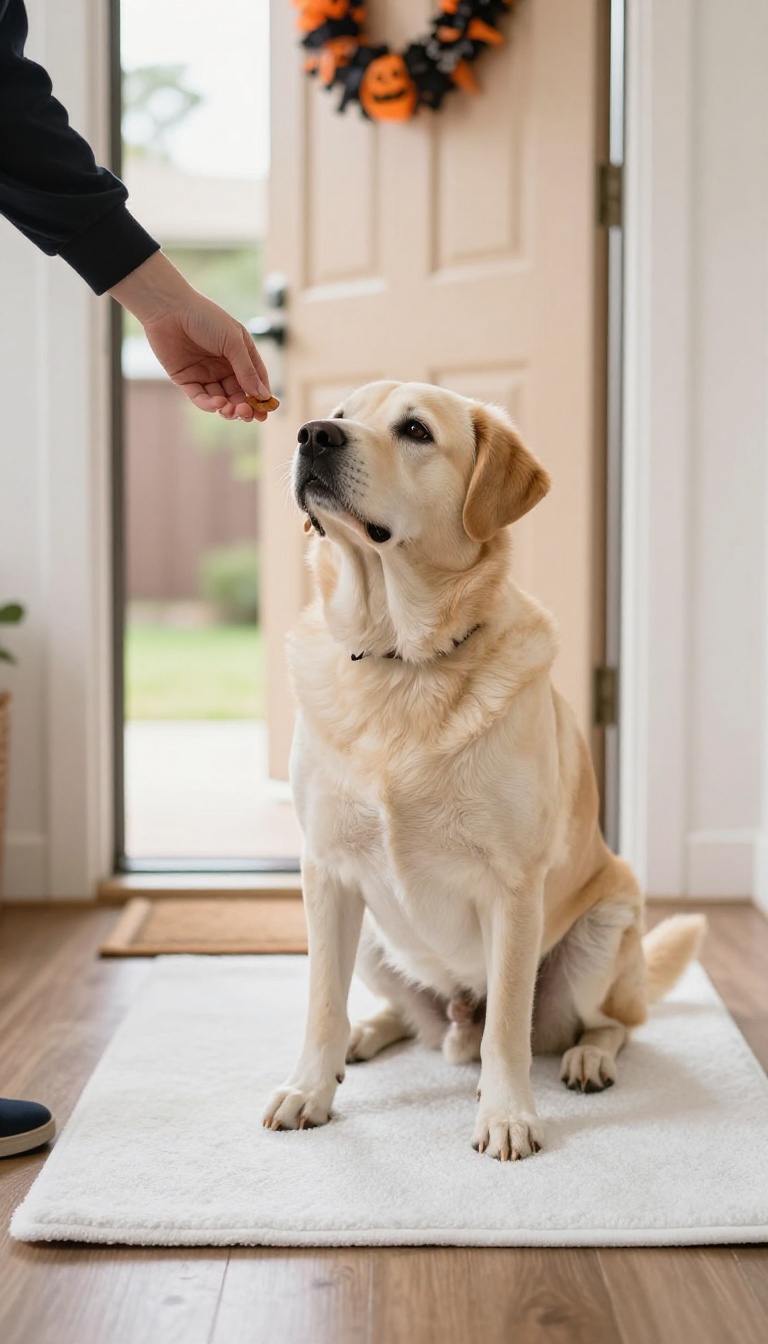
The moment the door opens, your dog’s instinct is to greet—or chase—whatever is on the other side. That’s why a reliable “wait” is the first line of defense for a calm doorway. It gives your dog a clear job to do while you manage the flow of trick-or-treaters, and it prevents those sudden lunges that can startle visitors or send your pup into the night.
Start by teaching “wait” in a quiet room with no distractions. Have your dog sit or stand a few feet from the door, then say “wait” in a calm, firm voice. Open the door a crack.
If your dog stays put, close the door and reward with a treat. If they move, close the door and try again. Repeat this until your dog understands that the door opening means “stay put. ”
Start Small And Build Up
Practice in short sessions, especially when your dog is calm. Begin with the door closed, then move to a slight opening, and gradually increase the time your dog holds the wait. Use a high-value treat like chicken or cheese to keep their focus.
Keep sessions to five minutes or less to avoid frustration.
Use A Mat Or Designated Spot
A mat or a specific rug near the door can become your dog’s “safe zone. ” Teach your dog to go to their mat when the doorbell rings or when you say “place. ” This gives them a physical anchor and a consistent spot to return to, making it easier to enforce the wait. Reward them for staying on the mat while you open the door.
Practice With Real Distractions
Once your dog has the basics, simulate real-world scenarios. Have a friend ring the doorbell or knock while you practice. Gradually add more realistic elements, like wearing a costume or holding a bag of treats.
The goal is to make the wait so automatic that your dog doesn’t even think about bolting.
2. Use a Leash or Tether for Extra Control
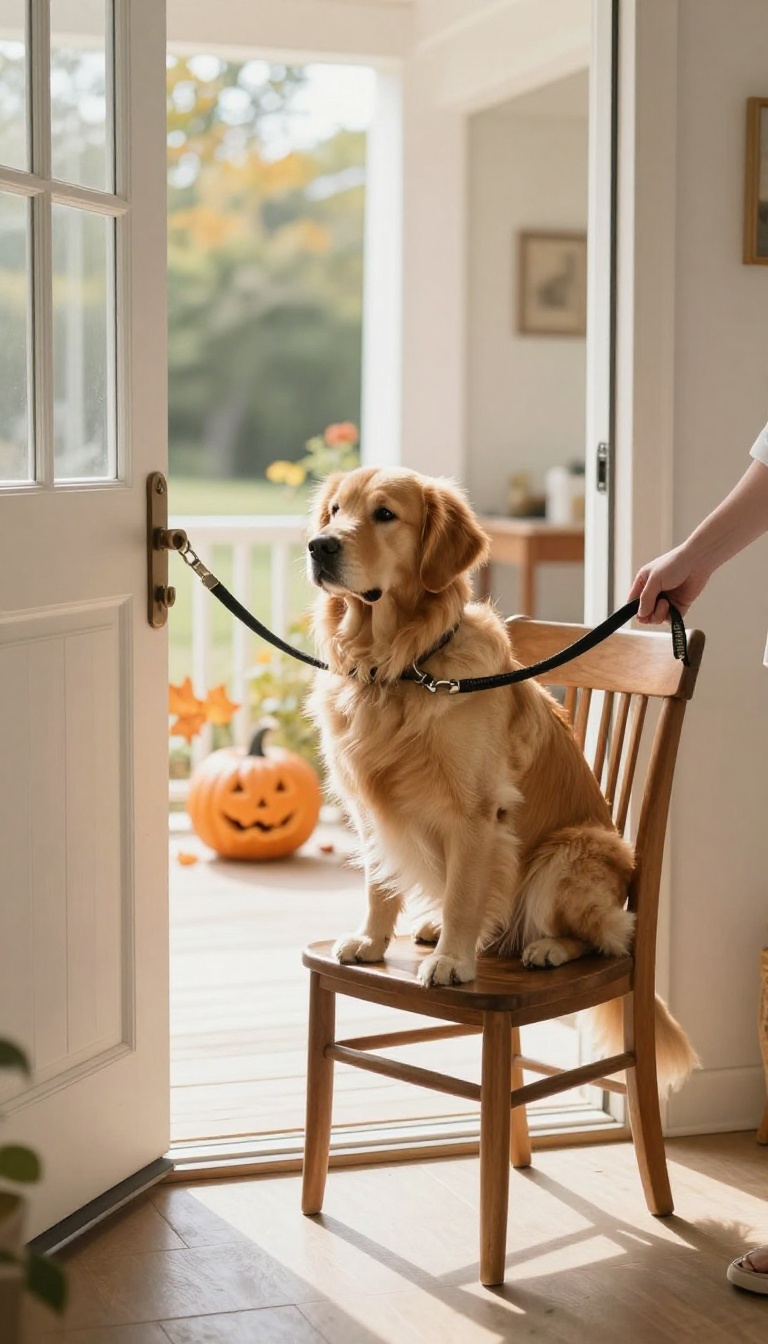
A loose dog near an open door is a recipe for a sudden escape. Even the most well-behaved pup can get spooked by a loud noise or tempted by a waving costume. Keeping your dog on a short leash or attaching a tether near the door gives you an instant way to prevent those dashes and keeps everyone safer.
When you’re handing out candy, your hands are full and your attention is split. A leash or tether lets you manage your dog without having to grab them mid-sprint. It’s a simple tool that adds a layer of security, so you can focus on the kids at the door while your dog stays put.
Why A Leash Works Better Than Relying On Recall
Even if your dog has perfect recall, Halloween is a high-stimulation night. The doorbell, the costumes, the constant stream of strangers—it’s easy for a dog to forget their training in the excitement. A leash takes the guesswork out of the situation.
You don’t have to hope they’ll listen; you have physical control right in your hand.
How To Set Up A Tether Near The Door
If you don’t want to hold the leash the whole time, set up a tether a few feet away from the door. Use a sturdy anchor point, like a heavy piece of furniture or a door handle, and attach a short leash. Make sure the tether is long enough for your dog to sit or lie down comfortably, but short enough that they can’t reach the doorway.
Test it beforehand to ensure it’s secure.
Tips For Making The Leash Or Tether Comfortable
Your dog might not love being restrained, so pair it with something positive. Give them a treat or a chew toy when they’re on the leash or tether. This helps them associate the setup with good things.
Also, keep the leash slack—don’t pull or yank—so your dog doesn’t feel stressed. The goal is to keep them calm, not to punish them.
3. Practice the 'Place' Command on a Mat
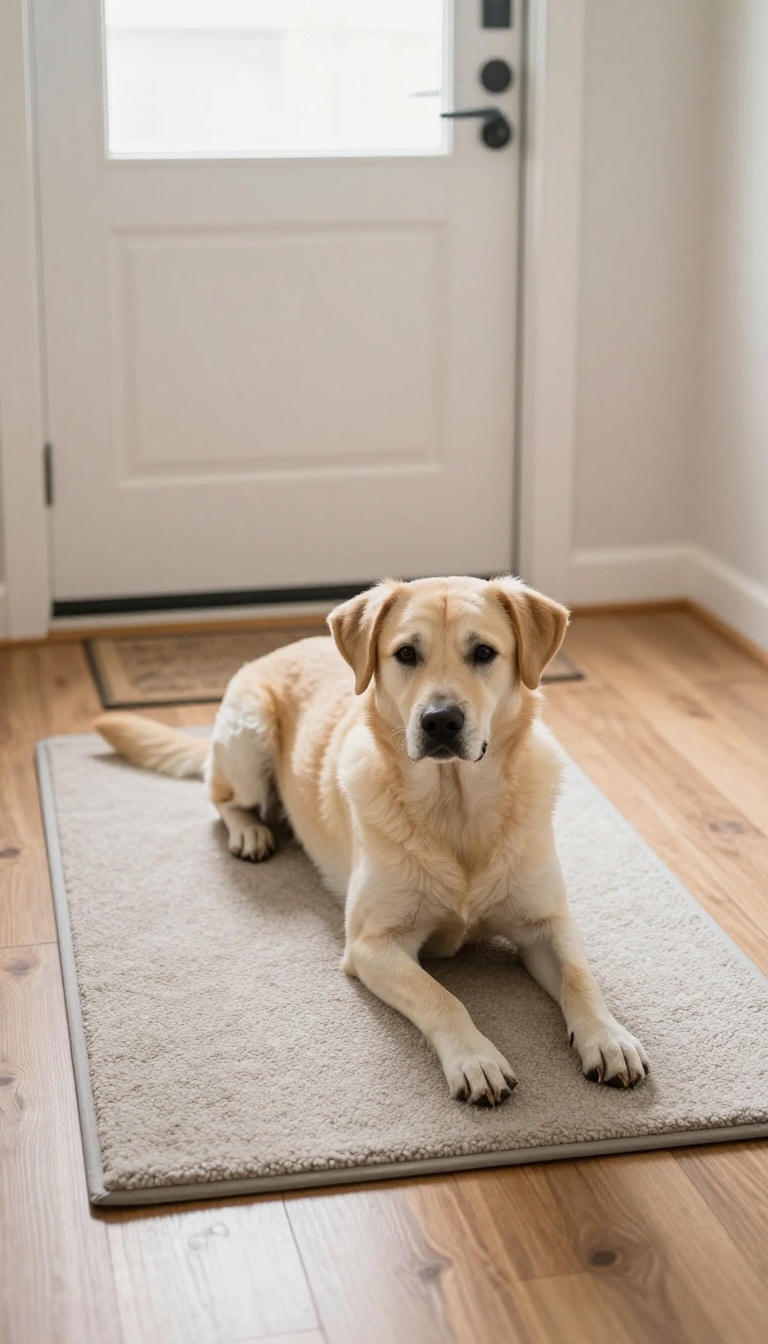
Training your dog to go to a designated mat is like giving them a personal safe zone. When the doorbell rings, they know exactly where to go instead of rushing to the door. This simple command can turn a chaotic moment into a calm routine.
Start by placing a comfortable mat or bed a few feet away from the door, but still within your sight. Use a treat to lure your dog onto the mat, then say 'place' and reward them for staying. Practice this during quiet times first, so your dog learns the behavior without distractions.
Gradually increase the duration they stay, and always reward calm behavior. Once they’re solid, add doorbell sounds or have a friend ring the bell while you practice. The key is to make the mat a positive, rewarding spot, not a punishment.
With consistent practice, your dog will automatically head to their mat when visitors arrive, giving you peace of mind and a safer entryway.
Choosing The Right Mat
Pick a mat that’s comfortable and non-slip, so your dog feels secure. It should be large enough for them to lie down but not so big that it takes up the whole entryway. A mat with a familiar scent, like an old towel, can also help them settle.
Training Steps
Start by luring your dog onto the mat with a treat and saying 'place. ' Reward them for stepping on it. Then, ask them to stay for a few seconds before giving a release word like 'okay. ' Gradually increase the distance between you and the mat, and the duration of the stay. Always end on a positive note with a treat and praise.
Adding Distractions
Once your dog masters the basics, introduce distractions like knocking on a table or playing a doorbell sound. Reward them for staying on the mat. Have a friend ring the actual doorbell, and if your dog stays, give them a high-value treat.
This builds their impulse control and makes the behavior reliable during real trick-or-treaters.
4. Desensitize to Doorbell Sounds
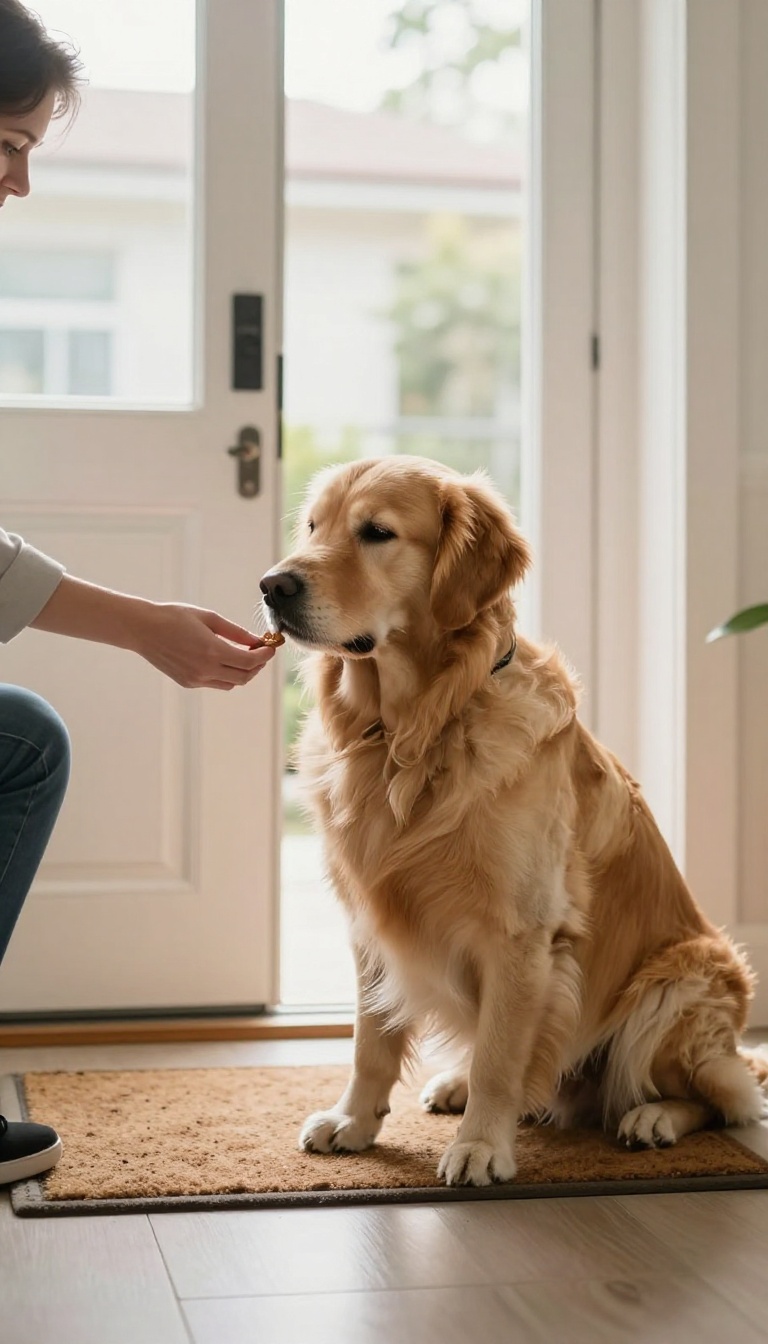
That familiar ding-dong can send your dog into a frenzy before the first trick-or-treater even steps onto the porch. The sound itself becomes a trigger, causing barking, spinning, or dashing to the door. But you can change that association with a simple training technique called desensitization.
Desensitization means exposing your dog to a trigger at a level so low it doesn't cause a reaction, then gradually increasing intensity while pairing it with something positive. For doorbells, this helps your dog learn that the sound predicts good things, not chaos. With consistent practice, the doorbell becomes a cue to stay calm and maybe even look to you for a treat.
Start Low And Slow
Begin by playing a doorbell sound at a very low volume—so low your dog barely notices. Use your phone or a computer to find a doorbell sound effect. As soon as the sound plays, drop a high-value treat on the floor.
Repeat this several times over a few days, keeping sessions short and fun.
Gradually Increase The Volume
Once your dog seems relaxed with the low volume, turn it up just a notch. Continue pairing the sound with treats. If your dog shows any signs of stress—like barking, whining, or pacing—drop the volume back down and proceed more slowly.
The goal is to keep your dog below their threshold, where they can still focus on you.
Add Real-life Distractions
After your dog is comfortable with a moderate volume, start adding realistic elements. Have a friend ring the actual doorbell while you toss treats, or use a recording that includes background noise like children's voices. Practice near the door, but keep your dog on a leash or behind a baby gate for safety.
Reward calm behavior, and gradually work up to opening the door while your dog stays in a sit or down.
5. Reward Calm Greetings, Not Jumping
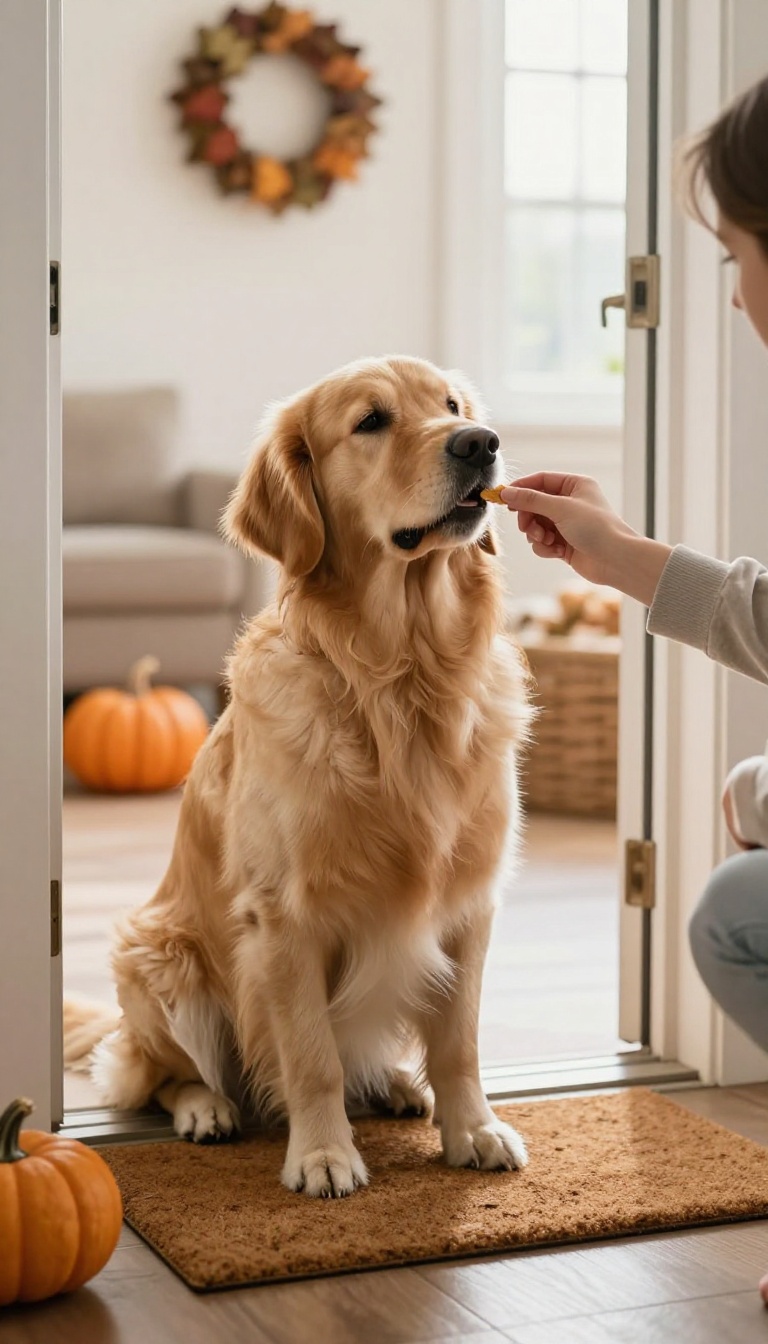
Jumping up is one of the most common greetings dogs offer—especially when they're excited and the door is a whirlwind of new people. But when a dog leaps at a trick-or-treater, it can knock over a small child, snag a costume, or just make everyone uncomfortable. The good news is that you can teach your dog that keeping all four paws on the floor is the fastest way to earn attention and treats.
The trick is to ignore the jumping completely and reward the calm. That means no eye contact, no talking, no pushing—just wait. The moment your dog's paws hit the floor, mark it with a “yes” and give a treat.
Ask every visitor to do the same: if your dog jumps, they turn away and fold their arms. Consistency across all greetings is what makes this stick.
Why Jumping Happens
Dogs jump to get closer to faces, which is how they greet each other. In the excitement of a doorway, they’re not trying to be rude—they’re just overwhelmed. The more attention they get from jumping, the more they repeat it.
Your job is to make calm behavior the only one that works.
The Four-paws Rule
Set a simple rule: no treats, pets, or eye contact until all four paws are on the ground. Practice with family members first, then friends, and finally trick-or-treaters. Keep treats by the door so you can reward quickly.
If your dog jumps, simply turn away and wait for them to settle.
Enlist Your Visitors
Trick-or-treaters won’t know your training plan, so give them a heads-up. A sign on the door saying “Please ignore jumping—we’re training! ” works wonders. Or, have a bowl of treats at the door and ask visitors to toss one to your dog only when they’re sitting.
This turns every greeting into a positive learning moment.
6. Create a Safe Zone Away from the Door
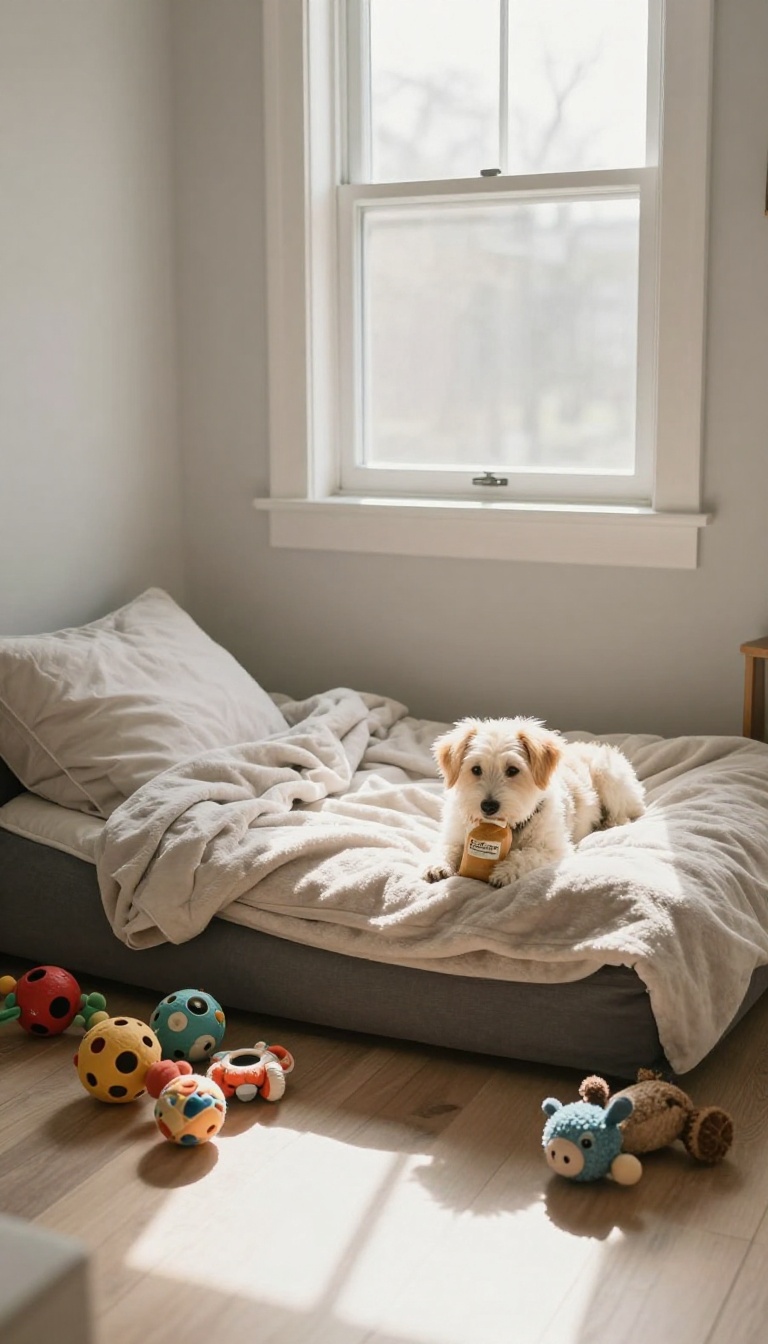
Sometimes the best way to handle a busy doorway is to not be near it at all. A safe zone gives your dog a break from the constant doorbell and strangers, which can be a lifesaver for anxious or easily overwhelmed pups. It’s not about locking them away—it’s about giving them a comfortable spot where they can decompress.
Set up a quiet room with your dog's bed, favorite toys, and a treat puzzle. This space should be ready before the first trick-or-treater arrives. If your dog gets too stressed, calmly lead them there and let them relax while you handle the door.
This prevents overstimulation and keeps everyone safe.
What To Put In The Safe Zone
Choose a room away from the front door, like a bedroom or a den. Add your dog’s bed or a comfy blanket, a few chew toys, and a treat puzzle or a Kong stuffed with peanut butter. Keep the door closed or use a baby gate to keep your dog inside.
You can also play soft music or white noise to muffle the sounds from outside.
How To Introduce The Safe Zone
Don’t wait until Halloween night to show your dog this space. A few days before, start feeding them meals or giving them treats in the room. Make it a positive place.
On the big night, if your dog seems stressed—pacing, whining, or hiding—guide them to the safe zone with a cheerful voice and a treat. Stay with them for a minute or two until they settle, then leave them to enjoy their puzzle.
When To Use The Safe Zone
The safe zone isn’t a punishment; it’s a proactive tool. If your dog starts barking or lunging at the door, that’s a sign they need a break. Also, consider using it during peak hours, like from 6 to 8 PM, when most trick-or-treaters come.
You can still let your dog greet visitors if they’re calm, but having the safe zone ready gives you a quick backup plan.
7. Practice with Fake Visitors
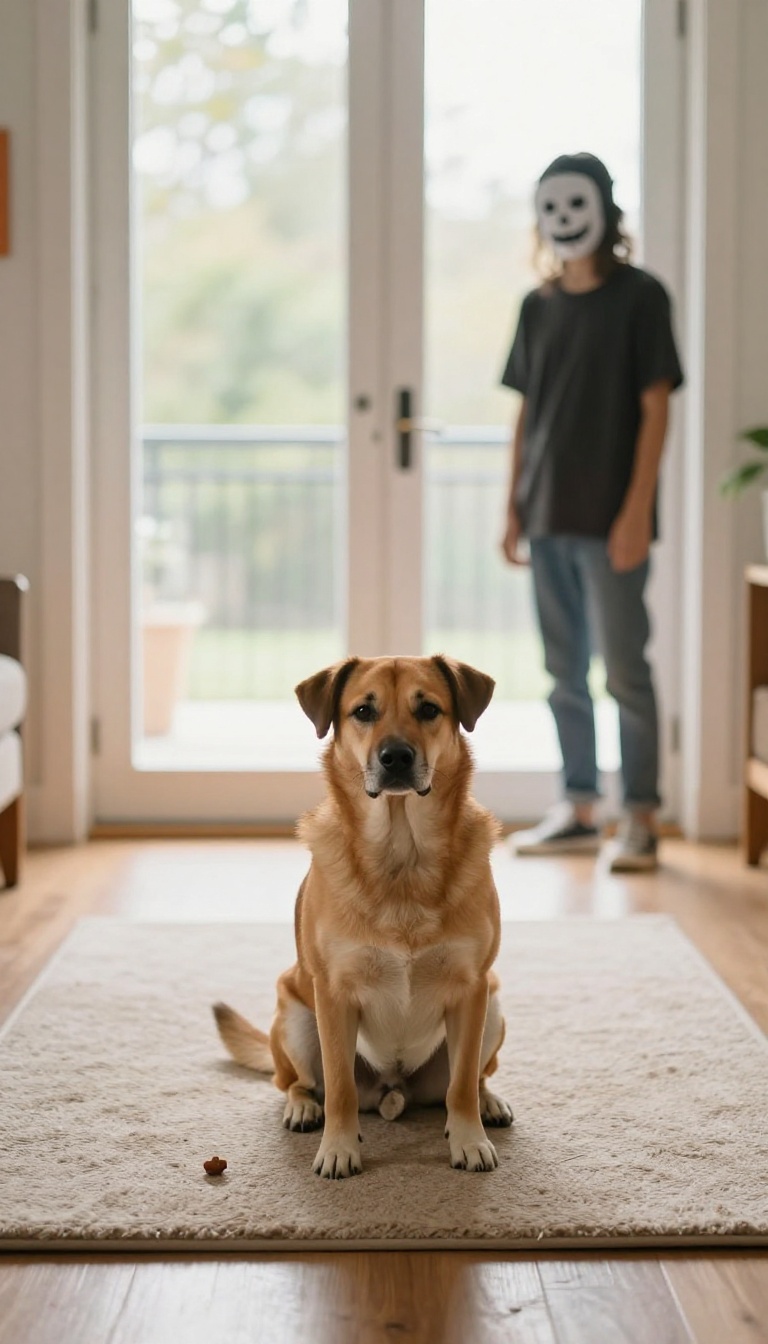
The real test comes when the doorbell rings for the first time on Halloween night. But you don't have to wait for that moment to see how your dog reacts. By rehearsing with fake visitors, you can spot problem behaviors and fix them before the actual chaos begins.
Set up a few practice sessions in the days leading up to Halloween. Ask a friend or family member to play the part of a trick-or-treater. Have them ring the doorbell or knock, then wait outside for a minute or two.
This gives you a chance to work through the routine without the pressure of a real crowd.
Start With A Familiar Face
Begin with someone your dog already knows. This reduces the initial excitement and helps your dog focus on your cues rather than the stranger. Have your helper approach the door, ring the bell, and then step back.
Reward your dog for staying calm and in position.
Add Costume Layers Gradually
Once your dog is comfortable with the basic drill, introduce costume elements. Start with something simple like a hat or a mask, then move to a full costume. Make sure your dog has plenty of treats and praise for staying relaxed.
If your dog seems nervous, slow down and give them more time to adjust.
Practice The Exact Behaviors You Want
Use these sessions to practice the specific manners you've been working on. If you want your dog to sit and stay near the door, have them do that before you open it. If you're using a mat or a crate, send them there.
The more you repeat the routine, the more automatic it becomes.
Keep Sessions Short And Positive
Don't overdo it. A few five-minute sessions are better than one long, stressful practice. End each session on a good note with a treat and some play.
Your dog will start to associate the doorbell with positive experiences, not just chaos.
8. Keep Treats Handy for Positive Reinforcement
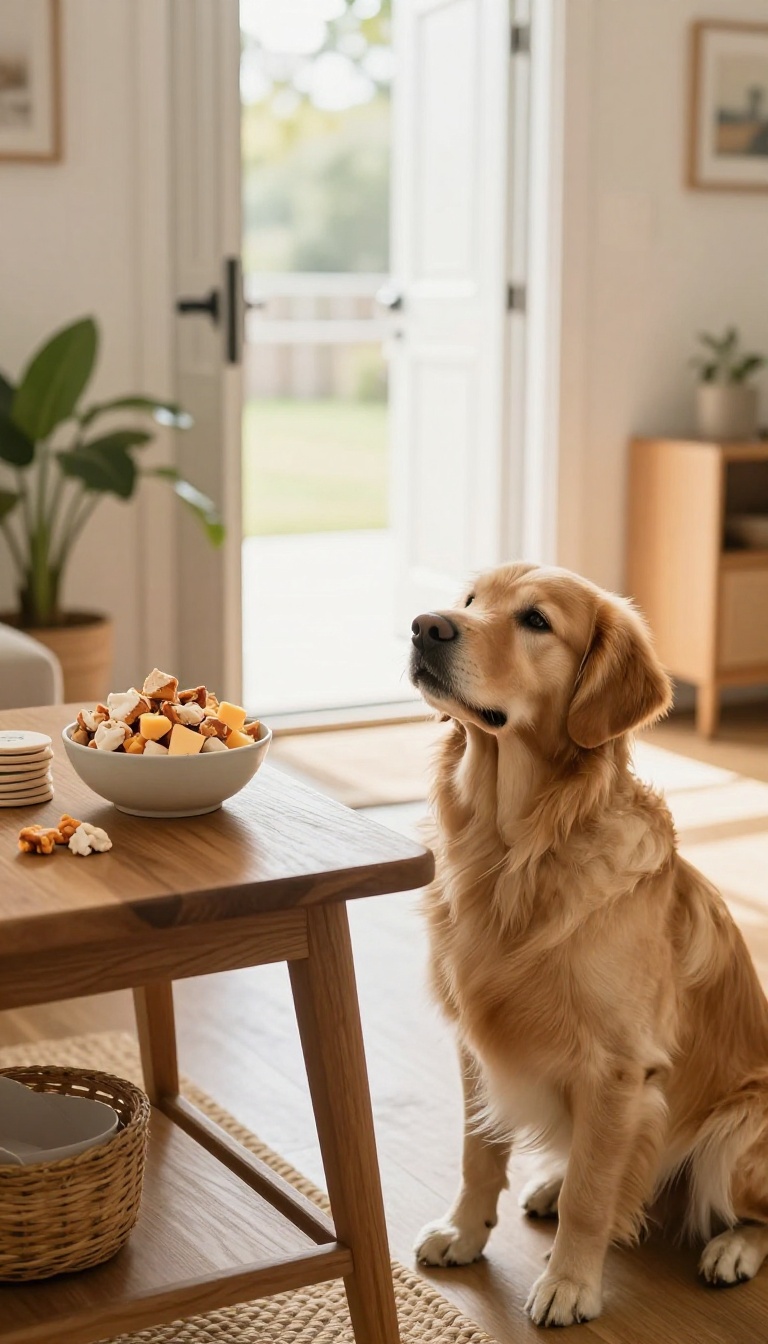
Timing is everything when you're training near a busy door. If you have to scramble to find treats after your dog already reacted, you've missed the moment. Keeping a bowl of high-value treats right by the entrance lets you reward the exact behavior you want—instantly.
When your dog chooses to stay calm instead of bolting, that's the behavior you want to see again. A treat delivered in that split second makes the connection clear. It's not about bribing; it's about communicating what works.
Set Up A Treat Station
Place a small bowl or pouch of treats on a table near the door, just out of your dog's reach. Use something extra special—tiny pieces of chicken, cheese, or hot dog—so it's worth their attention. You can even pre-portion treats into a small cup for quick access.
Reward The Right Moments
Watch for calm behavior: a sit, a down, or even just a glance your way instead of the door. The moment you see it, mark with a 'yes' or a click and drop a treat. Timing matters more than the amount, so keep treats small and frequent.
Use Treats To Redirect
If your dog starts to fixate on the door, call their name and offer a treat when they turn to you. This breaks the stare and gives them a job to do. Over time, they'll learn that checking in with you is more rewarding than reacting to the door.
9. Use a Baby Gate or Exercise Pen
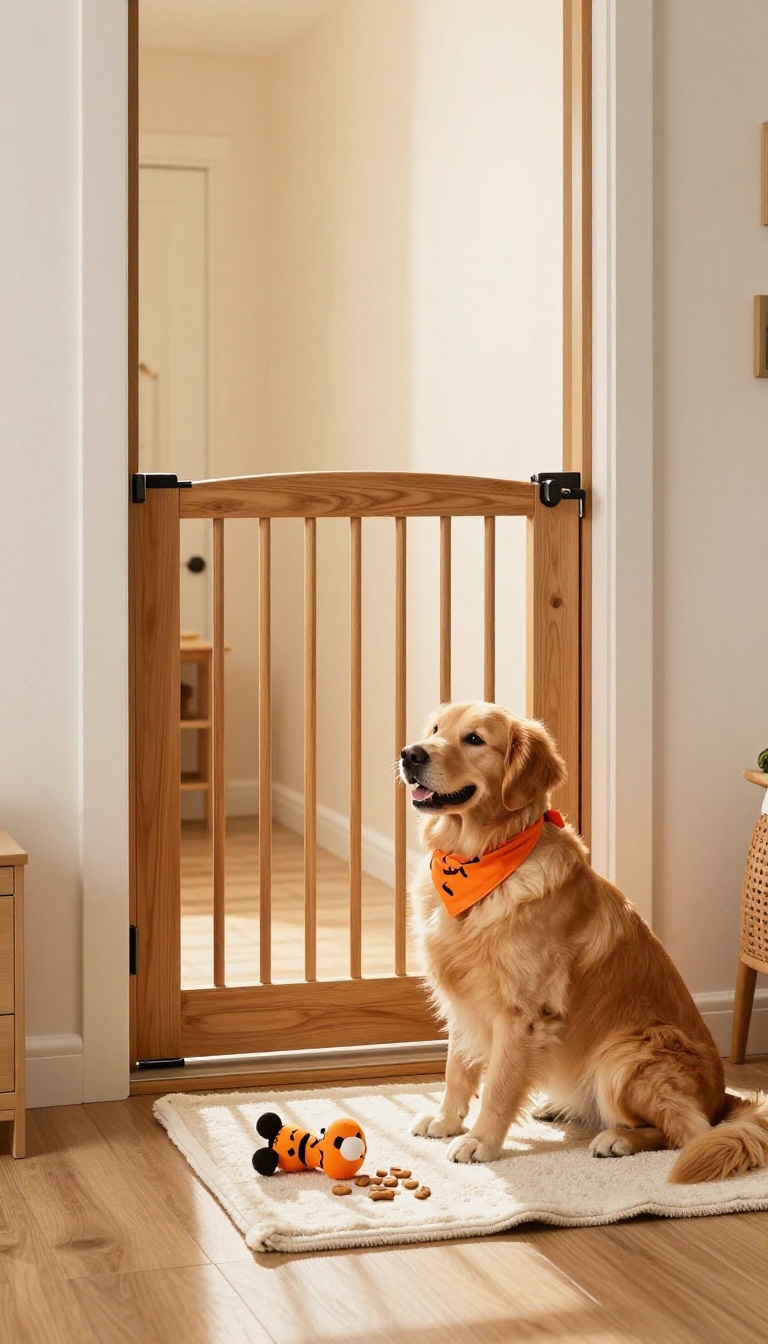
A baby gate or exercise pen set a few feet from the door gives your dog a clear boundary without making them feel isolated. It’s a simple, low-stress way to keep them safe while still letting them watch the action. Plus, it gives you a moment to open the door without a furry missile launching past you.
Position the gate or pen so your dog can see the door but not reach it. This way, they stay part of the fun without being underfoot. It’s especially helpful if your dog is a door-dasher or gets overly excited when guests arrive.
Set It Up Before The Chaos
Place the gate or pen at least three feet from the door. That gap gives you room to open the door and hand out candy without your dog slipping through. Make sure the barrier is sturdy and can’t be knocked over by a determined pup.
Practice with your dog before Halloween so they get used to the new setup.
Make It A Positive Hangout Spot
Toss a few treats or a favorite toy into the enclosed area so your dog associates it with good things. You can also add a comfy bed or blanket. The goal is to make the space feel like a cozy den, not a punishment.
When your dog settles there, reward them with praise and occasional treats to reinforce calm behavior.
Keep The View Clear
If your dog is curious, leave the gate open enough for them to see the doorway but not squeeze through. Some gates have a walk-through door that you can keep latched while still letting your dog peek. If your dog gets more worked up by watching, you can cover part of the gate with a sheet or towel to reduce visual stimulation.
Use It As A Training Tool
The gate or pen can also help you practice calm greetings. Have a friend ring the doorbell while you reward your dog for staying behind the barrier. Over time, your dog will learn that the door opening doesn’t mean they get to bolt.
This builds a reliable habit for future holidays and busy times.
10. Know When to Skip the Door Duty
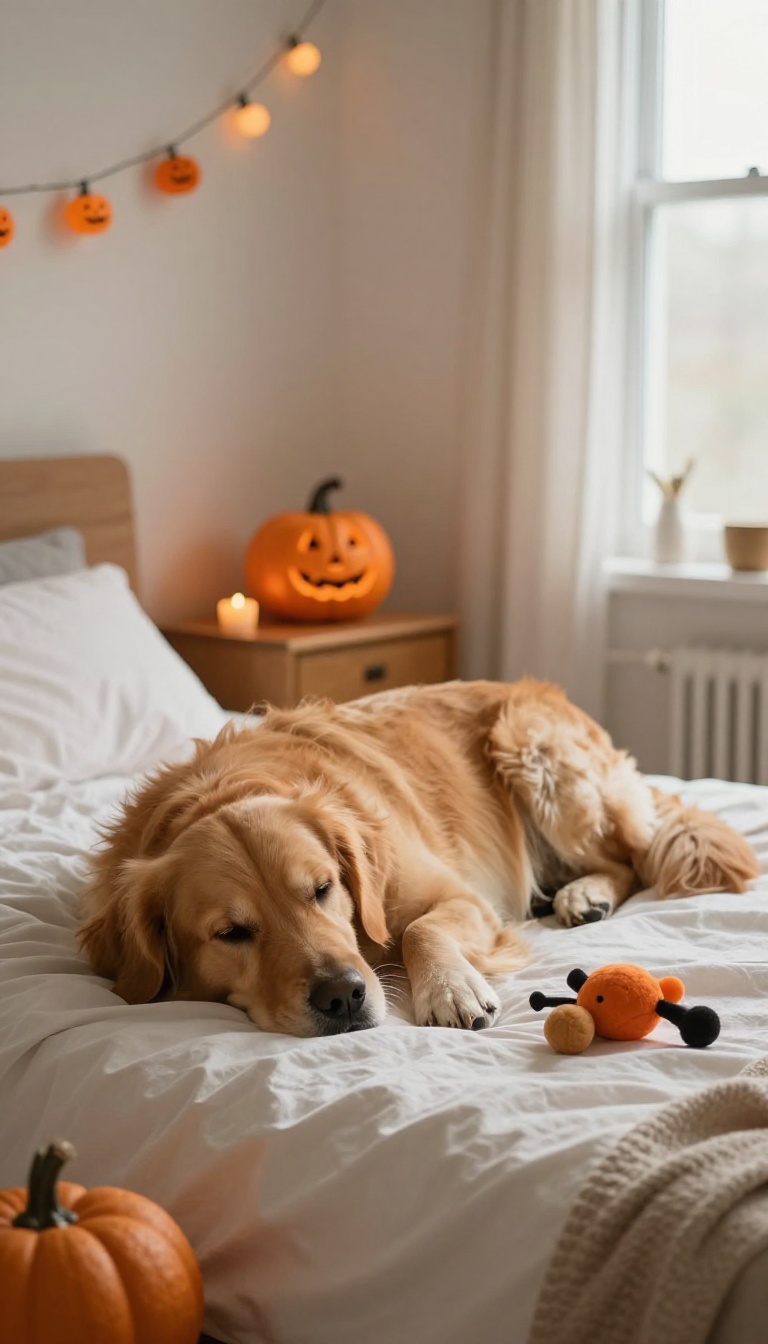
Not every dog is cut out for greeting a parade of strangers, and that's perfectly okay. Halloween is supposed to be fun for the whole family, including your pup. If your dog shows signs of fear or reactivity, forcing them to sit by the door can backfire.
It can make them more anxious and even lead to growling or snapping. Recognizing when to step back is a sign of responsible pet parenting, not failure.
Some dogs thrive on social interaction, while others would rather hide under the bed. The key is to read your dog's body language and respect their limits. If your dog is trembling, tucking their tail, or barking excessively, they're telling you they're uncomfortable.
In that case, the kindest thing you can do is give them a quiet, safe space away from the action. You can still enjoy Halloween without putting your dog through unnecessary stress.
Signs Your Dog Is Overwhelmed
Watch for subtle cues that your dog is struggling. Yawning, lip licking, and whale eye (showing the whites of their eyes) are early signs of stress. More obvious signs include cowering, hiding, or refusing treats.
If your dog is growling or snapping, they're not being 'bad'—they're communicating that they need space. Trust those signals and act accordingly.
Creating A Quiet Zone
Set up a comfortable retreat in a bedroom or a back room, away from the front door. Add their bed, a favorite toy, and maybe a puzzle feeder to keep them occupied. Close the door or use a baby gate to keep them safely inside.
You can play soft music or white noise to muffle the sounds of the doorbell and chatter. This gives your dog a chance to relax and decompress.
How To Still Enjoy The Night
You don't have to miss out on Halloween fun just because your dog is sitting this one out. You can still hand out candy, chat with neighbors, and enjoy the festive atmosphere. Check on your dog periodically to reassure them, but don't force them to come out.
After the last trick-or-treater leaves, you can reward your dog with a special treat and some quiet cuddle time.
FAQ
How do I stop my dog from barking at the doorbell?
Desensitize your dog to the doorbell sound by playing it at low volume and rewarding calm behavior. Pair the sound with treats to create a positive association. Practice regularly, and consider teaching a 'quiet' command.
What should I do if my dog jumps on trick-or-treaters?
Keep your dog on a leash or behind a baby gate. Ask visitors to ignore your dog until all four paws are on the floor. Reward calm behavior with treats and attention.
Consistency is key.
Is it okay to keep my dog in another room during Halloween?
Absolutely. If your dog is stressed or reactive, a quiet room with their bed and toys is a safe haven. It's better to prioritize your dog's comfort than to force them into a chaotic situation.
How can I teach my dog to stay on a mat when the door opens?
Start by teaching 'place' in a quiet area. Use a mat or bed and reward your dog for staying on it. Gradually add distractions, like knocking on the door, and reward calm behavior.
Increase duration over time.
What if my dog is scared of costumes?
Introduce your dog to costumes gradually. Let them sniff the costume while giving treats. If your dog is fearful, keep them away from the door and provide a safe space.
Never force interaction.
Conclusion
Halloween doesn't have to be a battle at the front door. With a little training and some smart setups, you can help your dog stay calm and polite while you enjoy the festivities. Start practicing these manners a few weeks before the big night, and you'll both be ready.
Remember, every dog is different.
Some may take to these tips quickly, while others need more time. Be patient, keep sessions short, and always reward the behavior you want to see. Your dog will thank you with a wagging tail—and maybe a few extra treats.

I’m Pallab Kishore, the owner of Little Pets Realm — an animal lover and pet care enthusiast sharing easy tips, healthy recipes, and honest advice to help every small pet live a happy, healthy, tail-wagging life.