
A busy pet home doesn't mean your dog has to miss out on backyard fun. With the right setup, you can create a zone that's both practical for you and exciting for your pup.
These 13 backyard dog zone ideas focus on durability, easy cleanup, and real-world use—so you spend less time maintaining and more time playing. From artificial turf patches that eliminate muddy paws to shaded canopies that keep your dog cool on hot days, each idea is designed for real schedules and real yards.
You'll find options that work whether you have a small patio or a sprawling lawn, and most can be set up in an afternoon.
1. Artificial Turf Patch for Low-Maintenance Play
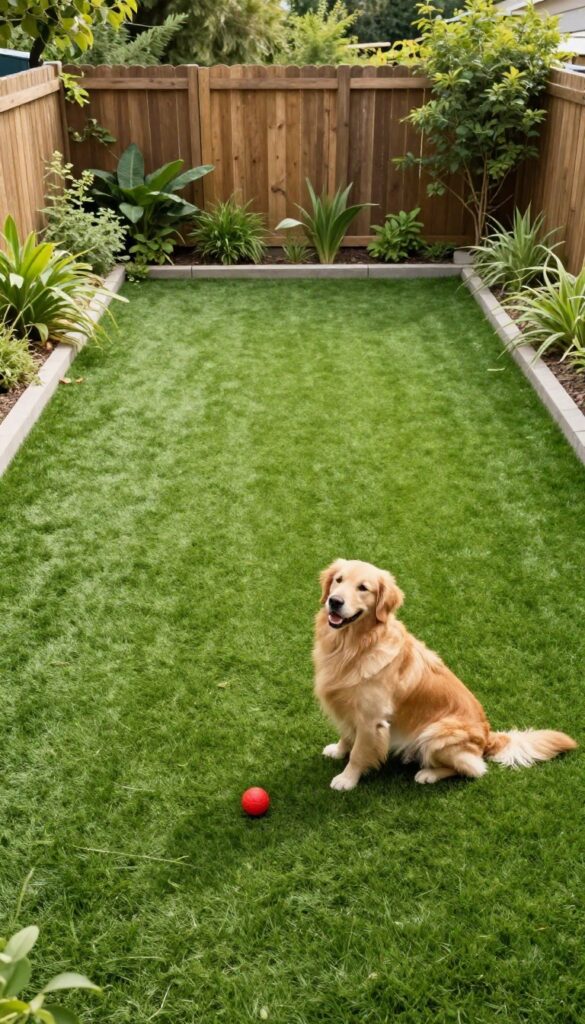
Muddy paws and patchy grass are the realities of a dog-loving household. An artificial turf patch solves both problems by giving your pup a designated area that stays green and clean year-round. It's a smart swap for busy owners who want a functional yard without the upkeep.
Why It Works
Artificial turf drains quickly, so puddles don't form after rain or sprinklers. It's also durable enough to handle digging and running without turning into a dirt pit. Your dog gets a consistent surface for play, and you get fewer muddy paw prints inside.
Best For
This works great for small backyards, side yards, or balconies where real grass struggles to grow. It's also ideal for owners with high-energy dogs who wear down natural turf fast, or for potty-trained pups who need a reliable spot.
Practical Tip
Install a permeable base layer like crushed stone or sand beneath the turf for proper drainage. Rinse the surface weekly with a hose and mild pet-safe cleaner to control odors. Add a few artificial plants or rocks around the edges to blend it into your landscape.
Budget-Friendly Option
If full turf installation isn't in the budget, try a large outdoor rug made of low-pile synthetic material. Place it over a gravel or concrete area for a similar easy-clean surface.
2. Shaded Canopy or Dog House for Hot Days
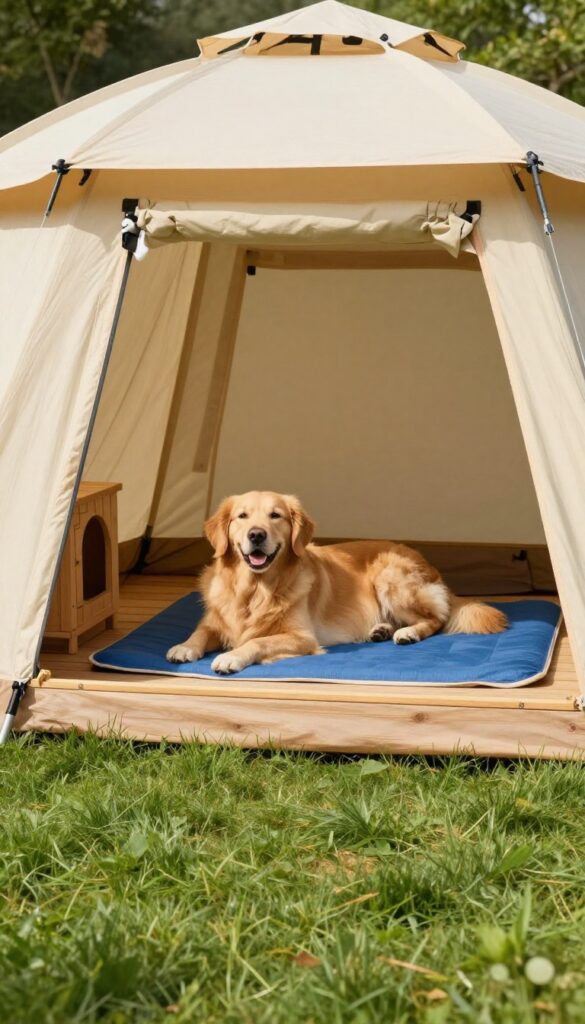
Summer heat can turn a fun backyard into an uncomfortable spot for your dog. A shaded canopy or insulated dog house gives them a cool retreat without you having to constantly monitor the sun's movement.
These setups are simple to install and make a big difference in your dog's comfort. Whether you choose a portable canopy or a permanent dog house, your pup gets a dedicated shady spot to relax.
Why It Works
Dogs can overheat quickly, especially during playtime. A shaded area reduces direct sun exposure and helps keep your dog's body temperature down. Elevated floors in dog houses allow air to circulate underneath, preventing moisture buildup and keeping the interior cooler.
Breathable canopy materials like mesh or UV-blocking fabric also help maintain airflow.
Best For
Ideal for dogs that spend a lot of time outdoors during warmer months, particularly brachycephalic breeds (like Bulldogs, Pugs, and Boxers) that are more prone to heat stress. Also great for yards without natural shade from trees or structures.
Practical Tip
Position the canopy or dog house in a spot that gets shade for most of the day, or face the entrance away from direct afternoon sun. For dog houses, choose one with an insulated roof and removable floor for easy cleaning. Add a cooling mat inside for extra comfort.
Budget-Friendly Option
A budget-friendly option is a simple pop-up canopy tent from a camping store. You can also repurpose an old wooden crate or large plastic storage bin by cutting a door and adding ventilation holes—just make sure it's sturdy and elevated off the ground.
3. Dig Pit with Sand or Mulch
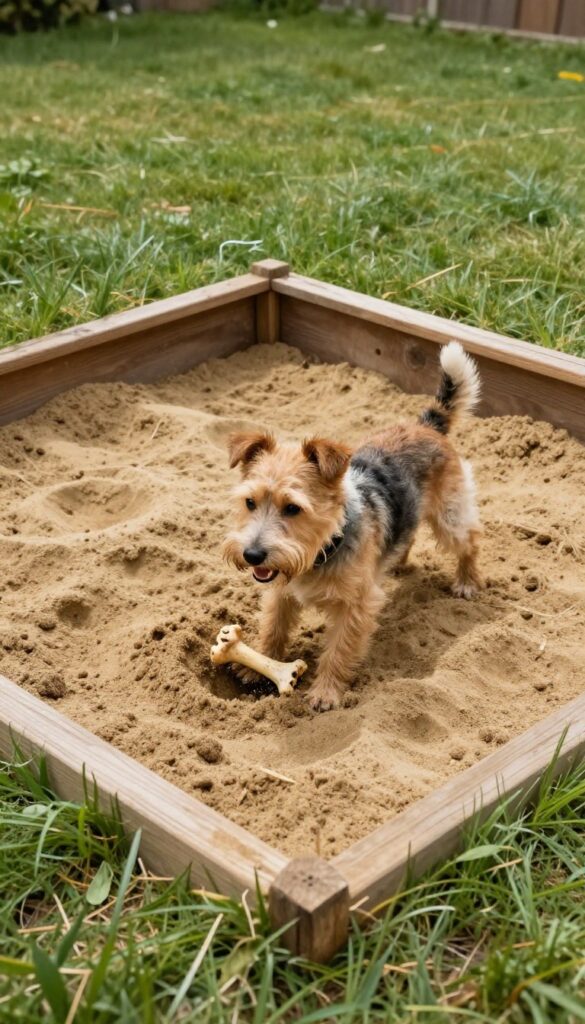
Some dogs just love to dig—it's in their DNA. Instead of fighting the instinct, give it a proper home. A dedicated dig pit filled with sand or soft mulch lets your dog satisfy that urge without destroying your flower beds or lawn.
It's a simple setup that can be as small or large as your yard allows. Bury a few toys or treats to make it even more enticing, and watch your pup happily excavate in their own special spot.
Why It Works
Designating a specific area for digging redirects your dog's natural behavior to a place that's easy to contain and clean. Sand or mulch is gentle on paws and drains well, so it stays usable even after rain. Plus, the contained space means less mud tracked into the house.
Best For
Terriers, dachshunds, and other breeds with strong digging instincts. Also great for puppies exploring their world or any dog that seems determined to redecorate your yard.
Practical Tip
Use a low wooden frame or landscaping timbers to define the pit clearly—dogs learn boundaries faster when they're visible. Fill it at least 8–10 inches deep so they can really dig. Rake the sand or mulch occasionally to keep it clean and fluff it up.
Budget-Friendly Option
Instead of buying expensive play sand, look for clean builder's sand or a bag of pea gravel from a hardware store. Mulch from tree trimming services is often free or very cheap—just make sure it's untreated and safe for dogs.
4. Splash Pad or Kiddie Pool for Water Fun
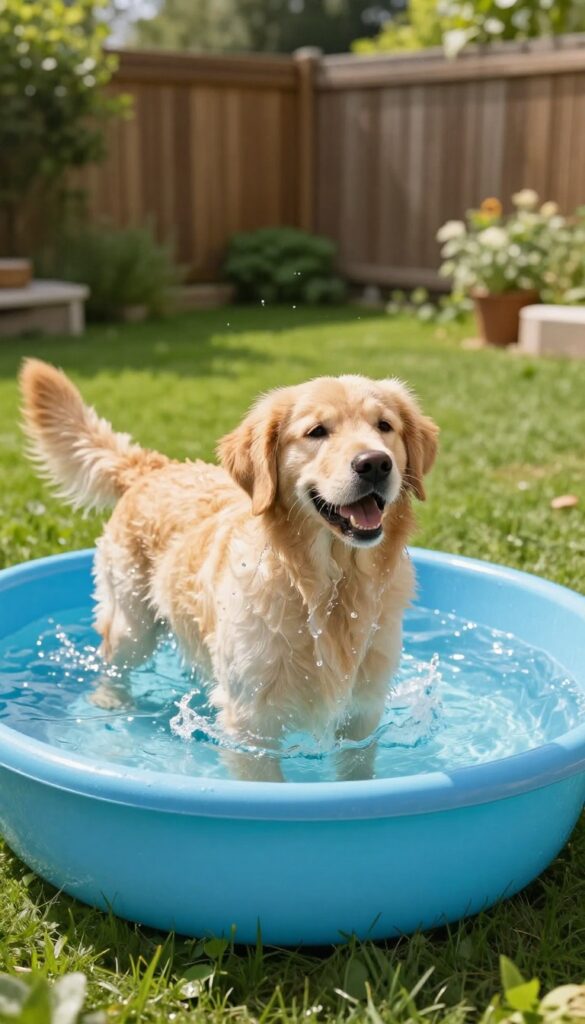
A shallow kiddie pool or DIY splash pad offers instant cooling on hot days. Many dogs love splashing around, and it's a simple way to keep them comfortable. Best of all, setup takes just minutes and cleanup is straightforward.
Why It Works
Water play provides natural temperature regulation and mental stimulation. The sensory experience of splashing and pawing at water engages your dog's curiosity while keeping them cool. It's a low-cost, high-reward activity that requires little supervision once your dog is comfortable.
Best For
This setup is perfect for water-loving breeds like Labradors, Golden Retrievers, and spaniels. It works well in any yard size, even on a small patio or balcony. Dogs that tend to overheat or have thick coats will benefit most from the cooling effect.
Practical Tip
Place a non-slip mat under the pool to prevent slipping and protect your grass. Change the water daily to keep it fresh and free of debris. For a splash pad, use a flat piece of PVC with small holes attached to a garden hose—easy to roll up and store.
Budget-Friendly Option
Skip expensive pet splash pads and use a hard plastic kiddie pool from a discount store. Alternatively, a large shallow storage bin works just as well for small dogs.
5. Secure Fencing with Dig-Proof Barriers
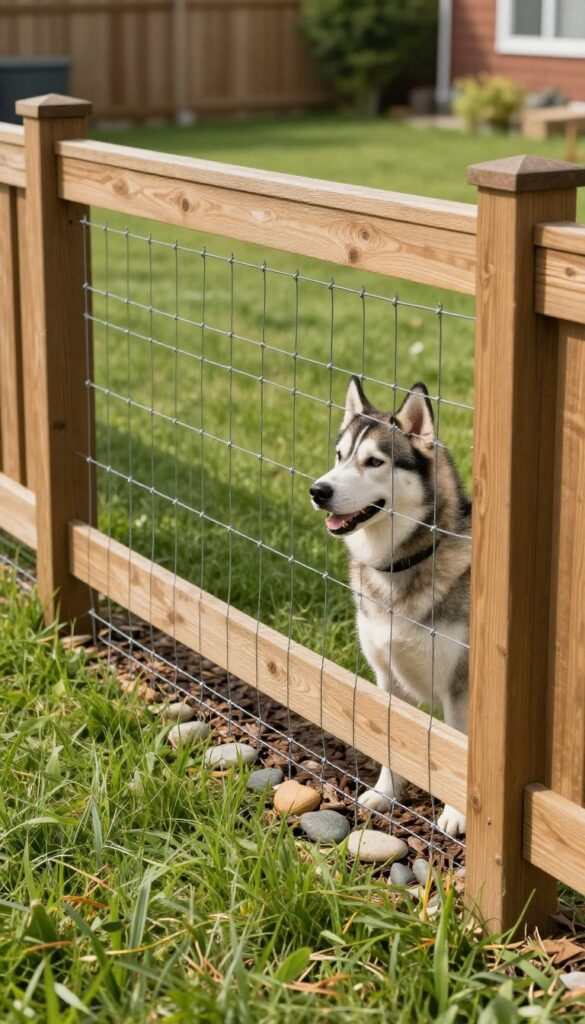
A fence that looks good but doesn't hold your dog in isn't doing its job. Dig-proof barriers add that extra layer of security so you can relax while your pup explores the yard.
By reinforcing the bottom of your fence with buried wire mesh or concrete footings, you stop escape artists in their tracks. It's a simple upgrade that makes a huge difference.
You don't need a total fence replacement—just a few strategic tweaks to keep everyone safe and sound.
Why It Works
Dogs are natural diggers, and a standard fence gap is an open invitation. Buried barriers create a physical block that prevents tunneling, while height extensions deter jumpers. This approach targets the most common escape routes without overhauling your entire yard.
Best For
Best for owners of dig-happy breeds like Huskies, Terriers, and Dachshunds, or any dog that has shown interest in escaping. Also ideal for homes with existing fences that have small gaps at the base or low heights.
Practical Tip
Use galvanized hardware cloth or welded wire mesh buried at least 12 inches deep, bent outward in an L-shape to discourage digging. For concrete footings, pour a narrow trench along the fence line. Add a few inches of mulch or river rock on top to hide the barrier and keep the yard looking natural.
Budget-Friendly Option
Skip professional installation and DIY with chicken wire or plastic garden edging buried 6-8 inches deep. It's not as durable but works for mild diggers and costs under $30.
6. Agility Course with DIY Obstacles
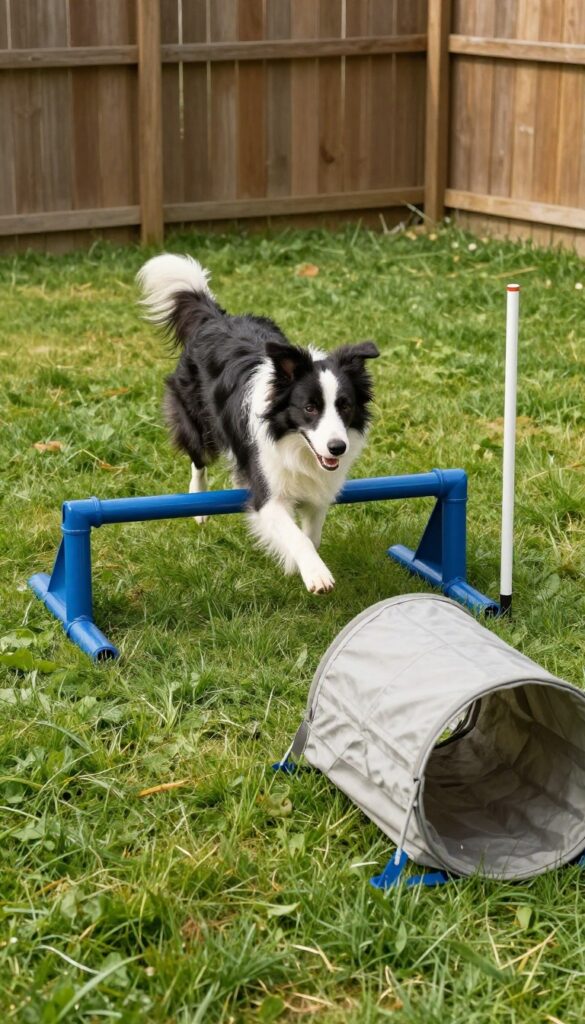
Dogs love to run, jump, and weave—it taps into their natural instincts and burns off energy fast. Setting up a simple agility course in your backyard turns daily exercise into a fun game you can enjoy together.
You don't need expensive equipment or a huge yard. With a few PVC pipes, some household items, and a bit of creativity, you can build jumps, weave poles, and tunnels that challenge your dog both physically and mentally.
The best part? You can adjust the height and difficulty as your dog learns, keeping things fresh and engaging. Plus, it's a great way to bond without leaving home.
Why It Works
Agility training provides both physical exercise and mental stimulation, which is key for a tired, happy dog. The variety of obstacles keeps your pup engaged and prevents boredom, while the DIY aspect means you can customize everything to your dog's size and skill level.
Best For
This setup is ideal for active breeds like Border Collies, Australian Shepherds, or Labradors, but any dog that loves to run and play will benefit. It works well in medium to large yards and is perfect for owners who want a fun, interactive way to exercise their dog without daily walks or trips to the dog park.
Practical Tip
Start with three to four obstacles—like a low jump, a tunnel made from a child's play tunnel, and weave poles spaced about 24 inches apart. Use PVC pipes for jumps so you can adjust the height using connectors. Place the course on grass or artificial turf for good traction, and always supervise to prevent injuries.
Keep sessions short, around 10–15 minutes, to avoid overexertion.
Budget-Friendly Option
Skip the PVC and use household items: a broomstick balanced on two buckets for a jump, a cardboard box with both ends open for a tunnel, and cones or water bottles for weave poles. It's free and still works great.
7. Comfortable Resting Area with Outdoor Bed
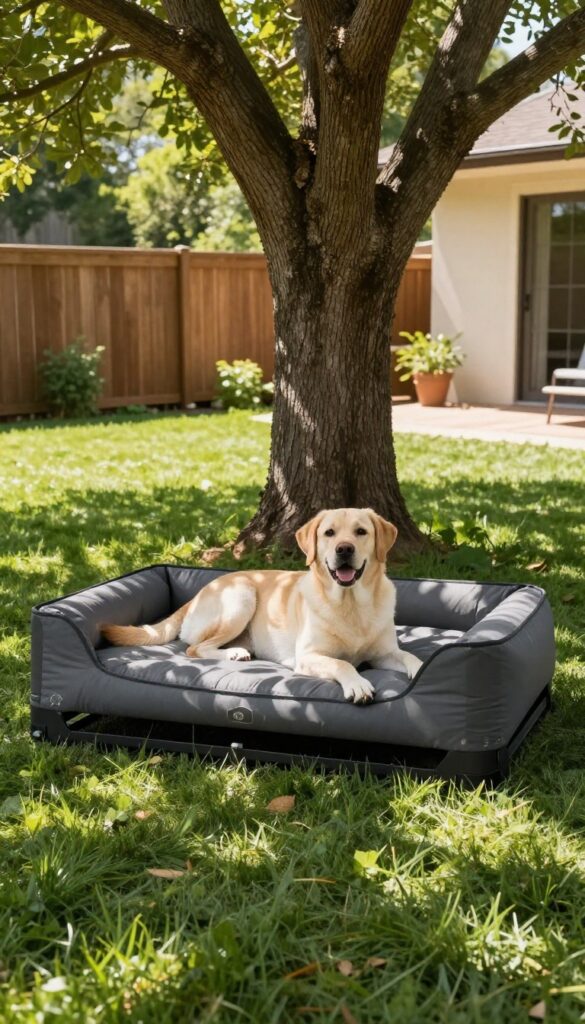
After a game of fetch or a long sniff session, your dog needs a spot to crash that's off the ground and out of the sun. An outdoor bed gives them a dedicated place to rest without dirt, damp grass, or hot pavement. It also keeps their fur cleaner so you don't have to deal with muddy paw prints on your patio furniture.
A raised cot or waterproof bed under a shaded spot creates a cozy retreat your dog will seek out again and again.
Why It Works
Dogs naturally seek out comfortable, elevated surfaces for lounging. A raised bed allows air to circulate underneath, keeping your dog cool in summer and dry after rain. Waterproof and chew-resistant materials stand up to outdoor elements and rough play, while easy-clean covers make maintenance a breeze.
Best For
This idea is perfect for dogs that spend several hours outside during the day, especially breeds like Labradors, Golden Retrievers, or Boxers that love to be outdoors. It also works great for homes with limited covered patio space, since a single bed can fit on a small balcony, porch, or deck corner.
Practical Tip
Place the bed in a spot that gets shade for most of the day—under a tree, an awning, or a pergola. If your dog is a chewer, opt for a cot-style bed with a heavy-duty fabric sling and aluminum frame. Throw a washable outdoor cushion on top for extra coziness, and secure the bed with stakes or weights if it tends to slide on smooth surfaces.
Budget-Friendly Option
Instead of a specialty outdoor dog bed, repurpose an old plastic kiddie pool by flipping it upside down and adding a weather-resistant cushion or folded blanket on top. It's a low-cost way to get your dog off the ground and it's easy to hose off when dirty.
8. Self-Watering Station or Automatic Fountain
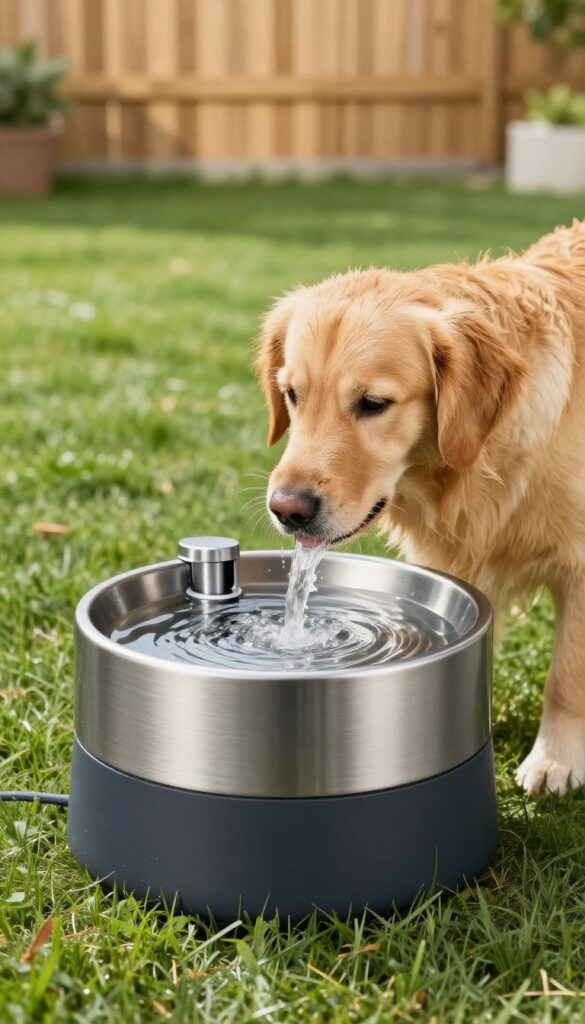
A self-watering station or automatic fountain keeps fresh water available all day without constant refills. It's a simple upgrade that reduces spills and encourages your dog to drink more, especially during active play. The moving water also stays cooler and cleaner than a stagnant bowl.
Why It Works
Dogs are naturally drawn to moving water, so a fountain encourages better hydration. It also cuts down on messy spills and the need to refill bowls multiple times a day—perfect for busy owners who want to ensure their pup always has access to clean water.
Best For
Busy pet parents who work long hours or have multiple dogs. Also great for dogs that tend to tip over bowls or prefer drinking from a hose or faucet. Works on patios, decks, or any yard with access to a power outlet or USB port.
Practical Tip
Place the fountain in a shaded area to keep water cool and reduce algae growth. Clean the filter and bowl weekly to prevent slime. Choose a model with a low voltage pump for safety and quiet operation.
Budget-Friendly Option
If a fountain isn't in the budget, try a heavy ceramic or stainless steel bowl with a wide base to resist tipping. Add a few ice cubes on hot days to keep water cool and appealing.
9. Toy Storage Bin for Easy Access
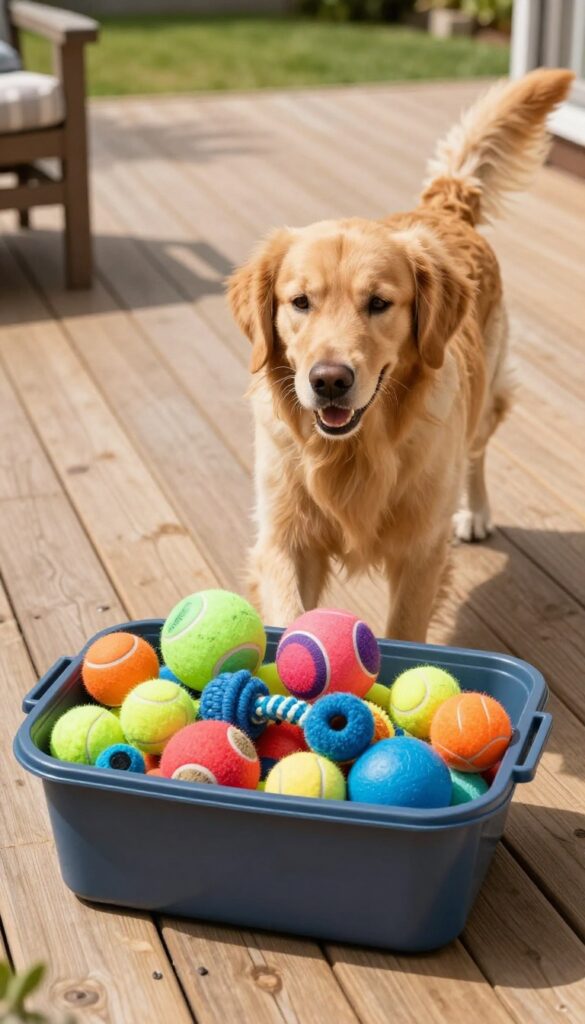
Nothing kills the backyard play vibe faster than hunting for a slobbery tennis ball under the bushes. A dedicated toy storage bin keeps everything in one spot so you can grab a frisbee or swap a worn-out rope in seconds.
Weatherproof deck boxes or lidded bins protect toys from rain and sun, making them last longer and stay cleaner. Plus, a tidy yard means fewer surprises when you mow or host a barbecue.
This setup is especially handy if your dog loves to rotate through toys or you have multiple pups with different preferences.
Why It Works
When toys are scattered, they get lost, chewed up by the lawnmower, or left out to rot. A bin creates a designated toy station that your dog can learn to visit—some dogs even enjoy picking out their own toy. It also keeps the yard looking organized and prevents tripping hazards for kids and adults.
Best For
This works great for homes with dogs that play fetch or tug regularly, especially in medium to large yards where toys can easily get lost. It's also perfect for multi-dog households where toy chaos can multiply fast.
Practical Tip
Choose a bin with a lid that latches securely to keep out rain, pests, and curious noses. Place it near your main play area or close to the back door for easy grab-and-go. Add a small hook or carabiner on the side to hang leashes or a poop bag dispenser.
Budget-Friendly Option
No need for a fancy deck box—a heavy-duty plastic storage tote with a snap-on lid works just as well. Drill a few small drainage holes in the bottom so moisture doesn't build up. You can even repaint it to match your outdoor decor.
10. Potty Area with Gravel or Synthetic Grass
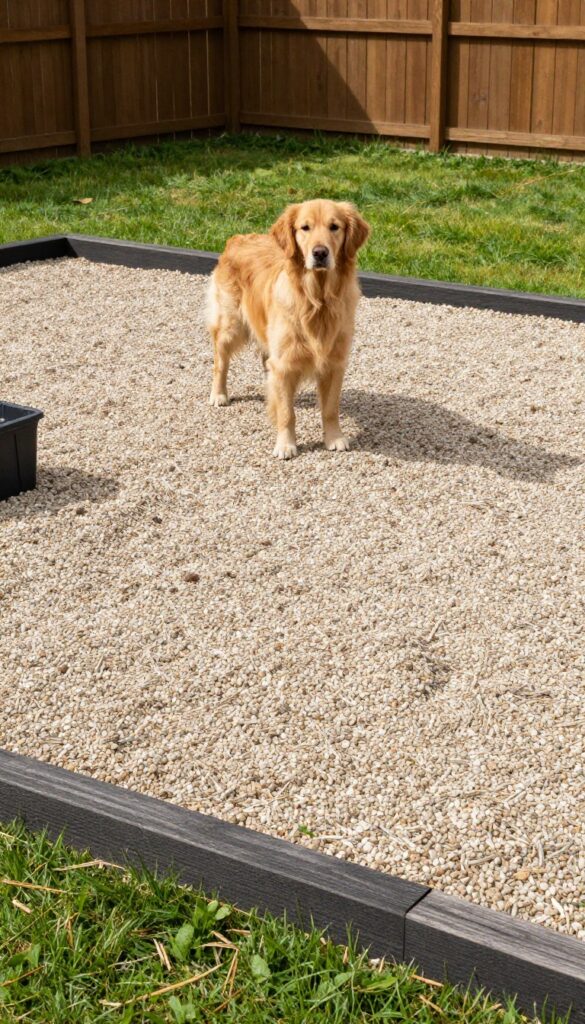
Designating a specific corner for bathroom breaks saves your lawn from yellow spots and muddy patches. Pea gravel or artificial turf makes cleanup as simple as a quick rinse with the hose. Dogs quickly learn the designated spot, which keeps the rest of the yard fresh and play-ready.
Why It Works
Dogs are creatures of habit, and a consistent potty zone reinforces good bathroom habits. Gravel drains quickly and doesn't hold odors like grass, while synthetic turf mimics real grass but stays mud-free. Both options are easy to sanitize with a pet-safe cleaner or just water, keeping the area hygienic and low-maintenance.
Best For
This setup is ideal for busy pet owners who want to minimize yard maintenance and for dogs that tend to dig or create muddy spots. It works well in medium to large yards where you can dedicate a corner, but can also be adapted for smaller spaces like balconies or patios with a portable patch.
Practical Tip
Use a border of pavers or landscape timbers to clearly mark the potty area and contain the gravel or turf. For gravel, choose pea gravel about 3/8 inch in diameter—it's comfortable on paws and won't stick to fur. Rinse the area weekly and replace any soiled gravel or turf sections as needed to keep it fresh.
Budget-Friendly Option
Instead of buying a pre-made synthetic turf patch, you can install a DIY gravel pad with a simple frame of 2x4s and a weed barrier fabric. A 4×4 foot area costs around $30 in materials and lasts for years with minimal upkeep.
11. Sensory Garden with Dog-Safe Plants
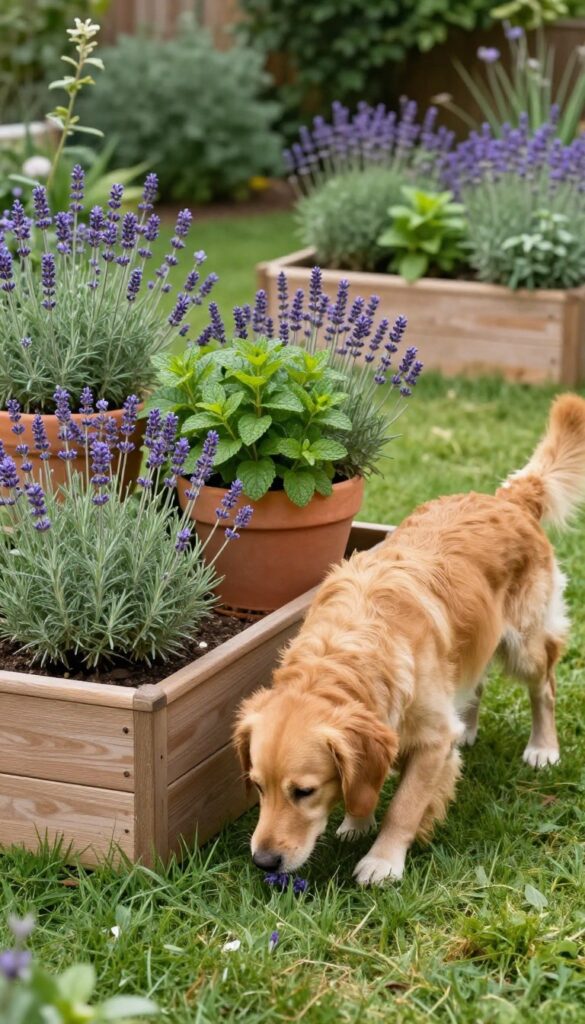
Turn a corner of your yard into a sniffing paradise with a sensory garden full of dog-safe plants. Lavender, rosemary, and mint release calming scents that encourage exploration without risking your pup's health. Raised beds or sturdy containers keep the plants protected from enthusiastic digging while adding a touch of green to your backyard.
Why It Works
Dogs experience the world through their noses, and a dedicated sniffing zone provides mental stimulation that tires them out faster than physical exercise. The right plants also repel pests naturally and create a peaceful atmosphere for both you and your dog.
Best For
This idea fits dogs who love to sniff and explore, especially curious breeds like Beagles, Labradors, or Terriers. It works well in medium to large yards but can be scaled down for patios using pots or window boxes.
Practical Tip
Use raised beds or large containers to prevent trampling and make maintenance easier. Choose a mix of upright and trailing plants for visual interest, and leave a bare dirt path or mulch area for your dog to walk on without damaging the garden.
Budget-Friendly Option
Skip expensive planters and repurpose old wooden crates or galvanized tubs. Drill drainage holes, line with landscape fabric, and fill with potting soil for a low-cost sensory garden.
12. Cooling Mat or Misting System for Hot Climates
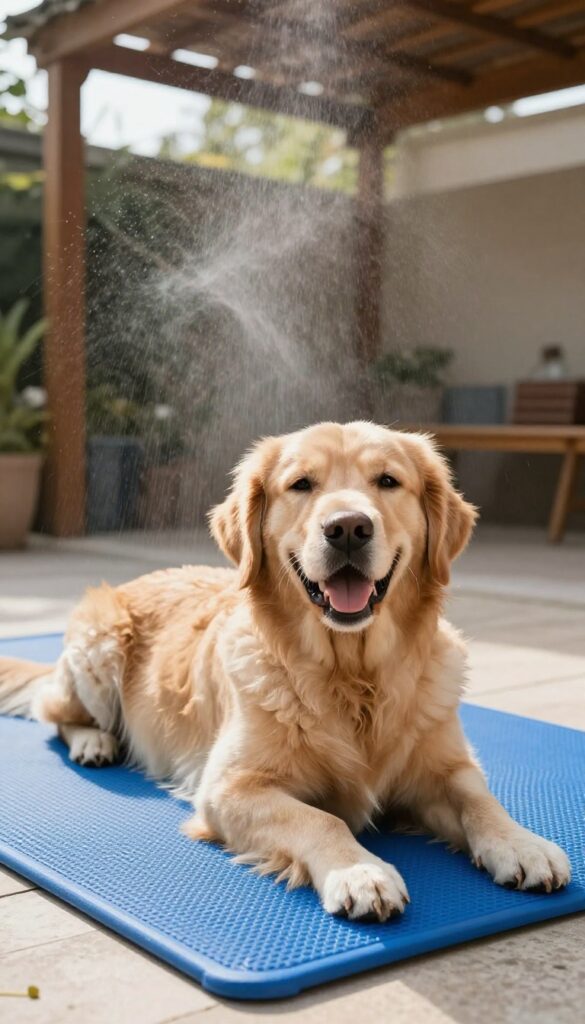
Summer heat can turn your dog's favorite yard into a no-go zone. Cooling mats and misting systems offer simple ways to beat the heat without locking your pup indoors.
These setups are easy to add to any backyard and give your dog a refreshing spot to chill between zoomies. No complicated installation needed—just place and play.
Why It Works
Dogs cool down mostly through panting and paw pads, which isn't very efficient. Cooling mats absorb body heat through contact, while misting systems lower the surrounding air temperature. Both help prevent overheating and keep playtime safe on scorching days.
Best For
Perfect for short-nosed breeds like Bulldogs and Pugs who struggle in the heat, as well as any dog that loves to run around during summer. Also great for homes in warm climates where shade alone isn't enough.
Practical Tip
Place cooling mats under a covered patio or tree to extend their effectiveness. For misting systems, attach them to a pergola or fence line—start with a low-pressure kit that connects to your garden hose for easy setup.
Budget-Friendly Option
Skip the fancy misting system and hang a simple garden sprayer nozzle on a timer. Or freeze a few water bottles, wrap them in a towel, and let your dog lie next to them—same cooling effect for pennies.
13. Night Lighting for Evening Walks and Play
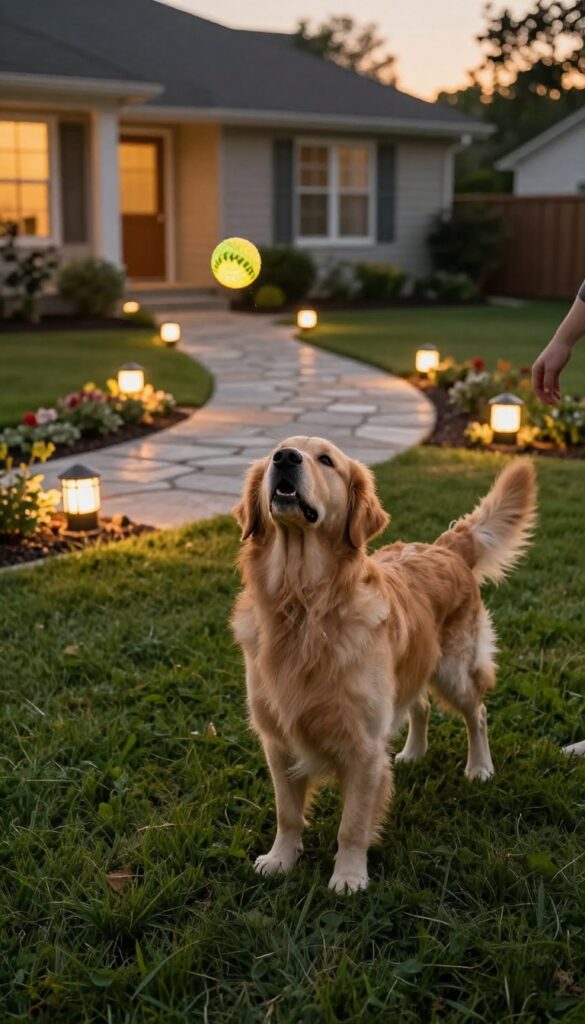
When the sun goes down, your backyard doesn't have to become a dark void. Night lighting lets you and your dog enjoy the yard after work or during late-night potty breaks without stumbling around. Solar path lights and motion-sensor LEDs are easy to install and automatically turn on at dusk, so you never have to remember to flip a switch.
They create a safe, inviting space for evening fetch sessions or just relaxing on the patio with your pup.
Why It Works
Good lighting prevents accidents—you can see where your dog is, avoid tripping over toys or garden edges, and spot any critters that might have wandered in. Motion-sensor lights also act as a deterrent for unwanted visitors, giving you peace of mind. For your dog, consistent lighting reduces anxiety in dark spaces and makes nighttime bathroom breaks quick and stress-free.
Best For
This idea is perfect for busy pet owners who often let their dog out after dark, or for those with large yards that feel unsafe without illumination. It also suits dogs that are nervous in the dark or need clear visibility to feel comfortable. Any yard can benefit, but it's especially helpful for homes with uneven terrain, steps, or obstacles.
Practical Tip
Place solar path lights along the edges of walkways and the perimeter of the play area to define boundaries. Use motion-sensor floodlights near the back door or over the main play zone for bright, instant light when needed. Choose warm white lights to create a cozy atmosphere, and avoid bright blue or cool tones that might startle your dog.
Budget-Friendly Option
If solar lights aren't in the budget, try low-cost LED string lights draped along a fence or pergola. They're often on sale at home improvement stores and can be plugged into an outdoor timer for automatic operation. Just make sure cords are safely secured out of your dog's reach.
FAQ
What is the best ground cover for a dog backyard?
Artificial turf or pea gravel are top choices. They drain well, are easy to clean, and withstand heavy use.
How can I keep my dog cool in the backyard?
Provide shade with a canopy or dog house, use cooling mats, and always have fresh water available.
How do I stop my dog from digging under the fence?
Bury chicken wire or concrete pavers along the fence line. You can also create a designated dig pit to redirect the behavior.
What plants are safe for a dog-friendly garden?
Dog-safe plants include lavender, rosemary, sunflowers, and marigolds. Avoid sago palm, azalea, and lilies.
How often should I clean the backyard dog zone?
Pick up waste daily, rinse potty areas weekly, and wash bedding and toys every few weeks to prevent odors and bacteria.
Conclusion
A backyard dog zone doesn't need to be elaborate or expensive. Pick one or two ideas that fit your space and your pup's personality, then build from there.
Your dog will appreciate having their own area to relax and play, and you'll love how easy it is to maintain. Start small, see what works, and enjoy the process of creating a space you both love.

I’m Pallab Kishore, the owner of Little Pets Realm — an animal lover and pet care enthusiast sharing easy tips, healthy recipes, and honest advice to help every small pet live a happy, healthy, tail-wagging life.