
Picture this: you turn your back for one second to grab a spoon, and your sandwich vanishes. Your dog looks up at you with innocent eyes and a guilty crumb on their whiskers.
Counter-surfing isn't just annoying—it can be dangerous if they snatch something toxic or sharp. The good news is that prevention is all about smart habits, not constant vigilance.
These 13 practical strategies tackle the problem from every angle, from managing your space to teaching your dog better choices. Start with the easiest fixes today, and you'll notice fewer sneak attacks in no time.
1. Clear the Counters
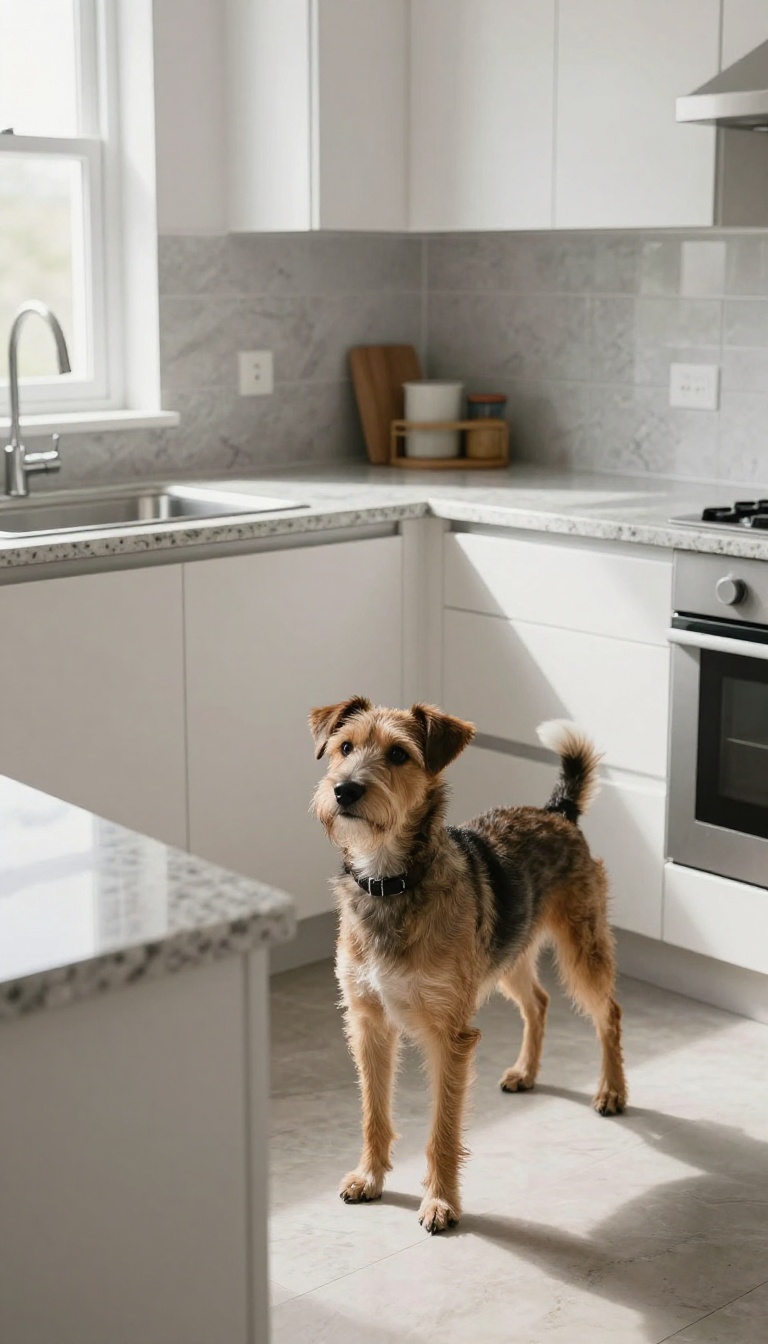
The most straightforward fix is also the most effective: don't leave anything edible within paw's reach. A clear counter is a boring counter, and a boring counter doesn't tempt your dog. Make it a habit to put away all food, even if you're just stepping into the next room for a minute.
When counters are bare, there's nothing to sniff out or snatch. This habit also removes the risk of your dog ingesting something harmful, like a stray piece of chocolate or a sharp utensil. Plus, it keeps your kitchen looking tidy—a win-win.
The One-minute Rule
If you're not actively preparing or eating food, it goes away. That means leftovers go straight into the fridge or a sealed container, and raw ingredients stay in the fridge or a covered bowl. Even a brief trip to the mailbox can be long enough for a sneaky dog to strike.
Make It A Family Habit
Everyone in the household needs to follow the same rule. If one person leaves a bag of chips out, your dog learns that counters sometimes have goodies. Consistency is key—talk to your family or roommates about the importance of clearing counters every time.
Don't Forget The Edges
Dogs can reach surprisingly far, especially if they're tall or agile. Push items away from the edge, and never leave food hanging over the counter. Use the back of the counter or a cabinet as a safe zone for anything that can't be put away immediately.
2. Use Baby Gates or Closed Doors
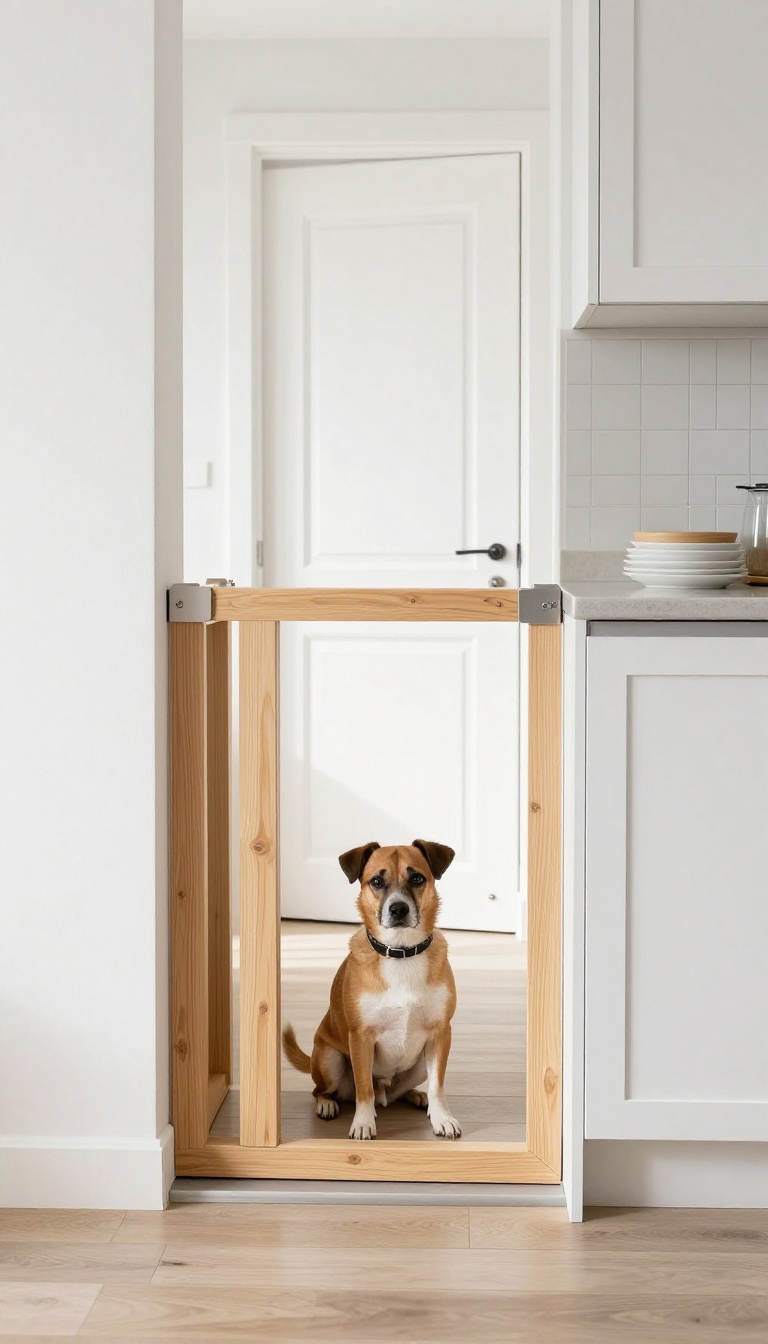
Sometimes the simplest solution is the most effective. If your dog can't get into the kitchen, they can't counter-surf. Baby gates and closed doors create a physical barrier that removes the opportunity entirely.
This is especially handy when you're cooking, eating, or just not able to keep an eye on your furry friend.
A baby gate or closed door is a foolproof way to keep your dog out of the kitchen when you're busy. It's not about punishment—it's about setting up your home for success. By limiting access, you're preventing the behavior before it starts, which is much easier than trying to correct it after the fact.
Choose The Right Gate
Not all baby gates are created equal. For most dogs, a pressure-mounted gate works fine, but for jumpers or escape artists, a hardware-mounted gate is more secure. Look for one with a walk-through door so you don't have to climb over it every time.
Measure your doorway to get the right fit.
Make It A Habit
The key is consistency. Use the gate every single time you're in the kitchen, not just when you're cooking. If you let your dog in sometimes, they'll learn that the gate doesn't always mean 'no. ' Over time, they'll understand that the kitchen is off-limits when the gate is up.
Closed Doors Work Too
If you have a door that closes off the kitchen, use it. It's even more straightforward than a gate. Just make sure the door is fully closed and latched—some clever dogs can nudge a door open if it's not properly shut.
You can also use a doorstop to keep it firmly in place.
Combine With Other Habits
A gate or closed door is most effective when paired with other prevention habits, like keeping counters clear and providing your dog with their own entertainment. This way, you're not just blocking access—you're also giving them a better alternative to focus on.
3. Teach a Solid 'Leave It'
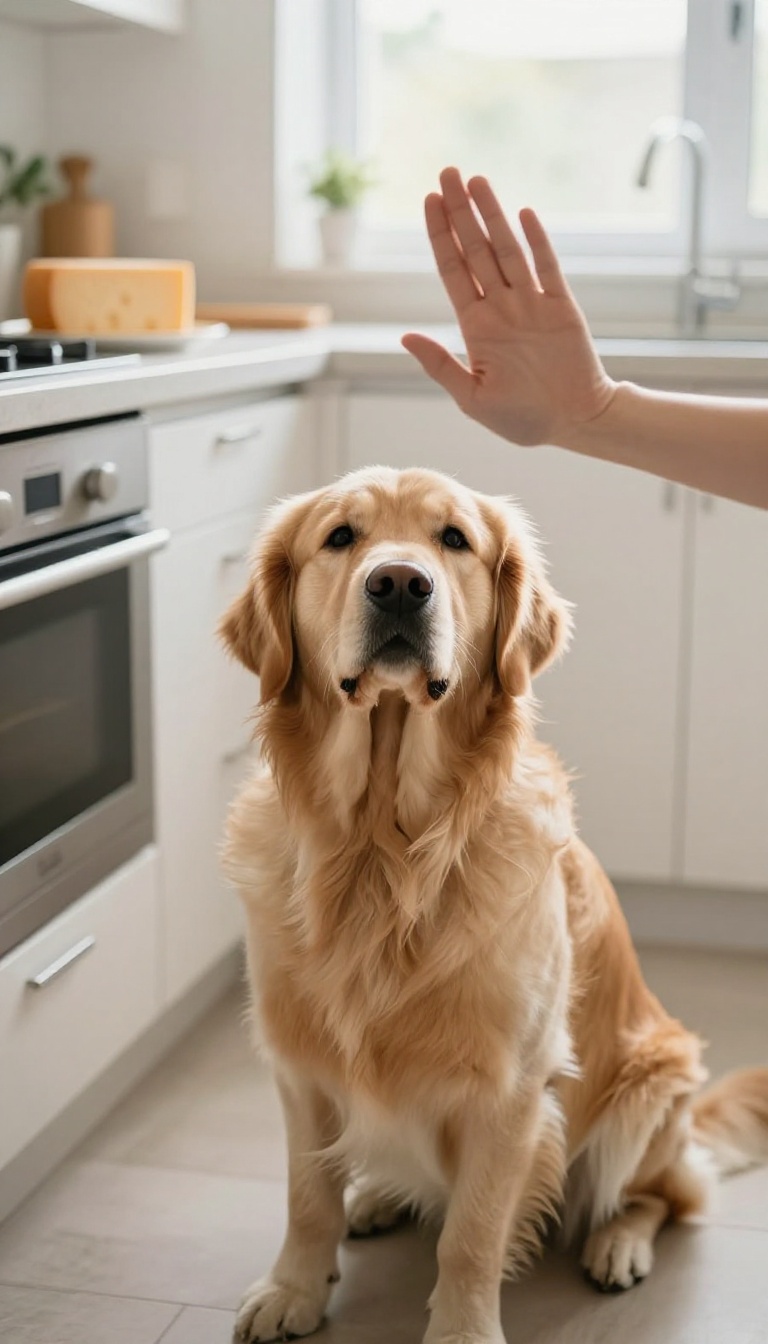
One of the most powerful tools in your anti-counter-surfing toolkit is a rock-solid 'leave it' command. It’s not just about saying the words—it’s about building a reflex that kicks in before your dog’s nose even reaches the counter. When your dog truly understands that 'leave it' means 'that thing is off-limits, and something better is coming, ' you’ll have a much easier time keeping them out of trouble.
Start With Low-value Treats
Begin training in a quiet room with no distractions. Hold a low-value treat in your closed fist and present it to your dog. When they sniff, lick, or paw at your hand, say 'leave it' in a calm, firm tone.
The moment they pull back or lose interest, mark it with a 'yes! ' and reward them with a high-value treat from your other hand. Repeat this until your dog immediately backs off when they hear the cue.
Graduate To Real Food On The Counter
Once your dog reliably leaves treats in your hand, it’s time to level up. Place a piece of real food—like a slice of cheese or a piece of chicken—on the edge of a table or counter. Keep your dog on a leash so you can prevent a grab if needed.
Say 'leave it' and be ready to gently pull them away if they lunge. When they look at you instead of the food, reward them with something even better. Practice this in short sessions, gradually moving the food closer to the edge and eventually leaving it unattended for a few seconds while you watch.
Practice In Real-life Scenarios
The ultimate test is the real kitchen counter. Start by placing a tempting treat on the counter while you’re nearby, and use your 'leave it' cue. Then slowly increase the difficulty: turn your back, walk a few steps away, or even leave the room for a moment (with supervision).
Always reward your dog for choosing to ignore the food. Over time, your dog will learn that ignoring the counter pays off—literally.
4. Reward Four-on-the-Floor
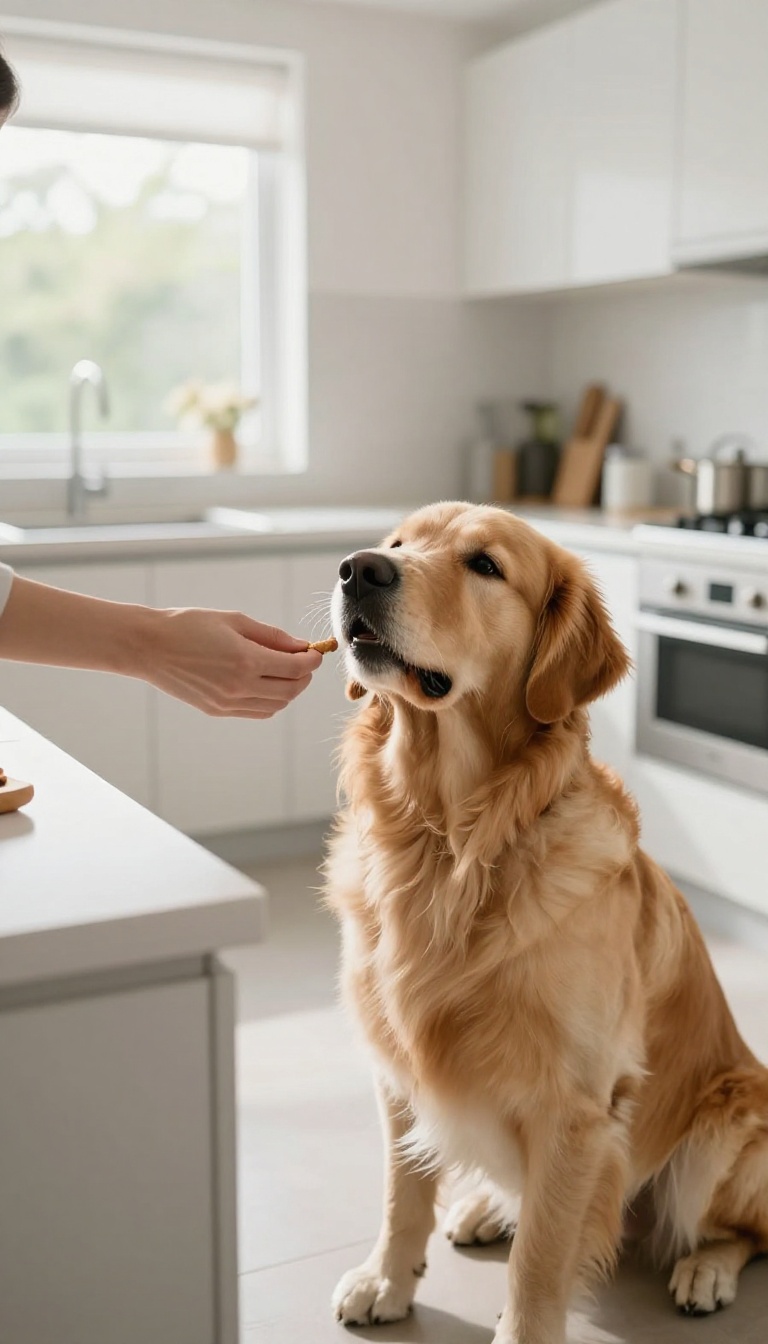
One of the sneakiest ways to stop counter-surfing is to make standing on all fours the most rewarding position in your dog's world. When you consistently reward your dog for keeping their paws on the ground, you're not just preventing a bad habit—you're building a new, better one. This simple habit shift can quietly transform your kitchen dynamics.
Rewarding four-on-the-floor is about catching your dog in the act of being good. Every time you see all four paws on the ground, especially near the counter, drop a treat. This teaches your dog that staying grounded pays off, while standing up gets them nothing.
Over time, your dog will choose the floor because it's where the good stuff happens.
Why It Works
Dogs repeat behaviors that are reinforced. When your dog stands on their hind legs, they're usually after food. If that behavior never gets rewarded, it becomes less interesting.
Meanwhile, every time they stay on all fours and get a treat, you're strengthening the exact behavior you want. It's a classic positive reinforcement swap: replace the unwanted action with a rewarded alternative.
How To Start Today
Keep a small bowl of treats near the counter. Whenever you're in the kitchen, watch for moments when your dog has all four paws on the floor. Toss a treat and say 'yes' or 'good' as they eat it.
Do this randomly throughout the day, not just when they're near the counter. The more often you catch them being grounded, the faster they'll learn.
Timing And Consistency
Timing matters. The treat needs to come within a second or two of the behavior so your dog connects the reward to their paws on the floor. Consistency is just as important—if you only reward sometimes, your dog might keep testing the counter.
Aim to reward every time you see four-on-the-floor, at least in the beginning. As the habit sticks, you can gradually reduce the frequency.
5. Provide a Mat or Bed
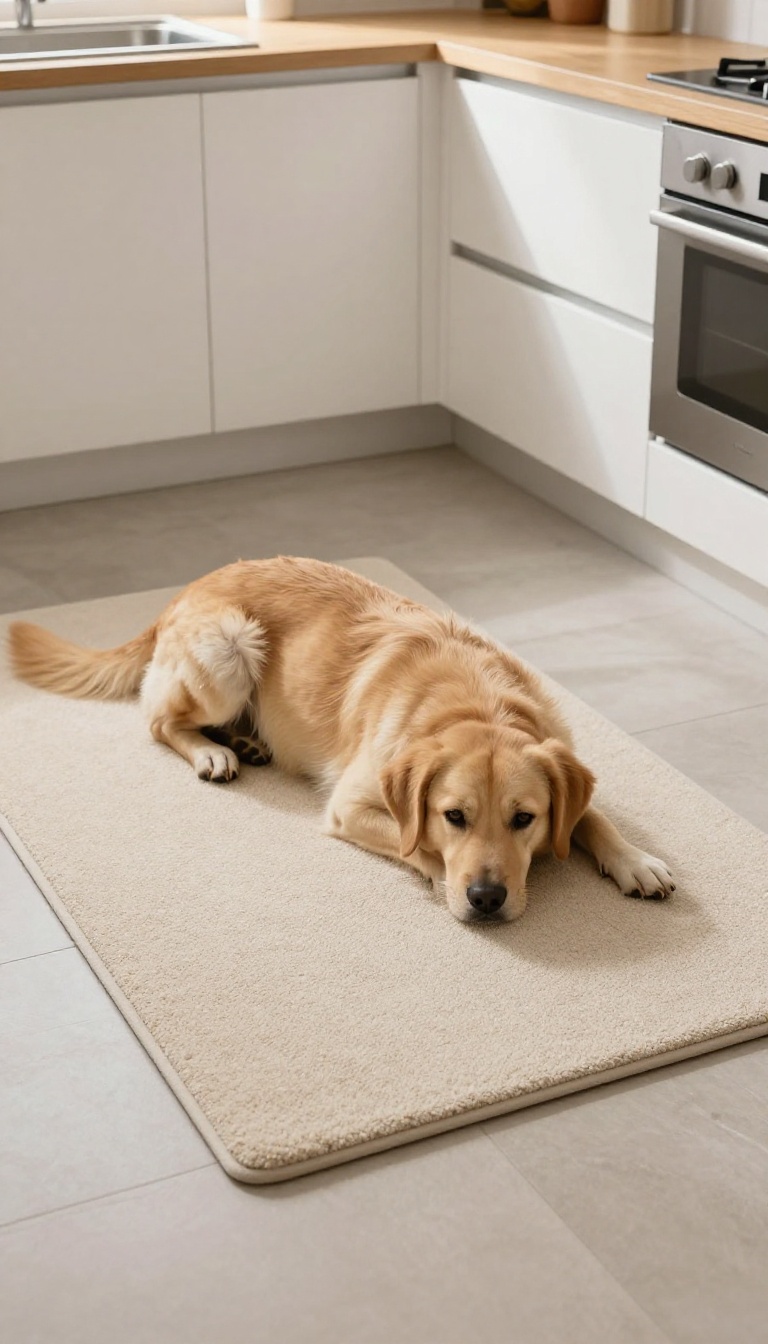
Giving your dog a designated spot in the kitchen does more than keep them out of your way—it gives them a clear job. A mat or bed becomes their 'place' where they can relax and feel included without hovering near the counter. This simple setup turns mealtime into a calm, structured routine for both of you.
Training your dog to use a mat takes a little patience, but the payoff is huge. Start by placing the mat in a spot where they can see you but aren't underfoot. Toss treats onto it and use a cue like 'go to your mat' or 'place. ' Reward them for staying, and gradually increase the duration.
With consistency, your dog will learn that good things happen when they're on their mat—and that the counter is off-limits.
Pick The Right Spot
Choose a location that's out of the main traffic flow but still lets your dog feel part of the action. A corner of the kitchen or just outside the doorway works well. Make sure the mat is comfortable and non-slip, so your dog feels secure and relaxed.
If they're anxious being away from you, start closer and slowly move it farther over time.
Make It A Positive Place
Your dog should associate their mat with good things. Give them a special chew, a stuffed Kong, or a puzzle toy only when they're on the mat. This keeps them busy and content while you cook or eat.
Over time, they'll see the mat as their cozy spot, not a punishment. Avoid sending them there as a scolding—keep it positive and rewarding.
Practice In Short Sessions
Don't expect your dog to stay for an entire meal right away. Start with short sessions—just a few minutes—and reward them for staying. Gradually increase the time as they get better.
Use a release cue like 'okay' to let them know when they can get up. With practice, they'll learn to settle on their mat until you say otherwise.
Use It Every Time You Eat
Consistency is key. Have your dog go to their mat every time you're in the kitchen, whether you're cooking, eating, or just grabbing a snack. This reinforces the habit and makes it a normal part of their routine.
If they get up, calmly guide them back without making a fuss. Soon, they'll automatically head to their mat when they see you preparing food.
6. Increase Physical Exercise
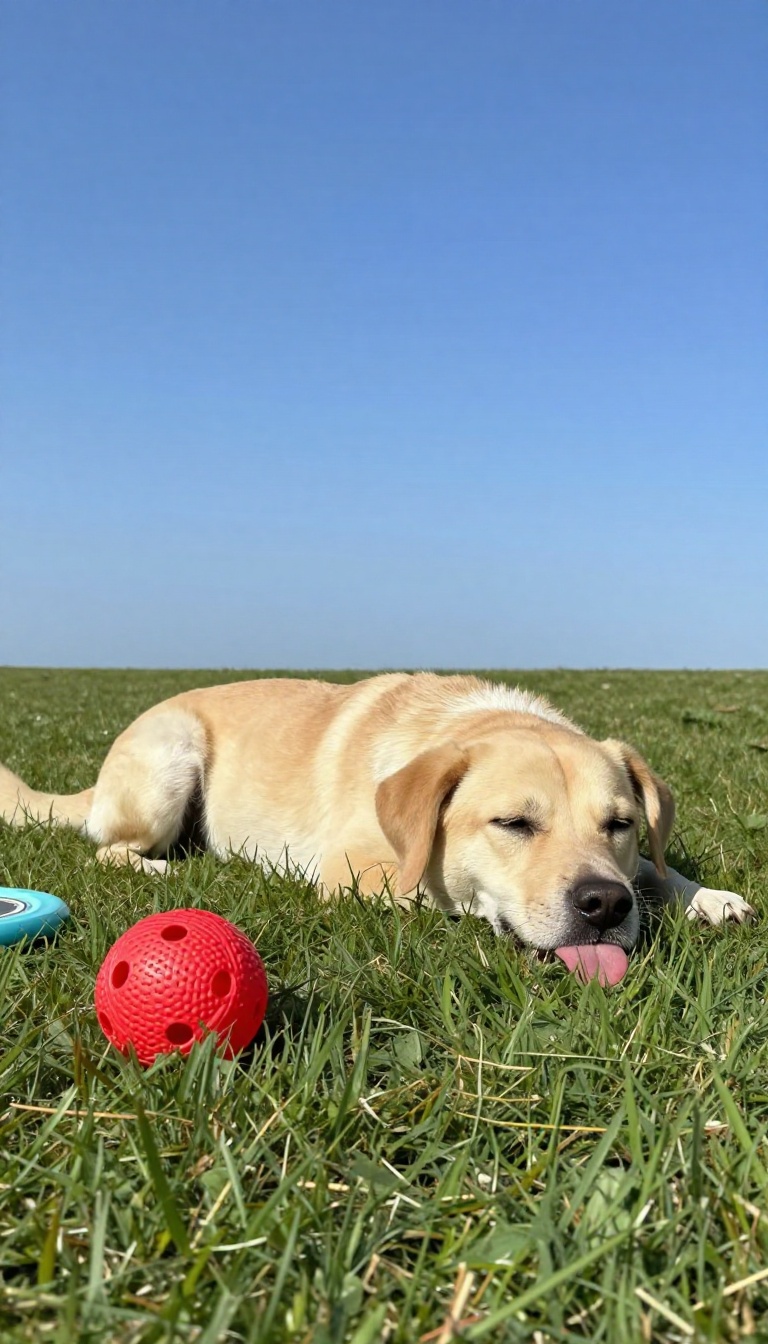
Ever notice how a well-exercised dog is more interested in napping than in sneaking a snack? That's no coincidence. Physical activity burns off the restless energy that often leads to counter-surfing.
A tired dog simply doesn't have the urge to patrol the kitchen for opportunities. So, if your dog seems to have endless energy, it might be time to step up the exercise game.
The Energy Connection
Dogs with pent-up energy are like toddlers who missed their nap—they get into everything. That extra zoomies energy often targets the kitchen counter because it's the most interesting spot in the house. Regular exercise helps release that energy in a positive way, leaving your dog calmer and less likely to seek out mischief.
Think of it as draining the battery so there's nothing left for counter-surfing.
More Than Just Walks
A quick stroll around the block might not cut it for high-energy breeds. Mix it up with activities that match your dog's age and fitness level. Try a game of fetch in the yard, a jog if you're up for it, or a hike on the weekends.
Even 15 extra minutes of active play can make a surprising difference. The goal is to leave your dog pleasantly tired, not just slightly less bored.
Mental Wear-out Counts Too
Physical exercise is important, but don't underestimate the power of mental stimulation. Puzzle toys, training sessions, or scent games can tire a dog just as effectively as a long run. A mentally engaged dog is a satisfied dog, and a satisfied dog is less likely to go looking for trouble.
Combine both physical and mental challenges for the best results.
7. Add Mental Stimulation
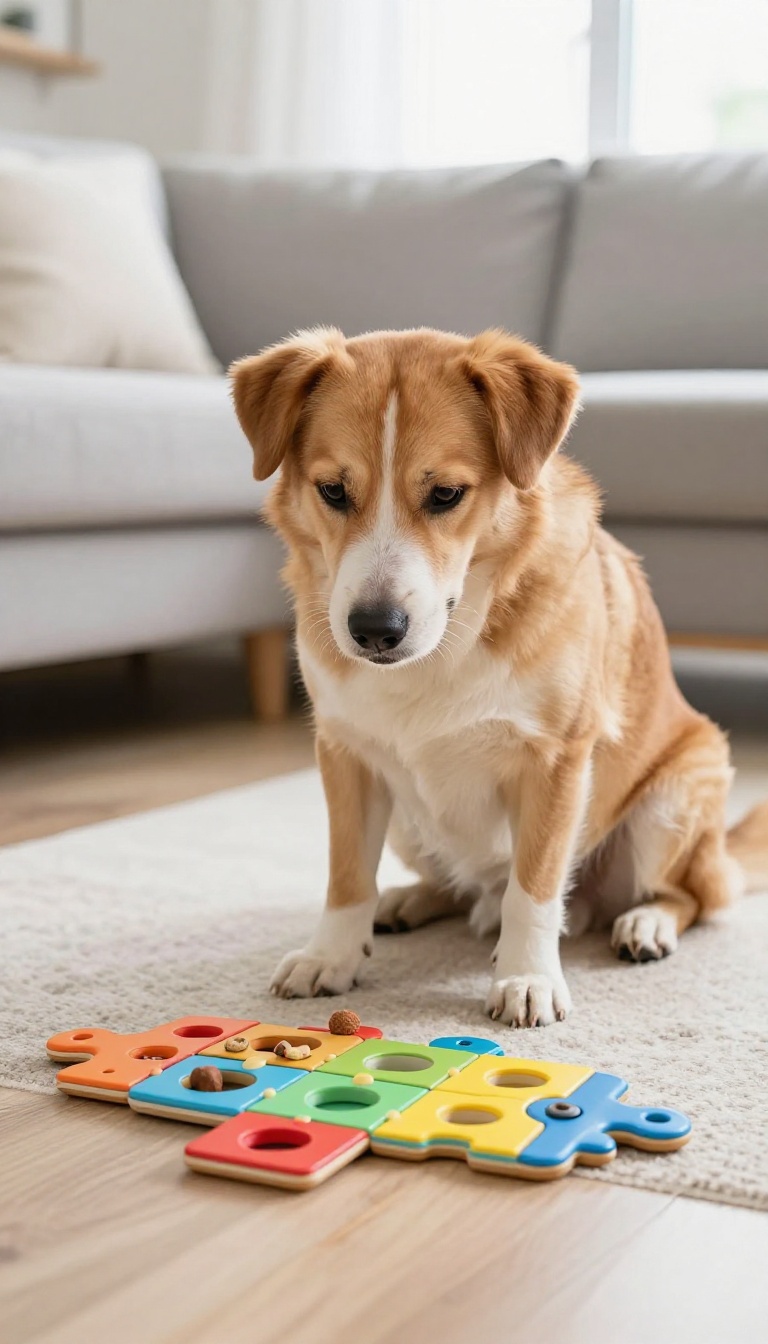
A bored dog is a creative thief. When your pup isn't getting enough mental exercise, they'll invent their own entertainment—and that often involves snatching food off counters. Mental stimulation is just as important as physical exercise for preventing mischief.
By keeping their brain busy, you're not only making them happier, but you're also reducing the urge to counter-surf out of sheer boredom.
Mental stimulation can take many forms, and it doesn't have to be complicated. The goal is to give your dog a job or a challenge that engages their mind. When they're focused on a puzzle or a game, they're less likely to be scanning the kitchen for opportunities.
Plus, a mentally tired dog is a calm, content dog—and calm dogs don't counter-surf.
Puzzle Toys That Pay Off
Puzzle toys are a fantastic way to channel your dog's problem-solving skills. These toys require your dog to figure out how to get treats out of compartments, slide pieces, or flip lids. Start with an easy puzzle to build their confidence, then gradually increase the difficulty.
A dog who's busy working on a puzzle is far less interested in what's on the counter.
Scent Games To Tire Their Nose
Dogs experience the world through their noses, and scent games are incredibly satisfying for them. Hide treats around the house and encourage your dog to find them. You can start simple by hiding treats in plain sight, then progress to hiding them under cups or in different rooms.
This taps into their natural foraging instincts and provides a great mental workout. A tired nose often means a tired brain.
Training Sessions That Build Focus
Short, regular training sessions are another excellent way to provide mental stimulation. Teaching your dog new tricks or practicing obedience commands reinforces their listening skills and keeps their brain sharp. Incorporate a 'leave it' command during these sessions to directly address counter-surfing.
The more your dog practices focusing on you, the better they'll be at ignoring temptations.
8. Manage the Environment with Leashes
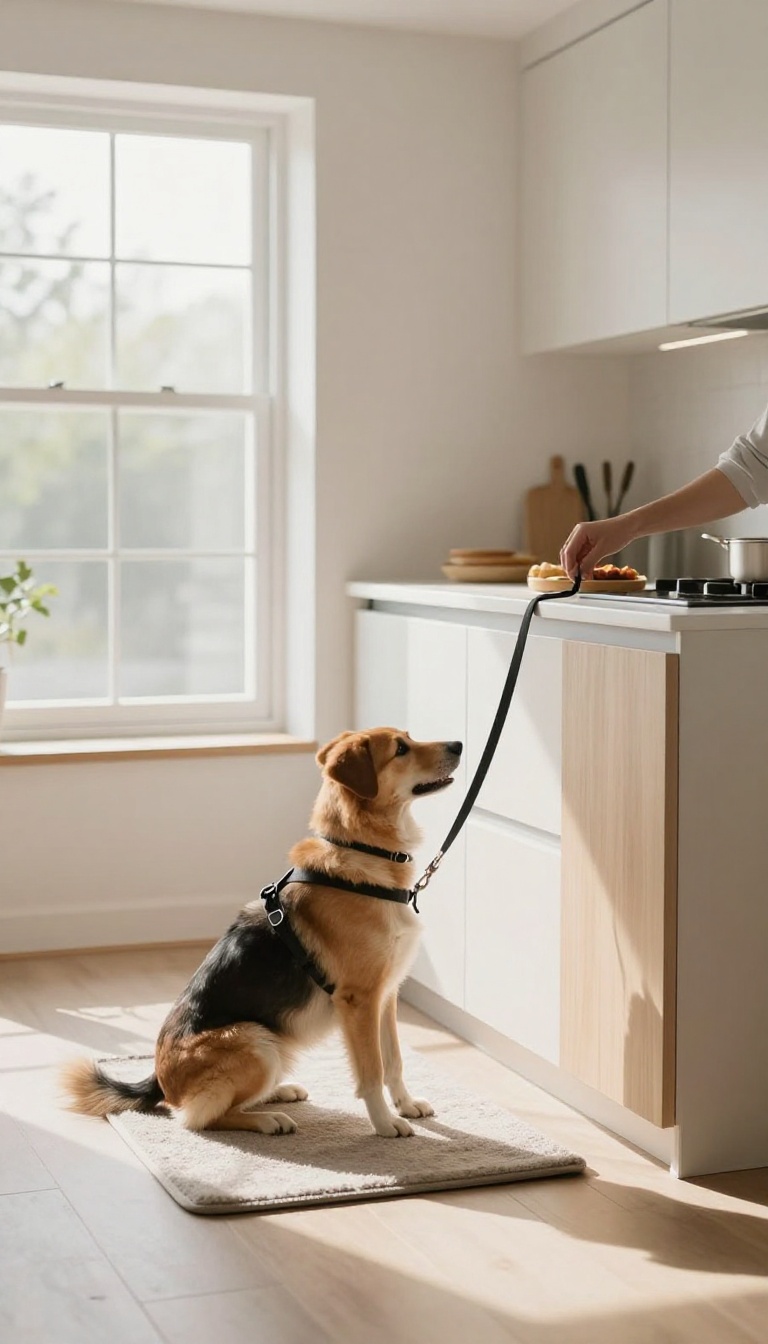
Leashes aren't just for walks—they're a brilliant tool for keeping your dog out of trouble in the kitchen. When you're cooking or cleaning, a short leash can physically prevent your dog from reaching the counter, breaking the habit before it starts. It's a simple, low-tech solution that works even when your attention is elsewhere.
Tie the leash to your waist or a sturdy cabinet handle, keeping your dog close but comfortable. This way, they can still be near you without being underfoot or sneaking a bite. Over time, they'll learn that the kitchen isn't a buffet, and you'll feel less stressed knowing they're safe.
Why Leashes Work
A leash stops the rehearsal of counter-surfing, which is key. Every time your dog practices the jump, they get better at it. By preventing access, you're breaking the chain of behavior and making it less likely they'll try again.
How To Set It Up
Use a short leash (4-6 feet) and attach it to a sturdy anchor point, like a table leg or a cabinet handle. Make sure there's enough slack for your dog to sit or lie down comfortably, but not so much that they can reach the counter. You can also use a hands-free leash around your waist for mobility.
Make It Positive
Pair the leash with positive reinforcement. Give your dog a chew toy or a mat to settle on while they're tethered. Reward them for calm behavior, so they associate the leash with good things, not punishment.
This turns a management tool into a training opportunity.
9. Use Motion-Activated Deterrents
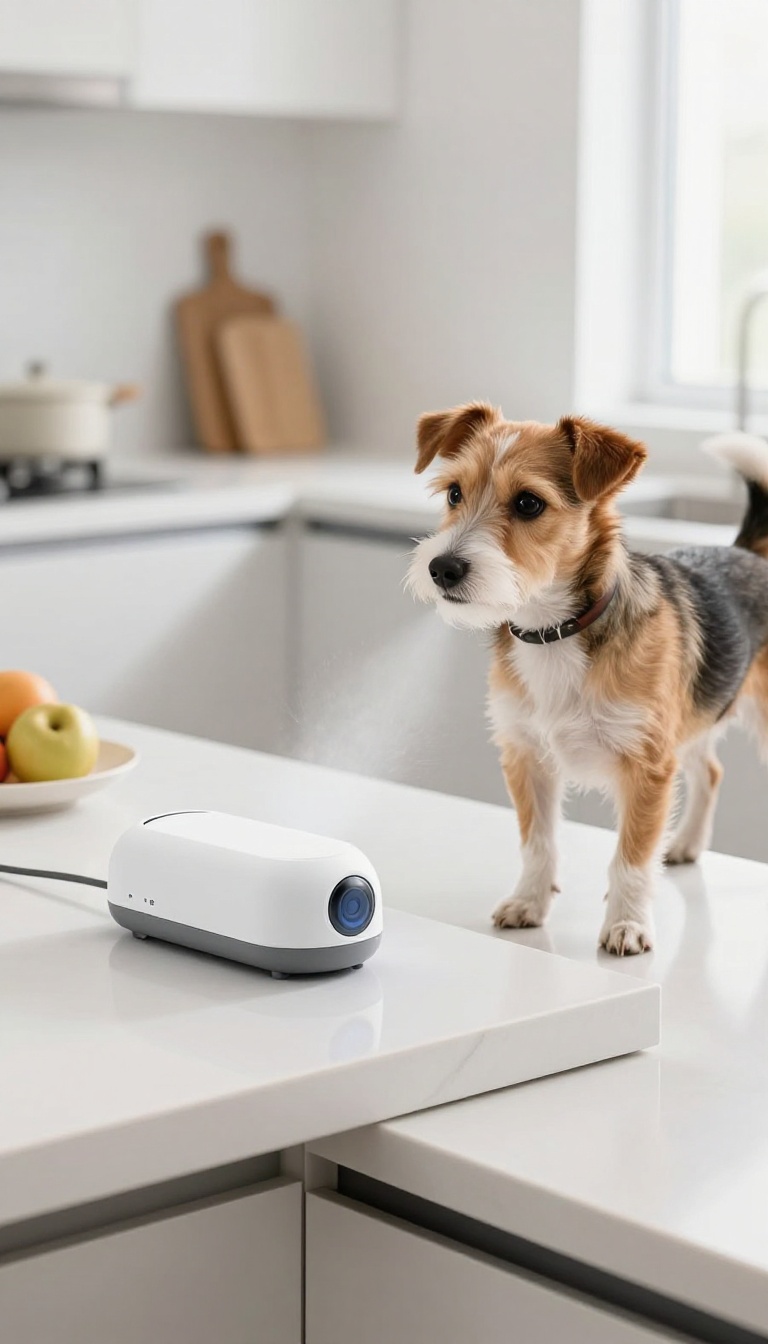
Sometimes the best way to teach a sneaky dog is to let the counter do the talking. Motion-activated deterrents give your pup a harmless but surprising consequence the moment their paws leave the floor. It's not about scaring them—it's about breaking the habit before it starts.
The key is to make the counter unpredictable. When your dog jumps up and gets a sudden puff of air or a loud beep, they start to associate the counter with a mild surprise. Over time, they'll think twice before even trying.
These devices work best when they're consistent, so place them strategically and let them do the work while you cook.
Pick The Right Type Of Deterrent
You have a few options, and each works a little differently. Motion-activated alarms emit a sharp sound that startles without harming. Compressed air cans (like Ssscat) release a quick burst of air that feels surprising but not painful.
Some pet parents even use smart cameras with built-in speakers to give a verbal correction remotely. Choose one that fits your dog's sensitivity—if they're easily spooked, start with a gentler sound.
Place Them Where It Counts
Position the deterrent at the edge of the counter where your dog typically jumps. Aim the sensor so it triggers when their front paws land, not when they're just sniffing around. If you have multiple hot spots, use more than one device.
The goal is to catch them every time, so consistency is key.
Pair With Positive Reinforcement
Deterrents work best when you also reward the behavior you want. When your dog chooses to stay on the floor, give them a treat or praise. This way, they learn that good things happen when they keep four paws down.
Over time, the surprise becomes less necessary, and you can phase it out.
10. Feed Your Dog on a Schedule
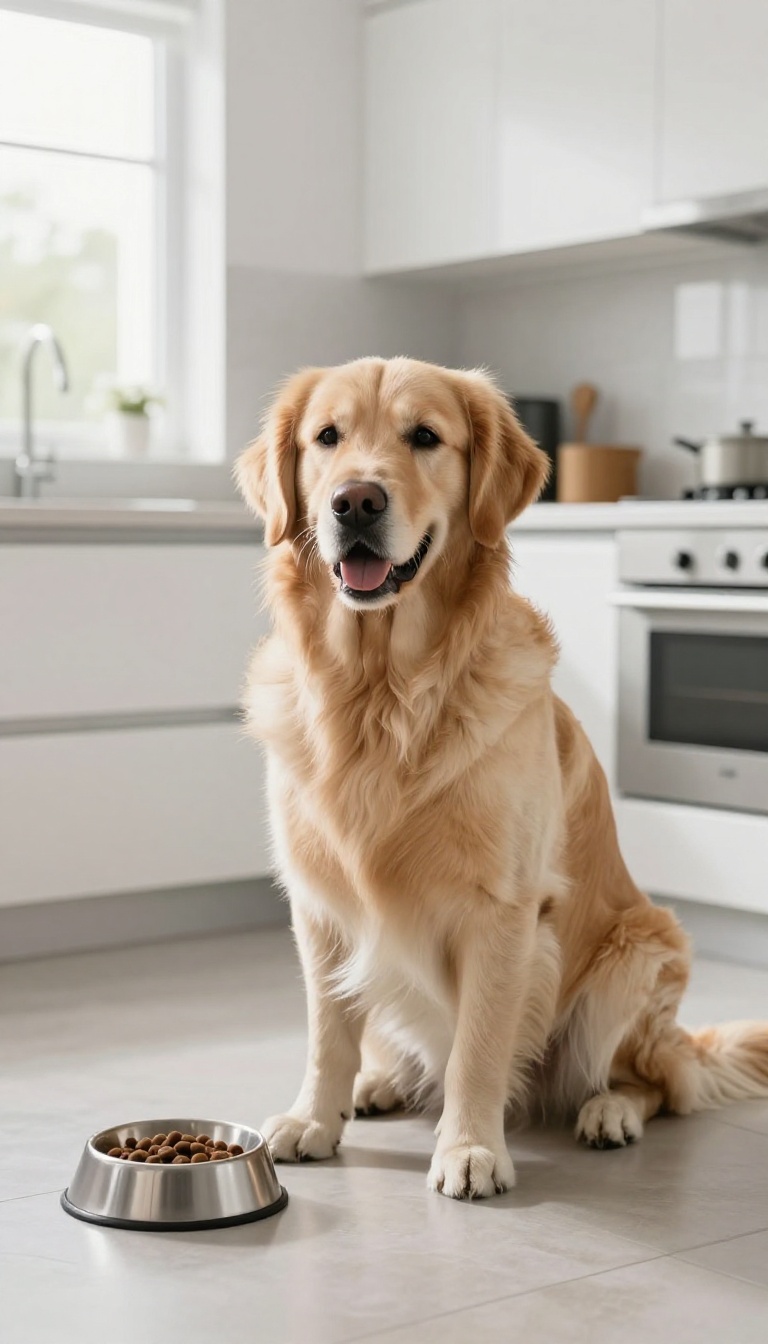
A hungry dog is a desperate dog. When your pup's stomach is growling and they don't know when the next meal is coming, the counter starts looking like a buffet. That's why a consistent feeding schedule is one of the most effective counter-surfing deterrents you can implement.
Dogs thrive on routine. When they know exactly when breakfast and dinner will land in their bowl, the anxiety that drives scavenging behavior fades. They learn that food comes from their dish, not from your plate or the kitchen counter.
Feeding your dog at the same times every day does more than just keep their tummy happy—it creates a sense of security. Dogs are creatures of habit, and a predictable schedule reduces the uncertainty that often leads to sneaky snacking. Plus, a well-fed dog is less likely to go hunting for extras between meals.
But a schedule isn't just about timing—it's also about portion control and consistency. Make sure you're feeding the right amount for your dog's size, age, and activity level. If they're still hungry after meals, talk to your vet about adjusting portions rather than giving in to those puppy eyes.
Why A Schedule Cuts Down On Counter Surfing
When dogs don't know when their next meal is coming, they're more likely to take matters into their own paws. A regular feeding time removes that uncertainty. Your dog learns that food will come, and it will come at the same time every day.
This reduces the urge to scavenge because they're not operating on constant hunger. Think of it like this: if you knew a delicious meal was coming at 6 PM sharp, you'd be less tempted to raid the pantry at 3 PM. Dogs are the same way.
A schedule sets their internal clock and gives them a sense of control over their food supply.
How To Set Up A Feeding Routine That Works
Start by choosing two or three consistent feeding times that fit your daily rhythm. Most adult dogs do well with two meals a day, about 8 to 12 hours apart. Puppies and seniors may need more frequent, smaller meals.
Stick to the same times every day, even on weekends. Use a timer if you need a reminder, and always feed in the same spot. This reinforces the routine.
Also, pick a food that's nutritionally balanced so your dog feels satisfied after meals. If you're not sure what to feed, ask your vet for recommendations based on your dog's specific needs.
What To Do If Your Dog Still Seems Hungry
If your dog acts hungry even on a schedule, check the portion size. The feeding guide on the food bag is a starting point, but your dog's ideal amount depends on their metabolism and activity level. You can also split their daily portion into smaller, more frequent meals to keep their blood sugar steady.
Another trick: add a little warm water or low-sodium broth to their kibble to make it more satisfying. Or incorporate some low-calorie veggies like green beans as a snack. Just be careful not to overfeed—obesity brings its own set of problems.
If your dog is constantly ravenous, it's worth a vet check to rule out medical issues.
11. Practice the 'Out' Cue
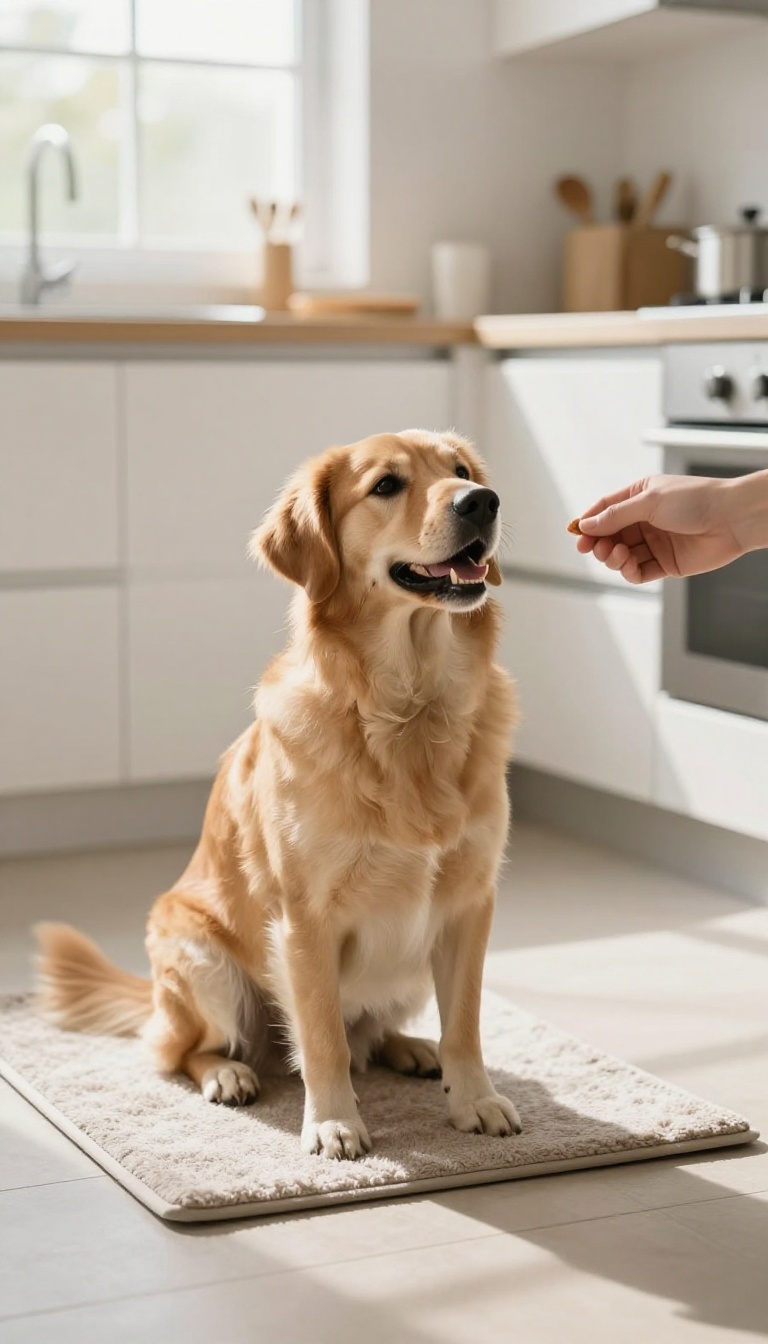
Teaching your dog a reliable 'out' cue is like having a remote control for their location. When you spot them eyeing the counter, a cheerful 'out' sends them trotting to another room, away from temptation. It's not about punishment—it's about giving them a clear, positive alternative.
Start by practicing in a low-distraction area. Say 'out' in a bright tone and toss a treat a few feet away, rewarding them as they move away. Gradually increase the distance and add distractions, like having someone hold a treat near the counter.
The goal is for 'out' to become a reflex, not a negotiation.
Make It A Game
Turn training into a fun game. Call 'out' and then race your dog to a designated spot, like their bed or a mat. Use high-value treats or a favorite toy as the reward.
The more fun it is, the faster your dog will respond when it really matters.
Practice In The Kitchen
Once your dog understands the cue, practice it in the kitchen during calm moments. Have them sit nearby, then say 'out' and reward them as they leave the room. Repeat this several times a day, gradually increasing the temptation by placing a treat on the counter before you give the cue.
Use It In Real-life Moments
When you catch your dog about to jump up, use your 'out' cue immediately. Keep your tone light and positive, then reward them as they move away. Over time, your dog will learn that leaving the kitchen is always a good choice, even when the roast chicken is calling their name.
12. Never Punish After the Fact
It’s a familiar scene: you walk into the kitchen to find your dog happily licking the last of the butter off the counter. Your first instinct might be to raise your voice, but that’s the worst thing you can do. Yelling or scolding after the fact won’t teach your dog anything—it’ll just confuse them and damage your bond.
When you punish your dog after they’ve already grabbed food, they don’t connect the punishment to the act. They’re not thinking, “I shouldn’t have taken that roast chicken. ” Instead, they’re thinking, “My human is angry, and I’m scared. ” This can lead to anxiety, fear, and even more sneaky behavior, because your dog learns to avoid you rather than avoid the counter.
Why Punishment Backfires
Dogs live in the moment. If you scold them even a few seconds after the theft, they have no idea why you’re upset. They might associate your anger with your presence, the kitchen, or even the food itself—but not with their own action.
This confusion can make them more likely to hide their sneaky behavior, not stop it.
Focus On Prevention Instead
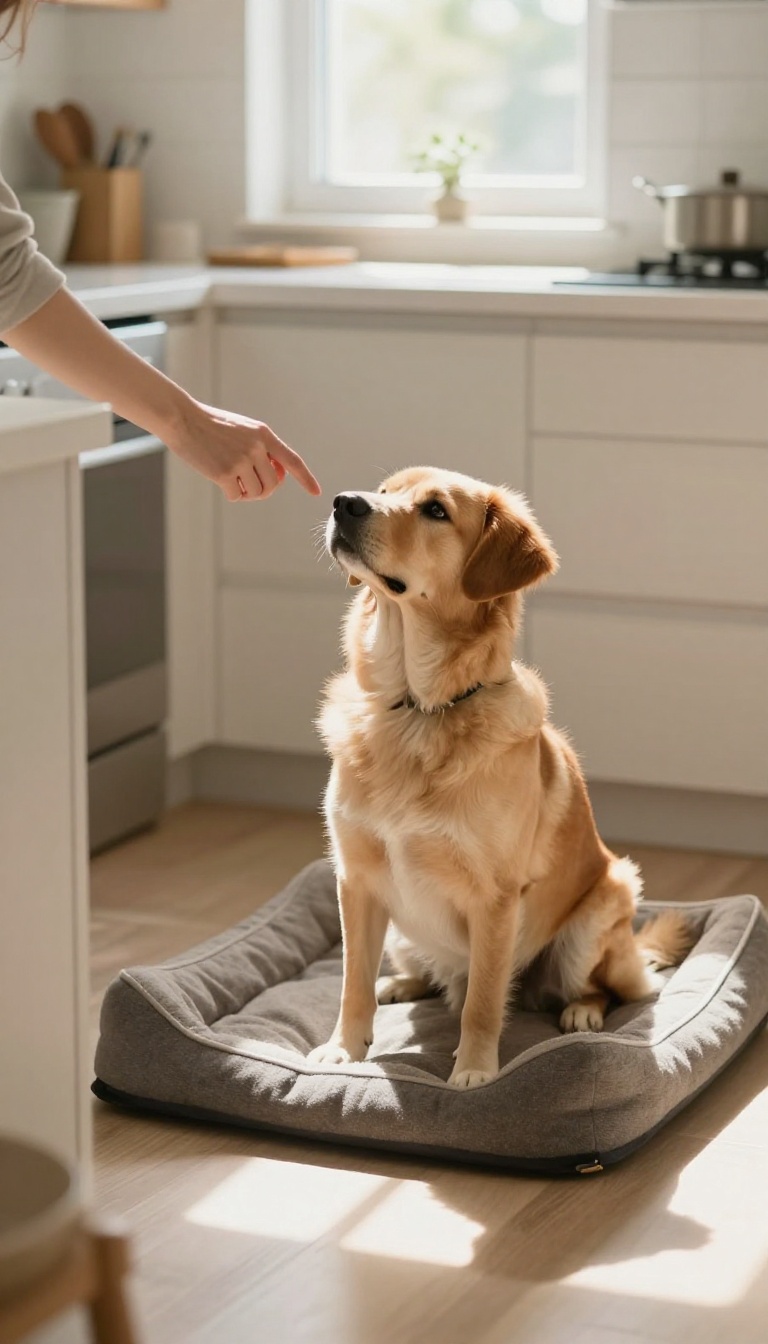
The best way to stop counter-surfing is to make it impossible. Keep food out of reach, use baby gates, or tether your dog when you’re cooking. If you catch them in the act, a firm “no” and redirecting them to their bed is enough.
Then, set up a management plan so it doesn’t happen again.
Build Trust, Not Fear
Punishment erodes trust. Your dog needs to feel safe around you, especially when they’ve made a mistake. By staying calm and focusing on prevention, you teach your dog that good things happen when they stay away from the counter—and that you’re a reliable leader, not a threat.
13. Be Consistent and Patient

Changing your dog's counter-surfing habit won't happen overnight. It's a process that requires time, repetition, and a whole lot of patience. Remember, your dog isn't being stubborn—they're just following a learned behavior that used to pay off.
Consistency is the secret ingredient in any training plan. If you're sometimes strict and sometimes lenient, your dog gets mixed signals. That confusion slows down learning.
So, commit to your rules and stick with them every single day.
Why Consistency Matters
Dogs thrive on predictability. When you consistently reward the same behaviors and redirect the same mistakes, your dog starts to understand what's expected. If you let them sneak a bite 'just this once, ' you're undoing days of effort.
That one slip tells them the counter is still worth checking.
Patience Pays Off
Think of training like building a new habit—it takes time. Some dogs pick it up in a few weeks, others need a few months. Don't compare your progress to someone else's.
Celebrate the small wins, like your dog choosing to lie down instead of jumping up. That's real progress.
Staying On The Same Page
If you live with family or roommates, everyone needs to follow the same rules. If one person feeds your dog from the table, the training falls apart. Hold a quick meeting to agree on the ground rules.
Consistency across all humans makes the message crystal clear for your dog.
FAQ
Why does my dog counter-surf even when I'm in the room?
Some dogs are bold and will try to grab food even when you're present, especially if they've been rewarded in the past. They may also be highly food-motivated or bored. Consistent training and management are key.
Can I train my dog to stop counter-surfing?
Yes, with patience and consistency. Training commands like 'leave it' and 'go to your mat' can help, but you also need to manage the environment to prevent rehearsal of the behavior.
What should I do if my dog steals something dangerous?
If your dog grabs something toxic or hazardous, contact your vet or a pet poison hotline immediately. Do not chase or punish your dog, as this can cause them to swallow the item faster.
How long does it take to break the counter-surfing habit?
It varies depending on the dog and how long the habit has been reinforced. With consistent training and management, you may see improvement in a few weeks, but full resolution can take months.
Are certain breeds more prone to counter-surfing?
Any dog can counter-surf, but breeds with high food drive or those that are tall and agile, like Labradors, Golden Retrievers, and Poodles, may be more likely to try it.
Conclusion
Counter-surfing is a tough habit to break, but it's not about outsmarting a sneaky dog—it's about removing the opportunity and rewarding better choices. Pick one or two habits from this list that fit your kitchen setup and start there.
Consistency beats perfection, so keep treats handy and your counters clear. Over time, your dog will learn that the floor is where the good stuff happens, and you'll enjoy cooking without a furry shadow underfoot.

I’m Pallab Kishore, the owner of Little Pets Realm — an animal lover and pet care enthusiast sharing easy tips, healthy recipes, and honest advice to help every small pet live a happy, healthy, tail-wagging life.